
Meth Withdrawal Symptoms and Treatment: What to Expect
Reviewed by Tiffany Komba, LMFT #136055 · Last reviewed November 20, 2026
Published November 20, 2026
Contents
- Meth Withdrawal Timeline From Crash to Month Three
- Physical and Psychological Symptoms to Expect
- Warning Signs That Need Emergency Care
- Treatment Levels From Detox to Outpatient Care
- Therapies and Medications Used for Methamphetamine
- Aftercare and Relapse Prevention After Detox
- Confirm Your Next Step for Meth Withdrawal Care
Someone you care about has stopped using meth and is sleeping much more than usual. When they wake, they seem drained, irritable, or unusually sad. You're trying to decide whether they need rest, a treatment appointment, or emergency help.
Understanding meth withdrawal symptoms and treatment starts with separating expected discomfort from signs that someone can't safely manage without immediate care. Heavy fatigue and changes in sleep can be part of withdrawal. Suicidal thoughts, hallucinations, chest pain, and seizures are not symptoms to watch at home while hoping they pass.
Meth Withdrawal Timeline From Crash to Month Three
Say someone stops using meth after repeated use. At first, they may feel depleted rather than obviously ill. Like a car coasting after the engine shuts off, their body doesn't return to its usual pace immediately. Sleep, energy, concentration, and mood may recover unevenly.
McGregor and colleagues (2005) found that overall methamphetamine withdrawal severity peaked within 24 hours of last use and declined during an acute phase lasting 7–10 days, then stayed lower and more stable during a subacute phase of at least another 2 weeks. Zorick and colleagues (2010) found that depressive and psychotic symptoms often largely resolved within 1 week, that many other withdrawal symptoms eased within 14 days, and that craving continued at a reduced level for at least 5 weeks. These are overlapping windows, not separate conditions with exact start and stop dates.
Meth withdrawal phases, timing and symptoms
| Phase | When It Happens | Typical Symptoms | What to Watch For |
|---|---|---|---|
| Crash | Within 24 hours of last use | Exhaustion, increased sleep, depressed mood, reduced activity | Rapidly worsening mood or difficulty staying safe |
| Acute phase | First 7–10 days after last use | Depression, anxiety, irritability, cravings, poor concentration | Intense symptoms that warrant medical review |
| Post-acute phase | At least 2 more weeks after the acute phase | Sleep disruption, physical discomfort, lingering cravings | Uneven improvement and continued risk of returning to use |
| Extended phase | At least 5 weeks after last use | Low mood, anxiety, cravings | Ongoing relapse risk after visible symptoms improve |
The timeline below offers a visual guide, not a deadline for recovery.
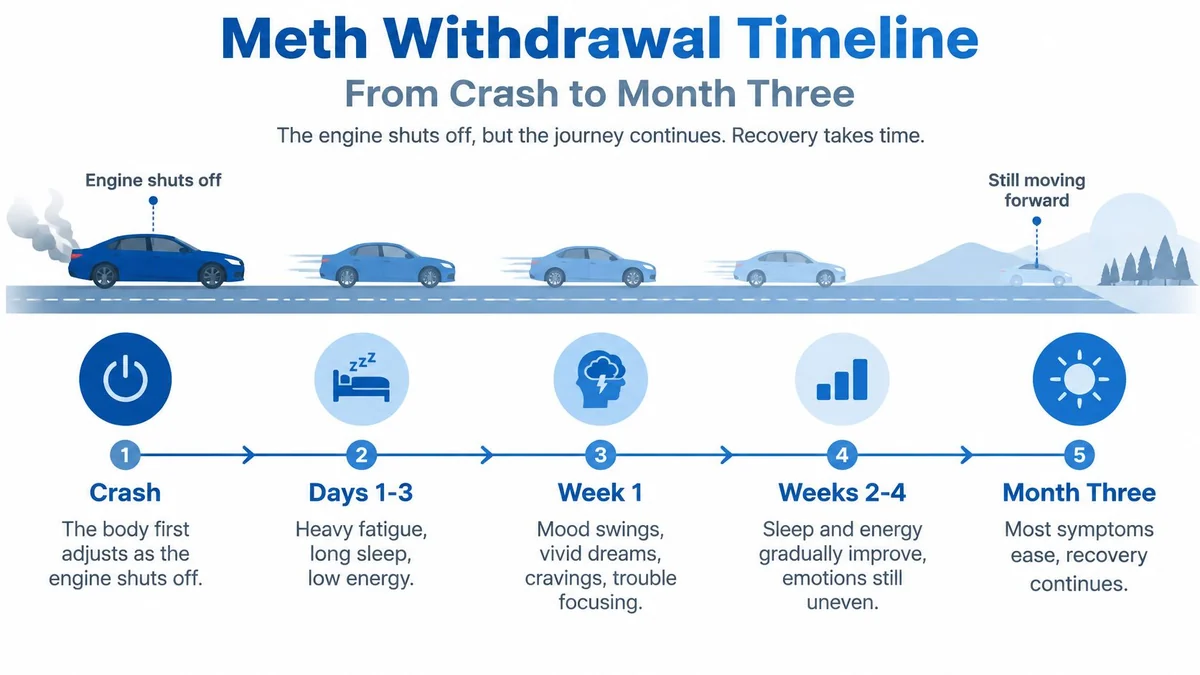
Improvement doesn't always happen in a straight line
During the crash, the person in our example may mainly want to sleep and eat. Later, they might be awake more often but struggle to follow a conversation, tolerate frustration, or enjoy familiar activities. Someone who looks more alert can still be having a difficult time emotionally.
The terms acute and post-acute can cause confusion. Acute describes the earlier, more intense symptoms. Post-acute describes symptoms that remain or recur as the most intense period settles. Neither label tells you whether a particular person is safe without an assessment.
Patterns of use, overall health, other substances, and existing mental health conditions can affect the course. A timeline can help organize care, but it shouldn't be used to dismiss a symptom because it arrived earlier or lasted longer than expected.
Plan follow-up before motivation fades
Arrange reassessment after the initial crash settles and again as the person returns to ordinary responsibilities. Put appointments on the calendar rather than relying on them to call when they feel worse.
Practical rule: Better sleep or more energy isn't the same as emotional stability.
Locate where the person is relative to their last use, then consider their current symptoms and safety. If they haven't had a medical assessment, use the timeline to explain what has changed, not to decide that they should manage alone.
Physical and Psychological Symptoms to Expect
Withdrawal can feel like someone has turned down a dimmer switch. After repeated stimulation, ordinary tasks may feel unusually demanding, and familiar pleasures may seem distant. That comparison describes the experience, not a diagnosis or a promise about how quickly it will resolve.
Exhaustion can affect both physical activity and emotional expression.

How symptoms show up in daily life
Fatigue and sleep changes may make getting dressed, preparing food, or answering messages feel like substantial work. Increased sleep doesn't necessarily leave someone feeling refreshed. Sleep may also become disrupted rather than just longer.
Physical discomfort and appetite changes can make routines unpredictable. A person may want larger meals but lack the energy to cook, or feel physically slowed down while also feeling restless inside. Offer simple food and fluids without turning meals into a confrontation.
Depression and low motivation can look like withdrawal from other people, flat emotions, or difficulty starting anything. Avoid interpreting those changes as laziness. At the same time, don't assume all depression will disappear without professional attention.
Irritability, anxiety, and concentration problems can make ordinary decisions harder. Keep conversations brief, offer clear choices, and postpone unnecessary arguments. A person who can't finish paperwork may need help organizing it rather than more pressure.
Cravings are experiences to plan for
Consider a hypothetical day: someone sleeps late, eats more than usual, and spends the afternoon feeling emotionally flat. A message from a friend associated with meth use then brings a strong urge to use. The helpful response is to identify the trigger and take a concrete action, such as silencing that contact and calling a support person.
Self-criticism can make it harder to talk openly about these experiences. Recognizing harsh inward-directed thinking can help, but it doesn't replace assessment for severe depression.
If you use video resources to understand withdrawal, discuss questions they raise with your clinician.
Meth Withdrawal — Why It Takes 6 Months to Feel Normal Again · Watch on YouTube
Keep a daily symptom log with sleep, meals, mood, cravings, and the circumstances around them. Use descriptive entries such as “felt hopeless after an argument” rather than only “bad day.”
- Record changes: Note whether symptoms are improving, worsening, or interfering with basic tasks.
- Name triggers: Include messages, places, conflict, boredom, or other events connected with cravings.
- Share the log: Bring it to appointments so the clinician can assess patterns rather than relying on memory.
Warning Signs That Need Emergency Care
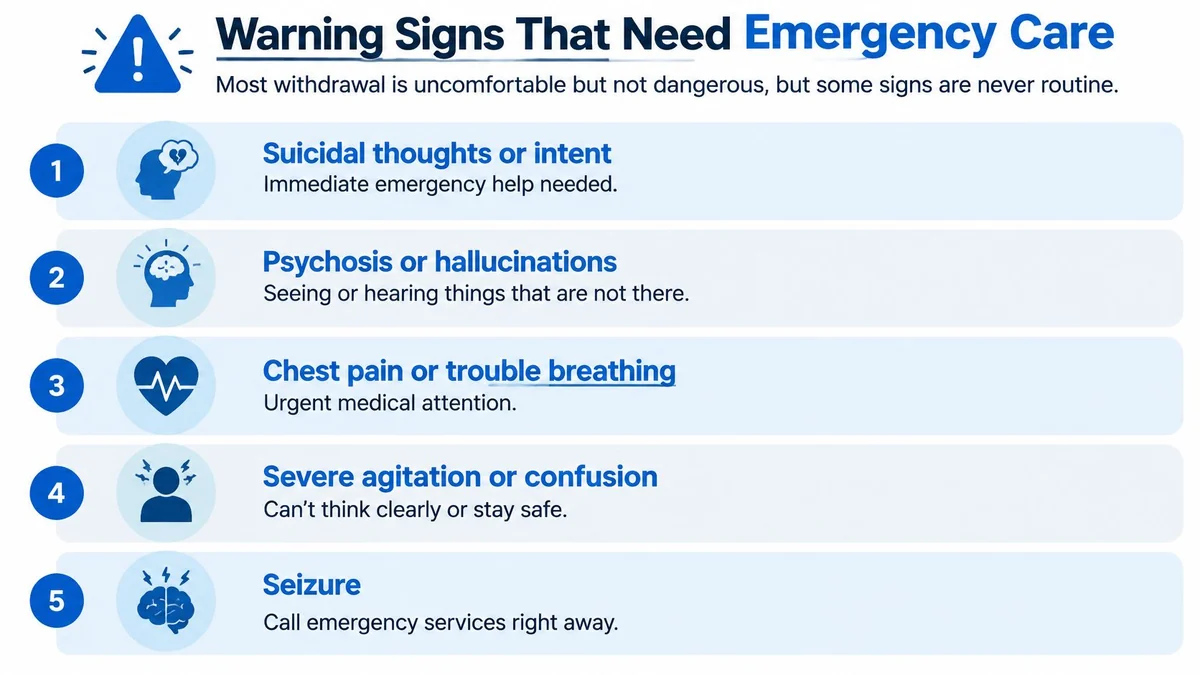
Meth withdrawal is often dominated by uncomfortable fatigue and mood changes, but it isn't safe to assume that everything happening after meth use is ordinary withdrawal. A person may also have intoxication-related complications, another medical illness, or withdrawal from another substance.
The review of methamphetamine toxicities and clinical management supports distinguishing expected withdrawal from psychiatric and medical emergencies. In the primary studies above, symptoms can begin within hours of last use, overall severity is often highest within 24 hours, and the acute phase typically lasts 7–10 days, with many symptoms easing within 14 days. Repeated users can experience withdrawal even without a stimulant use disorder diagnosis, so safety decisions shouldn't depend on a diagnostic label.
============
Signs that require immediate action
- Suicidal thoughts or intent: Statements about wanting to die, self-harm thoughts, or inability to stay safe require immediate help: call or text 988, and call 911 if there is immediate danger. A routine outpatient appointment is not enough.
- Hallucinations, psychosis, or severe confusion: Seeing or hearing things others don't, losing touch with reality, or becoming disoriented needs urgent evaluation.
- Severe agitation or violence: Threatening behavior or distress that prevents safe communication requires emergency help.
- Chest pain or trouble breathing: Don't assume these symptoms are anxiety.
- A seizure: Call 911 immediately.
- Inability to eat, drink, or keep fluids down: Seek urgent assessment, especially when the person is becoming weak or less responsive.
- Signs of another illness or overdose: Abnormal breathing, difficulty waking, fever with severe illness, or a sudden unexplained change shouldn't be attributed to withdrawal.
Keep the emergency warning signs accessible to everyone helping with care.
What families can safely do
Heavy sleep is different from being difficult to wake. Irritability is different from behavior that makes someone unsafe. Families don't need to diagnose the cause before requesting help.
For context on suspiciousness and changes in thinking, our guide to paranoia and methamphetamine explains concerns worth discussing with a clinician. Don't use educational reading to delay emergency evaluation when someone has lost touch with reality.
Clinical management is generally supportive: checking for other medical causes, protecting sleep, providing nutrition, and maintaining a calm, trauma-informed environment. Clinicians may use medication for specific symptoms when appropriate.
If you can't tell whether someone is exhausted or medically unwell, seek urgent professional assessment rather than testing the difference at home.
Home monitoring should be considered only when no emergency signs are present and a clinician considers the arrangement appropriate. If a red flag appears, call 911 right away. Don't substitute a detox admission inquiry for emergency care.
Treatment Levels From Detox to Outpatient Care
The right setting starts with a medical and psychological assessment, not a predetermined program length. Clinicians need to understand recent use, current symptoms, physical health, psychiatric history, other substances, and whether the home environment supports safety.
An initial assessment should determine whether medical detox is necessary before outpatient, IOP, or PHP care. A typical medically supervised detox episode lasts 3–7 days, but that describes a service episode, not the full duration of meth withdrawal or recovery.
Levels of care for methamphetamine withdrawal and recovery
| Level of Care | Setting | Typical Length | Best Fit |
|---|---|---|---|
| Medically supervised detox | Hospital or detox unit with 24-hour monitoring by licensed professionals | Typically 3–7 days, guided by substance use and health needs | Withdrawal requiring symptom management and medical oversight |
| Inpatient or residential care | Live-in facility with daily structure | Set through assessment and reassessment | Severe use, co-occurring mental health needs, or an unsafe recovery environment |
| Intensive outpatient care | In person or by telehealth | Continues according to clinical goals and progress | Stable housing and support, with a need for regular structured sessions |
| Standard outpatient counseling | Scheduled clinic visits | Scheduled around continuing-care needs | Lower-acuity needs or ongoing care after more intensive treatment |
Choose according to safety and support
Detox addresses stabilization. Our guide to medically supervised detox explains what medical oversight involves. Detox can address withdrawal from methamphetamine and other substances, including alcohol, opioids, and benzodiazepines, but the clinical approach must match the substance and the person's health conditions. Opioid withdrawal follows its own course, and Opioid Withdrawal Symptoms: A Timeline Guide explains what to expect day by day.
Residential care provides an onsite environment. It may fit someone whose symptoms, mental health needs, or living circumstances make recovery difficult to manage at home. Severe addiction issues or co-occurring mental health disorders can also make inpatient detox particularly beneficial.
Outpatient care requires a workable home plan. Stable housing matters, but so do reliable attendance, access to food, transportation or telehealth, and people who can support treatment rather than encourage use. Having a job doesn't automatically make outpatient care the safest choice.
Two different assessments can lead to different settings
Say someone has been using daily, feels depressed, and lives with people who continue to use. Their assessment may support supervised stabilization followed by residential treatment. The decision rests on safety and functioning, not how determined they sound.
Another person may have manageable symptoms, a supportive household, and the ability to attend structured appointments. Intensive outpatient care may allow them to receive substantial support while living at home.
Before admission, clarify the overnight monitoring arrangement, how the team handles worsening symptoms, and what happens at discharge. In a well-run detox program, prescribing physicians and addiction counselors coordinate medication adjustments, and clients move directly from detox into residential or outpatient treatment.
A discharge destination should be part of the admission conversation, not something left for the final day.
Therapies and Medications Used for Methamphetamine
There's no FDA-approved medication specifically for methamphetamine or another stimulant use disorder, according to the National Institute on Drug Abuse's methamphetamine guidance. Behavioral treatment is central, while medication decisions require a separate assessment of symptoms, health conditions, and potential benefits and risks.
Treatment approaches for methamphetamine use disorder
| Approach | What It Involves | Evidence Status |
|---|---|---|
| Contingency management | Vouchers, gift cards, or prizes for attendance and negative drug tests | Best-studied approach for methamphetamine |
| Cognitive behavioral therapy | Identifying triggers and changing thought and behavior patterns | Core evidence-based component |
| Motivational interviewing | Guided conversation that builds readiness to change | Evidence-based component used alongside other therapies |
| Relapse-prevention planning | Written responses to triggers and early warning signs | Standard element of structured aftercare |
| Medications under study | Trials targeting cravings, withdrawal, or related symptoms | No FDA approval for stimulant use disorder; insufficient evidence for treating withdrawal |
What behavioral treatment looks like
Contingency management makes progress concrete. A person receives a modest tangible incentive for an agreed, objectively verified behavior, such as attending treatment or providing a stimulant-negative test. It isn't a judgment about character or a substitute for a therapeutic relationship.
In cognitive behavioral therapy, a counselor helps someone connect a situation, a thought, an urge, and a response. For example, Friday evenings at a particular friend's house may be linked with meth use. The person rehearses an alternative evening, practices declining an invitation, and plans whom to contact if the urge persists.
Motivational interviewing helps someone discuss mixed feelings without turning treatment into an argument. Group support provides opportunities to practice honest communication and learn coping strategies. Written relapse-prevention planning turns those conversations into actions that are easier to follow under stress. 8 Warning Signs of Relapse to Watch For names the shifts to act on early.
What medication can and can't do
Medication trials remain active, but the systematic review summarized in the clinical literature found insufficient evidence that a medication reliably treats methamphetamine withdrawal. No medication clearly outperformed placebo for withdrawal intensity, craving, or treatment discontinuation.
That doesn't mean clinicians must leave every symptom untreated. They may prescribe symptom-targeted medication or treat a co-occurring condition when clinically appropriate. Treating depression or sleep problems isn't the same as having an approved medication for methamphetamine use disorder.
After assessment, a medically supervised detox plan may include medication-assisted treatment when appropriate. That terminology doesn't imply an FDA-approved methamphetamine medication; the prescribing physician and addiction counselor coordinate adjustments according to the individual's needs.
Meaningful progress deserves recognition without describing continued use as risk-free.
Treatment reviews should consider use patterns, cravings, mood, attendance, and daily functioning alongside abstinence. Discuss which behavioral therapies are included, what progress will look like, and what the team will change if the current approach isn't helping.
Aftercare and Relapse Prevention After Detox
Leaving detox means changing settings, not finishing treatment. Daily responsibilities, access to substances, and strained relationships can make the transition demanding. Arrange continuing care before discharge so the person doesn't have to organize everything while depleted or overwhelmed.
A complete plan includes a direct transition into residential or outpatient treatment after detox. Scheduled reassessments help the team evaluate progress, including whether selected medications are managing cravings effectively.
Build an aftercare plan people can actually use
- Book continuing appointments before discharge: Put therapy, medical follow-up, and support groups into a calendar. Confirm transportation or telehealth access.
- Write down early warning signs: Include changes that matter for this person, such as avoiding appointments, reconnecting with drug-using contacts, or hiding distress.
- Match each trigger with an action: “Avoid stress” isn't specific enough. “Leave the room during an escalating argument and call my support person” is actionable.
- Assign communication responsibilities: Identify who receives symptom updates and whom to contact when the plan isn't working.
- Review medication concerns promptly: Report side effects, worsening mood, or persistent cravings rather than adjusting prescribed medication independently.
Our coordinated-care process involves the addiction medicine specialist, mental health therapist, and substance abuse counselor communicating regularly, sharing assessment information, and adjusting the plan collaboratively. That helps prevent important changes from being discussed in separate appointments without reaching the whole team.
Rehearse a difficult evening
Suppose late-night stress is a major trigger. The person agrees to finish demanding tasks earlier, keep an evening group appointment, and call a designated support person when cravings begin. They also decide what to do if that person doesn't answer.
Our guide to relapse-prevention techniques offers ways to make those responses more concrete. Practice the steps when the person is calm so they're familiar during distress.
A lapse, or a return to use, doesn't erase previous progress. It does require prompt contact with the care team, honest discussion, and reassessment of safety and treatment intensity.
Create a one-page plan listing personal triggers, warning signs, contacts, and specific responses. Keep it accessible and review it at reassessment appointments. A useful plan should change when the person's circumstances change.
Confirm Your Next Step for Meth Withdrawal Care
You don't need to settle every question about treatment before taking action. The immediate decision is whether the person needs emergency help or can safely participate in a planned assessment. Uncertainty is a reason to seek guidance, not a reason to delay.
Use a short action path
- Make the safety decision first. If any emergency warning sign is present, call 911 now. Don't wait for an intake appointment or a return call from a treatment program.
- Arrange assessment when there's no immediate emergency. Explain when meth use stopped, what symptoms are happening, and whether the person is alone. Don't postpone the call until symptoms become unmanageable.
- Prepare a clear account. Write down recent substance use, prescribed medicines, existing health conditions, sleep changes, and any previous withdrawal complications. Include alcohol or sedative use even if meth is the main concern.
- Confirm the transition plan. Understand where the assessment will happen, who will monitor symptoms, and how the next treatment setting will be arranged.
- Include a support person when appropriate. With the person's consent, a family member can help remember instructions, organize transport, and communicate changes.
Start with an assessment, not a promise
Starting care at Addiction Resource Center begins with contacting our team for a thorough assessment and an approach matched to the person's needs. Our phone and text line is available 24/7 at 530-625-7910. Families can also contact us for guidance about seeking assessment, but this line doesn't replace 911 or 988.
Which medication or withdrawal interventions are appropriate is a clinical decision, not something a caller needs to determine in advance.
Today's task: Make the appropriate call, then write down the next appointment or instruction before ending the conversation.
Addiction Resource Center LLC offers assessment and outpatient, IOP, and PHP care for adults 18+ navigating meth withdrawal and recovery. ARC does not provide detox or residential care; if a higher level of care is needed, the team helps plan the transfer. Visit Addiction Resource Center LLC or call or text 530-625-7910 to discuss your symptoms, your home situation, and the next appropriate level of care.
Talk with us
Addiction Resource Center offers intensive outpatient treatment (IOP) for adults 18+ at our Yuba City office or by telehealth. Call or text 530-625-7910.
Check my insurance