You wake up expecting a routine morning, but your prescription oxycodone ran out the night before and the pharmacy is closed. Within hours, you may notice yawning, a runny nose, watery eyes, sweating, restlessness, and anxiety that feels far bigger than the situation warrants. Then the muscle aches, stomach upset, and sleeplessness begin. These opioid …

You wake up expecting a routine morning, but your prescription oxycodone ran out the night before and the pharmacy is closed. Within hours, you may notice yawning, a runny nose, watery eyes, sweating, restlessness, and anxiety that feels far bigger than the situation warrants. Then the muscle aches, stomach upset, and sleeplessness begin.
These opioid withdrawal symptoms are real, measurable, and treatable. Their timing depends heavily on the opioid involved, how often it was used, the dose, your health, and whether other substances are present. This guide explains what your body is doing, how the timeline changes by opioid type, and which signs mean you should contact a clinician instead of trying to endure withdrawal alone. For background on recognizing possible dependence related to oxycodone, see this guide to oxycodone dependence symptoms.
Table of Contents
- A Familiar First 12 Hours Without the Opioid
- What Opioid Withdrawal Actually Is
- Why the Body Reacts So Strongly
- How Long Symptoms Last by Opioid Type
- What Changes the Risk Picture
- Red Flags That Mean It Is Time to Get Help
- Medically Supervised Detox and the Path Forward
A Familiar First 12 Hours Without the Opioid
You may wake after an ordinary night and notice that your body feels strangely unsettled. Repeated yawning, a dripping nose, watery eyes, sweating, and an urge to keep moving can appear in a cluster. The experience may feel like anxiety or the start of an illness, especially before the muscle aches, stomach upset, and sleeplessness become obvious.
With a short-acting opioid, early withdrawal commonly starts about 6 to 12 hours after the last dose, according to the clinical overview from the National Center for Biotechnology Information. A longer-acting opioid releases more slowly, so the first symptoms may wait until later. Immediate-release oxycodone, for example, may produce signs overnight or the following morning, while another opioid can delay that first wave. Fentanyl exposure can also produce less predictable timing, particularly when illicit products or repeated exposure are involved.
What the first wave can feel like
Early symptoms often reflect an overactive nervous system and a severe flu-like illness at the same time:
- Nervous system changes: Anxiety, irritability, agitation, and difficulty staying comfortable may arrive before vomiting or diarrhea.
- Temperature shifts: Sweating, chills, goosebumps, and hot flashes can alternate.
- Upper-respiratory signs: A runny nose, tearing, and frequent yawning are common clues.
- Pain and sleep disruption: Muscle aches, restless legs, and insomnia can make the night feel endless.
A person may blame the symptoms on stress or a stomach bug. The combination and timing provide more useful clues than one symptom alone. Several symptoms appearing after an opioid dose is reduced or missed make withdrawal more likely. Information about oxycodone dependence symptoms may help explain why this pattern can develop.
Practical rule: Do not rely on a generic three-to-seven-day chart to judge safety. The opioid's half-life works like a release schedule for the body, while other substances, medical conditions, and fluid loss can change the risk.
You do not have to wait until symptoms become unbearable. A clinician can check your vital signs, treat vomiting or diarrhea, and discuss medicines that reduce withdrawal and cravings. Seek medical advice promptly if symptoms are severe, withdrawal has been complicated before, you are pregnant, or you fear returning to opioid use.
What Opioid Withdrawal Actually Is
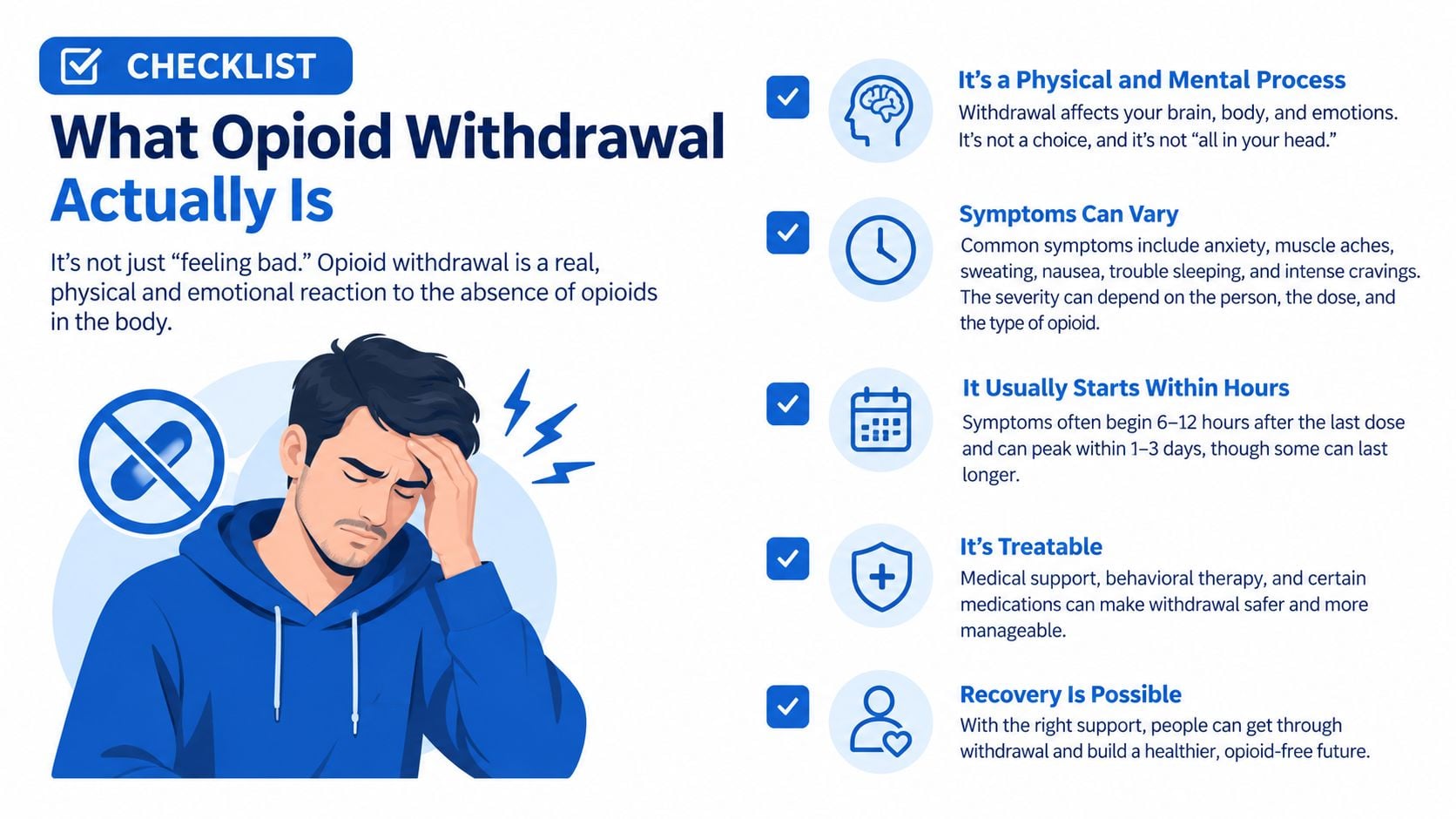
A person who regularly takes an opioid may notice withdrawal after a missed dose or a reduction. Opioid withdrawal is a clinical syndrome that develops when a physically dependent body receives less opioid or none at all. Withdrawal reflects physical dependence, and the DSM-5 defines it by a pattern of symptoms rather than a single complaint. It does not indicate a character flaw or a lack of interest in recovery.
The DSM-5 clinical reference lists at least 11 hallmark symptoms, including tearing or a runny nose, goosebumps, muscle aches, diarrhea, nausea or vomiting, enlarged pupils, insomnia, increased autonomic activity, and yawning. Several systems can change together, which is why withdrawal often feels broader than one illness.
The symptom clusters
Autonomic symptoms involve automatic body functions. Sweating, goosebumps, dilated pupils, a fast heartbeat, higher blood pressure, tearing, and temperature swings may appear.
Gastrointestinal symptoms can drain a person quickly. Nausea, vomiting, stomach cramps, and diarrhea make eating and drinking difficult, increasing the risk of dehydration.
Musculoskeletal symptoms may feel like a severe flu. Aches can affect the back, legs, joints, and larger muscle groups. Opioid exposure can also change how the nervous system processes discomfort, increasing pain sensitivity.
Mood and behavioral symptoms include anxiety, irritability, dysphoria, agitation, and intense cravings. Cravings can make another dose seem like the only dependable way to end the distress.
Sleep symptoms include insomnia, restless legs, and an inability to settle physically. Sleep loss can then worsen irritability, concentration problems, and emotional distress.
The timeline depends partly on the opioid's half-life. A shorter-acting drug may produce symptoms sooner, while a longer-acting drug can delay them. Fentanyl-related withdrawal may also be less predictable. Withdrawal can be manageable for an otherwise healthy adult, yet vomiting, diarrhea, dehydration, polydrug use, mental-health crises, or relapse can make unsupervised withdrawal unsafe.
Why the Body Reacts So Strongly
Your nervous system adapts to repeated opioid exposure. One important part of that adaptation involves the locus coeruleus, a brain region that helps regulate norepinephrine, a chemical messenger involved in alertness and the body's alarm response.
Chronic opioid use suppresses activity in this system. When the opioid is suddenly removed, the suppression lifts and norepinephrine release rises sharply. The resulting rebound helps explain why withdrawal can feel like intense anxiety layered onto a brutal flu.
The clinical review of opioid withdrawal neurobiology connects this norepinephrine surge with symptoms such as rapid heartbeat, sweating, enlarged pupils, tearing, anxiety, and diarrhea. The same process can leave you shaky, restless, hyperalert, and unable to sleep.

Why clinicians use more than fluids
Hydration and rest may support someone through mild symptoms, but they don't correct the underlying nervous-system rebound. Clinicians may use alpha-2 agonists, such as clonidine or lofexidine, to reduce excessive norepinephrine activity and ease sweating, agitation, rapid heart rate, and other autonomic symptoms.
They may also recommend opioid agonist treatment, including buprenorphine or methadone, when appropriate. These medications provide controlled activity at opioid receptors, which can stabilize the abrupt shift between opioid exposure and withdrawal. That isn't just hiding symptoms. It addresses the biological instability that drives them.
The right medication and timing depend on the opioid used, the last dose, current withdrawal signs, other medications, and medical history. Starting or changing treatment without clinical guidance can create complications, including sudden worsening of withdrawal in some circumstances.
How Long Symptoms Last by Opioid Type
A person who stops a short-acting opioid may feel the first changes before the day is over. Someone stopping methadone may feel little at first, then develop symptoms later. The opioid's half-life, or the time the body takes to remove half of the drug, helps explain this difference. Short-acting opioids leave the system faster, so withdrawal often starts sooner and reaches its hardest point earlier. Long-acting opioids delay the start but may prolong the process.
The Merck Manual overview of opioid toxicity and withdrawal describes short-acting withdrawal as commonly beginning within 4 to 12 hours, with peak severity around 24 to 72 hours. Methadone and other long-acting opioids may not produce symptoms until 24 to 48 hours or longer, and symptoms can continue for a week or more.
| Drug Type | Onset of Symptoms | Peak Intensity | Acute Phase | Post-Acute Tail |
|---|---|---|---|---|
| Short-acting opioids, such as heroin and immediate-release oxycodone | Often within hours | Commonly during the first several days | Often improves over several days, though some symptoms may continue longer | Cravings, low mood, poor sleep, and fatigue may persist |
| Long-acting opioids, such as methadone | Often delayed for a day or longer | May build more gradually | Can last about 10 days or longer | Mood, sleep, and craving symptoms may outlast the acute phase |
| Fentanyl and illicitly manufactured products | Timing can vary substantially | May be rapid or unusually severe | Medical monitoring may be needed when symptoms are intense or atypical | Persistent or unusual symptoms need clinical assessment |
These are working timelines, not a personal schedule. Dose, duration of use, the product's actual contents, and individual health can shift the experience. Fentanyl exposure deserves particular caution because withdrawal may not resemble a familiar heroin or prescription-opioid pattern.
A CDC report on severe fentanyl-associated withdrawal describes profound autonomic dysfunction, including severe hypertension and tachycardia, in hospitalized patients whose symptoms resisted escalating opioid medications. Unusual severity may involve fentanyl combined with another substance or a separate medical problem. Repeated self-dosing can add risk, so severe or atypical symptoms call for clinical evaluation.
Reading the timeline in phases
During the early phase, often roughly 12 to 36 hours after many short-acting exposures, yawning, tearing, a runny nose, sweating, anxiety, restlessness, and muscle aches may dominate. Long-acting opioids can shift this phase later.
During the peak phase, commonly around 36 to 72 hours for short-acting opioids, vomiting, diarrhea, abdominal cramping, chills, goosebumps, rapid heartbeat, high blood pressure, and strong cravings may become more prominent. Fluid loss and the risk of returning to opioid use can rise during this period.
During the protracted phase, physical symptoms may ease while sleep problems, fatigue, low mood, irritability, concentration difficulties, and cravings remain. Withdrawal can extend to 7 to 10 days for short-acting opioids or up to two weeks for long-acting opioids. Persistent symptoms deserve medical review because protracted withdrawal, undertreated pain, medication effects, or another condition may be involved. For a separate discussion, read how long methadone withdrawal may last.
What Changes the Risk Picture
Consider a representative patient, a 38-year-old with chronic back pain who has taken prescribed oxycodone for a long time. The prescription became difficult to obtain, so he switched to illicit fentanyl, drinks alcohol daily, lives alone, and has untreated depression. The opioid type matters, but it isn't the only variable determining whether withdrawal can be managed safely.
His exposure may be unpredictable, and the switch to illicit fentanyl can change both potency and symptom pattern. Daily alcohol use adds another concern because alcohol withdrawal can require urgent medical management and may occur alongside opioid withdrawal. Depression increases the importance of assessing hopelessness and self-harm risk, while living alone removes someone who could notice confusion, dehydration, or a dangerous change in behavior.
The factors clinicians weigh
- Drug, dose, and duration: Regular exposure, higher doses, and longer dependence generally increase physical adaptation and can make withdrawal harder to manage.
- Other substances: Alcohol, benzodiazepines, sedatives, and stimulants can change the risk profile and complicate monitoring.
- Medical conditions: Pregnancy, liver or kidney disease, cardiovascular problems, and older age can affect medication choices and safety.
- Mental health: Depression, anxiety, psychosis, and suicidal thinking require more than symptom relief.
- Previous attempts: Repeated withdrawal and return to use can create a dangerous cycle, especially when tolerance changes.
- Setting: Stable housing, reliable transportation, a supportive person, and access to a prescriber can make outpatient care more feasible.
For someone exploring nonmedication support for chronic pain alongside medical care, a clinician-reviewed resource on natural pain relief strategies may offer additional ideas. It shouldn't replace evaluation of opioid dependence or a supervised treatment plan.
The patient in this example may need inpatient or closely monitored detox because of unpredictable fentanyl exposure, daily alcohol use, untreated depression, and isolation. By contrast, a person tapering gradually with a prescriber, no significant co-occurring substance use, stable housing, and dependable support may be assessed for outpatient management. The distinction isn't about who is stronger. It reflects the combined effect of the drug, dose, body, mental health, and setting.
Red Flags That Mean It Is Time to Get Help
Some opioid withdrawal symptoms are miserable but commonly managed with clinical support. Yawning, sweating, goosebumps, mild nausea, muscle aches, restlessness, and insomnia don't automatically mean an emergency. Still, symptoms can change quickly, and people often underestimate dehydration, co-occurring withdrawal, or the danger of returning to opioids after tolerance has fallen.
Seek immediate medical evaluation or call emergency services for any of the following:
- Chest pain or difficulty breathing: These may signal a cardiac, respiratory, or other emergency rather than uncomplicated withdrawal.
- Blue or gray lips or fingertips: This suggests inadequate oxygen and requires urgent action.
- Confusion or altered mental status: New disorientation, extreme drowsiness, or inability to stay alert can indicate another substance, overdose, infection, or a serious medical complication.
- Hallucinations or severe paranoia: These symptoms need prompt assessment, particularly when alcohol or other drugs are involved.
- Repeated vomiting: Get help if you can't keep fluids down or symptoms are worsening.
- Dehydration signs: Dizziness when standing, marked weakness, very dry mouth, or no urination for 12 hours require urgent medical advice.
- High fever: A temperature above 101°F should be assessed rather than attributed automatically to withdrawal.
- Seizures: Call emergency services immediately.
- Severe abdominal pain: Severe or localized pain may point to a condition unrelated to withdrawal.
- Self-harm or suicide thoughts: Don't stay alone. Contact emergency services or a crisis service and remove access to immediate means of harm.
- Relapse after abstinence: Returning to a higher-than-usual dose can cause overdose because tolerance may have decreased.
- Pregnancy with active withdrawal: Contact an obstetric and addiction clinician promptly for coordinated care.
Withdrawal itself is rarely fatal in adults, but that doesn't make unsupervised detox risk-free. Vomiting and diarrhea can cause dehydration, aspiration can occur when other substances cause sedation, and alcohol or benzodiazepine withdrawal can introduce risks that opioid withdrawal alone usually doesn't. The greatest immediate danger may also come from relapse and overdose after a period without opioids.
If you're unsure whether symptoms cross the threshold for urgent care, call a clinician or emergency service and describe the last opioid used, approximate timing, other substances, medical conditions, and current symptoms.
Medically Supervised Detox and the Path Forward
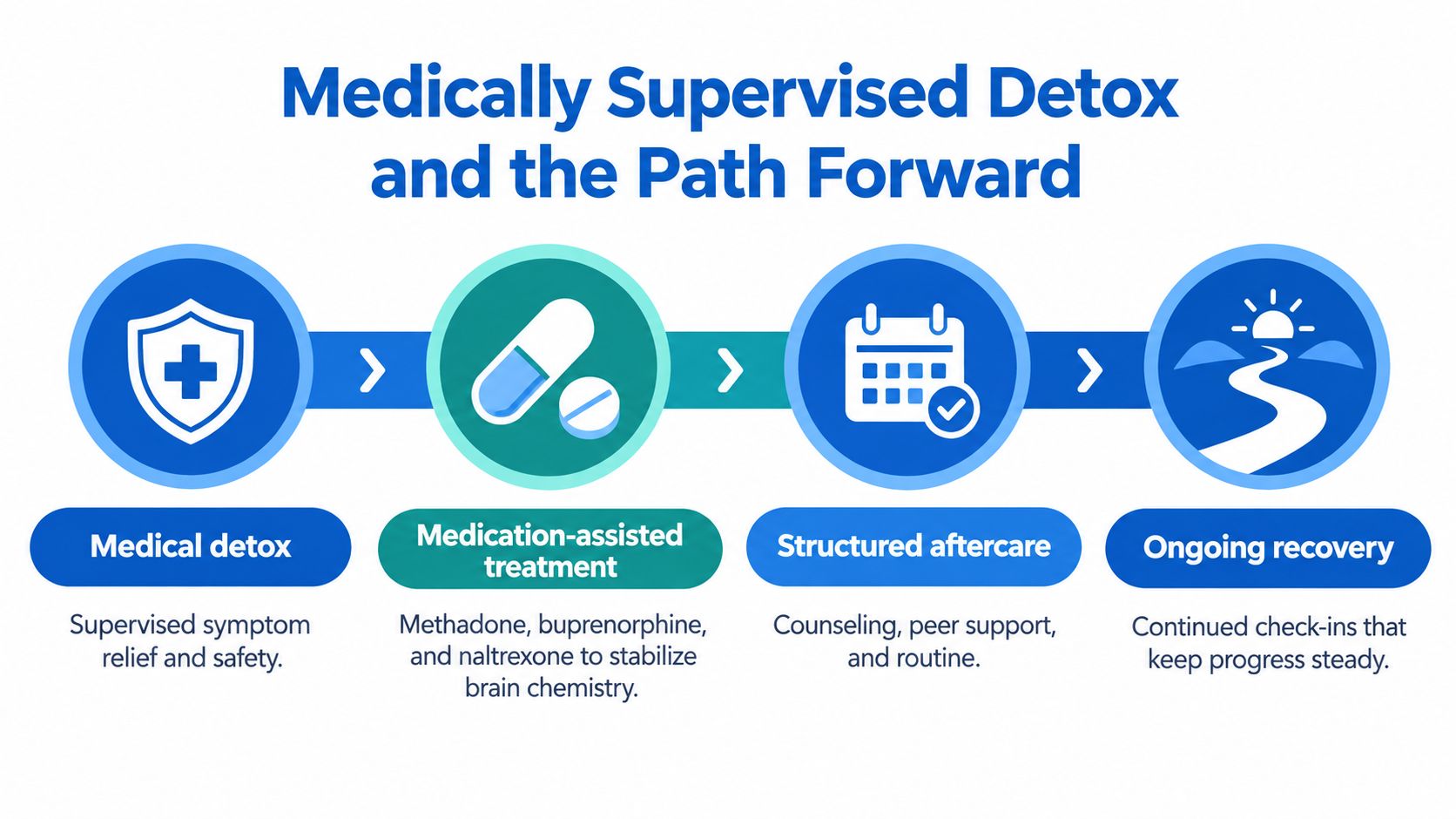
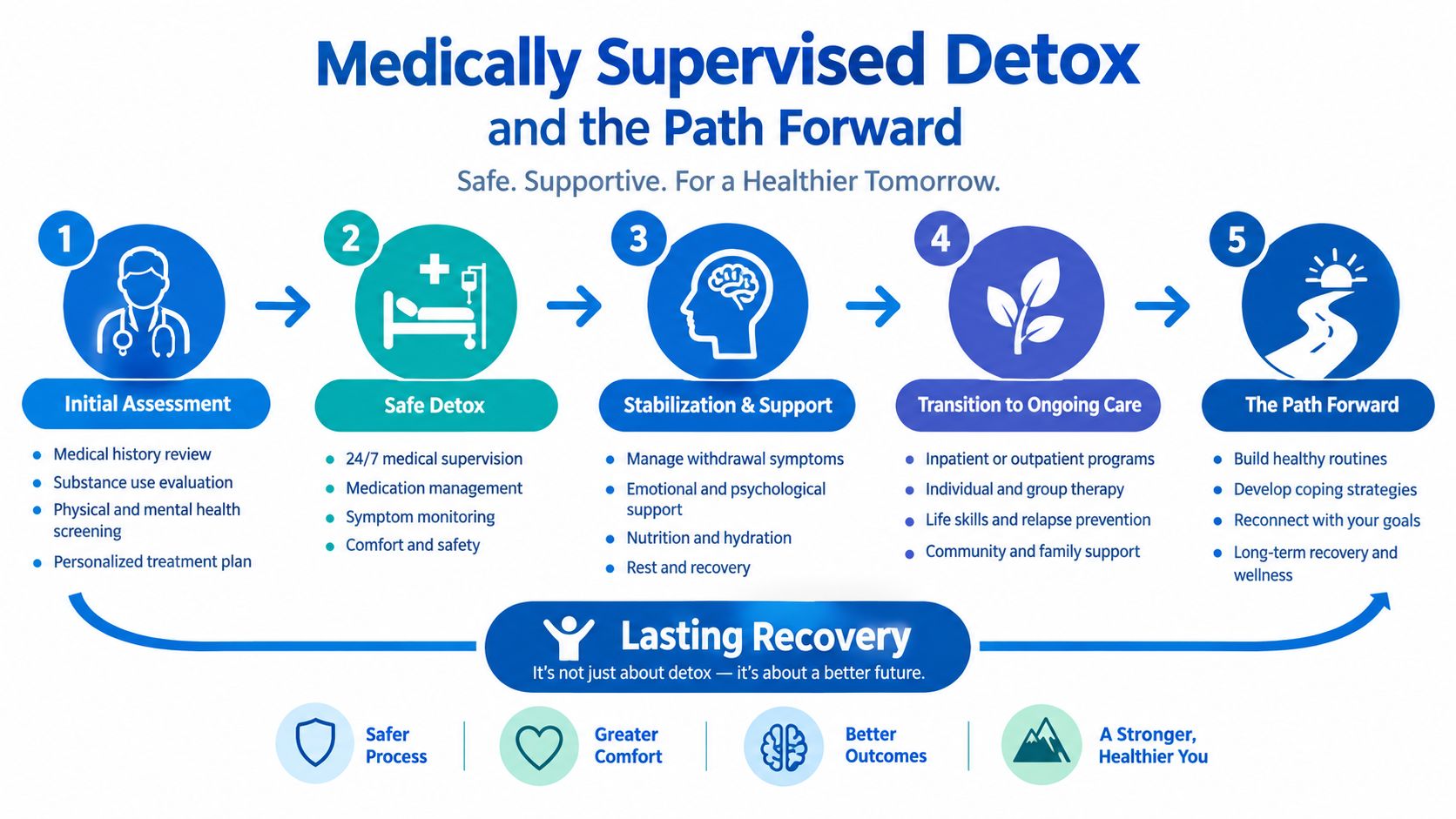
Detox is only the first part of care. A safer plan connects medical assessment, symptom relief, medication for opioid use disorder, and continuing support so that the end of acute withdrawal doesn't become the end of treatment.
At intake, a treatment team typically reviews the opioid involved, last use, withdrawal signs, vital signs, medical history, mental health, other substances, medications, pregnancy status when relevant, housing, and available support. The team then decides whether inpatient care, intensive outpatient treatment, or office-based care offers enough monitoring for the person's risk.
Matching care to the situation
Inpatient detox provides continuous observation and rapid response when withdrawal is severe, the drug supply is unpredictable, other substances are involved, medical conditions are significant, or the person can't remain safe at home.
Intensive outpatient care offers frequent clinical contact while the person lives outside the facility. It may suit someone with a stable environment and manageable medical risk, provided the person can attend appointments and follow the medication plan.
Office-based treatment can provide medication, counseling, monitoring, and follow-up for people whose symptoms and circumstances allow a less intensive setting. The decision should come from an assessment, not from a desire to avoid a particular level of care.
Medication options can include methadone, buprenorphine, and naltrexone, although they serve different clinical purposes and aren't interchangeable on a simple schedule. Buprenorphine and methadone can reduce withdrawal and cravings by stabilizing opioid-receptor activity. Naltrexone blocks opioid effects and requires a suitable opioid-free interval determined by a clinician.
Some people worry that medication-assisted treatment merely substitutes one drug for another. That comparison misses the purpose of treatment. Under medical supervision, these medications reduce uncontrolled cravings, lower the chance of returning to unsafe opioid use, and give patients room to address pain, trauma, depression, housing, and other drivers of substance use. The medication-assisted treatment clinic guide explains how this type of care can fit into a broader recovery plan.
A practical next step
If withdrawal is beginning now, contact a local treatment program, your prescriber, or an emergency department rather than trying to predict the entire course alone. In the United States, SAMHSA's helpline can help identify treatment options, and people in Yuba City can request a direct assessment from a local provider.
Addiction Resource Center LLC offers medically supervised detox with medication-assisted treatment, residential rehabilitation through its partner facility, Ona Treatment Center, and an Intensive Outpatient Program available in person or through telehealth. Its multidisciplinary team provides wellness monitoring, counseling, recovery mentoring, relapse-prevention education, and individualized aftercare planning for adults, including people using private insurance or TRICARE.
Withdrawal is a medical event, not a willpower test. Beginning care during the most vulnerable period can turn an unpredictable, frightening experience into a monitored treatment plan with a clear next step.
If opioid withdrawal symptoms are starting or you're worried about a loved one, Addiction Resource Center LLC can provide guidance about medically supervised detox, medication-assisted treatment, residential care, and in-person or telehealth IOP in Yuba City. Contact the center's 24/7 phone or text line at 530-625-7910 to discuss an assessment and the safest available level of care.