Short-acting opiates such as heroin and oxycodone usually begin withdrawal within 6 to 12 hours, peak around 36 to 72 hours, and taper over 4 to 7 days. Long-acting opiates such as methadone may not begin causing symptoms for 1 to 3 days, and withdrawal can last 10 to 20 days. You may be reading …


Short-acting opiates such as heroin and oxycodone usually begin withdrawal within 6 to 12 hours, peak around 36 to 72 hours, and taper over 4 to 7 days. Long-acting opiates such as methadone may not begin causing symptoms for 1 to 3 days, and withdrawal can last 10 to 20 days.
You may be reading this after missing a dose, waking up sweaty and restless, or trying to decide whether you can manage the next few days at home. The most useful answer isn't one fixed number. Withdrawal arrives in overlapping waves, and different symptoms end at different times. Physical discomfort may ease while insomnia, low mood, or cravings continue.
The timeline below describes common patterns, not a personal diagnosis. Your medication, dose, duration of use, other substances, health conditions, and treatment plan can all change the experience. If you're pregnant, use alcohol or benzodiazepines, have serious medical conditions, or feel unsafe, contact a medical professional rather than attempting withdrawal alone.
Table of Contents
- What the Opiate Withdrawal Time Frame Looks Like
- The Four Stages of Acute Opiate Withdrawal
- How the Opiate Withdrawal Time Frame Changes by Substance
- Why Two People With the Same Use Can Withdraw on Different Timelines
- Protracted Withdrawal and the Symptoms That Outlast Acute Detox
- Managing Symptoms at Each Stage of the Timeline
- When Withdrawal Needs Professional Medical Supervision
- Planning Your Next Step Beyond the Withdrawal Window
What the Opiate Withdrawal Time Frame Looks Like
You may be counting the hours since your last dose, wondering whether the sweating, restlessness, or cravings will worsen before they improve. The clearest answer comes from tracking which symptoms end when, because withdrawal arrives in overlapping waves rather than as one rise and fall. Each wave has its own cluster, and the schedule differs between short-acting and long-acting opioids.
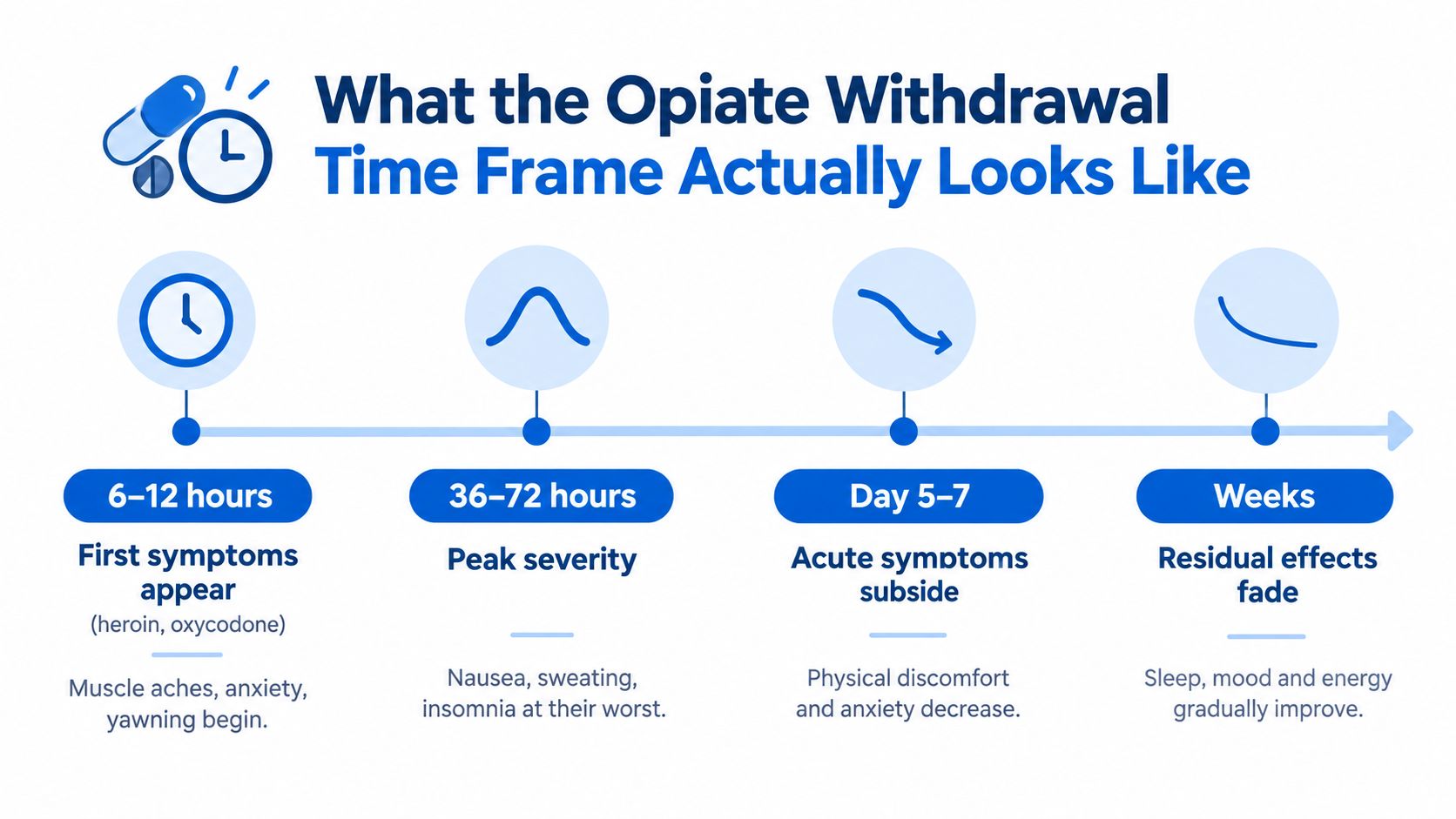
For short-acting opioids such as heroin and oxycodone, early symptoms commonly begin 6 to 12 hours after the last dose. As the drug level drops, the nervous system becomes overactive after adapting to regular opioid stimulation. Yawning, anxiety, watery eyes, a runny nose, muscle discomfort, sweating, and an urgent desire to use again may appear first.
Symptoms often become most intense around 36 to 72 hours. Nausea, vomiting, diarrhea, abdominal cramping, chills, goosebumps, restlessness, insomnia, and severe emotional distress can join the earlier symptoms. The acute physical phase usually tapers during the next 4 to 7 days. Sleep, mood, energy, and cravings may settle more slowly. This clinical review of opioid withdrawal outlines the typical pattern after abrupt cessation of short-acting opioids.
Think in symptom clusters, not one finish line
The first wave often centers on alertness and autonomic symptoms, such as sweating, watery eyes, and restlessness. The peak wave adds gastrointestinal distress, chills, and stronger body aches. Later, physical discomfort may ease while insomnia, low energy, irritability, low mood, or cravings remain.
Practical rule: A shorter acute timeline means the most intense physical symptoms are passing. It does not mean sleep, mood, or cravings have fully recovered.
Long-acting opioids shift the schedule because the medication remains in the body longer. World Health Organization clinical guidance describes methadone withdrawal beginning 12 to 48 hours after the last use and lasting 10 to 20 days. Other guidance places onset at 1 to 3 days, so clinicians plan around the specific opioid and the individual rather than promise one exact day of relief.
For a visual comparison of common detox windows, see this drug detox timeline guide. The first 24 to 96 hours call for attention to hydration, monitoring, symptom control, and relapse prevention, while lingering sleep and mood symptoms need a separate plan.
The Four Stages of Acute Opiate Withdrawal
Withdrawal can feel unpredictable, but symptoms often follow a recognizable sequence. The stages overlap, and their intensity differs from person to person. The most useful question is not “When will withdrawal end?” It is, “Which symptoms are likely to ease next?”
Anticipatory withdrawal
Around 3 to 6 hours after the expected dose, anxiety, yawning, watery eyes, restlessness, and thoughts about obtaining or using opioids may appear. The body may not feel seriously ill yet. The brain is noticing that the usual opioid effect is fading, like a thermostat trying to adjust after the heat suddenly stops.
This stage can create a strong urge to take “just enough” to prevent worse symptoms. Tell someone you trust, remove immediate access to substances if you can do so safely, and seek professional advice before the next symptoms build.
Early acute withdrawal
Between 6 and 24 hours, physical symptoms usually become easier to identify. Sweating, a runny nose, muscle aches, chills, goosebumps, agitation, and disrupted sleep may develop as the nervous system compensates for the missing opioid effect.
The experience may resemble the flu, yet emotional distress can be equally difficult. Anxiety, irritability, and cravings can interfere with simple tasks and make it harder to follow a plan without support.
Peak withdrawal
The most intense period commonly falls between 24 and 72 hours. Nausea, vomiting, diarrhea, abdominal cramping, dilated pupils, heavier sweating, a faster heart rate and higher blood pressure, and severe restlessness may join the earlier symptoms. Dysphoria, a painful low or unsettled mood, may also reach its strongest point.
The table links each stage to the symptom group that usually dominates:
| Stage | Onset Window | Physical Symptoms | Emotional Symptoms |
|---|---|---|---|
| Anticipatory | 3 to 6 hours | Yawning, watery eyes, early restlessness | Anxiety, drug-seeking urges |
| Early acute | 6 to 24 hours | Sweating, runny nose, aches, chills, poor sleep | Irritability, rising distress |
| Peak | 24 to 72 hours | Nausea, vomiting, diarrhea, cramps, goosebumps, dilated pupils | Dysphoria, agitation, intense cravings |
| Resolving | Days 4 to 10 | Physical symptoms gradually ease, energy remains low | Insomnia, low mood, lingering cravings |
Resolving withdrawal
From about day 4 through day 10, stomach symptoms, sweating, and other physical discomfort often begin to recede. Improvement can come in uneven steps rather than a straight line. As the body settles, insomnia, low mood, irritability, fatigue, and cravings may remain the symptoms that need the most attention.
A shorter acute phase means the strongest physical symptoms are easing. It does not mean sleep, mood, energy, or cravings have fully returned to normal. This symptom-by-symptom view gives a clearer recovery map than one final day on the calendar.
How the Opiate Withdrawal Time Frame Changes by Substance
A person stopping heroin may wake with yawning, sweating, and a strong urge to use, while someone stopping methadone may still feel little change at the same point. The difference comes mainly from how long each opioid stays active. Short-acting drugs leave the body faster, so withdrawal tends to start sooner. Long-acting drugs decline more slowly, which can delay symptoms and spread them across a longer period.
For heroin, oxycodone, hydrocodone, and immediate-release morphine, the usual short-acting pattern is 6 to 12 hours to onset, 36 to 72 hours to peak, followed by 4 to 7 days of tapering. The physical symptoms usually become the first cluster to ease, while sleep, mood, energy, and cravings can take longer. These windows describe common patterns, not a fixed schedule for every person.
Methadone follows a slower curve because its long half-life keeps the drug in the body longer. As covered in the timeline above, withdrawal may begin later and resolve more gradually. The guide to methadone withdrawal explains why its delayed timetable can feel different from withdrawal from short-acting opioids.
| Substance | Onset | Peak | Total Duration |
|---|---|---|---|
| Heroin | 6 to 12 hours | 36 to 72 hours | Tapers over 4 to 7 days |
| Oxycodone | 6 to 12 hours | 36 to 72 hours | Tapers over 4 to 7 days |
| Methadone | Later than short-acting opioids | Later than short-acting opioids | May resolve gradually over a longer period |
Why half-life changes the plan
Half-life means the time the body needs to reduce a drug's concentration. A longer half-life works like a slow-draining bathtub: the level falls gradually, so withdrawal may start later and fade less abruptly. That timing changes which symptom cluster appears first and when a clinician checks whether withdrawal has begun.
It also affects medication decisions. Treatments such as buprenorphine may cause sudden, severe withdrawal if started before enough opioid has left the body. Do not change medication timing without medical guidance. The calendar matters, but the safer guide is the symptom pattern and an assessment by a qualified clinician.
Why Two People With the Same Use Can Withdraw on Different Timelines
Two people can report similar opioid use and still experience different onset, peak, and recovery patterns. The reason is that withdrawal reflects both the drug and the body's adaptation to it. Individual reports show meaningful variation in the length of typical and most recent complete withdrawal experiences, as summarized in this clinical overview of opioid withdrawal.
The main modifiers
- Duration of habitual use: Longer exposure can produce deeper physiological adaptation, which may make symptoms feel more persistent or make the later sleep and mood phase more noticeable.
- Dose and potency: A higher regular dose can create a larger change when opioid stimulation stops. Illicit products may also vary in strength, making the apparent dose difficult to judge.
- Route of administration: Injection can create a faster rise and fall than oral use, while snorted and oral use may produce a different pattern of dependence and withdrawal. Route alone doesn't predict the entire timeline.
- Polysubstance use: Alcohol, benzodiazepines, and stimulants can change the symptom picture and introduce separate withdrawal risks. Combining substances also makes sleep, heart rate, anxiety, and hydration harder to interpret.
- Health and metabolism: Liver and kidney function, age, chronic pain, pregnancy, and co-occurring anxiety or depression may affect how symptoms appear and how well someone copes with them.
A person may therefore have physical symptoms that ease relatively quickly but experience depression, insomnia, or cravings for much longer. Another person may have a slower onset because of a long-acting formulation, then develop a drawn-out but less sharply defined decline.
The better question isn't only “How long will withdrawal last?” Ask, “Which symptoms are likely to end first, and which need continuing support?”
That shift helps you plan realistically. Fluids and nausea support address the early physical phase, while counseling, sleep support, and medication-assisted treatment can address the symptoms that don't follow the same clock.
Protracted Withdrawal and the Symptoms That Outlast Acute Detox
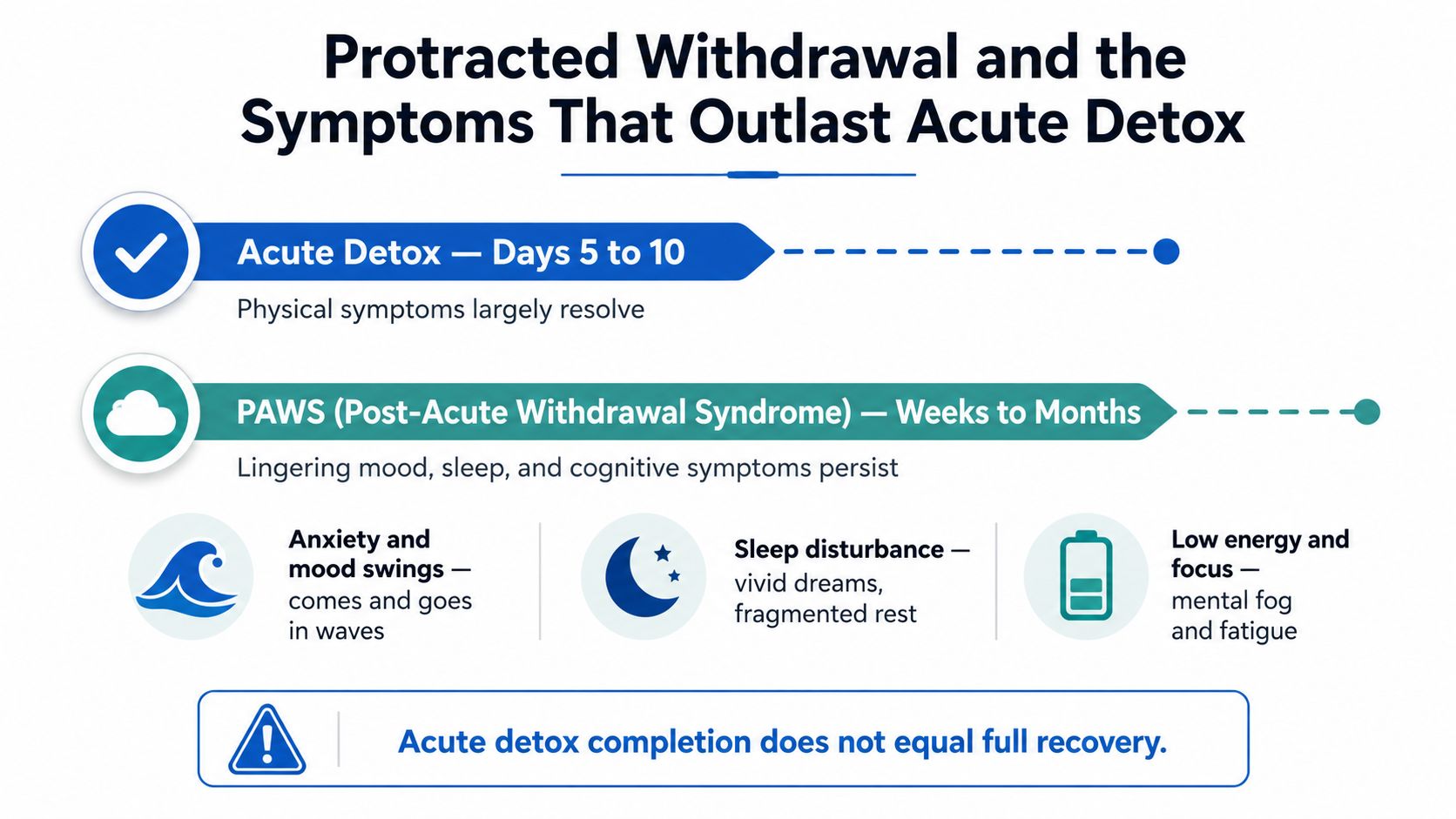
The last day of acute detox is not always the day you feel recovered. Protracted withdrawal, also called post-acute withdrawal syndrome or PAWS, refers to symptoms that remain after the strongest physical effects have eased. The timeline becomes less about one final day and more about which symptom cluster settles next.
Repeated opioid exposure leaves the brain and nervous system adjusting their control of reward, stress, sleep, and emotional balance. Recovery can feel uneven, like a dimmer switch rather than a light turning on. You may sleep better while motivation remains low, or feel calmer while concentration is still poor.
Match the lingering symptom to the right kind of support
- Mood symptoms: Dysphoria, anxiety, irritability, and reduced pleasure may make familiar activities feel empty.
- Sleep symptoms: Trouble falling asleep, broken sleep, and vivid dreams can continue after stomach symptoms improve.
- Cognitive symptoms: Poor focus and memory fog may make work, appointments, and decisions harder.
- Physical symptoms: Low energy, reduced appetite, and lingering aches can keep the body from feeling fully settled.
The pattern often rises and falls. A difficult night does not automatically mean withdrawal has restarted, while a good day does not mean every symptom has ended. Record sleep, mood, cravings, food, fluids, and medication so you and your clinician can see which problems are improving and which need attention.
Sleep disruption, mood changes, and irritability may follow different recovery paths, sometimes lasting well beyond the acute phase. CMS clinical guidance describes the need to account for withdrawal symptoms that can continue during opioid changes and recovery (CMS clinical guidance). Severe low mood, thoughts of self-harm, or cravings that feel unmanageable call for prompt professional support.
Managing Symptoms at Each Stage of the Timeline
The safest plan combines comfort measures with clinical oversight. Home measures can reduce strain, but they don't replace an assessment when symptoms are severe, another substance is involved, or you have a medical condition that could complicate withdrawal.
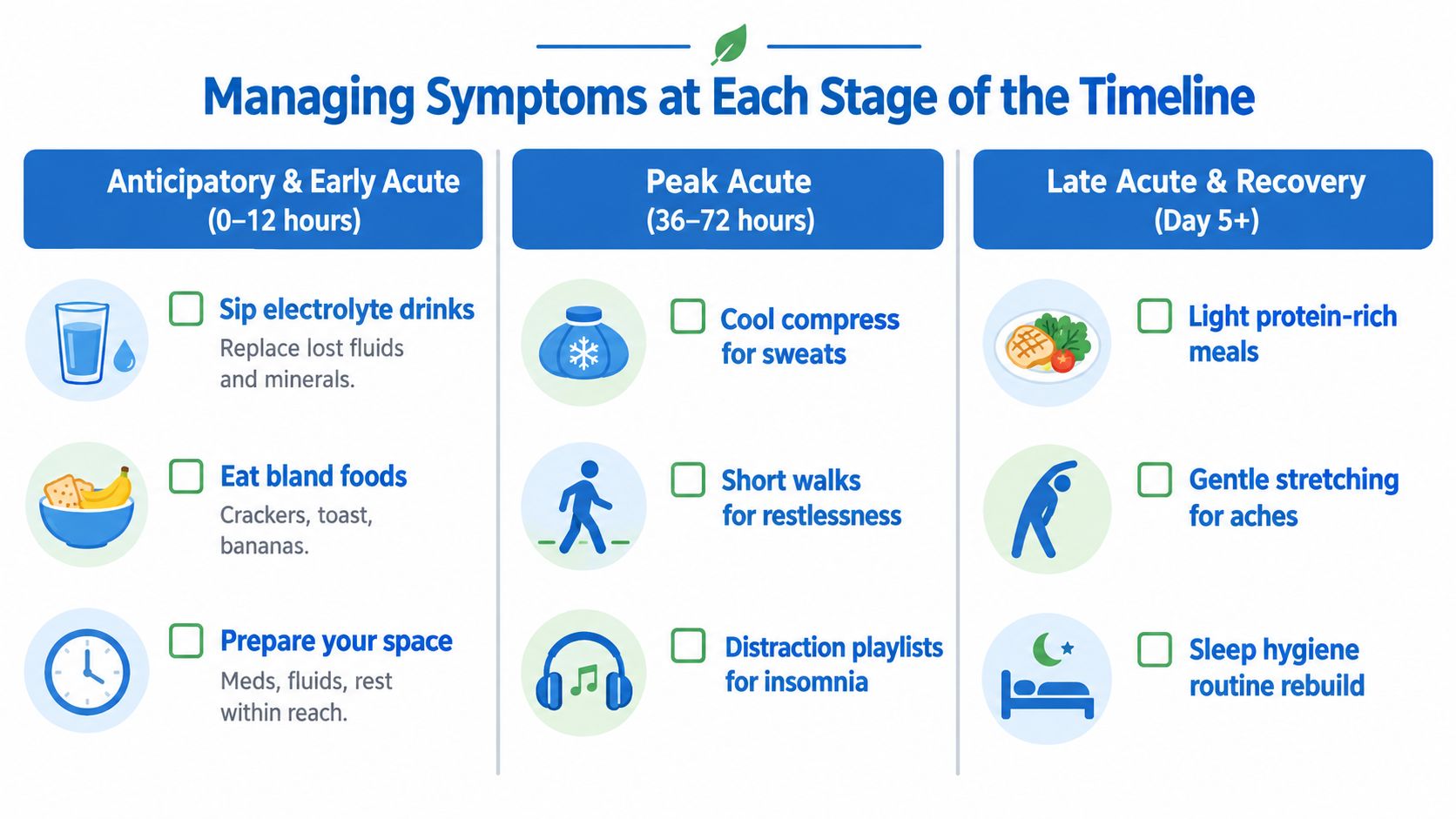
Anticipatory and early acute symptoms
Sip water or an electrolyte solution regularly, especially if sweating, vomiting, or diarrhea begins. Small portions of bland food, such as crackers, toast, or bananas, may be easier to tolerate than a full meal. Keep a calm, cool space ready with clean clothing, fluids, tissues, prescribed medicines, and a way to contact help.
Over-the-counter medicines may help some people with aches, nausea, or diarrhea, but check with a clinician or pharmacist first. Health conditions, pregnancy, medication interactions, and dehydration can change what's safe.
Peak symptoms
During the peak, symptom-targeted prescription medicines may include clonidine for autonomic symptoms, ondansetron or prochlorperazine for nausea, and other treatments selected by a clinician. Loperamide may be considered for diarrhea only as directed, because taking excessive amounts can be dangerous. Warm baths, cool compresses, short walks, and breathing exercises can provide brief relief when movement is tolerable.
Resolving symptoms and family support
As physical symptoms ease, rebuild a predictable sleep routine. Dim the room, reduce stimulating screens before bed, keep wake time consistent, and use gentle stretching rather than demanding exercise. If prescribed, buprenorphine or methadone can reduce withdrawal and cravings as part of medication-assisted treatment.
Family members should monitor fluids, alertness, breathing, vomiting, diarrhea, mood, and access to substances. Avoid arguing, shaming, or demanding promises during the peak. Use simple language, offer practical help, and call a clinician if the person's condition changes.
When Withdrawal Needs Professional Medical Supervision
Opioid withdrawal is often medically manageable, but attempting it alone isn't appropriate for everyone. The decision should account not only for opioid symptoms, but also for other substances, mental health, pregnancy, and the person's ability to stay hydrated and safe.
Seek medical supervision if any of the following applies:
- Alcohol or benzodiazepine use: Withdrawal from these substances can create risks that opioid withdrawal alone doesn't explain.
- Self-harm thoughts: Severe depression, hopelessness, or suicidal thinking requires immediate support.
- Pregnancy: Withdrawal and medication decisions should be coordinated with an obstetric and addiction-care team.
- Complicated history: Previous seizures, severe dehydration, electrolyte problems, or difficult withdrawal episodes raise concern.
- Unstable illness: Cardiac, pulmonary, liver, or kidney disease can make symptoms harder to manage safely.
- Uncertain exposure: An unknown product or changing potency makes the expected timeline less reliable.
A supervised setting can check vital signs, assess symptoms repeatedly with tools such as COWS, provide clinician-selected medicines, and respond quickly if dehydration, aspiration, or heart rhythm problems develop. It can also start buprenorphine or methadone when clinically appropriate and connect detox with continuing care. This overview of medically supervised detox explains why withdrawal management works best as part of a broader plan.
| Setting | Monitoring Level | Medications Available | Best Candidate |
|---|---|---|---|
| Home detox | Support from family or friends, limited clinical observation | Only medicines approved by a clinician for that person | Stable person with professional guidance and a safe support network |
| Residential treatment | Regular or continuous staff support, structured setting | Clinician-directed withdrawal and MAT options | Person needing structure, accountability, or mental health support |
| Inpatient hospital or licensed detox unit | Continuous medical monitoring and rapid response | Full medical assessment, fluids, and prescribed withdrawal medicines | High-acuity symptoms, pregnancy, serious illness, or polysubstance risk |
Supervision isn't the finish line. It creates a safer bridge to counseling, medication maintenance, residential care, or outpatient treatment.
Planning Your Next Step Beyond the Withdrawal Window
The next decision should reflect three timelines at once: the acute physical phase, the possible protracted mood and sleep phase, and your personal risk factors. A person using a short-acting opioid may need a different level of support from someone withdrawing from methadone, even if both expect the first symptoms to pass.
Choose the care door that matches your needs
Residential treatment offers a structured environment with daily therapy, medical support, and distance from triggers. It may suit someone with unstable housing, repeated relapse, severe co-occurring depression, or limited support at home.
An intensive outpatient program can provide scheduled counseling and recovery structure while allowing work, school, or family responsibilities to continue. In-person and telehealth formats may make attendance more practical, but the person still needs a stable and substance-free environment between sessions.
Outpatient MAT maintenance combines clinician-managed buprenorphine or methadone with counseling and recovery support. It can fit someone who is medically stable, has reliable follow-up, and can use practical safeguards around medication and relapse risk.
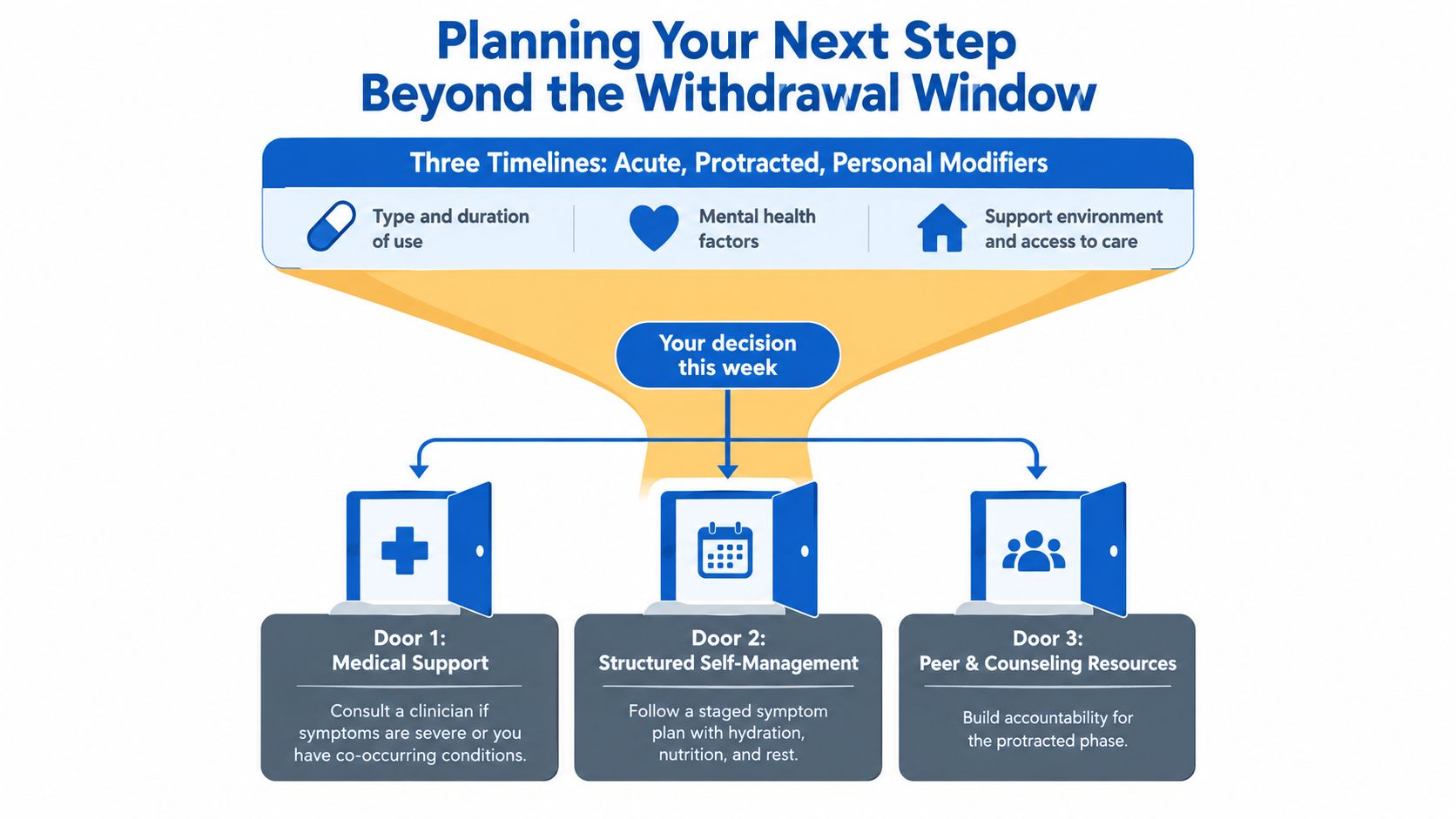
Turn the framework into an action plan
Start by writing down the opioid, formulation, last dose, usual pattern of use, other substances, medical conditions, mental health symptoms, and available support. Then ask a licensed provider for a withdrawal assessment, including whether a COWS-based evaluation is appropriate and which setting can monitor you safely.
A practical next step may be calling a licensed provider, touring a detox program, asking about medication-assisted treatment, or checking insurance coverage. Addiction Resource Center LLC offers medically supervised detox with MAT, residential rehabilitation through its partner facility, and an in-person and telehealth IOP for adults, with individualized support for substance use and co-occurring mental health needs.
The withdrawal window is a narrow opening, not the destination. Use it to connect with care that addresses cravings, sleep, mood, triggers, and relapse prevention after the acute symptoms fade.
If you're concerned about opioid withdrawal, Addiction Resource Center LLC can help you discuss medically supervised detox, MAT, residential care, or IOP options that fit your situation. Visit Addiction Resource Center LLC to request guidance, schedule a tour, or take the next step with a licensed treatment team.