
Skip to content

In crisis? Call or text 988 (Veterans press 1). Emergency: 911.

Methamphetamine treatment: a safer next step, with support

Changes in sleep, mood or daily responsibilities can make it hard to know where to begin. If methamphetamine use is causing concern, you can ask for help without having every answer. ARC offers adult outpatient care and can discuss whether another level of support is needed first.

Prefer to talk it through? Call 530-625-7910

Not a crisis service. In crisis? Call or text 988 (Veterans press 1). Emergency: 911.

FREE, CONFIDENTIAL ASSESSMENT

  1. Step 1 of 3, current
  2. Step 2 of 3, not started
  3. Step 3 of 3, not started

Let's see how we can help

Three quick questions. No contact details yet.

Who is this for? required
Is the person 18 or older? required

Published October 7, 2026

Reviewed by Tiffany Komba, LMFT (State of California LMFT #136055) on November 14, 2026
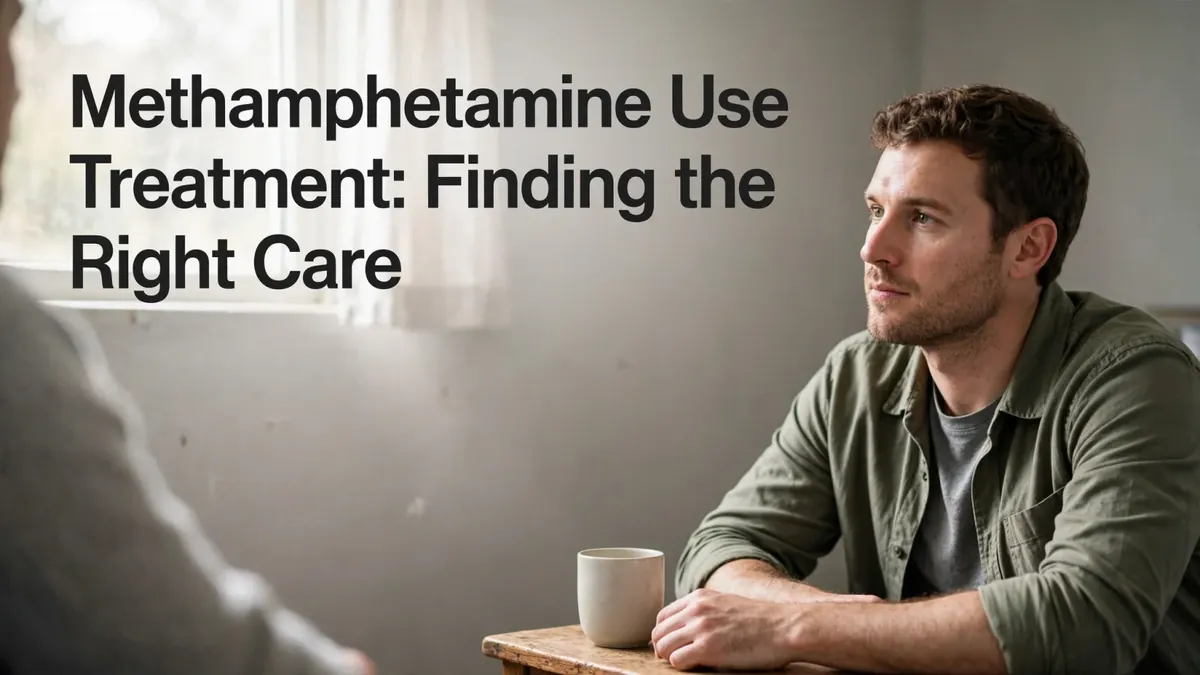
Methamphetamine Use Treatment: Finding the Right Care

Safety comes before routine intake

Chest pain, seizures, a very high temperature, severe agitation or an immediate risk of harm need urgent medical assessment. Call 911 for a medical emergency. In a mental-health crisis, call or text 988. Do not wait for an assessment request to be answered.
An adult speaking privately with an addiction clinician in a calm outpatient office, capturing assessment as a collaborative conversation.

Look at the impact, not a stereotype

Repeated difficulty reducing use, cravings, disrupted sleep or responsibilities, and relationship problems are reasons to seek professional evaluation. These experiences do not define your worth, and a website checklist cannot diagnose you.
A counselor and client side by side reviewing an individualized recovery plan, illustrating supportive behavioral care rather than a one-size-fits-all program.

What a clinical assessment considers

A clinician may ask about recent substance use, other substances or medicines, sleep, physical and mental health, previous treatment and your situation at home. The aim is to understand safety and support needs. The hero form starts an admissions conversation; it does not complete that clinical assessment online.
A client and care coordinator discussing a possible transition from residential treatment to outpatient IOP, with a calendar suggesting planned follow-up.

What the evidence says about treatment

The ASAM/AAAP stimulant guideline identifies contingency management as the current standard of care and describes other behavioral approaches that can support treatment. Medication decisions may also have a role for selected people under appropriate clinical care. These are general treatment options, not a statement that every approach is offered at ARC. Ask which services are available for your needs.

Outpatient care or a more structured setting?

IOP offers scheduled treatment while you live at home. PHP provides greater daily structure. Neither replaces urgent care or overnight monitoring. If detox or residential care is needed, ARC coordinates with Ona Treatment Center, a separately licensed partner.

Learn more; Learn more; Learn more

Recovery skills and practical barriers

ARC's group and individual sessions can focus on patterns linked to use, coping with stress and cravings, and routines that support daily life. Discuss sleep, anxiety, transportation, work and home concerns rather than assuming they need to be solved before you can reach out. In-person IOP is available in Yuba City; telehealth requires a private place in California.

If you are asking for someone you care about

Describe specific changes you have noticed and offer help with a first conversation if the person wants it. You do not need to diagnose them or pressure them to share publicly. Ask ARC about the boundaries of family participation and information sharing.

Questions about insurance should not keep you guessing

Network participation and coverage vary by plan. We verify your benefits before you start. Ask about coverage for the specific program, referral or prior authorization requirements, telehealth benefits if relevant, and any deductible, copayment or coinsurance.

A benefits check helps clarify your options; it is not a guarantee of payment. Treatment at ARC and services at Ona Treatment Center must be checked separately.

Insurance and payment

Verify your benefits

What happens after you reach out

You do not need to choose a program before asking for help. Select “Not sure yet” if you would like to discuss your options.

  1. Request contact. Complete the Free, Confidential Assessment in the hero for yourself or someone you care about. Insurance information is optional.

  2. Talk about the next step. An ARC admissions team member can discuss your concerns, practical needs and questions about care. A clinical assessment is needed to determine an appropriate treatment recommendation.

  3. Clarify fit and coverage. Before treatment begins, confirm the recommended program, current schedule, availability and any insurance requirements or costs. If you need care ARC does not provide, discuss a more appropriate starting point.

This website form requests contact; it does not provide a diagnosis, guarantee admission or commit you to treatment. It is not an emergency service.

Request my free assessment

Questions you may be asking

A next step you can take without having every answer

Whether you are ready to start or still deciding, you can ask for a conversation about care. Use the Free, Confidential Assessment in the hero to request contact from ARC's admissions team. You can select “Not sure yet,” and insurance information is optional.
Request my free assessment

Prefer to talk? Call 530-625-7910

Crisis support

ARC's routine phone number and assessment form are not crisis services. In a crisis, call or text 988; veterans can call 988 and press 1. For a medical emergency or immediate danger, call 911.