Skip to content

In crisis? Call or text 988 (Veterans press 1). Emergency: 911.

Cocaine and other stimulant treatment: help for the pattern you are facing

If stimulant use is affecting your sleep, mood, relationships or responsibilities, a conversation can help you understand the options. ARC provides adult outpatient care and can discuss a safe starting point without assuming that one program fits everyone.

Prefer to talk it through? Call 530-625-7910

Not a crisis service. In crisis? Call or text 988 (Veterans press 1). Emergency: 911.

FREE, CONFIDENTIAL ASSESSMENT

  1. Step 1 of 3, current
  2. Step 2 of 3, not started
  3. Step 3 of 3, not started

Let's see how we can help

Three quick questions. No contact details yet.

Who is this for? required
Is the person 18 or older? required

Published June 7, 2026 · Updated June 9, 2026

The original article was marked as reviewed by clinical staff. This revised copy does not claim a new clinical review.
Stimulant Addiction Treatment: Your 2026 Recovery Guide

Address immediate risks first

Stimulant intoxication can cause serious medical and psychiatric complications. Chest pain, seizures, overheating, severe agitation or immediate danger need urgent care. Call 911 for an emergency; call or text 988 for crisis support. ARC's assessment form is not a crisis service.
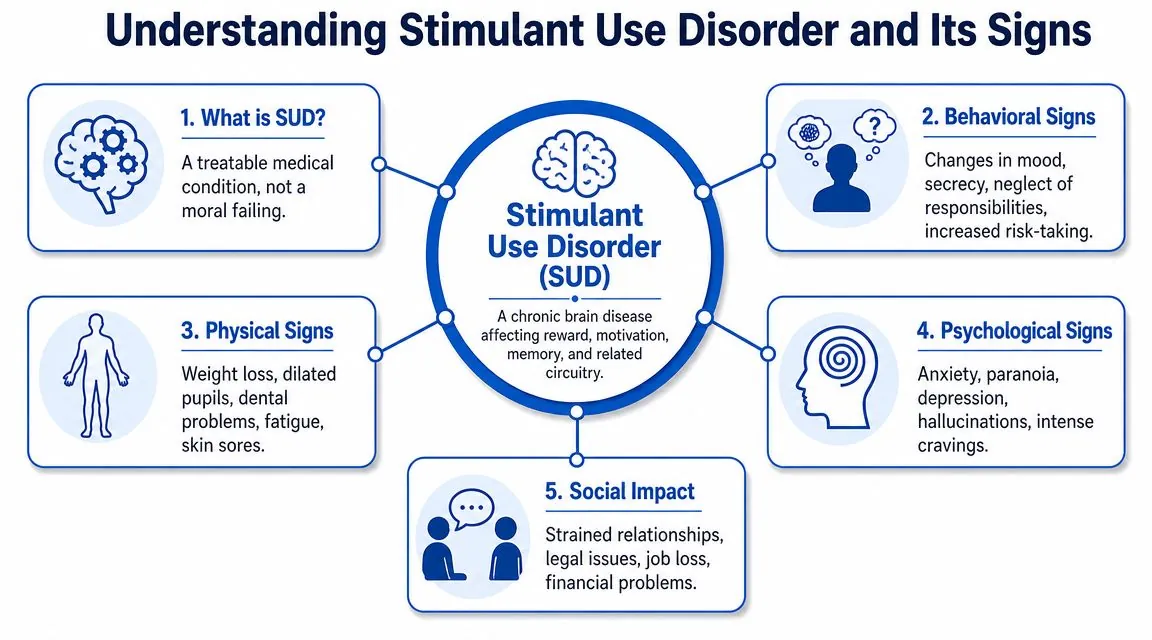
An infographic titled Understanding Stimulant Use Disorder outlining its definition, behavioral, physical, and psychological signs and social impacts.

When use deserves a closer look

Using more than intended, repeated attempts to cut down, cravings and continued use despite problems are reasons to seek evaluation. Cocaine, methamphetamine and misuse of prescription stimulants can present different concerns. Taking a prescribed medicine as directed is not automatically a substance use disorder; discuss concerns with the prescriber rather than changing medication on your own.
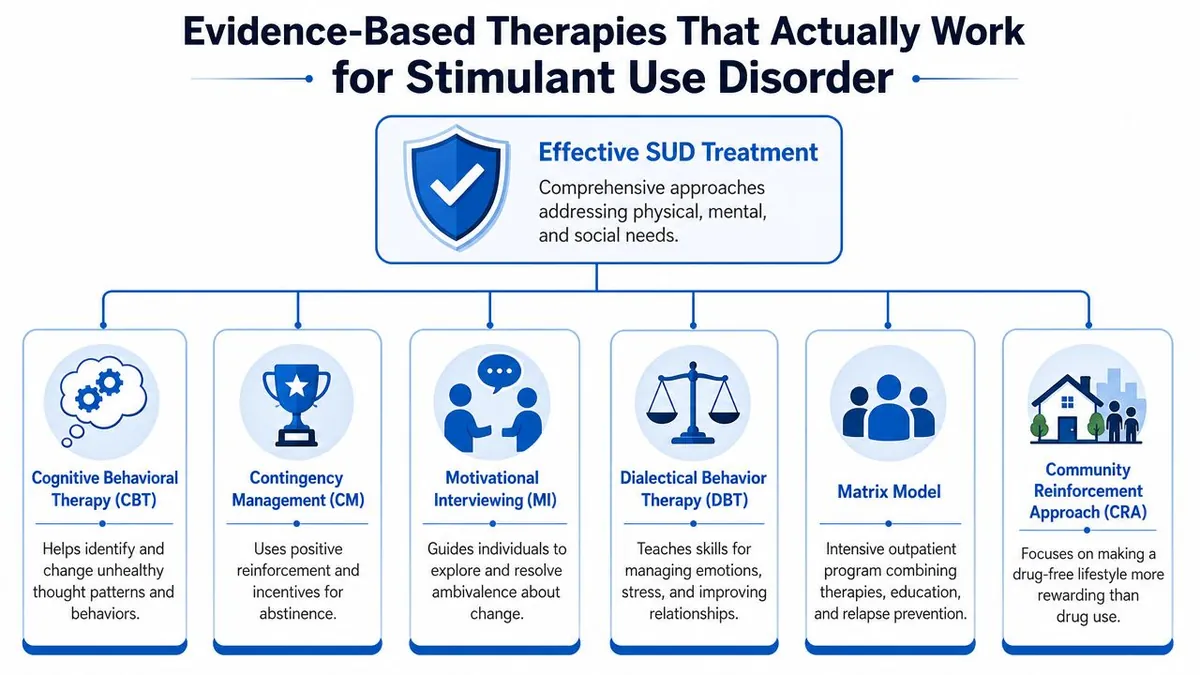
A diagram outlining six evidence-based therapies for stimulant use disorder treatment, including CBT, CM, MI, DBT, Matrix Model, and CRA.

Treatment is more than advice to stop

The ASAM/AAAP guideline identifies contingency management as the current standard of care for stimulant use disorder. Other behavioral treatments and selected off-label medications may be considered in appropriate clinical circumstances. A recommendation in a guideline is not proof that ARC offers every intervention. Ask about current services and referrals.
A person reaching out toward an open door leading to a bright, hopeful landscape with watercolor artistic effects.

Decide the setting before the schedule

Clinical assessment considers recent use, physical and mental health, safety, support at home and previous treatment. IOP can offer regular sessions while you live at home; PHP offers more structure. Some people need urgent or residential support first. ARC coordinates partner detox/residential care with Ona Treatment Center rather than providing it directly.

Practical outpatient support at ARC

Scheduled group and individual sessions can help you work on triggers, stress, cravings and daily routines. IOP is available in Yuba City or by live telehealth; evening IOP is by telehealth. Ask about current attendance expectations and whether the format fits your needs.

Learn more; Learn more; Learn more; Learn more; Learn more

Support from people you trust

If you are a loved one, describe specific concerns without labels or threats. Offer practical support for a first conversation when welcome. A person's clinical plan and information sharing need appropriate consent and professional guidance.

Questions about insurance should not keep you guessing

Network participation and coverage vary by plan. We verify your benefits before you start. Ask about coverage for the specific program, referral or prior authorization requirements, telehealth benefits if relevant, and any deductible, copayment or coinsurance.

A benefits check helps clarify your options; it is not a guarantee of payment. Treatment at ARC and services at Ona Treatment Center must be checked separately.

Insurance and payment

Verify your benefits

What happens after you reach out

You do not need to choose a program before asking for help. Select “Not sure yet” if you would like to discuss your options.

  1. Request contact. Complete the Free, Confidential Assessment in the hero for yourself or someone you care about. Insurance information is optional.

  2. Talk about the next step. An ARC admissions team member can discuss your concerns, practical needs and questions about care. A clinical assessment is needed to determine an appropriate treatment recommendation.

  3. Clarify fit and coverage. Before treatment begins, confirm the recommended program, current schedule, availability and any insurance requirements or costs. If you need care ARC does not provide, discuss a more appropriate starting point.

This website form requests contact; it does not provide a diagnosis, guarantee admission or commit you to treatment. It is not an emergency service.

Request my free assessment

Questions you may be asking

Sources

Alcohol/Drug Addiction, Treatment & Recovery | David Streem, MD · Watch on YouTube

A next step you can take without having every answer

Whether you are ready to start or still deciding, you can ask for a conversation about care. Use the Free, Confidential Assessment in the hero to request contact from ARC's admissions team. You can select “Not sure yet,” and insurance information is optional.
Request my free assessment

Prefer to talk? Call 530-625-7910

Crisis support

ARC's routine phone number and assessment form are not crisis services. In a crisis, call or text 988; veterans can call 988 and press 1. For a medical emergency or immediate danger, call 911.