You may be noticing small changes in someone you love. They're still going to work, answering messages, and handling ordinary responsibilities, yet they seem more secretive, irritable, disorganized, or distant. Perhaps their sleep has changed, money has started disappearing, or they look different without an obvious explanation. You may be wondering whether you're seeing signs …

You may be noticing small changes in someone you love. They're still going to work, answering messages, and handling ordinary responsibilities, yet they seem more secretive, irritable, disorganized, or distant. Perhaps their sleep has changed, money has started disappearing, or they look different without an obvious explanation. You may be wondering whether you're seeing signs of drug addiction in adults or just a difficult period.
That uncertainty can feel frightening. A single symptom rarely proves a substance use disorder, and many changes can have other medical, emotional, or situational causes. The concern becomes more meaningful when several physical, behavioral, social, and cognitive changes form a pattern that continues over time and causes harm.
Table of Contents
- Introduction Why Early Recognition Matters for Adults and Families
- Understanding Substance Use Disorder Beyond Willpower
- Physical Signs of Drug Addiction in Adults to Watch For
- Behavioral and Social Red Flags Families Often Miss
- Psychological and Cognitive Signs That Signal Loss of Control
- When to Seek Help Screening Tools and Choosing Care Options
- Next Steps for Families and Adults Seeking Support in Yuba City
Introduction Why Early Recognition Matters for Adults and Families
Early recognition gives families more room to respond thoughtfully. It can support a confidential screening conversation before impaired driving, a medical emergency, job loss, legal trouble, or a severe relationship breakdown forces the issue into the open. Early attention doesn't guarantee a simple recovery, but it can reduce the need for crisis-driven decisions and help an adult receive care matched to their situation.
The scale of substance-related problems helps explain why subtle warning signs deserve clinical attention. SAMHSA reported that 48.4 million people age 12 or older, or 16.8% of the population, had a past-year substance use disorder in 2024, including 28.2 million people with a drug use disorder. The figures appear in the reported 2024 substance use disorder data, and they show why families and clinicians may encounter concerning patterns in adults who don't fit a dramatic image of addiction.
Practical rule: Look for a pattern, not a verdict.
A useful way to observe that pattern is to move through four questions:
- What has changed physically? Look at sleep, coordination, speech, appearance, hygiene, and other bodily changes.
- What has changed behaviorally? Notice secrecy, isolation, missed responsibilities, money problems, and risky decisions.
- What has changed mentally? Pay attention to cravings, preoccupation, irritability, anxiety, concentration, and judgment.
- What happens when the person tries to stop? Tolerance, withdrawal, failed cut-down attempts, and continued use despite harm call for professional evaluation.
This approach avoids two common mistakes. Families sometimes wait for obvious intoxication, while others treat one red eye, one missed shift, or one angry exchange as proof. Addiction more often resembles a gradual shift. The important clue is the direction of change, the persistence of the changes, and whether the person keeps using despite consequences.
Understanding Substance Use Disorder Beyond Willpower
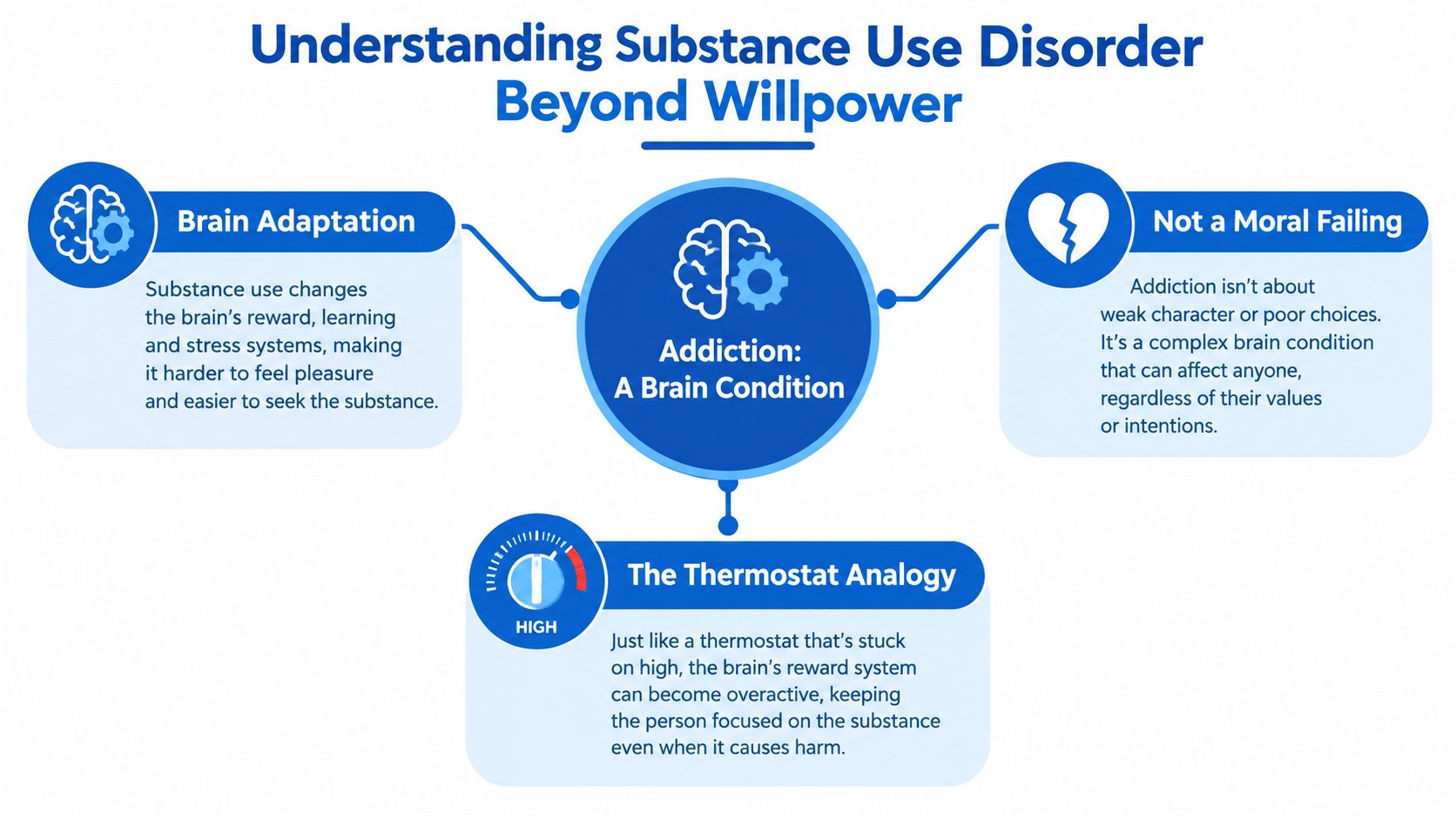
Addiction is a health condition involving changes in the brain and body. It isn't evidence that someone is weak, selfish, or incapable of making choices. Judgment and accountability still matter, but shame rarely explains the loss of control or helps a person access treatment.
A thermostat offers a simple analogy. A normally functioning thermostat adjusts the temperature and returns to a stable range. With repeated exposure to a substance, the body can adapt as though the substance has become part of the expected setting. The person may then need more of it to experience the same effect, and stopping may trigger withdrawal.
The clinical distinction is important. Tolerance means needing larger amounts to achieve the same effect. Withdrawal means experiencing a characteristic set of symptoms when use stops. The DSM-related clinical table in the National Center for Biotechnology Information overview of substance use disorder criteria places these signs alongside cravings, impaired control, and continued use despite harm.
Use, misuse, and disorder are different
Casual use doesn't automatically mean addiction. Misuse can involve taking a medication differently than prescribed, using a substance in a hazardous setting, or using it in a way that creates problems. A substance use disorder involves a more persistent pattern, especially when the person struggles to control use and continues despite damage to health, relationships, work, or safety.
Families often focus on the amount used. Amount matters, but control and consequences matter just as much. Someone may use relatively small amounts yet spend much of the day planning, obtaining, or recovering from use. Another person may use more visibly but seek help quickly and regain control. Only a qualified professional can evaluate the full picture.
Why the signs cluster
Addiction affects several connected areas at once. Brain adaptation can intensify cravings, physical dependence can make stopping uncomfortable, and impaired judgment can weaken the person's ability to respond to consequences. The result may look like secrecy, mood changes, missed obligations, and physical decline rather than a single unmistakable symptom.
Families seeking more context about inherited vulnerability and family patterns can read this guide to whether addiction runs in the family. Genetic and environmental influences may shape risk, but they don't determine a person's future or replace an individual assessment.
Physical Signs of Drug Addiction in Adults to Watch For
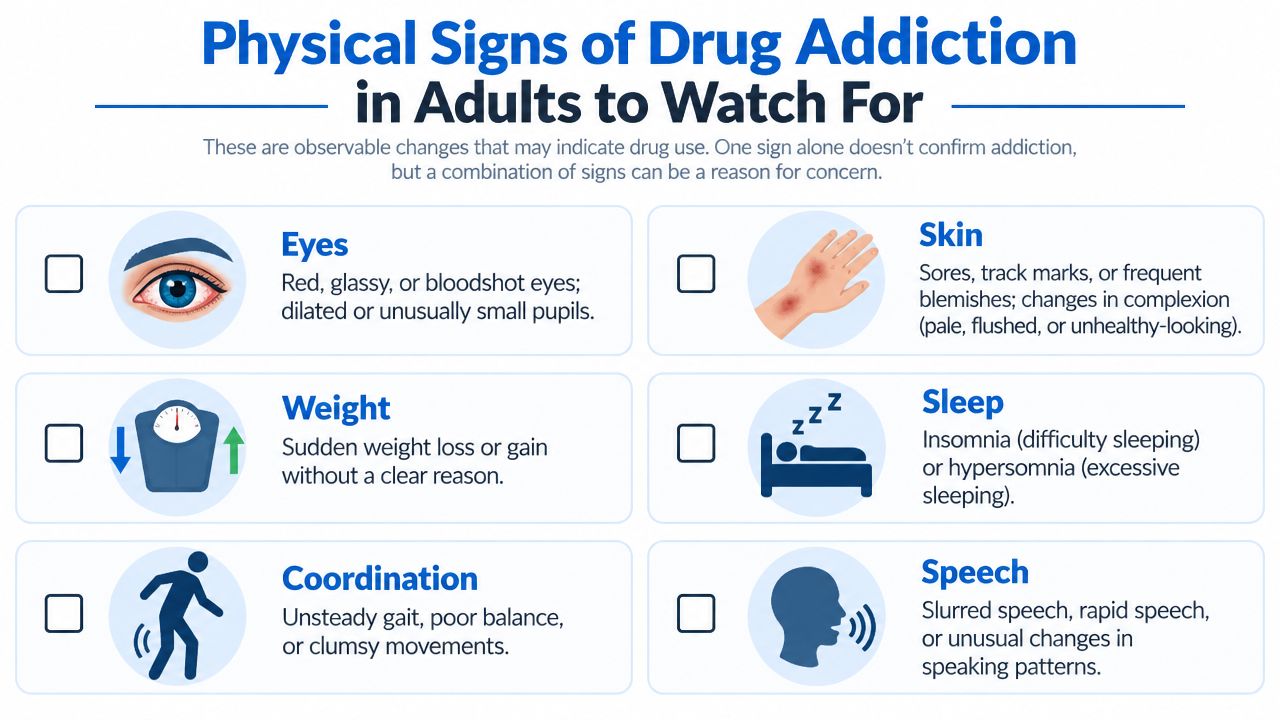
Physical signs often attract attention first, but they need context. A person may have bloodshot or glassy eyes because of fatigue, allergies, illness, or medication. A tremor may reflect anxiety or a medical condition. The concern grows when bodily changes appear alongside altered behavior, repeated sleep disruption, secrecy, or difficulty meeting responsibilities.
SAMHSA lists physical warning signs that can include bloodshot eyes, tremors, slurred speech, impaired coordination, and deterioration in personal appearance. Its broader guidance also identifies mood swings, irritability, unusual hyperactivity or paranoia, poor work performance, legal problems, unexplained financial strain, and changes in appearance as signs families may encounter. These observations are summarized in SAMHSA's guidance on co-occurring disorders and substance-related warning signs.
What families may observe
- Eyes and face: Redness, glassiness, unusual pupil changes, or a persistently tired appearance may stand out.
- Speech and coordination: Slurring, unusually rapid speech, slowed responses, stumbling, or unsteady movement can signal impairment, though they can also have other causes.
- Sleep and energy: Insomnia, sleeping at unusual times, or alternating between agitation and unusual drowsiness can disrupt ordinary routines.
- Weight and appetite: Noticeable weight loss, weight gain, or a marked change in eating habits deserves attention when it persists.
- Skin and nasal symptoms: Sores, unexplained marks, complexion changes, or frequent nosebleeds may appear depending on the substance and route of use.
- Hygiene and appearance: A person who once cared about grooming may stop bathing, changing clothes, or maintaining their usual appearance.
Different substances create different physical patterns, so families shouldn't try to identify a specific drug from appearance alone. The safer question is whether the change is new, recurring, and connected to other concerns. Document what you observe, such as “speech was slurred at dinner” rather than “they were using.”
If someone is difficult to wake, breathing abnormally, severely confused, experiencing a seizure, or in immediate danger, treat the situation as an emergency and contact emergency services. Don't wait for a routine screening.
Behavioral and Social Red Flags Families Often Miss
Addiction may first show up in a person's calendar, responsibilities, and relationships rather than in obvious intoxication. A dependable adult might miss appointments, avoid family gatherings, abandon hobbies, or become defensive about ordinary questions. One missed commitment has many possible explanations. A repeating pattern of secrecy, withdrawal, and consequences deserves closer attention.
Consider an adult who once managed household bills. They begin leaving mail unopened, borrowing money without explaining why, and reacting angrily when a partner asks about spending. At work, they arrive late, make avoidable mistakes, or take unexplained absences. Each event could have another cause, but concern increases when these changes appear alongside altered sleep, new social contacts, or physical symptoms.

Patterns that deserve attention
- Secrecy and unexplained absences: The person gives vague answers about their whereabouts, hides phones or belongings, or changes routines without a clear explanation.
- Work and responsibility problems: Performance declines, deadlines are missed, conflicts increase, or ordinary tasks remain unfinished repeatedly.
- Financial strain: Money disappears, bills go unpaid, valuables are sold, or requests to borrow funds become frequent.
- Social withdrawal: They avoid trusted relatives, spend time with a new group, or stop attending activities they once valued.
- Risky decisions: They drive while impaired, combine substances, take unsafe risks, or put other people in danger.
- Legal and relationship consequences: Arguments, complaints, citations, or legal problems accumulate while substance use continues.
These patterns do not identify a specific drug or prove a diagnosis. They show that daily life is being reorganized around a problem, much like a household gradually changing its routines to work around a recurring leak. Families should look for persistence, escalation, and consequences rather than waiting for one dramatic incident.
Keep notes privately and objectively. Record dates, observable behavior, safety concerns, and consequences. Avoid labels such as “liar” or “addict,” which can turn a conversation into an argument. A factual record gives a clinician a clearer account of what changed and helps families judge whether the pattern is continuing. When several areas of life are affected, screening and a calm conversation with a healthcare professional are reasonable next steps.
Psychological and Cognitive Signs That Signal Loss of Control
A person can still attend work, pay some bills, and speak normally while much of life revolves around obtaining, using, or recovering from a substance. Keeping a job shows some functioning. It does not show that substance use is under control. Families often miss this pattern because they are watching for obvious intoxication rather than gradual changes in attention, emotions, and priorities.
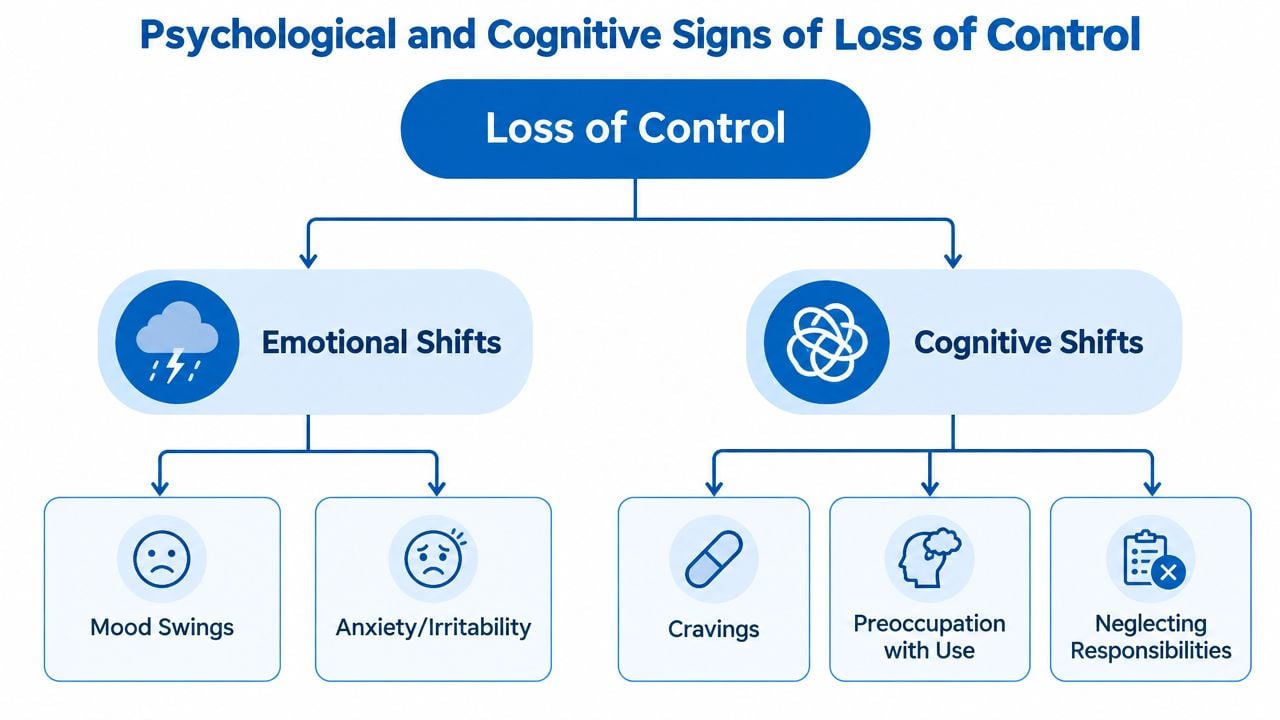
Craving and preoccupation may look like repeated thoughts about the next opportunity to use, irritation when access is uncertain, or plans built around the substance. An adult may promise to cut down, then abandon that plan when stress, availability, or withdrawal symptoms appear. Consequences may also be minimized because protecting access feels more urgent than addressing the harm.
Emotional shifts
Mood swings, irritability, anxiety, unusual hyperactivity, and paranoia can change ordinary conversations. The reaction may seem far larger than the situation. A neutral question about an unfinished obligation can lead to anger, suspicion, or sudden withdrawal.
These changes do not automatically indicate addiction. Depression, trauma, sleep disorders, medication effects, and other health conditions can produce similar signs. Screening gives a clinician a way to consider those possibilities instead of asking relatives to diagnose from the outside.
Cognitive and functional decline
Poor concentration, disorganization, forgetfulness, impaired judgment, and “spaced out” behavior can appear as lost items, incomplete tasks, missed plans, or unsafe choices. Someone may seem mentally present in one setting yet struggle with basic planning in another. The uneven pattern can be confusing, much like a phone that works for simple calls but repeatedly fails when several tasks run at once.
The annual National Survey on Drug Use and Health announcement provides broader context for substance use disorder reporting. For families, the practical point is simpler: changes in thinking and daily functioning deserve attention even without a public crisis. A person does not need to appear impaired every hour for loss of control to be developing.
Someone can function in one role and still be losing control in another.
The clearest concern is a cluster: persistent preoccupation, unsuccessful efforts to reduce use, emotional or cognitive changes, and continued use despite harm. One sign alone may have another explanation. Several signs that persist or intensify make a confidential screening and professional assessment reasonable, even when the person looks composed in public.
When to Seek Help Screening Tools and Choosing Care Options
Families don't need proof before asking for help. A confidential screening is appropriate when changes persist, interfere with relationships or responsibilities, or raise safety concerns. The clinical questions should include what the person uses, how often they use it, whether they've tried to reduce it, what happens when they stop, and what harm has followed.
A failed attempt to cut down is especially informative. Withdrawal symptoms can also indicate that the body has adapted and that stopping may require medical guidance. Continued use despite health, work, relationship, financial, or legal consequences suggests a loss-of-control pattern rather than an isolated lapse.
Use this level-of-care determination resource to understand why providers consider safety, withdrawal risk, medical needs, mental health, housing, support, and the person's ability to participate in treatment.
| Care Option | What It Provides | Best When |
|---|---|---|
| Medically supervised detox with MAT | Clinical monitoring during withdrawal, medical support, and medication-assisted treatment when appropriate | Withdrawal may be unsafe, severe, or difficult to manage without supervision |
| Residential rehabilitation | A structured living environment with counseling, recovery skills, and separation from immediate triggers | The person needs consistent structure, intensive support, or distance from a high-risk setting |
| Intensive Outpatient Program in person or via telehealth | Scheduled treatment while the person continues living at home, with counseling, accountability, and recovery planning | The person is medically stable and can participate safely outside residential care |
Support groups can complement formal treatment, especially for relatives who feel isolated or unsure how to respond. The Kindness Community Foundation guide to mental illness support groups offers a starting point for finding community-based support.
Ask a provider how quickly an evaluation should happen. Immediate danger, severe confusion, overdose concerns, suicidal thoughts, violent behavior, or dangerous withdrawal symptoms require emergency help rather than waiting for an outpatient appointment.
Next Steps for Families and Adults Seeking Support in Yuba City
Start with safety and calm. Choose a private time when the person doesn't appear intoxicated, describe specific observations, and use direct language such as, “I've noticed missed work, sleepless nights, and changes in your speech. I'm worried about your health, and I'd like to help you speak with a professional.”
Avoid arguing about whether the person is an “addict.” Focus on what you've seen and what has changed. Don't threaten consequences you can't enforce, cover up repeated harm, provide money without boundaries, or place yourself in danger. Families can find additional guidance in this resource on helping a family member with addiction.
Prepare for a confidential evaluation
Write down the symptoms, recent consequences, known substances, medications, medical conditions, mental health concerns, and any withdrawal experiences. If the adult agrees to care, ask about insurance verification, transportation, privacy, medication options, family participation, and what happens after the initial assessment.
In Yuba City, Addiction Resource Center LLC provides a continuum that includes 24/7 wellness monitoring, multidisciplinary support, medically supervised detox with MAT, partner residential rehabilitation through Ona Treatment Center in Browns Valley, California, and IOP available in person or through telehealth. Its team includes a medical doctor, registered nurse, licensed counselors, licensed marriage and family therapist, and recovery mentors. Services also include relapse prevention, accountability, education, and individualized aftercare planning.
The center serves adults aged 18 and older, accepts most major insurance plans, welcomes TRICARE beneficiaries, and offers support for people who are uncertain about which level of care fits. Families can ask questions before making a decision. A screening isn't a commitment to one program. It's a way to replace fear and guesswork with clinically informed next steps.
Addiction Resource Center LLC offers confidential screening, medically supervised detox with MAT, residential care through a partner facility, and in-person or telehealth IOP for adults in Yuba City and Northern California. If you're noticing signs of drug addiction in an adult, visit Addiction Resource Center LLC to explore care options or request guidance for yourself or someone you love.