
Co-Occurring Mental Health: Signs and Treatment
Reviewed by Tiffany Komba, LMFT #136055 · Last reviewed November 20, 2026
Published November 20, 2026

Contents
- What Co-Occurring Disorders Mean in Practice
- Common Mental Health and Substance Use Pairings
- How Screening and Diagnosis Work Together
- How Co-Occurrence Changes Outcomes and Relapse Risk
- Integrated Treatment Options from Detox to Aftercare
- Why People Fall Through the Cracks
- Involving Family and Planning Aftercare
- Take the First Step Toward Care in Yuba City
About 8.8 million U.S. adults with both a mental illness and a substance use disorder received neither type of treatment, according to SAMHSA's summary of the 2024 National Survey on Drug Use and Health. That gap changes how we should think about co-occurring mental health needs. The challenge isn't just recognizing symptoms, it's getting help from services that can address both conditions without making someone become stable before treatment begins.
For someone managing panic, depression, trauma symptoms, or substance use, the next step doesn't have to depend on knowing which problem came first. A useful starting point is understanding how the conditions interact, what an assessment should include, and how to recognize care that won't leave either concern unattended.
What Co-Occurring Disorders Mean in Practice
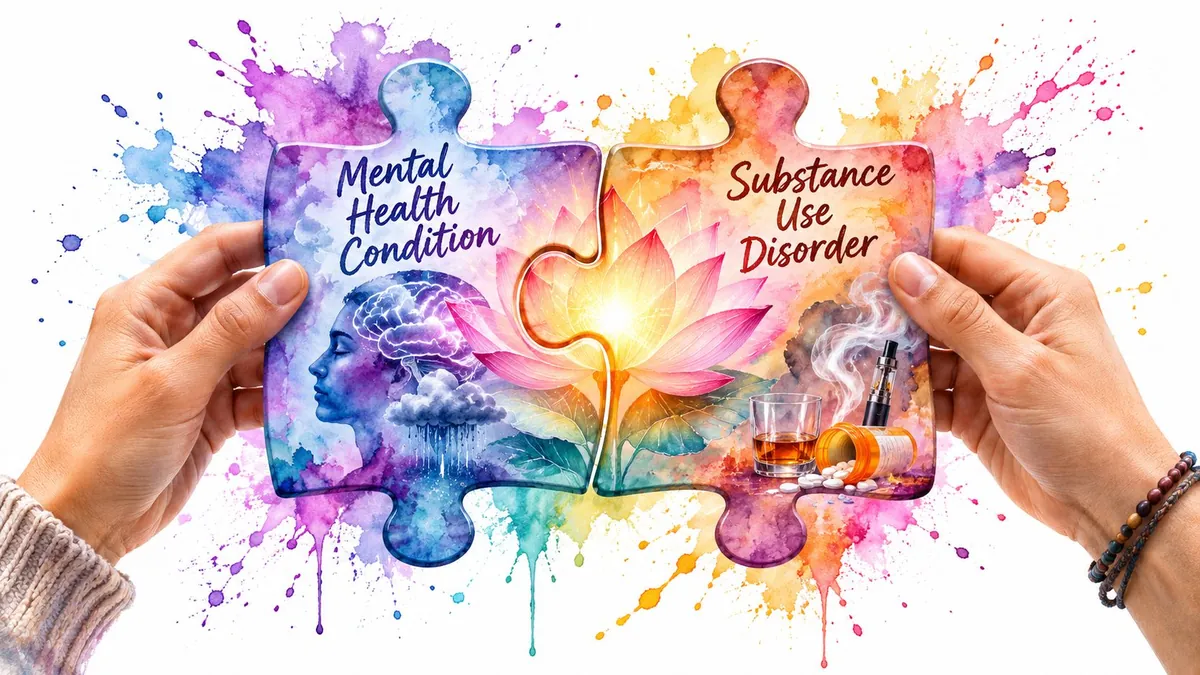
Co-occurring disorders, also called dual diagnosis, mean a mental health condition and a substance use disorder exist in the same person at the same time, and both need attention. What dual diagnosis means and how integrated care works covers the same pairing in more depth. Think of two gears locked together: turning one affects the other, so repairing only one can leave the machine grinding.
Say someone seeks help because drinking has started affecting work. During the appointment, they describe persistent hopelessness, difficulty getting out of bed, and losing interest in activities even during periods when they weren't drinking. The drinking prompted the visit, but the mood symptoms also need assessment.
Understanding the terms
The 2023 National Survey on Drug Use and Health highlights estimated that 32.8% of U.S. adults aged 18 or older, approximately 84.5 million people, had either a past-year mental illness or a substance use disorder, while 6.8 million adults had both serious mental illness and a substance use disorder during that year. These are different measures: the broader group includes people with either condition, not necessarily both.
Serious mental illness refers to a mental, behavioral, or emotional disorder causing serious functional impairment. That might involve substantial difficulty maintaining employment, managing daily responsibilities, or participating in relationships.
A substance use disorder means alcohol or drug use causes clinically meaningful problems. It isn't defined by using a substance or by whether someone appears intoxicated.
Practical rule: The concern that brings someone through the door shouldn't determine everything the clinician checks.
A person may arrive for withdrawal management while also experiencing trauma symptoms. Another may seek anxiety treatment without recognizing that their alcohol use needs attention. Neither situation makes the person dishonest or unusually complicated. It means the first appointment needs enough room for the whole picture.
Common Mental Health and Substance Use Pairings
| Condition | Substances often involved | Assessment focus |
|---|---|---|
| Depression | Alcohol, stimulants | Mood history and timing relative to use |
| Anxiety | Alcohol, benzodiazepines, cannabis | Worry and panic during sober periods |
| PTSD | Opioids, alcohol, stimulants | Trauma exposure, nightmares, and hypervigilance |
| Bipolar disorder | Stimulants, alcohol, cannabis | Mood timeline across sober periods |
| ADHD | Nicotine, stimulants, alcohol | Childhood symptom history |
| Psychosis | Cannabis, stimulants | Symptoms that persist after a sustained period without use |
Family history often raises the question of whether mental illness is inherited, and the same is true of substance use. These pairings are assessment prompts, not diagnostic shortcuts. They don't establish that a substance caused a condition, that a condition caused substance use, or that everyone with a diagnosis uses the substances listed.
How reinforcing patterns can develop
With depression, someone may drink to escape low mood, then feel less rested and less able to handle responsibilities. A person using stimulants for temporary energy may experience a difficult crash and use again to push through it.
With anxiety, immediate relief can become the main reason for using alcohol, cannabis, or benzodiazepines outside the prescribed plan. When the effects wear off, distress or withdrawal symptoms can encourage further use. Prescribed benzodiazepines shouldn't be stopped abruptly without medical guidance.
For someone with PTSD, numbing distress can become more urgent than addressing nightmares or avoiding trauma reminders. Understanding PTSD and substance use helps separate short-term relief from a recovery plan that addresses the trauma symptoms themselves.
Bipolar disorder requires careful attention to episodes of unusually high or irritable mood, energy, and reduced need for sleep. Substance use and disrupted sleep can complicate that picture, making a timeline more useful than judging a single difficult day.
With ADHD, a clinician needs to distinguish longstanding attention and impulse-control difficulties from problems appearing during substance use or withdrawal. Properly prescribed ADHD treatment shouldn't automatically be treated as substance misuse.
For psychosis, clinicians assess paranoia, hallucinations, disorganized thinking, and their relationship to substance exposure. Symptoms that continue after stabilization need follow-up, but urgent symptoms require help immediately.
What to bring to an appointment
Say someone drinks to sleep through anxiety, then develops sleeplessness when cutting back. That doesn't automatically mean they've developed a new anxiety disorder.
Write down what you feel, what you use, and when each changes. Bring the pattern that resembles your situation, not a self-assigned diagnosis.
How Screening and Diagnosis Work Together
Screening identifies concerns that deserve evaluation. Diagnosis determines what those concerns mean. A questionnaire can flag depression or risky drinking, but it can't resolve the whole clinical picture.
The National Institute on Drug Abuse explains that shared vulnerability, trauma, stress, and substance effects can contribute to co-occurring conditions, and that integrated treatment produces better health outcomes than fragmented care. Assessment therefore needs to connect symptoms rather than force a quick either-or explanation.
What a thorough intake involves
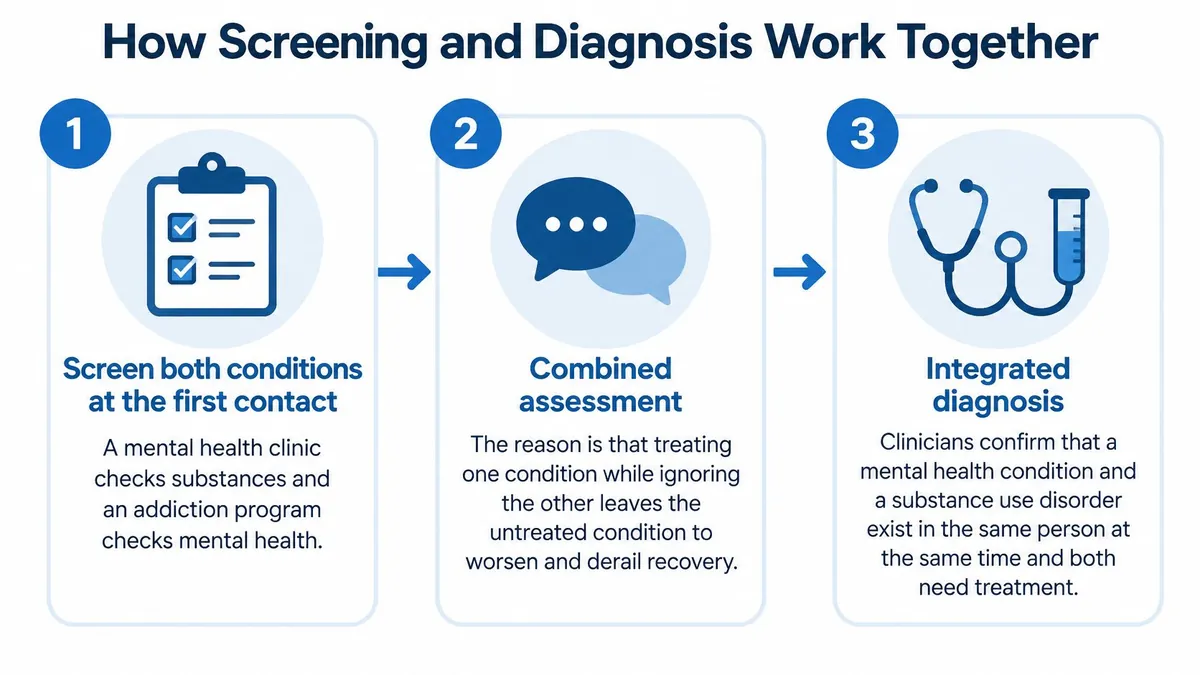
Screen both concerns at first contact. A mental health clinic should check substance use, and an addiction program should check mental health symptoms. This no wrong door approach means the starting location doesn't exclude part of the assessment.
Clinicians may use the AUDIT for alcohol, DAST-10 for drug use, PHQ-9 for depression, GAD-7 for anxiety, and PCL-5 for PTSD symptoms. For background on questionnaires you may encounter, the assessment options curated by DeTalks can help you prepare, but self-scoring doesn't replace clinical evaluation.
Complete a thorough evaluation. An assessment covers substance use patterns, medical history, family addiction history, trauma exposure, housing stability, employment status, and existing support networks. These details help identify what could interfere with a safe, workable plan.
Clarify diagnoses after acute intoxication or withdrawal subsides. Substance effects can resemble or intensify depression, anxiety, or psychosis, so an early label may remain provisional. Symptom relief and safety care should begin even when the diagnosis isn't settled.
Build a timeline of symptoms before substance use, during heavier use, and during periods without it. With permission, trusted family observations, medication records, and toxicology when appropriate can help fill gaps without treating any single result as the complete answer.
Reassess safety throughout care. Clinicians should ask directly about suicidal thoughts and evaluate psychosis and overdose risk, because safety needs can change. A separate suicide-risk question belongs alongside symptom questionnaires, not buried within a total score.
Repeat assessment when the person moves between levels of care or develops new symptoms. Better sleep, medication changes, and reduced substance exposure can make the picture clearer.
Before intake ends, ask which concerns need immediate treatment, which diagnoses remain uncertain, and when the team will review them.
How Co-Occurrence Changes Outcomes and Relapse Risk
Among the 6.8 million U.S. adults with both serious mental illness and a substance use disorder in 2023, roughly one in four received neither type of treatment, according to SAMHSA's NSDUH companion report. The report breaks down treatment receipt for that group.
| Treatment received | Share of group | Estimated adults |
|---|---|---|
| Both mental-health and substance-use treatment | 25.4% | 1.7 million |
| Mental-health treatment only | 47.3% | 3.2 million |
| Substance-use treatment only | 2.4% | About 160,000 |
| Neither type of treatment | 25.0% | 1.7 million |
Estimates are rounded. These figures describe people with serious mental illness, a narrower group than all adults with any mental illness plus a substance use disorder. Receiving both treatments also does not prove the providers coordinated them.
Why unresolved symptoms matter
An untreated symptom can act like a tripwire. A person who leaves detox with severe nightmares may reach for the substance they once used to get through the night. Substance use can then worsen sleep, mood, or daily functioning, making appointments and new coping skills harder to maintain. A return to use after discharge can reflect one problem treated while another stayed active.
A discharge plan that sends someone home with instructions to avoid alcohol, but no plan for the panic that preceded drinking, leaves a gap. If drinking resumes, calling the outcome a motivation problem misses that gap. Cravings, exposure to substances, relationship strain, housing instability, and other pressures may also matter. A useful review asks what happened before the return to use and what support was missing, rather than assigning blame.
A completed detox stay isn't the same as a completed recovery plan.
What coordinated care looks like
At Addiction Resource Center, coordinated care means the medical team, mental health therapist, and substance abuse counselor communicate regularly about progress, share assessment data, and adjust the plan collaboratively. Coordination should produce decisions the person can understand, not just separate appointments on a calendar. The system often asks people to reach full stability or abstinence before treatment begins. That requirement can turn a treatable condition into a revolving door. People fall through the cracks when one clinic treats mood and another treats substance use, and no one owns the handoff.
Progress should include more than abstinence alone. A meaningful review can track:
- Engagement: Attendance and barriers to keeping appointments.
- Medication follow-through: Whether the person can obtain and take prescribed medication.
- Clinical change: Mood, sleep, anxiety, and substance-use days.
- Care transitions: Whether the next provider receives the person and the plan.
These measures help distinguish a plan that needs adjustment from a person who needs more support carrying it out.
Integrated Treatment Options from Detox to Aftercare
Think of treatment intensity as a staircase, with more support available when risks are higher and greater independence when it's safe. People don't have to start at the top, and stepping back up isn't a failure.
Duration should follow clinical need rather than a fixed promise. Withdrawal risk, symptom severity, response to medication, housing, and available support all influence the appropriate level.
| Level of care | What it includes | Typical duration | Best fit |
|---|---|---|---|
| Medically supervised detox | Continuous medical monitoring, symptom relief, and emotional support | Until withdrawal can be managed safely at the next level | Significant withdrawal risk requiring medical supervision |
| Medication-assisted treatment | Medication for opioid or alcohol use disorder, paired with counseling and monitoring | Continued according to benefit, safety, and individual goals | A medication-supported plan for cravings and substance-use symptoms |
| Residential rehabilitation | A live-in setting with CBT, group therapy, and supportive wellness practices | Based on reassessment and discharge readiness | Need for substantial structure or difficulty remaining safe in the current environment |
| Intensive outpatient program | Multiple weekly sessions of CBT, relapse prevention, coping skills, and group counseling | Based on progress and ongoing support needs | Structured treatment while living outside a facility |
| Standard outpatient therapy | Individual counseling and psychiatric medication management when indicated | Individualized follow-up | Symptoms and risks manageable with less intensive contact |
Match the setting to the risk
Medically supervised detox addresses withdrawal and immediate stabilization. Inpatient detox can be particularly beneficial for people with severe addiction or co-occurring mental health disorders, but a diagnosis alone doesn't establish that detox is necessary. A clinician needs to assess the substances involved, recent use, withdrawal history, and current health.
Medication-assisted treatment isn't just a brief detox medication schedule. For opioid or alcohol use disorder, it can support an ongoing recovery plan when appropriate. Medication choices should account for psychiatric prescriptions, other substance use, side effects, and the person's goals.
Medication adjustments are made through coordinated discussion between the prescribing clinician and the addiction counselor. Don't change or discontinue prescribed medication on your own because another part of treatment has changed.
Structure, skills, and safe step-down
Residential treatment may make sense when someone needs a living environment organized around recovery. Unstable housing deserves attention, but psychiatric emergencies or medically dangerous withdrawal may require hospital-level care rather than routine residential placement.
An intensive outpatient program requires enough stability to participate while living elsewhere; a dual diagnosis IOP is the version built for someone who needs both conditions treated in the same setting. Transportation, privacy, reliable technology, and a safe place between sessions matter when comparing in-person care with telehealth, which is why a telehealth IOP has its own attendance expectations.
Therapies should also match the person's needs. CBT helps identify and change unhelpful thought and behavior patterns, while dialectical behavior therapy develops skills for handling distress, emotions, and relationships.
Choose by current risk: Match the level of care to what the person needs to remain safe and participate, not to whichever diagnosis is called primary.
A person can need medication, therapy, and housing support simultaneously. The right arrangement connects those needs rather than expecting a single treatment setting to solve all of them.
Why People Fall Through the Cracks
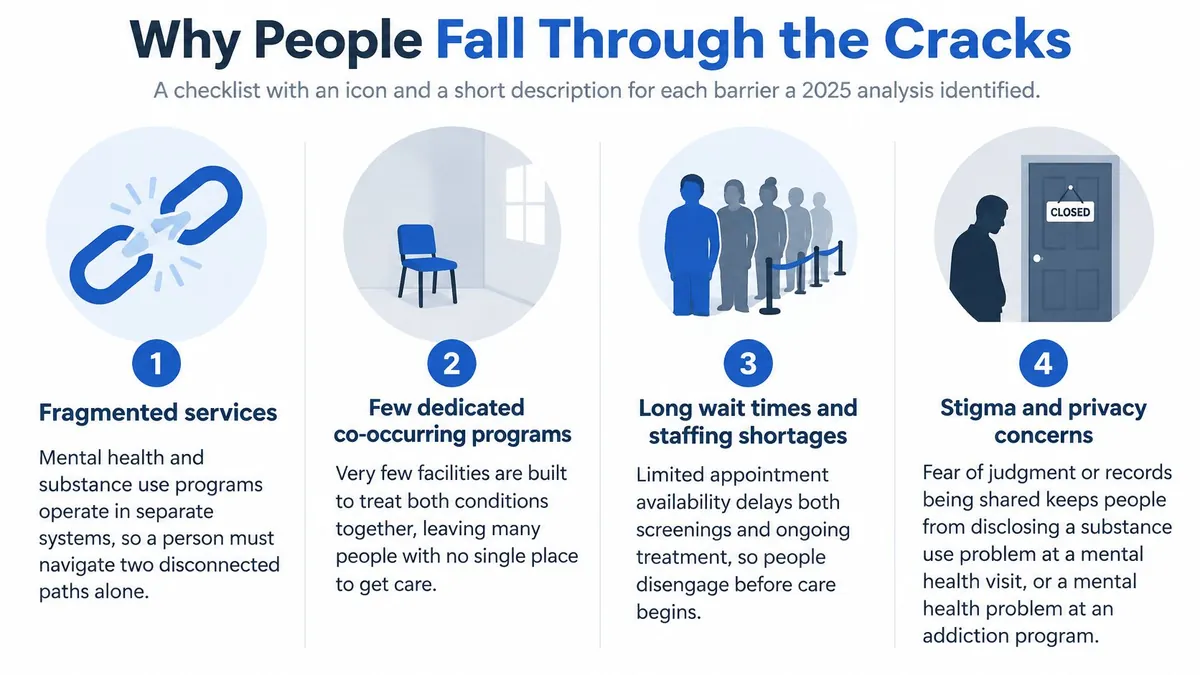
The assumption that someone only needs to find the right program leaves out a major obstacle: a program can exist without being accessible to the person who needs it. Eligibility rules, separate funding, and gaps between services can stop care before it starts.
A 2025 analysis of barriers to co-occurring-disorder care identified fragmented services, limited dedicated pathways, abstinence or psychiatric-stability requirements, stigma, workforce burnout, training gaps, and siloed funding. Rural workforce shortages and transportation limitations can make these barriers harder to overcome.
When referrals become a dead end
Say a mental health clinic tells someone to stop drinking before starting therapy. The addiction program then says their psychiatric symptoms need to be stable before admission. Each service may have limits on what it can safely provide, but the person is left without a practical route forward.
Requiring complete abstinence before mental health care, or full psychiatric stability before substance-use care, can delay the very help that makes either possible. Safety requirements remain necessary. The alternative to an unsuitable admission, however, should be an active connection to appropriate care, not a dismissal.
A helpful handoff identifies the receiving service, explains the immediate plan, and clarifies who remains responsible until the transition occurs. Handing someone a list of phone numbers doesn't accomplish all of that.
Questions that reveal how a program works
Use these questions with any intake team:
- Combined assessment: Can both mental health and substance-use concerns be assessed together?
- Shared decisions: How are medications and recovery goals coordinated across clinicians?
- Worsening symptoms: What happens if symptoms escalate between visits?
- Continuity: What care is arranged after detox or residential discharge?
- Participation needs: How does the program accommodate different learning preferences and comfort with groups?
An initial consultation identifies learning preferences, comfort with group versus individual therapy, and whether medication-assisted treatment aligns with the person's values. These are practical planning questions, not minor preferences to address only after a person struggles.
A useful answer should describe a process and who carries it out. General reassurance that a program treats everything isn't enough to show how care will work.
Involving Family and Planning Aftercare
Family members can support recovery without taking over treatment. With the person's permission, they can share observations about symptoms, help clarify the timeline, and attend invited sessions while respecting privacy and decision-making. Families also need guidance about boundaries, communication, and what to do when they're worried.
When family conflict drives substance use, family therapy alongside individual counseling can help. Involvement should support the person's safety and goals, so a trusted friend or another support person may be more appropriate when family relationships are unsafe.
Put the transition plan in writing
Effective discharge planning turns intentions into appointments, responsibilities, and clear instructions.
Schedule follow-up before discharge. Confirm the first psychiatric or therapy appointment and how the person will get there. A provider's name without an appointment can leave a gap when support is most needed.
Write down the medication plan. Include current prescriptions, what changed during treatment, who manages refills, and whom to contact about side effects or access problems.
Make relapse prevention specific. Identify personal triggers and a usable response for each, such as leaving a high-risk setting, calling a support person, or using a practiced grounding skill. Avoid relying only on instructions to stay motivated.
Build a crisis plan with warning signs and contacts. Include suicidal thoughts, hallucinations or paranoia that affect safety, and overdose concerns, with clear instructions for urgent help.
Arrange the next level of care. If the plan involves moving from residential treatment to intensive outpatient care, confirm intake, attendance expectations, transportation, and any telehealth requirements.
Confirm that therapeutic support begins promptly after withdrawal care rather than waiting for another crisis. At ARC, therapy, education, and relapse-prevention tools are part of the outpatient program.
Give supporters a defined role
A support person might help organize appointments, hold a copy of the agreed crisis plan, or provide transportation. They shouldn't be expected to diagnose symptoms, police every decision, or replace professional care.
Draft the plan on paper with a trusted person before discharge. Review it whenever the level of care changes, especially if medications, housing, or the available support network have changed.
Take the First Step Toward Care in Yuba City
Call or text 530-625-7910 today to discuss starting treatment or get guidance for a loved one. Addiction Resource Center LLC's line is available 24/7, so you don't have to settle every question before making contact.
We're one Yuba City option for adults 18 and older with substance-use and co-occurring mental health needs, located at 1002 Live Oak Blvd., Suite A, Yuba City, CA. ARC does not provide detox, residential care, medication-assisted treatment (MAT) or methadone. For adults 18 and older we offer an intensive outpatient program (IOP) Monday through Friday, 10 a.m.–1 p.m. and 2–5 p.m. in person in Yuba City or by telehealth, and 6–9 p.m. by telehealth only, and a partial hospitalization program (PHP) in person. The IOP uses CBT and DBT.
Prepare for a useful first conversation
Ask any program, including ours, who provides care, which insurance plans it accepts, and whether TRICARE is accepted. Confirm your individual benefits and coverage before making financial commitments.
Other local options include county behavioral health services. The most appropriate starting point depends on urgency, medical needs, access, and the support someone can safely use.
- Bring a timeline: Include substances used, changes in use, and previous treatment attempts.
- Bring health information: List mental health history, current medications, and important medical concerns.
- Use the intake checklist: Discuss coordination, worsening symptoms, continuing care, and participation needs with any program.
For a mental health crisis, call or text 988; for a medical emergency, call 911. For a suspected overdose or immediate danger, call 911; use naloxone if it's available for a suspected opioid overdose, and follow emergency instructions. Don't wait for a routine intake appointment when someone needs emergency help.
Addiction Resource Center LLC offers coordinated support for substance use and co-occurring mental health needs in outpatient care. Visit Addiction Resource Center LLC to explore care options, then call or text 530-625-7910 to discuss a starting point for yourself or someone you love.
Talk with us
Addiction Resource Center offers intensive outpatient treatment (IOP) for adults 18+ at our Yuba City office or by telehealth. Call or text 530-625-7910.
Check my insurance