10 Books About Recovery from Alcoholism: A Reading Guide
Reviewed by Tiffany Komba, LMFT #136055 · Last reviewed November 20, 2026
Published November 20, 2026
Contents
- 1. Alcoholics Anonymous (The Big Book)
- 2. Living Sober
- 3. SMART Recovery 4-Point Program Handbook, 4th Edition
- 4. This Naked Mind
- 5. Alcohol Explained
- 6. We Are the Luckiest, The Surprising Magic of a Sober Life
- 7. Drinking, A Love Story
- 8. The Recovering, Intoxication and Its Aftermath
- 9. Quit Like a Woman, The Radical Choice to Not Drink in a Culture Obsessed with Alcohol
- 10. Quitter, A Memoir of Drinking, Relapse, and Recovery
- How the 10 recovery books differ in approach and audience
- Start With One Book, Then Add Real Support
It's late, the house is quiet, and you're searching for books about recovery from alcoholism instead of going to sleep. Maybe you've poured out the remaining alcohol and want a practical roadmap to getting sober rather than a reading list. Maybe your partner has asked you to get help, or you're the partner trying to understand why another promise hasn't held.
The right book depends on what you need tonight. A program handbook gives you something to practice. An explanation helps you examine drinking habits and beliefs. A memoir offers companionship, but it won't necessarily tell you what to do when an urge hits.
Start with a practical guide if you need structure, an explanatory book if you want understanding, or a memoir if you need to feel less alone. You don't have to agree with every author, adopt a particular identity, or finish a book that isn't helping.
Reading can support recovery. It can't assess withdrawal risk or make stopping alcohol medically safe.
If you experience physical withdrawal when you cut back, seek medical assessment rather than using a book to plan an unsupervised detox. For everyone else, choose a starting point below and connect the reading to a concrete action, such as attending a meeting, discussing an exercise with a counselor, or asking someone for support.
1. Alcoholics Anonymous (The Big Book)
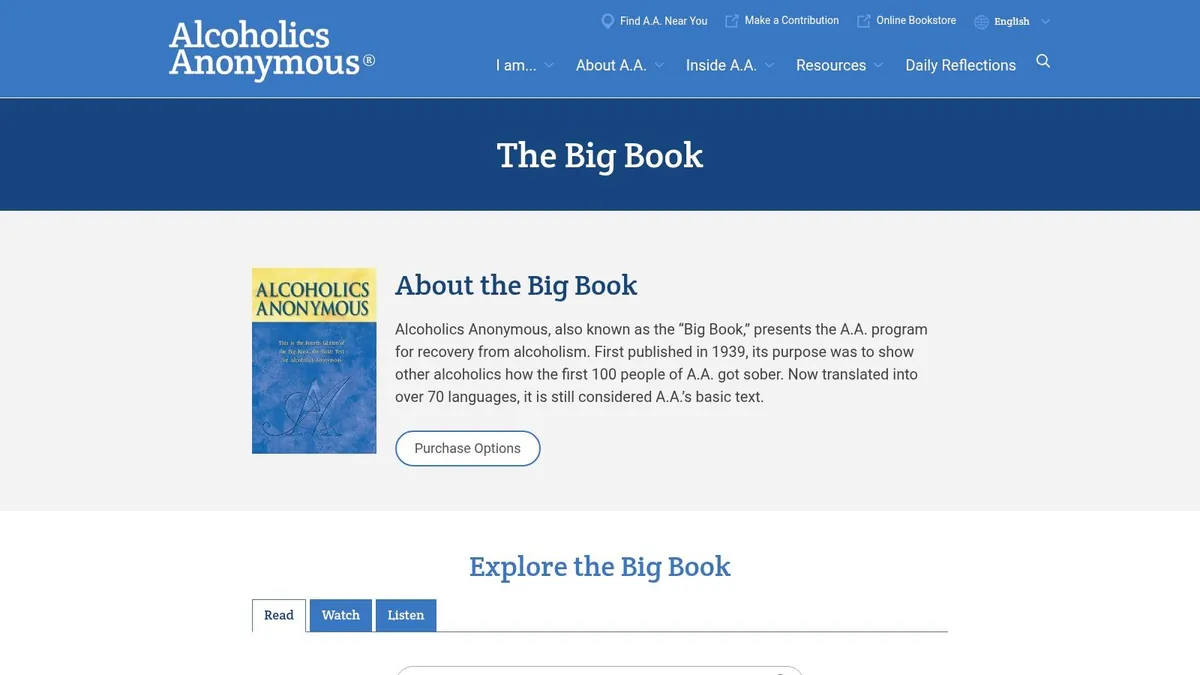
Best for someone considering A.A. who wants to understand its program directly. This is a program text with personal recovery stories, not a collection of motivational reflections.
Its strength is the connection between reading and participation. You can read about A.A.’s approach, take questions to a meeting, and discuss the material with a sponsor rather than trying to interpret everything alone. According to A.A.’s edition history, more than 35 million copies of the English editions had been distributed, evidence of reach rather than proof of individual treatment success.
Read for the framework, not medical instructions
Start with the explanation of the program, then explore the personal stories that speak to your situation. If its discussion of resentment feels unfamiliar, this explanation of A.A. and resentments gives you a focused topic to discuss with a recovery support person.
The trade-off is its spiritual language and historical voice. Some readers find those elements reassuring; others find them difficult to engage with. Neither reaction determines whether you can recover.
A useful pairing is Living Sober for everyday situations. Don't use it as a withdrawal guide, medication reference, or reason to delay clinical care.
2. Living Sober
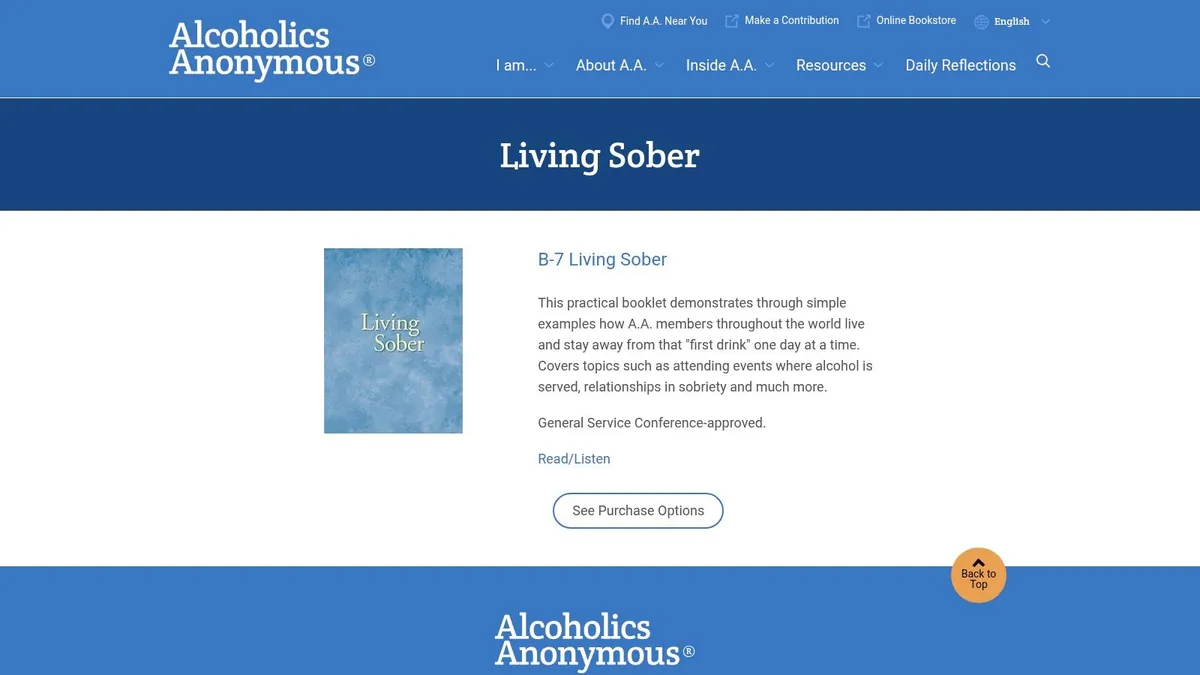
You've decided not to drink, but dinner invitations, empty evenings, and difficult conversations still need handling. Living Sober is the practical handbook for that gap between deciding and doing.
Unlike the Big Book, this booklet puts everyday living at the center. Its short sections make it easier to read around an immediate problem rather than work through a larger recovery framework from beginning to end. That makes it a useful starting point when concentration is limited or a particular situation needs attention.
- Best reader: Someone in early recovery who wants straightforward suggestions for ordinary days without alcohol.
- Best use: Choose a section related to an upcoming challenge, then decide what you'll do differently.
- Reading order: Read it before or alongside the Big Book if practical questions are more urgent than understanding A.A.’s full approach.
Say you're invited to a gathering where people will drink. Use the reading to prepare an exit plan, choose someone you can contact, and practice a brief response if someone offers alcohol.
Its limitation is scope. It's written from an A.A. perspective and isn't a detailed explanation of alcohol use disorder, medication, or co-occurring mental health concerns. Keep it as an accessible daily companion, not your entire recovery plan.
3. SMART Recovery 4-Point Program Handbook, 4th Edition
Choose this program handbook if you prefer secular language, written exercises, and specific skills. The SMART Recovery handbook addresses motivation, urges, thoughts and behaviors, and a balanced life through a cognitive-behavioral approach.
Its practical advantage is that it asks you to work with your own situations. Rather than reading about someone else's turning point, you examine what you expect alcohol to do for you, what follows drinking, and how you might respond differently. It can be used independently or alongside SMART meetings.
Work an exercise before reading ahead
Start with the issue most likely to interrupt your next attempt at change. If you repeatedly justify drinking after a stressful workday, write out that reasoning and test alternatives instead of highlighting a passage about motivation.
A companion explanation of unhelpful thinking patterns sometimes called stinkin' thinkin' can help you recognize the thoughts you want to examine. Keep the focus on changing a response, not labeling yourself as someone who thinks badly.
The limitation is the workbook format. It requires active participation, and its broader addiction focus may feel less personally specific than an alcohol memoir. This is a stronger starting point than Alcohol Explained if you already understand why you want change but need tools for acting on it.
Independent use also doesn't mean unsupported detox. Medical assessment and practical recovery exercises serve different purposes.
4. This Naked Mind
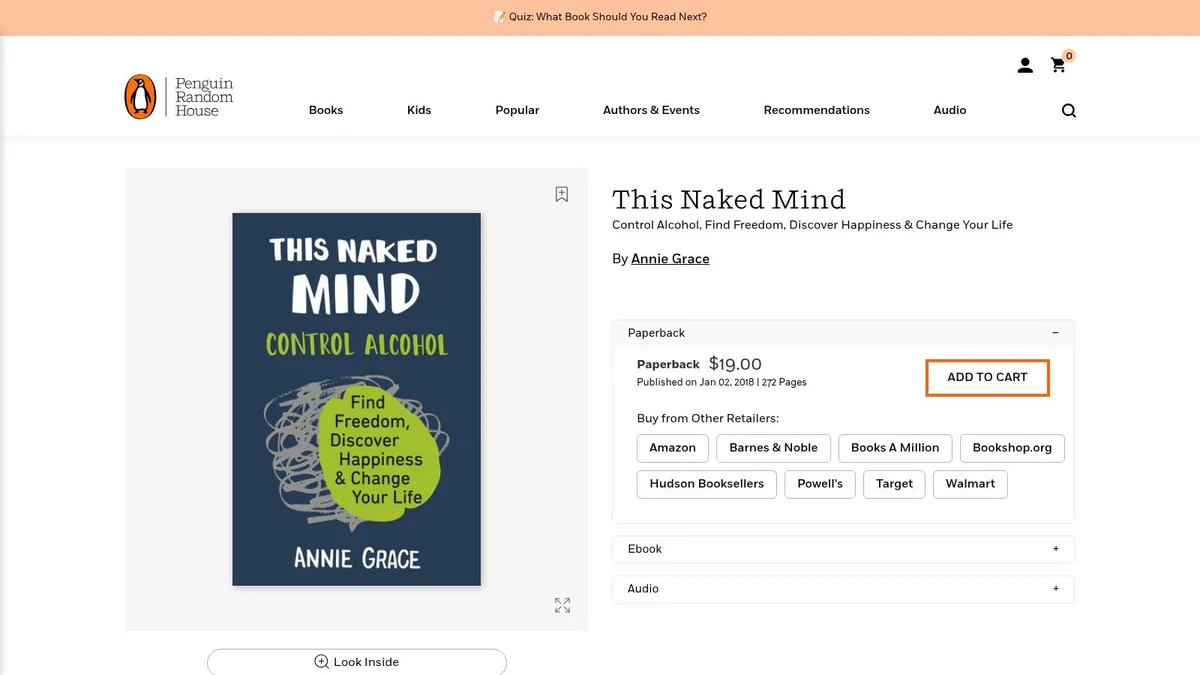
For the reader who keeps thinking alcohol is both the problem and the reward, This Naked Mind is an accessible self-help explanation rather than a formal recovery program. Annie Grace examines beliefs, habits, drinking cues, and alcohol's effects, combining discussion with her personal perspective.
Its useful distinction is attention to what you believe drinking provides. You can examine the expectation that alcohol makes socializing easier or marks the end of work, rather than treating every urge as a simple failure of resolve.
- Best reader: Someone questioning their drinking who doesn't yet connect with a program-based approach.
- Reading order: Start here if you need to examine your reasons for drinking, then add Living Sober or the SMART handbook for practical action.
- Useful exercise: Write down a drinking expectation before reading, then reconsider it afterward in your own words.
Its limitation is that a persuasive explanation isn't individualized treatment. Feeling differently about alcohol doesn't automatically give you a response to withdrawal, persistent cravings, or an unsafe home situation.
Treat the book as a way to open a conversation, not settle every medical question. If a claim affects a treatment decision, bring that question to a qualified clinician rather than assuming the author's approach fits your circumstances.
5. Alcohol Explained
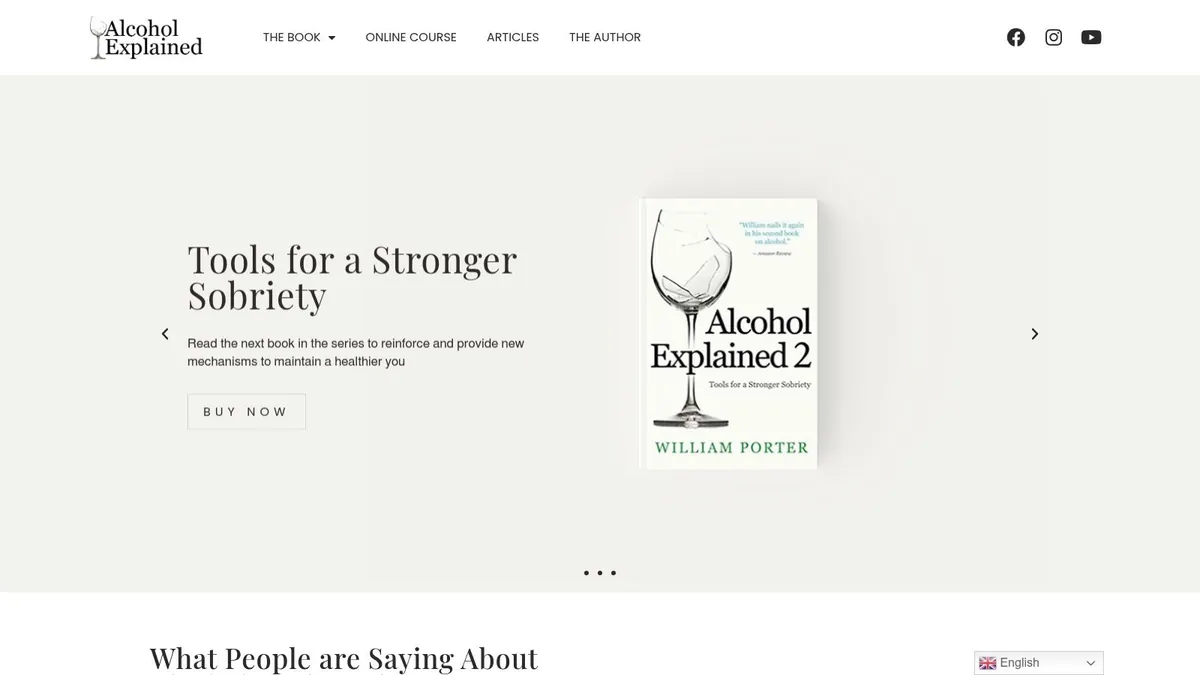
Alcohol Explained suits the skeptical reader who wants an understandable account of drinking patterns before committing to a program. William Porter discusses physical and psychological effects and how drinking can become self-reinforcing.
Compared with This Naked Mind, this is the better fit when the reader's main question is how drinking perpetuates itself, rather than how to reconsider alcohol's place in their life. Both are explanatory self-help books, but neither should be mistaken for a clinical assessment.
Understanding needs a next step
Read a sample, identify a pattern you recognize, and write down a question that matters to your circumstances. A partner or parent can use the same approach to better understand the person drinking without trying to diagnose them from a chapter.
Practical rule: Turn an explanation into a question or action. Agreement with an author isn't the same as a change in behavior.
For example, if the discussion helps you notice a recurring drinking cue, record when it happens and prepare an alternative response with your counselor or support person. Pair this book with the SMART handbook if you want somewhere to practice that work.
The limitation is its role as an author-led explanation. It isn't a treatment manual, a medication guide, or an independent clinical review. Readers seeking emotional companionship may also prefer a memoir.
6. We Are the Luckiest, The Surprising Magic of a Sober Life
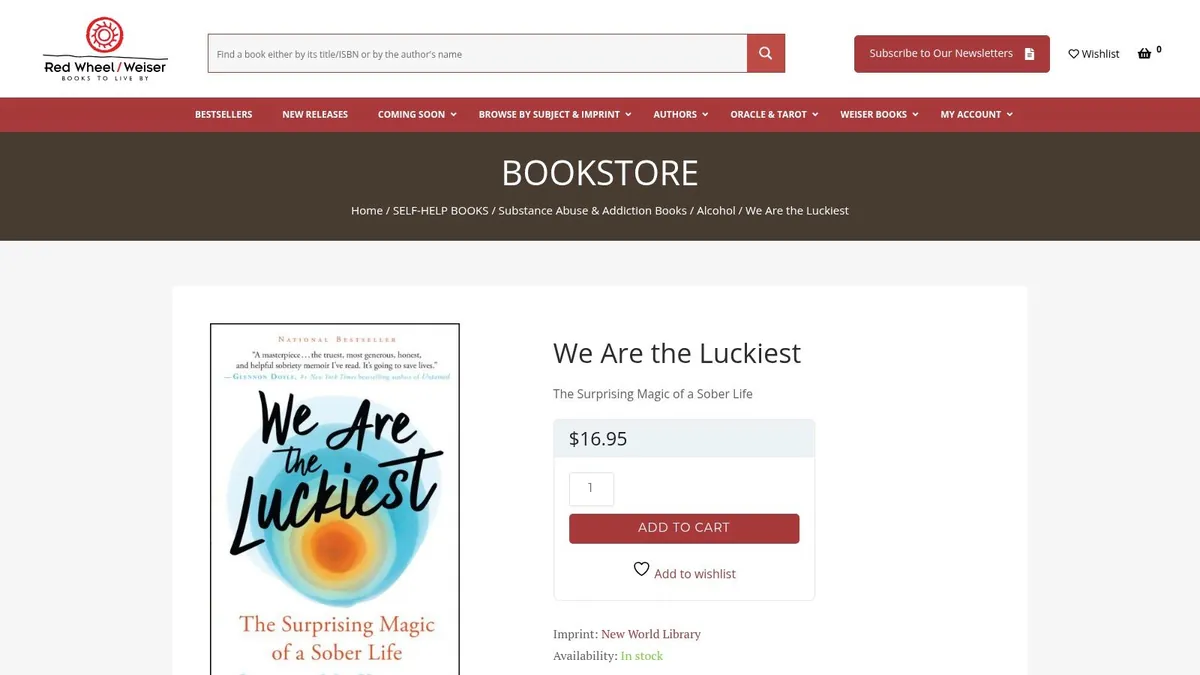
Sometimes you don't need another explanation of why drinking causes problems. You need a personal account of what it means to live differently. Laura McKowen's We Are the Luckiest is a memoir for that reader, with candid reflection on getting sober and the emotional and social changes involved.
Its main value is perspective: the author describes her experience rather than setting out a program that every reader must follow.
A partner or parent may find that distinction useful. Read to understand an emotional experience, not to collect passages that prove what your loved one should do.
- Best reader: Someone who wants an honest personal voice and a picture of life beyond drinking.
- Reading order: Keep it alongside a practical handbook, especially when exercises alone feel emotionally dry.
- Discussion prompt: Identify what feels familiar and what doesn't, without requiring your recovery to resemble McKowen's.
The limitation is the same quality that makes memoir compelling: it's one person's account. It can offer recognition without supplying an individualized response to cravings, relationship conflict, or mental health symptoms.
Use it as a companion during recovery, not as the source of a treatment plan. If reading leaves you emotionally unsettled, pause and bring the reaction to someone who can support you.
7. Drinking, A Love Story
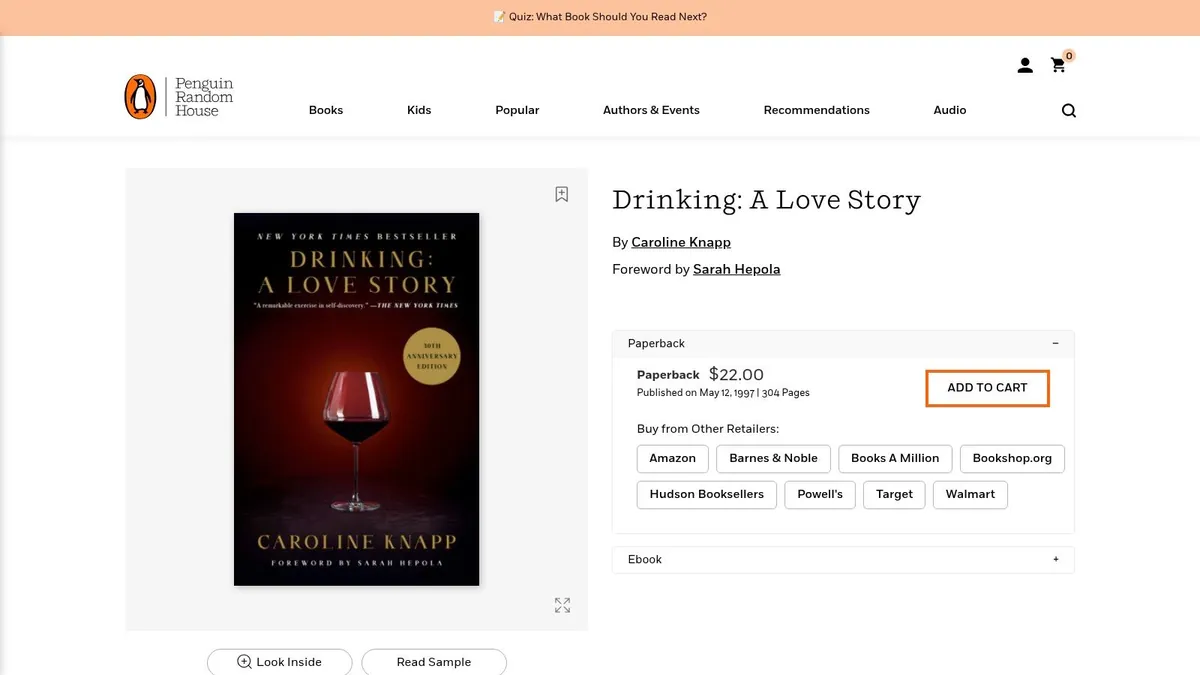
Caroline Knapp's Drinking: A Love Story is for readers who prefer emotional detail to workbook exercises. Her memoir explores her relationship with alcohol and her path toward sobriety, including the emotional role drinking played.
The title points toward a useful question: not only what drinking costs, but what someone feels attached to about it. That question can help a family member approach a conversation with curiosity rather than assuming the person drinking doesn't understand the consequences.
Read for recognition, not comparison
Start here if an intimate narrative is more likely to hold your attention than a program text. Follow it with Living Sober when you want practical suggestions, or Alcohol Explained when you want a more explanatory companion.
Don't measure your need for help against Knapp's experiences. You don't need a matching history, a comparable consequence, or the same emotional response to justify seeking support.
Its limitations are intensity and lack of instruction. Some readers may find the account emotionally heavy, and recognizing yourself in a story doesn't tell you how to manage an immediate urge.
For partners, a productive response is to ask what felt familiar to your loved one, if they want to discuss it. Avoid turning a memoir into evidence in an argument.
8. The Recovering, Intoxication and Its Aftermath
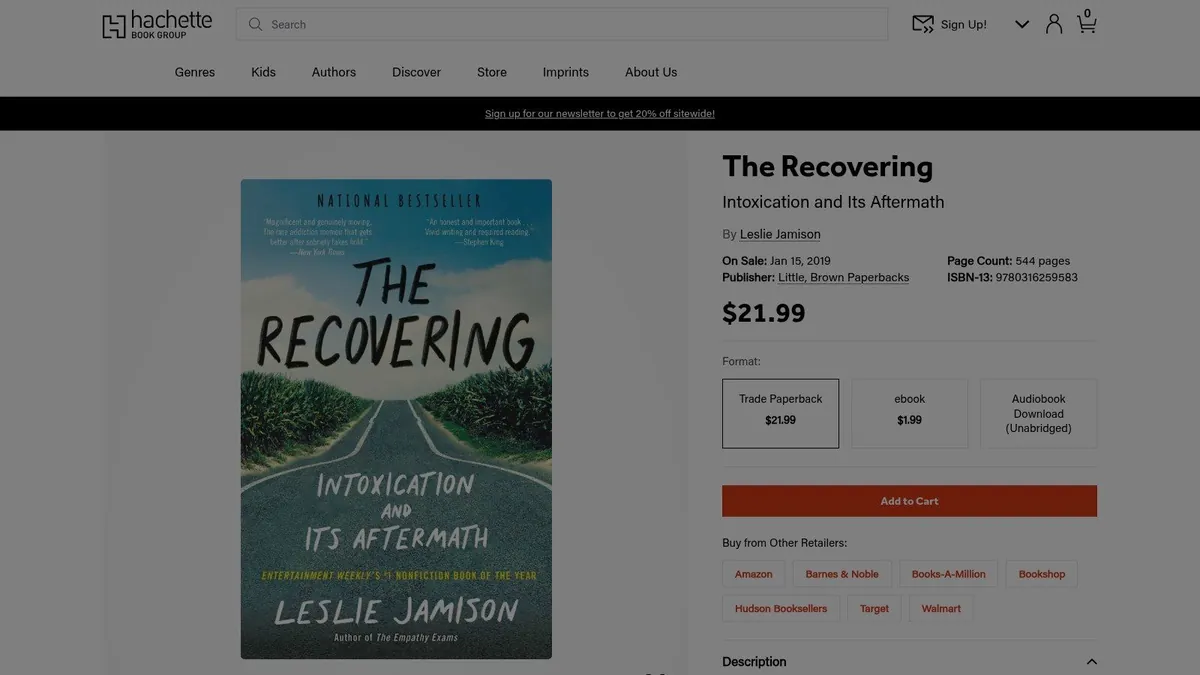
Leslie Jamison's The Recovering is literary nonfiction that combines memoir, reportage, and cultural history. It considers her own recovery alongside other writers' experiences with addiction, giving readers a broader frame than a single personal narrative.
This is the strongest fit here for someone who enjoys sustained reflection and wants to examine how people tell stories about addiction and recovery. It isn't the book to hand someone whose immediate question is how to get through tonight without drinking.
- Best reader: A literary nonfiction reader interested in recovery, identity, creativity, and other people's accounts.
- Reading order: Read it after an accessible practical guide if you're beginning recovery and need immediate structure.
- Trade-off: You get breadth and reflection rather than a concise set of daily instructions.
You don't have to turn recovery into an extraordinary story for ordinary sober days to matter.
Use the book to examine expectations you bring to recovery, including the idea that stopping drinking should immediately produce purpose or clarity. Then keep your practical commitments separate from whether the reading feels inspiring.
Its limitation is its length and essayistic approach. It asks for attention and patience, and it doesn't provide a day-by-day program. Save it for when you have the interest and concentration to engage with that kind of book.
9. Quit Like a Woman, The Radical Choice to Not Drink in a Culture Obsessed with Alcohol
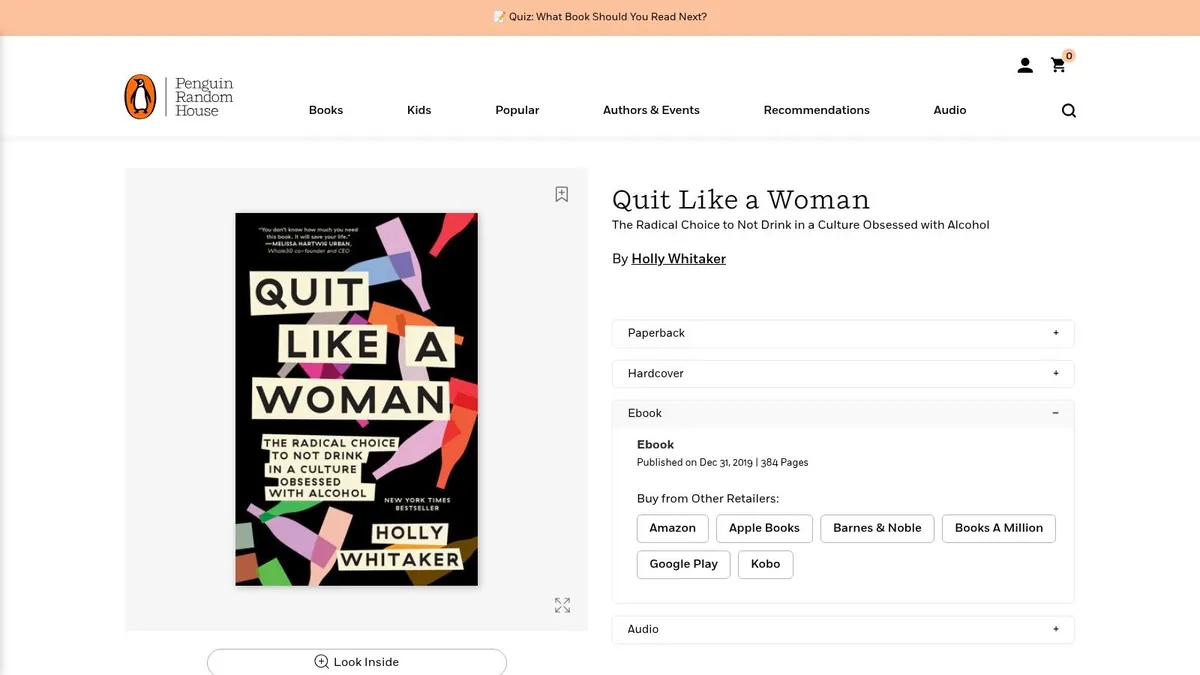
Holly Whitaker's Quit Like a Woman combines personal narrative, cultural criticism, and self-help. Its women-focused perspective addresses social norms around alcohol as well as the author's own path away from drinking.
Choose it if your questions extend beyond personal habits to the expectations around you. A reader tired of alcohol-centered socializing may find this framing more engaging than a book focused mainly on individual choices.
Use the perspective without adopting every conclusion
Read this before Living Sober if you need help putting social pressure into words. Then use the practical booklet to prepare for the situations you've identified, such as refusing a drink or leaving an event.
You can also read it alongside the SMART handbook if you prefer a secular, skills-focused companion. There's no requirement to agree with an author's entire worldview to find part of a book useful.
Its limitation is fit. Whitaker's framing won't resonate with everyone, and cultural criticism doesn't replace an assessment of dependence, withdrawal risk, or treatment needs.
For partners and parents, read it as a perspective worth understanding rather than a universal explanation of women's drinking. Ask which pressures matter to the person you're supporting instead of deciding that their experience must match the author's.
10. Quitter, A Memoir of Drinking, Relapse, and Recovery
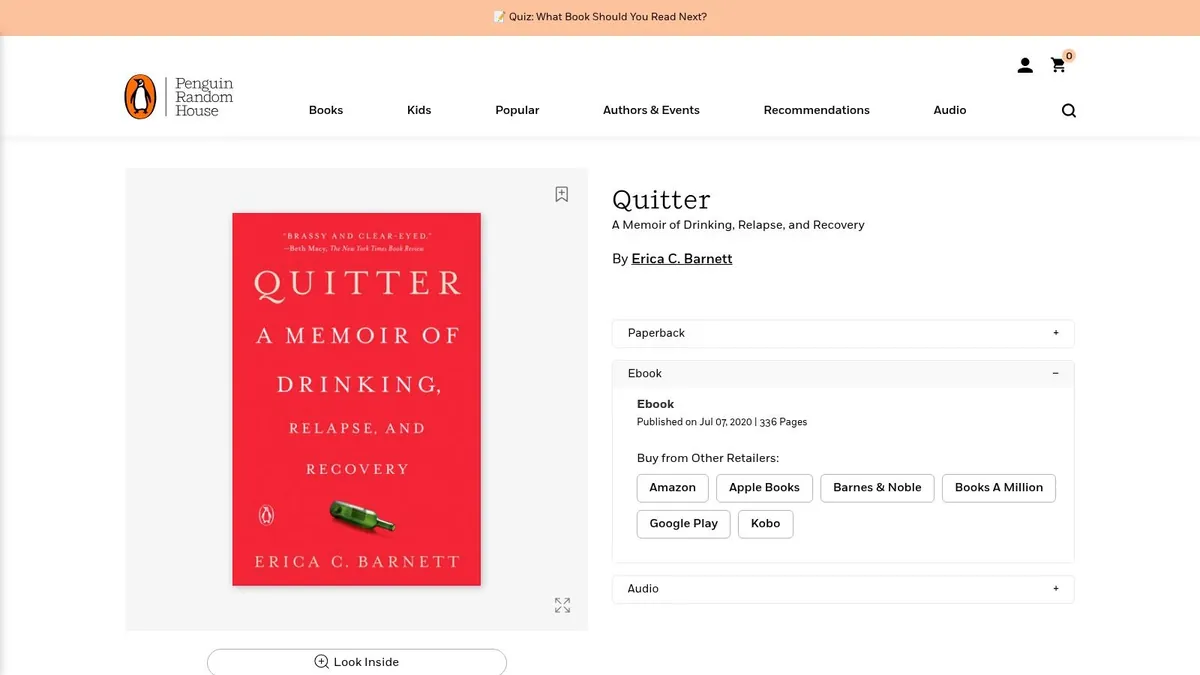
A return to drinking can leave someone feeling that previous effort no longer counts. Erica C. Barnett's Quitter is a memoir that includes treatment and relapse without presenting recovery as simple or uninterrupted.
Its value is honesty about setbacks. That can help a reader move beyond an idealized recovery story, but it shouldn't be read as suggesting relapse is necessary or medically harmless.
- Best reader: Someone looking for a candid account of treatment, setbacks, and recovery.
- Reading order: Choose it after, or alongside, a practical guide rather than instead of one.
- Family use: Discuss how to respond to renewed drinking without turning the conversation into punishment or minimizing safety concerns.
For a more practical companion, this guide to 90 days of sobriety can help frame questions about structure and ongoing support. Keep the focus on what help is needed now rather than whether someone has followed an ideal timeline.
The limitation is that this remains a personal narrative, not a relapse-response workbook. Some experiences may be difficult to read, particularly during a vulnerable period.
If you've returned to drinking, don't wait to finish the book before seeking help. Reassess safety, reconnect with support, and be honest about what has changed.
How the 10 recovery books differ in approach and audience
| Book | Approach | Best For |
|---|---|---|
| Alcoholics Anonymous (The Big Book) | A.A. 12-step framework with recovery stories | Readers exploring A.A. alongside meetings |
| Living Sober | Practical A.A. suggestions for everyday sobriety | Readers seeking brief tips for common situations |
| SMART Recovery 4-Point Program Handbook, 4th Edition | Secular, cognitive-behavioral exercises and tools | Readers wanting a structured, action-oriented approach |
| This Naked Mind | Self-help exploring beliefs and habits around drinking | Readers considering a change without a formal program |
| Alcohol Explained | Accessible explanation of alcohol's physical and psychological effects | Readers seeking to understand drinking patterns |
| We Are the Luckiest: The Surprising Magic of a Sober Life | Reflective memoir about getting sober | Readers looking for a personal sobriety story |
| Drinking: A Love Story | Intimate memoir about drinking and recovery | Readers who prefer personal narrative to a workbook |
| The Recovering: Intoxication and Its Aftermath | Literary nonfiction combining memoir, history, and reporting | Readers interested in a broad, reflective perspective |
| Quit Like a Woman: The Radical Choice to Not Drink in a Culture Obsessed with Alcohol | Memoir and self-help examining drinking culture, with a women-focused perspective | Readers exploring social pressure and sobriety |
| Quitter: A Memoir of Drinking, Relapse, and Recovery | Candid memoir about alcoholism, treatment, and relapse | Readers seeking a personal account that includes setbacks |
Start With One Book, Then Add Real Support
Choose one book that matches your immediate need, not a stack you feel obligated to finish. For practical structure, start with the Big Book, Living Sober, or the SMART handbook. For understanding, choose This Naked Mind or Alcohol Explained; for companionship, choose the memoir whose voice holds your attention.
A partner or family member can start with an explanation or memoir without treating it as a diagnosis of their loved one; How to Support Someone in Recovery: A Practical Guide covers that role in more detail. Use the reading to ask better questions, understand someone's experience, and identify your own boundaries. Don't make finishing a book a test of whether they deserve support.
Make reading part of an active plan
Structured self-help deserves a place in recovery, but the useful ingredient isn't owning the book alone. A review of alcohol bibliotherapy found that self-help manuals could support reductions in drinking, particularly when they included behavioral strategies rather than generic information. Choose an exercise, record what happened, and discuss the result instead of relying on motivation alone.
Support also changes how you use the material. A review of stepped-care approaches described a trial in which a book paired with personalized feedback produced better drinking outcomes than either component alone. That supports a practical approach: bring your questions, written reflections, and sticking points into counseling or another structured support setting.
Keep medical treatment separate from an author's preferred recovery philosophy. Medication, withdrawal management, and ongoing craving treatment require individualized clinical decisions. Don't treat a supplement as a substitute for prescribed treatment or supervised withdrawal care.
Know when reading isn't enough
Books can explain recovery, but they can't determine whether you need detox or assess a worsening mental health concern. They also can't tell you whether a structured living setting fits your situation, and What Is a Sober Living Home? explains what that option is. If drinking is causing physical withdrawal, seek medical assessment before attempting to stop on your own. Severe symptoms, including seizures, hallucinations, or confusion, require emergency care: call 911. For a mental health crisis, call or text 988.
Addiction Resource Center LLC offers outpatient, intensive outpatient (IOP), and partial hospitalization (PHP) care for adults 18+ at 1002 Live Oak Blvd Suite A, Yuba City. A confidential assessment can help clarify the recovery approach that fits your circumstances. The phone and text line is available around the clock at 530-625-7910.
You don't need to finish a recovery book before asking for help. Read something useful, write down what you need, and take that question to a person who can help you act on it.
Addiction Resource Center LLC offers outpatient, IOP, and PHP care for adults 18+ to help you put the ideas in these books into practice with structured clinical support. Visit Addiction Resource Center LLC to explore care options in Yuba City and take the next step toward a recovery plan that fits your life.
Talk with us
Addiction Resource Center offers intensive outpatient treatment (IOP) for adults 18+ at our Yuba City office or by telehealth. Call or text 530-625-7910.
Check my insurance