
Why Do Alcoholics Have Red Noses? The Medical Truth (2026)
Reviewed by clinical staff
Published June 11, 2026 · Updated October 3, 2026
Contents
- How This Guide Reviewed the Medical Evidence on Red Nose and Alcohol
- The Truth About Alcohol and Facial Redness
- Debunking the Myth of the Alcoholic Nose
- How Alcohol Triggers Facial Redness
- When a Red Nose Signals Deeper Health Issues
- What to Do If You Are Concerned
- Frequently Asked Questions
- Find Compassionate Addiction Help in Northern California
A red nose is one of those visible changes that feels like a diagnosis in itself. If you are asking why do alcoholics have red noses, you likely want a straight answer: alcohol widens blood vessels near the skin's surface, which causes temporary redness. However, a persistently red, swollen, or bulbous nose is usually a sign of a skin condition like rosacea or rhinophyma—not proof of alcoholism.
The distinction matters because people often confuse the symptom with the cause. In reviewing dermatology sources for this update, the consistent finding was that while alcohol exacerbates facial redness, it does not create the structural changes associated with severe rhinophyma. A temporary flush after a drink is a normal vascular response. A permanently enlarged nose requires medical evaluation for conditions that may need treatments ranging from prescription topical therapy to surgical intervention.
How This Guide Reviewed the Medical Evidence on Red Nose and Alcohol
- Alcohol Flushing: The immediate, temporary widening of blood vessels caused by alcohol metabolism.
- Rosacea: A chronic inflammatory skin condition that causes persistent redness and visible vessels, often triggered by alcohol.
- Rhinophyma: A severe progression of rosacea involving tissue growth, frequently misunderstood as being directly caused by drinking.
This guide prioritizes sources from recognized dermatological associations and peer-reviewed medical journals over anecdotal evidence. Older stereotypes blamed rhinophyma solely on heavy drinking, but modern evidence does not support a direct causal link.
The Truth About Alcohol and Facial Redness
Alcohol can absolutely make the face look red. Many people notice warmth, blotchiness, or a flushed nose soon after drinking. That part is real.
What often gets confused is what kind of redness a person has. A temporary flushed face after alcohol is not the same thing as a permanently red, swollen, or thickened nose. One may come and go within hours. The other may point to a skin condition or another health issue that needs a clinician's attention.
That's where people get tripped up. They see a visible change and jump straight to a moral conclusion. Medicine asks a different question: what process in the body is causing the redness?
A red nose can mean different things
A red nose may reflect:
- Temporary flushing after alcohol, heat, or emotional stress
- Sensitive skin or rosacea, where the face reacts easily and stays red longer
- Visible small blood vessels that become easier to see over time
- Inflammation that makes the skin look irritated or swollen
- General health strain related to heavy drinking, poor nutrition, or other medical problems
Some of these causes are mild and manageable. Some need prompt care.
Practical rule: Don't use the appearance of a nose to diagnose alcoholism. Use it as a reason to ask better medical questions.
The emotional side matters too. A person with facial redness may already feel embarrassed, defensive, or judged. If you're talking to a family member, the most helpful tone is calm and specific: "I've noticed your skin seems redder lately. Have you had that checked?" That goes much farther than labels or accusations.
Debunking the Myth of the Alcoholic Nose
The phrase "alcoholic nose" has been around for a long time, but it isn't a medically accurate diagnosis. The correct medical term is rhinophyma, and modern medical discussion describes it as a severe form of rosacea, not a direct consequence of drinking alcohol, according to the National Rosacea Society review on rhinophyma and alcohol intake.
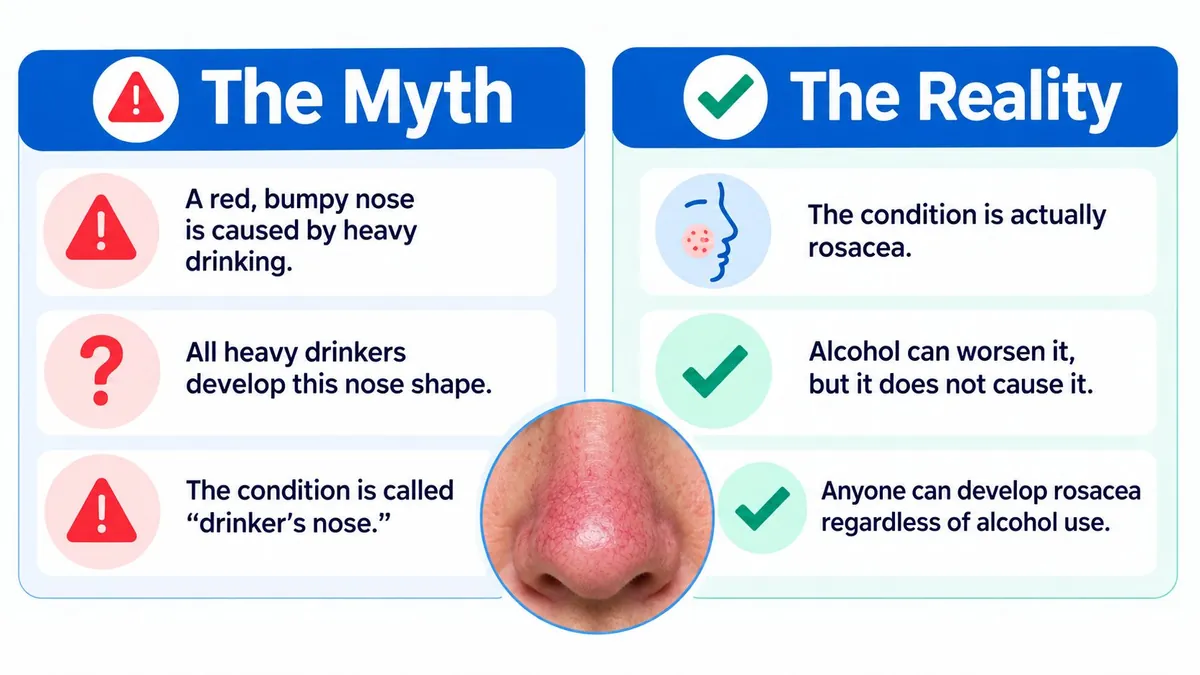
People often assume cause when they're really seeing association. Someone who drinks heavily may flush more often. A person with rosacea may also look redder after alcohol. But that doesn't mean alcohol created rhinophyma in the first place.
What rhinophyma actually is
Rhinophyma is a benign dermatologic condition tied to rosacea. In plain language, it involves skin on the nose becoming thicker, bumpier, and more enlarged over time. That's different from ordinary blushing or the brief redness some people get after a drink.
This is why the old stereotype is so damaging. It takes a medical condition and turns it into a public accusation.
Modern dermatology sources clarify that the belief that heavy drinking directly causes the enlarged, red, bulbous nose is not supported by evidence. Rhinophyma occurs in people who drink and in people who do not drink at similar rates. What alcohol can do is worsen facial flushing because it dilates blood vessels, which may make redness look more obvious during a flare-up. This distinction is critical: the stigma is older than the science, with terms like "whiskey nose" and "gin blossom" spreading long before we understood the underlying pathology Cleveland Clinic rhinophyma overview.
A red, bulbous nose is not reliable proof that someone drinks heavily. It may reflect a skin disease that deserves treatment, privacy, and compassion.
Here's a simple comparison:
For readers seeking more detail on procedural options for advanced rhinophyma, resources such as the guide from Chernoff Cosmetic Surgery outline how modern dermatologic surgery can address tissue changes when they affect function or appearance.
Why this myth sticks around
The myth survives because it fits what people think they're seeing. Alcohol can make the face red in the short term. Rosacea can make redness worse over time. When those two overlap, people draw the wrong conclusion.
Clinical reviews support this nuance. Alcohol and caffeine can cause local vasodilation, temporarily intensifying redness in a nose that is already inflamed. However, population data show no simple cause-and-effect relationship between alcohol consumption and the development of rhinophyma itself PMC research on alcohol and rhinophyma.
The better conclusion is more humane and more accurate. If a nose is persistently red, enlarged, or changing shape, think medical evaluation, not nickname.
How Alcohol Triggers Facial Redness
Alcohol affects the face in ways that are easier to understand when you separate short-term reactions from longer-lasting skin changes. Those are not the same process.
Immediate effects and why flushing happens
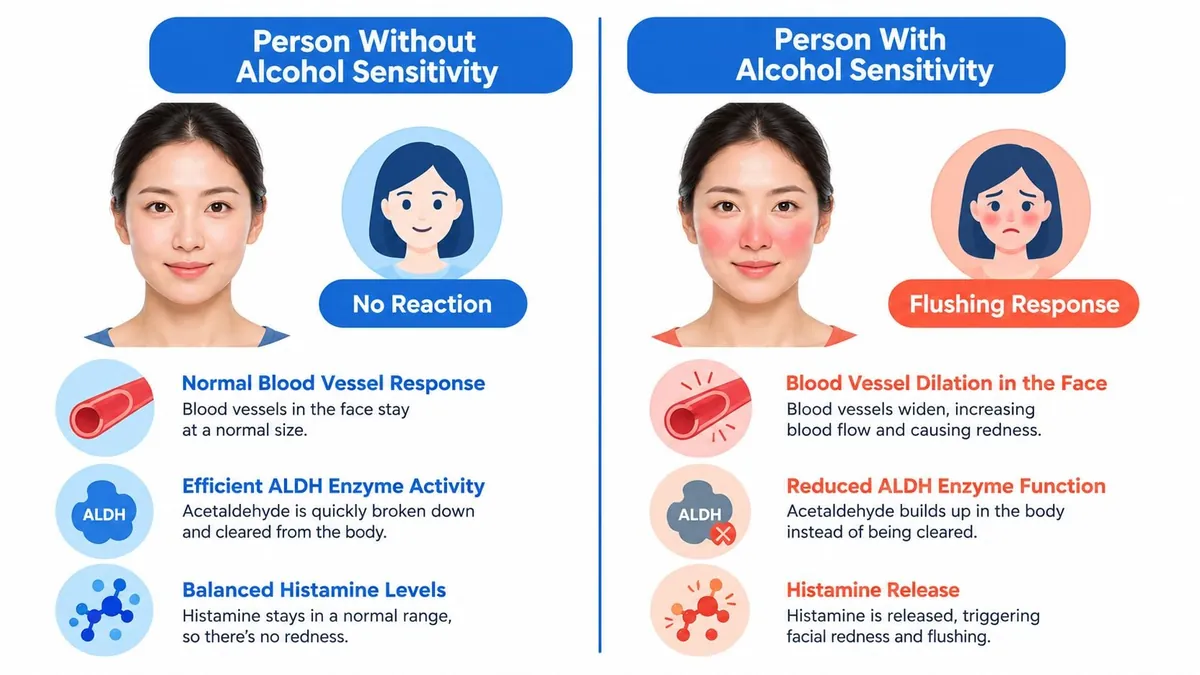
The fastest reason alcohol makes the nose and cheeks look red is vasodilation. That means blood vessels widen. When that happens near the skin, more blood moves through the area, and the face looks warmer and redder.
A simple way to picture it is traffic. If a road suddenly opens more lanes, more cars can pass through at once. With alcohol, widened blood vessels let more blood flow near the surface of the skin. The result is visible flushing.
This reaction often affects both the nose and the cheeks simultaneously. The facial nerves and blood vessels are interconnected, so the "flush" is rarely confined to one area. For some people, that redness fades after the alcohol wears off. For others, especially those with sensitive skin, it lasts longer and happens more intensely.
A few features can make this response more noticeable:
- Existing rosacea makes the skin react more strongly
- Heat and spicy food can add to the same flushed look
- Stress can stack on top of alcohol's effects
- Repeated drinking episodes can make redness feel like a recurring pattern
That's one reason family members get confused. They don't just see someone turn red once. They see it happen again and again, and they start to assume the skin change itself proves addiction. It doesn't. It proves the face is reacting.
Among rosacea triggers, it is worth noting that alcohol doesn't just dilate blood vessels; it also acts as an irritant to the skin barrier, which can lead to a compounding cycle of redness that feels impossible to stop once it starts.
Longer-term changes in the skin
When flushing happens often, the skin may stop fully returning to baseline. Some people begin to develop more persistent redness, and tiny surface blood vessels may become easier to notice. This is known as telangiectasia.
This is especially important in people who already deal with rosacea. Alcohol doesn't need to be the root cause to still be a meaningful trigger. If you want a practical overview of day-to-day management, this 2026 rosacea expert plan walks through common ways people try to reduce redness and protect reactive skin.
A few longer-term issues may show up together:
- Ongoing background redness that no longer fades easily
- More frequent flare-ups after drinking
- Skin irritation from repeated inflammation
- Visible small vessels that give the nose or cheeks a consistently red look
The key question isn't "Does alcohol make people red?" It often can. The key question is whether the redness is temporary, part of rosacea, or a sign that the body is under broader stress.
People also often use the same phrase for very different appearances. One person has a brief flushed nose after wine. Another has chronic redness with visible vessels. Another has thickened nasal skin that needs dermatologic care. Those shouldn't all be lumped into one stereotype.
Alcohol can trigger flushing and worsen existing redness, but the visible result depends on a person's skin, underlying conditions, and how long the irritation has lasted.
When a Red Nose Signals Deeper Health Issues
Sometimes the skin is only part of the story. A red nose may be a cosmetic concern, but in some people it can also appear alongside the broader physical effects of chronic heavy drinking.
That doesn't mean every red nose points to organ damage. It means visible facial changes shouldn't distract from a bigger health check, especially if they appear with fatigue, memory problems, poor appetite, easy bruising, shakiness, or major changes in mood and daily functioning.
The skin can reflect whole-body stress
Heavy alcohol use can strain many systems at once. When that happens, the skin often stops looking calm and resilient. People may notice more redness, irritation, dryness, or a generally unhealthy appearance.
A family member's instinct can be useful if it stays compassionate. Instead of focusing only on the nose, pay attention to the whole picture. Is the person sleeping poorly? Eating less? Losing interest in normal routines? Looking physically run down?
Those patterns matter more than any old stereotype.
Nutrition problems can show up on the face
Long-term alcohol misuse can interfere with nutrition. When the body doesn't get or absorb what it needs, the skin may become more reactive and slower to recover. That can make redness and irritation look worse.
Nutritional injury can also affect the brain. If you're concerned that a loved one has serious alcohol-related memory or confusion problems, this explanation of Massachusetts alcohol treatment and wet brain gives a useful overview of why prolonged alcohol misuse can become medically urgent.
A few warning signs deserve prompt medical attention:
- Confusion or severe forgetfulness
- Poor balance or unsteady walking
- Very limited food intake
- Persistent vomiting
- Sudden worsening in appearance or functioning
Don't let a visible symptom become the whole conversation. Sometimes a "red nose" question is really a question about whether someone's health is slipping overall.
If you're worried, start with a doctor, not a debate. A clinician can look at the skin, review alcohol use, check for other medical causes, and help sort out what needs attention first.
What to Do If You Are Concerned
If you're worried about yourself or someone close to you, take a two-track approach. Look at the skin issue and the alcohol issue separately, even if they may be connected.

That helps because people often make one of two mistakes. They either obsess over the nose and ignore the drinking, or they focus only on alcohol and never get the skin properly diagnosed.
Start with a medical evaluation
A primary care doctor or dermatologist can help identify whether the redness looks more like flushing, rosacea, visible vessels, irritation, or another condition. That matters because each problem has a different path forward.
Bring concrete observations to the appointment:
- When it happens after drinking, stress, heat, or certain foods
- How long it lasts
- Whether the skin is changing shape or texture
- What else is happening such as burning, dryness, swelling, or breakouts
That kind of detail is more useful than saying, "It looks like an alcoholic nose."
Look honestly at alcohol use without shame
If drinking has become frequent, hard to control, or tied to conflict, poor sleep, anxiety, or secrecy, it's worth addressing directly. Seeking help for alcohol use is not an admission of weakness. It's a health decision.
Sometimes the alcohol itself is being used to cope with something deeper. Anxiety, family tension, grief, and relationship stress often travel with problem drinking. For people who need support around those patterns, Therapy for anxiety and relationships can be one example of the kind of counseling support that helps people work on the issues around alcohol, not just the substance itself.
A calm first conversation can sound like this:
- Name what you've noticed. "I've seen more redness in your face, and I'm worried about your health."
- Stay away from labels. Avoid words that corner the person.
- Ask about support. "Would you be open to seeing a doctor or talking with someone?"
- Focus on care, not blame. That keeps the door open.
"I'm not trying to judge you. I want to help you figure out what's going on."
That sentence often lowers the temperature of the conversation right away.
Frequently Asked Questions
Will my red nose go away if I quit drinking?
If the redness is caused by temporary alcohol-induced flushing, it will likely resolve within hours of stopping alcohol and may improve significantly over weeks of abstinence. However, if the redness is due to permanent damage to blood vessels (telangiectasia) or rosacea, quitting drinking will prevent worsening but may not eliminate the redness completely. Dermatological treatments are often needed for persistent vessel visibility.
What does alcoholism do to the nose?
Alcoholism itself does not structurally deform the nose. However, chronic heavy drinking can worsen underlying skin conditions like rosacea, leading to persistent redness and visible blood vessels. In rare cases associated with long-term rosacea, rhinophyma can develop, causing tissue enlargement, but this is a skin disease progression, not a direct result of alcohol toxicity alone.
How do you get rid of a drinker's nose?
There is no home remedy to reverse a "drinker's nose" because the term often misidentifies a medical condition. For temporary redness, avoiding triggers like alcohol helps. For rosacea, prescription topicals or oral medications are standard. For rhinophyma (enlarged, bulbous tissue), treatment typically requires procedural interventions such as laser therapy, electrosurgery, or surgical contouring performed by a dermatologist or plastic surgeon.
Can a red nose from drinking be reversed?
Yes, in many cases. Temporary flushing reverses as alcohol metabolizes. Chronic redness from rosacea can be managed and improved with medical treatment and trigger avoidance. Structural changes from rhinophyma are generally permanent without surgical intervention, though surgery can restore a more typical nasal shape.
Find Compassionate Addiction Help in Northern California
When people ask why do alcoholics have red noses, they're often asking a much bigger question underneath it. They're asking whether a visible change means someone is unwell, whether alcohol is involved, and whether anything can still be done.

The answer is yes. A red nose is not a character flaw. It's a reason to slow down, look carefully, and respond with medical accuracy and respect.
For adults and families in Yuba City and across Northern California, getting help is often easier when one place can guide the next steps. Others need a structured outpatient program that fits around work or family life. Some need residential care and a calmer setting to stabilize.
The right plan depends on the person, not on a stereotype.
Here's what often helps people take the first step:
- Privacy matters. Many people delay treatment because they fear embarrassment.
- A clear intake process helps. Knowing who to call and what happens next reduces panic.
- Flexible levels of care matter. Not everyone needs the same setting or schedule.
- Support for co-occurring mental health needs matters. Alcohol problems rarely exist in isolation.
If you're in Northern California, it also helps to know the practical details ahead of time.
The most important step is often the simplest one. Stop treating the red nose as the whole story. Start treating the person.
Learn more about our outpatient addiction treatment services, or contact Addiction Resource Center.
Talk with us
Addiction Resource Center offers intensive outpatient treatment (IOP) for adults 18+ at our Yuba City office or by telehealth. If you need detox or residential care first, we coordinate it with our partner, Ona Treatment Center in Browns Valley, CA. Call or text 530-625-7910.
Check my insurance