Explore practical tools to stay sober with daily resources designed to strengthen your recovery commitment and build lasting habits.

Staying sober requires more than willpower alone. At Addiction Resource Center, we know that real recovery happens when you combine medication, community support, and daily habits that work for your life.
This guide walks you through the tools to stay sober that actually make a difference. You’ll find concrete options you can start using today.
Medications That Actually Work for Addiction
Medication-assisted treatment stands as one of the most evidence-backed approaches in recovery, yet many people hesitate because they view it as trading one substance for another. This misconception costs lives. Medications for alcohol and opioid use disorders work differently than addictive drugs-they stabilize brain chemistry, reduce cravings, and prevent overdose without producing the high that drives addiction.
How Medications Address Addiction
For alcohol use disorder, naltrexone blocks the rewarding effects of alcohol and reduces cravings, while acamprosate restores brain chemistry balance after prolonged drinking. Disulfiram acts as a deterrent by causing severe nausea if someone drinks. For opioid use disorder, buprenorphine provides a partial opioid effect that prevents withdrawal and craving without the euphoria of heroin or prescription painkillers. Methadone, a full opioid agonist, requires daily clinic visits but offers strong craving management. Naltrexone for opioids works best for highly motivated individuals. Medication-assisted treatment combined with counseling increases abstinence rates compared to counseling alone.
Working with Your Doctor to Find the Right Match
Your doctor needs specific information to recommend the right medication. Tell your doctor about your medical history, current medications, liver and kidney function, and any mental health conditions. Some medications interact dangerously with other drugs. Buprenorphine, for example, carries overdose risk if mixed with benzodiazepines, yet many people with anxiety take both. Your doctor should run baseline labs before treatment starts and monitor regularly afterward.
Dosage matters tremendously. Too low a dose leaves you vulnerable to cravings and relapse. Too high a dose creates unnecessary side effects.
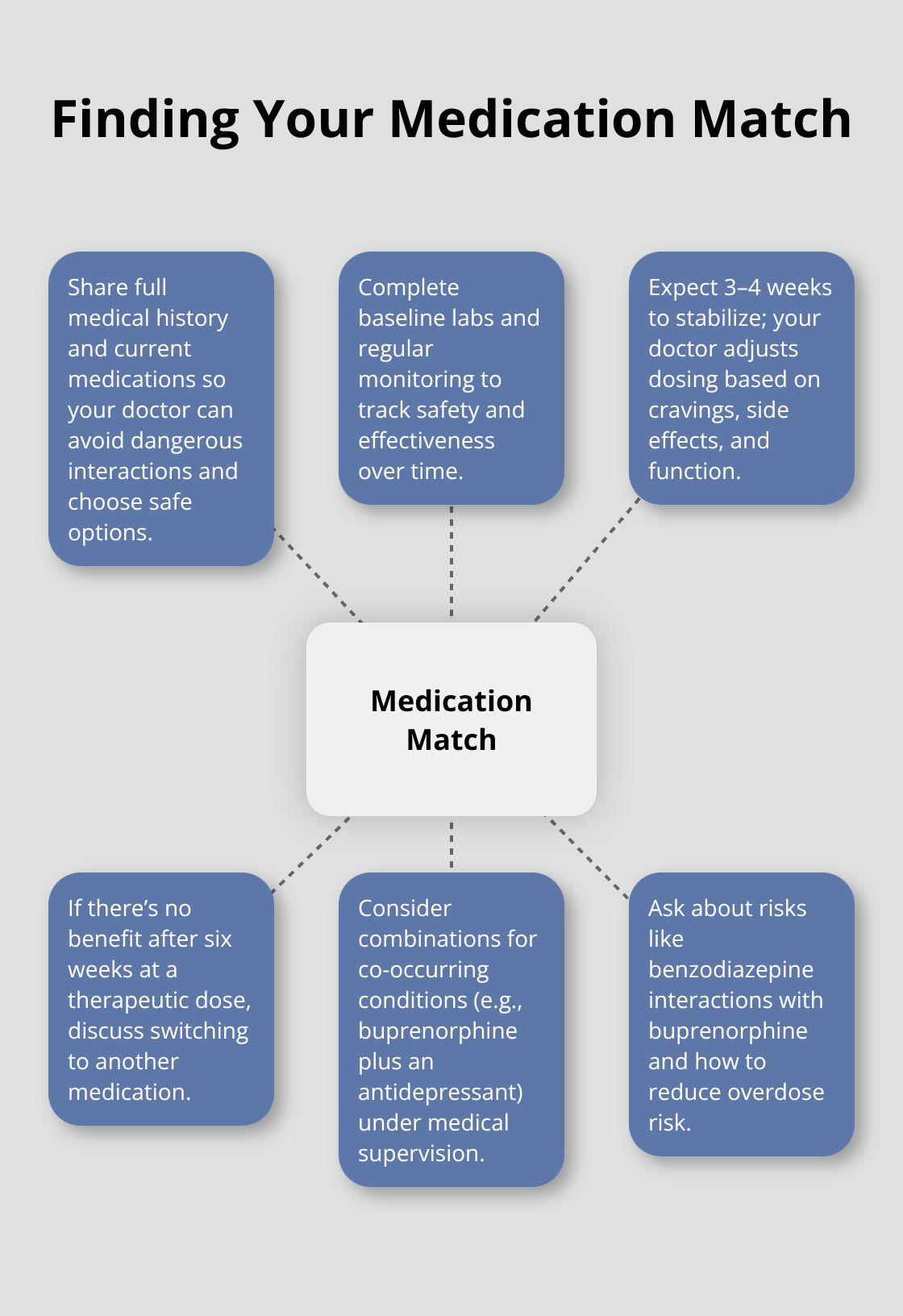
Most people need 3 to 4 weeks to stabilize on the right dose. Your doctor will adjust based on your response. If your first medication doesn’t work after six weeks at a therapeutic dose, switching to another option makes sense. Some people benefit from combining medications for co-occurring disorders-a person with opioid addiction and depression might take buprenorphine plus an antidepressant. This isn’t failure. It’s precision medicine.
What Happens During Treatment
Starting medication-assisted treatment means committing to regular doctor visits, usually weekly at first, then monthly once stable. Opioid treatment programs often require urine drug screens to verify you take the medication and don’t use other drugs. This feels invasive but protects your recovery. Some programs offer take-home doses after you prove stability. Buprenorphine can be prescribed in office-based settings, making treatment more flexible and private than methadone clinics.
Side effects vary by medication. Naltrexone causes nausea in some people during the first week. Buprenorphine may cause constipation. Methadone can cause weight gain. These aren’t deal-breakers-most side effects diminish within weeks, and your doctor can manage them with other medications or dose adjustments.
Addressing Cost and Access
Insurance coverage varies widely. Some plans cover all medication-assisted treatment. Others require prior authorization or limit which medications they’ll pay for. Contact your insurance company before treatment starts. If cost blocks access, ask your doctor about sliding-scale clinics or programs that don’t deny services based on inability to pay.
The medication itself isn’t treatment. Treatment happens when you combine medication with counseling, support groups, and behavioral changes. Medication removes the biological obstacle so your brain can actually benefit from therapy and community support. Consistency matters most-missing doses restarts cravings, and skipping appointments destabilizes your progress. Once you stabilize on the right medication, you’re ready to build the community connections and daily habits that sustain long-term recovery.
Support Groups and Community Resources
Community sustains recovery in ways medication alone cannot. The difference between someone who stays clean for six months and someone who stays clean for six years often comes down to the relationships they build in recovery. Isolation kills recovery while connection sustains it.
Traditional 12-Step Programs and Their Alternatives
Twelve-step programs like Alcoholics Anonymous and Narcotics Anonymous remain the most accessible option. They operate in nearly every community, cost nothing, and meet multiple times daily in most areas. AA hosts over 60,000 meetings worldwide, making it statistically the easiest support system to access. However, AA isn’t the only path. SMART Recovery uses a four-point science-based program instead of spiritual principles and offers meetings both in-person and online through their meeting locator. LifeRing Secular Recovery focuses on self-empowerment without religious language. If traditional meetings don’t resonate with you, these alternatives work equally well for people who engage consistently.
The key difference isn’t the program itself-it’s showing up regularly. Research shows that people who attend weekly support meeting attendance maintain long-term abstinence at significantly higher rates than those who attend sporadically or not at all.
Digital Recovery Apps and Virtual Support
Digital recovery apps have transformed access for people who can’t attend in-person meetings or need support between sessions. Loosid functions as an all-in-one platform with over 300,000 members, offering virtual peer support, progress tracking, and access to sober-friendly events and travel discounts. WEconnect Recovery provides eight or more virtual peer-support meetings daily with camera-optional participation, automatic attendance tracking, and geofencing that verifies you actually attended.
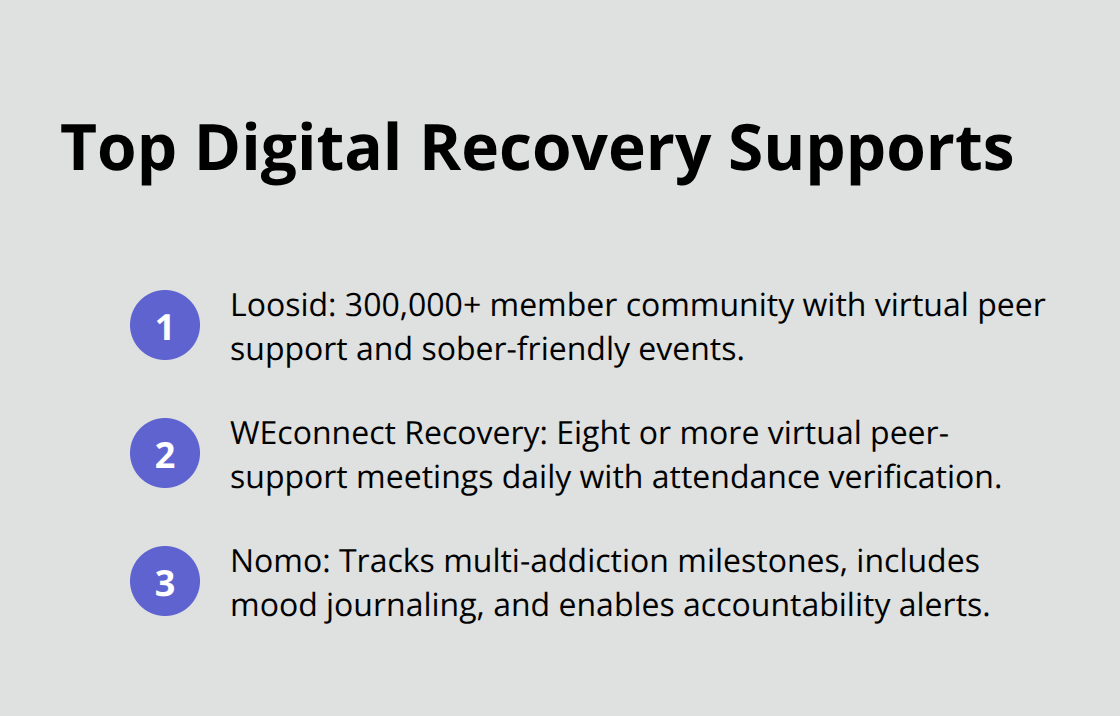
Nomo tracks sobriety milestones across multiple addictions, includes a mood journal, and connects you with accountability partners who receive alerts when you struggle.
These apps work best when paired with professional treatment rather than used alone. They fill gaps between therapy sessions and provide immediate support during high-risk moments.
Finding Local Recovery Groups in Your Area
Local recovery groups in your area-whether through treatment centers, hospitals, or community organizations-offer the benefit of face-to-face connection that builds deeper relationships. Ask your doctor or treatment provider for groups meeting near you, or search your city’s health department website for recovery resources. Many communities also offer peer recovery coaching, where someone further along in recovery guides you through early sobriety.
Building Your Recovery Network
The combination of supports matters most. Someone taking buprenorphine who attends weekly therapy, joins an online support group, and connects with a sponsor or accountability partner has exponentially better outcomes than someone relying on medication alone. Your next step involves translating this community support into daily habits that reinforce your commitment to sobriety.
Building Daily Routines That Stick
The difference between staying sober for thirty days and staying sober for three years comes down to what you do on Tuesday afternoon at 2 PM when nobody’s watching. Medication manages cravings. Support groups provide accountability. But daily structure prevents the boredom and emptiness that trigger relapse. Most people relapse not during crisis moments but during ordinary days when old habits feel easier than new ones.
Replacing Time Addiction Consumed
Addiction consumed hours each day. If you spent two hours daily using, that’s fourteen hours per week suddenly empty. Your brain will push you toward that void. The solution isn’t motivation-it’s scheduling. Wake at the same time daily, eat breakfast within thirty minutes of waking, exercise by mid-morning, work or volunteer in the afternoon, attend a support meeting or therapy session, and maintain consistent sleep. This structure sounds rigid, but it works because it removes decision fatigue. Research shows that people maintaining consistent daily routines report significantly lower craving intensity than those with chaotic schedules.
Exercise as a Biological Tool
Exercise deserves specific attention because it rewires your brain’s reward system. Try thirty minutes of moderate activity five days weekly-this reduces anxiety and depression while releasing endorphins that naturally elevate mood. Walking, running, swimming, or yoga work equally well. The key is doing the same activity at the same time, so it becomes automatic rather than something you have to motivate yourself to do. Your body adapts to the routine and begins craving the endorphin release instead of substances.
Stress Management Without Substances
Stress triggers relapse more reliably than anything else. Your old coping mechanism for stress was substances. You need new ones before stress hits. Mindfulness meditation reduces anxiety measurably-even ten minutes daily improves emotional regulation enough to weather cravings without using. Apps like Headspace and Calm offer recovery-specific modules. Progressive muscle relaxation, where you tense and release each muscle group systematically, takes fifteen minutes and lowers cortisol levels. Box breathing (inhale for four counts, hold for four, exhale for four, hold for four) interrupts the stress response immediately.
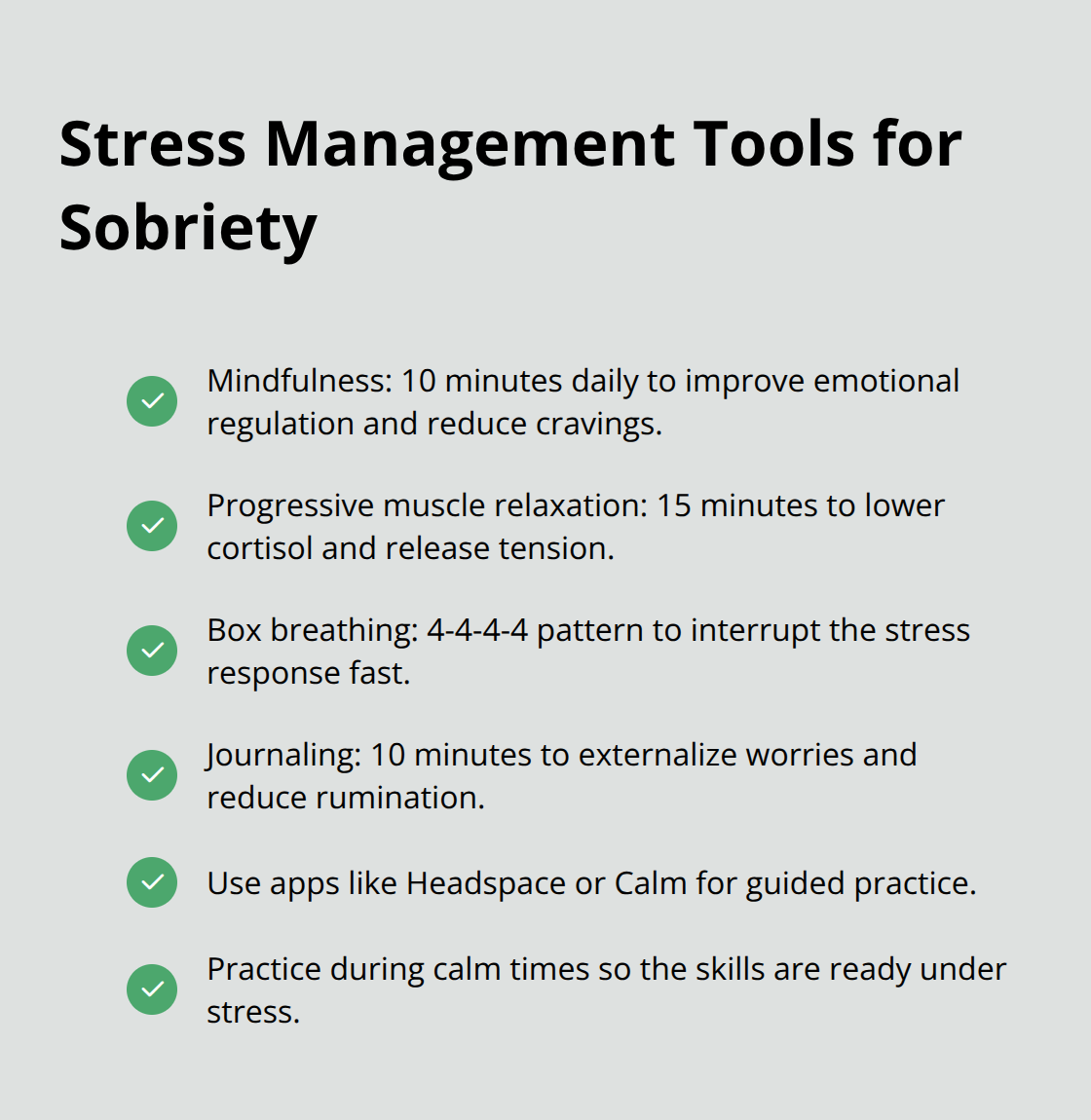
Write these techniques down and practice them during calm moments so they’re available during high-stress ones.
Journaling works differently-it externalizes anxious thoughts rather than letting them spiral internally. Ten minutes of writing about what’s bothering you reduces rumination and clarifies what you can actually control versus what you cannot. Many people skip this because it feels unrelated to addiction recovery. It absolutely relates. Unmanaged stress biochemically increases craving intensity.
Filling Your Time with Meaningful Activities
Addiction fills a void. Recovery requires filling that same void with activities that genuinely interest you, not activities you think you should do. If you hate yoga, don’t do yoga. If you love woodworking, join a woodworking workshop. The hobby matters less than the consistency and the fact that it engages your mind enough to displace craving thoughts.
Volunteer work offers particular power because it combines structure, purpose, and community. Volunteering three hours weekly at an animal shelter, food bank, or community center gives your week purpose beyond personal recovery. Research shows that people engaging in volunteer work maintain abstinence at higher rates than those who don’t. Social connection through these activities prevents the isolation that kills recovery. Building relationships outside support groups-with people who don’t know your addiction history-normalizes your identity beyond recovery. You become someone who volunteers at the shelter, not just someone in recovery.
Consistency: The Key to Lasting Sobriety
You now possess the tools to stay sober that actually work. Medication stabilizes your brain chemistry, support groups and apps connect you to people who understand your struggle, and daily routines fill the hours addiction consumed. These aren’t optional extras-they form the foundation of lasting recovery.
The most important tool isn’t medication or meetings or exercise. It’s consistency. People who stay sober for years don’t do everything perfectly; they show up regularly, adjust when something stops working, and build a life worth staying sober for. That life emerges gradually through small daily choices repeated over months and years.
Recovery isn’t linear, and you’ll have days when cravings feel overwhelming and days when sobriety feels effortless. What matters is having people and practices ready for the hard days. At Addiction Resource Center, we provide personalized addiction therapy, substance abuse counseling, and mental health support tailored to your specific needs. Contact Addiction Resource Center to explore treatment options that support your long-term sobriety.