Build a sober lifestyle with practical daily steps for lasting recovery and mental wellness.


Sobriety is a daily practice, not a destination. It requires concrete steps-from building genuine support around you to managing the moments when cravings hit hardest.
We at Addiction Resource Center know that how to live sober means handling the practical realities of recovery. This guide walks you through the everyday actions that create lasting change.
Building a Strong Support System
Who Should Be in Your Sober Circle
Sobriety thrives when you stop trying to do it alone. The people around you shape your daily reality, and research consistently shows that strong social connections reduce relapse risk significantly. Isolation feeds cravings, while genuine relationships create accountability and real motivation to stay sober. Start by identifying who in your life actually supports your recovery goals-not people who tolerate your sobriety, but those who actively encourage it. These are the people who ask how you’re doing without offering a drink, who suggest activities that don’t center on alcohol, and who stick around when recovery gets uncomfortable. Write down three to five specific names and what each person offers: emotional support, practical help, or shared interests outside drinking. Then reach out to at least one person each week.
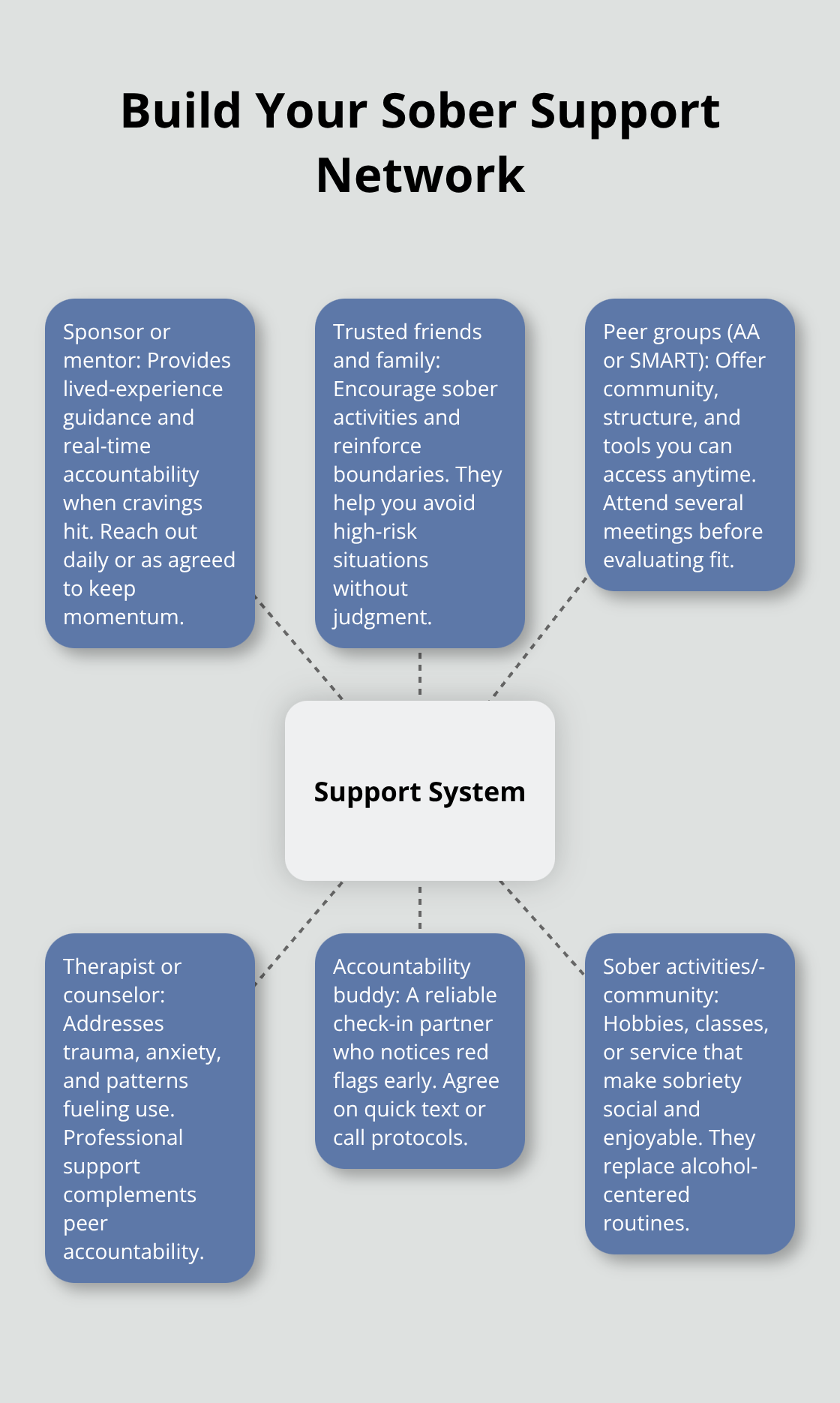
A daily check-in with someone you trust-a sponsor, friend, or family member-creates structure and prevents isolation from creeping in.
Peer Support Groups: AA and SMART Recovery
Support groups like SMART Recovery and AA operate on the principle that shared experience breaks shame faster than anything else. SMART Recovery uses cognitive behavioral tools to reshape your relationship with cravings, making it ideal if you prefer evidence-based strategies over spiritual approaches. AA’s 12-step framework appeals to those seeking community rooted in shared struggle and accountability. Both organizations have grown substantially-AA has roughly 1.3 million members globally, while SMART Recovery offers meetings across multiple countries plus a mobile app for accessing tools anytime. If formal groups feel intimidating, start with one meeting and commit to attending three times before deciding if it fits.
Professional Support Through Counseling and Therapy
Therapy or counseling adds another layer by addressing the specific reasons you drink or used substances. A counselor can help untangle trauma, anxiety, depression, or family patterns that fuel addiction in ways peer support alone cannot. The combination of peer support, professional guidance, and personal accountability creates a three-part safety net that catches you when one element falters. When you’re ready to explore professional treatment options, facilities provide personalized addiction therapy and substance abuse counseling tailored to your specific needs. The next step involves identifying what actually triggers your cravings and building practical strategies to handle those moments.
Managing Triggers and Cravings in Daily Life
Understanding Your Triggers
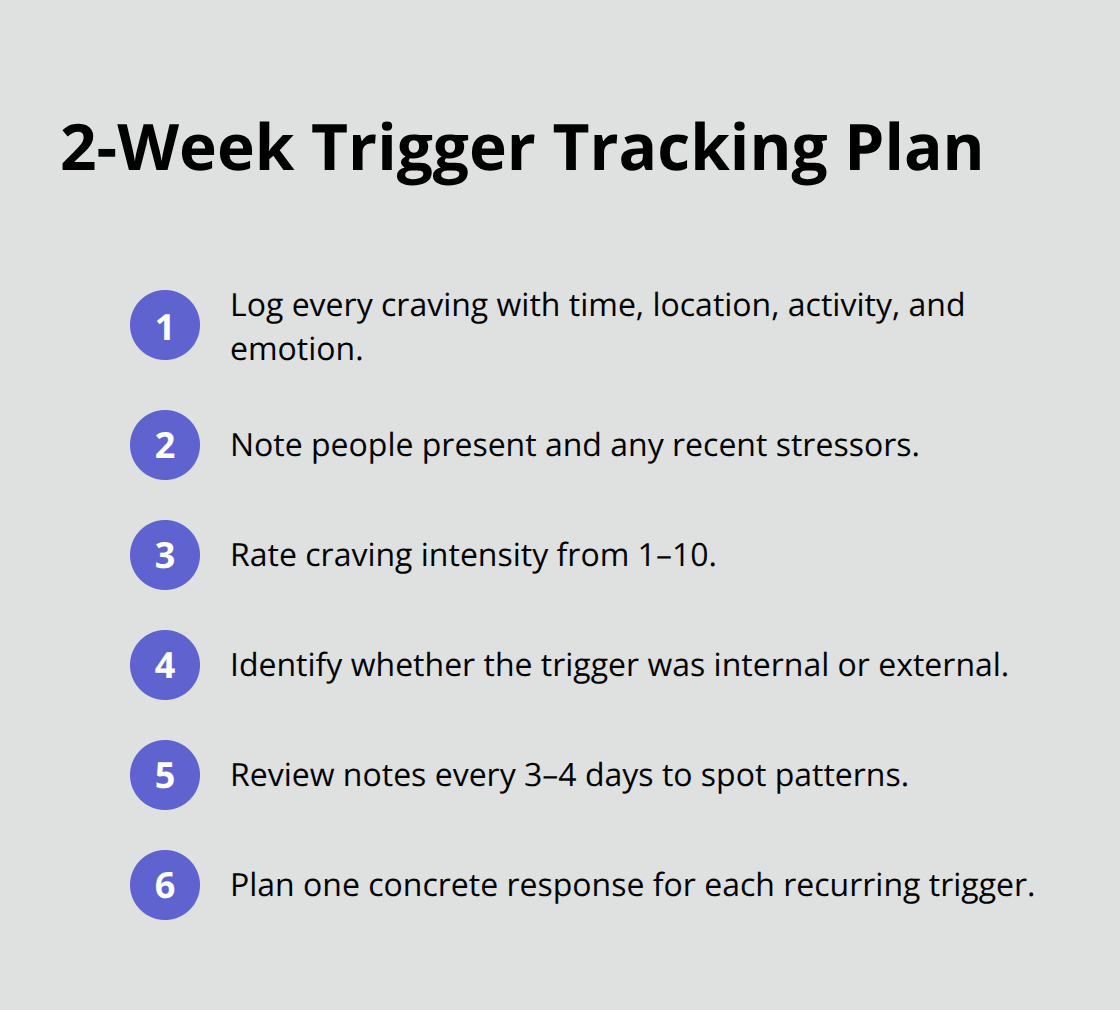
Cravings follow predictable patterns tied to specific moments, places, people, or emotions. The Combined Behavioral Intervention Manual, a clinical guide used by therapists treating alcohol-related problems, identifies addiction triggers into two types: external ones like social situations or passing a bar, and internal ones like stress, anger, loneliness, or boredom. External triggers often become avoidable-you can skip the happy hour or choose different routes home. Internal triggers demand actual coping skills because you cannot avoid your own thoughts and feelings. Track what precedes your urges for two weeks. Write down the time, location, what you were doing, and how you felt. You’ll spot patterns: maybe Wednesday evenings trigger cravings when work stress peaks, or Sunday nights when isolation creeps in. This data becomes your defense.
Building Your Coping Toolbox
Once you know your triggers, build a coping toolbox with short-term strategies you can deploy in minutes (text a friend, take a cold shower, do ten minutes of breathing exercises), mid-term options (go for a walk, call your support person, engage in a hobby), and longer strategies (attend a meeting, spend time in nature, work on a project). The recognize-avoid-cope framework, rooted in cognitive behavioral therapy, teaches you to pause when a craving hits, identify the thought driving it, and replace it with reality. That thought saying one drink is fine? Challenge it directly. One drink leads to more for most people in recovery. Cravings are short-lived-they crest and pass within fifteen to twenty minutes if you ride them out without fighting. Carry a wallet card or digital reminder of why you chose sobriety. In high-risk situations you cannot avoid, have an exit strategy planned before you arrive and keep a trusted friend on standby.
Creating Routines That Protect Your Sobriety
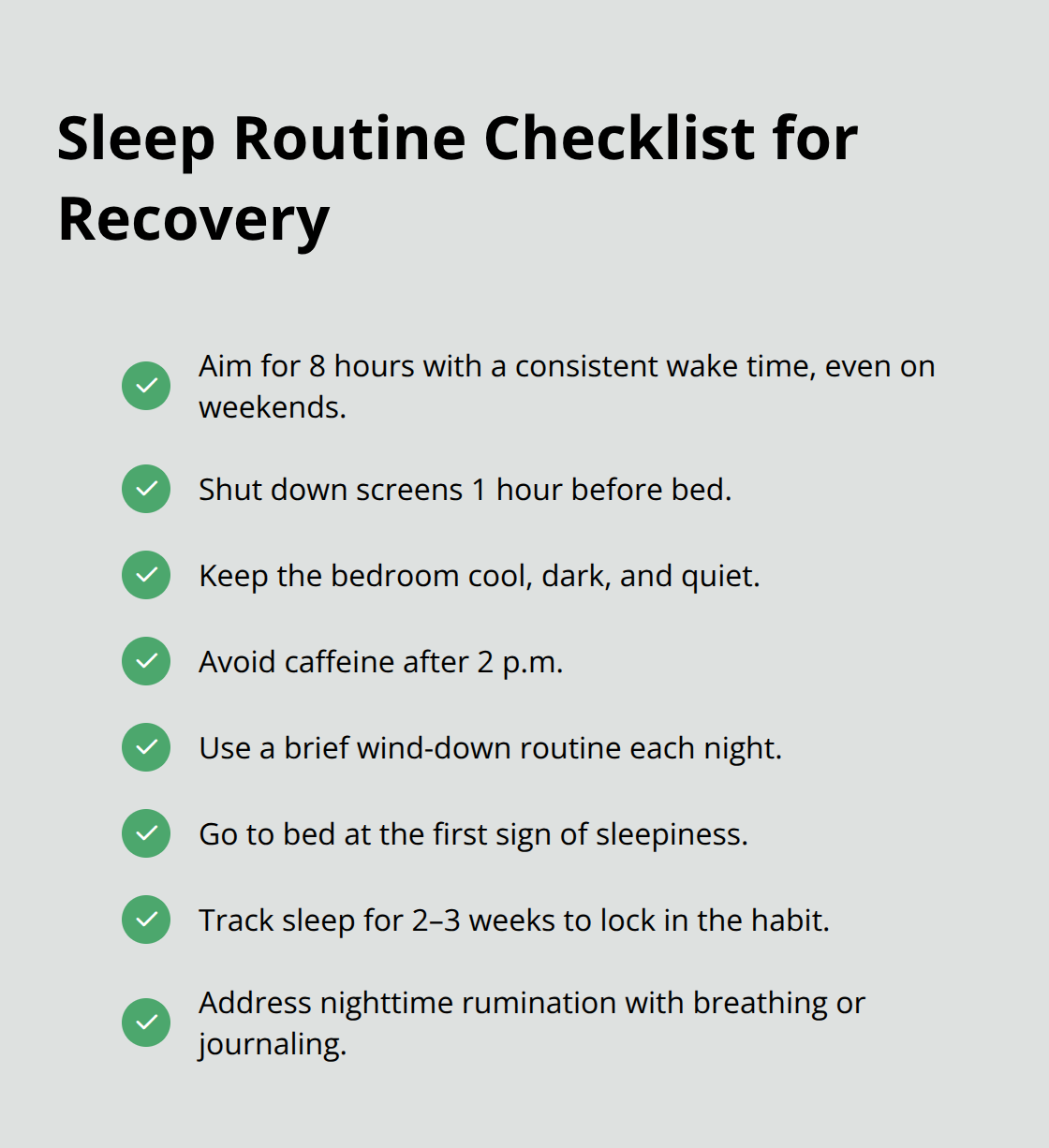
Daily routines form your foundation for staying sober. Consistency resets your body clock and makes healthy behaviors automatic over time. Try for eight hours of sleep nightly with a consistent wake time, since sleep deprivation triggers cravings and poor decision-making. Build a calming pre-bed routine: no screens one hour before sleep, dim lights, soothing music, or reading. Exercise three times weekly, starting with twenty-minute walks outdoors if you are new to movement-research shows that structured activity prevents relapse. Eat regular meals combining protein, complex carbs, vegetables, and fruit; plan grocery shopping and meal prep so unhealthy options do not fill your kitchen. Daily routines and practices support long-term sobriety by building consistency into your recovery.
Managing Stress Before It Builds
Stress management matters enormously because uncontrolled stress is a relapse trigger. Spend ten to twenty minutes daily on mindful breathing or meditation. During overwhelm, take five to ten minute breaks to regain control. Avoid over-committing yourself and talk with your therapist or a trusted person when pressure builds. Replace old drinking patterns with new activities: join a class, start a sport, build something, or pursue a hobby that genuinely interests you. Research suggests habit formation takes time to become automatic, so prioritize consistency over perfection. A well-structured day reduces boredom, a known relapse trigger, and builds self-control like exercising a muscle. These daily practices create the stability you need to handle what comes next: protecting your physical and mental health as the foundation for long-term recovery.
Maintaining Physical and Mental Health
Your body and brain directly shape your sobriety. When you neglect sleep, skip meals, or avoid movement, cravings intensify and stress spirals. The reverse is equally true: consistent exercise, proper nutrition, and solid sleep make staying sober significantly easier.
Exercise as Your First Line of Defense
Start with exercise because it delivers immediate results. Move for twenty to thirty minutes at least three times weekly, and outdoor activity works best since sunlight regulates mood and sleep cycles. Walking, cycling, or any activity you’ll actually do counts more than perfect gym routines. Exercise reduces stress hormones and releases endorphins that counteract mood dips common in early recovery. Research shows that structured activity prevents relapse, making movement one of your most powerful tools against cravings.
Sleep and Nutrition Create Stability
Your sleep schedule matters enormously because sleep deprivation triggers poor decision-making and heightens cravings. Try for eight hours nightly with a consistent wake time, even on weekends. Stop screens one hour before bed, keep your bedroom cool and dark, and avoid caffeine after two in the afternoon. A consistent sleep routine takes two to three weeks to establish, so stick with it through the adjustment period.
Food directly affects your mental state and cravings. Eat regular meals with protein, complex carbohydrates, vegetables, and fruit because stable blood sugar prevents the mood crashes that fuel urges to drink. Plan your grocery shopping and meal prep on weekends so you’re not reaching for processed options when tired or stressed. Alcohol contains seven calories per gram (nearly as much as fat), so reducing drinking often leads to weight loss and improved energy without additional effort.
Addressing Mental Health Issues Directly
Co-occurring mental health issues like depression, anxiety, or trauma often underlie addiction, and ignoring them guarantees relapse. Many people self-medicate with alcohol or drugs to numb emotional pain, so addressing the root cause matters more than willpower alone. Talk with a counselor or therapist about depression, anxiety, past trauma, or family patterns that trigger your substance use. Medication can help reduce cravings or the rewarding effect of drinking if urges persist after weeks of effort, and these medications are non-addictive.
Some people benefit from daily mindfulness or meditation (ten to twenty minutes) to manage stress and emotional regulation. Others need structured therapy like cognitive behavioral therapy to reshape harmful thought patterns. The combination of consistent exercise, solid sleep, proper nutrition, professional support, and stress management creates a physical and mental foundation that makes sobriety sustainable. Your nervous system needs time to recalibrate after years of substance use, so patience with yourself during this adjustment period is essential.
Sustainable Steps for a Lifetime of Recovery
Living sober rests on three pillars that work together every single day. You need people around you who genuinely support your recovery, whether that’s a sponsor, therapist, support group, or trusted friend. You must understand your triggers and have practical coping strategies ready before cravings arrive. You protect your sleep, nutrition, and mental health because these directly affect your ability to stay sober.
Real recovery happens in the small moments: the morning walk that clears your head, the phone call to your sponsor when stress builds, the meal you planned instead of skipping, the eight hours of sleep that reset your nervous system. These daily actions compound over weeks and months into lasting change. How to live sober means building these concrete systems that support you consistently, not relying on willpower alone.
If you struggle to build these systems alone or if cravings persist despite your efforts, professional support makes a real difference. We at Addiction Resource Center offer personalized addiction therapy and substance abuse counseling tailored to your specific needs (our team understands the complex nature of addiction and provides compassionate support throughout your recovery journey). Contact Addiction Resource Center to explore how our outpatient addiction treatment programs can help you move forward with confidence.