Explore holistic addiction treatment methods that heal your body, mind, and spirit. Learn integrated approaches for lasting recovery and wellness.


Addiction doesn’t just affect your brain-it impacts your entire being. At Addiction Resource Center, we’ve seen firsthand that treating only the mind leaves people vulnerable to relapse.
Holistic addiction treatment methods address what traditional programs miss: your physical health, emotional wounds, and search for meaning. This approach works because recovery requires healing on every level.
Why Holistic Treatment Works When Standard Approaches Don’t
The Limitations of Single-Modality Treatment
Holistic addiction treatment rejects the idea that addiction is purely a brain disorder requiring only medication or talk therapy. It addresses the physical deterioration, emotional trauma, and spiritual emptiness that typically accompany substance use. Addiction damages your body through malnutrition and sleep deprivation, wounds your mind with anxiety and depression, and disconnects you from any sense of purpose. Traditional programs that focus solely on behavioral change or medication miss these interconnected problems, which is why relapse rates remain stubbornly high. When you treat only one dimension, the untreated dimensions become weak points where relapse finds entry.
How Mind-Body Integration Changes Recovery Outcomes
Research from Harvard Health Publishing shows that mind-body medicine approaches in addiction are increasingly integrated into recovery programs because they address underlying distress, not just the surface symptom of substance use. Your physical state directly determines your mental resilience and emotional capacity during recovery. Poor nutrition, irregular sleep, and physical deconditioning create a cascade of problems: your mood destabilizes, cravings intensify, and stress tolerance collapses.
The National Center for Complementary and Integrative Health reports that mindfulness-based interventions reduce use of alcohol, cocaine, marijuana, cigarettes, opiates, and amphetamines while lowering cravings and relapse risk, but only when paired with physical wellness practices. A meta-analysis in the Journal of Substance Abuse Treatment found that mindfulness approaches show small-to-moderate effects on reducing substance use, yet these effects strengthen significantly when combined with exercise, proper nutrition, and structured sleep routines.
The Evidence for Integrated Recovery
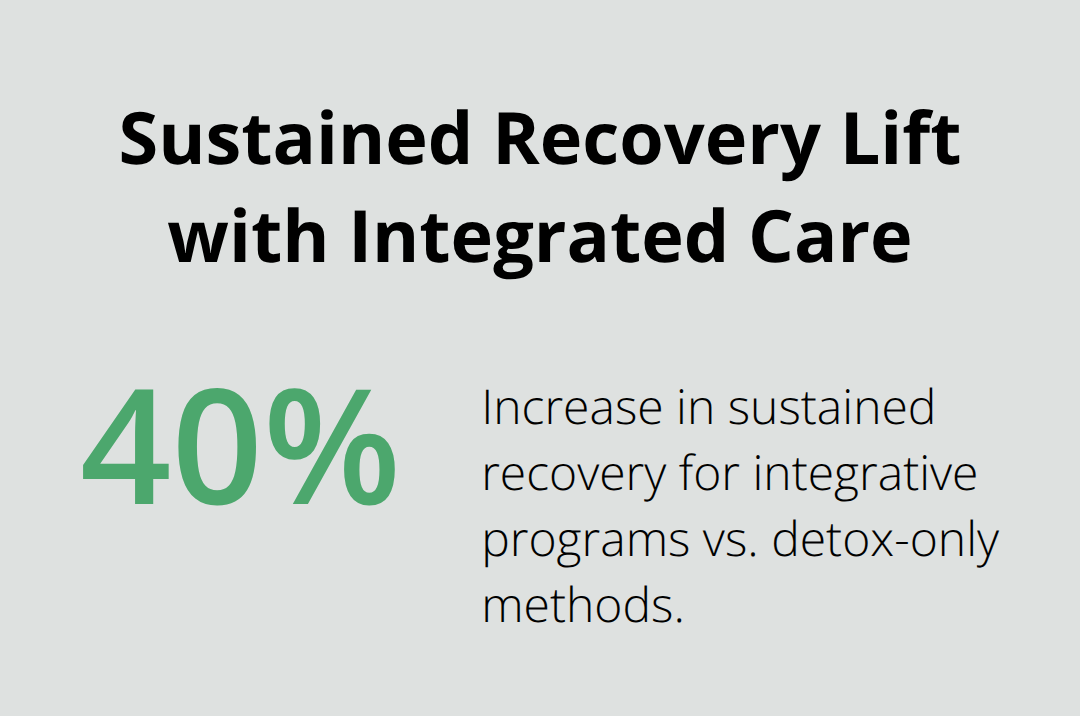
Programs employing integrative techniques that address all three dimensions report a 40 percent increase in sustained recovery compared to traditional detox-only methods (American Journal of Drug and Alcohol Abuse). This isn’t theory-it’s documented research. Your body needs movement, your mind needs cognitive tools, and your spirit needs connection to something meaningful. Addressing all three simultaneously creates the foundation for lasting recovery that single-modality treatment cannot achieve.
The practical reality emerges when you examine what happens next: clients who receive integrated care move beyond initial abstinence into sustained sobriety. This transition requires understanding how each dimension of treatment reinforces the others.
How Physical, Mental, and Spiritual Recovery Work Together
Physical Wellness as the Foundation for Mental Clarity
Recovery demands action across three interconnected dimensions, and each one amplifies the others. Physical wellness practices form the foundation because your body’s state directly determines your mental clarity and emotional stability. Exercise reduces cravings with measurable neurochemical changes through dopamine activation in the reward pathway that counteracts the dysregulation caused by substance use. Nutrition matters equally; malnutrition during active addiction depletes serotonin, magnesium, and B vitamins, leaving you vulnerable to depression and anxiety. Addressing these deficiencies through structured nutrition and consistent sleep routines creates the biological stability your mind needs to engage with therapy effectively.
Yoga and tai chi offer dual benefits: they build physical strength while training your nervous system to tolerate discomfort without reaching for substances. Mindfulness-based approaches combined with regular physical activity produce measurable reductions in substance use. This combination works because your body and mind cannot be separated during recovery.

Cognitive Tools That Stick When Your Body Is Stable
Mental health support through cognitive behavioral therapy identifies the specific thoughts and triggers that drive cravings, but these tools only stick when your body is physically stable. CBT teaches you to recognize the thought pattern that precedes a craving-the moment your mind says you cannot tolerate the discomfort-and then offers concrete skills like urge surfing, where you observe the craving without acting on it, watching it peak and subside like a wave. This technique strengthens when paired with breathing exercises and physical movement because your body learns it can survive the discomfort.
Spiritual Meaning as the Anchor for Lasting Motivation
Spiritual practices complete this framework by anchoring recovery to something larger than avoiding substances. This does not require religion; spirituality means finding genuine connection and purpose through practices that matter to you. Meditation, journaling, creative expression, or involvement in a community with shared values strengthen intrinsic motivation to stay sober. Spirituality can play a meaningful role in addiction recovery by offering hope, structure, and emotional grounding.
Integrating All Three Dimensions Into Daily Practice
The practical integration happens when you combine a morning yoga session with journaling about your recovery goals, attend a therapy session addressing specific triggers, and spend time on a spiritual practice that resonates with you. This combination addresses the physical exhaustion, mental distortions, and spiritual emptiness that drive relapse, creating redundancy so that weakness in one area does not collapse your entire recovery. When you address all three dimensions simultaneously, you build a recovery structure that withstands the pressures and setbacks that derail single-modality approaches. Taking care of your physical and mental health directly impacts your ability to stay sober and handle triggers, making this integrated approach essential for lasting transformation. The next section examines the specific evidence-based programs and real results that demonstrate how this integrated approach transforms lives.
Evidence-Based Holistic Programs and Real Results
How Integrated Treatment Produces Measurable Outcomes
Integrated addiction treatment produces measurable outcomes that traditional single-focus programs cannot match. Programs employing integrative techniques that address physical, mental, and spiritual dimensions report a 40 percent increase in sustained recovery compared to traditional detox-only methods. This statistic reflects real people who stay sober beyond the initial crisis period. These numbers matter because they show the difference between abstinence that collapses after thirty days and recovery that holds through the first year when relapse risk peaks.
The Three Categories of Intervention That Work
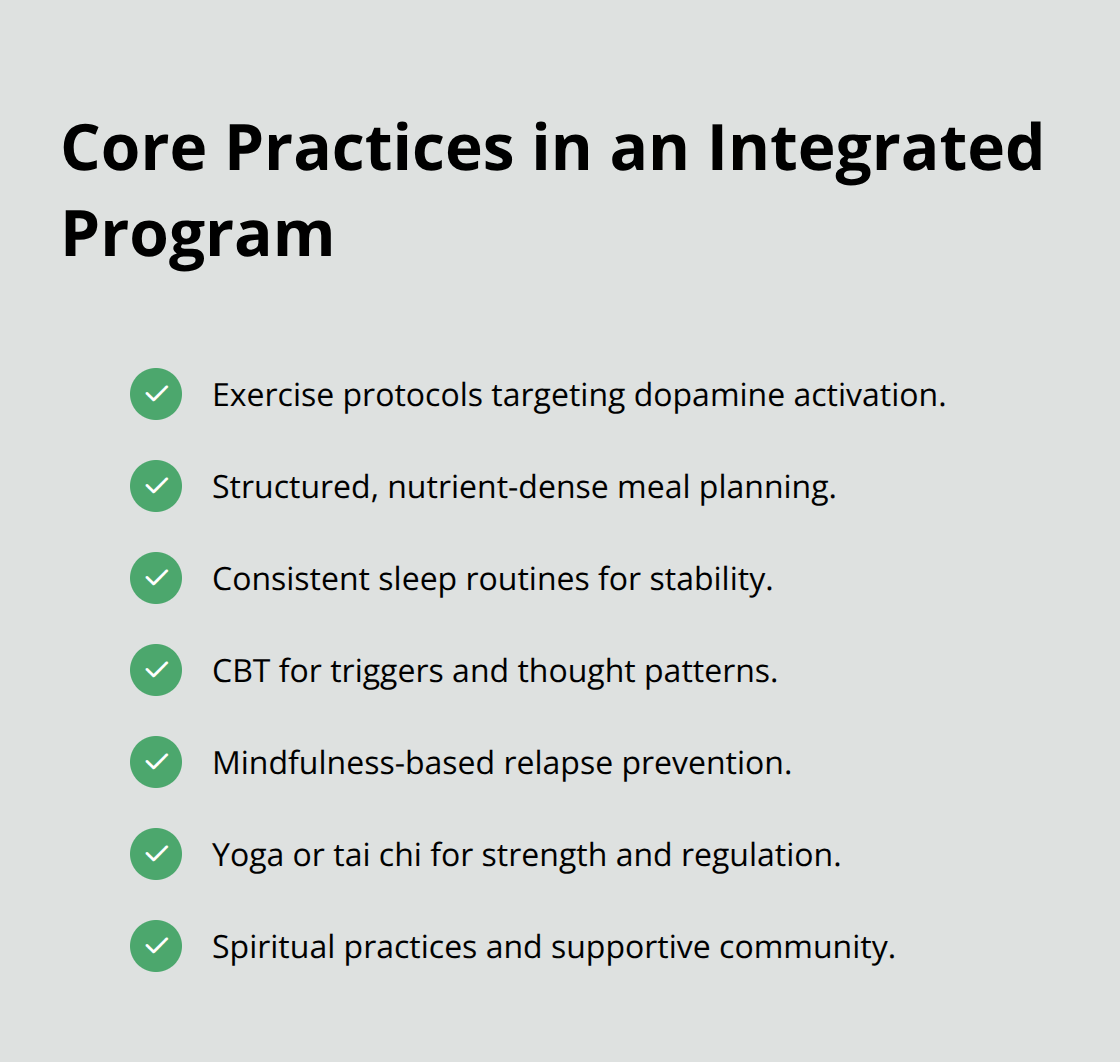
The practical tools that drive these results combine three specific categories of intervention. Mindfulness-based relapse prevention trains you to recognize triggers and practice urge surfing, reducing cravings and decreasing the frequency of use. Exercise protocols targeting dopamine activation directly counteract the reward pathway dysregulation caused by substance use; structured physical activity produces neurochemical changes that reduce cravings with measurable intensity.
Nutrition intervention addresses the specific deficiencies common in recovery, particularly magnesium and B vitamins that depression and anxiety deplete, restoring the biological foundation your brain needs to process therapy effectively. Spiritual practices like meditation and creative expression anchor motivation to something beyond avoiding substances, strengthening the intrinsic drive that carries people through difficult periods when willpower alone fails.
Why Each Tool Reinforces the Others
These tools work because each one reinforces the others. Weakness in one area does not collapse your entire structure when three dimensions support your recovery simultaneously. Physical stability makes your mind receptive to cognitive tools. Mental clarity allows you to engage with spiritual practices authentically. Spiritual connection motivates you to maintain the physical and mental disciplines that sustain recovery. This redundancy creates resilience that single-modality approaches cannot provide.
Final Thoughts
Holistic addiction treatment methods work because they address the full scope of how addiction damages you. Your body deteriorates, your mind fractures, and your sense of purpose dissolves-treating only one dimension leaves the others vulnerable, which explains why relapse happens so often in traditional programs. When you address all three simultaneously, you create a recovery structure that holds through the difficult periods when single-modality approaches collapse.
Programs that integrate physical wellness, cognitive tools, and spiritual practices report 40 percent higher sustained recovery rates than detox-only approaches. This represents the difference between people who stay sober and people who relapse within months. Your body needs movement and nutrition to stabilize your neurobiology, your mind needs cognitive strategies to interrupt the thought patterns driving cravings, and your spirit needs connection to something meaningful beyond avoiding substances.
Finding a program that genuinely integrates these three dimensions matters more than you might realize. We at Addiction Resource Center understand that addiction is complex and recovery demands this integrated approach, which is why we provide personalized addiction therapy programs that address your physical health, mental resilience, and spiritual foundation as interconnected parts of one recovery process. Your commitment to addressing body, mind, and spirit separates lasting sobriety from temporary abstinence.