Art therapy offers a unique avenue for families affected by alcoholism to express emotions without words. It complements traditional therapies and helps navigate the complex emotions and trauma associated with addiction. No artistic skill is required to unlock its benefits and foster healing…

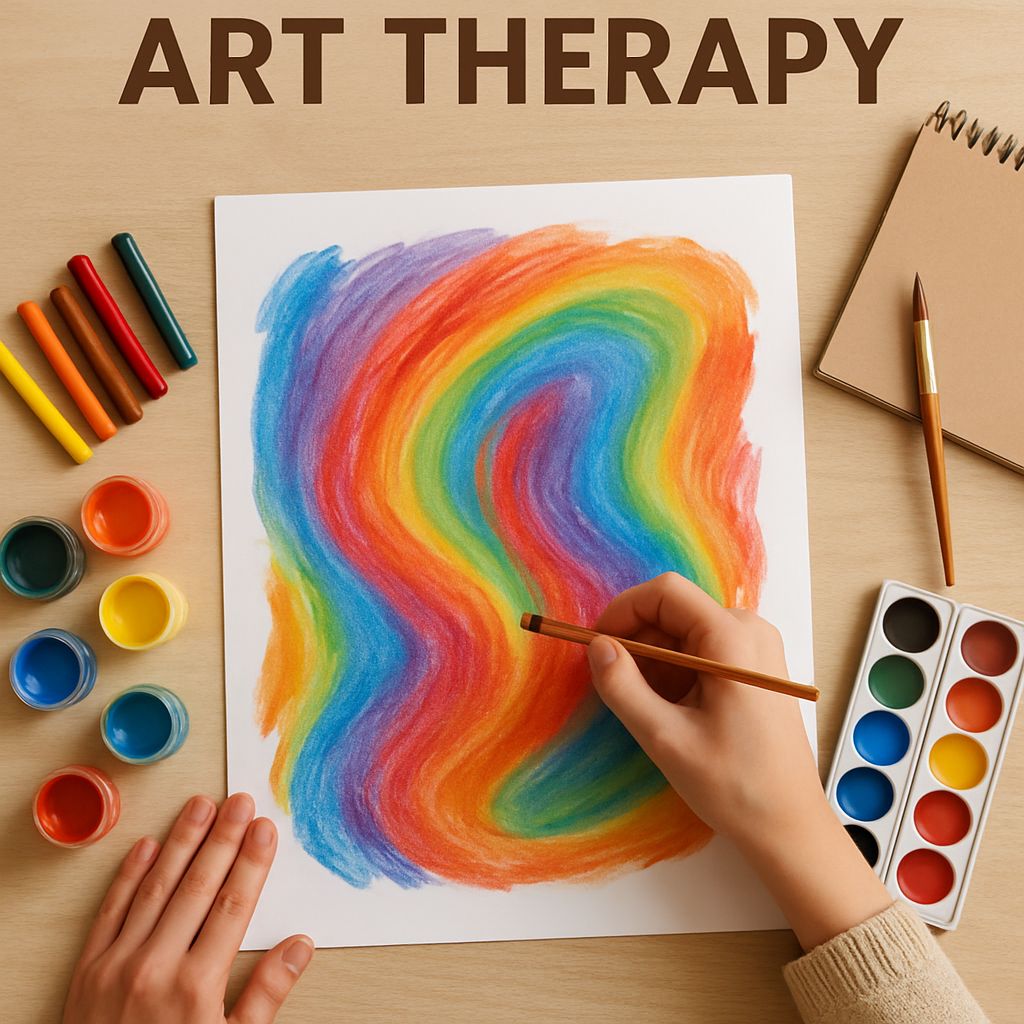
- Art therapy provides a platform for families affected by alcoholism to channel their pent-up emotions, shame, and trauma without the need to verbalize them.
- Since 1953, studies have shown that creating art serves as a potent medium for emotional catharsis and collective experience in overcoming addiction.
- Art therapy is now incorporated in 38.6% of addiction treatment schemes in the U.S. — and the justifications for its inclusion are convincing.
- Art therapy complements 12-step programs, motivational interviewing, and trauma-focused CBT — it does not replace them.
- Neither you nor your family member battling alcoholism needs to be artistically inclined for art therapy to be effective.
Healing Through Art: How Families Recover from Alcoholism
For families living under the cloud of alcoholism, words often fail to suffice before the healing process even commences.
Alcoholism doesn’t just harm the person who drinks. Its effects are felt throughout the family – in children who learn to be silent, in partners who lose trust, and in homes where shame becomes the dominant emotion. Traditional talk therapy can help many people, but for families dealing with deep, unspoken trauma, the thought of sitting across from a therapist and trying to put years of pain into words can seem daunting. This is where art therapy comes in. For families dealing with this kind of pain, resources like Addiction Resource Center provide accessible, evidence-based guidance on effective approaches.
The Limitations of Verbal Therapy for Alcoholism-Affected Families
Experiencing trauma changes the brain in specific ways, affecting learning, perception, and emotional processing. For many family members of those with alcohol use disorder (AUD), their years spent in survival mode mean that discussing the experience can actually re-trigger it rather than help them process it. The nervous system doesn’t differentiate between remembering a traumatic event and re-experiencing it. Verbal therapy, while important, requires people to do something their trauma may be actively preventing: putting into words experiences that were never stored in the brain as language.
Children raised in homes where alcoholism was prevalent often have an even deeper struggle. They learned at a young age to suppress, downplay, and stay quiet. When they are asked to suddenly put those experiences into words in a therapy setting, it can lead to a roadblock that has nothing to do with their willingness to participate and everything to do with how trauma becomes ingrained.
Why Art Therapy Is Not Your Usual Talk Therapy
Art therapy doesn’t need words. Instead of asking a person to express their feelings verbally, it encourages them to express it visually — through color, form, texture, imagery, and mark-making. This isn’t a shortcut. It’s a scientifically-proven method that taps into emotional content stored in areas of the brain that language doesn’t have direct access to.
Understanding the Concept of Art Therapy
Art therapy is a type of psychotherapy that primarily uses the process of creating art as a therapeutic tool. This is not the same as art education, recreational arts and crafts, or a hobby group with a therapist present. It is a structured clinical intervention that is administered by a trained and credentialed professional, and its main purpose is to promote mental health, emotional wellbeing, and in many cases, recovery from addiction and trauma.
Art therapy as a formal field has been around since the mid-20th century, and studies on its effects on substance abusers started as early as 1953. A significant review of the literature by Moore in 1983 looked at 20 studies over those three decades and consistently found that creating art provided a significant outlet for emotional release, self-expression, and shared experiences among people undergoing treatment for addiction.
What Does a Professional Art Therapist Do?
An art therapist is a professional who has earned a master’s degree and is registered with the Art Therapy Credentials Board (ATCB) as either an ATR (Art Therapist Registered) or ATR-BC (Board Certified). They are not art teachers, and they are not art critics. Their job is to watch you as you create art, to interpret the things that come out of your art, and to help you talk about your art in a way that helps you heal.
What makes them unique is their dual training: they have a deep understanding of both the psychological principles of therapy and the expressive qualities of different art materials. They know, for example, that working with wet clay engages the body differently than drawing with a pencil — and that this difference has clinical significance.
What Makes Art Therapy Different from an Art Class
While an art class focuses on the final product, art therapy is all about the process. The therapist isn’t there to judge your artwork — they’re observing how you approach the blank canvas, which colors you choose, where you pause, and what you say (or don’t say) as you create.
For families impacted by alcoholism, this distinction is critical. Many family members bear the burden of shame – regarding what transpired at home, their identity, and the ordeals they’ve endured. In a therapeutic setting, being reassured that there is no incorrect way to create art can be the first time an individual feels secure enough to express their genuine feelings.
The Impact of Alcoholism on the Entire Family
Alcoholism is not just an individual’s problem. It reshapes the whole family structure around the drinking — and the aftermath doesn’t just disappear when the drinking ceases.
The Impact on Children in Alcoholic Homes
Children who grow up in households with alcoholism experience a unique and thoroughly researched set of difficulties. They frequently assume roles that are not meant for them, such as the caregiver, the mediator, or the unseen child who refrains from asking for anything in order not to exacerbate the tension in the home. These modifications are survival tactics, but they come with a price that can linger into adulthood.
One of the main reasons art therapy is so effective for this group is because of the emotional suppression that is often found in these environments. For a child who has spent years learning to hide their feelings, expressive art-making offers a truly safe space. Studies have repeatedly shown that trauma experienced in childhood often comes to the surface more easily through image-making than through verbal dialogue.
The Erosion of Trust and Communication
When alcoholism is a part of the family dynamic, the only thing that is predictable is unpredictability. Promises are often made and just as often broken. Emotions can be volatile, swinging from one extreme to the other without any warning. Family members become accustomed to living in a constant state of tension, never knowing what to expect. This type of environment slowly but surely wears away at the bedrock of trust that is necessary for open and healthy communication.
When a family finally seeks help, it can be truly frightening to communicate with one another — not because they don’t want to bond, but because the means to do so have been broken. Art therapy, especially in a group or family setting, provides a structured, low-stress method to repair those means without necessitating direct verbal confrontation before trust has been reestablished.
The Destructive Power of Shame and the Silence It Creates in Families
Shame is a particularly damaging emotion for families dealing with alcoholism. It promotes secrecy, stops families from seeking help, and isolates them from the support they need. Studies on art therapy for these families have shown that the private, non-verbal aspect of the creative process can lead to major revelations – things that people couldn’t or wouldn’t say out loud but could express through art. In documented therapy sessions, people with histories of major childhood trauma and later substance abuse were able to bring to light repressed memories through art in a way that talk therapy had consistently failed to do.
The Benefits of Art Therapy for Families Impacted by Alcoholism
Art therapy has a unique ability that many other clinical treatments lack: it can reach people exactly where they are, without expecting them to have the vocabulary, awareness, or emotional preparedness that other therapies often require. This is no small feat for families impacted by alcoholism. It can often be the deciding factor between participation and withdrawal.
The Substance Abuse and Mental Health Services Administration (SAMHSA) has been a strong advocate for the use of art therapy in group addiction treatment. They point to its proven ability to capture clients’ interest, foster self-awareness, and assist individuals in recognizing and coping with challenging emotions. When used in conjunction with treatment programs, art therapy has been shown to complement both Motivational Interviewing and 12-Step methods, supplementing rather than supplanting the models that families may already be accustomed to.
Art Therapy Aids in Recognizing and Controlling Tough Emotions
Research consistently shows that art therapy can help individuals suffering from substance abuse disorders to better understand their own experiences. Lusebrink and Hinz suggest that the act of systematically arranging one’s artwork and selecting materials can aid cognitive and emotional processing in a structured and meaningful manner. For family members who have lived in emotional turmoil for years, this type of structured self-examination can be truly enlightening.
When it comes to art therapy, no decision is too small. The color you choose, the pressure you apply to a pencil, or even the choice to tear paper instead of cutting it – these are all significant in a therapeutic setting. These choices provide insight into emotions that a person may not yet be able to articulate. An experienced art therapist can interpret these choices and gently guide the client to do the same.
Unlocking Hidden Trauma Through Artistic Expression
Art therapy has been proven to be a highly effective tool for individuals who have experienced trauma, a group that includes the majority of family members who have been affected by a loved one’s long-term alcoholism. Studies have shown that art therapy can help these individuals become more consciously aware of the negative events they have experienced, and the ways in which these events have shaped them. This can lead to a resolution of symptoms that were not previously reachable through verbal therapy. This is especially important in cases where verbal therapies have been attempted, but have not been successful. Clinical studies have shown that individuals who have experienced significant childhood adversity as a result of a family member’s substance abuse have been able to bring to the surface and process experiences through the creation of art that had previously remained locked away for decades.
Group Art Therapy Fosters Shared Understanding Among Family Members
Group art therapy is the most popular format in substance use disorder treatment programs, and for good reason. When family members create art together — without the need for direct conversation — something changes. Barriers are broken. Perspectives are revealed in a way that they seldom are through words alone. Studies show that group art therapy helps participants understand their own and others’ experiences with addiction, and encourages the acknowledgement of ambivalence that is critical to true recovery work. Seeing a loved one’s inner world depicted in color and shape can rebuild empathy quicker than months of structured conversation.
One-on-One Art Therapy Provides a Safe Environment for Private Sharing
Group therapy can be very effective, but it isn’t always where the most profound healing occurs. One-on-one art therapy sessions provide a private environment where an individual can share traumatic experiences that they are not yet ready to discuss in a group setting. This is especially crucial for family members who feel shame about what happened in their home – children who saw violence, spouses who covered for their partner, and parents who blame themselves for their child’s drinking. The unique therapeutic relationship, based on the mutual observation of the art being created, can contain disclosures that no other method can.
What Families Can Expect from Art Therapy Techniques
Art therapy sessions are not unstructured, free-for-all experiences. They are guided by a therapist who deliberately chooses materials and prompts based on the individual or group’s progress in therapy. Different materials provoke different reactions, and therapists use this variability on purpose.
Using Art as a Form of Emotional Expression
The First Step Series, a program created by Holt and Kaiser in 2009 and featured in The Arts in Psychotherapy, is one of the most effective and well-researched art therapy methods for those in the early stages of substance abuse treatment. This approach uses a series of guided drawing and painting exercises specifically designed to help clients understand their relationship with substances, examine the consequences, and start to imagine a life without addiction. The First Step Series was created for group therapy settings and has been successfully used in a variety of treatment contexts.
Drawing and painting are usually the easiest ways for most people to start art therapy. No previous experience is required, the materials are familiar, and it’s easy to get started. In the beginning, a therapist might suggest a simple exercise like “draw how you’re feeling right now” or “paint what it feels like to be home” and the results often surprise even the person who created it.
For those with a family member suffering from AUD, painting exercises that focus on the dynamics of the family can be especially enlightening. Who is taking up the most space in the picture? Who is being left on the sidelines? What colors are most prominent? These are not necessarily questions the therapist will ask directly, but they are observations that will help guide the therapeutic discussion that follows.
Another unique benefit of painting is that it provides a physical output that remains long after the therapy session is over. This tangible product – a piece of art that sits on a table, impossible to ignore – can be revisited, contemplated, and even reworked. It serves as a testament to the emotional journey undertaken, and for families in recovery, observing the evolution of these artworks over the course of treatment can be a powerful indicator of progress.
Using Clay Work to Help Deal with Anger and Grief
Clay is a unique medium in that it engages the entire body, not just the hands. It necessitates physical pressure, manipulation, and prolonged contact in a way that drawing does not. For family members harboring anger — at the individual who drank, at themselves, at the years wasted — clay work provides a legitimate, safe outlet. The actions of pounding, tearing, smoothing, and reshaping clay can help to externalize feelings that cannot be safely expressed verbally.
Working with clay is a different experience when you’re sad than when you’re mad. The slow, thoughtful process of building a form — coiling, pinching, gradually shaping something from nothing — can be a lot like the process of grieving. Therapists who work with family members who are grieving or have experienced a loss often use clay specifically because the material requires patience, forgives mistakes, and can be reworked without judgment. For a family that has experienced a deep loss through a loved one’s alcoholism, that quality alone can be very therapeutic.
Art Gallery Tours as a Form of Community Healing
Art therapy doesn’t always take place in a therapy room. Some programs use guided tours of art galleries or museums as part of the healing process. This practice is sometimes referred to as “museum-based art therapy” or visual thinking strategies (VTS) in community settings. These tours use existing works of art as a way to reflect, discuss, and explore emotions in a neutral, non-therapy environment.
Art gallery visits are especially beneficial for families affected by alcoholism during the latter stages of treatment. This is when the emphasis changes from dealing with the crisis to recreating identity and reestablishing community ties. The seemingly simple act of standing in front of a painting and being asked “what do you see?” — with no incorrect responses — can be a potent tool for rebuilding the self-assurance needed to trust one’s own perceptions. Many family members of individuals with AUD have spent years questioning their own reality. Having others bear witness to their interpretations of art can subtly begin to repair that.
It’s important to remember that recovery is not a solitary journey. Therapeutic work in communal areas can help to restore the sense of community that alcoholism frequently destroys. Some initiatives combine gallery visits with collaborative art-making sessions. In these sessions, family members can express their reactions to the artwork they’ve seen. This creates a connection between the world of art and their personal experiences.
The Role of Art Therapy in Alcoholism Treatment
Art therapy isn’t a cure-all for alcoholism or its impact on families. What we do know, however, is that it can be a powerful addition to the structured treatment programs that are the foundation of addiction recovery – it can extend their reach, increase their effect, and keep clients engaged who might otherwise completely withdraw.

How Art Therapy Works with the 12-Step Model
Art therapy and the 12-step model are a natural fit. The 12-step model is one of the most commonly used methods in alcoholism recovery. Art therapy has been found to work well within this model. A study by Horay in 2006 found that most American studies on art therapy for recovery in people who misuse substances were based on the 12-step treatment model. Art therapy does not compete with the steps. Instead, it deepens the inner work that each step requires. This is particularly true for the steps that involve honesty, self-inventory, and making amends.
- Step 1 (Admitting powerlessness): Visual journaling and image-making can help an individual express what denial has kept hidden, making the admission more tangible and real.
- Step 4 (Moral inventory): Structured art directives allow clients to map out their history, relationships, and regrets in ways that are less intimidating than a written list but equally revealing.
- Step 8 (Making a list of those harmed): Art therapy offers a way to process guilt and grief about harm caused before an individual is emotionally ready to make direct amends.
- Step 12 (Carrying the message): Group art-making builds the community connection and service orientation that this final step is rooted in.
For family members who are not themselves in a 12-step program but are supporting someone who is, art therapy provides a parallel process — a structured way to do their own emotional work alongside the recovery journey of their loved one, without requiring them to adopt a framework that may not feel personally relevant.
Art therapy and the 12-step model are a perfect match. Both models encourage participants to confront their reality, deal with unpleasant truths, and take responsibility for their actions over time. Art therapy just offers a different — and for many, more relatable — way to do this.
Art Therapy in the Context of Motivational Interviewing
Motivational Interviewing (MI) is a therapeutic approach that was created to assist individuals in overcoming their uncertainty about making changes — and uncertainty is a hallmark of the early stages of recovery from addiction. In a 2006 study, Horay found that British studies on art therapy and substance abuse were more likely to be in line with stage-of-change models such as MI than with the 12-step approach, indicating a different but equally effective therapeutic direction.
Art therapy and MI are linked because art naturally brings ambivalence to the surface. When a client is asked to paint “the part of you that wants to stop drinking” next to “the part of you that isn’t sure,” both parts become visible at the same time — which is exactly the kind of honest, non-confrontational self-examination that MI is designed to facilitate. The image holds the contradiction without forcing it into a resolution the person isn’t ready for.
Studies have also found that art therapy can boost self-efficacy, as shown by Kaimal and Ray, and Kaimal et al. in separate studies. Self-efficacy is a key goal of Motivational Interviewing. When someone finishes an art project and sees that they’ve made something meaningful, that feeling of capability carries over. It gives them the confidence that they can change, which is what MI is all about.
Art Therapy is Now Included in Almost 40% of Addiction Programs
A study funded by the National Institute on Alcohol Abuse and Alcoholism, conducted by Aletraris et al., discovered that 38.6% of 307 addiction treatment programs surveyed included art therapy — and notably, many of these programs continued to offer it despite frequent inability to be reimbursed by Medicaid. This is a significant finding. When programs absorb the cost of a service because they believe in its value, it demonstrates a clinical belief that is more than just ticking boxes. SAMHSA has formally encouraged the inclusion of art therapy in group addiction treatment, citing its proven ability to engage clients’ abilities, attention, and insightfulness in ways that complement existing treatment structures. The evidence base is growing, and the clinical community is responding to it.
Finding the Right Art Therapy Support for Your Family
It can be a challenge to find the right art therapy support, but knowing what to look for can make a big difference. Not all programs that say they offer “expressive arts” or “creative therapy” are actually led by a trained and credentialed art therapist. It’s important to find a program that not only offers quality therapy, but also fits well with your family’s needs.
- American Art Therapy Association (AATA): The AATA maintains a therapist locator at arttherapy.org where you can search for credentialed art therapists by location and specialty.
- Art Therapy Credentials Board (ATCB): Look for therapists with ATR (Art Therapist Registered) or ATR-BC (Board Certified) credentials, which confirm graduate-level training and supervised clinical hours.
- Substance use disorder treatment centers: Many inpatient and outpatient addiction treatment centers now incorporate art therapy into their programming. Ask specifically whether art therapy is led by a credentialed art therapist or by a general counselor using art activities.
- Family therapy programs: Some family-focused treatment programs offer art therapy specifically designed for non-addicted family members, including children and adolescents.
- Community mental health centers: These can be a lower-cost entry point, and some offer sliding-scale art therapy services for families affected by addiction.
When contacting a potential art therapist, it is completely appropriate to ask about their specific experience working with addiction-affected families, what treatment models they work within, and how they structure sessions for family members at different stages of the recovery process. A skilled therapist will welcome those questions.
It’s important to know that some insurance plans will cover the cost of art therapy if it’s part of a larger mental health treatment plan provided by a licensed clinician. The reimbursement landscape is inconsistent, but you should have a direct conversation with both the therapist and your insurer before assuming you’ll have to pay for everything out of pocket.
The first and most crucial step is to start. Families dealing with alcoholism frequently spend years waiting for the “perfect time” to seek assistance — waiting for the individual with the alcohol problem to improve, waiting until things get sufficiently bad, waiting until they feel prepared. Art therapy does not necessitate readiness. It engages with individuals where they are, utilizes what they bring, and progresses from there.
Commonly Asked Questions
- Does insurance cover art therapy for alcoholism treatment?
- Does my loved one need to be in recovery to begin art therapy?
- Can kids participate in art therapy with adults?
- When will we see results from art therapy?
- What qualifications should an art therapist possess?
Does Insurance Cover Art Therapy for Alcoholism Treatment?
Coverage can vary greatly based on your insurance provider, your specific plan, and how the art therapy is structured and billed. If a licensed mental health professional delivers art therapy as part of a larger treatment plan, it’s more likely to be partially covered. A study by Aletraris et al. found that many addiction treatment programs that offer art therapy were unable to receive Medicaid reimbursement for it, highlighting the ongoing disconnect between clinical evidence and insurance policy. Always double-check with your insurance provider and ask the therapist how they bill before making any assumptions about cost.
Is My Loved One Required to Be in Recovery for Me to Begin Art Therapy?
No. Art therapy is fitting for family members regardless of the recovery stage of their loved one — and in many situations, it is most beneficial exactly when the individual with AUD has not yet sought help. Family members bear their own trauma, sorrow, and emotional burdens that deserve separate treatment. Art therapy does not necessitate the presence of the person who drinks, nor do they need to be sober or even willing to engage with treatment.
Is Art Therapy Suitable for Children as well as Adults?
Art therapy is not only suitable for children, but it can be particularly beneficial for them. This is because children often do not have the verbal skills to process their experiences through talking alone. Whether children attend the same sessions as adults will depend on what the goals of the therapy are and what the therapist thinks is best. Some programs offer group sessions specifically for children from alcoholic households. Other programs include family members of all ages in the same sessions, if they think it will be helpful.
When Can We Expect to See Results from Art Therapy?
There is no set timeline for seeing results from art therapy, and any therapist who tells you otherwise should be viewed with skepticism. What we do know from research is that art therapy can lead to significant changes early on in the treatment process, especially when it comes to emotional awareness, engagement, and the ability to identify and start to process difficult emotions. For instance, the First Step Series protocol by Holt and Kaiser was specifically developed for early-stage treatment and has been shown to produce results in short-term settings. Deeper trauma processing usually takes more time, and families should be prepared for ongoing work rather than a quick fix.
What Makes a Qualified Art Therapist?
In the U.S., a fully qualified art therapist will have at least a master’s degree in art therapy or a related field, as well as supervised clinical hours. The two main credentials to look out for are ATR (Art Therapist Registered) and ATR-BC (Art Therapist Registered — Board Certified), both of which are issued by the Art Therapy Credentials Board (ATCB). The ATR-BC credential is the higher of the two and requires the passing of a national board examination to demonstrate a higher level of verified competency.
If you’re looking for art therapy specifically in the context of addiction treatment, extra training or experience in substance abuse disorders is a significant advantage. Don’t be afraid to ask outright: “Have you worked with families affected by alcoholism?” and “What treatment models do you integrate with your art therapy practice?” The answers to these questions will give you a good idea of whether this is the right fit for you.
In addition to the ATCB requirements, some states may also require art therapists to have a license. Therefore, it’s a good idea to check the regulations specific to your state. In states where there is no separate license for art therapy, therapists may have a broader mental health license, such as LMHC or LCSW, and practice art therapy within that scope. This is perfectly acceptable as long as their training and experience are up to par.