Explore the importance of self-care in addiction recovery and discover practical strategies to support lasting sobriety and wellbeing.


Self-care isn’t a luxury during addiction recovery-it’s a foundation. When you’re rebuilding your life after addiction, taking care of your physical and mental health directly impacts your ability to stay sober and handle triggers.
At Addiction Resource Center, we’ve seen firsthand how the importance of self-care in addiction recovery determines who maintains long-term sobriety and who struggles. This guide walks you through practical strategies that work.
Why Self-Care Directly Changes Your Recovery Outcomes
Stress is the number one relapse trigger, and self-care is the most direct way to manage it. When you stop using substances, your nervous system becomes hyperactive. Your brain has relied on drugs or alcohol to regulate stress for months or years. Self-care practices like consistent sleep, nutrition, and movement literally rewire how your body handles pressure. According to research from SAMHSA, people in recovery who maintain structured daily routines and physical activity show significantly lower relapse rates than those who don’t. The science is clear: sleep reduces relapse risk more effectively than willpower alone. Your body needs this foundation to process emotions without turning to substances.
How Nutrition and Movement Stabilize Your Brain
When you eat regular meals with whole grains, lean proteins, and omega-3 fats, you stabilize your mood and support the brain healing that addiction interrupted. This isn’t motivational talk-it’s biology. Exercise releases endorphins, which are the neurochemicals your brain was artificially producing through substance use.
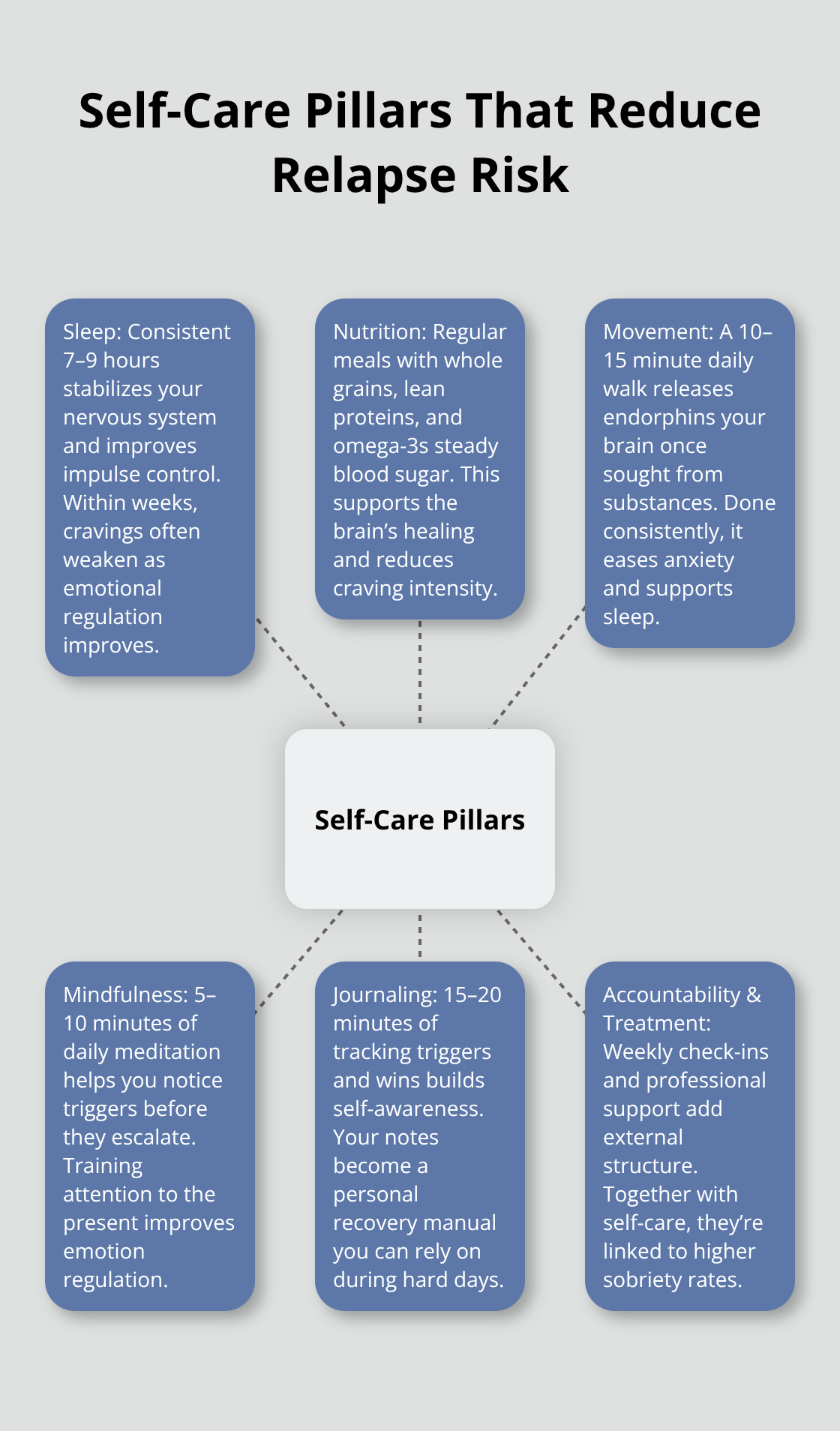
A 10-to-15 minute daily walk functions as a legitimate treatment tool, not optional self-improvement. Your body stores stress in muscles, organs, and your nervous system. When you neglect sleep, nutrition, or movement during recovery, you leave yourself defenseless against cravings. Research shows that people who prioritize hydration, consistent meal timing, and regular physical activity experience clinically meaningful reductions in craving.
Why Cravings Are Physical, Not Just Mental
Cravings aren’t just mental-they’re physical sensations your body learned to associate with relief. When your body is well-rested and nourished, it doesn’t send those urgent signals demanding a fix. Mindfulness practices like 5-to-10 minutes of daily meditation actually lower anxiety by helping you notice triggers before they escalate into urges. The NSDUH data shows that among the 20.5 million adults in recovery, those who combined self-care practices with professional support maintained sobriety at higher rates than any single approach alone.
Building Emotional Strength Through Repetition
Emotional resilience in recovery isn’t built through motivation or positive thinking. It’s built through repetition. When you show up for yourself every single day with the same sleep time, the same exercise routine, and the same mindfulness practice, you prove to your brain that you’re reliable and worth protecting. This sounds simple, but it’s revolutionary in recovery. Most people in active addiction operate in chaos-unpredictable sleep, irregular eating, constant stress. Your nervous system learned to expect crisis. Self-care retrains your nervous system to expect stability.
Using Journaling to Track What Works
Journaling for 15-to-20 minutes daily helps you track which situations trigger cravings and which self-care practices actually work for you. This self-awareness is what separates people who stay sober from people who relapse. You’re not just going through motions; you’re collecting data about what keeps you stable. When you have a difficult day, you can reference your journal and see exactly which combination of sleep, movement, nutrition, and social connection helped you through similar challenges before. This evidence-based approach to your own recovery means you stop guessing and start knowing what protects your sobriety. The next section shows you how to turn these self-care practices into a sustainable plan that actually fits your life.
The Three Daily Habits That Actually Prevent Relapse
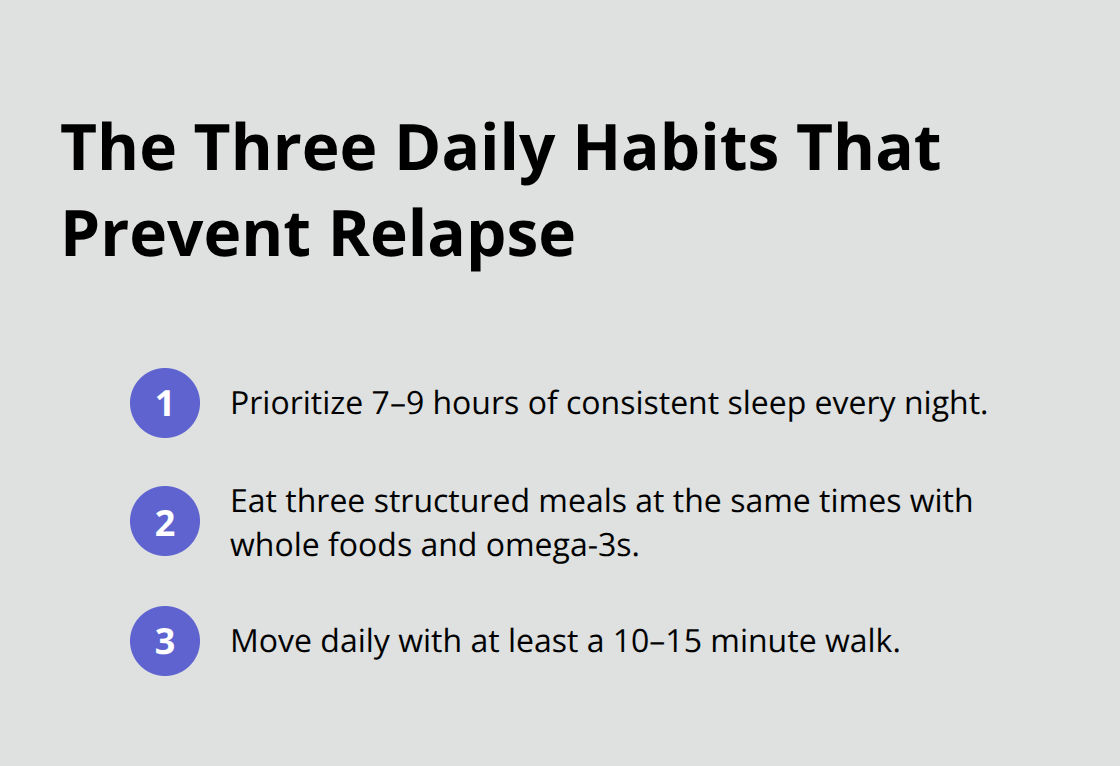
Sleep comes first because everything else fails without it. Seven to nine hours nightly isn’t optional self-improvement; it’s relapse prevention. When you’re sleep-deprived, your prefrontal cortex shuts down-the part of your brain that makes decisions and resists impulses stops working. Sleep deprivation increases relapse risk because your body becomes desperate for any substance that provides relief or stimulation. Set a non-negotiable bedtime and wake time even on weekends. This consistency trains your nervous system to expect stability instead of chaos. Within two weeks of consistent sleep, most people notice cravings weaken and emotional regulation improve.
Fixing Insomnia Without Substances
If insomnia hits, avoid caffeine after 2 p.m., keep your bedroom cool and dark, and use the 4-7-8 breathing technique if racing thoughts keep you awake. These methods work because they address the physical mechanisms that disrupt sleep, not just the mental anxiety around it. Your body needs to learn that rest comes naturally, without chemical assistance.
Nutrition Stabilizes Your Brain Chemistry
Nutrition works alongside sleep as your second anchor. Eat three meals daily at the same times, with whole grains, lean proteins, and omega-3 rich foods like salmon or walnuts. Your brain is literally rebuilding itself after months or years of substance use disrupting neurotransmitter production.
Regular meals stabilize blood sugar, which directly reduces craving intensity. Skipping meals makes your body send urgent distress signals that feel identical to cravings. Hydration matters equally; drinking water consistently throughout the day supports detoxification and cognitive function.
Movement Redirects Your Brain’s Chemistry
Movement is your third non-negotiable habit, and it doesn’t require gym membership or athleticism. Start with a 10-to-15 minute daily walk. This releases endorphins that your brain previously obtained through substances, so you’re not fighting biology; you’re redirecting it. Exercise reduces anxiety when done consistently. Within four weeks of daily movement, sleep improves, appetite normalizes, and emotional reactivity decreases.
Mindfulness Ties Everything Together
Mindfulness practice bridges all three habits together. Five to ten minutes of daily meditation doesn’t require silence or spiritual belief; it’s simply sitting and noticing your breath without judgment. When a craving arrives, mindfulness lets you observe it as a physical sensation that will pass rather than a command you must obey. Research shows mindfulness-based approaches improve emotion regulation and reduce cravings because you’re training your attention to stay present instead of spiraling into future anxiety or past regrets.
Journaling immediately after meditation or exercise captures the insights these practices generate. Write what triggered stress that day, how your body felt during exercise, what sleep quality you achieved. This data becomes your recovery manual because you’ll see patterns about which combinations of sleep, nutrition, movement, and mindfulness protect your sobriety on difficult days. When you repeat the same sleep time, exercise routine, meal schedule, and meditation practice daily for thirty days, your nervous system stops expecting crisis and starts expecting stability. This shift is what transforms recovery from a white-knuckle struggle into a sustainable lifestyle. The next section shows you how to build accountability systems that keep these habits in place when motivation fades.
How to Keep Self-Care Habits When Motivation Disappears
Self-care habits collapse without accountability. The first two weeks feel manageable because motivation is high, but by week three, most people skip exercise, eat irregularly, and rationalize staying up late. This is where support networks become non-negotiable infrastructure, not optional encouragement.
Build External Accountability Structures
Find one person who understands recovery and commit to a weekly check-in about your sleep, nutrition, and movement. This isn’t therapy; it’s practical reporting. According to NSDUH data, people in recovery who maintained regular contact with support systems reported sustained sobriety at significantly higher rates than isolated individuals. Text your accountability partner your bedtime the night before, report your exercise completion within two hours of finishing, and share a photo of one healthy meal daily.
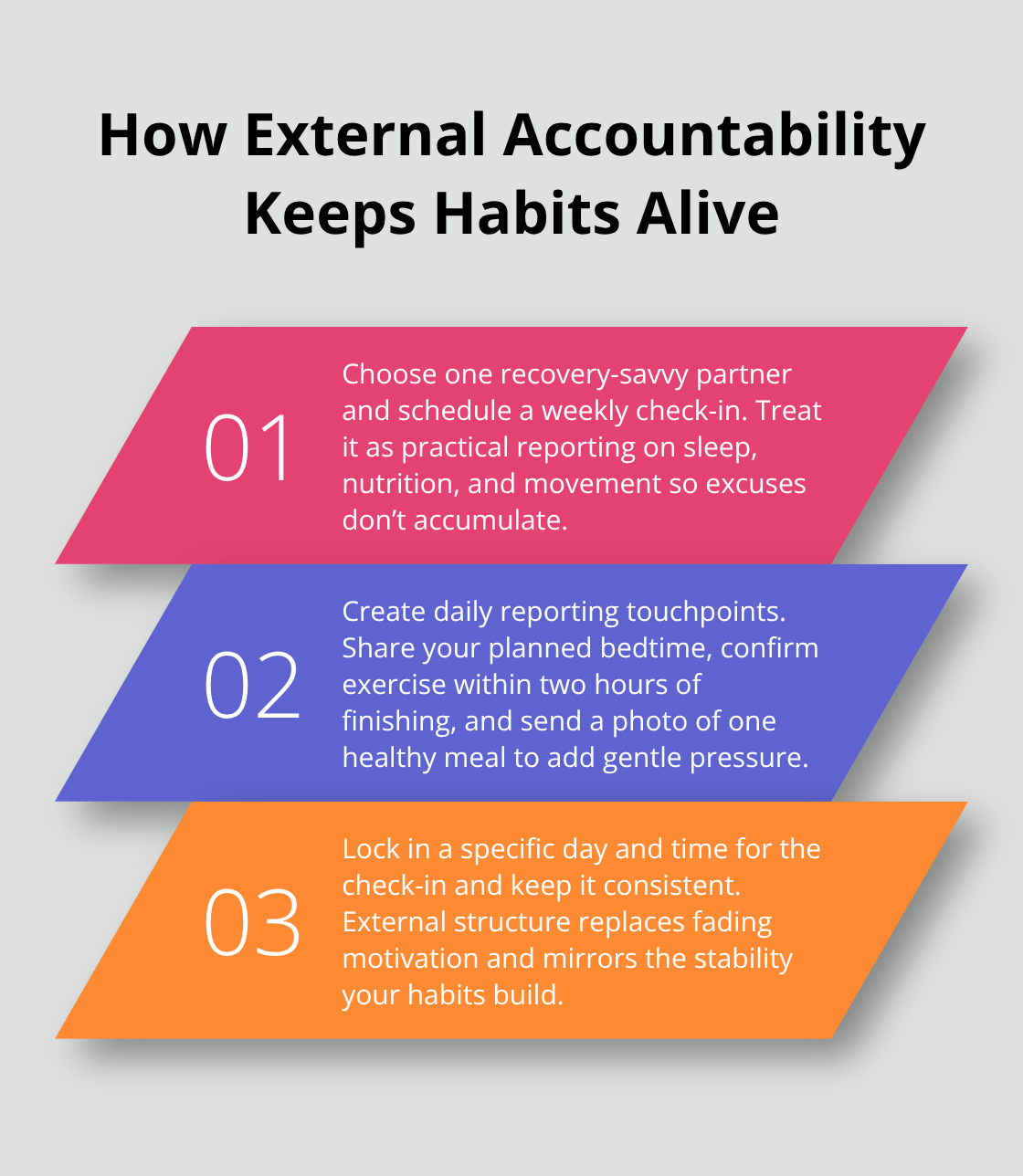
This creates friction that prevents skipping. The accountability shifts from internal willpower to external structure. Set a specific day and time for this weekly check-in, not a vague whenever-you-have-time arrangement. Consistency in accountability mirrors the consistency you’re building in your self-care habits themselves.
Use Data to Reveal Hidden Patterns
Track your progress in a spreadsheet or simple notebook because data reveals patterns that memory cannot. Record sleep hours, exercise minutes, meals completed, and cravings intensity daily. After thirty days, you’ll see which days triggered poor sleep or skipped meals. You’ll notice that days following exercise had fewer cravings. This evidence becomes your recovery manual when motivation fades. Adjust your approach based on actual data, not assumptions. If you consistently skip evening exercise, move it to morning. If skipping meals happens on certain days, prepare meals the night before those days.
Integrate Professional Treatment Into Daily Routines
Professional treatment provides structure that self-care alone cannot replace. Medication-assisted treatment, therapy sessions, or group counseling create external accountability that sustains recovery when daily habits feel burdensome. The integration happens when your therapist or counselor reviews your self-care data with you. Show them your journal entries about triggers and your sleep-to-craving patterns. They adjust treatment recommendations based on what you’re actually experiencing, not theoretical protocols. This collaborative approach transforms self-care from solo effort into partnership with trained professionals who can modify your plan when setbacks occur.
Final Thoughts
Self-care isn’t something you do after recovery stabilizes-it’s what makes recovery possible in the first place. The importance of self-care in addiction recovery determines whether you maintain sobriety through difficult months or return to substances when stress peaks. Among the 20.5 million adults in recovery, those who combined structured self-care with professional support maintained sobriety at significantly higher rates than those relying on willpower alone.
Your body doesn’t care about motivation; it responds to repetition. When you show up for yourself with the same sleep schedule, the same exercise routine, and the same meal times every single day, your brain stops expecting chaos and starts expecting safety (this shift separates temporary sobriety from lasting recovery). Starting today matters more than starting perfectly-pick one habit and commit to thirty days of consistency, then add the next one.
Track your progress in writing so you can see which combinations of self-care practices protect your sobriety when cravings arrive. Share your data with an accountability partner or therapist who understands recovery. We at Addiction Resource Center provide personalized addiction therapy and substance abuse counseling designed to complement the self-care foundation you’re building, so explore our outpatient addiction treatment programs tailored to your specific needs.