Boost your addiction treatment success rate with evidence-based strategies, personalized plans, and professional support systems that work.


Addiction treatment works when the right conditions align. The success rate of addiction treatment depends on multiple factors-from your personal commitment to the quality of professional support you receive.
At Addiction Resource Center, we’ve seen firsthand that recovery isn’t about luck. It’s about understanding what actually drives lasting change and building a treatment plan around those proven elements.
What Actually Determines Treatment Success
The Four Concrete Motivators That Drive Treatment Engagement
Motivation is not some abstract quality that people either have or lack. Research from the National Recovery Study, which tracked 2,002 U.S. adults who resolved substance use problems, reveals that four concrete factors drive treatment engagement: family encouragement, external threats like job loss or health consequences, peer support, and self-efficacy. Family factors emerged as the strongest predictor, with individuals who felt family encouragement showing significantly higher treatment initiation rates. This means the people around you matter more than willpower alone.
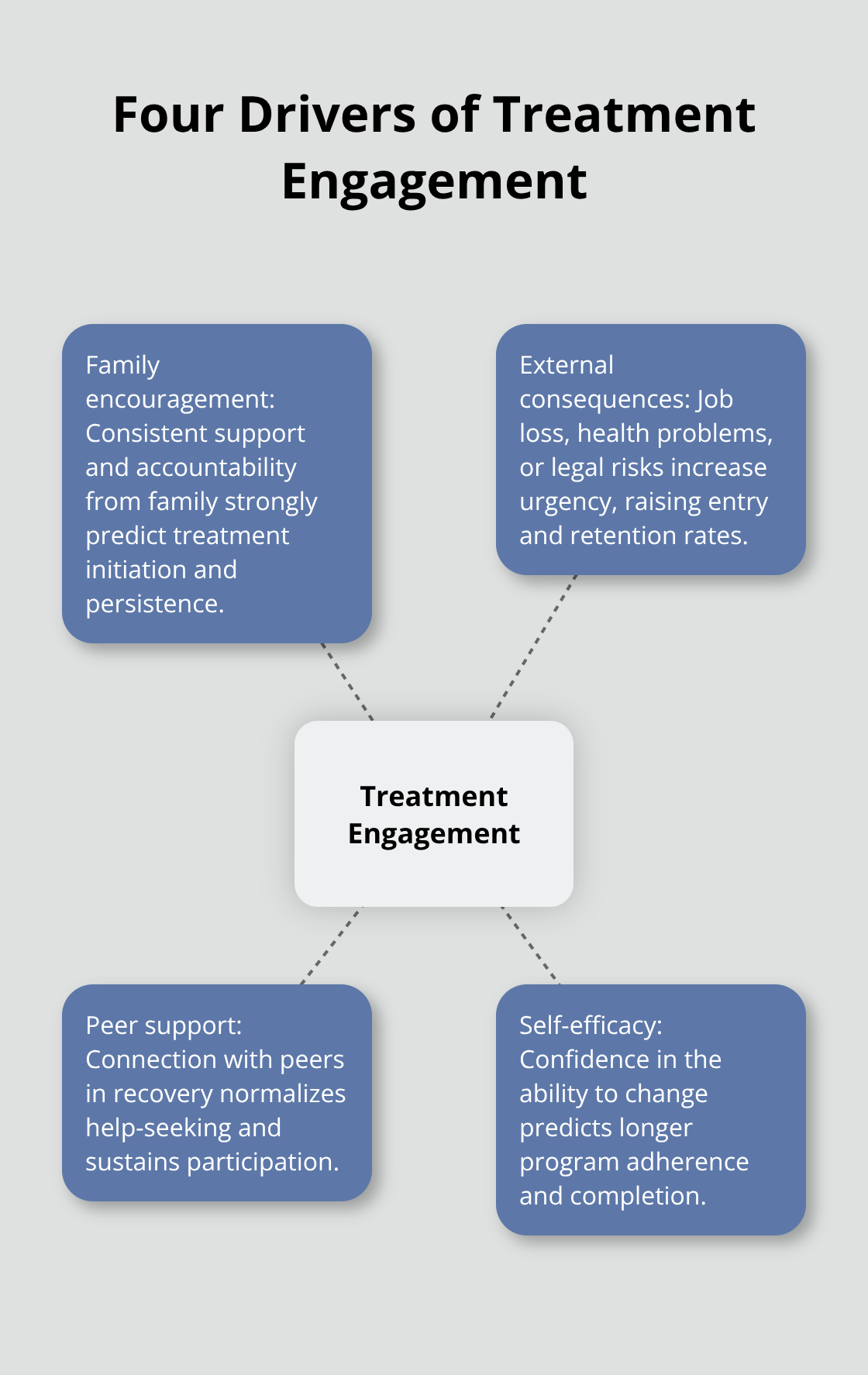
External consequences also work. When someone faces real threats-losing employment, deteriorating health, or social consequences-they enter treatment and stay engaged at higher rates. Self-efficacy, your confidence in your ability to stop using and follow through with treatment, directly predicts how long you remain in a program. People with higher self-efficacy complete treatment at higher rates than those who doubt themselves.
Why Program Structure Matters More Than You Think
The quality of your treatment program determines whether these motivational factors actually translate into recovery. Programs that offer multiple levels of care, from medical detoxification through intensive outpatient services to sober living arrangements, produce better outcomes than single-modality programs. Evidence-based approaches like Cognitive Behavioral Therapy teach you to identify triggers and modify harmful thought patterns. When combined with medications for opioid or alcohol use disorder, these approaches create the strongest foundation for lasting change.
The Non-Negotiable Role of Aftercare
Aftercare is not optional-it’s essential. People who engage in ongoing counseling and peer support groups after completing their primary treatment phase have significantly lower relapse rates. Aftercare planning determines your success after graduation and prevents the isolation that often precedes relapse, keeping you accountable to your recovery goals.
Treating Mental Health Alongside Addiction
Co-occurring mental health conditions like depression and anxiety require integrated treatment, not separate appointments. Research shows that integrated treatment for comorbidity has been found to be consistently superior compared to treatment of individual disorders with separate treatment plans. Your mental health and substance use recovery are inseparable; addressing one without the other leaves you vulnerable to relapse.
The data reveals that treatment success depends on real motivation anchored in concrete life circumstances, professional support that addresses your specific needs, and mental health care that runs parallel to addiction treatment. Understanding these factors positions you to evaluate treatment options and recognize what your recovery actually requires. The next step involves examining the specific evidence-based approaches that translate these success factors into measurable results.
What Actually Works in Addiction Treatment
Cognitive Behavioral Therapy Stops Relapse Before It Starts
Cognitive Behavioral Therapy stands as the most practical tool for preventing relapse. It teaches you to recognize the thoughts and situations that trigger cravings, then rewires how you respond to those triggers. When someone in treatment identifies that stress leads to urges, CBT provides concrete skills to interrupt that pattern before it becomes a relapse. Research shows this approach directly reduces the abstinence violation effect-that emotional spiral where one lapse becomes a full relapse. The strength of CBT lies in its specificity: it targets your actual thought patterns, not generic coping strategies.
Medications Work Only When Paired With Therapy
Medication-assisted treatment for opioid use disorder, using buprenorphine or methadone alongside counseling, reduces cravings and withdrawal symptoms that otherwise derail recovery. Naltrexone blocks opioid effects entirely, making use pointless. For alcohol use disorder, naltrexone, acamprosate, and disulfiram each work through different mechanisms. Disulfiram creates physical discomfort if you drink, which works best for highly motivated individuals in structured settings.
The critical point: medications work when paired with therapy, not alone. A person taking medication without counseling still faces the same triggers and thought patterns that led to addiction initially. Research shows that integrated medication and psychosocial treatment had substantially better long-term outcomes than those receiving either approach separately.
Aftercare Plans Must Be Specific, Not Vague
People who complete a primary treatment phase then disappear have relapse rates between 40 and 60 percent within months. Those who engage ongoing peer support through groups like Alcoholics Anonymous or Narcotics Anonymous, attend regular counseling sessions, and maintain sober living arrangements cut relapse risk significantly. Research from Steven Melemis on relapse prevention shows the process unfolds in three stages: emotional, mental, then physical. Catching relapse at the emotional stage through ongoing support prevents it from progressing.

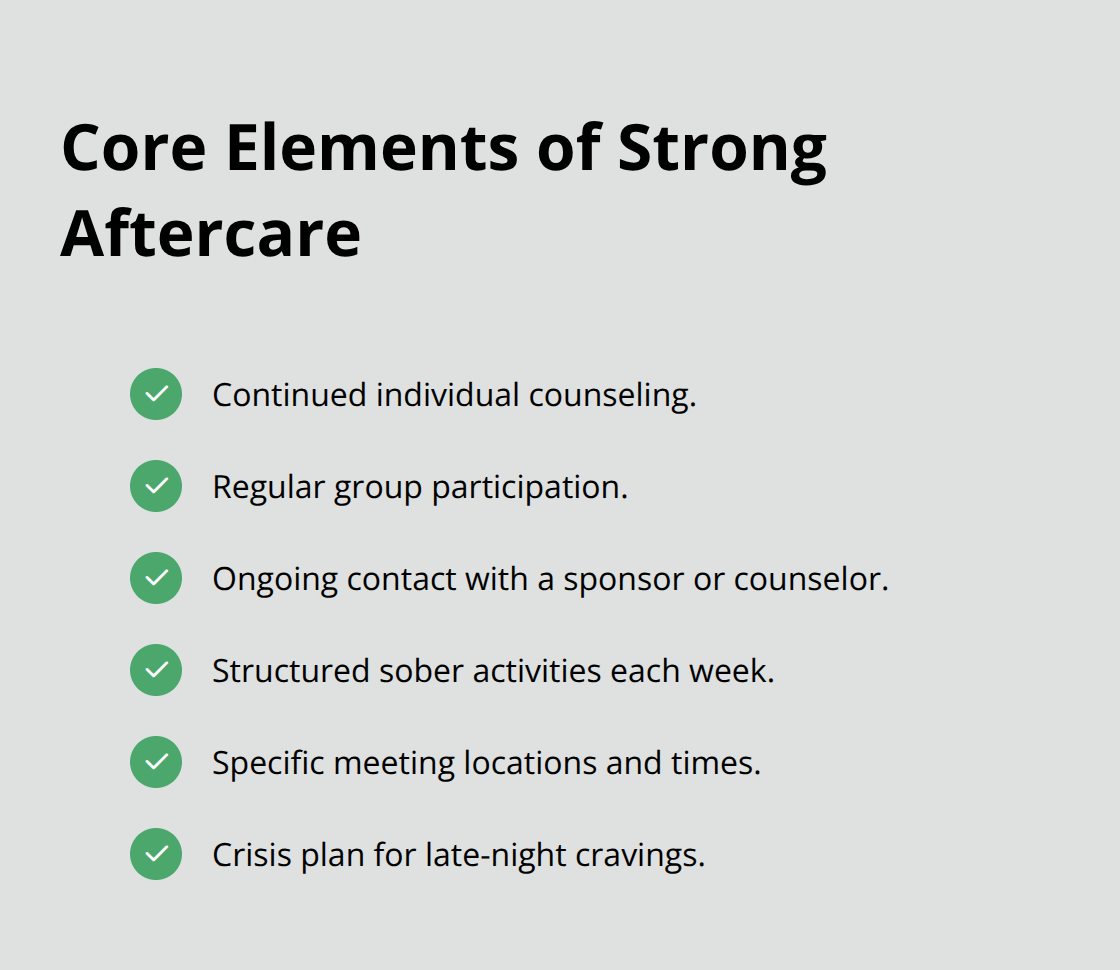
Recovery management checkups, where you return for brief assessments even while abstinent, help identify early warning signs and prevent small slips from becoming full relapses. Your aftercare plan should specify exactly where you’ll attend meetings, who your sponsor or accountability partner is, and what you’ll do when cravings hit at 2 a.m. on a Tuesday. Vague plans like “I’ll go to more meetings” fail because they lack specificity.
Building Your Strongest Aftercare Foundation
The strongest aftercare combines continued individual counseling, group participation, regular contact with a sponsor or counselor, and structured activities that replace the time and social connections substance use once provided. These elements work together to address the reality that addiction recovery extends far beyond your primary treatment phase. The next section examines how personalized treatment plans translate these evidence-based approaches into your specific recovery pathway.
How We Customize Your Recovery Path
Assessment Identifies Your Specific Recovery Needs
Treatment success hinges on one reality: no two people arrive at recovery with identical circumstances, trauma histories, or neurochemistry. Standardized programs fail because they ignore individual differences. Your treatment plan starts with a comprehensive assessment that identifies your specific triggers, your psychiatric history, your support network strength, and your recovery capital-a research-backed concept measuring your financial resources, social connections, and access to recovery support. Someone with psychiatric comorbidity like depression requires different medication timing and dosing than someone without it. Someone lacking family support needs intensive peer connection through groups and sober living arrangements. Someone employed needs scheduling flexibility that someone unemployed may not. This assessment phase determines whether you need intensive outpatient programming, standard outpatient counseling, medication-assisted treatment, or a combination. This data informs effective treatment: professionals don’t wait for relapse to adjust your plan. They anticipate higher-risk profiles upfront and structure accordingly.
Mental Health Treatment Runs Parallel to Addiction Therapy
Depression and anxiety don’t pause while you address substance use; they actively fuel cravings and relapse risk. Integrated treatment addresses psychiatric conditions simultaneously with addiction therapy, often with the same counselor who understands both domains rather than forcing you between separate providers. Medication management for depression or anxiety coordinates with any medications for opioid or alcohol use disorder to prevent interactions and ensure your brain chemistry stabilizes comprehensively. Your ongoing counseling continues indefinitely-not for 12 weeks, then nothing. Recovery management checkups bring you back periodically even during stable abstinence, catching emotional or mental warning signs before they escalate to relapse. This approach prevents the isolation that precedes relapse.
Community Support Replaces What Addiction Took
Community support connects you to peer groups, sober living communities, vocational services, and recreational activities that replace the social structures addiction once provided. These elements work together to address the reality that addiction recovery extends far beyond your primary treatment phase. Peer groups like Alcoholics Anonymous or Narcotics Anonymous provide accountability and shared experience. Sober living arrangements offer structured environments during the transition back to independent living. Vocational services help you rebuild employment and financial stability. Recreational activities fill the time and social connections that substance use once occupied. This sustained model prevents the void that often triggers relapse.
Final Thoughts
Treatment success depends on three interconnected realities that work together to shape your recovery outcome. Your motivation must anchor to concrete circumstances-family support, external consequences, peer encouragement, and your own confidence in change. The program you select must offer evidence-based approaches like Cognitive Behavioral Therapy paired with medication when appropriate, followed by sustained aftercare that prevents relapse through ongoing counseling and community connection. Mental health treatment must run parallel to addiction therapy, not separate from it, because these factors determine the success rate of addiction treatment far more than willpower or luck.
Professional guidance matters because addiction specialists recognize patterns you cannot see alone. They identify your specific recovery capital, anticipate your highest-risk moments, and adjust your plan before relapse occurs rather than after. They coordinate medications, therapy, and community support into one coherent strategy instead of leaving you to piece together fragmented services, and this integrated approach directly improves outcomes because it addresses the full complexity of your situation.
If you’re ready to move forward, Addiction Resource Center provides personalized outpatient addiction treatment designed around your specific needs. Our team combines evidence-based counseling with mental health support and community resources to address addiction comprehensively. The first step involves contacting us to discuss your situation and begin building your recovery plan.