Identify addiction triggers and learn practical coping strategies to stay strong in recovery. Manage cravings and prevent relapse with proven techniques.


Triggers in addiction recovery are often the biggest obstacle between someone and lasting sobriety. They can hit without warning-a familiar place, a stressful moment, or a conversation that pulls you back toward old habits.
At Addiction Resource Center, we’ve seen firsthand how understanding and managing these triggers transforms recovery outcomes. This guide gives you concrete strategies to identify what sets you off and practical tools to stay grounded when temptation strikes.
What Actually Triggers Cravings in Recovery
Triggers operate in three distinct categories, and understanding which one affects you most is the difference between staying sober and relapsing. Internal triggers stem from your emotional state-stress, anxiety, loneliness, anger, or fatigue can all spark intense cravings without any external prompt. External triggers come from your environment: a specific location, a person you used with, a bar you passed, or even a song that reminds you of using. Social and situational triggers blend both worlds-a friend offering you a drink, a celebration where substances are present, or workplace stress that coincides with old using patterns. These three categories rarely operate in isolation, which makes trigger management complex but manageable with the right approach.

The HALT Framework: Four High-Risk States
The HALT framework Hungry, Angry, Lonely, Tired-is a tool used to remind people of four of the most common stressors in recovery. If you skip meals, your blood sugar crashes and emotional regulation suffers. Anger without a healthy outlet intensifies cravings. Loneliness without connection pushes you toward old escape routes. Exhaustion lowers your defenses against urges. Track these four states daily for two weeks and note when cravings spike. You’ll see patterns emerge immediately.
Identify Your Personal Triggers
Write down three to five situations where you felt strong cravings in the past week. For each one, identify whether it was internal, external, or social. Pay attention to specific people, places, and situations tied to your past use. If certain friends, neighborhoods, or activities were part of your using life, they remain powerful triggers even months into recovery. Beyond these obvious connections, notice the subtler patterns: a time of day, a particular emotion, or a type of conversation that pulls you toward old habits.
Develop Two Strategies for Each Trigger
For each trigger you identify, develop two specific strategies: one that avoids it entirely, one that manages it if avoidance isn’t possible. If stress at work triggers you, your avoidance strategy might be limiting overtime; your management strategy might be calling your sponsor immediately after a difficult meeting. If a particular friend triggers you, avoidance means distance; management means meeting that friend only in structured settings like coffee shops rather than bars. Physical illness, chronic pain, or untreated anxiety and depression amplify trigger intensity significantly, so addressing these alongside trigger management strengthens your overall recovery.
The Difference Between Avoidance and Management
The goal isn’t to eliminate triggers-that’s impossible-but to recognize them early and respond with intention rather than impulse. Some triggers you can sidestep entirely. Others (workplace stress, family obligations, social events) you cannot avoid, so you need a concrete plan to navigate them without relapsing. This dual approach-knowing what to avoid and knowing how to handle what you can’t avoid-prepares you for the real world of recovery. As you build confidence in managing triggers, you’ll notice that cravings lose their grip over time. The next step involves the practical tools and support systems that turn this awareness into lasting action.
How to Turn Trigger Awareness Into Action
Create a Trigger Log and Spot Patterns
The moment you identify a trigger, the real work begins. Knowing that stress or loneliness sets you off means nothing without concrete steps to interrupt the pattern.

Start with a trigger log: for two weeks, write down every craving episode, what preceded it, and how intense it felt on a scale of one to ten. Research from the National Institute on Drug Abuse shows that relapse rates hover between 40 to 60 percent, largely because people recognize triggers but fail to execute a response plan. Your log becomes a map. Once you spot the pattern-say, cravings spike every Tuesday evening or whenever you pass a certain street-you move from passive awareness to active intervention. The specificity matters. A vague commitment to handle stress better fails; a concrete plan to call your sponsor the moment work tension rises works.
Test Coping Mechanisms That Fit Your Brain
Coping mechanisms replace the substance-seeking behavior, but only if they’re immediately accessible and genuinely appealing to you. Physical exercise reduces cravings measurably. A 30-minute walk or run lowers anxiety and resets your nervous system when an urge hits, which beats sitting with the discomfort and hoping it passes. If exercise feels unrealistic in the moment, have a backup: a cold shower shocks your system out of the craving spiral, or calling someone from your support network interrupts the isolation that fuels relapse. Journaling works for some people because it externalizes intrusive thoughts instead of letting them loop in your head. The key is testing three different coping strategies and identifying which one actually works for your brain, not which one sounds good in theory.
Activate Your Support Network Before Crisis Hits
Your support network isn’t optional-it’s structural. People in your corner who understand recovery provide accountability and perspective when your judgment clouds over. A sponsor or peer from a recovery group can talk you down from a relapse spiral in minutes, something willpower alone cannot do. Contact your support person before you’re in crisis, not after cravings peak. Research shows that people who maintain regular contact with their support network sustain sobriety far longer than those who isolate. The next section explores how lifestyle changes-sleep, nutrition, and movement-create an environment where triggers lose their power over time.
Build a Recovery Environment That Works Against Cravings
Triggers lose their power when your daily life actively resists them. A chaotic routine creates openings for cravings to slip through; a structured day fills those gaps with purpose and stability.
Sleep as Your First Defense
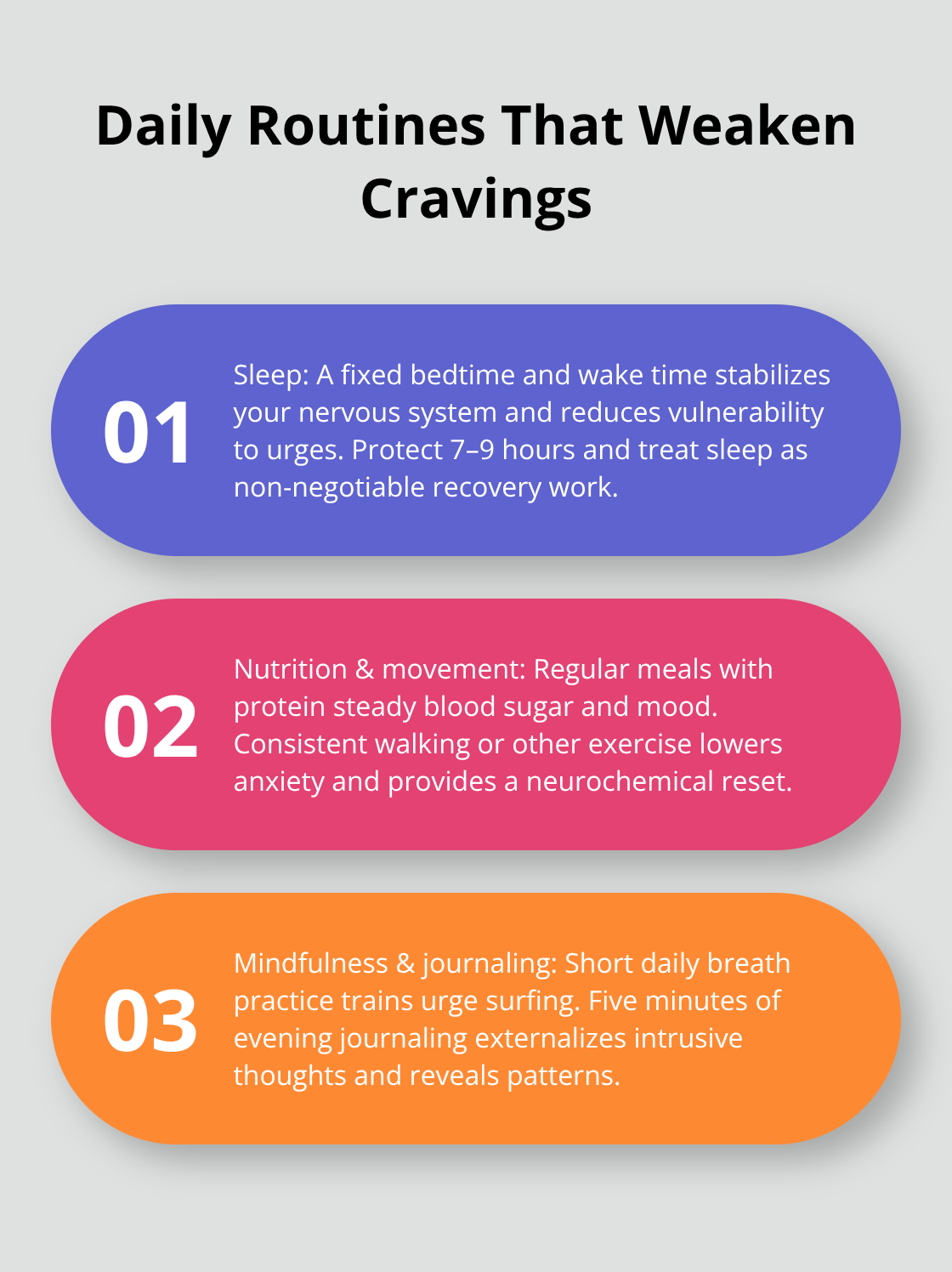
Poor sleep directly amplifies trigger intensity because exhaustion erodes emotional regulation and impulse control. The National Institute on Drug Abuse identifies fatigue as a primary relapse driver, yet most people in early recovery treat sleep as optional. Set a fixed bedtime and wake time seven days a week, even weekends. This stabilizes your nervous system and makes you measurably less vulnerable to cravings. If insomnia plagues you, avoid screens after 9 p.m., keep your bedroom cool and dark, and discuss non-addictive sleep aids with your doctor.
Nutrition and Movement Interrupt the Craving Cycle
Skipping meals crashes blood sugar and triggers emotional dysregulation that feels identical to craving intensity. Eat protein at every meal to stabilize glucose levels. Three structured meals plus two snacks prevents the metabolic chaos that makes you reach for old coping mechanisms. Physical exercise reduces anxiety and resets your nervous system in ways that sitting through cravings cannot match. Exercise doesn’t require a gym membership or special equipment. Walking outside for 30 minutes daily cuts stress measurably and provides the neurochemical reset that cravings disrupt. If you hate running, try cycling, swimming, dancing, or weight training. The specific activity matters far less than consistency. People who exercise regularly report fewer cravings and longer stretches between urges than those who rely on willpower alone.
Mindfulness and Stress Management Separate Success From Relapse
Meditation sounds abstract until you practice it under real pressure. Spend ten minutes daily sitting quietly, focusing on your breath, and noticing thoughts without judgment. When a craving hits during the day, this practice teaches your brain to observe the urge rather than act on it. Cravings are temporary waves that peak and subside within minutes if you don’t feed them. Journaling works similarly. Write for five minutes each evening about what triggered you, how you felt, and what you did instead. This externalizes the spiral of intrusive thoughts and builds awareness of patterns you’ll miss otherwise.
Create Response Plans for High-Stress Situations
High-stress situations demand a concrete response plan before they arrive. If workplace pressure typically sets you off, schedule a call with your sponsor immediately after difficult meetings rather than waiting until cravings peak. If social events tempt you, commit to leaving by a specific time and bring a sober friend who understands your recovery. The specificity transforms vague intentions into executable actions. These structural changes take two to three weeks to feel natural, but research shows that people who establish routine, prioritize sleep and nutrition, and move their bodies regularly sustain recovery far longer than those who leave their environment to chance.
Maintaining Long-Term Sobriety Beyond Trigger Management
Managing triggers in addiction recovery demands ongoing practice, not a one-time fix. You’ve learned how to identify what sets you off, develop concrete coping responses, and build a support network that sustains you through difficult moments. The research confirms that people who combine trigger awareness with lifestyle changes-sleep, nutrition, movement, and stress management-sustain sobriety far longer than those who rely on willpower alone. Your recovery environment matters as much as your mindset because a regulated nervous system and strong emotional defenses make triggers lose their grip.
Early recovery demands vigilance as you track patterns and adjust your response plan. Hunger, anger, loneliness, and exhaustion remain predictable danger zones that the HALT framework helps you catch before cravings spike. If you slip, treat that as information about what needs adjustment in your plan, not as personal failure. Progress, not perfection, defines sustainable recovery.
We at Addiction Resource Center understand that lasting sobriety requires professional support tailored to your specific situation. Our team offers personalized substance abuse counseling and addiction therapy programs designed to help you build the skills and resilience needed to manage triggers in addiction recovery. Contact Addiction Resource Center today to explore treatment options that fit your life and support your path forward.