Discover how music therapy for addiction recovery can ease cravings, reduce stress, and support your healing journey with science-backed techniques.


Music has a measurable impact on brain chemistry and emotional regulation, making it a legitimate tool in addiction recovery. At Addiction Resource Center, we’ve seen firsthand how music therapy helps people rebuild their lives by rewiring neural pathways and processing trauma.
This guide walks you through how music therapy works, where to find quality programs, and how to integrate it into your recovery plan.
How Music Rewires Your Brain During Recovery
Dopamine and the Brain’s Reward System
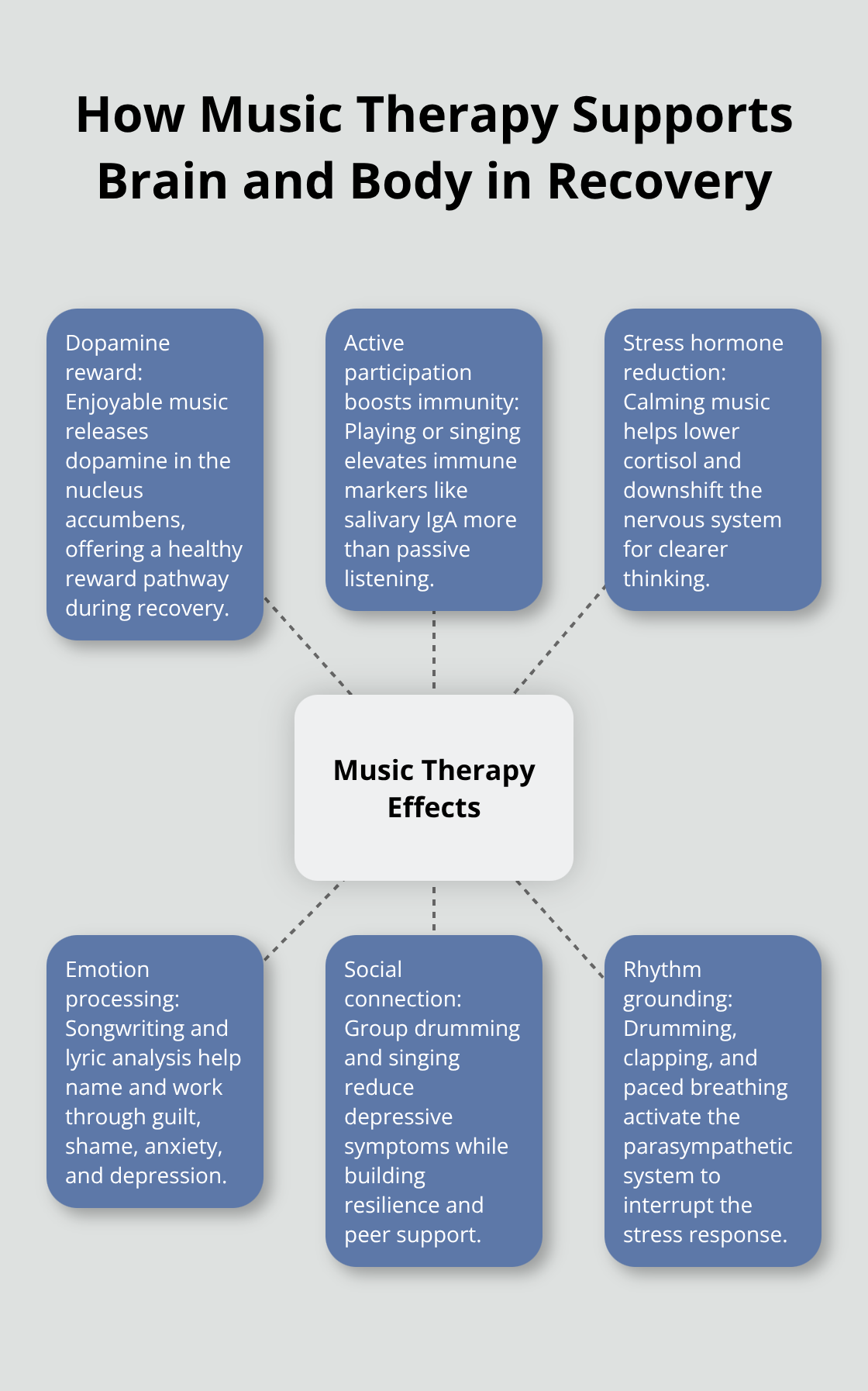
Music therapy works because it directly engages the brain’s reward and emotion-processing systems in ways that support addiction recovery. When you listen to music you enjoy, your brain releases dopamine release from music in the nucleus accumbens, the same reward center that substance use activates. Research from Blood and Zatorre shows that peak musical pleasure triggers dopamine release comparable to other rewarding experiences. This matters for recovery because it gives your brain a legitimate alternative source of reward without the harm of drugs or alcohol.
Active music-making like playing an instrument or singing produces even stronger effects than passive listening. Studies show that playing music increases immune markers like salivary IgA more than simply listening does, meaning your body gets a measurable health boost from participation. Over time, repeated exposure to music-based rewards helps your brain build new pathways away from substance-seeking behaviors.
Stress Hormones and Nervous System Regulation
The stress hormone cortisol reduction through music occurs when you engage with music you find calming, according to research by Fancourt and colleagues. This physiological shift matters because stress and cravings are tightly connected. When your cortisol levels fall through music listening or performance, your nervous system downshifts, making it easier to resist urges and think clearly about your recovery goals.
Rhythm-based grounding exercises used in music therapy interrupt the stress response directly. Clapping, drumming, or synchronized breathing with music activates your parasympathetic nervous system, the part of your body that calms you down. This gives you a tool you can use immediately when cravings hit or stress spikes unexpectedly.
Processing Emotions Through Music
Music therapy helps you process emotions that fuel addiction relapse. Guilt, shame, anxiety, and depression commonly surface in early recovery, and these feelings often trigger relapse if left unaddressed. Songwriting and lyric analysis give you a structured way to name and work through these emotions without judgment.
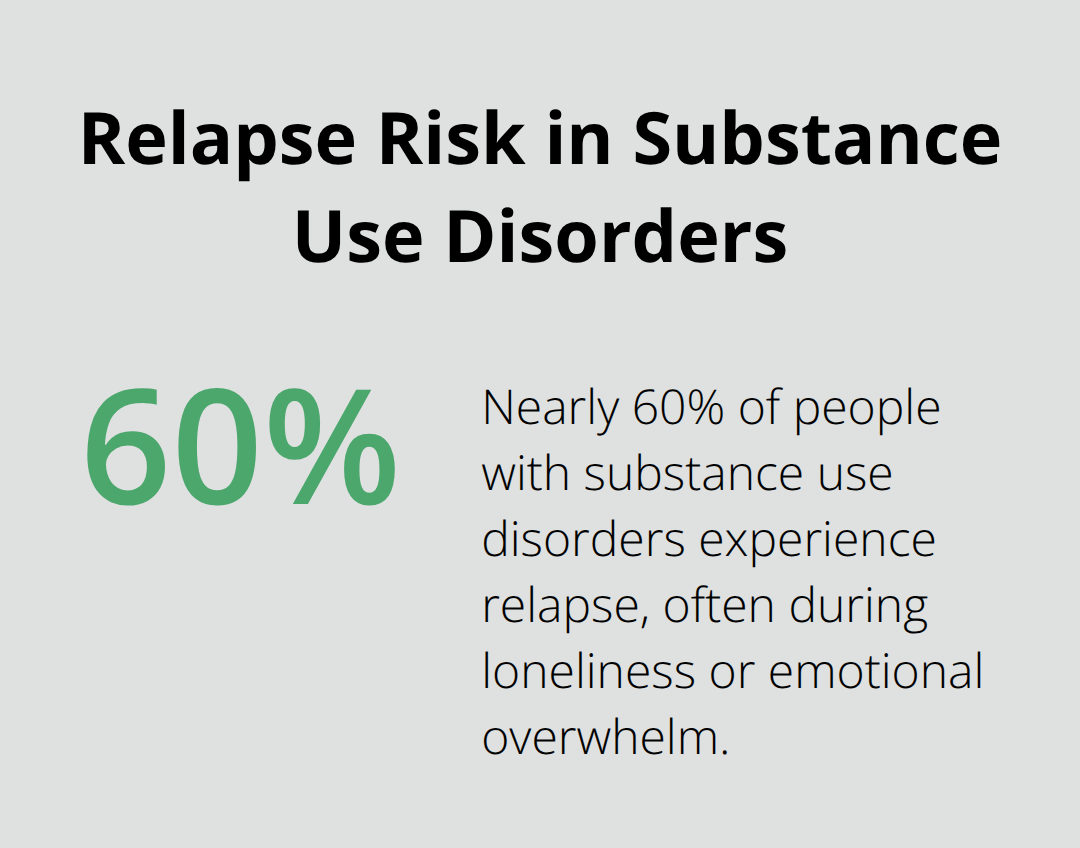
Group drumming circles and ensemble singing create social connection while you work through difficult feelings, which reduces the isolation that feeds relapse. Research on group music activities by Fancourt and colleagues found that drumming and singing together lower depressive symptoms and increase social resilience. This matters because nearly 60 percent of people with substance use disorders experience relapse, often during moments of loneliness or emotional overwhelm. When you practice music with others in recovery, you simultaneously manage emotions and build the peer support network that prevents relapse.
Moving Forward With Music in Your Treatment Plan
The neurological and emotional benefits of music therapy create a foundation for lasting recovery. Understanding how music rewires your brain sets the stage for choosing the right music therapy program and integrating it into your broader treatment approach.
Where Music Therapy Fits Into Your Recovery Plan
Individual Sessions: Personalized Music Therapy
Music therapy works best when it’s woven into your broader treatment strategy rather than used alone. Individual sessions with a licensed music therapist typically run 30 to 60 minutes and focus on your specific recovery goals-whether that’s managing cravings, processing trauma, or building emotional regulation skills. A trained therapist will assess your musical preferences, past associations with music, and recovery stage to create a personalized approach.
Songwriting sessions help you articulate what triggers your cravings and construct a recovery narrative in your own words, making abstract recovery concepts concrete and personal. Instrumental improvisation on drums, piano, or guitar lets you express emotions that are hard to talk about, which matters because unprocessed feelings drive relapse. The therapist tracks measurable outcomes like stress levels, anxiety symptoms, and your sense of belonging in recovery, not just whether you feel better.
Group Music Activities: Building Connection and Resilience
Group music activities accelerate recovery in ways individual therapy cannot. Drumming circles, group singing, and ensemble playing create immediate peer connection and reduce the isolation that fuels relapse. Research shows that group music-making lowered depressive symptoms more effectively than individual listening.
These activities work because you manage difficult emotions and build social resilience simultaneously with people who understand your struggle. The shared experience of making music together strengthens your recovery network in ways that talking alone cannot achieve. Group sessions also normalize the recovery process and remind you that others face similar challenges.
Combining Music Therapy With Other Treatments
When you integrate music therapy with cognitive behavioral therapy or medication-assisted treatment, the results compound. Music provides an emotional outlet that complements talk therapy, while CBT gives you structured thinking tools, and medication addresses the neurochemical side of addiction. This combination approach addresses recovery from multiple angles at once.
Start with at least three sessions to establish whether music therapy resonates with you; research suggests meaningful benefits emerge after consistent engagement. Most addiction treatment programs, including outpatient and intensive outpatient formats, can incorporate music therapy into their service mix if you request it and your provider has access to a qualified therapist (insurance coverage varies significantly, so verify whether your plan covers music therapy and whether the therapist holds proper licensure before committing).
Finding the Right Program and Provider
A qualified music therapist holds credentials from recognized music therapy associations and understands addiction recovery principles. Your provider should explain how they’ll measure progress and adjust your treatment plan based on what works for you. The therapist’s role involves collaborating with your broader treatment team-counselors, doctors, and support networks-to ensure music therapy supports rather than replaces other essential treatments.
When you’ve identified a program that incorporates music therapy, ask whether they tailor music selections to your preferences and whether they offer both individual and group options. The next step involves understanding what specific questions to ask before you commit to a program.
Finding a Music Therapist Who Understands Addiction Recovery
Verify Credentials and Addiction Expertise
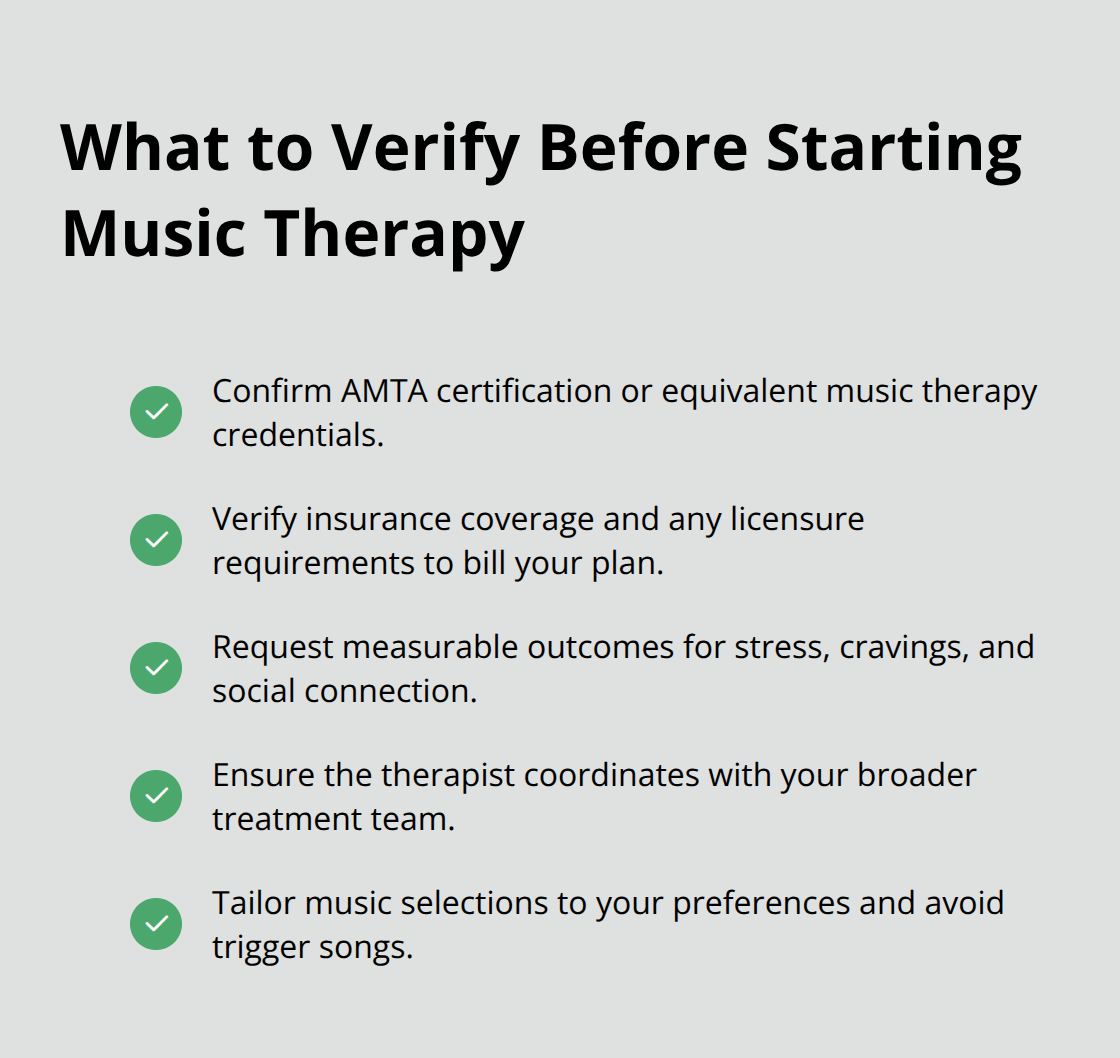
Credentials matter more than you might think. A qualified music therapist holds certification from the American Music Therapy Association or equivalent body in your country, which requires a bachelor’s degree or higher in music therapy from one of over 80 AMTA-approved programs. This distinction separates licensed music therapists from musicians who claim to offer therapy. When you contact a potential provider, ask directly whether they hold music therapy credentials and whether they have specific experience treating substance use disorders. Many providers claim to use music in treatment without formal training in music therapy itself, which typically means less structured outcomes and weaker integration with your broader recovery plan.
Confirm Insurance Coverage Before Your First Session
Insurance coverage varies dramatically, so call your insurance company before scheduling an appointment and ask whether music therapy is covered and whether the therapist must hold specific licenses to bill your plan. Some plans cover music therapy only when delivered by a licensed therapist within a registered treatment facility, while others exclude it entirely. This administrative step prevents you from discovering halfway through treatment that you owe thousands out of pocket. The therapist’s office should verify your coverage before your first session rather than leaving you to sort it out alone. Ask whether the program offers sliding scale fees or reduced rates if insurance won’t cover sessions, since out-of-pocket music therapy typically costs between 75 and 150 dollars per session depending on your location and therapist experience.
Track Measurable Outcomes, Not Just Feelings
A strong music therapy provider tracks specific metrics rather than relying on how you feel. Request that your therapist measure stress levels using standardized scales, monitor changes in reported cravings before and after sessions, and document your sense of belonging or social connection over time. These measurements tell you whether the therapy works and give your provider data to adjust the approach if progress stalls. If a program says music therapy helps but cannot show you measurable changes in anxiety, mood, or craving intensity after three to four sessions, that signals a problem. The research on music therapy in addiction treatment shows meaningful benefits, so lack of improvement suggests either a poor match between you and the therapist or an ineffective approach.
Require Communication Across Your Treatment Team
Music therapy should enhance your existing treatment, not replace it. Before enrolling in a music therapy program, confirm that the therapist communicates with your counselor, prescribing doctor, and other treatment providers. This collaboration matters because your therapist needs to know if you take medications that affect mood, whether you are in early recovery or stable long-term recovery, and what triggers your cravings most intensely. A therapist working in isolation cannot tailor the approach effectively. Ask whether the program uses specific music selections based on your personal preferences and recovery stage, since listening to songs associated with your past use can actually increase cravings rather than reduce them.
The therapist should discuss this risk upfront and adjust accordingly.
Final Thoughts
Music therapy for addiction recovery works because it addresses the neurological, emotional, and social dimensions of substance use disorders at the same time. When you engage with music through individual sessions, group activities, or structured listening, your brain builds new reward pathways, your stress hormones drop, and your sense of connection strengthens. These changes compound over time, making relapse less likely and recovery more sustainable.
Your next step depends on where you stand in your recovery journey. If you just started treatment, ask your provider whether music therapy is available and whether a licensed therapist can assess your needs. If you already work through recovery, adding music therapy to your existing plan can deepen emotional processing and strengthen your peer support network, and you should try at least three sessions before deciding whether the approach works for you.
We at Addiction Resource Center understand that recovery requires more than one tool. Music therapy complements counseling, medication-assisted treatment, and peer support by giving you an immediate, accessible way to manage cravings and process difficult emotions. If you are ready to explore music therapy or need comprehensive addiction treatment, contact Addiction Resource Center to learn about our outpatient programs and mental health support services in Yuba City.