If someone in your family has just walked into detox, or you're the one sitting in the intake chair, the first few minutes can feel strangely ordinary. A nurse asks about sleep, medications, past treatment, and safety, yet the way those questions are asked can decide whether the room feels steady or threatening. That is …

If someone in your family has just walked into detox, or you're the one sitting in the intake chair, the first few minutes can feel strangely ordinary. A nurse asks about sleep, medications, past treatment, and safety, yet the way those questions are asked can decide whether the room feels steady or threatening.
That is where trauma informed care principles stop being theory and start becoming the operating system behind treatment. In addiction care, trauma-informed practice is not a separate therapy you add later, it is the way the program handles privacy, language, timing, choice, and follow-through so people are less likely to feel cornered or pushed aside. SAMHSA's framework is built around safety, trustworthiness and transparency, peer support, collaboration and mutuality, voice, and choice, and attention to cultural, historical, and gender factors (SAMHSA TIP 57 overview).
A good program doesn't just sound kind. It makes the intake process, the schedule, the medication conversation, and the discharge plan feel understandable and human. That matters because trauma exposure is common in the people seeking help, and the setting itself can either calm a stressed nervous system or trigger the same alarm bells that made treatment hard to enter in the first place.
Table of Contents
- Why a Routine Check-In Can Change Everything
- The Six Principles and the 4 Rs Explained Simply
- Why Substance Use Programs Cannot Afford to Skip This
- What the Principles Look Like Across Levels of Care
- Practical Playbooks for Families and for Staff
- Common Misconceptions and How to Spot Real Implementation
- Putting It Together and Getting Started
Why a Routine Check-In Can Change Everything
A person in the first days of detox is asked a simple question, maybe about medications, maybe about whether they feel safe. If the staff member rushes the answer, uses jargon, or skips the explanation of why the question is being asked, that moment can feel like an interrogation. If the staff member slows down, explains the purpose, and gives the person a chance to pause or ask for clarification, the same question can feel like care.
That's the heart of trauma informed care principles in real life. The goal isn't to turn every interaction into a therapy session, it's to make ordinary service moments less likely to feel humiliating, confusing, or controlling. SAMHSA's guidance treats trauma-informed care as a system-wide framework, not a single intervention, because the delivery system itself, policies, workflows, staff behavior, and physical space, shapes whether clients feel safe enough to stay engaged (CDC overview of TIC).
What the first minutes are really testing
A new client is not just deciding whether to answer questions. They're deciding whether the program feels predictable, whether staff will listen, and whether they can ask for a pause without being punished. In an addiction setting, that decision can affect whether they return after the first night, whether they trust the medication discussion, and whether family members feel included or shut out.
Practical rule: if a routine question can't be answered in a way that preserves dignity, the program needs to redesign the question, not blame the client's “resistance.”
This is why trauma-informed care matters for families, counselors, nurses, and people thinking about treatment. It gives a clear standard for the small moments that often determine the larger outcome. If you want a plain-language companion on the overlap between trauma and addiction, the guide on PTSD and substance use is a helpful starting point.
The Six Principles and the 4 Rs Explained Simply
SAMHSA's framework can sound abstract until you translate it into things you can picture. Think of the 4 Rs as the program's job: realize trauma is common, recognize how it shows up, respond with policies and practices that fit, and resist re-traumatization at every step. The six principles are the tools that make those four jobs visible.
The principles, translated into everyday language
Safety is the thermostat in the room. A client can't relax if the room is freezing, the chairs feel exposed, or every conversation sounds like a test. In practice, safety means the environment, tone, and schedule help people settle instead of brace.
Trustworthiness and transparency is a menu, not a hidden bill. People do better when they know what's happening, why it's happening, and what comes next. That means honest explanations about intake, medication, group rules, and discharge planning.
Peer support is a fellow traveler on the trail. Someone who has lived through addiction or recovery can reduce shame in a way a polished brochure never will. That support works best when it complements, not replaces, clinical care.
Collaboration and mutuality is doing push-ups with someone, not for them. Staff still lead, but they don't dominate every choice. Clients are more likely to engage when their input changes the plan.
Voice and choice is handing back the steering wheel. A person may not control the fact that they need detox, but they can often choose pacing, questions, and how much family involvement feels safe.
Attention to cultural, historical, and gender factors is making sure the map matches the territory. A program that ignores identity, language, discrimination, or past system harm can be technically organized and still feel unsafe to the person in front of it.
The broad reason this matters is simple. Trauma exposure is widespread, with StatPearls reporting over 70% of people experience at least one traumatic event in their lifetime and about 10% develop PTSD afterward, alongside worldwide lifetime PTSD prevalence of 1.3% to 12.2% and 12-month prevalence of 0.2% to 3.8% (StatPearls on trauma-informed care).
Why Substance Use Programs Cannot Afford to Skip This
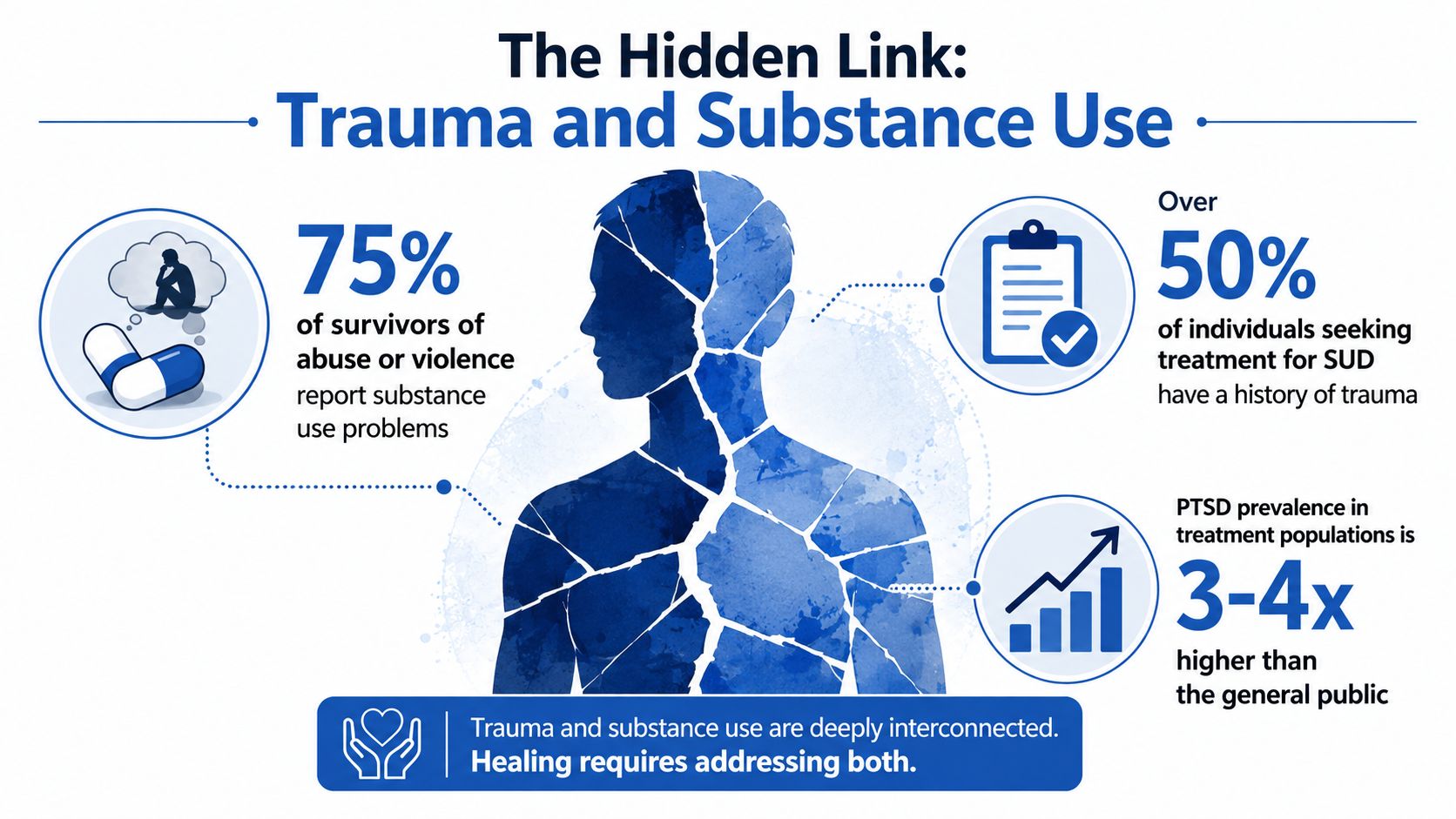
A client can sit through intake, nod at every question, and still feel unsafe the moment the door closes behind them. That is why trauma-informed care in substance use treatment is closer to basic plumbing than to a specialty feature. SAMHSA's behavioral health guidance says more than half of people seeking substance abuse treatment report one or more lifetime traumas, and many inpatient clients have subclinical traumatic stress symptoms or PTSD.
The same guidance reports that in Wave 2 of the National Epidemiologic Survey on Alcohol and Related Conditions, 71.6% of respondents reported witnessing trauma, 30.7% experienced a trauma that resulted in injury, and 17.3% experienced psychological trauma. That means addiction programs are usually meeting trauma-exposed people, not a small edge case. A counselor may never see those numbers at the front desk, but the pattern shows up in missed appointments, guarded answers, shutdowns during groups, and sudden dropoff after discharge.
Why a system approach matters more than a warm tone
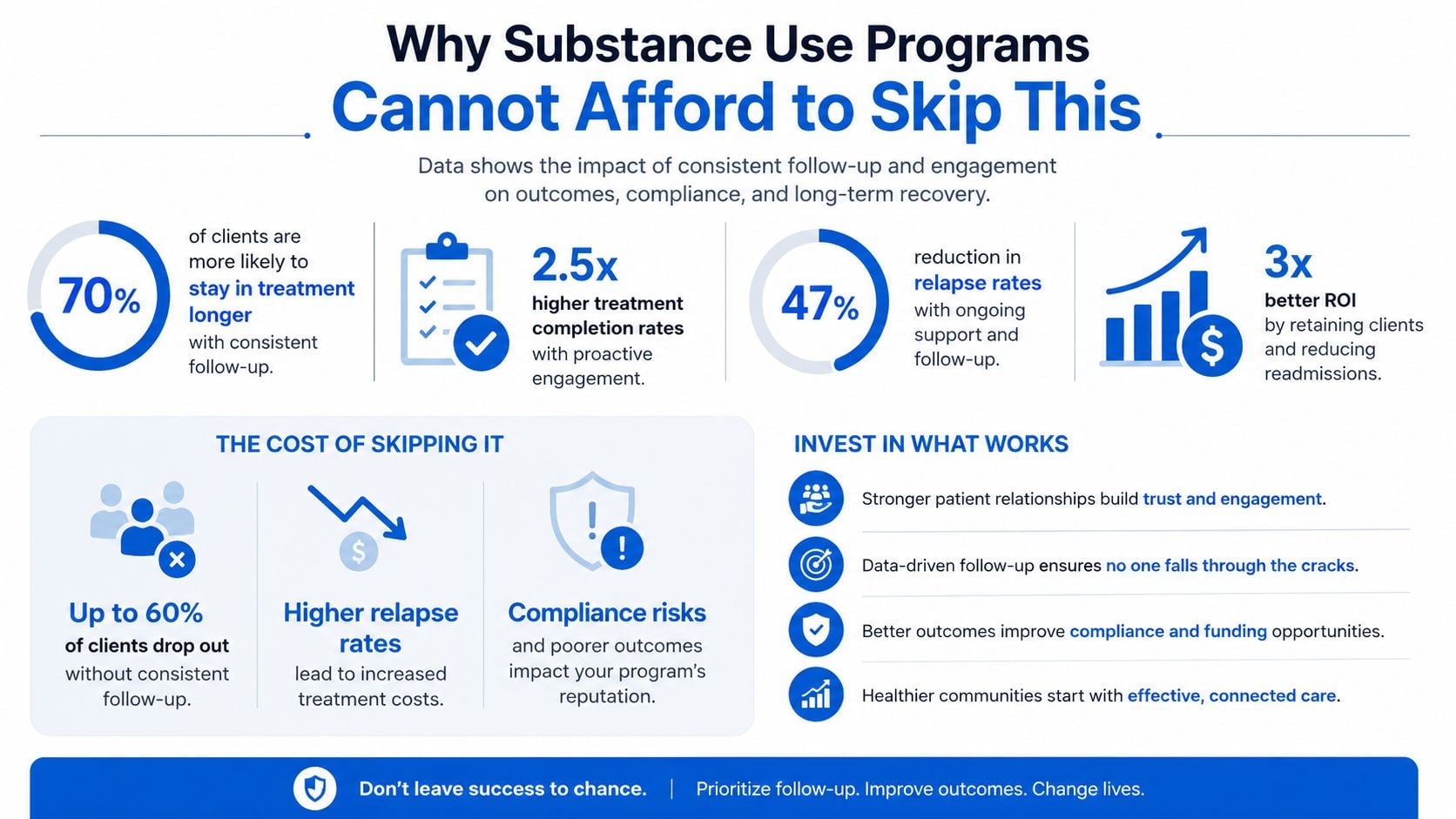
A kind clinician can still work inside a process that shakes trust. Long waits with no explanation, unclear medication rules, public check-ins, or a discharge summary handed over in a hurry can make a person brace for the next problem. Trauma-informed care shifts the question from “Was the staff member nice?” to “Does the program keep lowering the chances of re-traumatization at each step?”
That is also why trauma-informed care is different from trauma therapy. Trauma therapy addresses the clinical effects of trauma. Trauma-informed care shapes the setting so clients can take part in detox, MAT, IOP, telehealth, or family work without feeling that every contact is a test of endurance.
Key takeaway: if a program changes only the counselor's tone and leaves intake, scheduling, handoffs, and discharge untouched, the system is still asking clients to adapt to it.
Families and referral partners can test for this by asking how the program handles privacy, medication explanations, missed appointments, and crises after hours. A page that discusses co-occurring disorders and integrated care may sound reassuring, but the key question is whether the setting was built to reduce re-traumatization or only to describe it. The same standard helps when a program talks about PTSD in substance use treatment, including clear education like trauma and substance use connections, and when a family is looking for practical and financial NICU help while trying to understand how stress affects care-seeking and follow-through.
What the Principles Look Like Across Levels of Care
A trauma-informed program changes its behavior with the setting. Detox asks for one kind of steadiness, group therapy asks for another, and telehealth needs clear signals that help people stay oriented when no one is in the room together. The principles stay the same, but the day-to-day actions shift like the same house with different rooms arranged for different uses.
Detox and MAT
In medically supervised detox, safety usually starts with predictability. A nurse explains when vitals will be checked, what the next medication window is, and who to call if anxiety rises. If buprenorphine is being discussed, collaboration and mutuality appears when the nurse explains the option in plain language instead of presenting it like a technical decision the client has to absorb alone.
Voice and choice can be as small as asking whether a client wants the curtain partly open or fully closed during a check-in. That detail may seem minor, but it gives back a little control at a time when many people feel as if their body and schedule belong to the unit.
Residential and group work
In residential treatment, peer support may look like a recovery mentor greeting a new arrival and walking through the unit routine without talking down to them. In group, trustworthiness means the facilitator says what the group is for, what stays confidential, and what happens if someone becomes overwhelmed. That kind of clarity does more than a polished speech ever could.
Family meetings add another layer. When the family's role in decision-making, privacy, or emotional expression is different from the clinician's assumptions, the meeting can either build connection or widen distance. Staff also need to watch how trauma intersects with co-occurring concerns, because a person who is managing mental health symptoms and substance use may need coordinated explanations rather than separate messages from different corners of the program. A clear overview such as co-occurring disorders and integrated care can help families understand why that coordination matters.
IOP and telehealth
In an IOP, collaboration shows up in the schedule. One client may need evening sessions, another may need a slower pace after a lapse, and another may need a format that does not feel like constant monitoring. In telehealth, safety includes knowing how to log in, what to do if privacy is not possible at home, and how to signal distress without having to explain everything from the start.
Programs that support parents and caregivers often need the same kind of practical clarity. Someone who is juggling treatment, work, and family stress may also be searching for practical and financial NICU help, so a trauma-informed system should make it easier, not harder, to ask for support and keep showing up.
The table below gives a quick view of how the principles often look across levels of care.
| Principle | Detox and MAT | Residential | IOP and Telehealth |
|---|---|---|---|
| Safety | Clear explanations, calm room flow, predictable checks | Stable routines, private spaces, de-escalation options | Private login support, session structure, backup contact plan |
| Trustworthiness | Honest medication explanations | Consistent house rules and staff responses | Clear attendance expectations and follow-up |
| Peer support | Recovery mentor or lived-experience support | Informal support during community time | Check-ins that normalize setbacks and return |
| Collaboration and mutuality | Medication decisions explained in plain language | Client input on goals and daily structure | Shared planning for pace, schedule, and participation |
| Voice, empowerment, and choice | Choices about pacing and questions | Choice within house routines | Choice in telehealth format, camera use, and family involvement |
| Cultural, historical, and gender responsiveness | Respectful language, identity-aware care | House norms that do not erase identity | Scheduling and communication that fit real-life contexts |
Addiction Resource Center LLC, for example, offers medically supervised detox with MAT, residential rehabilitation through its partner facility, and an IOP that can be done in person or via telehealth, all within a multidisciplinary team. That matters because trauma-informed care is not just a philosophy on paper. It shows up in whether each level of care is organized so the client can stay oriented, understood, and able to take part without feeling pushed aside.
Practical Playbooks for Families and for Staff
Families usually want one thing first, a way to tell whether a program will treat their loved one with dignity. Staff and supervisors usually want a different thing, a way to make the care consistent when the day gets busy. Both groups can use the same six principles, but they need different questions.
What families can ask on a tour or first call
Start with the room, not the brochure. Ask whether private counseling space is available, how the team handles a client in distress, and how staff explain medication decisions. Those questions tell you a lot about safety, trustworthiness, and choice without requiring you to know clinical jargon.
Look for concrete signs that the program is real rather than label-only. Staff should be able to describe what happens if someone gets overwhelmed, how family involvement is handled, and how privacy is protected during intake or telehealth sessions. If every answer sounds vague or sales-driven, that's a warning sign.
Practical rule: a trauma-informed program can describe what happens on a hard day, not just what happens on a good one.
If you're helping after discharge, don't flood the person with advice. Offer choices, keep your tone steady, and ask what kind of support feels useful today. The goal is to lower pressure, not to force a perfect recovery conversation.
What staff and supervisors should build into the job
Onboarding should include trauma screening without destabilization, pacing around trauma questions, and clear rules for when trauma work should wait until stabilization is stronger. Documentation should help the team coordinate care, not turn every detail into surveillance. That distinction matters because clients can feel when a chart is being used against them.
Supervision should also cover secondary traumatic stress. A team that works with withdrawal, relapse, family conflict, and grief needs regular space to process the emotional load of the job. If the workforce is not supported, the program starts leaking safety from the inside.
A useful lens is to ask whether the system reduces re-traumatization during routine tasks. That includes intake flow, handoffs, billing conversations, and discharge planning. A well-run program makes those moments feel organized instead of chaotic.
Common Misconceptions and How to Spot Real Implementation
A common misunderstanding is that kindness alone equals trauma-informed care. Kindness helps, but if the program still surprises people with rules, rushes disclosures, or makes medication access feel punitive, the system is still working against the client. Another mistake is assuming that offering one trauma therapy group means the whole program is trauma-informed.
Screening once at intake is not enough either. Trauma-informed care has to show up in the way staff schedule follow-ups, explain changes, coordinate aftercare, and handle setbacks. If the only trauma conversation happens in one office, the rest of the program may still feel cold or coercive.
A quick way to pressure-test a program
Ask whether the staff can describe how the six principles shape daily operations. Ask how the program minimizes retraumatization during intake, detox, or discharge. Ask what happens when someone can't tolerate a question, a room, or a schedule.
The field still has a measurement problem. Implementation reviews note that trauma-informed care spans settings and workforce supports, but the field still lacks standard definitions, consistent measures, and strong cross-setting outcome data (implementation review). That means families and payers have to look for concrete behavior, not just a label on the website.
A program is more credible when its language, policies, and staff responses match the principles it names. If the brochure says “choice,” but the person can't pause an intake, reschedule a group, or ask for privacy, the label isn't doing real work.
Putting It Together and Getting Started
Trauma-informed care means one simple thing repeated across many settings, the program makes it easier to stay safe, stay informed, and stay engaged. For families, ask three questions before enrolling someone. For clinicians, audit one workflow this week. For people considering treatment, notice whether the intake feels clear, respectful, and choice-driven.
FAQ: Does trauma-informed care delay treatment? No, it should make the start of care safer and clearer. Does MAT count as trauma-informed? It can, if it's delivered with transparency, choice, and respect. Is telehealth IOP trauma-informed by default? No, it depends on privacy support, communication, and how the team handles distress.
If you're in Northern California and want a place to start, Addiction Resource Center LLC in Yuba City offers a confidential intake process, a 24/7 phone and text line, and treatment options that include detox, MAT, residential care through its partner facility, and in-person or telehealth IOP.
If you're trying to compare options, ask how the program handles safety, choice, and follow-through in the first phone call and the first week. Addiction Resource Center LLC works with adults seeking addiction treatment and co-occurring mental health support, and you can visit Addiction Resource Center LLC to learn more, ask about trauma-informed intake, and take the next step when you're ready.