Navigate the continuum of care for addiction recovery with practical steps through detox, treatment, and long-term support services.

Addiction recovery isn’t one-size-fits-all, and the path forward depends on your specific situation. The continuum of care in addiction treatment offers different levels of support-from intensive programs to ongoing maintenance-so you get exactly what you need when you need it.
At Addiction Resource Center, we’ve seen firsthand how the right care level at the right time transforms outcomes. This guide walks you through each option and helps you build a recovery plan that actually works for your life.
What Happens at Each Level of Care
The Dual Diagnosis Assessment Sets Your Path
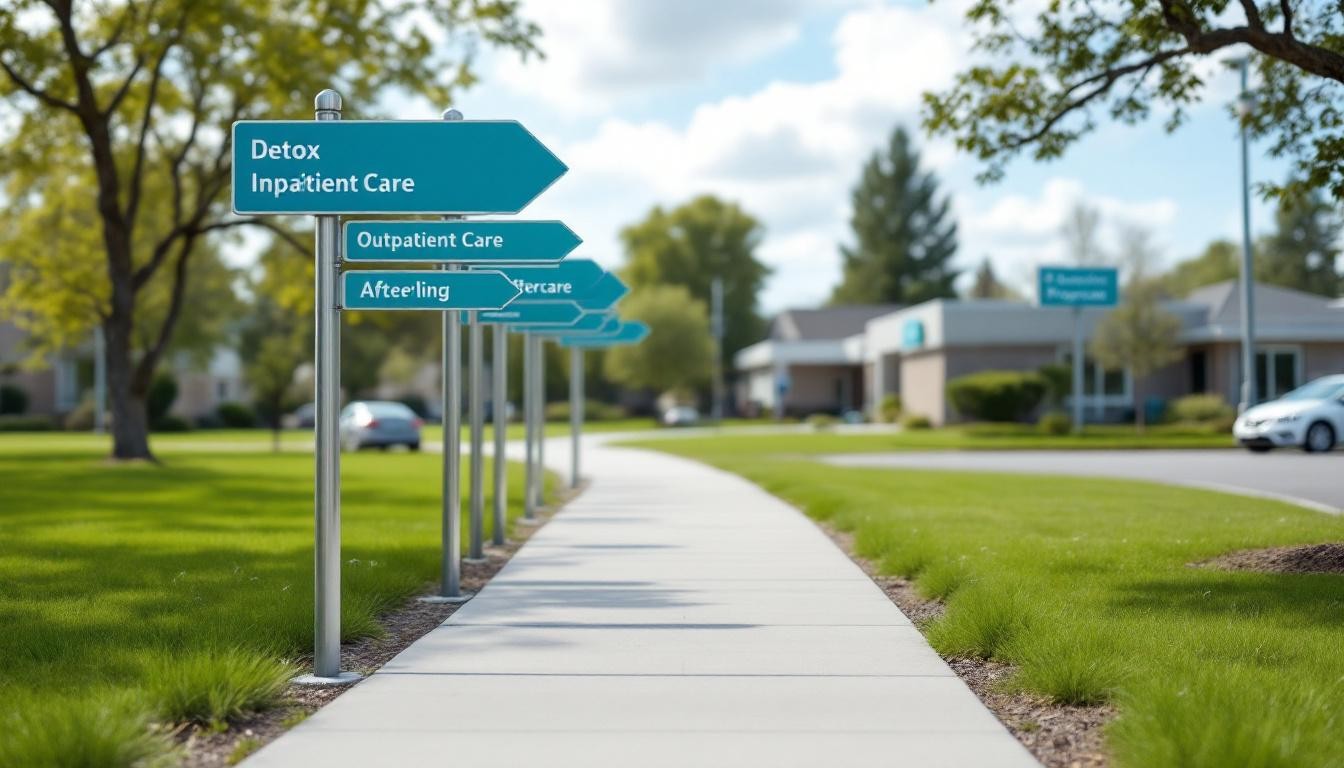
The continuum of care isn’t a vague concept-it’s a specific sequence of treatment environments that match your medical and psychological needs at different points in recovery. When you enter treatment, your first step involves a dual diagnosis assessment that identifies both substance use patterns and co-occurring mental health issues like depression or anxiety. This assessment determines whether you need medical detox with 24-hour supervision, a residential program where you live at the facility, a partial hospitalization program that runs six hours daily five days a week, an intensive outpatient program with about nine hours of treatment spread across three to five days, or standard outpatient counseling.
How Research Supports Full-Continuum Progression
Research from the National Institute on Drug Abuse shows that people who move through a full continuum-starting at higher intensity and stepping down as they stabilize-see significantly better outcomes than those who jump directly to lower levels. The 2021 National Survey on Drug Use and Health reported 4.1 million people aged 12 and older received substance use treatment in the past year, with the distribution across entry points showing many people appropriately start at inpatient or detox levels based on medical necessity.

Building Skills at Each Treatment Stage
Structured progression through these levels matters because each stage builds specific skills you’ll need later. During early recovery in intensive settings, you focus on achieving abstinence and developing relapse prevention strategies, typically spending six weeks to three months at this intensity. Research found that continuing care extending beyond initial treatment produces higher abstinence rates, with studies showing roughly 50 percent improvement in sustained sobriety compared to people without continuing care.
Transitioning Through Maintenance and Community Support
As you move to maintenance stages, you shift from crisis stabilization to broadening your sober social network and improving emotional functioning, which may last two months to a year. The final stage involves community-based support through groups like Alcoholics Anonymous or Narcotics Anonymous, where studies show sustained participation dramatically improves long-term outcomes. What separates successful recoveries from failed ones often isn’t the initial treatment intensity but whether you complete the transition planning before discharge and follow through with continuing care-research shows that without coordinated aftercare, relapse risk increases substantially within the first year.
Your treatment plan takes shape based on these levels, but the real work happens when you move between them. The next section explores the outpatient options that fit your life while maintaining the structure you need.
Outpatient Treatment That Fits Your Life
Intensive Outpatient Programs for Working Recovery
Intensive outpatient programs deliver roughly nine hours of treatment spread across three to five days per week, making them the strongest option for people working or managing family responsibilities while in recovery. This structure keeps you engaged without pulling you away from employment or caregiving duties entirely. Research found that structured outpatient programs with consistent scheduling showed higher retention rates than those with flexible or ad-hoc appointments. You receive individual therapy sessions, group therapy, psychoeducation about addiction triggers, and relapse prevention training all coordinated within a single program rather than scattered across multiple providers. When you transition down from inpatient care, intensive outpatient acts as a critical bridge, preventing the sudden drop in structure that leads many people back to substance use.
The Research on Structured Transitions
Studies show that roughly 20 percent of people who leave treatment without continuing care avoid relapse after one year, whereas those moving into structured outpatient care see roughly 50 percent better abstinence outcomes. If you work full-time, scheduling matters enormously: programs offering evening or weekend sessions dramatically improve attendance. Research on proximity shows living within 10 miles of your treatment facility increases the likelihood you’ll actually show up to appointments and complete the program.

The difference between success and failure often comes down to whether your treatment schedule fits your actual life.
Standard Outpatient Counseling for Maintenance Stages
Standard outpatient counseling typically involves one-hour sessions once or twice weekly and works best for people with stable housing, employment, and strong support systems who need ongoing monitoring rather than intensive daily structure. This level suits people in the maintenance stage of recovery who’ve already completed higher-intensity treatment and now focus on preventing relapse through regular therapy and skill-building. You shift from crisis stabilization to broadening your sober social network and improving emotional functioning during this phase.
Aftercare Programs That Prevent Relapse
Aftercare programs specifically designed to prevent relapse operate differently than general counseling: they include alumni meetings, periodic phone checkups, booster sessions when cravings spike, and connections to employment or vocational services. Research found that people who participated in aftercare for 12 months or longer had substantially better outcomes than those who attended sporadically or stopped early. Housing stability matters too: people in sober living homes or recovery residences show better retention and lower relapse rates than those returning to unstable housing situations. If your living situation remains precarious, request placement in a structured housing program before discharge from inpatient care-this prevents a common failure point.
Engagement Strategies That Work
Low-cost reinforcement strategies like attendance contracts, reminder calls, and small incentives for completing sessions consistently boost engagement in outpatient and aftercare settings. Research shows these simple tools can increase session attendance fourfold compared to standard referrals alone. The research is clear that aftercare engagement directly predicts long-term success, and the practical steps you take now determine whether you maintain momentum or lose ground. Your next decision involves assessing which specific treatment modalities address your unique challenges and how to combine them for maximum impact.
Building Your Personalized Recovery Plan
Your Unique Recovery Profile Determines Treatment Success
Recovery works when treatment matches your specific situation, not when you force yourself into a generic program. The first actionable step involves identifying which substances you’ve used, how long you’ve used them, your mental health history, your living situation, and your work or family obligations. This assessment goes beyond what a clinician asks during intake-it’s about understanding which combination of therapies will actually stick with your brain chemistry and your life. If you’ve struggled with alcohol for fifteen years while managing depression, your treatment plan looks completely different from someone with a two-year cocaine habit and stable mental health. Research on adaptive treatment strategies shows that regularly monitoring progress and adjusting your therapies based on how you respond produces significantly better engagement and outcomes than static treatment plans. The practical truth is that roughly one-third of people respond extremely well to standard treatment, one-third show mixed results, and one-third struggle initially-which means flexibility matters more than finding the perfect program on day one.
Combining Multiple Treatment Modalities for Better Outcomes
Combining multiple modalities works better than relying on single-therapy approaches. If you attend an intensive outpatient program three days weekly, add individual cognitive behavioral therapy focused on your specific triggers, participate in a structured support group like Narcotics Anonymous, and work with a case manager on housing stability, you stack evidence-based interventions rather than hoping one approach solves everything. Research from the National Institute on Drug Abuse emphasizes that people with co-occurring mental health conditions need simultaneous treatment for both issues-taking antidepressants while attending group therapy without addressing the underlying depression creates incomplete recovery. The combination of medication, therapy, and community support produces substantially stronger results than any single intervention alone.
Setting Realistic Milestones and Tracking Progress
Try thirty days of continuous abstinence while completing your relapse prevention plan, which research identifies as a completion criterion that correlates with longer-term success. Your second milestone targets ninety days with consistent program attendance and demonstrated engagement in support networks outside formal treatment. After six months, you should have stable housing, active employment or meaningful daily structure, and a clear plan for transitioning to maintenance-level care.
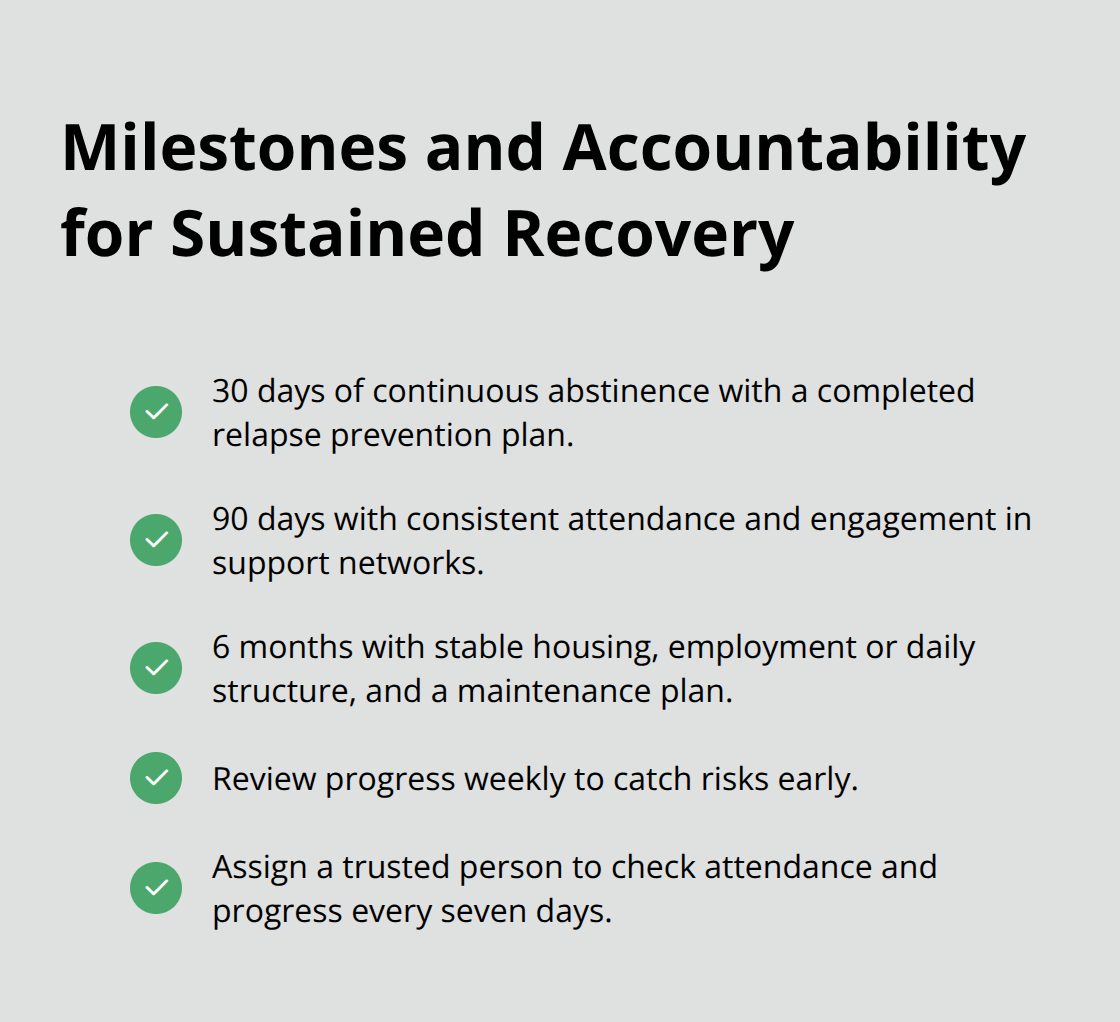
Track these metrics weekly, not monthly-weekly progress reviews catch problems before they become relapse triggers. Assign someone you trust to review your attendance records and progress with you every seven days; research on low-cost reinforcement strategies shows that simple accountability structures increase session attendance fourfold compared to standard referrals alone.
Final Thoughts on Your Recovery Path
Recovery shifts as you progress through the continuum of care for addiction treatment. Early on, you need intensive daily structure to break substance use cycles and stabilize your mental health, but as weeks turn into months and you build new habits, that same intensity becomes restrictive. Your clinician should discuss stepping down to standard outpatient counseling when you consistently meet milestones, or stepping back up to higher care levels when cravings intensify or attendance slips-the continuum works because it adapts to your changing needs.
Your support network determines whether recovery sticks or fades, since research shows people with stable family, friend, or community connections maintain sobriety at dramatically higher rates than isolated individuals. Call your sponsor when cravings hit, not after relapse happens, and stay connected to your therapist or case manager even when things feel stable (consistency prevents the gaps where relapse occurs). Housing stability matters too-request placement in a recovery residence before discharge from inpatient care if your living situation remains unstable.
The decision to start treatment happens now, not when things worsen. Contact Addiction Resource Center today to discuss which level of care matches your current needs and begin building your personalized recovery plan.