Discover practical tools to maintain sobriety through daily habits, community support, and proven strategies for lasting recovery.


Staying sober requires more than willpower alone. It demands concrete tools to maintain sobriety, structured routines, and genuine human connection.
At Addiction Resource Center, we’ve seen firsthand that people who build consistent practices into their daily lives experience stronger, longer-lasting recovery. This guide walks you through the specific strategies that work.
Daily Routines That Support Long-Term Sobriety
Sleep as the Foundation of Recovery
Sleep deprivation sabotages sobriety. Research shows that sleep deprivation and relapse rates are linked because exhaustion depletes the brain’s ability to resist cravings and manage stress. Try eight hours consistently, with the same wake time every single day, even on weekends. This consistency trains your circadian rhythm and stabilizes mood-regulating hormones like serotonin and dopamine.
Set a bedtime alarm 30 minutes before sleep to wind down. Skip screens during this window because blue light suppresses melatonin production. If sleep problems persist after two weeks of consistent timing, talk to a doctor rather than self-medicating with substances or alcohol. Poor sleep hygiene is a documented trigger for relapse, so treating it seriously matters for long-term sobriety.
Structure Replaces the Void Addiction Created
Structure fills the void that addiction once occupied. Research found that unstructured free time as a predictor of relapse is one of the strongest factors because idle hours invite cravings and old thinking patterns. Build a daily schedule that includes three non-negotiable anchors: a morning routine (shower, breakfast, one intentional activity), a midday check-in (either a call to a sponsor, peer, or therapist), and an evening wind-down (hobby, exercise, or self-care).
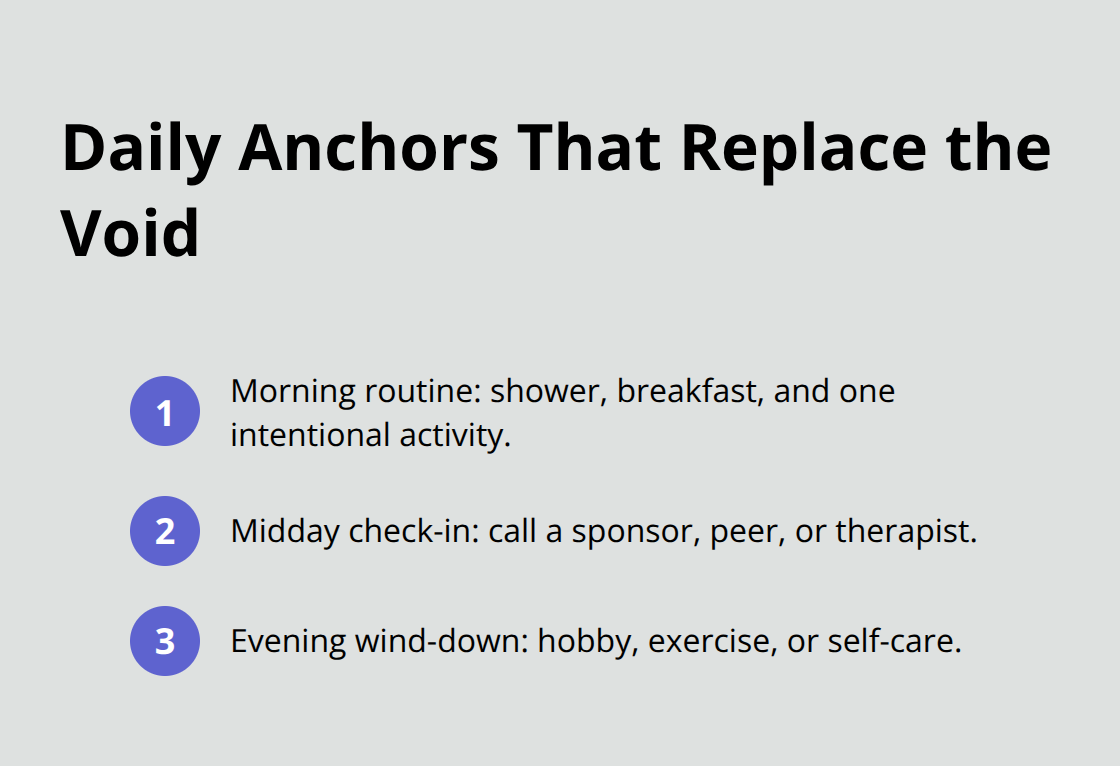
This structure takes roughly 66 days to become automatic, so commit fully for the first two to three months post-treatment. Track your adherence with a simple calendar or phone app-marking off completed days creates momentum and visibility.
Accountability Converts Private Commitments Into External Reality
Accountability works because it transforms private commitments into external reality. Weekly check-ins with a sponsor, therapist, or trusted friend create friction that prevents you from skipping routines without notice. These conversations reveal patterns early: if you miss two check-ins, that’s a warning sign that stress or complacency is creeping in, and you can adjust your support before relapse risk escalates.
The next step involves recognizing which specific situations and emotions trigger your cravings, then building targeted responses that interrupt the cycle before it gains momentum.
Support Systems and Community Connection
Peer Support Groups Create Accountability Without Judgment
Isolation kills sobriety faster than almost anything else. The moment you stop talking to people about your recovery, relapse risk skyrockets. Peer support groups work because they create accountability without judgment. In groups like AA or NA, you sit with people who understand cravings at a cellular level because they’ve lived through them. Research shows that structured peer support combined with ongoing tools produces strong outcomes. The key is showing up consistently, not just when you feel like it. Pick a meeting time that fits your schedule permanently and treat it like a non-negotiable work commitment. Many people find that attending multiple meetings per week in the first three months accelerates stability because each session reinforces the same message: you’re not alone, and recovery is possible.
A Sponsor Provides Personalized Guidance During Crisis Moments
A sponsor accelerates your progress because you get personalized guidance tailored to your specific triggers and weaknesses. A sponsor isn’t a therapist, but someone who has maintained sobriety longer and can walk you through concrete steps when cravings hit at 2 AM. The relationship works best when you pick someone with at least one year of sobriety and similar life circumstances. This one-on-one connection fills gaps that group meetings cannot address because the guidance targets your exact vulnerabilities rather than general recovery principles.
Professional Therapy Addresses Root Causes
Professional counseling and therapy address the underlying issues that fueled your addiction in the first place (whether unprocessed trauma, untreated depression, or unmanaged anxiety). Cognitive-behavioral therapy specifically has strong evidence for reducing relapse rates in alcohol dependence, according to peer-reviewed addiction research. This evidence-based approach helps you rewire thought patterns that trigger cravings and teaches you to interrupt the cycle before it gains momentum.
Three Layers of Support Hold Firm When One Weakens
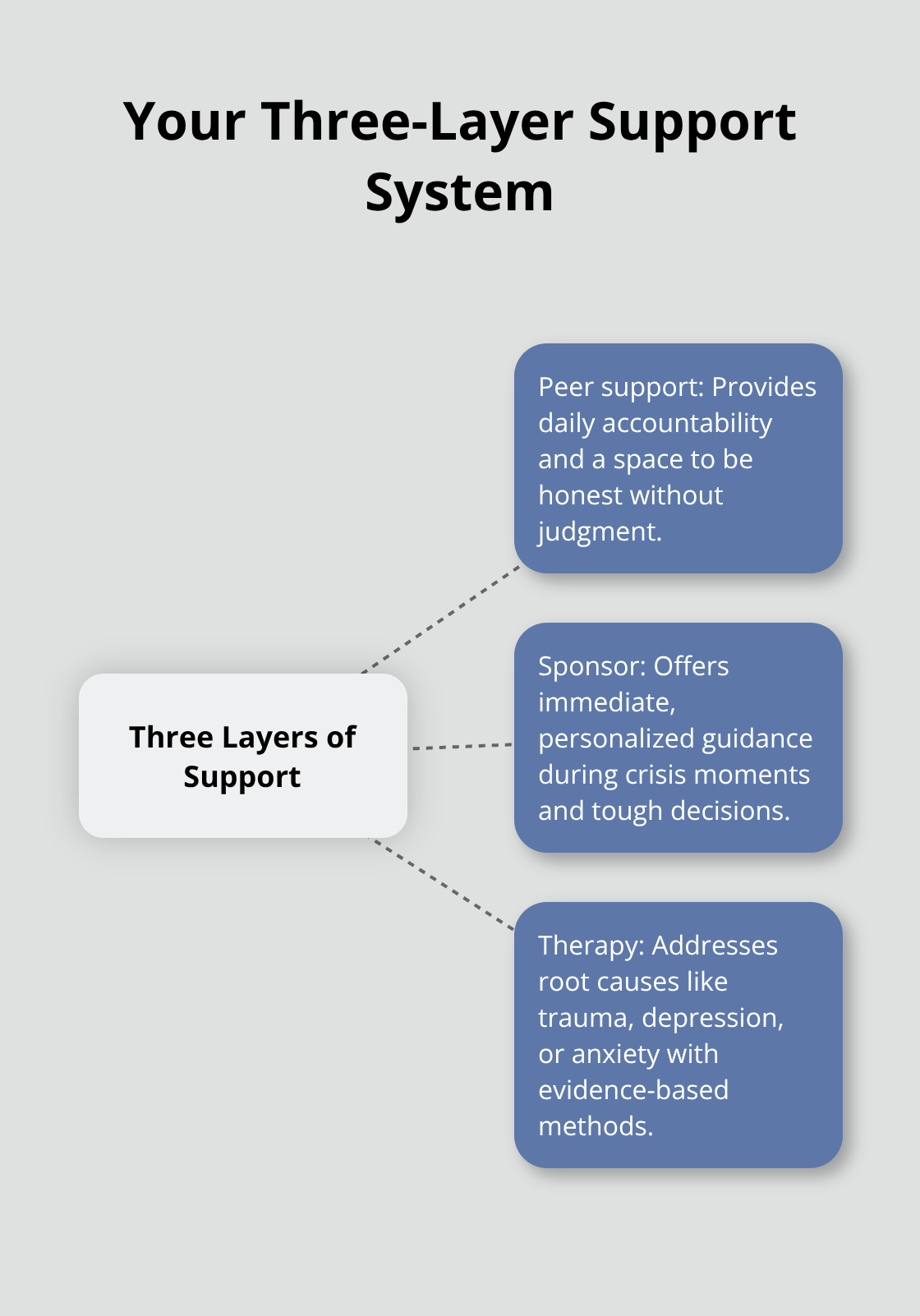
The combination matters most: peer support provides daily accountability, a sponsor offers immediate guidance during crisis moments, and therapy tackles the root causes that no meeting alone can fix. This three-layer approach catches you from multiple angles so that when one system weakens, the others hold firm. With these relationships in place, you’re ready to identify the specific situations and emotions that trigger your cravings and build targeted responses to interrupt them.
Practical Tools and Strategies for Managing Triggers
Identify Your Triggers Before They Control You
Cravings don’t arrive randomly-they follow predictable patterns tied to specific people, places, emotions, or situations. The HALT framework (Hungry, Angry, Lonely, Tired) identifies four high-risk states where relapse risk spikes dramatically. Tracking when these states occur reveals your personal vulnerability windows.
Start an Urge Log this week: record the date, time, what you were doing, who you were with, and the intensity of the craving on a scale of one to ten. After two weeks of entries, patterns emerge. Maybe Tuesday evenings trigger cravings because that’s when you used to meet certain friends, or financial stress hits hardest on the first of the month when bills arrive.
One person discovered that social media scrolling at night created a dangerous spiral-boredom led to scrolling, which led to seeing old connections, which triggered cravings. Once identified, that trigger became manageable because she replaced scrolling with a 20-minute walk instead.
Recognize Warning Signs and Act Within Your Window
Warning signs arrive before the craving peaks: jaw clenching, restlessness, irritability, or suddenly thinking about old using buddies. These physical and emotional signals give you a 15 to 30-minute window to activate your coping response before the craving becomes overwhelming.
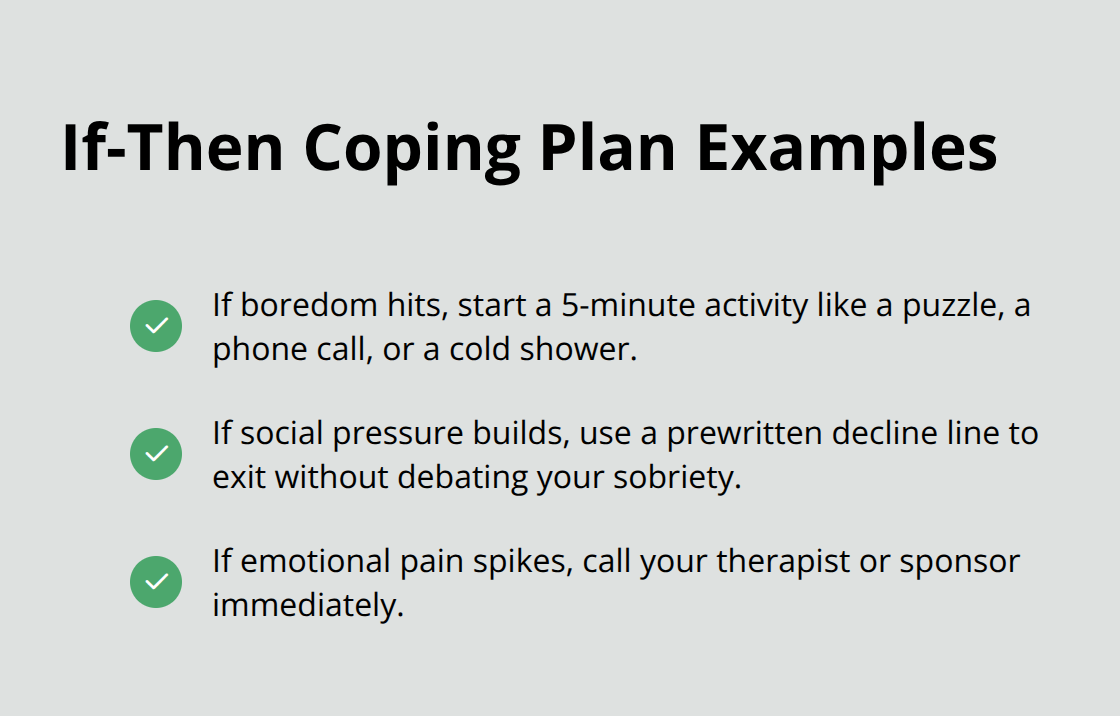
Your coping mechanisms must be as specific as your triggers. Generic advice like exercise or call a friend fails because it arrives too late if you haven’t practiced it beforehand. Instead, create a decision tree: if the trigger is boredom, what activity can you start in under five minutes (a puzzle, a phone call, a cold shower)? If the trigger is social pressure, what exact words will you say to decline without explaining your sobriety to everyone? If the trigger is emotional pain, which therapist or sponsor number do you call immediately?
Research on cognitive-behavioral therapy shows that pre-planning specific responses reduces relapse rates in alcohol dependence because your brain doesn’t have to problem-solve during a moment of weakness.
Use Technology to Track What Actually Works
Apps like I Am Sober track your days of sobriety with visual progress, creating a psychological boost that reinforces motivation. Others like Nomo log cravings in real time, helping you see which coping strategies actually work for you versus which ones you think should work.
SMART Recovery integrates the ABC Exercise from Rational Emotive Behavior Therapy, mapping the event that triggered you, the belief you formed about it, and the emotional consequence. This three-step framework breaks the automatic cycle where trigger leads directly to craving. Reviewing this data weekly with a sponsor or therapist identifies which tools genuinely interrupt your cycle and which ones need adjustment.
The consistency matters most: using one coping tool daily for 66 days builds the neural pathways that make sobriety automatic rather than effortful.
Building a Sustainable Path to Long-Term Recovery
Sobriety demands consistent practice across multiple areas of your life: sleep schedules that stabilize your brain chemistry, daily structures that replace the void addiction created, peer support that catches you when isolation creeps in, and specific coping strategies that interrupt cravings before they overwhelm you. These tools to maintain sobriety work because they address the whole person, not just the addiction itself. Research shows that people who stick with these practices for at least 66 days see them transform into automatic behaviors as your brain rewires itself through repetition.
Long-term success requires treating recovery like a non-negotiable commitment, the same way you would treat a job or relationship that matters. Missing one check-in or one meeting does not derail you, but patterns of avoidance signal that something needs adjustment-that’s why accountability catches warning signs early and prevents relapse risk from escalating. When you report to a sponsor, therapist, or peer group, you course-correct before problems spiral out of control.
Professional support accelerates your progress because trained counselors help you identify your specific triggers, address the root causes beneath your addiction, and build a personalized recovery plan tailored to your needs. We at Addiction Resource Center understand the complex nature of addiction and offer substance abuse counseling and personalized addiction therapy that transforms these tools from abstract concepts into lived practices. Contact Addiction Resource Center today and take the first step toward a healthier life.