Build support networks for families in recovery and strengthen your community with practical strategies and resources.

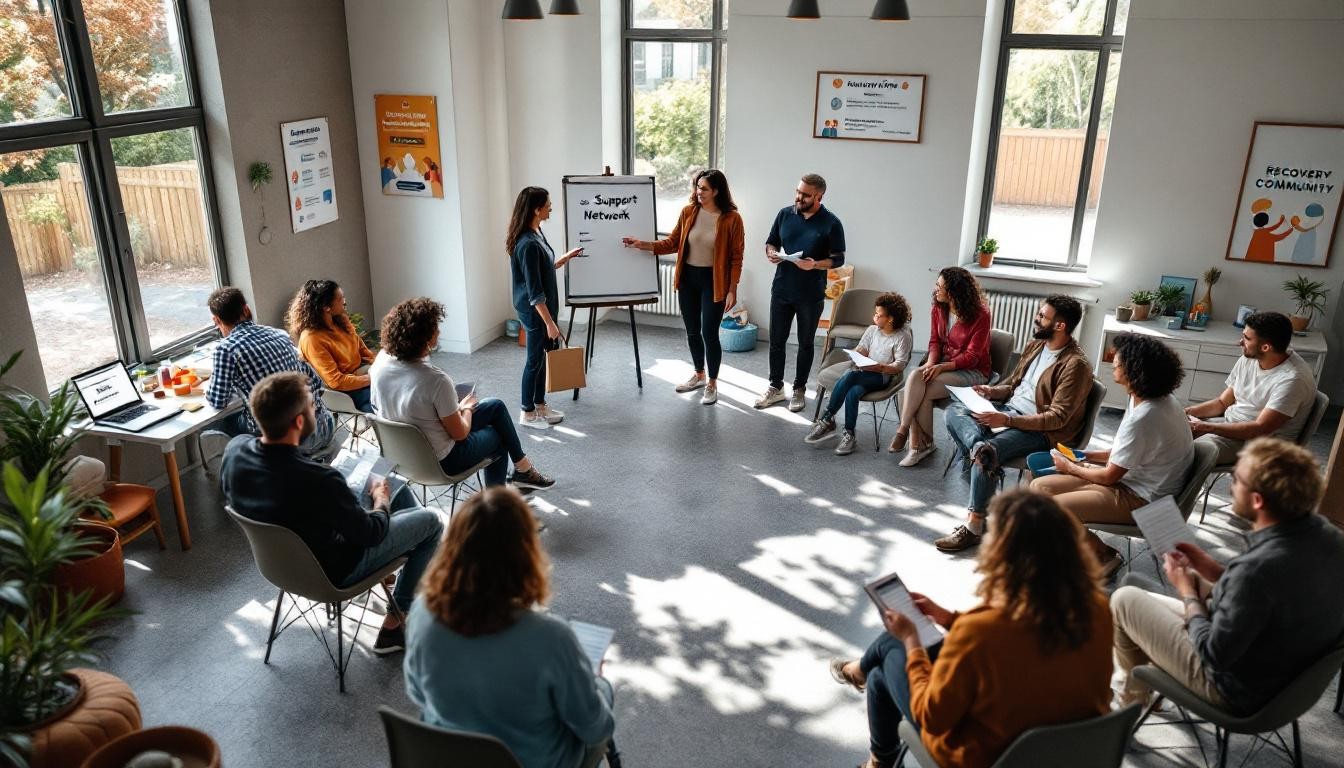
Addiction doesn’t happen in isolation-it affects everyone around the person struggling. Family members often become the backbone of recovery, yet many don’t know how to help effectively.
At Addiction Resource Center, we’ve seen firsthand how support networks for families can transform recovery outcomes. This guide shows you how to build those networks and navigate the path forward together.
How Family Involvement Changes Recovery Outcomes
Family involvement in addiction recovery isn’t optional-it’s one of the strongest predictors of sustained sobriety. Research consistently shows that when families actively participate in treatment, people stay sober longer and experience fewer relapses. Individuals with strong family support networks show measurably better treatment retention rates and higher abstinence self-efficacy. This isn’t about having a perfect family or unlimited resources. It’s about intentional, consistent engagement from the people closest to the person in recovery.
When a family member attends therapy sessions, learns about triggers, and stays informed about the recovery process, they become part of the solution rather than an unintentional obstacle. The emotional foundation matters most here. Addiction thrives in isolation and shame, so families that openly acknowledge the problem and commit to the recovery journey create an environment where sobriety becomes possible. This means showing up-not just emotionally, but physically and consistently.
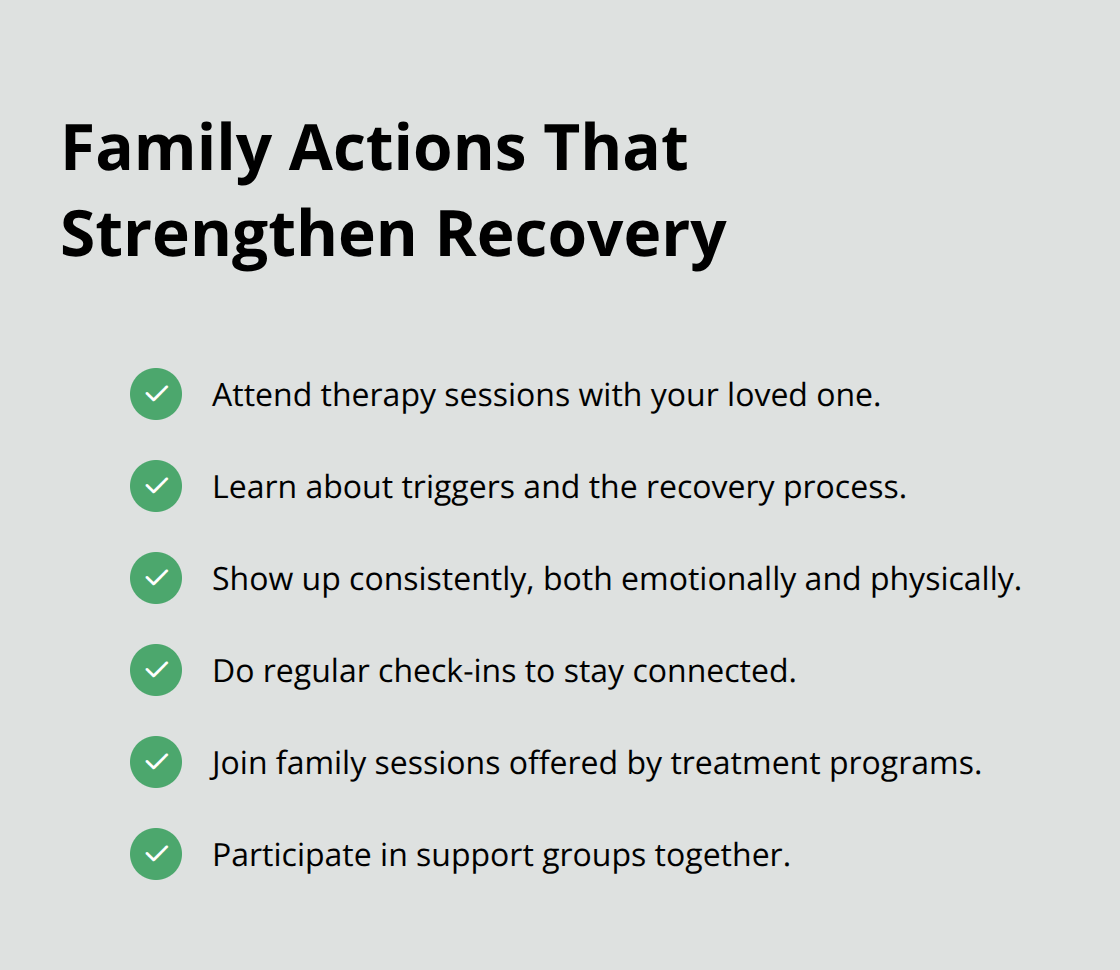
Regular check-ins, attending family sessions, and participating in support groups send a clear message: recovery is worth fighting for.
How Family Patterns Perpetuate Addiction Across Generations
Addiction often runs in families for reasons that go beyond genetics. Dysfunctional family patterns-poor communication, unresolved trauma, enabling behaviors-create conditions where substance use flourishes. Families stuck in these patterns tend to repeat them across generations unless someone deliberately interrupts the cycle. This happens through honest conversation about what’s actually happening, not what people wish were happening.
Family members need to identify their own roles in the system. Are you protecting the person from consequences, making excuses, or avoiding difficult topics? These behaviors feel protective but actually enable continued use. Breaking cycles means setting boundaries that feel uncomfortable at first. It means saying no when someone asks to borrow money, not covering up missed work, and not pretending everything is fine. These actions hurt in the moment but create pressure for change.
Why Relationship Quality Matters More Than Network Size
The Phoenix, a sober-active community, found that participants with longer involvement built stronger recovery networks. This shows what happens when families actively connect with recovery-focused communities rather than staying isolated in their struggle.
The quality of relationships in a support network matters far more than the quantity. One mentor or sponsor who truly understands recovery provides more value than ten distant acquaintances. Families should actively cultivate these meaningful connections for their loved one and themselves. Mentors, peers in recovery, and community members who share the recovery experience provide the highest levels of support (not just larger networks or more distant ties). This distinction shapes how families should approach building their support systems-focus on depth and authenticity rather than breadth.
As you move forward in creating effective family support groups, understanding these relationship dynamics becomes essential to your strategy.
Where to Find Support and How to Build Your Team
Al-Anon, Nar-Anon, and 12-Step Family Programs
Family support groups exist in multiple formats, and the right choice depends on your location, schedule, and what your family actually needs. Al-Anon and Nar-Anon are the most established options, with Al-Anon reporting over 24,000 meetings weekly across 180 countries. These groups cost nothing to attend. Nar-Anon operates similarly but focuses on families affected by narcotics use. Both offer anonymity and a structured approach to understanding your role in the addiction cycle. The 12-step model emphasizes acceptance and community accountability. Start by attending a few meetings from each option in your area before committing.
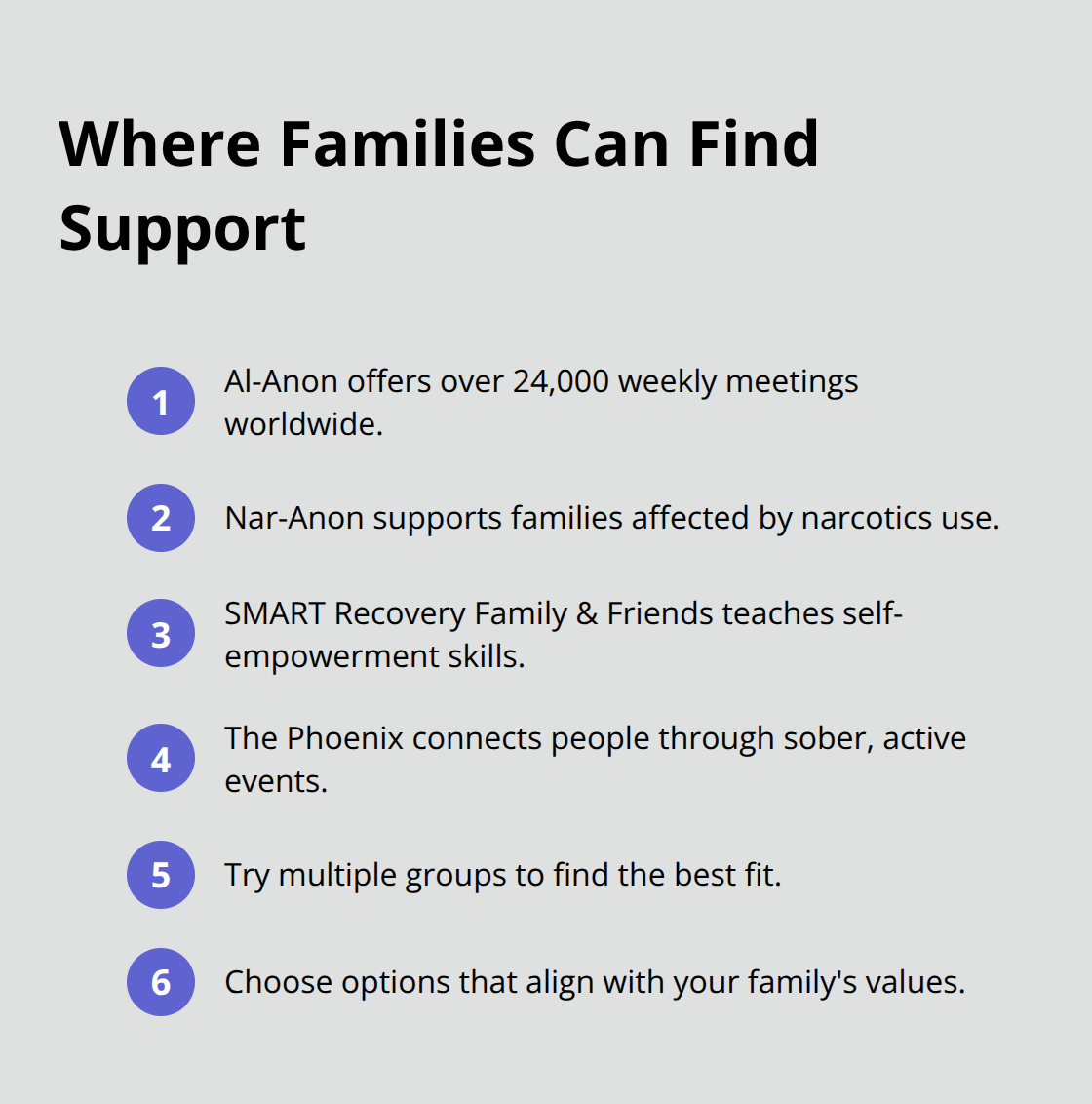
Many families benefit from trying multiple groups to see what resonates.
Non-12-Step Alternatives and Sober-Active Communities
If you prefer a non-12-step framework, SMART Recovery Family and Friends teaches self-empowerment strategies instead of spiritual components. This approach emphasizes personal responsibility and coping skills. Your family’s values determine which fits best. Beyond traditional support groups, sober-active communities like The Phoenix operate differently. They connect people through alcohol- and drug-free activities like CrossFit, yoga, hiking, and social events rather than sitting in chairs discussing problems. The Phoenix served over 556,950 people across all 50 states by the end of 2024 and expanded to include an online marketplace connecting members with additional recovery resources. This model works well for families who want their loved one engaged in meaningful activities alongside recovery work, not instead of it.
Professional Family Therapy and Communication Skills
Professional family therapy through licensed therapists or counselors offers personalized guidance tailored to your specific family dynamics and communication patterns. Treatment centers often integrate family therapy into their programs. Communication skills matter more than most families realize. Many families have never learned how to discuss difficult topics without escalating into arguments or shutting down emotionally. Family therapy teaches specific techniques: using statements instead of accusations, listening without planning your response, and identifying what you actually need versus what you think should happen. These skills prevent resentment from building and create space for genuine connection.
Structuring Family Conversations and Finding Professional Help
Set a regular family meeting time, even monthly, where everyone knows they can bring up concerns. Structure prevents these conversations from feeling like attacks. Start small by discussing one specific situation rather than trying to solve years of dysfunction in one conversation. Families that practice these skills report fewer conflicts and better adherence to recovery plans. Your local hospital, community mental health center, or treatment facility can connect you with qualified therapists who specialize in family addiction work. Insurance often covers family therapy when it’s part of a broader treatment plan. As you identify the right support structure for your family, the next step involves understanding how professional guidance works alongside these community resources to address deeper patterns in your recovery journey.
The Role of Professional Guidance in Family Recovery
When Professional Help Becomes Non-Negotiable
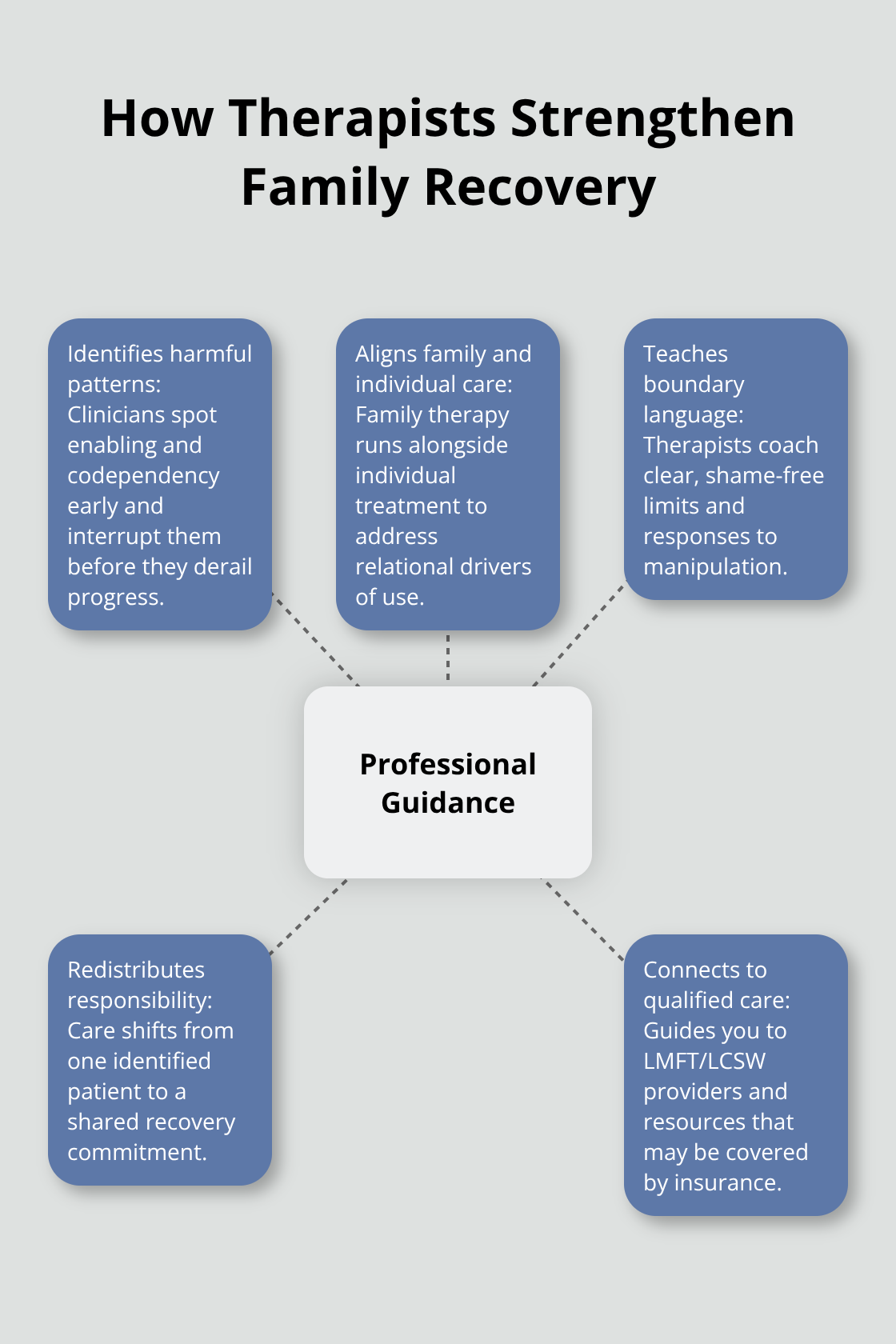
Professional guidance stops being optional the moment family patterns start repeating or enabling behaviors take root. Many families wait too long to involve therapists, hoping the situation will resolve itself or that attendance at support groups alone will shift deeply ingrained dynamics. This approach fails because family systems have their own momentum. A therapist trained in addiction family work identifies patterns you cannot see from inside the system. Licensed therapists who specialize in addiction recognize codependency and enabling faster than families do, and they interrupt these patterns before they sabotage recovery.
You need professional involvement when conversations escalate into arguments, when you find yourself covering for the person in recovery, when you’re unsure whether you’re helping or hurting, or when family members disagree sharply about how to respond. The U.S. Surgeon General’s Advisory on Social Connection notes that strong social ties improve well-being and recovery outcomes, but those ties only work when they’re healthy. A therapist makes the difference between a support network that strengthens recovery and one that inadvertently perpetuates dysfunction.
How Individual and Family Therapy Work Together
Individual treatment and family therapy operate in parallel, not in competition. While your loved one addresses their substance use in individual sessions or residential treatment, family therapy tackles the relational patterns that often fuel addiction in the first place. Many treatment centers now require family involvement as part of their program because research shows better long-term outcomes when families engage alongside the person in recovery.
A therapist helps you distinguish between genuine support and enabling, which most families struggle to identify alone. It feels like love because the intention is to help, but it removes the pressure that motivates change. Your therapist will teach you specific language for setting boundaries without shame and for responding to manipulation without guilt. This skill alone prevents relapse cycles that repeat year after year.
Breaking the Identified Patient Pattern
Family therapy also addresses what therapists call the identified patient problem, where the entire family system organizes itself around managing one person’s addiction. When this happens, other family members’ needs disappear and resentment builds silently. A skilled therapist redistributes responsibility so recovery becomes a shared commitment rather than one person’s burden that everyone else enables or resents.
Treatment professionals understand that family dynamics shape whether recovery sticks, and they structure programs to involve families intentionally rather than as an afterthought. The therapist teaches specific techniques: using statements instead of accusations, listening without planning your response, and identifying what you actually need versus what you think should happen. These skills prevent resentment from building and create space for genuine connection. Families that practice these approaches report fewer conflicts and better adherence to recovery plans.
Finding Qualified Family Therapists
Your local hospital, community mental health center, or treatment facility can connect you with qualified therapists who specialize in family addiction work. Insurance often covers family therapy when it’s part of a broader treatment plan. Look for therapists with credentials in marriage and family therapy (LMFT) or clinical social work (LCSW) who have specific training in substance use disorders. Ask potential therapists about their experience with codependency, enabling patterns, and multi-generational family dynamics. The right fit matters-you need someone who understands addiction’s impact on family systems and can teach practical skills, not just talk about problems.
Building a Sustainable Path Toward Lasting Recovery
Family-centered recovery works because it addresses addiction at its source: the relationships and patterns that shape whether someone stays sober. Support networks for families aren’t luxuries-they’re foundational to lasting recovery. When families understand their role, set healthy boundaries, and connect with both professional help and community resources, recovery becomes sustainable rather than a constant struggle.
The evidence shows that families actively participating in treatment see better outcomes, mentors and peers in recovery provide more meaningful support than larger networks without depth, and professional therapists interrupt enabling patterns that families cannot see from inside the system. Sober-active communities create environments where recovery becomes part of daily life, not something separate from it. These elements work together to strengthen your family’s recovery journey.
Start by identifying one person in your family who can attend a support group this week, reach out to a therapist who specializes in addiction family work, and connect your loved one with a mentor or community like The Phoenix. Addiction Resource Center provides personalized substance abuse counseling, addiction therapy, and mental health support designed to help families navigate this journey together.