You may be reading this after another difficult night, wondering whether stopping today means shaking, vomiting, sleeplessness, panic, or something more dangerous. A family member may be asking the same question while trying to decide whether to call a treatment program, visit an emergency department, or wait and see what happens at home. The honest …


You may be reading this after another difficult night, wondering whether stopping today means shaking, vomiting, sleeplessness, panic, or something more dangerous. A family member may be asking the same question while trying to decide whether to call a treatment program, visit an emergency department, or wait and see what happens at home. The honest answer is that what happens during detox depends heavily on the substance, the person's health, and the level of medical support available.
Detox is more than waiting for a drug or alcohol to leave the body. It's a period of withdrawal, monitoring, symptom relief, and stabilization. Some withdrawal syndromes are mainly exhausting and uncomfortable. Others, particularly alcohol and benzodiazepine withdrawal, can become medically dangerous. A clear timeline helps you recognize what's expected, what requires urgent attention, and what support should follow once the first physical symptoms improve.
Table of Contents
- Understanding What Detox Means
- Withdrawal Timelines by Substance Type
- A Day in Medically Supervised Detox
- Choosing Between Inpatient and Outpatient Detox
- The Mental Health and Sleep Recovery Arc
- Next Steps After Detox and Continuing Care
- Common Questions About the Detox Experience
Understanding What Detox Means
A person who has been drinking heavily every day may stop before work on Monday and feel anxious, sweaty, nauseated, or unable to sleep by afternoon. They may plan to drink water and stay in bed until the symptoms pass. With alcohol withdrawal, that approach can be unsafe because symptoms may intensify after they begin.
In clinical care, detox means medically managed withdrawal from a substance that the body has become dependent on. A care team reviews the person's substance history, physical health, mental health, and current symptoms. Staff then watch for changes and provide supportive care or medication when appropriate. The goal is stabilization, with trained help available as the body adjusts.
Practical rule: If alcohol or benzodiazepines are involved, speak with a qualified medical professional before deciding that home detox is safe.
Alcohol withdrawal can begin within 6 to 12 hours after the last drink, with early symptoms such as anxiety, tremor, sweating, nausea, headache, and insomnia, according to Cleveland Clinic's clinical overview of alcohol withdrawal. Symptoms may worsen during the following 24 to 72 hours, a period when seizures and delirium tremens become important concerns. Benzodiazepine withdrawal also requires professional guidance. Stopping suddenly can cause severe anxiety, seizures, and a withdrawal course that lasts longer than the first physical symptoms.
Detox isn't rehabilitation
A medically supervised detox places immediate withdrawal management at the center of the crisis. It does not address triggers, trauma, housing instability, relationships, cravings, coping skills, or the reasons substance use became necessary in the person's life. It also cannot guarantee continued abstinence after discharge.
That distinction helps families plan the next stage. Someone can be physically stable while still needing residential treatment, an Intensive Outpatient Program, medication treatment, therapy, or recovery support. Detox is the first chapter of care, not the whole recovery story.
The body may settle before mood, sleep, concentration, and cravings feel steady. Those longer-lasting concerns belong in the continuing treatment plan, even when the most intense physical withdrawal has passed.
Different uses of the word detox
People also use “detox” for a social media break, a wellness cleanse, or a dietary reset. These experiences may change mood, sleep, or routine, but they are different from clinical substance withdrawal. Substance detox involves physical dependence and the possibility of symptoms requiring assessment, medication, and observation.
If you are unsure which situation applies, report exactly what was used, how often it was used, when the last dose or drink occurred, and whether withdrawal happened before. A treatment professional can use those details to recommend a safer level of care.
Withdrawal Timelines by Substance Type
A person who stops drinking after heavy, prolonged alcohol use may develop tremor, sweating, nausea, insomnia, or anxiety within hours. Someone stopping methadone may feel little at first, then develop withdrawal later because the medication remains active longer. These different starting points explain why there is no universal detox length.
The timeline depends on the substance's half-life, physical dependence, pattern of use, previous withdrawal episodes, and co-occurring medical or psychiatric conditions. The milestones below provide orientation, not a personal medical forecast.
| Substance | Symptom Onset | Peak Severity | Acute Duration |
|---|---|---|---|
| Alcohol | 6 to 12 hours after the last drink | Seizures are most common at 24 to 48 hours; delirium tremens typically peaks around 48 to 72 hours | Commonly about 3 to 7 days |
| Short-acting opioids, such as heroin | Commonly 6 to 12 hours | Often develops over the early withdrawal period, with intensity varying by use pattern | Acute symptoms usually last 5 to 7 days |
| Methadone | Commonly 18 to 48 hours | Later and more prolonged than short-acting opioid withdrawal | Acute symptoms can last longer, with SAMHSA describing methadone withdrawal as 14 to 21 days |
| Benzodiazepines | Timing varies by medication and dependence pattern | May develop over 1 to 4 weeks or longer with tapering | Often 1 to 4 weeks or longer |
| Stimulants | An acute crash can begin soon after stopping | A high symptom peak can occur within 24 hours | Acute withdrawal may last 1 to 2 weeks, with subacute symptoms continuing beyond it |
Alcohol
Alcohol withdrawal deserves early medical attention because symptoms can intensify after they begin. Withdrawal commonly starts 6 to 12 hours after the last drink. Tremor, sweating, nausea, anxiety, insomnia, rapid heart rate, and increased blood pressure may appear first.
Symptoms can worsen through the next 24 to 72 hours. Withdrawal seizures are most common during the 24 to 48 hour window. Delirium tremens can involve confusion, hallucinations, severe agitation, and dangerous changes in the body's automatic functions. It typically peaks around 48 to 72 hours. The Cleveland Clinic describes the progression and risks of alcohol withdrawal.
Severe withdrawal is not the usual outcome, but delirium tremens is reported in about 3% to 5% of people withdrawing from alcohol and can be fatal without treatment, according to Silch Health's alcohol detox guidance. A person with heavy or prolonged alcohol use should not rely on a general rule that the third day will be easier.
Opioids
Opioid withdrawal is usually not life-threatening, yet it can be intensely uncomfortable and may drive a return to use. Short-acting opioids such as heroin may produce symptoms within 6 to 12 hours. Methadone withdrawal may not begin until 18 to 48 hours, since methadone remains active longer.
Aches, sweating, nausea, diarrhea, restlessness, anxiety, insomnia, and strong cravings can occur. The acute physical symptoms are only one part of the process. Cravings, sleep disruption, and low mood may continue after the body has passed its most intense withdrawal period.
Medication-based withdrawal management is generally preferred over abrupt cessation. Buprenorphine or methadone can reduce withdrawal and support a transition into ongoing opioid treatment. Rapid detox using an antagonist requires enough time for opioids to clear. Starting that medication too soon can cause precipitated withdrawal. The NNH NHS guidance on opioid dependence management warns that detox without a transition to continuing opioid agonist treatment is associated with increased relapse, morbidity, and death.
Benzodiazepines and stimulants
Benzodiazepine withdrawal does not follow a short, predictable pattern. Symptoms can last 1 to 4 weeks or longer, and tapering may be necessary instead of stopping suddenly. A clinician may adjust the taper according to the medication, duration of use, current dose, previous withdrawal, seizure history, and mental health symptoms.
Stimulant withdrawal often begins with a crash. Exhaustion, depressed mood, increased sleep or disrupted sleep, slowed thinking, and craving may appear soon after stopping. SAMHSA's treatment guidance describes 1 to 2 weeks of acute stimulant withdrawal. Methamphetamine withdrawal research describes a subacute period lasting at least two more weeks, with depression-related symptoms, anxiety, and craving potentially continuing after the initial crash.
People taking prescribed antidepressants may experience a different discontinuation process, rather than substance detox in the usual sense. Anyone considering a medication change should discuss safer antidepressant tapering options with a qualified prescriber, as outlined by Refresh Psychiatry & Therapy. For a broader explanation of how duration varies, see this guide to how long detox may take.
A Day in Medically Supervised Detox
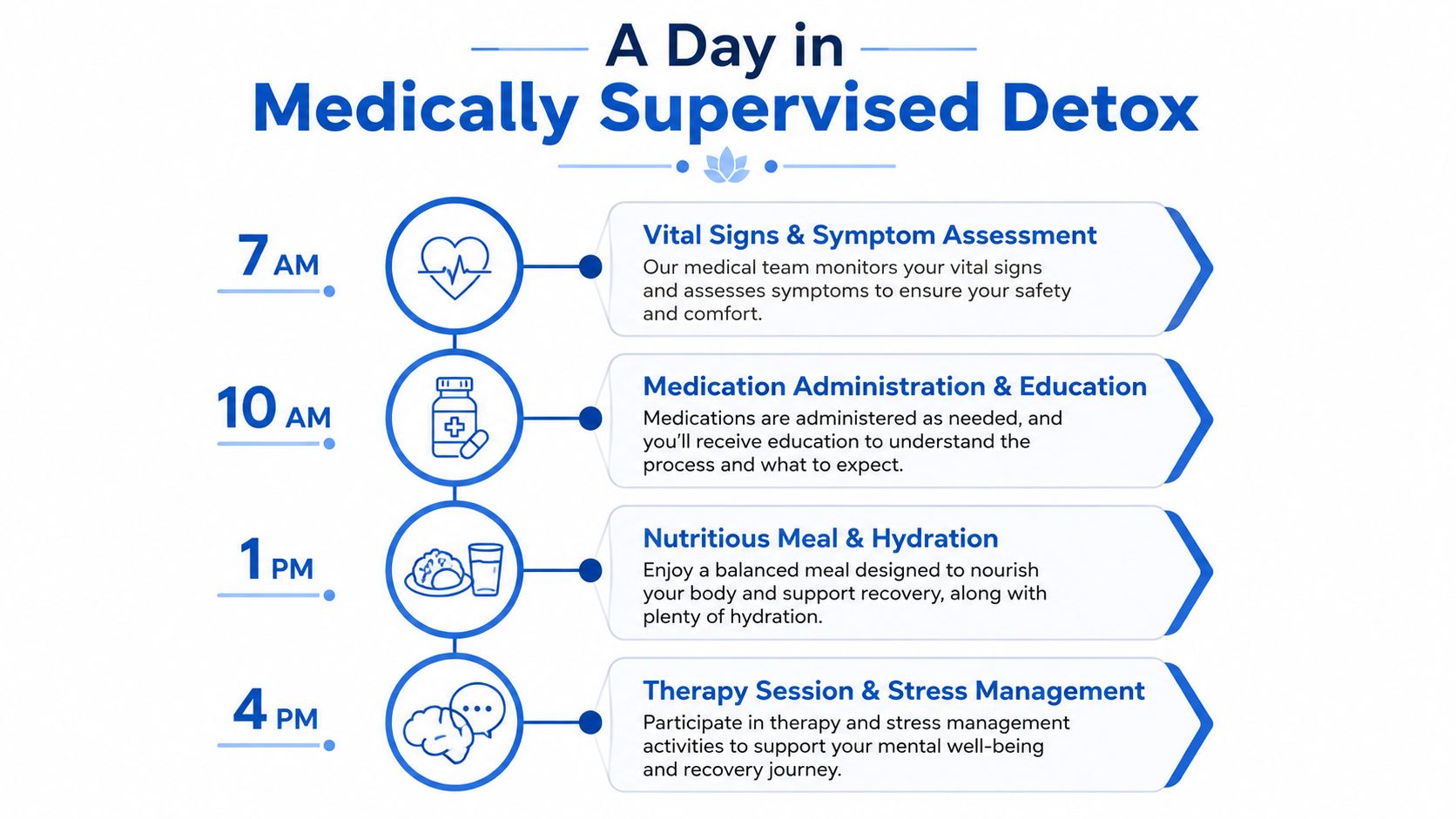
A supervised detox unit is neither a passive waiting room nor a place where staff hand out medication. The team watches for changes, reassesses symptoms, and adjusts the plan as the person moves through withdrawal.
Admission begins with an assessment. A medical professional asks about the substance used, the last dose or drink, the usual amount and frequency, previous withdrawal, seizures, medical conditions, prescriptions, allergies, and mental health. Staff check vital signs and identify factors that may change the recommended setting, such as polysubstance use or unstable medical symptoms.
How monitoring guides care
Alcohol programs may use the Clinical Institute Withdrawal Assessment for Alcohol, Revised, or CIWA-Ar, to quantify symptoms such as agitation, nausea, tremor, sweating, anxiety, and confusion. In the clinical pathway described by the Cambridgeshire and Peterborough alcohol detox guideline, a CIWA-Ar score of 20 or more indicates severe withdrawal and calls for urgent treatment, reassessment, and attention to seizure or delirium tremens risk.
Benzodiazepines may be used during alcohol withdrawal to reduce severe complications. Opioid withdrawal may be treated with buprenorphine or methadone when clinically appropriate. Thiamine is commonly included in alcohol detox protocols to reduce the risk of Wernicke's encephalopathy. Medication decisions belong to the treating team, because the right choice and dose depend on the person's history and current examination.
A registered nurse may conduct repeated symptom and vital-sign checks. A physician oversees the medical protocol and responds to complications. Licensed counselors help the person understand treatment options, while recovery mentors can offer practical peer perspective. Emotional support matters because fear, shame, irritability, and confusion can make withdrawal feel more isolating.
What the day may feel like
Most of the early day may involve rest, fluids, meals as tolerated, medication, and short check-ins. Formal therapy may be limited while symptoms are intense. As the person stabilizes, staff can introduce education, coping strategies, family communication, and a plan for continuing care.
A trauma-informed approach can make these interactions safer and more respectful, especially for people whose substance use is connected to traumatic experiences. The principles described in this guide to trauma-informed care include attention to safety, choice, trust, collaboration, and support.
Choosing Between Inpatient and Outpatient Detox
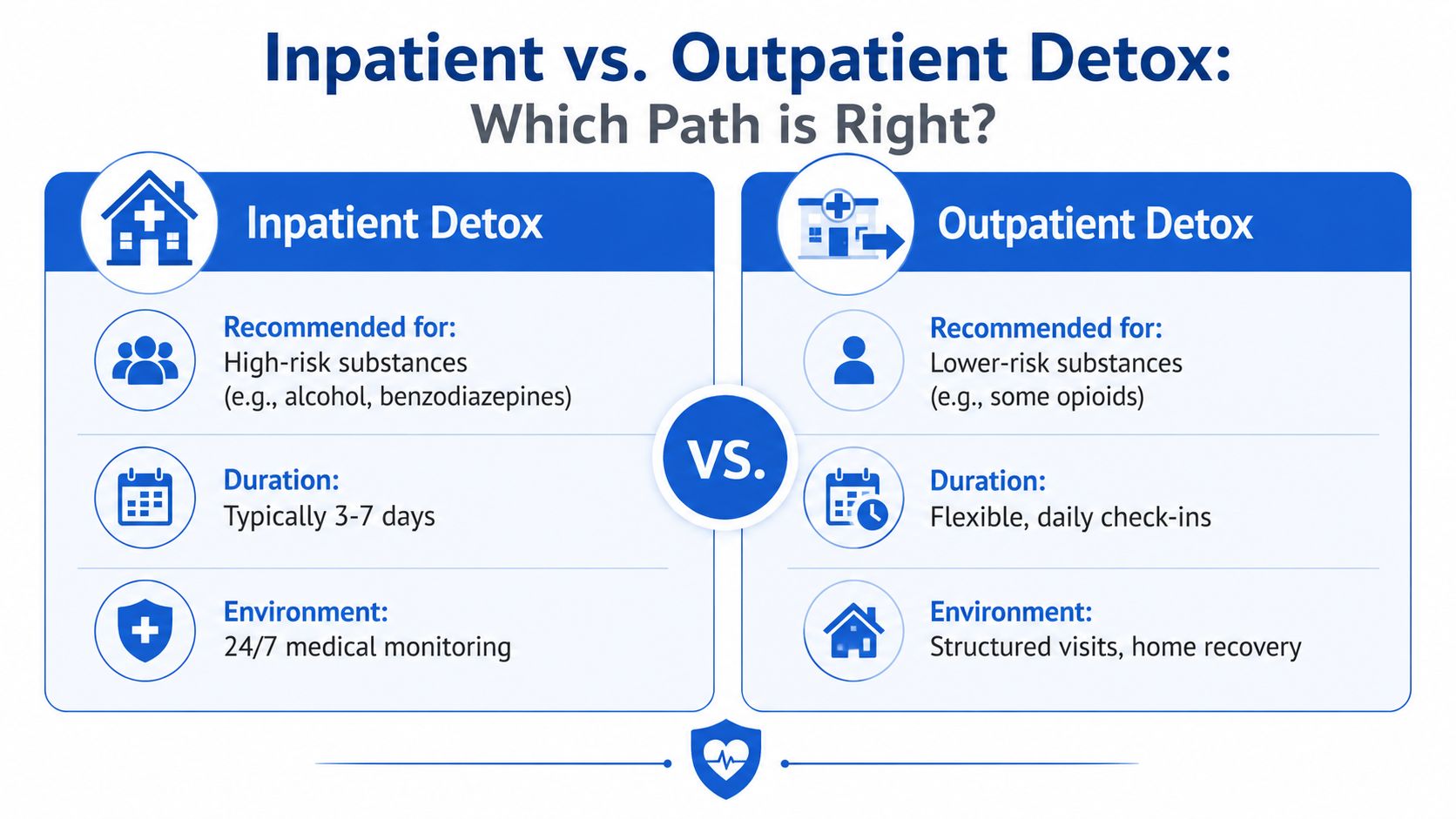
The safest setting depends less on what someone prefers and more on the level of risk. Inpatient detox provides continuous access to nursing observation, medical reassessment, medication administration, and emergency response. Outpatient detox allows a person to return home between scheduled visits, but it requires reliable attendance, a safe environment, and the ability to seek urgent help if symptoms change.
Inpatient care is more likely to be appropriate when alcohol or benzodiazepines are involved, when the person has a history of withdrawal seizures or delirium, when symptoms are already severe, or when medical and psychiatric conditions are unstable. It may also be preferable when someone uses multiple substances, lives alone, lacks transportation, or doesn't have a sober and dependable support person.
When outpatient care may fit
Outpatient withdrawal management can work for some people with lower medical risk, especially when a clinician can prescribe and monitor medication, the home environment is stable, and a trusted person can help observe changes. It still requires active participation. Missing visits, taking unapproved substances, or hiding worsening symptoms can turn an outpatient plan into an unsafe one.
The substance alone doesn't determine placement. A person withdrawing from opioids may be medically appropriate for outpatient care but still need a structured plan because cravings can be powerful. Another person may need inpatient care because of pregnancy, serious heart disease, severe depression, or a prior complicated withdrawal history. The clinician's assessment should weigh all of these factors together.
Privacy, employment, caregiving, and transportation are legitimate concerns. They shouldn't be ignored, but they also shouldn't override a clear medical danger. Ask the treatment provider how records are protected, whether telehealth or flexible scheduling is available, and how family members can participate with the patient's permission.
The Mental Health and Sleep Recovery Arc
The obvious physical symptoms may fade while the person still feels far from normal. Sleep can remain fragmented, emotions can swing quickly, concentration can feel unreliable, and ordinary tasks may require unusual effort. Families sometimes interpret this as a lack of motivation, but the nervous system may still be adjusting after repeated exposure to a substance.
This is particularly clear with stimulants. Research described in SAMHSA's clinical guidance notes that acute stimulant withdrawal can last 1 to 2 weeks, while methamphetamine withdrawal may include a subacute period lasting at least two additional weeks with depression-related symptoms, anxiety, and craving. The end of the physical crash doesn't necessarily mark the end of emotional recovery.

Sleep and mood need their own plan
Sleep disruption can affect judgment, memory, irritability, and craving. A person may sleep excessively after stimulant use, struggle with insomnia after alcohol use, or experience disturbing dreams and restless nights during opioid withdrawal. Good care treats sleep as part of recovery rather than expecting it to correct immediately once the substance is gone.
A behavioral detox study found that a 7-day social media detox in young adults was associated with reductions in anxiety of 16.1%, depression of 24.8%, and insomnia of 14.5%, according to the PubMed record for the study. That finding concerns social media use, not alcohol or drug withdrawal, but it highlights an important point: detox experiences can involve behavioral, emotional, and sleep changes, not only physical symptoms. People seeking general guidance about how to improve sleep with detox should separate wellness claims from clinically supervised withdrawal care.
When symptoms need attention
Persistent sadness, panic, confusion, hallucinations, suicidal thoughts, or inability to sleep should be reported to the treatment team. A mental health condition may become more visible after substance effects and withdrawal symptoms settle. That doesn't mean the person is failing. It means the next phase of care may need psychiatric evaluation, therapy, medication management, or stronger daily structure.
Next Steps After Detox and Continuing Care
Detox ends when the person is medically stable enough for the next setting, not when every craving or emotional difficulty has disappeared. Before discharge, the care team should create a practical plan that answers where the person will go, who will provide follow-up, what medications will continue, and what happens if symptoms or cravings increase.
Match care to the next need
Residential rehabilitation offers an immersive, structured environment for people who need distance from substances, frequent support, and time to practice new routines. An Intensive Outpatient Program can provide scheduled therapy and accountability while the person continues work, school, or family responsibilities. Some people need outpatient counseling, peer support, psychiatric care, or medication treatment rather than residential placement.
For opioid use disorder, continuing medication treatment with buprenorphine or methadone may be an important part of the plan. The opioid guidance cited earlier emphasizes that detox without transition to ongoing opioid agonist treatment can increase relapse and other serious risks. Alcohol recovery may also involve medication options, counseling, mutual-support groups, or a combination selected with a clinician.
Build a usable aftercare plan
A useful plan identifies triggers, early warning signs, coping responses, transportation, appointments, crisis contacts, and supportive people. It should also address sleep, nutrition, co-occurring mental health conditions, legal or employment needs, and family boundaries. A written plan is easier to follow when fatigue and craving make decision-making harder.
Families can ask whether the program accepts their insurance, including major private plans or TRICARE, and what services require authorization. They can also ask how confidentiality works and what information the patient must authorize before staff can share details. Guidance on aftercare planning can help turn discharge into a sequence of appointments and supports instead of an abrupt return to the old routine.
Common Questions About the Detox Experience
Is detox painful?
Withdrawal can be physically and emotionally difficult, but supervised care can reduce symptoms and respond to complications. Medication, hydration, nutrition, rest, monitoring, and calm communication all matter. The goal isn't to promise a symptom-free process. It's to make withdrawal safer and more manageable.
How long does a detox stay last?
There's no single answer. Alcohol's acute phase commonly lasts about 3 to 7 days, while opioid, benzodiazepine, methadone, and stimulant timelines differ substantially, as described in the substance-specific timeline above. A clinician may extend care when symptoms remain unstable, several substances are involved, or the next placement isn't ready.
What if symptoms become more severe?
Tell staff immediately. Increasing tremor, confusion, hallucinations, seizures, severe agitation, chest pain, breathing difficulty, or suicidal thoughts require urgent medical attention. In outpatient care, contact the prescribing team or emergency services according to the safety plan rather than waiting for the next appointment.
Can someone leave against medical advice?
A patient may ask to leave, but doing so can interrupt monitoring and medication management during a risky period. Staff should explain the specific risks, assess decision-making capacity, offer alternatives, and create the safest possible plan if the person still leaves.
How can family members help?
Stay calm, avoid arguing about blame, and support medical contact without covering up substance use or supplying alcohol or drugs. Ask the patient what information they authorize staff to share. Privacy rules may limit what clinicians can tell family, but family members can still provide relevant information to the care team.
Addiction Resource Center LLC offers medically supervised detox, medication-assisted treatment, residential rehabilitation through its partner facility, and Intensive Outpatient care available in person or through telehealth, with individualized planning for adults and families. If you're in Yuba City or Northern California, visit Addiction Resource Center LLC to ask about confidential treatment options and the next safe step.