Understand your alcohol liver recovery timeline and what physical changes to expect as your liver heals from alcohol damage.

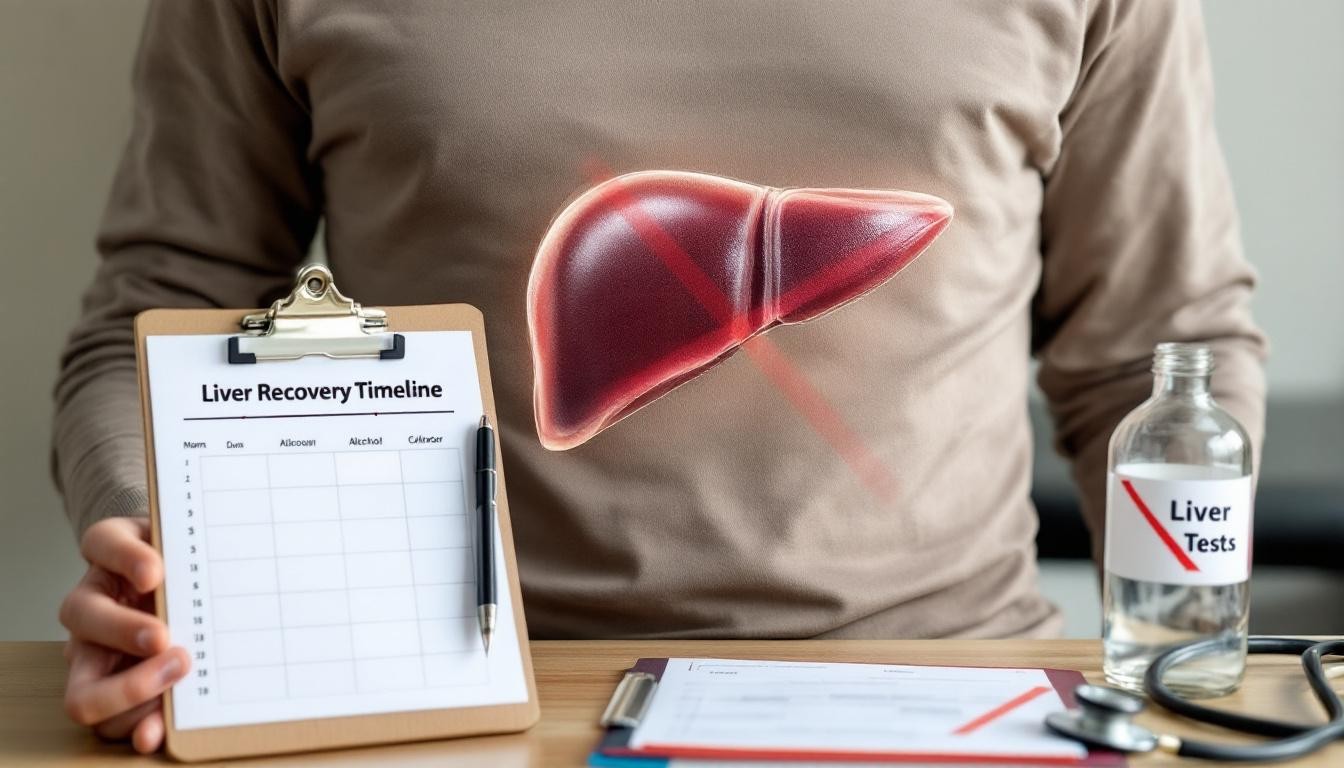
Your liver can heal after alcohol damage, but the timeline depends on how severe the injury is and how committed you are to recovery. At Addiction Resource Center, we’ve seen countless people reverse liver damage by stopping drinking and following a structured recovery plan.
Understanding your alcohol liver recovery timeline helps you set realistic expectations and stay motivated through each stage of healing.
How Alcohol Damages Your Liver
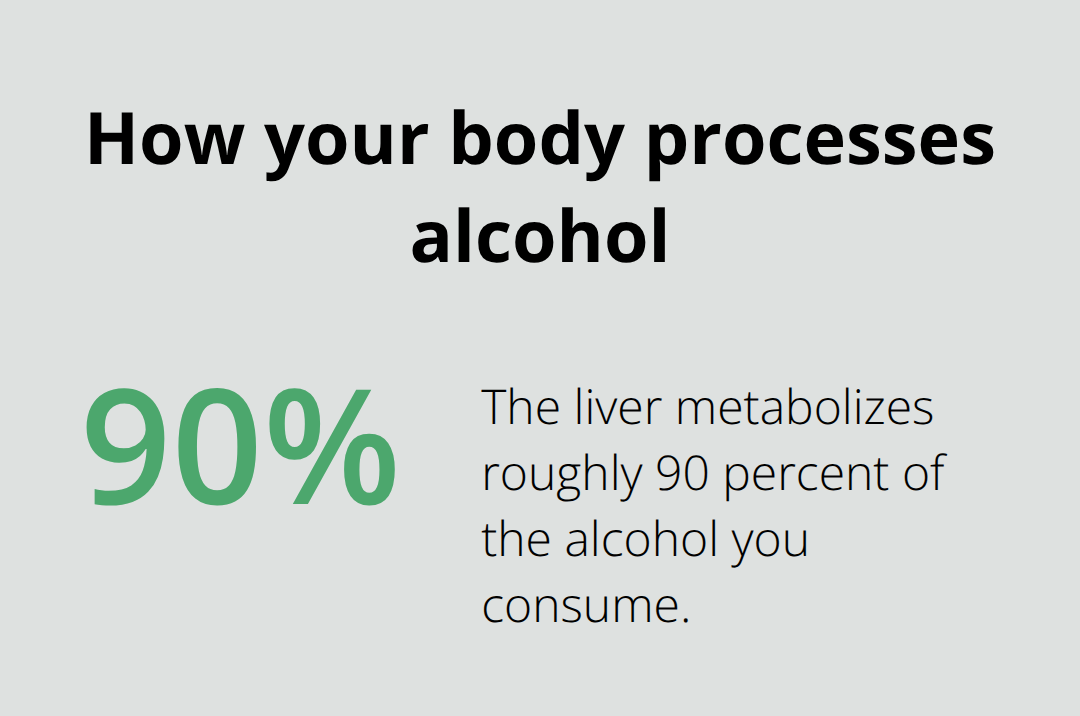
The liver metabolizes roughly 90 percent of the alcohol you consume, processing about one standard drink per hour. When you drink regularly, this organ works overtime and accumulates damage that progresses through three distinct stages. The International Agency for Research on Cancer classifies alcohol as a Group 1 carcinogen, meaning it directly increases your risk of liver cancer alongside other serious conditions. Understanding what happens at each stage of liver damage matters because the extent of damage determines how long recovery takes and whether full healing is even possible.
Fatty Liver Disease Starts Early
Fatty liver is the first stage of alcohol-related liver damage and develops when fat deposits accumulate in liver cells. Regularly consuming two to three drinks daily can trigger fatty liver disease in some individuals, and binge drinking accelerates this process significantly. The good news is that fatty liver is reversible if you stop drinking. Research shows that within two to three weeks of abstinence, your liver begins clearing fat deposits and inflammation starts dropping. However, most people don’t notice symptoms at this stage, which means damage progresses silently.
You might feel fine while your liver is actively deteriorating, which is why many people continue drinking without realizing the harm they’re causing.
Alcoholic Hepatitis Involves Serious Inflammation
If you continue drinking past the fatty liver stage, alcoholic hepatitis develops. This condition involves severe inflammation of liver tissue and causes noticeable symptoms including jaundice, abdominal pain, nausea, fatigue, and dark urine. Early-stage alcoholic hepatitis is reversible with immediate medical intervention and complete abstinence, but waiting too long makes recovery impossible. Cleveland Clinic research indicates that a two to four week period of abstinence can reduce liver inflammation and lower elevated liver enzymes in heavy drinkers, but this window closes as damage progresses. The inflammation damages liver cells faster than your body can repair them, creating a dangerous downward spiral.
Cirrhosis Represents Permanent Scarring
Cirrhosis is the final stage where liver tissue becomes scarred and hardened, severely reducing liver function. Unlike fatty liver or hepatitis, cirrhosis cannot be reversed because scar tissue doesn’t regenerate. If cirrhosis develops, even small amounts of alcohol become toxic to your liver and can trigger liver failure. The NHS emphasizes that if you have cirrhosis or advanced alcoholic hepatitis, no medical or surgical treatment can prevent liver failure unless you stop drinking completely and commit to lifelong abstinence. At this stage, liver transplantation may be your only option for survival (you must be well enough for surgery and willing to never drink again to qualify). The progression from fatty liver to cirrhosis typically takes years of heavy drinking, but some people reach advanced stages faster depending on genetics, weight, gender, and overall health.
Why Recovery Speed Varies
Your individual recovery timeline depends on which stage of liver damage you’ve reached and how long you’ve been drinking. Someone with fatty liver who stops drinking immediately may see significant improvement within weeks, while someone with cirrhosis faces a lifetime of abstinence just to prevent further deterioration. Genetics, body weight, and overall health also influence how quickly your liver heals and whether full recovery is possible. Stopping drinking and pursuing holistic recovery approaches can support your healing journey and address the underlying factors driving alcohol use. The sooner you stop drinking after damage begins, the better your chances of reversing harm and avoiding progression to cirrhosis.
Timeline for Liver Recovery After Quitting Alcohol
The first 24 hours after your last drink mark the start of your liver’s recovery. Alcohol clears from your bloodstream within a day, and dehydration starts improving as your body rebalances fluids. Your digestion and energy levels begin recovering because blood sugar regulation returns toward normal. Within one week of abstinence, sleep quality often improves dramatically and mornings feel more energetic.
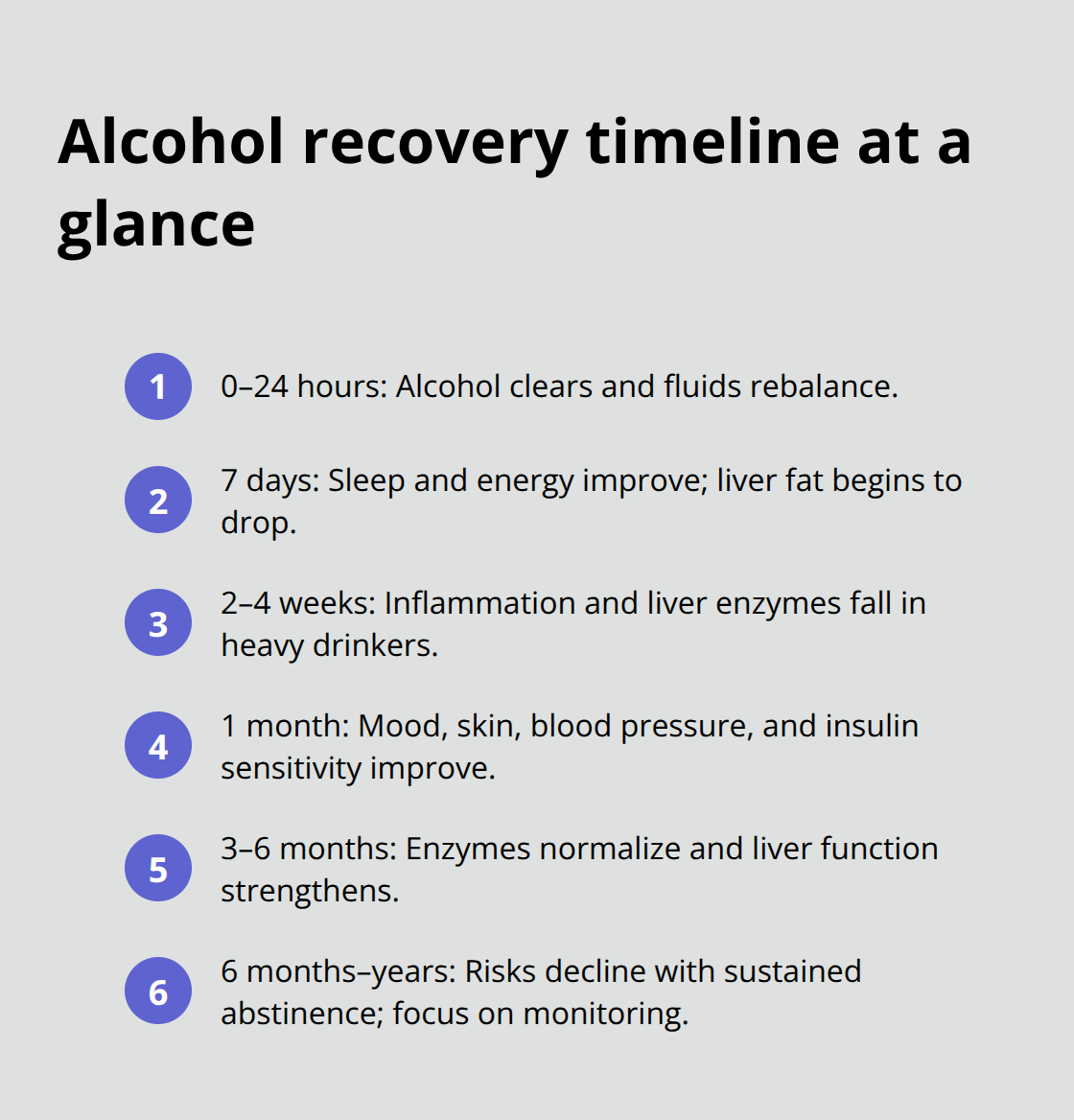
Research shows that seven days without alcohol reduce liver fat and help heal mild scarring in cases of mild liver damage, demonstrating the liver’s remarkable capacity to regenerate quickly. Withdrawal symptoms may still be present during this first week, but they typically subside within about seven days as your nervous system adjusts to functioning without alcohol’s depressant effects.
The First Month Accelerates Visible Improvements
The first month represents a critical window where visible improvements accelerate rapidly. A 2021 Cleveland Clinic review found that two to four weeks of abstinence reduce liver inflammation and lower elevated liver enzymes in heavy drinkers. After one month without alcohol, many people notice mood stabilization, reduced anxiety, higher energy levels, and potential weight loss. Your skin often looks healthier as circulation improves and hydration increases. One month of abstinence can reduce insulin resistance and lower blood pressure, according to research on alcohol’s effects on health. Gut-related issues such as bloating, indigestion, heartburn, and diarrhea commonly improve within four weeks. Your liver continues regenerating during this period, with liver fat continuing to decrease and tissue healing progressing steadily. Maintaining complete abstinence and avoiding relapse during this phase matters most, as even occasional drinking can interrupt the healing process and prolong recovery timelines.
Three to Six Months Shows Measurable Healing
Between three and six months, your liver repair may complete if you had moderate drinking patterns. Even heavy drinkers notice significantly better overall health and fewer infections as liver function improves. Your doctor can track progress through liver function tests that measure enzymes like ALT and AST, which typically decrease as healing occurs. The AST:ALT ratio shifts toward healing as enzyme levels improve, serving as a concrete signal of progress you can discuss with your healthcare provider. Blood tests become your most reliable indicator of whether your recovery plan is working. At this stage, the inflammation that characterized early liver damage has substantially diminished, and your liver’s ability to filter toxins and produce essential proteins strengthens noticeably. You’ll likely experience better energy levels, improved digestion, and a general sense of vitality that motivates continued sobriety.
Six Months to Years Determines Long-Term Outcomes
After six months of abstinence, the trajectory of your recovery becomes clearer. Research shows that after one year or more without alcohol, your risk for chronic diseases including heart disease, stroke, and type 2 diabetes declines significantly. Your liver’s regeneration capacity depends heavily on the extent of prior damage, but sustained abstinence offers the best chance for maximum recovery. If you had cirrhosis, this long-term period focuses on preventing further deterioration rather than reversing scarring, making lifelong abstinence non-negotiable. Regular medical monitoring through liver imaging and blood work helps your doctor assess ongoing improvements and detect any complications early. The longer you maintain sobriety, the stronger your immune function becomes and the lower your risk of developing alcohol-related complications.
What Supports Healing at Every Stage
Medical supervision, proper nutrition, and mental health support work together to accelerate your recovery at every stage. Your healthcare provider can prescribe medications to manage withdrawal symptoms safely and monitor your liver function through regular testing. A balanced diet rich in antioxidants, lean proteins, and whole grains provides the nutrients your liver needs to rebuild damaged tissue. Stress management techniques and counseling address the psychological factors that drive alcohol use, reducing your relapse risk and strengthening your commitment to sobriety. This multi-year recovery window separates those who truly commit to sobriety from those who relapse, making continued professional support and strong personal motivation essential for success. The support systems you establish now-whether through therapy, support groups, or trusted relationships-directly influence whether you maintain abstinence and achieve full liver recovery.
How to Monitor and Support Your Liver Recovery
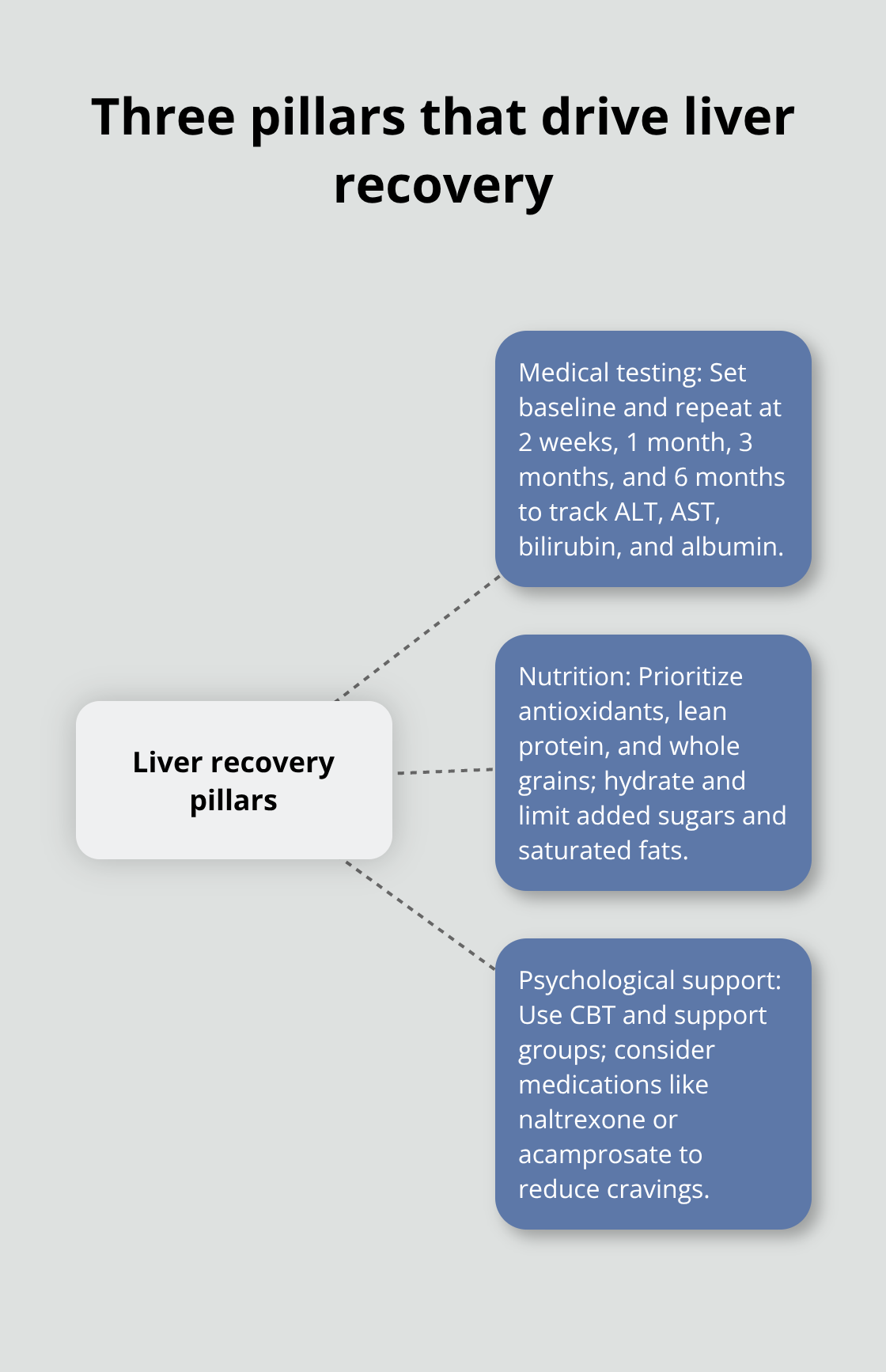
Your liver recovery depends on three interconnected pillars: tracking progress through medical testing, fueling healing with proper nutrition, and addressing the psychological factors that drive relapse. Medical monitoring forms the foundation because you cannot manage what you cannot measure.
Track Your Progress With Medical Testing
Request liver function tests at baseline, then at two weeks, one month, three months, and six months after quitting alcohol. These tests measure ALT and AST enzymes, which drop as your liver heals, plus bilirubin and albumin levels that indicate how well your liver performs its essential functions. Cleveland Clinic research shows that enzyme levels typically normalize within weeks to months depending on how severe your initial damage was. Your doctor should also order imaging like ultrasound or fibroscan to assess fatty liver deposits and scarring, creating a concrete record of your progress that motivates continued sobriety. Track these numbers obsessively because visible improvement on paper reinforces your commitment when motivation wavers.
Fuel Healing With Strategic Nutrition
Nutrition directly accelerates liver regeneration because your liver needs specific nutrients to rebuild damaged cells and restore function. Prioritize antioxidant-rich foods including berries, citrus fruits, leafy greens like spinach and kale, plus omega-3 sources such as salmon and walnuts to reduce inflammation and support tissue repair. Try three to four small meals daily with adequate protein at each meal, since your liver struggles to store glycogen after alcohol damage and needs consistent energy intake to prevent muscle wasting. Minimize processed foods, added sugars, and excessive saturated fats because these burden your recovering liver and promote fatty deposits. Hydration matters equally, so drink approximately eight cups of water daily to support your liver’s detoxification processes. Moderate exercise like walking or swimming for thirty minutes most days accelerates fat loss from your liver and improves circulation, but avoid intense workouts during early recovery when your body is still adjusting to sobriety.
Address Psychological Factors With Professional Support
Mental health support addresses why you drank in the first place, making it non-negotiable for sustained recovery. Cognitive behavioral therapy helps identify triggers and develop coping strategies before cravings strike, while support groups provide accountability and connection to others navigating similar challenges. Medications like naltrexone or acamprosate reduce alcohol cravings, offering concrete support during vulnerable moments. The combination of medical monitoring, nutritional precision, and professional mental health care creates a three-part defense against relapse while your liver repairs itself.
Taking the Next Step Toward Lasting Liver Recovery
Your liver’s capacity to heal after alcohol damage offers genuine hope, but only if you commit to complete abstinence and seek professional support immediately. The alcohol liver recovery timeline we’ve outlined shows that your liver regenerates within days of stopping drinking, with measurable improvements appearing in weeks and substantial healing occurring within months. Fatty liver reverses completely with sustained abstinence, while alcoholic hepatitis responds dramatically to early intervention and proper care-even cirrhosis stabilizes when you maintain lifelong sobriety and follow medical guidance.
The path forward demands more than willpower alone. Your recovery depends on professional help addressing both the physical damage and the psychological factors driving alcohol use. We at Addiction Resource Center provide personalized addiction therapy and substance abuse counseling tailored to your specific situation, recognizing that each person’s recovery journey differs based on damage severity, health history, and life circumstances. Our outpatient addiction treatment programs and mental health support services combine medical treatment, counseling, and ongoing support to address your comprehensive needs.
Waiting weeks or months before seeking help allows damage to progress and reduces your chances of full recovery. Contact us today to start your personalized addiction treatment plan and take the first step toward reclaiming your health. Your liver’s remarkable regenerative capacity offers real hope, but only if you act now and maintain your commitment through the months and years ahead.