Learn how cognitive behavioral therapy for addiction works, its effectiveness, and practical strategies to support your recovery journey today.


Cognitive behavioral therapy addiction treatment works by rewiring how your brain responds to cravings and stress. Instead of fighting urges with willpower alone, CBT gives you concrete tools to change the thoughts and behaviors that fuel addiction.
At Addiction Resource Center, we’ve seen firsthand how this approach helps people break free from substance use. This guide shows you exactly how CBT works and which techniques you can start using today.
How Cognitive Behavioral Therapy Rewires Your Brain’s Response to Addiction
Addiction creates powerful neural pathways where stress triggers an automatic reach for substances. CBT breaks this pattern by making you aware of what happens between the trigger and the behavior. CBT produces moderate overall improvements in abstinence, with particularly strong results for cannabis and cocaine users. The mechanism is straightforward: you learn to spot the exact moment a thought leads to a craving, then interrupt that chain before action follows. This isn’t about positive thinking or motivation alone. It’s about mapping your personal addiction blueprint and then systematically dismantling it through concrete practice.
Spotting What Actually Drives Your Use
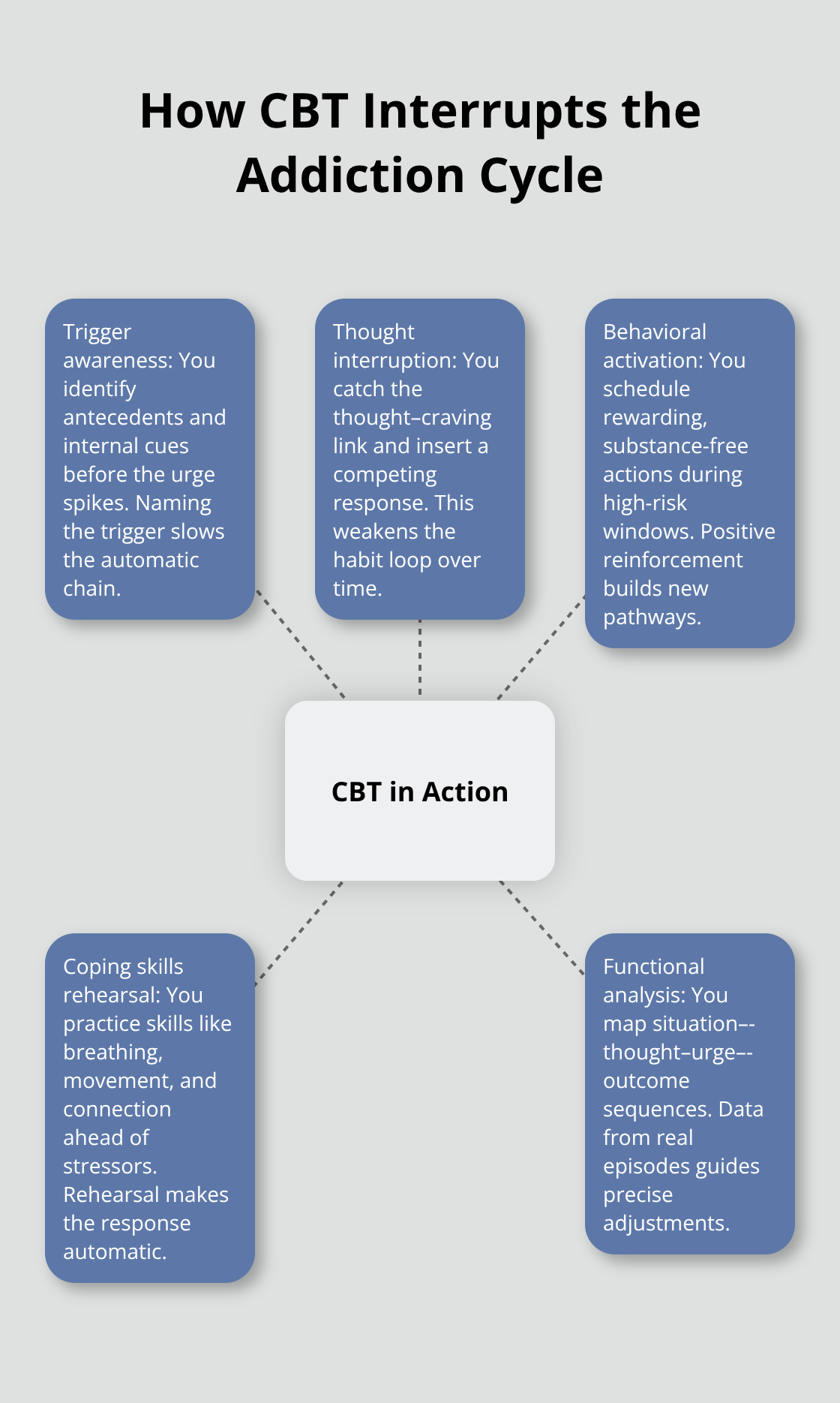
Your triggers are specific. Not stress in general, but the exact feeling when your boss criticizes you or the specific time of day when loneliness hits hardest. Functional analysis means you write down the situation, the thought that follows, and the urge that results. One person’s trigger might be a particular location; another’s might be a specific conversation pattern. The research is clear: people who complete detailed trigger identification show better outcomes than those who work with vague descriptions. Once you identify your three to five primary triggers, you stop reacting blindly. You start predicting when high-risk situations will appear and plan your response in advance.
Changing Thoughts That Feed Cravings
Your brain tells you stories that justify use. Maybe it says you deserve a drink after a hard day, or that one use won’t matter, or that you can’t handle stress without substances. These thoughts feel like facts, but they’re distortions. Cognitive restructuring means you write down the thought, examine what evidence actually supports it, and replace it with a realistic alternative. Studies show this practice rewires how your brain processes cravings over time. The goal isn’t to eliminate difficult emotions but to stop letting them automatically lead to substance use. People who practice thought records consistently report that cravings become noticeably weaker within weeks because the thought-craving connection weakens through repetition of the new response.
Why Coping Skills Matter More Than Willpower
Willpower fails because it treats addiction as a simple choice problem. Coping skills work because they address the actual mechanisms that drive use. When stress hits, you need a specific action ready-not a vague intention to stay strong. The most effective coping strategies (deep breathing, physical activity, calling a support person) interrupt the automatic pathway between trigger and substance use. Research on contingency management shows that people who practice these skills in advance handle high-risk situations far more effectively than those who rely on in-the-moment decisions. Your next chapter covers the exact techniques you can start using today to build these skills.
Techniques That Actually Work When Cravings Hit
Track your thoughts to break the automatic chain
Start with thought records because they force you to see the exact mechanism driving your cravings. Open a note on your phone or use paper and write three columns: the situation that triggered you, the automatic thought that followed, and the physical craving you felt. Most people skip this step and jump straight to willpower, which fails consistently. Research shows people who complete thought records interrupt the automatic chain between thought and urge.
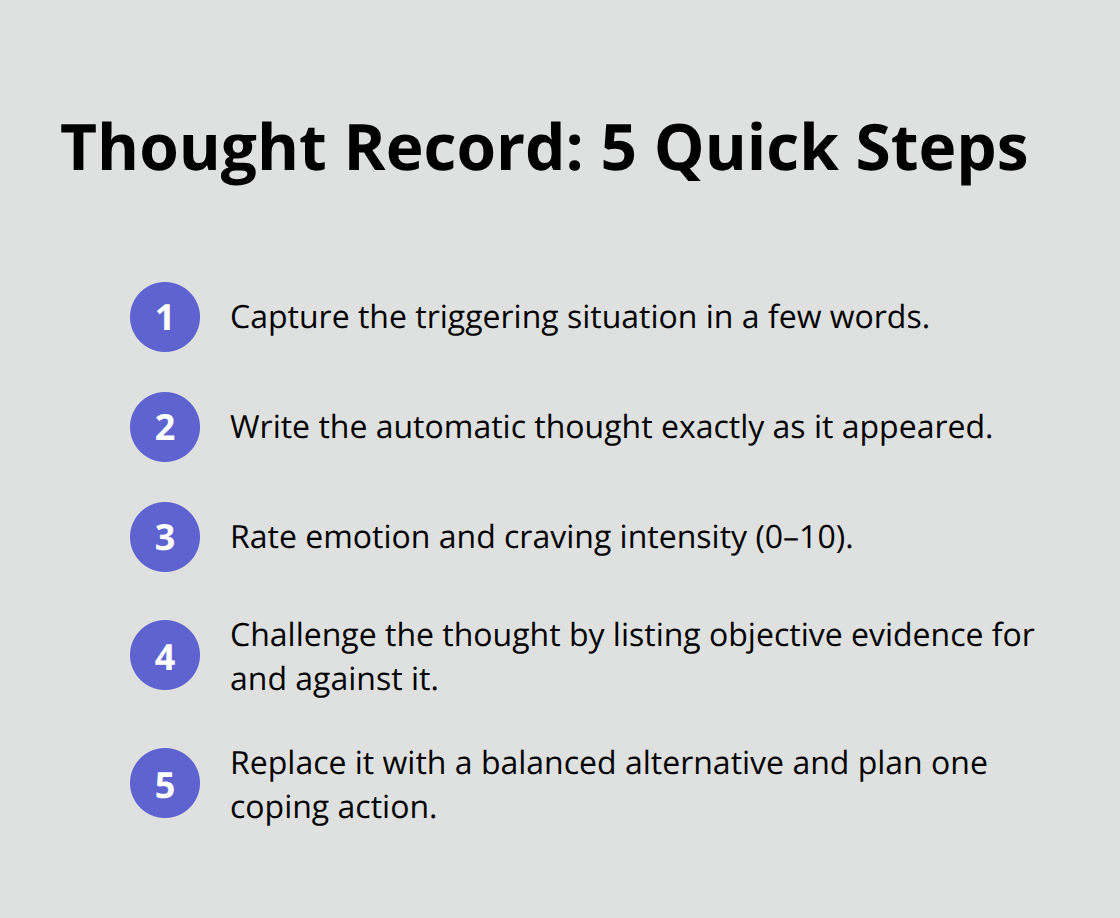
After two weeks of tracking, patterns emerge. You’ll see that specific thoughts appear repeatedly-I deserve this, I can handle one use, nobody will know. These become targets for cognitive restructuring, where you write the distorted thought, list what evidence actually supports it (usually nothing), and replace it with what’s true. One person discovered her thought “I can’t handle stress without drinking” only felt true on days when she skipped meals and sleep. Once she fixed those basics, the thought lost its power. This isn’t positive thinking. It’s examining your thoughts like a detective examining evidence, then reaching conclusions based on facts rather than feelings.
Schedule activities before cravings strike
Behavioral activation works differently than waiting for motivation to appear. You schedule specific activities before cravings strike. Research shows that people who engage in rewarding activities during high-risk times show significantly better abstinence rates than those who don’t. The activities must be concrete and immediately available-a 20-minute walk, calling a specific friend, working on a hobby you actually enjoy.
Many people build exposure exercises into their routine, which means gradually facing situations that previously triggered use without acting on the urge. If your trigger is social situations, you attend one for 15 minutes, then 30 minutes, then longer, while using your coping skills. Each time you face the situation without using, the trigger weakens. Your brain learns that the situation itself doesn’t require substance use to manage. Music therapy and other creative outlets can also ease cravings and reduce stress during these high-risk moments.
Write Your Relapse Prevention Plan in Advance
For relapse prevention, map your specific high-risk scenarios and write your response plan in advance. Don’t plan vaguely to call someone. Write down the exact person’s name and number. Don’t plan to exercise. Write which exercise, what time, where. The specificity matters because it removes decision-making when your brain is compromised by cravings (this is why vague intentions fail so consistently).
These techniques work fastest when you practice them consistently outside therapy, not just during sessions. The more you rehearse your response to triggers before they hit, the more automatic your new coping response becomes. This preparation transforms how you handle the situations that previously led to use. Pairing these skills with self-care strategies strengthens your overall recovery foundation. Once you master these foundational techniques, the next step involves finding professional support that matches your specific needs and recovery goals.
Finding the Right CBT Provider for Your Recovery
Not all addiction treatment providers deliver CBT the same way, and that difference matters significantly for your outcomes. A provider claiming to offer CBT should explain exactly how they structure sessions around functional analysis, thought records, and behavioral activation rather than just discussing your feelings. Effective CBT requires trained clinicians who follow evidence-based protocols, not therapists who simply mention cognitive techniques occasionally. When evaluating any provider, ask whether they use standardized CBT manuals (developed for cocaine, alcohol, or opioid treatment) and whether their therapists receive ongoing supervision to maintain treatment fidelity. Research consistently shows that programs using structured CBT manuals with regular clinical oversight produce better abstinence outcomes than those relying on improvised approaches.
What Credentials and Training Actually Matter
The therapist’s credentials matter significantly-look for licensure as a Licensed Clinical Social Worker, Licensed Professional Counselor, or psychologist with specific addiction training, not just a general mental health background. Many community providers lack this specialization, which is why treatment effectiveness varies dramatically between facilities claiming similar services. A qualified provider can explain their specific training in CBT for substance use disorders and describe how they tailor treatment to your particular triggers and thought patterns. Ask about their experience with your specific substance (alcohol, opioids, cocaine, or others) since research shows that providers with focused expertise in your substance produce stronger results than generalists.
Matching Treatment Intensity to Your Situation
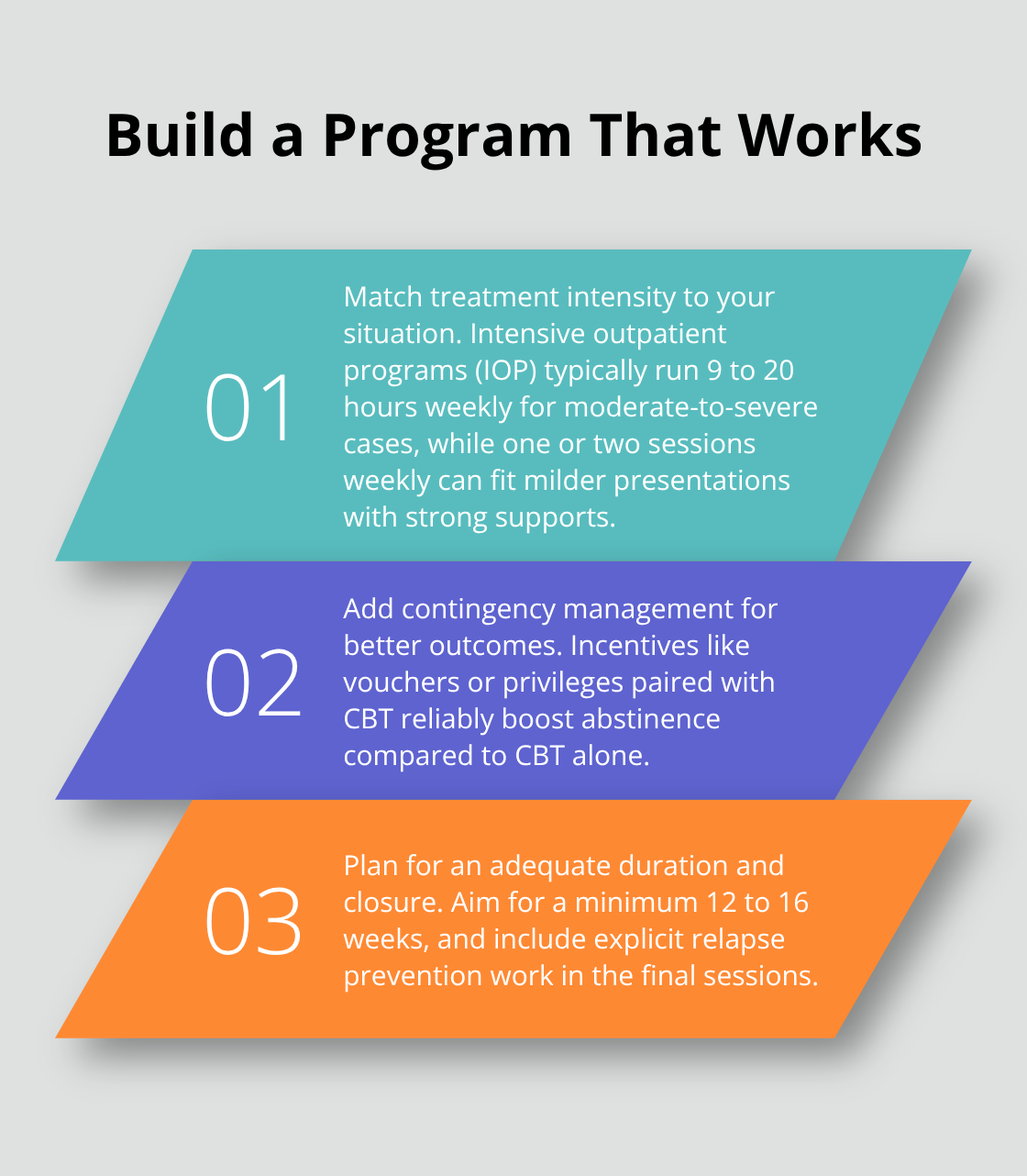
The specific treatment format affects how quickly you see results. Intensive outpatient programs (IOP) typically run 9 to 20 hours weekly and work best for people with moderate-to-severe addiction or unstable living situations, while standard outpatient therapy at one or two sessions weekly suits people with stronger support systems and milder presentations. Before committing to any program, ask about their contingency management component-whether they reward abstinence with concrete incentives like vouchers or privileges, since research shows this combination significantly boosts outcomes compared to CBT alone. Find out how long treatment typically lasts; programs should plan for minimum 12 to 16 weeks rather than promising quick fixes, and they should explicitly address relapse prevention in the final sessions.
Integration With Medication and Other Supports
Ask whether they integrate pharmacotherapy options (such as naltrexone or acamprosate for alcohol, or medication-assisted treatment for opioids) since combined approaches outperform behavioral treatment alone in most rigorous trials. A strong provider explains how they coordinate medication management with your CBT work rather than treating them as separate tracks. Verify they accept your insurance or offer sliding scale fees, because financial barriers consistently prevent people from completing treatment even when they find quality providers. Ask specifically how they handle situations where clients face relapse-whether they have protocols for intensifying treatment or adjusting the approach rather than simply discharging people who struggle.
Final Thoughts
Cognitive behavioral therapy for addiction works because it targets the exact mechanisms driving your substance use rather than relying on willpower or motivation alone. The techniques you’ve learned-tracking your thoughts, scheduling activities before cravings strike, and writing specific relapse prevention plans-produce measurable results when you practice them consistently. Research shows that people who complete these exercises interrupt the automatic chain between trigger and use within weeks, with many reporting noticeably weaker cravings as their new responses become automatic.
Your next step depends on where you stand in recovery. If you’re still using, professional treatment accelerates progress significantly compared to attempting these techniques alone. If you’re in early recovery, adding CBT to your current support system strengthens your foundation. If you’ve relapsed before, structured CBT with contingency management and medication support (when appropriate) addresses why previous attempts failed.
Contact Addiction Resource Center today to discuss which treatment approach fits your situation. We deliver CBT-based programs tailored to your needs, combining behavioral therapy with mental health support and substance abuse counseling to address the full picture of your addiction. Recovery is possible, and the specific tools you’ve learned here work fastest when combined with professional guidance and ongoing accountability.