During the year after treatment, a major review found that 1 in 4 people stayed continuously abstinent, while another 1 in 10 drank moderately without problems, and the rest still cut overall alcohol use by 87% and alcohol-related problems by 60% (PubMed review of U.S. alcohol treatment outcomes). These findings provide insight into whether alcohol …

During the year after treatment, a major review found that 1 in 4 people stayed continuously abstinent, while another 1 in 10 drank moderately without problems, and the rest still cut overall alcohol use by 87% and alcohol-related problems by 60% (PubMed review of U.S. alcohol treatment outcomes). These findings provide insight into whether alcohol rehab is effective. It can work, but not as a magic switch, and not only for people who never drink again.
For worried families, that matters. Rehab can help people drink less, stay safer, rebuild routines, and keep moving toward recovery even when the path isn't straight. The most useful way to judge treatment is not by perfection, but by whether it creates lasting change, reduces harm, and gives someone a real plan for the next hard day.
Table of Contents
- The Honest Answer to a Difficult Question
- Redefining What Success in Recovery Looks Like
- What Research Reveals About Rehab Effectiveness
- The Core Components of Effective Alcohol Treatment
- Why Aftercare and Ongoing Support Are Not Optional
- Understanding Relapse as Part of the Recovery Process
- How to Find Quality Treatment in Northern California
The Honest Answer to a Difficult Question
People usually ask does alcohol rehab really work because they're scared, hopeful, or both. They want a straight answer that will tell them whether to trust the process, spend the money, and keep believing after a hard relapse. The honest answer is yes, rehab can work, but it works best when you define success correctly.
A short stay that ends with no follow-up often isn't enough. Alcohol use disorder changes behavior, routines, mood, sleep, and relationships, so treatment has to address more than the drink itself. When rehab is structured, long enough, and connected to ongoing care, it gives people a better chance to make changes that last.
Practical rule: judge rehab by progress, not by whether someone never slips again.
That shift matters because recovery isn't a pass or fail test. A person may leave treatment drinking less, thinking more clearly, sleeping better, or reconnecting with family. Those are real clinical gains, and they often set up later stability.
Families tend to look for one clean finish line. Real recovery is usually messier than that. The best evidence points to a long-term management model, where treatment starts the process, and aftercare helps protect the gains.
Redefining What Success in Recovery Looks Like
Success in alcohol treatment is often described too narrowly. If someone does not stay sober forever, people assume rehab failed. That view misses what treatment does for many clients, which is reduce harm, improve stability, and make healthier choices more possible.
A major review of U.S. alcohol treatment outcomes found that during the year after treatment, 1 in 4 clients remained continuously abstinent, while another 1 in 10 drank moderately without problems; the remaining clients, as a group, reduced overall alcohol consumption by 87% and cut alcohol-related problems by 60%. That finding shows why rehab outcomes should be read on a spectrum. The person who drinks less, fights less, misses fewer workdays, and ends fewer nights in crisis is not “failing” in the way many people imagine.
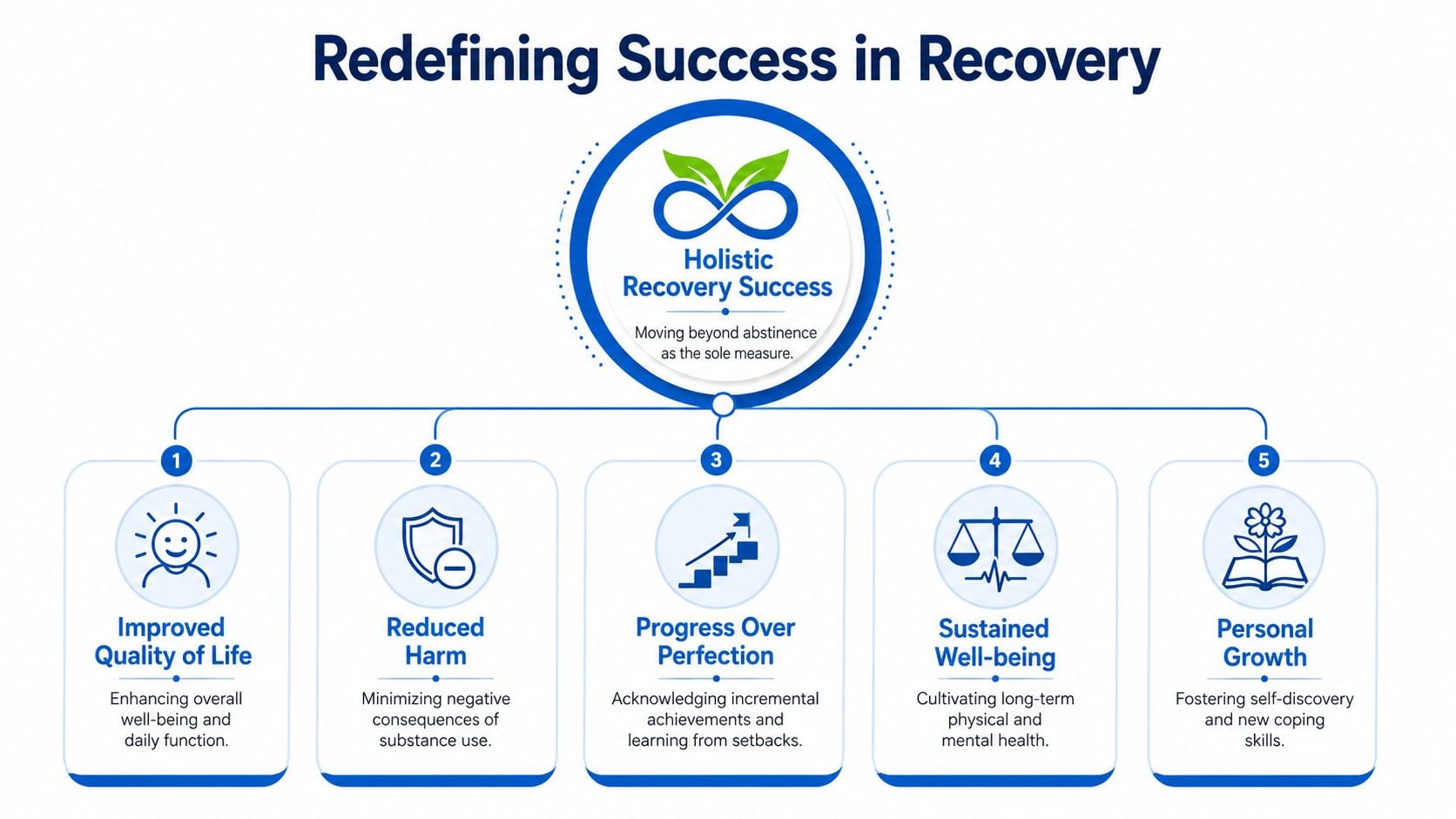
Recovery means more than abstinence
Recovery can be understood as a set of gains that often happen together. Improved quality of life may look like steadier mornings, less shame, or better relationships. Reduced harm may show up as fewer dangerous situations, fewer medical crises, and fewer conflicts at home.
There is also progress over perfection. A person may not stop all at once, but they might start noticing triggers, asking for help sooner, or using a coping skill they learned in treatment. Those changes matter because they change the trajectory.
Recovery can be real even before it is complete.
That is why clinicians and families should watch for broader signs of improvement. A person who is calmer, more engaged, and more honest about drinking is often moving in the right direction, even if the process is not linear. Treatment should support that progress, not dismiss it because it does not look perfect.
The same idea fits a simple recovery model. Treatment works like a long-term health plan, where early care starts the process and ongoing support protects the gains. For a closer look at evidence-based treatment approaches and how they are used in practice, see this overview of effective addiction treatment options and outcomes.
Why this matters to families
Families get stuck when they treat sobriety as the only valid outcome. That can make every setback feel like proof that nothing worked. A better standard is whether treatment reduces danger and increases the person's ability to participate in life.
For some people, that means starting with abstinence. For others, it means stabilizing first and building toward it. Rehab is useful when it helps someone keep going, even in smaller steps than relatives hoped for.
What Research Reveals About Rehab Effectiveness
The evidence keeps pointing to the same practical lesson, rehab works better when it lasts long enough to change habits, not just interrupt them. Independent summaries of the evidence report that individuals with addiction need at least 90 days of treatment for better outcomes, and longer engagement is linked to more durable recovery, because it gives people time to stabilize, practice coping skills, and plan for aftercare (Addiction Center).
That finding lines up with how recovery unfolds. Early treatment often focuses on withdrawal, safety, and basic routines. Later treatment gives people time to notice triggers, rebuild decision-making, and tolerate normal stress without automatically reaching for alcohol.
The point isn't that shorter care never helps. It's that short care alone often doesn't give the brain and behavior enough repetition to hold. That's why a treatment plan that includes step-down care usually makes more sense than a one-and-done model.
Clinical takeaway: duration matters because recovery skills need repetition before they hold up under stress.
A helpful way to evaluate any program is to ask what happens after the first phase ends. If the answer is vague, the treatment plan may be too thin. If the program has clear transitions, follow-up, and continued monitoring, it's much closer to what the evidence supports.
For readers who want a deeper look at treatment models and outcomes, this resource on effective addiction treatment, evidence, options, and outcomes is a useful companion. It fits the same basic message, good rehab is structured, not rushed.
What the research does not say is that everyone needs the same path. It says longer, organized care improves the odds. That's a more realistic and more hopeful answer than a promise of instant cure.
The Core Components of Effective Alcohol Treatment
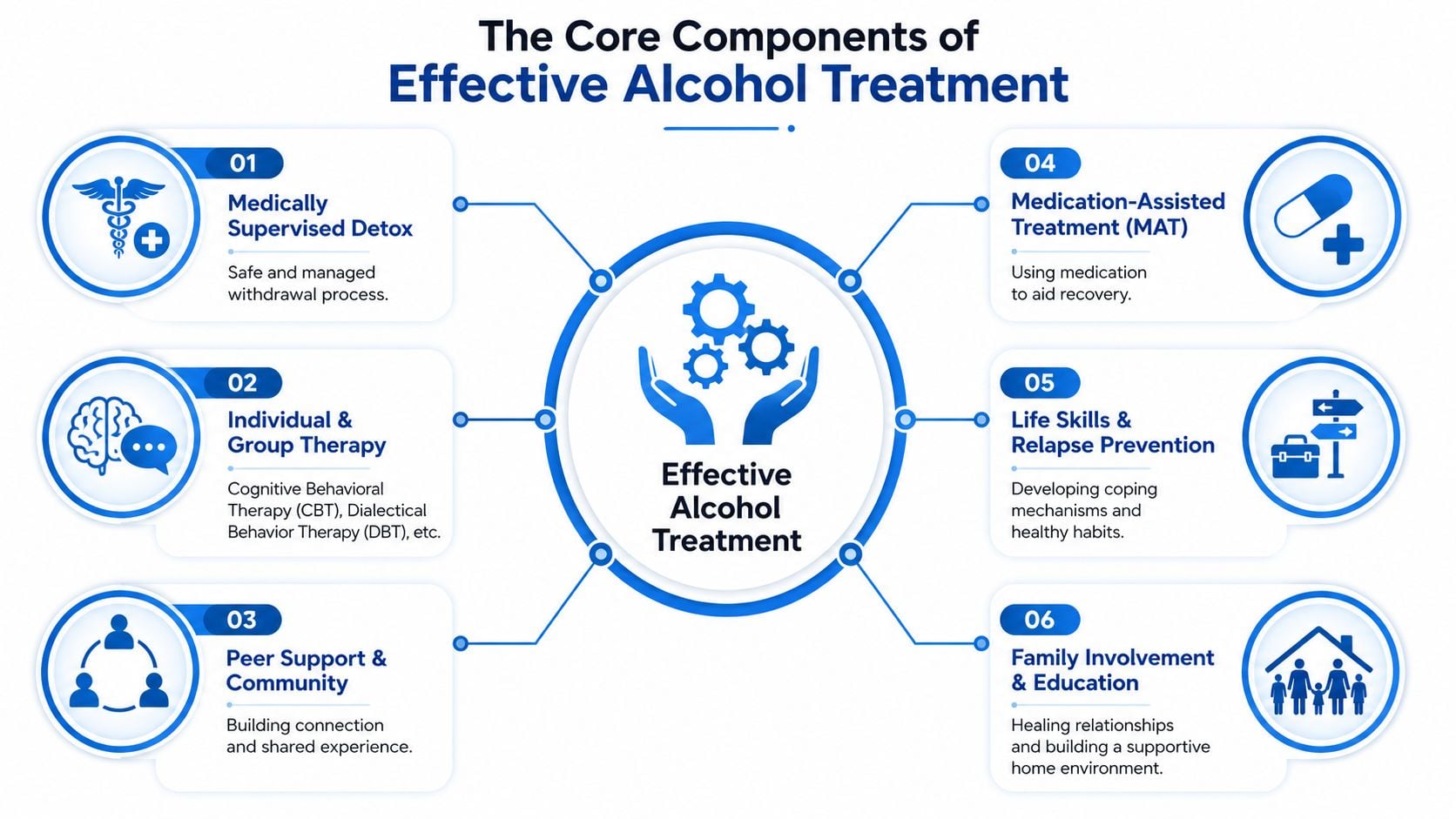
A good alcohol program does more than keep someone away from drinks for a few days. It treats withdrawal, teaches coping, addresses mental health, and helps the person return to daily life with a plan. Those parts matter because alcohol use disorder affects the whole person, not just one habit.
Start with medical safety and medication support
Medically supervised detox helps a person get through withdrawal with monitoring and support. For some people, the early stage of stopping alcohol can be physically and emotionally rough, so medical oversight matters. The primary goal is safety first, not heroic endurance.
Medication-assisted treatment, or MAT, is another key piece. Medications can help reduce cravings and support stability, especially when therapy alone hasn't been enough. A clear explanation of MAT treatment for alcohol can help families understand why medication is often part of a modern treatment plan.
Therapy should be personal, not generic
Effective care usually includes individual therapy and group therapy. The methods can vary, but the goal stays the same, helping someone spot triggers, challenge old habits, and practice new responses before stress turns into drinking. That's where relapse prevention starts to become concrete.
A program should also pay attention to co-occurring mental health disorders. Depression, anxiety, trauma, and alcohol misuse often feed each other, so it makes sense to treat both sides together. For families trying to understand that overlap, co-occurring depression and alcohol treatment is a useful context piece.
Don't ignore community and family
A strong program also includes peer support, life skills, and family education. People don't recover in a vacuum. They need structure, encouragement, and practical tools for sleep, work, conflict, and boredom, because those daily pressures can push drinking back to the center.
One local example is Addiction Resource Center LLC in Yuba City, which offers outpatient treatment, an IOP, substance use counseling, and individualized addiction therapy. The specifics matter less than the principle, any center you consider should be able to explain how it handles detox, therapy, medications, and aftercare in plain language.
Why Aftercare and Ongoing Support Are Not Optional
Residential or intensive treatment is the start of recovery, not the finish line. A person can do meaningful work in rehab and still need structure afterward, because the actual test comes when they return to stress, routine, and the same people or places that used to trigger drinking. That's why aftercare is not an extra, it's part of the treatment itself.
One long-term follow-up reported that people who attended 27 weeks of Alcoholics Anonymous were sober 16 years later at a rate of 67%, compared with 34% among those who did not attend AA (The Recovery Village summary of treatment success rates). That doesn't mean AA is the only answer, but it does show how continued support changes the picture over time.

A good aftercare plan often includes step-down outpatient care, support groups, and sober living when needed. The point is not to fill every hour forever. The point is to keep enough structure in place while a person is still vulnerable.
If you're comparing programs, ask about their follow-up process and whether they help families understand what happens next. A useful overview of aftercare planning and guidance for keeping recovery on track can help you see what a serious plan looks like.
The more the plan continues beyond discharge, the less likely the person is to feel alone when cravings show up. Recovery is easier to maintain when someone still has check-ins, accountability, and people who know what they're working on.
Understanding Relapse as Part of the Recovery Process
Relapse scares families because it can feel like all the effort was wasted. It usually isn't. A return to drinking is a sign that the treatment plan needs attention, not proof that the person can't recover.
Expert summaries emphasize that alcohol use disorder is chronic, and many people need more than one treatment episode before stable recovery. The best-supported response is continuing care and medication (Addiction Help). That framing is much more useful than shame, because shame tends to push people away from help.
What relapse usually means
Relapse often tells you that something in the recovery plan wasn't strong enough for the situation the person faced. Maybe the person needed more support, a medication review, a different therapy approach, or better help with depression or stress. The right reaction is to look at the gap, then close it.
That's why relapse plans matter before a crisis happens. If someone knows exactly who to call, what medication to discuss, and how to get back into care quickly, the relapse can be shorter and less damaging. The goal is not to pretend relapse never happens. The goal is to respond faster and more effectively when it does.
A relapse is a signal, not a verdict.
Families can help most by staying calm, documenting what changed, and getting the person back in touch with treatment. Lectures rarely improve the next step. Practical support does.
A better question than “Did rehab fail?”
Ask, “What needs to change now?” That question keeps the focus on treatment adjustment instead of blame. It also fits the fact that people often improve over time, not all at once.
Medication, therapy, and follow-up care are not signs of weakness. They're the tools that help a chronic condition stay manageable. When families understand that, they're less likely to abandon the person after one bad week.
How to Find Quality Treatment in Northern California
Start by asking direct questions. A strong provider should explain its approach without jargon or defensiveness, and the answers should sound specific rather than vague. If the staff can't clearly describe the care plan, that's a warning sign.
Use a simple checklist when you call:
- Do you offer medically supervised detox and medication support? If not, ask where withdrawal care is handled.
- How do you treat depression, anxiety, or trauma alongside alcohol use? Good programs don't separate mental health from substance use.
- What does your aftercare planning include? You want clear next steps, not a goodbye at discharge.
- Do you provide outpatient support or step-down care after residential treatment? Recovery usually needs a continuum.
- How do you involve families when appropriate? Loved ones often need guidance, too.
If you want a local option to compare against those standards, Addiction Resource Center LLC in Yuba City offers outpatient substance use care, including detox support, IOP, residential partnerships, and individualized planning for adults in Northern California. It also accepts most major insurance and welcomes TRICARE beneficiaries, which can make access simpler for families sorting out coverage.

For immediate help or to ask about treatment options, contact Addiction Resource Center LLC at 1002 Live Oak Blvd., Suite A, Yuba City, CA, or call or text 530-625-7910.
If you're trying to decide what to do next, contact Addiction Resource Center LLC today to ask about detox, IOP, residential partnerships, and aftercare planning for yourself or someone you love.