The first signs often don't look dramatic. Someone stops using pills, heroin, fentanyl, alcohol, or another substance and starts saying they “just feel off.” They can't sleep. Their stomach turns. They sweat through a shirt, pace the room, or say their legs hurt and they can't get comfortable. A family member may wonder if this …

The first signs often don't look dramatic. Someone stops using pills, heroin, fentanyl, alcohol, or another substance and starts saying they “just feel off.” They can't sleep. Their stomach turns. They sweat through a shirt, pace the room, or say their legs hurt and they can't get comfortable. A family member may wonder if this is anxiety, the flu, panic, or something more serious.
That confusion is common, and it's one reason detox gets delayed. People often expect one generic set of symptoms, when the question is more specific: what substance was involved, when was the last use, and what symptoms are showing up now? Those details shape both comfort and safety.
Table of Contents
- Introduction to Drug Detox Symptoms and Why They Matter
- How Withdrawal Happens in the Body and Brain
- Opioid Detox Symptoms and How Common They Are
- Alcohol Sedative and Stimulant Detox Symptoms Compared
- Detox Timelines When Symptoms Start Peak and Fade
- Why Medically Supervised Detox Makes Symptoms Safer to Manage
- Getting Help for Drug Detox Symptoms and Next Steps Toward Recovery
Introduction to Drug Detox Symptoms and Why They Matter
Detox symptoms matter because they're not a character test. They're a body and brain response to the sudden absence of a substance the nervous system had adapted to. When someone has developed dependence, stopping use can trigger a predictable withdrawal pattern. The pattern changes by drug class, dose, frequency, and whether more than one substance is involved.
A person going through opioid withdrawal may look miserable but stay medically stable. A person withdrawing from alcohol may start with tremor and sweating, then worsen fast. Those differences are why broad symptom lists can be misleading. Families need timing and danger windows, not just words like nausea, shaking, or cravings.
Many people searching for help are already in the middle of this moment. They're trying to decide whether to wait it out, call a detox center, go to urgent care, or head to the emergency room. A practical starting point is understanding what detox for drug use involves and how support is structured in a setting focused on detox for drug use.
What detox symptoms usually signal
Detox symptoms usually mean the body is trying to rebalance itself. That can involve:
- Autonomic symptoms like sweating, goosebumps, blood pressure changes, fast heart rate, and chills
- Gastrointestinal symptoms like nausea, vomiting, cramping, and diarrhea
- Pain and sleep problems such as muscle aches, restlessness, and insomnia
- Mood and mental changes including anxiety, irritability, low mood, and craving
Practical rule: Withdrawal symptoms make more sense when you track them by substance and by time since last use, not as one big category called “detox.”
Why early recognition changes outcomes
When people recognize symptoms early, they're less likely to misread serious withdrawal as something minor. That matters most with alcohol and sedatives, where the risk can rise after symptoms begin. It also matters with opioids, where the distress can become intense enough to push someone back to use before they've had a chance to stabilize.
Knowing the pattern won't make withdrawal pleasant. It can make it less frightening, and it can help you decide when support is needed now, not later.
How Withdrawal Happens in the Body and Brain
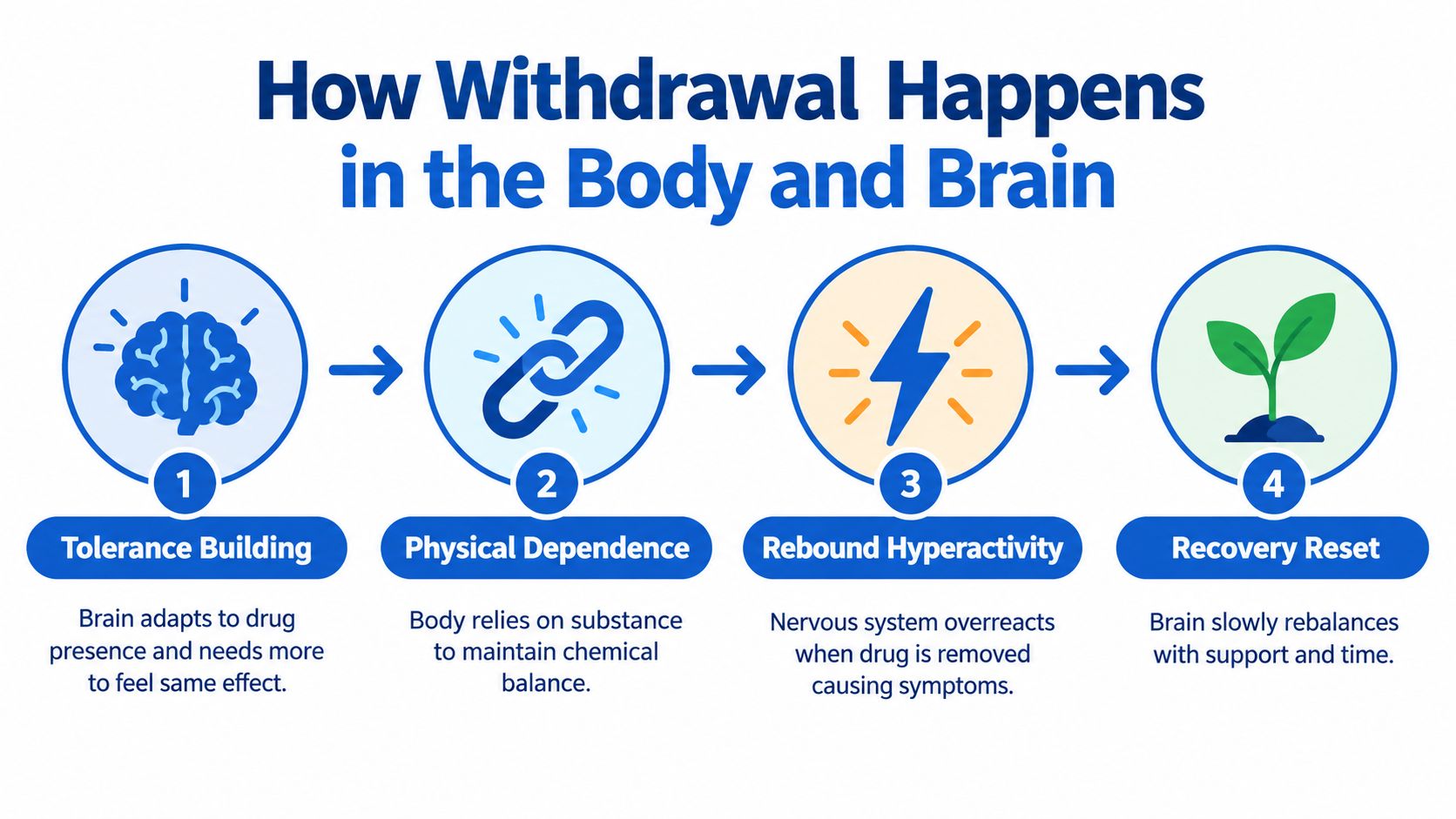
Withdrawal starts with adaptation. If a substance shows up repeatedly, the brain and body stop treating it like a surprise. They adjust around it.
Over time, the nervous system builds tolerance, meaning the same amount may feel weaker than it once did. Then comes dependence, where the body begins to rely on that substance to keep things feeling normal. When the substance suddenly drops away, the body doesn't switch back instantly. It rebounds.
The simplest way to picture it
Think of the nervous system like a thermostat that's been manually adjusted for a long time. If a drug slows things down, the body may start pushing in the opposite direction to compensate. If a drug stimulates certain pathways, the body may damp them down over time. When the drug is removed, that compensation is still in place for a while.
That's why withdrawal often feels like overshoot. People don't just feel “without the drug.” They feel the nervous system swinging the other way.
Why symptoms come in clusters
This rebound effect helps explain why symptoms tend to travel together. In opioid withdrawal, for example, the syndrome commonly includes anxiety, irritability, agitation, sweating, tearing, runny nose, enlarged pupils, fast heart rate, high blood pressure, nausea, vomiting, cramping, diarrhea, and craving according to a clinical overview on opioid withdrawal syndrome and practical monitoring markers.
That cluster isn't random. It reflects the same stress systems firing across different parts of the body at once.
- The gut reacts with nausea, cramps, vomiting, or diarrhea.
- The autonomic system reacts with sweating, chills, heart rate changes, and blood pressure shifts.
- The brain reacts with restlessness, insomnia, irritability, and craving.
Withdrawal often feels chaotic to the person experiencing it. Medically, it usually follows a recognizable pattern.
Physical symptoms and psychological symptoms
People sometimes ask whether withdrawal is “physical” or “mental.” In real life, it's usually both.
Physical symptoms are the easier ones to spot. Sweating, tremor, stomach upset, yawning, vomiting, and insomnia are visible. Psychological symptoms can be just as disruptive. A person may feel keyed up, hopeless, panicky, or unable to think clearly.
That mix is one reason home detox can unravel quickly. Someone may start out focused on one symptom, like stomach pain or not sleeping, and miss the larger picture that their whole nervous system is under strain. Recovery begins when the body has time and support to reset.
Opioid Detox Symptoms and How Common They Are
A common real-world scenario looks like this. Someone stops opioids, expects to feel sick for a day or two, then gets hit with body aches, sweating, stomach cramps, and a level of restlessness that feels hard to tolerate. The pattern often looks predictable to a clinician, but it does not always feel predictable to the person in it.
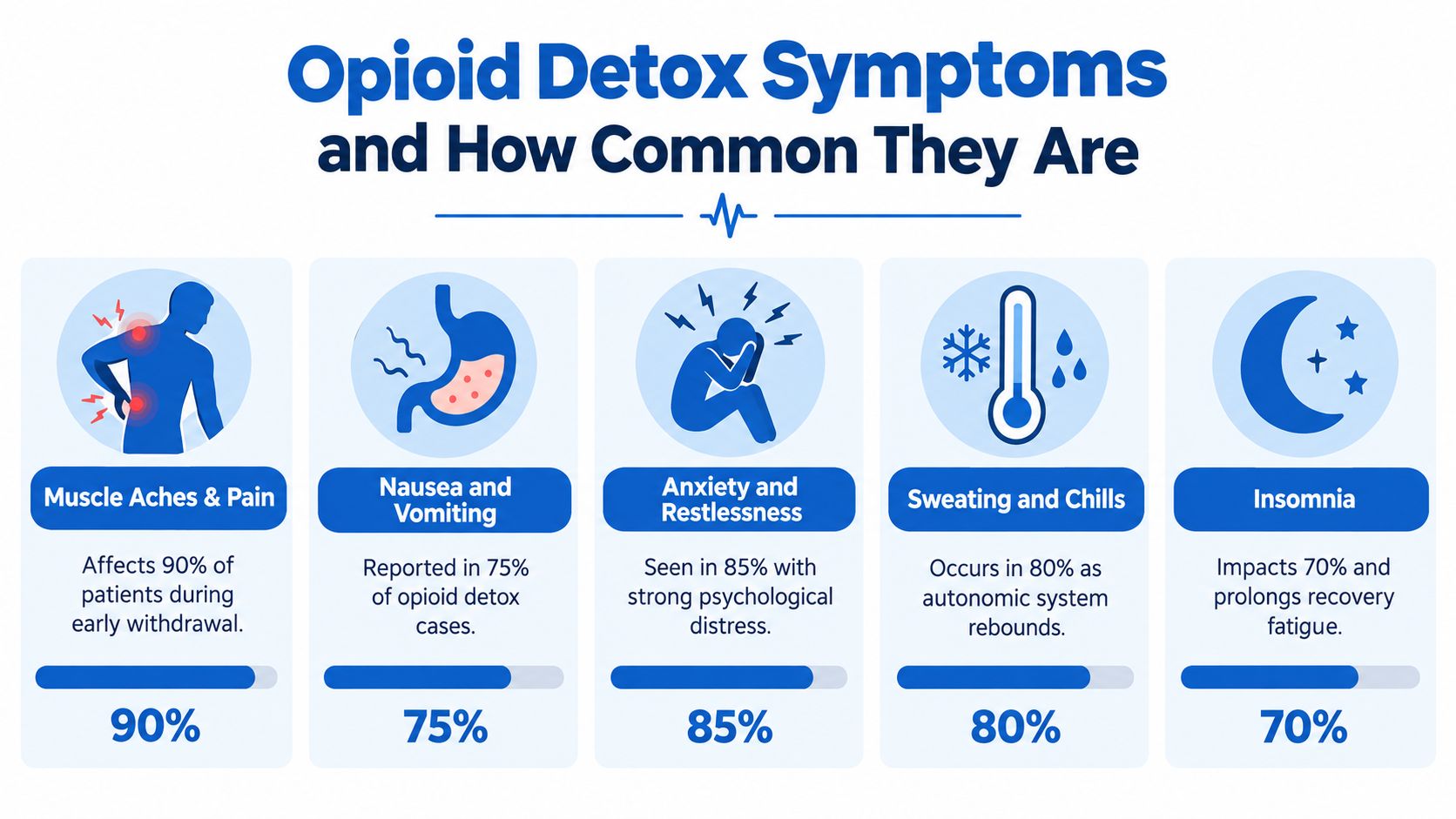
Opioid withdrawal usually follows a recognizable symptom cluster. The DSM-5 summary in this opioid withdrawal reference describes lacrimation or rhinorrhea, piloerection, myalgia, diarrhea, nausea or vomiting, dilated pupils, insomnia, autonomic hyperactivity, and yawning. In plain language, that means watery eyes or a runny nose, goosebumps, body aches, stomach upset, enlarged pupils, trouble sleeping, repeated yawning, and a nervous system stuck in high alert.
What people actually report most often
Population research helps answer a question many readers have. Which symptoms are common, and which ones are warning signs?
In a 2023 U.S. analysis of people with past-year non-medical opioid use, commonly reported symptoms included muscle aches, sweating or goosebumps, insomnia, depressed mood, and nausea or vomiting, according to a study in Drug and Alcohol Dependence. That pattern matters because it shows opioid withdrawal is usually a mix of pain, autonomic symptoms, poor sleep, mood strain, and stomach symptoms all at once.
A separate community study of people who inject drugs found that withdrawal symptoms were frequently reported over the prior six months, as described in this study on opioid withdrawal among people who inject drugs. In other words, withdrawal episodes are common in real life, not rare exceptions.
Here is the practical takeaway. Body aches, sweating, yawning, nausea, diarrhea, dilated pupils, and insomnia fit the expected opioid withdrawal picture. They can feel severe, but by themselves they usually point to distress rather than the specific life-threatening complications seen more often with alcohol or benzodiazepine withdrawal.
Expected opioid withdrawal versus reasons to get urgent help
This side-by-side view helps many families more than a generic symptom list.
Often expected in opioid withdrawal
- Body aches and back pain
- Runny nose, tearing, yawning
- Sweating, goosebumps, chills
- Nausea, vomiting, diarrhea, stomach cramping
- Restlessness, insomnia, anxiety, craving
Get medical help promptly if opioid withdrawal includes
- Trouble breathing
- Chest pain
- Fainting
- Confusion that is new or worsening
- Inability to keep fluids down, especially with repeated vomiting or heavy diarrhea
- Signs of severe dehydration such as very dark urine, dizziness when standing, or minimal urination
- Very high blood pressure, very fast heart rate, or symptoms that seem unusually intense or mixed with another substance exposure
That distinction matters because opioid withdrawal is often miserable, yet the danger usually comes from complications around it. Dehydration, relapse after a period of lowered tolerance, hidden alcohol or sedative withdrawal, infection, pregnancy, or other medical illness can change the risk level quickly.
What this feels like in practice
People often call opioid detox “flu-like,” but that phrase can undersell it. A better comparison is a whole-body alarm response. The gut speeds up, the pain system flares, sleep falls apart, and the brain keeps signaling that something is wrong.
The timeline also helps explain why people seek help. Early symptoms can build into a harder stretch of insomnia, vomiting, diarrhea, and craving. That combination can push someone back to opioid use fast, especially if they are trying to manage it alone.
A brief video can help put names to the symptoms many people experience:
When the picture is less straightforward
Recent reporting has highlighted a practical challenge. With fentanyl-adulterated supply patterns shifting, some people present with severe hypertension, rapid heart rate, and vomiting alongside opioid withdrawal symptoms, making the picture more complicated than many basic FAQ pages suggest, according to this report on medical detox visits and changing fentanyl adulterants.
If opioid withdrawal looks harsher than expected, starts after use of an unknown street supply, or includes symptoms outside the usual pattern, a medical evaluation is a reasonable next step. That is not overreacting. It is a safer way to sort out whether this is straightforward opioid withdrawal or a mixed medical problem.
Alcohol Sedative and Stimulant Detox Symptoms Compared
Not all withdrawal syndromes work the same way. Readers often get tripped up here. They assume that if one person got through opioid withdrawal at home, another person can do the same with alcohol, benzodiazepines, or a mixed pattern involving several drugs.
Alcohol and sedatives deserve special caution because the nervous system can become dangerously overactive during withdrawal. Stimulant withdrawal usually looks different. It often leans more toward exhaustion, depressed mood, sleep disruption, and craving, though people can still need close support depending on mental state, hydration, and other substances involved.
The danger window is different by substance
Alcohol withdrawal can begin within 6 to 8 hours after the last drink, commonly peak at 10 to 30 hours, and may progress to withdrawal seizures within 0 to 48 hours, hallucinations around 12 hours, and delirium tremens at 48 to 72 hours, based on this clinical review of alcohol withdrawal timing and complications.
For many families, that's the key point. Early symptoms don't guarantee the worst is over. Someone can start with sweating, tremor, nausea, fast pulse, and agitation, then worsen later.
If you want a patient-friendly explanation focused on symptom recognition, this guide to alcohol detox symptoms is helpful for understanding what early alcohol withdrawal can look like day to day.
Detox Symptoms and Risk by Substance Class
| Substance Class | Typical Symptoms | High-Risk Complications | When to Seek Urgent Care |
|---|---|---|---|
| Alcohol | Tremor, sweating, nausea or retching, agitation, fast heart rate, high blood pressure | Seizures, hallucinations, delirium tremens, severe confusion, fever | Seek urgent care for confusion, hallucinations, seizure activity, severe agitation, or rapidly worsening vital signs |
| Benzodiazepines and other sedatives | Anxiety, tremor, insomnia, autonomic overactivation, nausea | Seizures, hallucinations, severe rebound agitation | Seek urgent care if symptoms escalate quickly, if the person becomes disoriented, or if seizure risk is a concern |
| Opioids | Body aches, sweating, restlessness, insomnia, vomiting, diarrhea, dilated pupils, cravings | Dehydration, severe distress, relapse risk, complicated or atypical presentations | Seek urgent care for uncontrolled vomiting, inability to keep fluids down, chest symptoms, severe blood pressure issues, or mixed-substance concerns |
| Stimulants | Crash, fatigue, low mood, sleep changes, irritability, craving | Severe depression, suicidal thinking, paranoia, inability to care for self | Seek urgent care if the person expresses self-harm thoughts, becomes psychotic, or can't stay safe |
Where generic symptom lists fall short
A clinical guidance document from New South Wales notes that many generic pages don't explain how timing and danger windows differ by substance, even though that's often what patients and families need most in real life. It also highlights how symptom overlap, especially anxiety, insomnia, and gastrointestinal symptoms, can make people misread severity and delay care in alcohol or opioid withdrawal, as summarized in this clinical guidance on alcohol and other drug withdrawal.
That's why one symptom never tells the whole story. Tremor after stopping alcohol means something different from fatigue after stopping cocaine. Vomiting during opioid withdrawal means something different from confusion during alcohol withdrawal.
Detox Timelines When Symptoms Start Peak and Fade
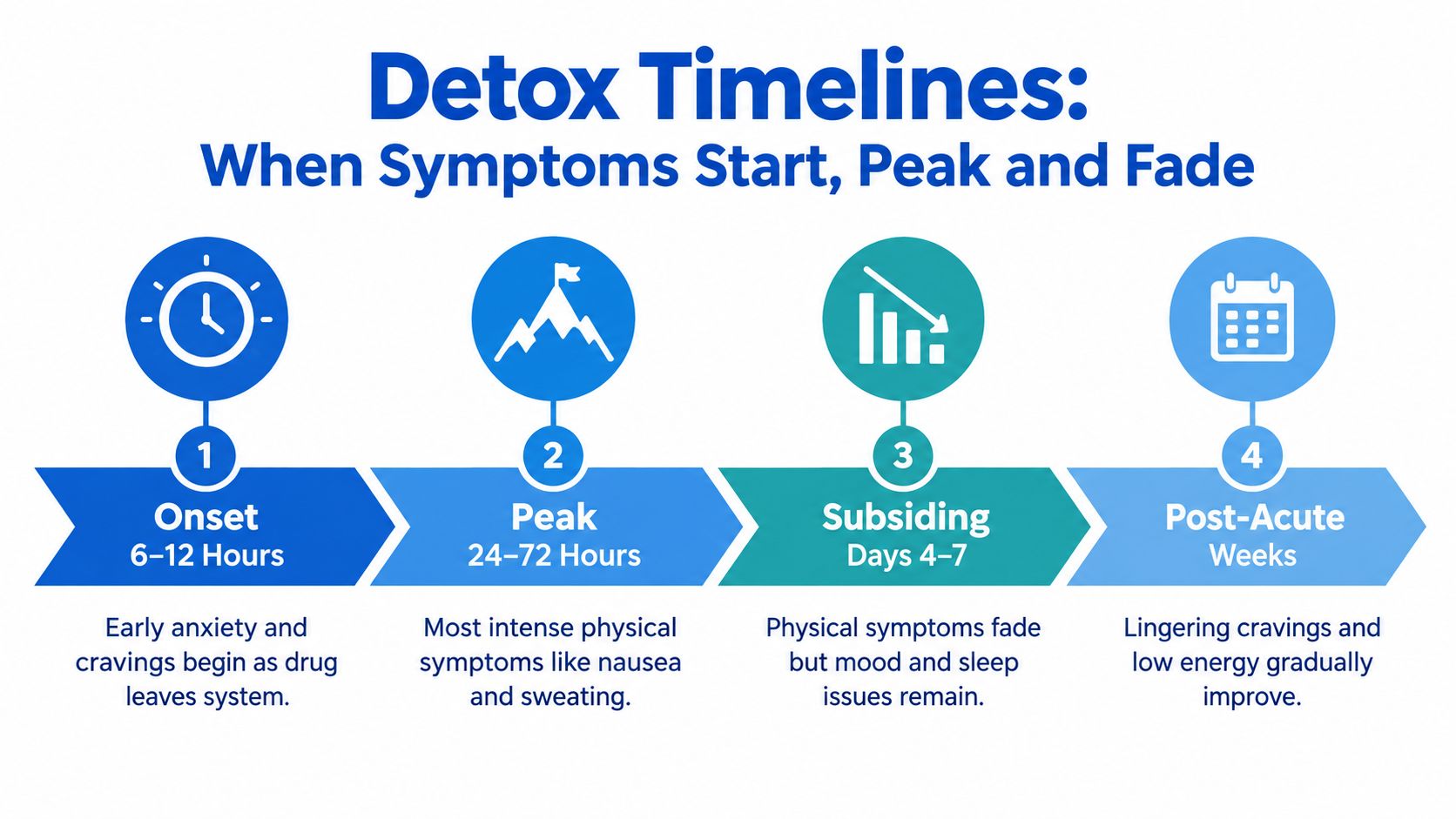
Timing is one of the most useful clues in detox. Families often ask, “If this is withdrawal, when should it start?” The answer depends heavily on the drug's half-life, which is a medical way of saying how long the substance stays active in the body.
Short-acting drugs leave faster, so withdrawal often starts sooner. Longer-acting drugs can delay onset, which sometimes fools people into thinking they're in the clear when they aren't.
Opioids by short acting and long acting pattern
A 2026 clinical timeline review reported that short-acting opioid withdrawal can begin 6 to 12 hours after the last dose, peak at 36 to 72 hours, and the acute physical phase usually lasts 5 to 7 days, while long-acting opioids may not trigger symptoms until 24 to 48 hours later and can extend to 2 weeks or more, according to this opioid withdrawal timeline review.
That timing explains a common real-world mistake. Someone stops a short-acting opioid in the evening, feels only mildly uncomfortable overnight, then wakes up much worse the next morning. Another person stops a long-acting opioid and assumes the absence of symptoms on day one means they won't withdraw, only to deteriorate later.
Alcohol follows a shorter but more dangerous clock
Alcohol withdrawal tends to move on an hours-to-days schedule, not a days-to-weeks schedule. That faster clock is why monitoring can't wait until symptoms look extreme.
A few practical patterns help:
- Early phase often includes shaking, sweating, nausea, retching, fast pulse, high blood pressure, and agitation
- Progression phase may bring worsening tremor, confusion, hallucinations, or seizure activity
- Later danger window is where delirium tremens can emerge in severe cases
The absence of severe symptoms in the first few hours doesn't guarantee safety for the next day or two.
Why timelines still vary
No timeline is perfectly exact for one person. Symptoms can shift based on several factors:
- Substance type matters most. Short-acting and long-acting drugs behave differently.
- Dose and frequency change how much the body has adapted.
- Polysubstance use can blur the picture and change expected timing.
- General health and hydration affect how a person tolerates symptoms.
- Past withdrawal episodes may shape what happens this time.
That last point matters emotionally. People sometimes compare one detox attempt to another and assume it will unfold the same way. It might not.
What to monitor instead of guessing
When someone may be entering detox, practical observation helps more than trying to predict everything. Pay attention to:
- Time since last use
- Pulse and blood pressure if available
- Ability to keep down fluids
- Sleep loss and escalating agitation
- Confusion, hallucinations, or seizure activity
Those markers often matter more than how “tough” someone seems. Withdrawal severity is not a willpower issue. It's a physiology issue.
Why Medically Supervised Detox Makes Symptoms Safer to Manage
Medical detox changes the question from “Can this person endure it?” to “Can this person get through it safely enough to keep moving into treatment?” That's a better question.
In supervised detox, clinicians track the things withdrawal can destabilize first: vital signs, hydration, mental status, symptom progression, and seizure risk. Those are not small details. They're the difference between a miserable but manageable detox and one that turns into a medical crisis.

What supervision actually changes
A supervised setting can respond in real time when symptoms shift. That includes medication-assisted approaches for opioid withdrawal, symptom management for autonomic distress, fluid support, observation for worsening alcohol withdrawal, and help when insomnia or agitation starts spiraling.
For readers who want a straightforward explanation of the process, this overview of medically supervised detox lays out what monitoring and stabilization usually involve.
Why home detox gets riskier with mixed or unclear symptoms
The modern drug supply has made withdrawal less predictable in some cases. When fentanyl-related or mixed-substance patterns are involved, “typical” symptoms may overlap with atypical blood pressure spikes, intense vomiting, or other findings that need evaluation.
That's one reason many evidence summaries support structured care rather than symptom relief alone. When clinicians can sort expected withdrawal from red flags, people are less likely to miss dehydration, delirium, seizure risk, or a dangerous return to use.
Supervised detox doesn't just reduce discomfort. It helps clinicians decide whether what you're seeing is ordinary withdrawal, complicated withdrawal, or something else entirely.
A practical way to think about detox support
Not every detox looks the same. Some people need hospital-level evaluation. Some need a dedicated detox program with medication support and observation. Some need a tapering plan and close follow-up. The point is matching the setting to the risk.
In Northern California, one example of that kind of structured option is Addiction Resource Center LLC, which offers medically supervised detox with medication-assisted treatment, along with residential and outpatient follow-through. For people sorting through other kinds of toxic exposure questions at the same time, it can also be useful to read broadly about medically guided detox approaches, including topics like integrative detox for metal poisoning, because “detox” is used in very different ways across health care and those differences matter.
Getting Help for Drug Detox Symptoms and Next Steps Toward Recovery
If you're watching someone sweat, shake, vomit, pace, cry, or say they can't do this anymore, start with the basics. What substance was used? When was the last use? What symptoms are happening right now? Are they getting better, staying the same, or escalating?
The biggest practical distinction is this: expected withdrawal symptoms are uncomfortable, but red flags suggest urgent evaluation. Red flags include confusion, hallucinations, seizures, severe agitation, chest symptoms, inability to keep down fluids, rapidly worsening vital signs, or any concern for self-harm. Alcohol and sedative withdrawal deserve especially quick attention because danger can rise after early symptoms begin.
What to have ready when you call
When contacting a detox provider, urgent care, or emergency service, it helps to have a few details ready:
- Substance history with the main drug or drugs involved
- Last use time and whether use stopped abruptly or tapered
- Current symptoms including vomiting, diarrhea, tremor, sweating, insomnia, confusion, or hallucinations
- Other health factors such as pregnancy, heart issues, seizure history, or psychiatric symptoms
- Support situation including whether someone is alone or has a safe person with them
The next step after detox
Detox is stabilization, not the whole treatment plan. People do better when detox connects directly to ongoing care, whether that means residential treatment, medication-assisted treatment, therapy, recovery mentoring, or an intensive outpatient program. The goal isn't only to get through the worst symptoms. It's to lower the chance of returning to use when stress, craving, or sleep problems show up afterward.
If you're in Yuba City or elsewhere in Northern California, reaching out early can make the decision-making much clearer. A short phone call can help sort out whether symptoms sound expected, urgent, or best handled in a supervised setting.
If drug detox symptoms are starting now, Addiction Resource Center LLC can help you figure out what level of care makes sense, from medically supervised detox with MAT to residential rehab through its partner facility and in-person or telehealth IOP. Their team works with adults, families, and Tricare or other insured patients who need clear guidance, monitoring, and a practical next step. You can learn more or reach out directly through Addiction Resource Center LLC.