Explore evidence-based addiction treatment options and real outcomes. Discover which approaches work best for recovery and lasting results.


Addiction treatment works when it’s matched to the right person at the right time. Research shows that evidence-based approaches-from medication to therapy to peer support-deliver real results.
At Addiction Resource Center, we’ve compiled what the science actually says about effective addiction treatment and how to measure success. This guide walks you through your options and what outcomes you can realistically expect.
What Actually Works in Addiction Treatment
Medications That Target the Brain’s Reward System
Medication-assisted treatment has become standard care for alcohol and opioid use disorders, yet remains vastly underused. According to the National Institute on Alcohol Abuse and Alcoholism, only about 1.6% of adults with past-year alcohol use disorder received FDA-approved medications in 2021. For alcohol, three medications exist with distinct mechanisms. Naltrexone blocks reward pathways and patients can take it daily or receive a monthly injection. Acamprosate modulates brain chemistry to maintain abstinence and requires two pills three times daily.
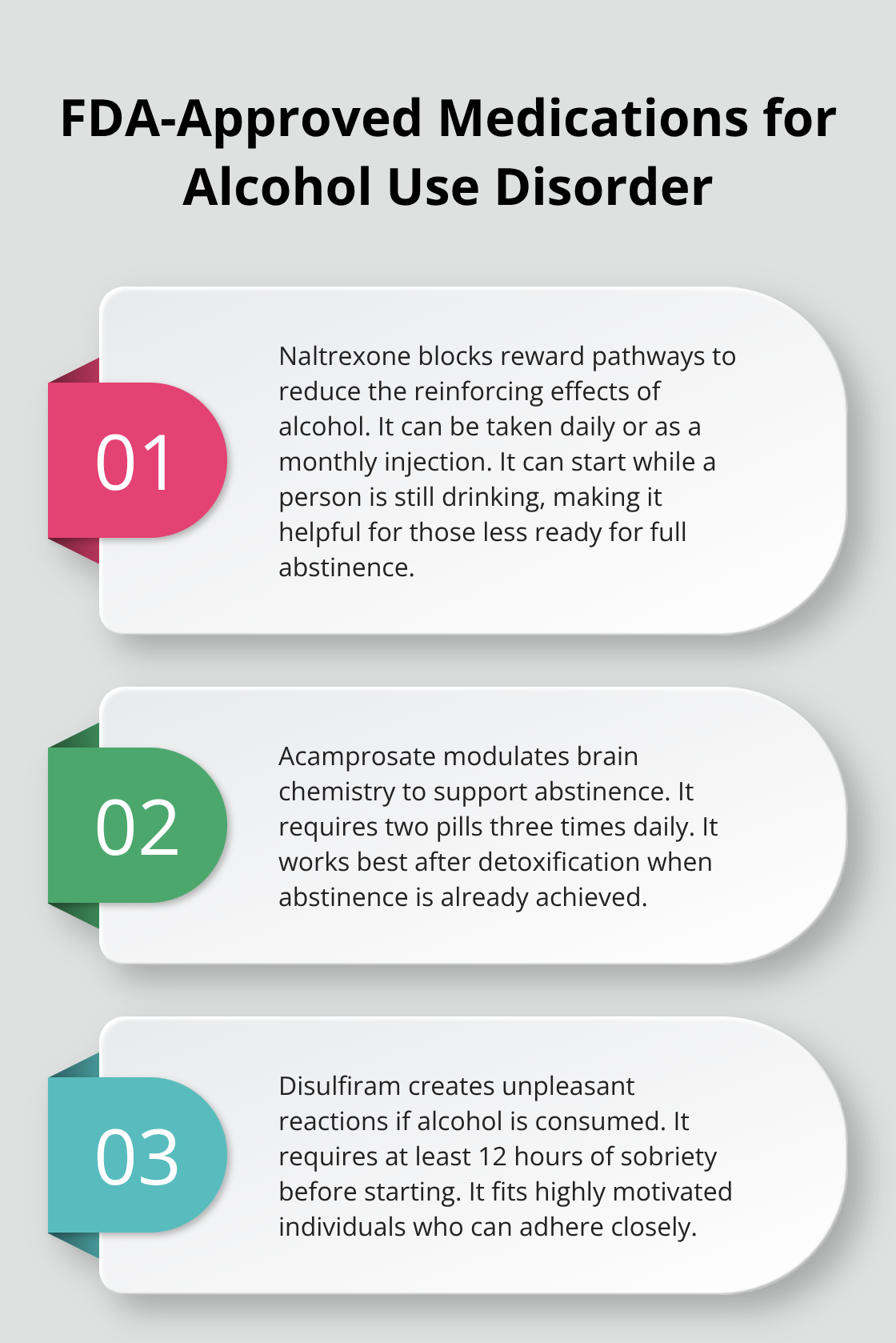
Disulfiram creates unpleasant reactions if alcohol is consumed but demands strict adherence. The right choice depends on individual circumstances and readiness. Naltrexone can start while someone is still drinking, making it useful for less committed patients. Acamprosate works best after detoxification when abstinence is achieved. Disulfiram requires at least 12 hours of sobriety before starting and suits highly motivated individuals.
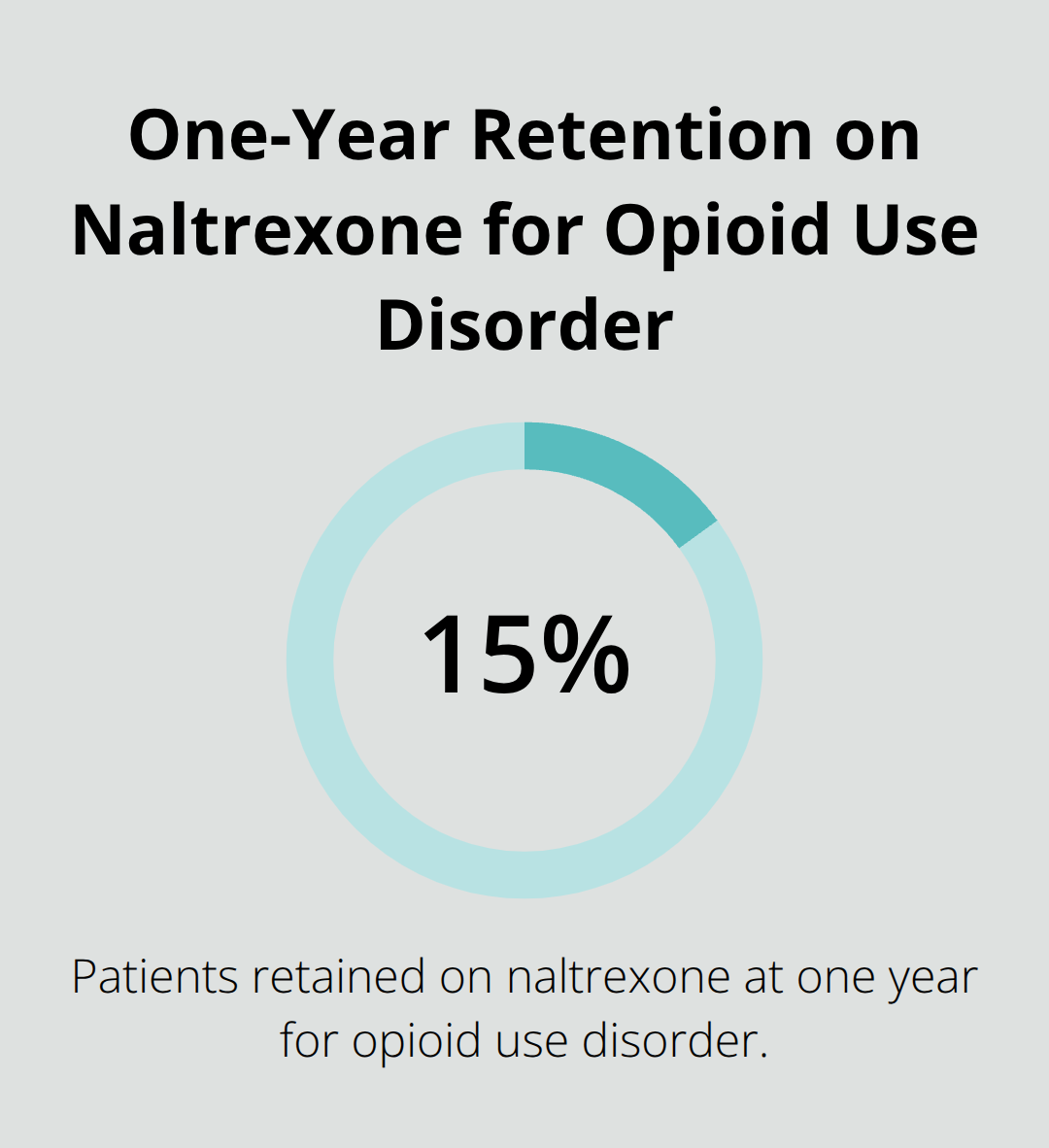
For opioid use disorder, methadone and buprenorphine reduce cravings and withdrawal, with buprenorphine carrying lower overdose risk. Naltrexone for opioids blocks receptors to prevent relapse but shows lower long-term retention rates around 15% at one year. Treatment duration matters enormously-fewer than 90 days produces limited benefit, while longer treatment spanning months or years associates with significantly better outcomes.
Behavioral Therapies That Build New Skills
Behavioral therapies stand as equally proven alternatives to medication alone. Cognitive-behavioral therapy teaches clients to identify thoughts that drive substance use and build relapse prevention skills. Contingency management provides tangible rewards for abstinence, with research showing higher-value incentives produce larger effects, particularly for people entering treatment with positive drug tests. The Community Reinforcement Approach combines therapy with vouchers and environmental restructuring to strengthen non-drug reinforcers. Motivational enhancement therapy builds internal motivation rather than imposing change.
Twelve-step facilitation connects people with peer groups like Alcoholics Anonymous or Narcotics Anonymous. Active involvement-regular attendance, having a sponsor, volunteering-predicts better outcomes. A Cochrane review found twelve-step facilitation as effective as cognitive-behavioral therapy at reducing drinking at 12 months.
Combining Approaches for Maximum Impact
Combining medication with psychotherapy produces superior results compared to either approach alone. Treatment typically requires months, not weeks, with patients moving between outpatient, intensive outpatient, residential, and inpatient levels as needed. The Addiction Severity Index standardizes assessment to match individual problems with appropriate services. Longer treatment duration and problem-service matching consistently improve outcomes across all modalities, making 90 days a practical minimum for meaningful change. Evidence-based strategies that address both the brain’s chemistry and the behaviors that sustain addiction create multiple pathways to recovery. Understanding which treatment options exist is only the first step-the next critical decision involves selecting the right setting and intensity level for your specific situation.
Where Treatment Happens
Outpatient Programs for Stable Living Situations
The setting where you receive treatment fundamentally shapes your recovery experience. Outpatient programs let you maintain work and family responsibilities while attending sessions several times weekly, making them realistic for people with jobs and stable housing. According to the Surgeon General’s report on addiction, outpatient drug-free programs were the most cost-effective. Standard outpatient visits happen once or twice weekly, while intensive outpatient programs run three to five days per week for three to four hours daily. Partial hospitalization programs operate during business hours but allow you to return home each evening.
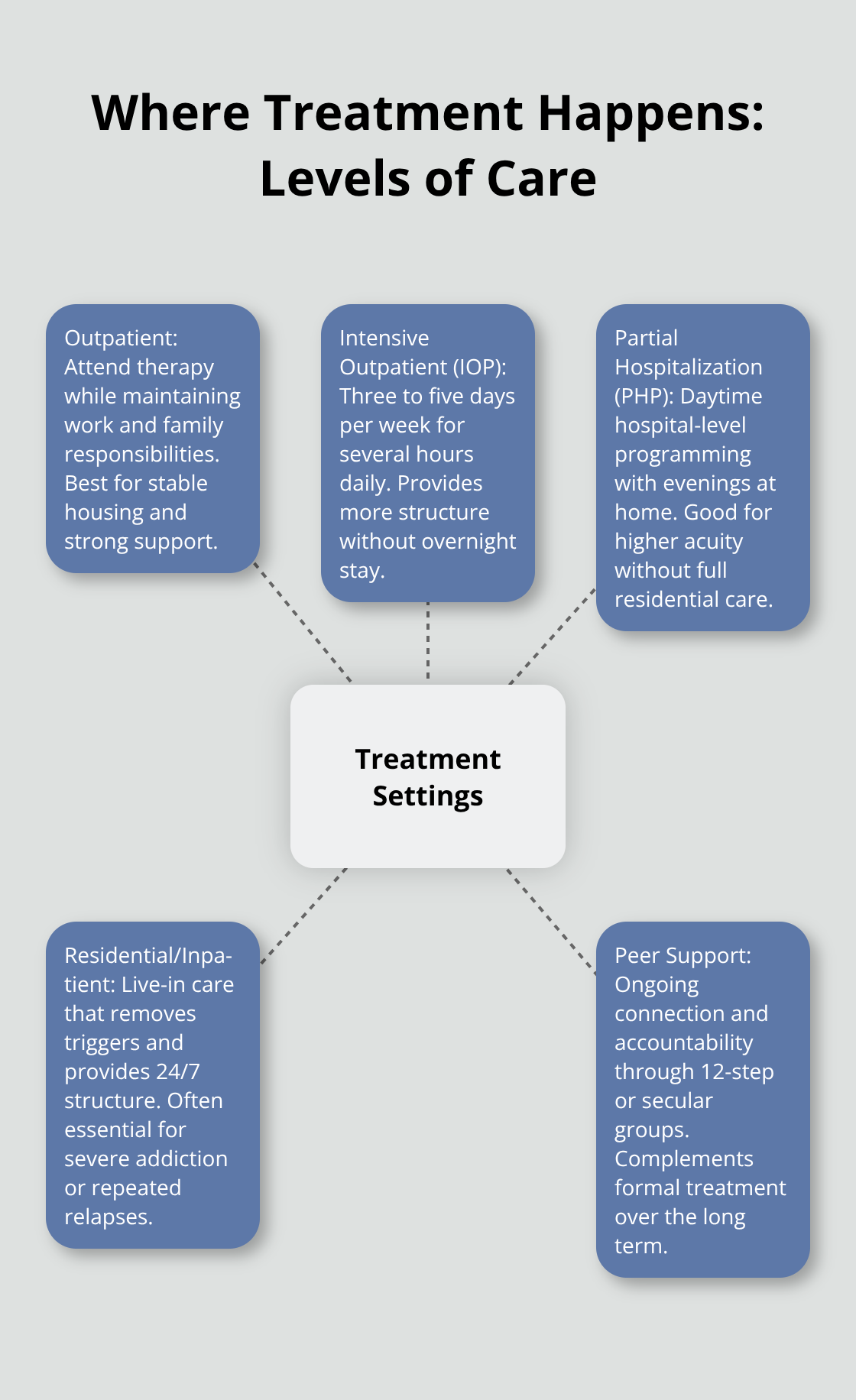
These middle-ground options work well for people who need structure without residential placement. The key advantage is flexibility-you don’t face disruption from your life, which matters for employment and family stability. However, outpatient treatment demands high self-discipline and a supportive home environment. If your household enables substance use or your living situation is chaotic, outpatient alone often fails.
Inpatient Care for Severe Addiction
Inpatient and residential programs remove you from triggering environments entirely, which proves essential for severe addictions or when multiple previous treatment attempts failed. The Surgeon General’s data shows that about half of people with alcohol use disorder experience withdrawal symptoms requiring medical monitoring, making inpatient detoxification necessary in these cases. Residential programs typically last 28 to 90 days, with ninety days treatment duration better outcomes in addiction recovery than shorter stays.
You receive medications if needed, participate in group and individual therapy, and learn coping skills in a structured setting. Treatment duration matters enormously-retention for at least 90 days associates with less inpatient mental health treatment and more mental health services, while longer treatment spanning months or years associates with significantly better outcomes.
Peer Support Groups and Ongoing Connection
Peer support groups-whether twelve-step programs like Alcoholics Anonymous and Narcotics Anonymous or secular alternatives like SMART Recovery and LifeRing-complement formal treatment by providing ongoing connection and accountability. Active involvement in these groups, including regular attendance and working with a sponsor, correlates with sustained abstinence. The NIAAA research shows that twelve-step participation produces outcomes equal to professional therapy at one year.
Matching Treatment Intensity to Your Situation
The tension is real: outpatient treatment respects your independence but requires you to resist daily temptations, while inpatient care controls your environment but temporarily disrupts your normal life. Your choice depends on addiction severity, previous treatment history, housing stability, and whether you can afford to step away from work temporarily. These decisions about where and how intensively you receive treatment directly influence which specific therapies and medications work best for your recovery, which we’ll examine in the next section.
How Do You Know Treatment Is Working
Treatment success isn’t about feeling good or reaching some mystical state of permanent abstinence. It’s measurable. The Surgeon General’s report on addiction identifies concrete outcomes that matter: reduced substance use, improved employment and family functioning, better psychiatric stability, and fewer legal problems. These aren’t theoretical goals-addiction specialists track them throughout and after treatment. Research consistently shows that treatment outcomes rival those for managing diabetes or hypertension when patients receive adequate duration and continuing care. Relapse happens, and that’s normal. About one-third of people experience a lapse during early recovery, but a single use doesn’t erase all progress. What distinguishes successful recovery is how quickly someone re-engages with treatment after a slip.
The real measure is whether you’re using less frequently, experiencing fewer consequences, and rebuilding stability in your work and relationships.
Employment and Financial Stability
Employment rates tell a powerful story. People who complete at least 90 days of treatment show significantly higher employment engagement and earnings than those who drop out early. This matters because stable employment provides structure, purpose, and income that reduce relapse risk. If you’re still unemployed six months after treatment, that’s a warning sign worth addressing through vocational counseling or job training programs that many treatment providers now integrate into their services. Financial pressure eases when you stop spending money on substances, creating tangible relief that sustains motivation for continued recovery.
Physical and Cognitive Improvements
Quality of life improvements extend beyond abstinence into concrete changes you’ll notice immediately. Sleep improves within weeks as your nervous system stabilizes without substances depressing or stimulating it. Relationships shift when you show up consistently and stop lying about your use. Cognitive function-memory, decision-making, concentration-improves noticeably within months, particularly for alcohol and opioid use. These improvements create momentum that sustains recovery far more effectively than willpower alone.
Measuring Progress With Objective Tools
Tracking progress matters more than hitting perfect abstinence milestones. Many treatment programs now use objective measures like urine drug screens paired with client self-reporting to monitor use patterns. Some programs employ contingency management, which provides tangible rewards-gift cards, cash, or privileges-for meeting abstinence goals or treatment milestones. This approach improves both treatment retention and abstinence rates. The key is establishing what success looks like for your specific situation before treatment starts, then measuring progress against those concrete targets rather than comparing yourself to others’ recovery journeys. Complementing these tools with self-care strategies and music therapy can further strengthen your recovery plan.
Final Thoughts
The evidence proves that effective addiction treatment works when it matches your specific needs and circumstances. Research spanning decades shows that medication-assisted approaches, behavioral therapies, and peer support produce measurable results comparable to managing chronic conditions like diabetes or hypertension. The most important decision isn’t choosing between medication, therapy, or support groups-it’s choosing to start treatment and committing to at least 90 days of engagement.
Your path forward depends on honest assessment of your situation and willingness to adjust your approach if relapse occurs. If you have stable housing and employment, outpatient treatment may provide the flexibility you need, while severe addiction or previous failed attempts often require residential care that removes triggering environments. Medications reduce cravings and withdrawal, therapy teaches skills to handle stress without substances, and peer groups provide accountability that sustains motivation long after formal treatment ends.
We at Addiction Resource Center understand that recovery requires personalized care addressing your unique circumstances. Our team provides outpatient addiction treatment, substance abuse counseling, and mental health support tailored to your needs, and we invite you to explore evidence-based treatment options that can help you move forward in your recovery journey.