No over-the-counter medication treats alcohol withdrawal, and the most any product can do is ease one isolated symptom such as a headache or sleeplessness. The underlying withdrawal process can still progress to seizures or delirium tremens while that single symptom feels better. That's the counterintuitive part people miss at the pharmacy shelf. Feeling a little …

No over-the-counter medication treats alcohol withdrawal, and the most any product can do is ease one isolated symptom such as a headache or sleeplessness. The underlying withdrawal process can still progress to seizures or delirium tremens while that single symptom feels better.
That's the counterintuitive part people miss at the pharmacy shelf. Feeling a little calmer, sleeping a little longer, or losing a headache can look like progress, but none of those changes means the nervous system has stabilized. The safer question isn't which pill to buy, it's whether you need assessment before symptoms build.
Table of Contents
- Why Over the Counter Medication Cannot Treat Withdrawal
- Common OTC Products People Try and What They Miss
- How Withdrawal Escalates Hour by Hour
- What Vitamins and Thiamine Can and Cannot Do
- Red Flags That Mean Stop Self-Treating Now
- Medically Supervised Detox and the Medications Clinicians Use
- Confirm Your Next Step Before You Stop Drinking
Why Over the Counter Medication Cannot Treat Withdrawal
Withdrawal happens because heavy drinking has been suppressing the nervous system for a long time. When alcohol stops, that brake comes off and the system runs hot, producing tremor, sweating, anxiety, nausea, and insomnia. An over-the-counter pill can dim one warning light, such as pain, but it doesn't cool the engine that's overheating underneath.
That distinction matters because withdrawal isn't rare or always mild. According to the National Institute on Alcohol Abuse and Alcoholism core resource on alcohol use disorder, up to 50% of people with alcohol use disorder experience withdrawal symptoms when they stop drinking, with approximately 260,000 emergency-department visits and 850 deaths each year in the United States because of alcohol withdrawal. Symptoms can escalate from tremors and vomiting to seizures or delirium tremens.
What a Pharmacy Shelf Leaves Untouched
Products such as acetaminophen, ibuprofen, sleep aids, antihistamines, and antidiarrheal medicines may address an isolated complaint for a few hours. They don't prevent seizures, delirium, or dangerous autonomic instability, and they don't stop progression to severe withdrawal. Treating nausea while heart rate, agitation, and confusion climb is a clear example of symptom relief masking a worsening condition.
The medication class with the strongest evidence for acute withdrawal is benzodiazepines, which reduce symptoms and help prevent serious complications. Those are prescription medicines, not alcohol withdrawal over the counter medication options, because dosing requires clinical assessment and monitoring. A clinician also checks your drinking history, prior withdrawal episodes, other medicines, and medical conditions before deciding what's safe.
If you're choosing products to get through withdrawal on your own, you're already past the point where a pharmacy product is an adequate plan.
You'll get more protection from an honest assessment than from a well stocked medicine cabinet. The sections below walk through common products people try, how symptoms escalate over time, which warning signs need urgent care, and what supervised treatment involves.
Common OTC Products People Try and What They Miss
People usually reach for familiar products because each one matches one uncomfortable symptom. The table below puts those choices side by side, so you can see the specific danger each product leaves untouched.
| Product (examples) | Why people take it | What it may ease | Why it fails or adds risk |
|---|---|---|---|
| Acetaminophen (Tylenol) | Headache, body aches | Pain only | Liver risk with heavy drinking; no effect on tremor, seizure or delirium |
| Ibuprofen (Advil, Motrin) | Muscle aches, headache | Pain and inflammation | Stomach bleeding risk with heavy drinking; no withdrawal protection |
| Diphenhydramine (Benadryl, ZzzQuil) | Sleeplessness, nervousness | Mild drowsiness | No seizure or delirium protection; sedation stacks with alcohol |
| Pain and sleep combinations (Tylenol PM-style) | Headache with poor sleep | Pain plus drowsiness | Combines both risks above; hidden diphenhydramine is easy to miss |
| Doxylamine (Unisom) | Insomnia | Drowsiness | Same sedation stacking; does not stabilize the nervous system |
| Loperamide (Imodium) | Diarrhea from vomiting or stress | Diarrhea | Masks symptoms; does not treat dehydration or the withdrawal process |
| Melatonin | Sleep onset | Sleep timing | Not validated for withdrawal; cannot prevent seizures |
| Antacids or famotidine (Tums, Pepcid) | Nausea, heartburn | Stomach discomfort | Can hide nausea that needs monitoring; no withdrawal effect |
The Sedation Trap With Sleep Aids
Diphenhydramine and doxylamine cause drowsiness, so they feel like they're calming withdrawal. They aren't stabilizing the overactive nervous system, and they offer no validated protection against seizures or delirium. As explained in the UK clinical guidelines for alcohol treatment pharmacological interventions, withdrawal reflects central nervous system hyperexcitability, and benzodiazepine based regimens, not OTC sedatives, are the established treatment.
Sedation also stacks. Combining an antihistamine sleep aid with residual alcohol, opioids, prescription sleep medicines, or other sedatives can increase impairment and the risk of dangerously slowed breathing. You're more likely to fall, miss worsening symptoms, or sleep through a window when you should've called for help.
Pain Relievers and Stomach Products
Acetaminophen and liver strain: Heavy drinking already stresses the liver, so repeated acetaminophen doses can add risk, especially when combination products double the amount you're taking without obvious warning. Ibuprofen and bleeding: Ibuprofen can irritate the stomach lining, and heavy alcohol use raises concern about stomach bleeding, particularly if you're vomiting or not eating. Loperamide and antacids: Slowing diarrhea or easing heartburn doesn't replace lost fluids, correct the withdrawal process, or tell you whether vomiting is becoming dangerous.
Check labels carefully before you take anything. Many nighttime, cold, and pain and sleep formulas contain hidden diphenhydramine or acetaminophen, so two products that look different can deliver the same ingredient twice. If you aren't sure what's in a product, ask a pharmacist rather than guessing.
Practical rule: If an OTC product has become the whole plan for getting through withdrawal, the situation has moved past what that product can safely handle.
Fluids, food when you can tolerate it, and rest can support comfort in mild cases a clinician has already assessed. They don't become withdrawal treatment just because symptoms feel a little less intense for an hour or two.
How Withdrawal Escalates Hour by Hour
Consider a reader who stops drinking on Monday morning and feels shaky but basically fine by Monday evening. He takes a sleep aid, sleeps poorly, and assumes the worst has passed. By Wednesday, he's confused, feverish, and seeing things that aren't there, and his family has to call for emergency help.
That pattern is why clinicians describe withdrawal as a wave that builds rather than a switch that flips. The infographic below shows how that wave rises across the first three days, even when day one looks manageable.
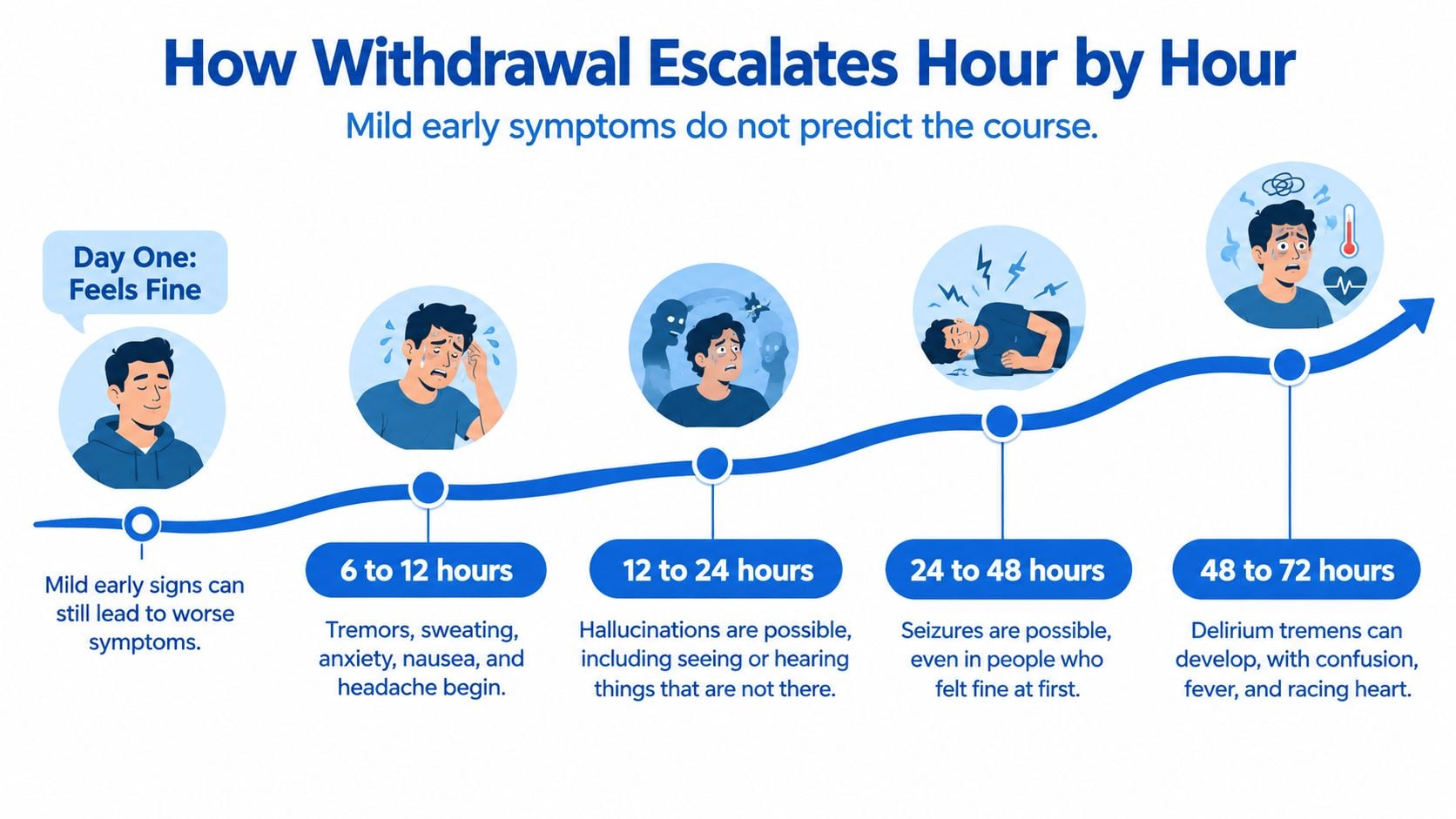
Clinical guidance notes withdrawal can begin within roughly 24 hours after the last drink, while delirium tremens commonly emerges two to three days later, as set out in the NHS inpatient protocol for management of alcohol withdrawal. Initial mild symptoms therefore don't establish that home treatment is safe. A product taken at hour six does nothing to protect you in the higher risk window on day two.
The short video below reinforces that timeline in visual form, which can help family members understand why watching closely for several days matters.
Four Windows to Watch
| Window after last drink | What typically happens | Role of OTC products |
|---|---|---|
| 6 to 24 hours | Tremor, sweating, anxiety, insomnia, nausea | Comfort only; does not change the course |
| 12 to 48 hours | Hallucinations and seizures can begin; seizure risk peaks here | None; cannot prevent seizures |
| 48 to 72 hours | Delirium tremens commonly emerges | None; emergency treatment is required |
| Beyond 72 hours | Course depends on monitoring and overall health | Supportive only if a clinician approves |
Timing varies from person to person. How much and how long you've been drinking, your age, other medical problems, and previous withdrawal episodes all shape the course. Someone who has withdrawn before may escalate faster the next time, so a prior mild experience isn't a reliable promise.
The trap is judging safety by how you feel early. A calm first evening can sit in front of a dangerous second or third day, and extra doses of pain relievers or sleep aids won't close that gap. If alcohol withdrawal over the counter medication is your only safeguard during those windows, you don't have a safeguard against the complications that matter most.
What Vitamins and Thiamine Can and Cannot Do
Vitamins are the one pharmacy purchase that can play a legitimate supporting role, and that's exactly why they cause confusion. Heavy drinking often reduces food intake, impairs intestinal absorption, and interferes with how the body uses thiamine. Supporting nutrition matters, but a supplement isn't detoxification.
Thiamine, also called vitamin B1, is the principal vitamin related intervention during withdrawal. Clinicians give it to help prevent Wernicke encephalopathy, a serious neurologic condition linked to thiamine deficiency. Folate and other nutritional support may also be recommended during withdrawal, depending on your health and diet.
When a Tablet Is Not Enough
Warning features of Wernicke encephalopathy include confusion, impaired balance or unsteady walking, abnormal eye movements, low blood pressure, low body temperature, and reduced consciousness. Those signs require urgent hospital treatment, not another day of oral supplements at home. As described in the NCBI clinical reference on alcohol withdrawal and Wernicke risk, oral thiamine can be unpredictably absorbed when Wernicke encephalopathy is suspected, so high dose intravenous or intramuscular treatment is advised in that situation.
Imagine a person who takes a store bought thiamine tablet, feels clearer the next morning, and decides she's safe. That evening she becomes confused and unsteady, and her family assumes the vitamin needs more time. The tablet didn't fail because vitamins are useless, it failed because oral absorption was unreliable and she needed evaluation and possibly injectable treatment.
You're more likely to get the nutritional part right when a clinician reviews what you're taking, checks for deficiency risks, and decides whether oral dosing is adequate. For readers sorting through supplement claims, guidance on drug detox vitamins and their limited role can help separate supportive nutrition from actual withdrawal treatment. That distinction is especially important if vomiting, poor eating, or long term heavy drinking makes absorption less predictable.
An OTC multivitamin may be reasonable when a clinician approves it, but it should never delay assessment, replace injectable thiamine when it's indicated, or make unsupervised detox seem safe.
Vitamins also don't control autonomic hyperactivity, seizures, hallucinations, or delirium. They protect nutrition while medical treatment addresses withdrawal itself. If confusion, abnormal eye movements, severe unsteadiness, or altered consciousness appear, waiting for supplements to work is the wrong move.
Red Flags That Mean Stop Self-Treating Now
You don't need to wait until every warning sign appears before you act. The American Society of Addiction Medicine recommends ambulatory patients be evaluated daily for up to 5 days after reducing or stopping alcohol, with escalation to a higher level of care if symptoms worsen, severe tremor or agitation develops, psychiatric status deteriorates, or oversedation occurs, according to the ASAM alcohol withdrawal guideline summary. That daily contact exists because withdrawal can change direction quickly.
The checklist below turns that standard into signs you and your family can recognize at home.
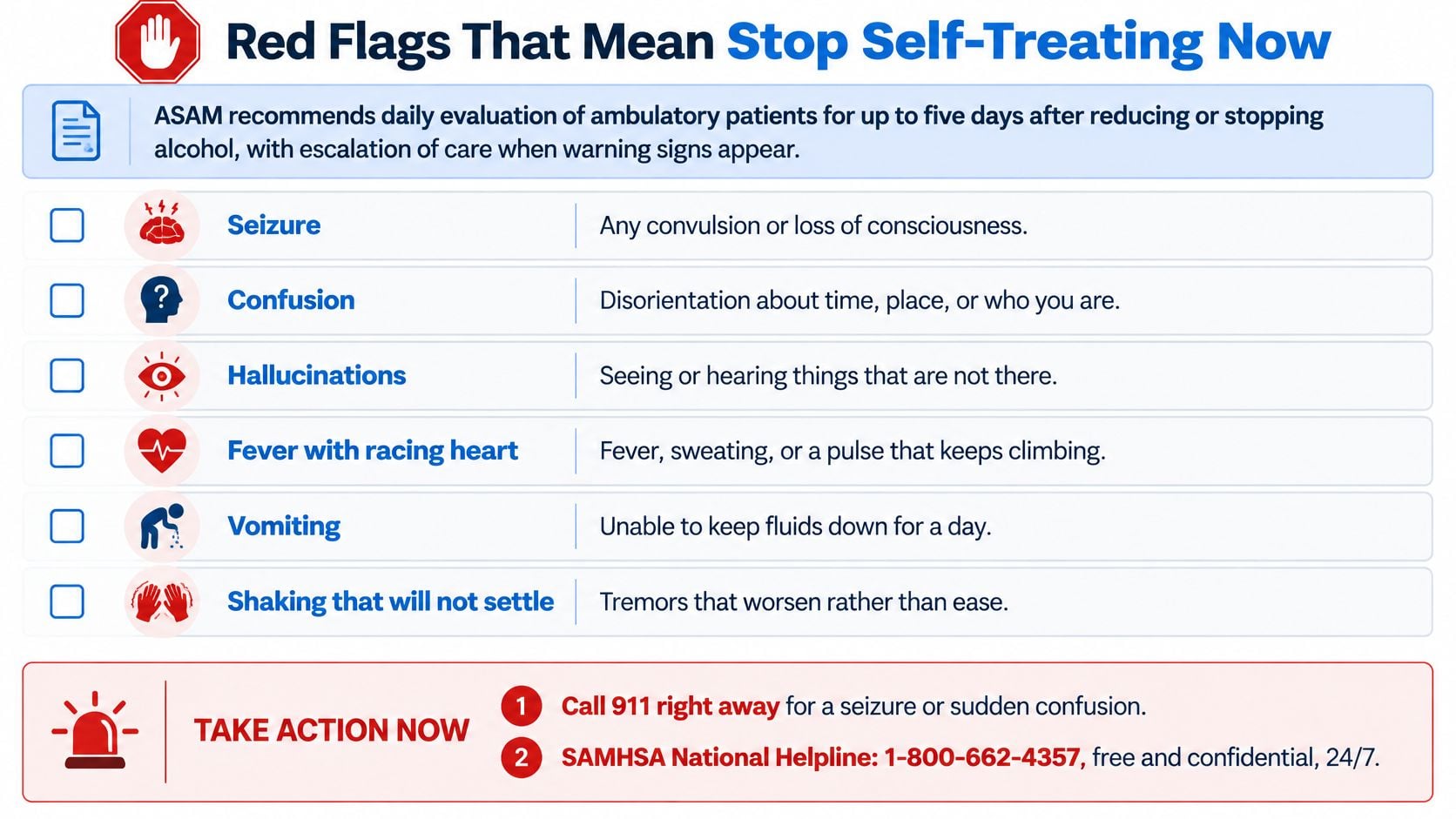
A CIWA-Ar score of 20 or higher signals severe withdrawal in clinical settings. You won't calculate that score reliably on your own, but you can watch for the visible problems that push a score upward, such as worsening tremor, agitation, disorientation, and hallucinations. Visible shaking, severe agitation, disorientation, hallucinations, or a seizure require emergency evaluation rather than additional OTC medication.
Act on the First Serious Sign
| Red flag | What it can signal | What to do now |
|---|---|---|
| Shaking that worsens or does not settle | Escalating withdrawal or severe tremor | Same-day medical evaluation |
| Any seizure | Medical emergency | Call 911 or the local emergency number |
| Confusion, disorientation or hallucinations | Possible delirium tremens | Emergency evaluation now |
| Fever with racing heart and agitation | Dangerous autonomic instability | Emergency care now |
| Extreme drowsiness or slowed breathing after sleep aids | Additive sedation | Emergency care; take no more medication |
| Cannot keep fluids down | Dehydration and worsening symptoms | Same-day care |
Some people shouldn't attempt outpatient management without specialist direction at all. That includes people with a history of withdrawal seizures or delirium tremens, inability to take oral medication, serious acute illness, or severe cognitive impairment. If any of those apply to you, get professional direction before you stop drinking abruptly.
Families often hesitate because they don't want to overreact. You're not overreacting when you respond to a seizure, sudden confusion, or a racing heart with fever, and earlier help gives clinicians more options. If you're helping a loved one decide what to do next, information on getting help for alcohol withdrawal can support that conversation without replacing emergency care.
Don't take extra OTC doses to fix a red flag symptom. More sleep aid won't treat hallucinations safely, and more pain reliever won't stabilize a racing heart. For any seizure, call 911 or your local emergency number now.
Medically Supervised Detox and the Medications Clinicians Use
Medically supervised detox pairs monitoring with medication, so treatment can change as symptoms change. Clinicians track tremor, agitation, orientation, vital signs, hydration, and sedation, then adjust doses or escalate care when needed. That responsiveness is the main advantage you can't reproduce with alcohol withdrawal over the counter medication at home.
A consultation is also where related needs get addressed together, including thiamine, fluids, nutrition, sleep, and other medical or mental health conditions. The photo below reflects that assessment step, where vital signs and health goals shape the plan.

Prescription Options by Stage of Care
| Medication (examples) | Typical use | Where it is given | Key point |
|---|---|---|---|
| Benzodiazepines (chlordiazepoxide, diazepam, lorazepam) | Moderate to severe withdrawal; seizure and delirium prevention | Medically supervised detox | First-line; dosed and tapered by clinicians |
| Gabapentin | Mild withdrawal; adjunct therapy | Prescribed, outpatient or inpatient | Non-benzodiazepine option; monitored for sedation |
| Carbamazepine | Mild withdrawal in some protocols | Prescribed, monitored | Requires blood monitoring and interaction checks |
| Naltrexone | Relapse prevention after withdrawal | Prescribed, ongoing | Does not treat withdrawal itself; requires opioid-free status |
| Acamprosate | Relapse prevention after withdrawal | Prescribed, ongoing | Does not treat withdrawal itself; kidney function must be checked |
Benzodiazepines remain first-line therapy for moderate to severe withdrawal and for prevention of seizures and delirium. Gabapentin or carbamazepine may be used for mild withdrawal in selected patients, but they're still prescription medicines with monitoring needs. Naltrexone and acamprosate serve a different purpose, they support relapse prevention after withdrawal rather than treating acute symptoms.
Readers may not realize how rarely medication treatment reaches people who could be assessed for it. In 2024, 2.4% of U.S. adults aged 18 or older with past-year alcohol use disorder, 665,000 people, received medication-assisted treatment, according to NIAAA alcohol treatment statistics for the United States. A similar access gap appears in Pew Charitable Trusts analysis of medication treatment for alcohol use disorder, which reported approximately 634,000 of an estimated 30 million people received medication treatment in 2022, or about 2%.
Medication-assisted treatment, or MAT, combines medication with counseling and ongoing support after the acute phase. Withdrawal management should therefore be treated as the opening phase of alcohol use disorder care, not a standalone hurdle to endure and forget. If you're comparing levels of care, an explanation of what medically supervised detox involves outlines how assessment, monitoring, and medication fit together.
The step many people skip is the conversation itself. You don't have to decide alone whether your withdrawal risk is mild, moderate, or severe, and you shouldn't have to guess which prescription option fits your history.
Confirm Your Next Step Before You Stop Drinking
Before your last drink becomes a test you have to pass alone, put a safer sequence in writing. The notebook image below captures the simple habit that helps, a short list prepared before symptoms make decisions harder.
- Write down your pattern: Note how much you drink each day and the time of your last drink.
- Call before you stop: Contact a clinician or a 24/7 line first if you drink heavily every day or you've had withdrawal before.
- Ask about level of care: Discuss whether medically supervised detox, residential treatment, or an Intensive Outpatient Program fits, in person or by telehealth.
- Check coverage: Confirm benefits with your insurer or, for veterans and military families, TRICARE.
- Arrange a watcher: Ask a sober family member or friend to watch for red flags during the first days.
Addiction Resource Center LLC in Yuba City, CA is one option among several, offering medically supervised detox with MAT, residential care through partner Ona Treatment Center in Browns Valley, and IOP in person or by telehealth, reachable 24/7 at 530-625-7910. Readers outside the area can call the SAMHSA National Helpline at 1-800-662-4357 for free, confidential guidance. If you have any red flag, call 911 or the local emergency number now.
If you're weighing pharmacy products against the risks of seizures, delirium, and unstable vital signs, you deserve a clinical assessment before you stop drinking, not after symptoms escalate. Addiction Resource Center LLC offers medically supervised detox with MAT, residential care through its partner facility, and IOP in person or by telehealth for adults in Yuba City and Northern California. Visit Addiction Resource Center LLC to discuss your drinking pattern, withdrawal history, and coverage, and to confirm the safest next step today.