Up to 80% of binge or chronic heavy drinkers experience thiamine deficiency, but vitamins don't remove drugs from the body faster. Their useful role in detox is correcting deficiencies and preventing complications, while marketed vitamin regimens cannot replace medically supervised withdrawal care. The popular advice is simple: take high-dose vitamin C, drink a cleanse, and …

Up to 80% of binge or chronic heavy drinkers experience thiamine deficiency, but vitamins don't remove drugs from the body faster. Their useful role in detox is correcting deficiencies and preventing complications, while marketed vitamin regimens cannot replace medically supervised withdrawal care.
The popular advice is simple: take high-dose vitamin C, drink a cleanse, and “flush” substances from your system. The clinical reality is more careful. Your liver, kidneys, lungs, and digestive system handle drug metabolism and elimination through ordinary physiology. Vitamins can provide raw materials when substance use has left someone malnourished, but they don't act like a pipe cleaner for the bloodstream.
That distinction matters most during alcohol, benzodiazepine, opioid, or stimulant withdrawal. A supplement kit can't monitor seizures, delirium, dehydration, breathing problems, dangerous blood-pressure changes, or severe electrolyte disturbances. It can also create false reassurance at the moment a person needs medical assessment.
Table of Contents
- Why Vitamins Come Up in Drug Detox at All
- How Substance Use Wrecks Nutrient Status
- The Vitamins and Minerals That Matter Most
- What Targeted Vitamin Therapy Actually Looks Like
- Detox Vitamin Claims Worth Questioning
- Using Nutrition Safely During Withdrawal and Recovery
- Putting It All Together for Lasting Recovery
Why Vitamins Come Up in Drug Detox at All
Clinical detox didn't adopt thiamine because it “scrubs” alcohol from the body. It adopted thiamine because chronic alcohol use can impair intake, absorption, storage, and use of this vitamin, creating a serious risk to the nervous system. Alcohol-use treatment guidance has long treated thiamine as a preventive intervention for complications such as Wernicke's encephalopathy and Korsakoff's syndrome, not as a faster route to sobriety. A clinical review of nutrition in addiction recovery reports that up to 80% of binge or chronic heavy drinkers experience thiamine deficiency, more than half experience vitamin B6 deficiency, and two-thirds have folate deficiency.
The wider nutritional picture is also concerning. The same review reports that more than 74% of people entering treatment for drug addiction showed clinical signs of nutrient deficiency, while more than 60% had multiple nutrient deficiencies on testing and symptom review. Those findings explain why medical teams may use vitamins during withdrawal. They don't prove that vitamins remove drugs or metabolites.
Deficiency prevention is different from detoxification
Think of thiamine as a component needed to keep the brain's energy machinery running. If the body lacks it, the brain can struggle during a period already marked by physiological stress. Replacing it helps reduce the risk created by deficiency. It doesn't change the pharmacology of alcohol, opioids, benzodiazepines, or stimulants.
A person researching how to test for vitamin deficiency may find useful background on assessment, but testing and treatment decisions still belong with a qualified clinician. Symptoms such as confusion, weakness, vomiting, tremor, or poor coordination can reflect withdrawal, deficiency, dehydration, infection, or another urgent condition.
Clinical rule: A vitamin can be medically important without being a detoxifying agent.
Why a kit can't manage withdrawal
Withdrawal care involves more than replacing nutrients. Alcohol and benzodiazepine withdrawal can become life-threatening, and opioid withdrawal may involve severe vomiting, diarrhea, dehydration, and relapse-related overdose risk. Stimulant withdrawal can bring profound fatigue, mood symptoms, and impaired judgment.
A branded bottle can't perform neurological checks, administer appropriate medication, or respond when symptoms escalate. Medical supervision also lets clinicians choose the route and dose of replacement when someone is vomiting, malnourished, or unable to absorb oral supplements.
How Substance Use Wrecks Nutrient Status
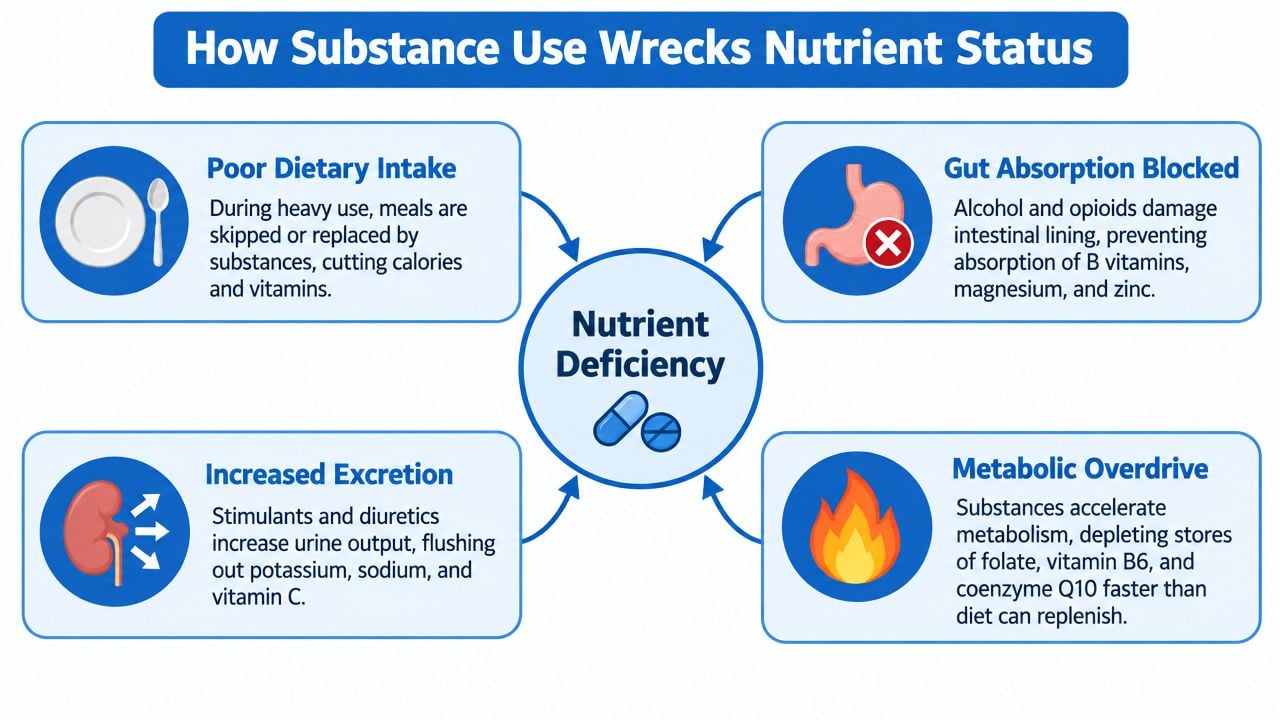
Nutrient depletion usually has several causes operating at once. Substance use can reduce food intake, interfere with absorption, damage storage and processing systems, and increase losses during sweating, vomiting, diarrhea, or urination. The body's nutritional “battery” gets drained while the charger works poorly.
Four routes to deficiency
Poor dietary intake often comes first. Someone spending money, time, and attention on substances may skip meals or rely on foods that provide calories without enough protein, vitamins, or minerals. Stimulants may suppress appetite, while opioids can disrupt ordinary eating and digestion. Alcohol can provide energy without supplying the balanced nutrition needed for repair.
Gut absorption problems add another barrier. Irritation, altered motility, vomiting, and chronic digestive disruption can prevent nutrients from moving effectively from food into the bloodstream. The result is similar to having a full charger plugged into a damaged outlet. Food may be present, but the body doesn't receive everything it contains.
Storage and processing can suffer, especially when alcohol-related illness affects the liver. The liver helps store and process nutrients, so impaired function can complicate replacement. This is one reason a plan based on symptoms alone can miss important medical context. Readers exploring liver recovery after quitting should treat nutrition as one part of broader medical follow-up, not as a substitute for evaluating liver disease.
Increased losses and demand become more obvious during withdrawal. Sweating, diarrhea, vomiting, poor intake, and disrupted sleep can quickly worsen hydration and mineral balance. A stimulant user, an alcohol-dependent patient, and a person withdrawing from opioids may all be depleted, but the pattern and urgency won't necessarily match.
Why blanket advice fails
Smoking, sleep loss, unstable housing, limited food access, and co-occurring eating disorders can compound the problem. A person may need food support, lab testing, medication, and treatment for gastrointestinal or liver conditions, not a larger supplement stack.
A vitamin and mineral deficiency testing guide can help readers understand what clinicians may assess, but no online checklist can determine whether a symptom is caused by deficiency or withdrawal. Targeted replacement beats generic megadosing because it matches treatment to the person's actual risks, absorption, kidney and liver function, medications, and clinical presentation.
The Vitamins and Minerals That Matter Most
No single “detox vitamin” covers every nutritional problem. Different nutrients support different systems, and the safest plan starts with food, medical history, symptoms, and appropriate testing.
| Nutrient | Clinical Role | Top Food Sources | Common Gap in Substance Use |
|---|---|---|---|
| Thiamine, B1 | Supports carbohydrate metabolism and nervous-system function | Pork, legumes, whole grains, fortified cereals | Particularly important in chronic alcohol use, where deficiency can become neurologically dangerous |
| Other B vitamins | Help with energy metabolism, blood-cell production, and nerve function | Eggs, fish, poultry, legumes, leafy greens, fortified grains | Poor intake and alcohol-related malabsorption can affect B6, folate, and other B vitamins |
| Vitamin C | Supports connective tissue, immune function, and antioxidant defenses | Citrus, berries, peppers, broccoli, tomatoes | Limited diets and prolonged poor intake can reduce dietary supply |
| Vitamin D | Contributes to bone, muscle, immune, and mood-related functions | Fortified dairy or alternatives, eggs, fatty fish | Low intake and limited outdoor activity may contribute to deficiency |
| Magnesium | Supports muscles, nerves, sleep, and many enzyme reactions | Nuts, seeds, beans, whole grains, leafy greens | Poor food intake, gastrointestinal losses, and alcohol-related depletion can widen the gap |
| Folate | Supports DNA synthesis and red blood cell production | Leafy greens, beans, lentils, avocado, fortified grains | Alcohol use and inadequate meals can reduce intake and status |
| Potassium and sodium | Help regulate fluid balance, nerves, muscles, and cardiac activity | Produce and other foods, with sodium guided by clinical needs | Vomiting, diarrhea, sweating, dehydration, and poor intake can disturb levels |
The special case of thiamine
Thiamine deserves priority in alcohol withdrawal because the consequences of severe deficiency can involve the brain. It's not a general wellness booster in this context. Clinicians use it because the risk profile justifies prompt prevention, particularly when nutrition is poor or absorption is unreliable.
Other B vitamins support related systems, but more isn't automatically better. Vitamin C is commonly promoted for detox, yet its role is nutritional support rather than accelerated drug clearance. Vitamin D often requires blood testing because symptoms alone don't establish deficiency.
Minerals require more caution
Magnesium, potassium, and sodium aren't interchangeable “electrolytes.” Too little can be dangerous, but unsupervised replacement can also be harmful, particularly with kidney disease, heart disease, dehydration, or interacting medicines. Iron deserves similar caution because unnecessary supplementation can cause harm when deficiency hasn't been established.
Food remains the foundation whenever someone can eat and absorb normally. Supplements become more useful when intake is inadequate, deficiency is documented or strongly suspected by a clinician, or withdrawal makes ordinary meals impossible.
What Targeted Vitamin Therapy Actually Looks Like
Thiamine in alcohol withdrawal provides the clearest example of evidence-based nutrient treatment. Clinical guidance recommends routine thiamine because chronic alcohol use can compromise nutrition and increase the risk of Wernicke's encephalopathy and Korsakoff's syndrome. In hospital protocols, thiamine may be given intravenously or intramuscularly at 100 mg daily for 3 to 5 days, while some reviews describe 250 mg parenterally daily for 3 to 5 days. Suspected Wernicke's encephalopathy may require 500 mg daily for 3 to 5 days by a parenteral route. These dosing details come from alcohol-withdrawal treatment guidance on thiamine, and they're not instructions for self-treatment.
Route matters. Someone who is vomiting, severely malnourished, or experiencing significant withdrawal may not absorb an oral tablet reliably. Clinicians may continue supplementation for 7 to 14 days or longer when alcohol-related malnutrition persists, again based on the person's condition and local protocol.
A clinical moment
A patient arrives for inpatient alcohol detox after eating very little and reporting vomiting. The team doesn't hand over a wellness drink and wait for it to work. They assess withdrawal severity, hydration, neurological signs, medications, and medical history. They may provide parenteral thiamine, manage withdrawal with appropriate medication, correct fluids or electrolytes when indicated, and introduce oral food as tolerated.
That sequence shows the difference between risk-based care and a product bundle. The vitamin is one tool inside a monitored plan. It doesn't manage agitation, seizures, hallucinations, blood pressure, or relapse risk.
| Element | Medical Protocol | Generic Supplement Stack |
|---|---|---|
| Reason for use | Corrects or prevents clinically important deficiency | Promises broad “cleansing” or energy benefits |
| Dose | Selected for withdrawal risk, symptoms, route, and medical history | Set by a product label or marketing formula |
| Route | Oral, intramuscular, or intravenous when clinically indicated | Usually oral, regardless of vomiting or malabsorption |
| Monitoring | Includes neurological, hydration, medication, and withdrawal assessment | Often relies on self-observation |
| Scope | Works alongside supervised withdrawal treatment | Doesn't treat seizures, delirium, overdose, or severe withdrawal |
Detox Vitamin Claims Worth Questioning
Marketing often borrows medical language without accepting medical responsibility. A product may mention antioxidants, neurotransmitters, or liver support while leaving the impression that it can speed drug elimination. The central pharmacology problem remains: adding vitamins doesn't make the body process a substance on demand.
Claim one is that megadose vitamin C flushes opioids
Small historical observations have generated interest in vitamin C for withdrawal symptoms. A review cited in a peer-reviewed article reported that 57% of patients in a vitamin C and E group had significant reductions in withdrawal symptoms, compared with 7% in a control group. The same article describes an observation at the Haight-Ashbury Free Clinic in which 1 to 3 grams of buffered vitamin C daily were used with 60 people withdrawing from stimulants and opiates; one-third reported at least 70% reduction in acute symptoms, and half reported at least 60% relief. These findings are limited, historical, and symptom-focused. They don't demonstrate faster removal of drugs.
The relevant review also states that independent medical sources have found no convincing evidence that vitamins or detox supplements remove toxins or drug metabolites faster than normal physiology, and no proven or approved vitamin treatment exists for opioid withdrawal. The peer-reviewed review discussing vitamin C and withdrawal supports a cautious interpretation, not a promise to flush opioids.
Juice cleanses and branded kits
Juice-only plans can make nausea, blood-sugar swings, weakness, and inadequate protein harder to manage. Herbal mixtures may interact with medicines or create liver risks, while high-dose products can cause gastrointestinal symptoms or other complications. The practical review of detox drinks and kits finds little to no clinical evidence that commercial products accelerate drug elimination.
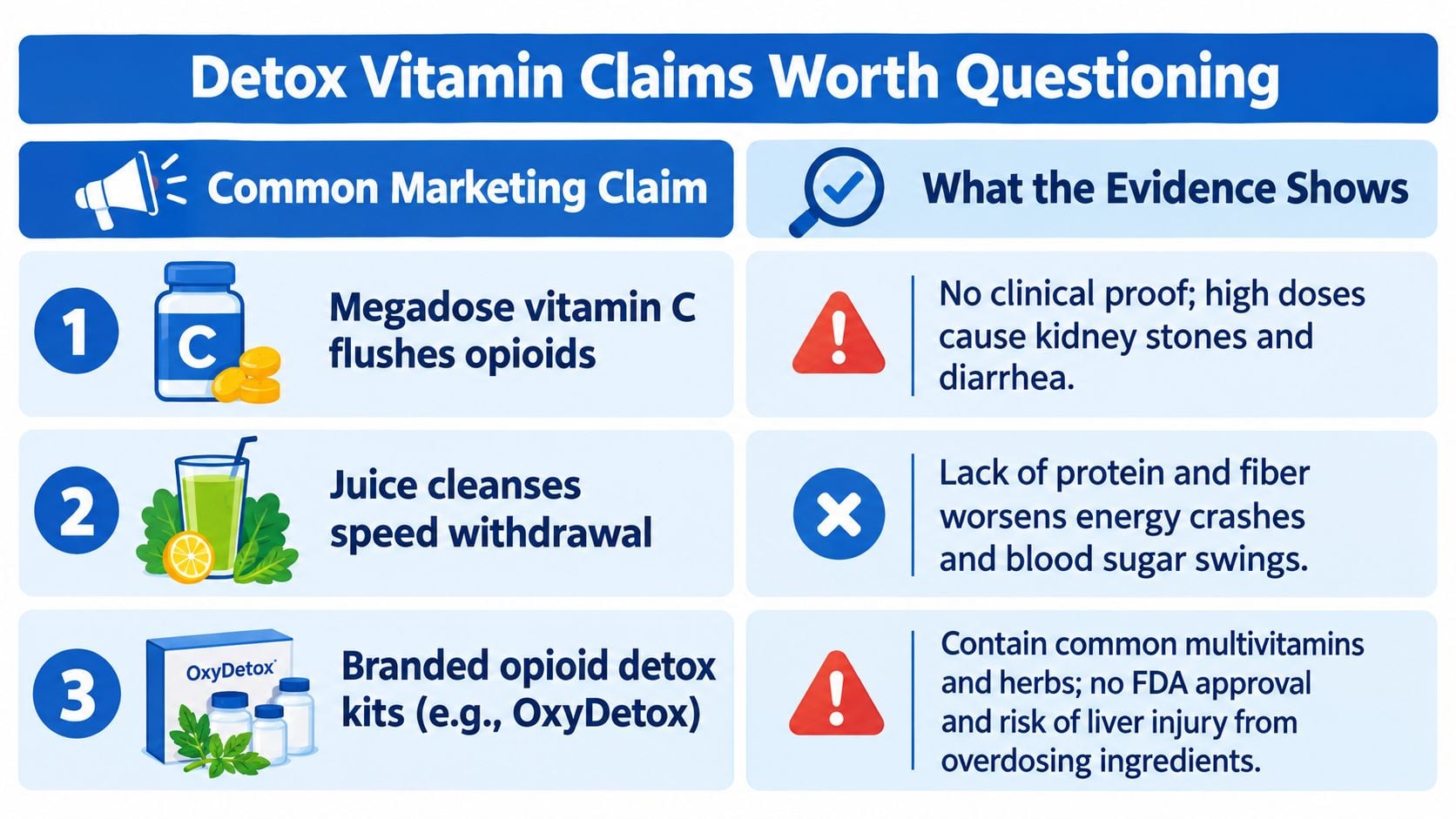
A product label also doesn't tell you whether an ingredient is appropriate with liver disease, kidney disease, pregnancy, prescribed medication, or an eating disorder. Learn to spot supplement red flags, including exaggerated promises, hidden blends, and claims that sound like guaranteed medical outcomes.
No oral vitamin regimen replaces supervised withdrawal management for alcohol, benzodiazepines, or opioids. If someone has confusion, hallucinations, seizures, severe vomiting, chest pain, trouble breathing, fainting, or thoughts of self-harm, a supplement purchase is not the next step. Urgent medical care is.
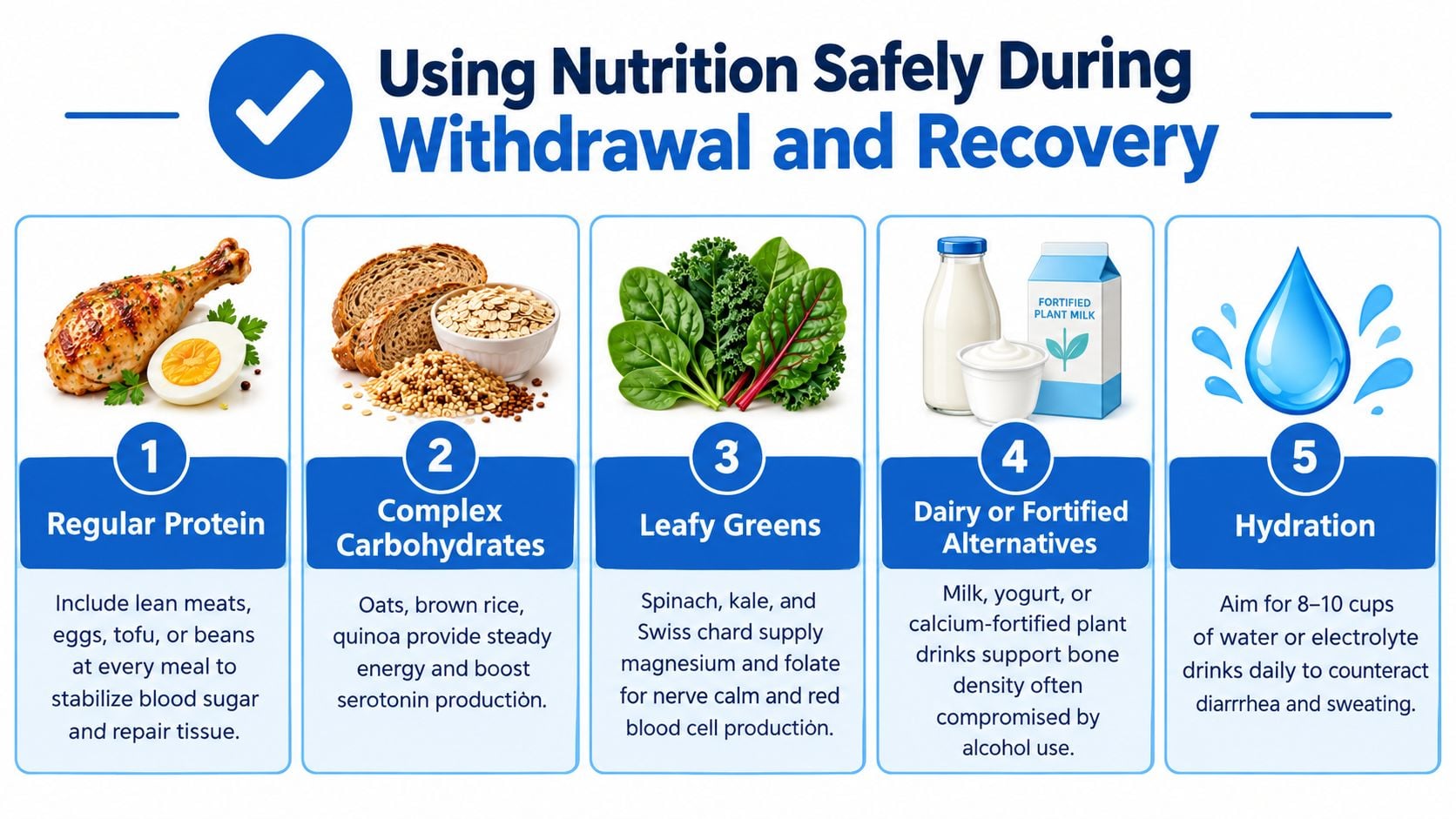
Using Nutrition Safely During Withdrawal and Recovery
Nutrition works best as a stabilizing routine, not a dramatic cleanse. Start with meals that are realistic during nausea or fatigue, then expand variety as appetite and digestion improve.
Build a tolerable food pattern
Regular protein from eggs, poultry, fish, tofu, beans, yogurt, or other tolerated foods supports tissue repair and steadier meals. A person who can't manage a full plate may begin with soup containing beans, yogurt with oats, or a small egg sandwich.
Complex carbohydrates such as oats, brown rice, potatoes, whole-grain bread, and quinoa provide usable energy. Withdrawal can already feel like a crash, so restricting food sharply may intensify weakness and irritability.
Leafy greens and colorful produce contribute folate, vitamin C, magnesium, and fiber. Cooked vegetables may be easier to tolerate than raw salads during early withdrawal.
Dairy or fortified alternatives can provide protein and nutrients when tolerated. Hydration should follow clinical advice, especially when vomiting, diarrhea, heart disease, kidney disease, or electrolyte abnormalities are present.
A guide to probiotic supplements in addiction recovery may help explain gut-focused products, but probiotics don't replace fluids, calories, withdrawal medication, or treatment for an underlying gastrointestinal problem.
When clinicians should guide replacement
Ask for medical assessment rather than self-prescribing when there's severe alcohol use, persistent vomiting or diarrhea, documented malabsorption, pregnancy, an eating disorder, chronic opioid or stimulant use, liver disease, kidney disease, or a complex medication list. A clinician may consider thiamine, folate, B12, vitamin D, magnesium, iron, and electrolyte testing based on history and symptoms.
Medication-assisted treatment belongs in this plan. Buprenorphine and methadone can reduce opioid withdrawal and cravings, while naltrexone, acamprosate, and other treatment approaches may be appropriate in selected alcohol-use situations. Stabilizing withdrawal can make it easier to eat, sleep, attend appointments, and absorb nutrients, but medication selection must be individualized.
Safety boundary: Don't use a supplement to “push through” symptoms that could represent dangerous withdrawal.
Putting It All Together for Lasting Recovery
Vitamins can repair a nutritional gap. They can't repair every consequence of substance use, and they don't treat addiction by themselves. Lasting recovery combines medically supervised withdrawal when needed, medication-assisted treatment where appropriate, behavioral support, improved sleep, safer routines, and gradual restoration of food variety.
A practical decision frame looks like this:
- Identify the substance and pattern of use. Alcohol, benzodiazepines, opioids, and stimulants create different withdrawal risks.
- Ask whether screening is appropriate. A clinician may consider thiamine, folate, B12, vitamin D, magnesium, electrolytes, or other tests based on the history.
- Avoid megadosing before assessment. Lab results, kidney and liver function, pregnancy status, and medication interactions can change what is safe.
- Use whole foods as the base. Add supplements for a documented or clinically suspected need, not because a label promises a flush.
- Treat nutrition as one part of care. Counseling, relapse-prevention planning, peer support, and appropriate medication address problems vitamins cannot.
A patient may enter treatment unable to tolerate breakfast, sleeping in short bursts, and relying on a branded detox drink for control. With supervised withdrawal care, appropriate nutrient replacement, regular meals, and counseling, the focus gradually shifts from surviving the next symptom to rebuilding a dependable day. Nutritional recovery is measured in months, not days, and consistency matters more than intensity.
The whole-person approach described in holistic addiction treatment options is useful when it keeps nutrition in its proper place. Food and supplements can support recovery, but medical oversight and sustained behavioral care carry the larger responsibility.
Addiction Resource Center LLC offers medically supervised detox with medication-assisted treatment, residential rehabilitation through its partner facility, and intensive outpatient care in person or by telehealth for adults and families in Northern California. If you need help separating safe nutrient support from risky detox marketing, visit Addiction Resource Center LLC to request guidance, schedule a tour, or start a confidential conversation.