No universal timeline predicts a negative urine drug test; learn what affects results, how to disclose medications, and what to do about unexpected findings.

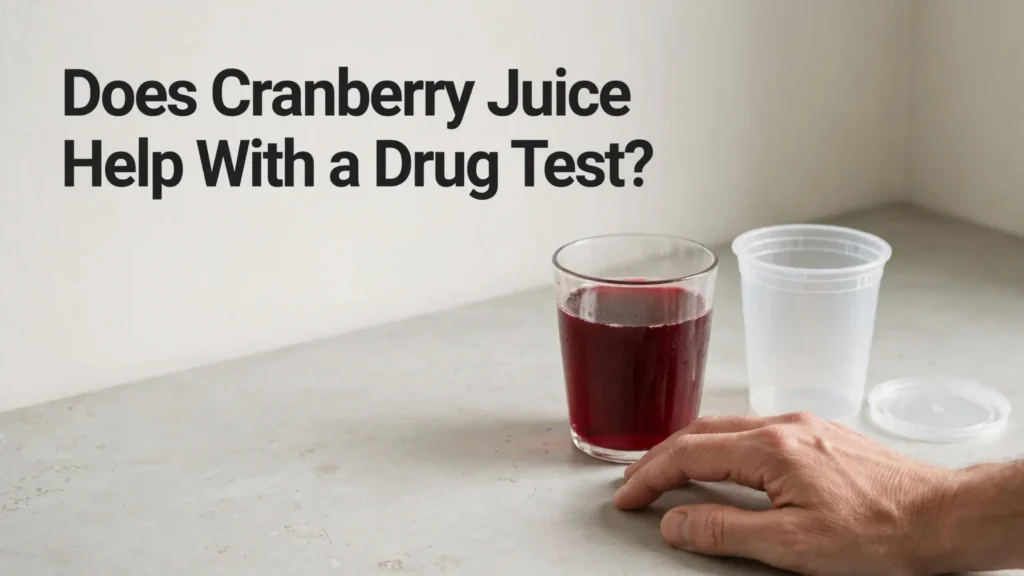
People facing an upcoming screen often look for a guaranteed timeline, but no universal schedule can predict whether a urine test will be negative. Detection windows vary by substance, biological factors, and the specific thresholds set by the testing organization. If the underlying concern involves ongoing substance use, Addiction Resource Center LLC in Yuba City provides a clinical route into treatment rather than a method for altering a test outcome. Understanding how these screens work, how to handle prescription disclosures, and what an unexpected finding means will help you approach the process with accurate expectations.
A Negative Result Has No Universal Timeline
A negative result means either no tested drugs were found or the amount was too small to count as positive, and drug tests can find signs of drugs taken hours to several days or more before a test, depending on the drug, how much you used, how long you used it, and how your body reacts to it.
Water-soluble substances clear the body differently than fat-soluble ones. Some drugs leave the system in a matter of days, while others bind to fat cells and release slowly over time. Some fat-soluble drugs can accumulate in the body with chronic use, extending the detection window beyond that after a single use. A drug’s half-life is the time it takes for its concentration in the body to fall by half. As the body processes the remaining amount, the concentration generally declines over time. This mathematical curve only represents an average. Kidney function and age can influence how quickly your body processes and excretes these compounds, while hydration can affect urine concentration. Some medical conditions can also affect metabolism or excretion, which may keep a drug in your system longer than a textbook estimate.
Because these variables affect metabolism differently for everyone, online calculators and standard tables offer rough estimates. Two people using the same amount of a substance on the same day may test differently a week later. Relying on a generic timetable to predict an individual result often leads to misplaced confidence, as you cannot force the body to metabolize substances faster than its natural capacity allows.
What a Urine Drug Screen Checks
A drug screen differs from a routine urinalysis ordered by a doctor to check for kidney function or infection. The specific substances included and the procedures followed depend entirely on the test and its purpose, allowing employers, sports organizations, and medical providers to order panels customized to their specific requirements.
Many standard screens look for five common categories of drugs: amphetamines, cocaine, marijuana, opiates, and phencyclidine (PCP). Expanded panels add categories like benzodiazepines, barbiturates, methadone, or synthetic opioids. Laboratories often test for metabolites rather than the original drug itself. When the liver processes a chemical, it breaks the substance down into secondary compounds that frequently remain in the urine much longer than the parent drug. For example, screens do not only look for cocaine; they test for benzoylecgonine, its primary metabolite. The organization requesting the test decides which panel to run and which metabolites to flag.
They also determine the cutoff levels, which are the specific concentrations of a substance measured in nanograms per milliliter. A concentration below the cutoff registers as a negative result, even if trace amounts exist in the sample. The defined panels and stringent specimen-validity testing described in federal workplace guidelines measure temperature, pH, creatinine levels, and specific gravity to ensure the sample is unadulterated human urine. Private employers, clinical providers, and local agencies do not automatically adopt these federal standards. Their policies might include different substances, use alternate cutoff levels, or follow a separate chain of custody. When asked to provide a sample, you have the right to ask the requesting organization what the panel includes, why the test is necessary, and how the results will be handled.
What to Do Before a Test
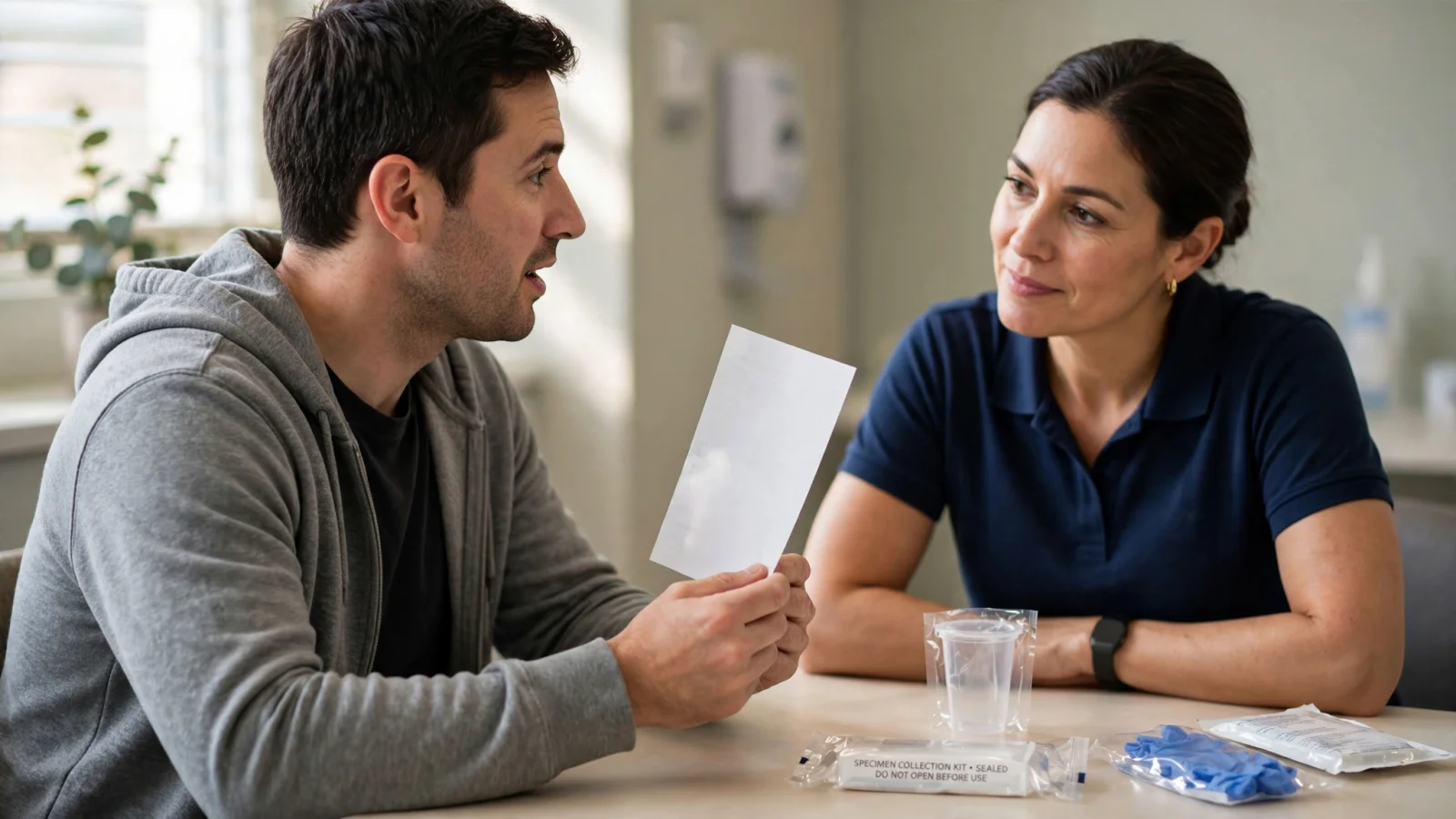
Preparing for a drug screen involves clear communication rather than attempting to manipulate the sample or invent explanations. Because testing facilities understand environmental exposures, the cutoff levels set by certified laboratories account for passive inhalation or minor accidental ingestion. Claiming second-hand exposure rarely explains a sample that registers above the official cutoff threshold. Follow the instructions provided by the testing professional carefully, bringing proper identification, emptying your pockets if requested, and washing your hands before entering the collection area.
Disclosing your current medications is a central part of this process. Follow the testing program’s instructions for disclosing any prescription drugs, over-the-counter medicines, and dietary supplements you take, since some can affect screening results. In workplace programs, that disclosure may be handled by a Medical Review Officer rather than collection staff. Keep a current medication list available in case a reviewer asks about an unexpected result.
Do not stop taking a prescribed medication solely to change a test result. Abruptly discontinuing prescriptions for psychiatric conditions, pain management, or blood pressure can cause severe medical complications. If you have concerns about how a prescription might affect your screening, discuss the issue with your prescribing physician and the testing professional ahead of time.
Avoid products marketed as guaranteed ways to clear your system. Federal workplace programs and certified laboratories use specimen-validity procedures specifically designed to detect tampering. Drinking massive amounts of water before a test lowers the concentration of natural waste products like creatinine. Laboratories may report these samples as dilute, which can lead to a retest under the organization’s procedures. Adding chemicals to the cup can alter the sample’s pH and may signal adulteration. Honest communication and adherence to the stated testing procedures provide a far more reliable path than relying on unverified evasion methods.

What an Unexpected Result May Mean
A positive finding on a preliminary screen does not serve as the final word, because many testing programs use a two-step process to evaluate samples. The initial test often relies on immunoassay technology, which uses antibodies to detect the presence of drugs or their metabolites. These initial tests process quickly and cost less, making them ideal for high-volume screening.
Because immunoassay tests react to the general shape of molecules, they can produce false positives. Over-the-counter decongestants, certain antidepressants, and dietary supplements sometimes trigger a reaction meant for an illicit substance. These initial false positives occur frequently enough that a more accurate confirmatory test usually follows, depending on the organization’s policies.
Depending on the testing program, the laboratory may send a sample that flags as non-negative on the initial screen for confirmatory testing, such as gas chromatography/mass spectrometry (GC/MS). This advanced testing method breaks the sample down at the molecular level, identifying the exact chemical structure of the substance. GC/MS testing can help distinguish a target drug from substances that cross-react on an immunoassay.
If an unexpected result occurs, ask the testing organization whether confirmation testing or a medical review is available. In many workplace testing programs, a Medical Review Officer (MRO) evaluates confirmed positive results. The MRO acts as an independent physician who contacts you to discuss the finding. If you provide a valid prescription that explains the laboratory result, the MRO may report the result as negative under the program’s rules. If the MRO cannot verify a legitimate medical explanation, the result may be reported as a confirmed positive to the requesting employer or agency under the program’s rules.
A single test outcome provides only a snapshot of that specific sample. Federal guidance indicates that a negative workplace test does not establish that someone has never used drugs, and similarly, a laboratory-confirmed positive does not automatically establish misuse or addiction. The result must be interpreted within its specific testing and clinical context.

If Substance Use Is Behind the Worry
Anxiety about a drug screen often stems from a genuine struggle with substance dependence. When this worry interferes with employment, health, or family life, an assessment can help clarify what support fits your situation. Addiction Resource Center LLC directly provides adult intensive outpatient care in Yuba City, offering a structured path to recovery without requiring a full residential stay.
The center delivers individualized planning, in person and by telehealth, allowing clients to maintain daily responsibilities while receiving care. Telehealth sessions utilize secure video platforms, giving clients in remote parts of Northern California access to the same evidence-based curriculum provided in the Yuba City clinic. The program incorporates progress reviews, cognitive behavioral therapy (CBT), motivational interviewing, trauma-informed care, relapse-prevention education, and support from dedicated recovery mentors. These recovery mentors share their own lived experiences, bridging the gap between clinical instruction and everyday challenges. You can learn about entering an intensive outpatient program and begin building a sustainable recovery framework locally.
For people requiring higher levels of care, the center maintains a direct pathway to its partner, Ona Treatment Center in Browns Valley, which provides a separate continuum of care that includes residential treatment and medically supervised services such as Medication-Assisted Treatment (MAT). These detox and residential services are delivered exclusively by Ona Treatment Center, distinct from the outpatient care managed directly by Addiction Resource Center.
Navigating insurance benefits is part of the intake process. Addiction Resource Center advertises acceptance of most major insurance plans and offers a TRICARE-approved IOP option. You should verify your specific coverage for the provider and the exact service level needed, particularly when considering a referral to Ona Treatment Center. The center provides a 24/7 call and text route at 530-625-7910 to discuss these options, though this number is for intake coordination rather than emergency medical response.
For people who chronically drink heavily, stopping alcohol suddenly to pass a test can be life-threatening, and alcohol withdrawal signs include tremors, sweating, elevated pulse or blood pressure, anxiety, nausea or vomiting, seizures, and delirium tremens. Because some of these symptoms can be dangerous, NIAAA says a small proportion of people with alcohol use disorder need medical care and monitoring, with intensive inpatient detox for those at risk of life-threatening symptoms.
Common Questions About Urine Drug Testing
Navigating detection windows, unexpected results, and local treatment options becomes easier when you know what to expect from the screening process and how individual health factors influence the outcome.
How long can drugs be detected in urine?
Detection windows vary widely based on the substance, the frequency of use, and your individual metabolism. Some compounds clear the body in hours, while others remain detectable for weeks. No generic timeline can predict exactly when your sample will test negative.
Can prescriptions or over-the-counter medicines affect a result?
Yes. Certain medications and supplements share molecular similarities with targeted drugs, which can trigger a false positive on an initial screen. Disclose your current medications to the testing professional and ask about the confirmation process if an unexpected result occurs.
Does a positive screen automatically mean misuse?
Not necessarily. Initial immunoassay tests sometimes cross-react with legal substances. A more accurate confirmatory test, such as gas chromatography/mass spectrometry, usually follows to verify the exact chemical structure. A confirmed positive may also result from a valid prescription, which a Medical Review Officer can evaluate and clear.
Are workplace, clinical, and other urine tests all the same?
No. The requesting organization determines which substances the laboratory looks for and what cutoff levels apply. Federal workplace programs use strictly defined panels and validity checks, but private employers and clinical providers design their own testing protocols. Ask the requesting organization what their specific test includes.
Should someone stop drinking to pass a test?
Stopping alcohol abruptly after a period of chronic, heavy use presents significant medical dangers. Unsupervised cessation can trigger tremors, seizures, and life-threatening delirium tremens. Seek a medical assessment before stopping, and direct severe withdrawal symptoms to emergency medical care.
Where can someone near Yuba City get help?
Addiction Resource Center LLC directly provides intensive outpatient care, both in person and by telehealth, at its Yuba City location. For those needing round-the-clock medical supervision, its partner Ona Treatment Center in Browns Valley offers a separate pathway for detox and residential care. You can call or text 530-625-7910 around the clock to discuss which level of care fits your needs.
If you are concerned about your substance use and looking for a structured path forward, Addiction Resource Center LLC can help. Contact Addiction Resource Center to learn more about our individualized outpatient programs in Yuba City and coordinated access to residential care.