A relapse prevention plan is a personalized, written risk-management protocol that maps triggers, warning signs, coping skills, support contacts, and emergency steps to stop a lapse from becoming a full relapse. It turns recovery guidance into clear actions you can follow when stress, cravings, or difficult emotions make thinking harder. You may be doing well …

A relapse prevention plan is a personalized, written risk-management protocol that maps triggers, warning signs, coping skills, support contacts, and emergency steps to stop a lapse from becoming a full relapse. It turns recovery guidance into clear actions you can follow when stress, cravings, or difficult emotions make thinking harder.
You may be doing well after treatment, attending appointments, and feeling more confident in your recovery. Then a stressful workday, an argument, a lonely evening, or an unexpected encounter with an old using friend brings back a craving you thought had disappeared. In that moment, remembering what to do can be difficult. A written plan gives you something practical to reach for before the situation becomes a crisis.
Table of Contents
- Introduction to Relapse Prevention Planning
- Understanding How Relapse Prevention Works
- Core Components That Make a Plan Effective
- How to Create Your Personalized Relapse Prevention Plan
- Keeping Your Plan Current and Ready for Emergencies
- Real World Examples and Simple Templates You Can Use
- Moving Forward With Support and Next Steps
Introduction to Relapse Prevention Planning
Consider someone named Jordan, recently finished with structured treatment and settling back into everyday life. Jordan has good intentions, supportive people, and a clear commitment to recovery. But after a difficult day, Jordan starts replaying old memories, ignores messages, and thinks about visiting a familiar place connected with substance use.
Without preparation, the first response might be to argue with the craving or promise to “just get through it.” A relapse prevention plan offers a different path. It might say, “When I start isolating after work and thinking about using, I'll leave the area, call my counselor, and spend the evening with a safe support person.” The plan doesn't remove every difficult feeling. It reduces the number of decisions Jordan has to make under pressure.
At its simplest, a relapse prevention plan is a personal safety protocol for recovery. It records what raises your risk, how you recognize trouble early, which coping actions you'll try, who you'll contact, and what you'll do if a near-relapse or lapse occurs. It's more useful than a generic checklist because it reflects your history, routines, health, relationships, and current supports.
Relapse prevention grew from cognitive-behavioral approaches that help people identify high-risk situations, manage triggers, and keep a single lapse from becoming a full return to substance use. Clinical literature describes the approach as supporting abstinence or harm-reduction goals while also providing strategies for managing a lapse if one happens. You can read a plain-language relapse prevention plan explained guide for another practical overview.
Who benefits from a written plan
A plan can help someone leaving residential treatment, participating in an intensive outpatient program, taking medication for a substance use disorder, attending peer support, or maintaining recovery with outpatient counseling. Loved ones and clinicians can also use it to understand what support should look like before an emergency develops.
This guide focuses on the part many people overlook: the plan should stay alive. You'll learn how relapse prevention works, what belongs in the document, how to create it, how to respond to a lapse, and how to review it as your circumstances change. The purpose isn't to predict every possible problem. It's to make your next safe action easier to find.
Understanding How Relapse Prevention Works
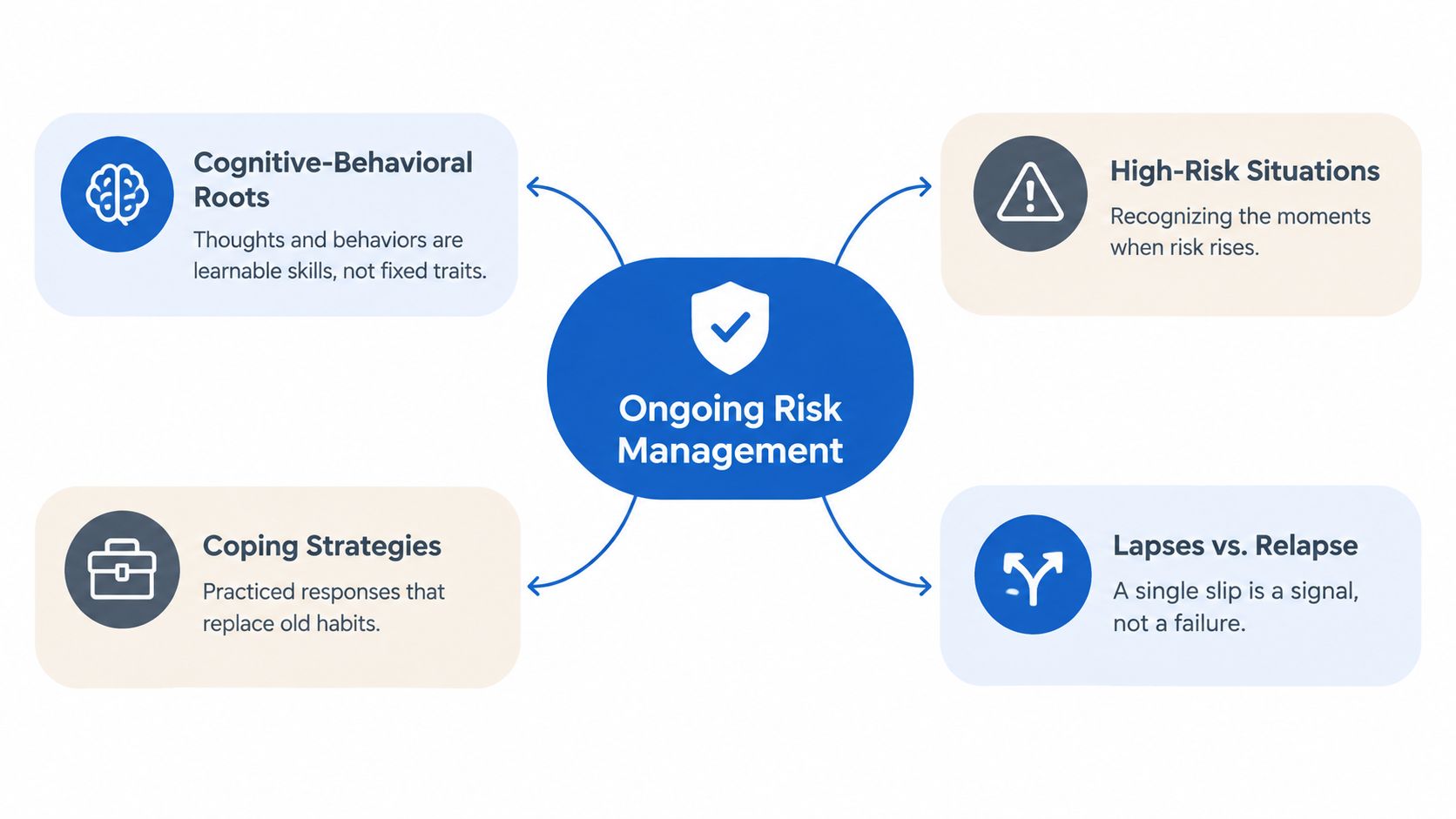
Relapse prevention is rooted in cognitive-behavioral relapse prevention, which treats thoughts, feelings, situations, and behaviors as connected parts of a pattern. That pattern can be studied and changed. Instead of relying only on willpower, you identify the conditions that raise risk and practice a different response before the urge becomes overwhelming.
A fire prevention system makes the idea easier to understand. You don't wait for a building to be engulfed before checking smoke alarms, removing hazards, or deciding where to exit. You notice heat, smoke, and sparks early. Recovery planning works similarly. A trigger may be the spark, a warning sign may be the smoke, and a coping action or support call may stop the fire from spreading.
Clinical guidance emphasizes documenting early warning signs, emotional states, external stressors, support contacts, and specific coping actions so a person and their care team can respond before substance use becomes a full recurrence. The plan turns a vague concern, such as “stress makes me want to use,” into an observable sequence: “After conflict, I stop answering messages, skip meals, and start thinking that using would solve the problem.”
Lapse and relapse are not identical
A lapse is a brief return to substance use or a serious movement toward use. A relapse generally describes a broader return to an established pattern. The distinction matters because a lapse can become information for strengthening the plan, rather than proof that recovery has ended.
If you notice a lapse, secrecy and shame can make the situation more dangerous. Contacting support, getting medically appropriate guidance, and reviewing what happened can interrupt the chain. For additional help identifying patterns, see this resource on the warning signs of relapse.
A plan sits inside broader care
Historical relapse-prevention models identify five major strategy areas:
- Therapy: Learn to recognize thinking patterns, emotional reactions, and behaviors connected with risk.
- Medications: When clinically appropriate, medication can form part of a broader treatment plan.
- Monitoring: Regular check-ins help identify changes before they become emergencies.
- Peer support: Sponsors, recovery groups, and trusted peers can reduce isolation and provide accountability.
- Emerging interventions: New approaches may complement established therapy and support systems.
The plan is therefore not a single coping tip. It's a coordinated way to connect clinical care, daily choices, relationships, and rapid response.
Core Components That Make a Plan Effective
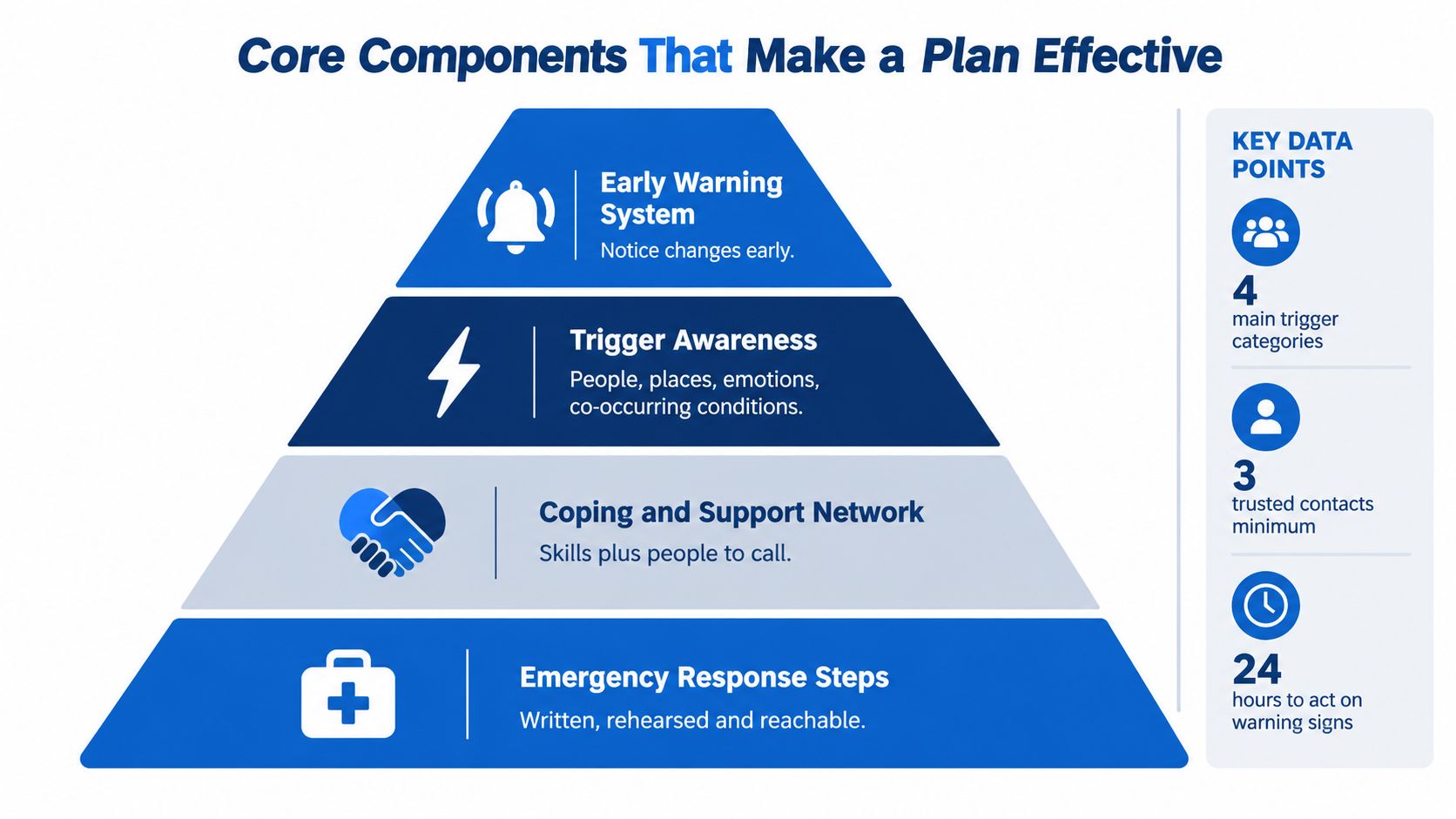
An effective plan works like an early-warning and response system. It connects a trigger to a warning sign, then links that sign to a specific action and a person who can help. The more observable the chain is, the less you have to rely on judgment during a high-risk moment.
Start with triggers and warning signs
Triggers can come from outside you, inside you, or both. Common categories include:
- People: Friends, relatives, or acquaintances connected with past substance use.
- Places: Neighborhoods, homes, bars, parties, or routes associated with using.
- Emotions: Anxiety, anger, boredom, loneliness, or depression.
- Life conditions: Work conflict, relationship strain, disrupted routines, financial pressure, or untreated mental-health symptoms.
A useful plan avoids broad wording such as “avoid stress.” Instead, write what stress looks like for you. For example: “After a tense call with my supervisor, I skip dinner, stay alone in my car, and tell myself I deserve relief.” Those details can be noticed and acted on.
Warning signs often appear before a craving reaches its peak. Irritability, isolation, romanticizing past use, skipping appointments, abandoning routines, and avoiding supportive people can all signal that risk is rising. Your clinician or counselor can help distinguish an ordinary difficult day from a pattern that needs immediate attention.
Match each sign with a practiced response
Coping skills should be concrete and realistic. A plan might pair isolation with calling a trusted person, leaving a high-risk location, attending a peer-support meeting, or scheduling an urgent counseling contact. It might pair anxiety with a grounding exercise, a quiet walk, medication management through a qualified clinician, or a structured conversation with someone safe.
Risk-management mindset: Don't ask only, “How do I stop craving?” Ask, “What is the next safe action, and who can help me take it?”
Healthy routines support these responses. Regular meals, sleep habits, movement, meaningful activities, and planned social contact can make recovery more stable, but they shouldn't be written as vague ideals. Name the action you'll take and when you'll take it.
Build the human safety net
List support contacts by name, role, and situation. One person might be appropriate for a late-night craving, another for transportation away from a risky setting, and another for clinical concerns. Include your counselor, sponsor, peer-support contact, prescribing clinician, or trusted family member when those relationships are part of your care.
Finally, write emergency steps for a near-relapse or lapse. These might include moving away from substances, contacting a support person immediately, informing your treatment provider, avoiding driving while impaired, and seeking urgent or emergency medical care when safety is at risk. Your plan should make clear what happens first, second, and third.
For a deeper look at the cognitive-behavioral foundation, this guide to relapse prevention therapy CBT can provide useful context.
How to Create Your Personalized Relapse Prevention Plan
Create the first version when you're calm, not while a craving is demanding your attention. Use a phone note, printed sheet, recovery workbook, or shared document. Keep the language direct enough that another trusted person could understand what to do.
1. Define what recovery protects
Begin with the reasons you want to continue recovery. These might include your health, relationships, housing, work, freedom, or the ability to participate in activities you value. Write one or two sentences:
“I'm protecting my relationship with my children and my ability to live safely without substances.”
This isn't a test of motivation. It's an anchor for moments when short-term relief starts to compete with long-term priorities.
2. Map your high-risk situations
Complete this prompt: “My risk rises when…” Include people, places, emotions, times of day, and changes in routine. Add co-occurring mental-health experiences such as panic, depression, anger, boredom, or loneliness. A Canadian clinical resource specifically emphasizes planning for these emotional triggers and underlying mood or anxiety concerns, rather than focusing only on external situations. See its guidance on preventing and managing relapse.
3. Record your early warning signs
Ask, “What would someone close to me notice first?” Your answers might include withdrawing, becoming unusually reactive, missing appointments, sleeping at unusual times, thinking about past use, or stopping activities that normally support recovery.
4. Choose coping actions you'll actually use
Pick responses that fit your life. Write two or three options for each major trigger, such as calling a support person, leaving a location, using a breathing or grounding exercise, attending a meeting, taking a walk, or contacting a clinician. Practice them before you need them.
5. Name your support circle
Add names, phone numbers, roles, and availability when relevant. Don't write “call someone.” Write, “Call Sam when I'm thinking about using,” or “Message my counselor if I've missed two appointments or feel unable to stay safe.”
6. Write the emergency sequence
Use clear verbs:
- Leave the setting connected with use.
- Contact the first support person.
- Contact the treatment provider or clinician.
- Don't stay alone if safety is uncertain.
- Seek urgent medical help when there's overdose risk, severe intoxication, withdrawal danger, or immediate danger to yourself or someone else.
7. Set a review date
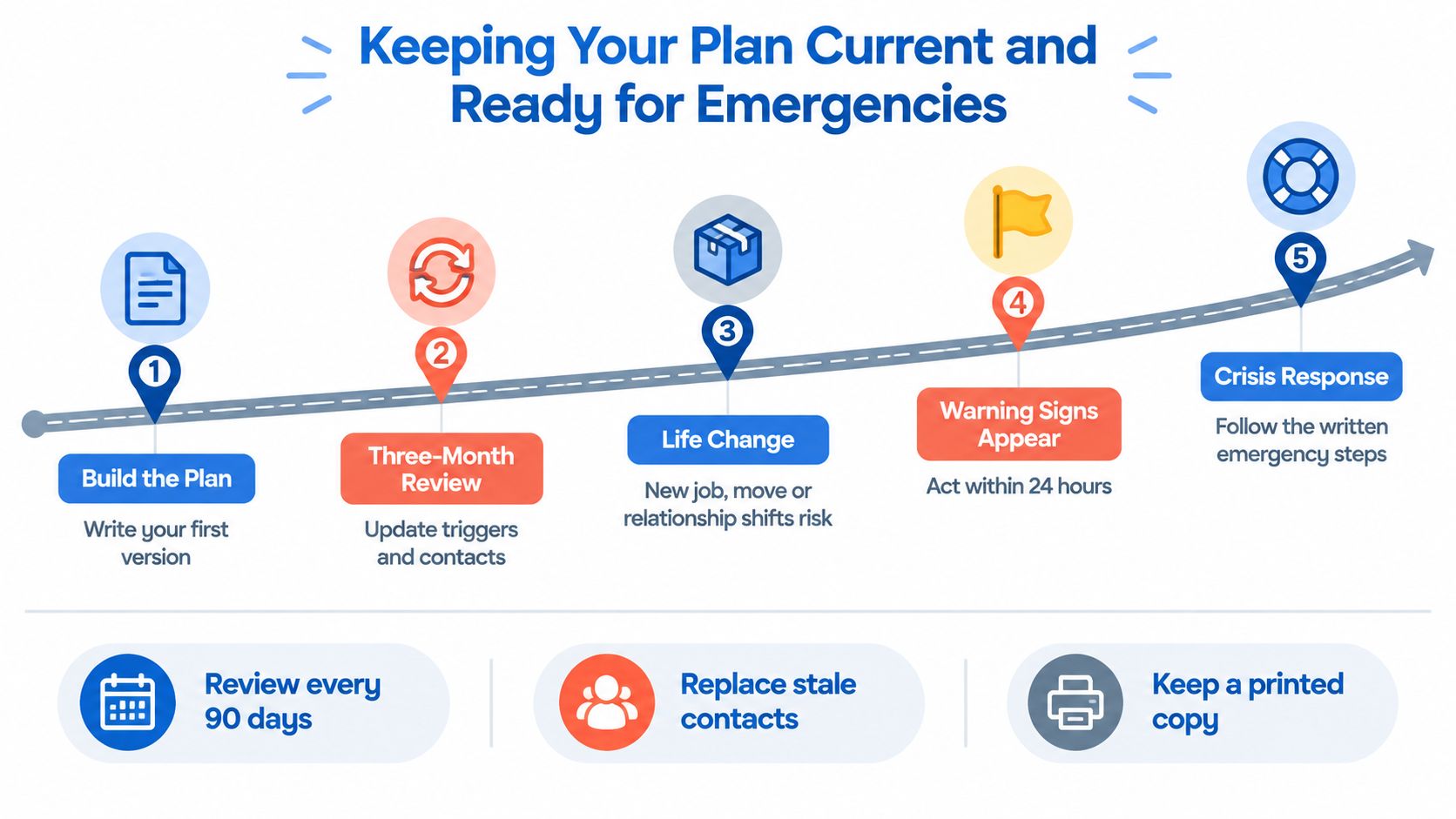
Treat the document as adjustable. The maintenance rhythm described in current guidance includes monthly reviews during the first year and quarterly reviews afterward. Mark the date in your calendar rather than trusting memory.
8. Share the plan
Ask a counselor, sponsor, peer mentor, or trusted loved one to review it. They may notice missing warning signs, unrealistic steps, or support gaps. Keep the final version easy to reach on your phone and in printed form.
Keeping Your Plan Current and Ready for Emergencies
A plan can become outdated even when it was thoughtfully written. Your schedule changes, relationships shift, treatment needs develop, and a trigger that once seemed minor may become more important. A phone number that no longer works can turn a carefully designed safety net into a blank space.
Set a monthly review during the first year and a quarterly review afterward, following the maintenance recommendation identified in the available guidance on relapse-prevention planning. During each review, ask:
- Which triggers appeared recently?
- Did I notice any warning signs earlier than expected?
- Which coping actions helped?
- Which actions felt unrealistic?
- Are my contacts still available and appropriate?
- Have medications, appointments, housing, work, or relationships changed?
Update the plan after a major stressor, move, job change, relationship disruption, change in mental health, or near-relapse. Don't wait for the next scheduled review if the risk picture has changed.
Include mental-health triggers explicitly
Many plans say “avoid people, places, and things” but leave out what happens when the main danger is anxiety, depression, anger, boredom, or loneliness. These experiences deserve their own response lines.
For example:
- Anxiety: Contact a clinician, use a practiced grounding exercise, and avoid making major decisions while highly activated.
- Depression: Tell a support person you're withdrawing, keep the next appointment, and ask for help with basic daily structure.
- Anger: Leave the argument, delay contact with the person involved, and use a safe de-escalation plan.
- Boredom: Move into a planned activity or public recovery-support setting.
- Loneliness: Contact someone before isolation becomes the default.
These steps don't replace treatment for a mental-health condition. They connect emotional care with substance-use prevention. National releases from the Substance Abuse and Mental Health Services Administration continue to track substance use, mental health, and treatment together, supporting an integrated approach rather than treating relapse as a standalone behavior problem.
Write the lapse protocol before you need it
A lapse protocol should answer, “What do I do immediately?” Move away from further access, contact support, tell your treatment provider, and seek medical help if there is danger from intoxication, withdrawal, overdose, or self-harm. Don't use the lapse as a reason to abandon the plan. Use it as a signal to activate care and revise the missing safeguard.
If the situation requires urgent help, use appropriate emergency services. A resource on emergency addiction treatment can help clarify when a crisis needs immediate professional attention.
Real World Examples and Simple Templates You Can Use
The same framework looks different from person to person. Maya, a young adult in recovery, identifies parties, old friends, and fear of social rejection as high-risk situations. Her early warning signs are checking old contacts, skipping meetings, and telling herself that she can “handle one night.” Her plan says she'll decline invitations that involve substance use, call a peer before responding to old contacts, and leave immediately if substances appear.
Marcus is a parent whose risk rises after exhausting workdays. His warning signs are staying in the car after arriving home, becoming short-tempered, ordering food instead of eating with family, and avoiding messages. His response includes contacting his counselor, telling a trusted family member that he needs company, eating something simple, and following the evening routine written in his plan.
Neither plan tries to control every thought. Each one identifies a chain early enough to interrupt it.
A one-page starting template
Copy this structure into a notebook or phone note:
My recovery priorities
What am I protecting? What matters most if I stay in recovery?
My high-risk situations
People, places, emotions, routines, and mental-health symptoms that increase risk.
My early warning signs
What I notice in my thoughts, mood, body, behavior, sleep, relationships, or appointments.
When I notice those signs, I will
List the first safe action, the next coping action, and the person to contact.
My support contacts
Name, role, phone number, and the situation in which I'll call.
My professional supports
Counselor, prescriber, clinic, peer program, appointments, and treatment instructions.
If I have a near-lapse or lapse
Write the immediate sequence, including who I'll contact and when I'll seek urgent care.
Review date
Record the next date and the person who will review the plan with you.
A template is a starting point, not a substitute for individualized care. This Oceans Luxury Rehab guide offers another format to consider, while this relapse prevention plan template can help you organize the same practical categories. Keep your wording specific, readable, and honest enough to guide action.
Moving Forward With Support and Next Steps
Relapse is common, but it isn't inevitable, and it doesn't mean a person is beyond help. Reviews report overall relapse rates of about 40–60%, with some addiction studies reporting that more than 85% of people relapse within one year; other clinical summaries describe one-year rates ranging from 80–95% for nicotine, heroin, and alcohol. Stimulant relapse has been estimated at about 50% in the first year, and some studies note 65–85% relapse at 12 months among young people with substance use disorders. These figures explain why recovery needs continuing support, not why anyone should lose hope. Peer-reviewed review data
Your plan should be short enough to use, detailed enough to guide action, and flexible enough to change. Share it with the people who may need to respond, and ask a professional to help when cravings intensify, mental-health symptoms worsen, a lapse occurs, or your current level of support no longer feels sufficient.
Structured care can provide counseling, peer connection, medication support when appropriate, monitoring, intensive outpatient treatment, telehealth access, and aftercare planning. In Yuba City and Northern California, Addiction Resource Center LLC offers substance-use and co-occurring mental-health care, including medically supervised detox with medication-assisted treatment, residential rehabilitation through a partner facility, and an Intensive Outpatient Program available in person or through telehealth.
Addiction Resource Center LLC can help you identify triggers, build coping skills, create a relapse prevention plan, and arrange individualized aftercare support for ongoing recovery. Visit Addiction Resource Center LLC to learn about treatment options in Yuba City and telehealth support, or contact the center for guidance about the next safe step.