You're standing in the kitchen after a long night, wondering whether the shaking, nausea, or foggy thinking will pass if you just stop on your own. That moment is where a lot of families get stuck, because “detox for drug” sounds simple, but the safest path depends on the substance, the person's health, and what …

You're standing in the kitchen after a long night, wondering whether the shaking, nausea, or foggy thinking will pass if you just stop on your own. That moment is where a lot of families get stuck, because “detox for drug” sounds simple, but the safest path depends on the substance, the person's health, and what support is available at home.
Detox is the body's clearing period, not a cure. It's the medically guided process of letting substances leave the system while withdrawal symptoms are watched and managed, the way a mechanic safely restarts a machine that's been running on the wrong settings for too long. It can steady someone enough to think clearly again, but it doesn't erase the reasons they started using, and it doesn't guarantee sobriety after the symptoms ease.
WHO notes that withdrawal from cannabis, cocaine, or amphetamines is best managed in a supportive environment, and that treatment contact coverage for drug use disorders remains very limited in many reporting countries, ranging from 0.3% to 35%. WHO also reports 331 million people used a drug in the past 12 months in 2024, a 34% increase since 2014 (WHO and UNODC report on global drug use and withdrawal care). Those numbers help explain why detox is often the front door to care, not the finish line.
Table of Contents
- What Drug Detox Really Means
- Home Detox Versus Medical Detox
- Withdrawal Symptoms and Timelines by Substance
- How Medication-Assisted Treatment Fits In
- Choosing Between Inpatient and Outpatient Detox
- How to Choose a Safe Detox Program
- What Comes After Detox and How to Start
What Drug Detox Really Means
The word detox gets used loosely, so it helps to separate the process from the promise. Drug detox means the body is adjusting to the absence of a substance while clinicians help reduce withdrawal risk and discomfort. It's the first stabilizing step, not the part of recovery that heals habits, trauma, grief, or stress.
A simple way to think about it is a phone that's been glitching because the operating system is overloaded. Restarting it can make the device usable again, but it doesn't fix the broken app that kept crashing it. Detox clears the system enough to move forward, while therapy, medication planning, and lifestyle changes handle what comes next.
For alcohol, benzodiazepines, and long-term opioid use, trying to white-knuckle withdrawal alone can be dangerous. Physical symptoms can escalate quickly, and the risk isn't just discomfort, it can include seizures, severe dehydration, or dangerous mental status changes. A family member who is hoping to “just get through the weekend” often needs to hear that detox is about safety first.
Practical rule: If someone has ever had severe withdrawal, confusion, seizures, or a medical complication during a past attempt, home detox is the wrong starting point.
People also get confused about emotional stability versus physical stabilization. A person can look calmer once the worst symptoms fade and still be very vulnerable to relapse because cravings, insomnia, shame, and fear haven't been addressed. That's why the best programs treat detox as the opening phase of a longer treatment plan, not a standalone cure.
If you want a plain-language overview of the early process, the detox overview from SayARC is a useful starting point. From there, the key decision is whether detox belongs at home or in a medical setting.
Home Detox Versus Medical Detox
Home detox and medical detox can both begin with the same intention, which is to stop using. The difference is the level of protection around that decision. Home detox usually means stopping in an unmanaged environment, often with over-the-counter supports and help from family members, while medical detox places the person in a licensed setting with monitoring and withdrawal medications when needed.
Here's the simplest way to compare them.
| Factor | Home Detox | Medical Detox |
|---|---|---|
| Supervision | Family or self-monitoring | 24-hour clinical monitoring |
| Medication access | Usually limited or none | Medications can be ordered and adjusted |
| Safety for higher-risk substances | Lower safety margin | Better suited for alcohol, benzodiazepines, opioids, and stimulants with complication risk |
| Privacy | Familiar setting, but less control over triggers | More privacy from daily triggers, with structured care |
| Clinical response | No rapid response if symptoms worsen | Staff can watch vitals and escalate care quickly |
| Best fit | Mild, short-lived use patterns with strong support | Withdrawal risk, prior complications, or unstable home conditions |
A local example may help. A person who used cannabis occasionally and has a stable home, no major medical history, and a calm support person nearby may do well with outpatient or home-based guidance. Someone stopping alcohol after heavy daily use, or someone with a history of seizures, needs a very different plan. If you're comparing options in California, a page like medical detox treatment California can help you see how a licensed program describes its level of oversight.
Home detox often looks cheaper and more private on paper, but it can become more expensive if a complication sends someone to the ER.
The trade-off is simple. Home detox offers familiarity, while medical detox offers watchfulness. That matters because withdrawal can change fast, and the symptoms that seem manageable at breakfast can look very different by nightfall.
A useful self-check is straightforward. Ask what substance was used, how long it's been used, whether there were prior withdrawal problems, whether there's a mental health history, and whether the home is stable enough to support recovery. If any of those answers raise concern, medical detox is usually the safer choice.
For a family trying to judge urgency, the emergency addiction treatment guide from SayARC can be a practical reference before making calls.
Withdrawal Symptoms and Timelines by Substance
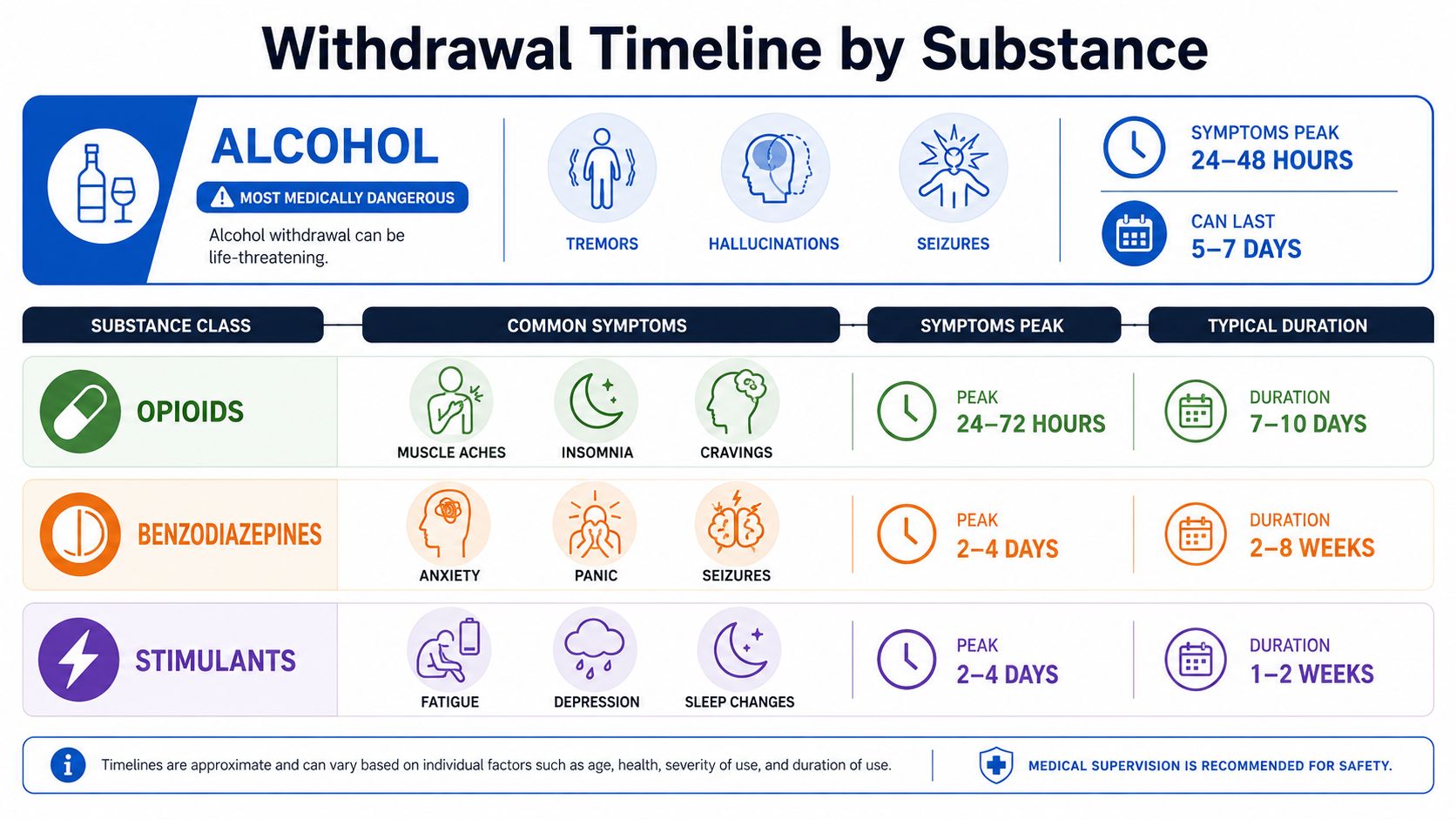
A family member stops using, seems fine at first, then gets shaky, sick, or unusually quiet. That pattern is common in withdrawal, and the timing matters because some symptoms rise quickly while others build over days. A clear when withdrawal symptoms start guide from Empire Medical Wellness can help with the early window, and a practical overview of how long detox takes gives families a better sense of what the next few days may look like.
Alcohol
Alcohol withdrawal carries the highest medical risk among common substances. Symptoms can begin within hours and then intensify over the next day or two, with the most serious problems often appearing in the 24 to 72 hour window. Clinicians watch closely for tremors, hallucinations, seizures, confusion, and delirium tremens.
Mild anxiety, sweating, nausea, and sleep disruption can still be hard to live with, but they are usually managed more safely under supervision. The picture changes if agitation worsens, thinking becomes disorganized, the person looks feverish, or any seizure appears. Those signs need urgent medical care.
Opioids
Opioid withdrawal usually feels miserable before it feels dangerous. Muscle aches, restlessness, sweating, stomach upset, diarrhea, cravings, and insomnia are common, and they can last beyond the first rough days. Short-acting opioids tend to bring symptoms on sooner than long-acting ones, so two people who stop on the same day may not follow the same timeline.
The acute phase is often hardest in the first several days. After that, the quieter part can still cause problems, especially cravings, low mood, and poor sleep, which can raise relapse risk after the obvious physical symptoms ease. Dehydration, confusion, chest pain, or distress so intense that the person cannot stay safe deserve prompt attention.
Stimulants
Cocaine and methamphetamine withdrawal often hits the mind more than the body. The crash phase can bring exhaustion, long sleep periods, depression, and sometimes suicidal thinking, even when there are no dramatic physical signs.
Families often expect withdrawal to look like shaking or vomiting. With stimulants, the warning signs may look different, such as sleeping all day, refusing food, or speaking in a hopeless way. Any talk of self-harm, panic that keeps escalating, or trouble staying connected to reality needs immediate help.
Benzodiazepines
Benzodiazepine withdrawal is the one that makes clinicians insist on a taper instead of stopping suddenly. Cold-turkey withdrawal can be life-threatening, and symptoms may include severe anxiety, panic, insomnia, tremors, hallucinations, and seizures. The timing depends on the medication and the pattern of use, so timelines are guides, not guarantees.
If a loved one has been taking benzodiazepines regularly, a home stop should never be treated as harmless. Confusion, shaking that gets worse, or any seizure activity should be treated as an emergency. Careful planning is safer than confidence here, especially when a program can explain both monitoring and the next step in treatment before enrollment.
How Medication-Assisted Treatment Fits In
Medication-assisted treatment, or MAT, is often misunderstood as swapping one drug for another. In detox, that's not what it means. MAT combines approved medications with medical monitoring and counseling so the brain and body can settle while withdrawal is managed safely.
For opioid withdrawal, methadone and buprenorphine are used to reduce withdrawal intensity and cravings, while naltrexone is used later to block opioid and alcohol effects after detox has finished. For alcohol and sedative withdrawal, a clinician may use a benzodiazepine taper to lower the risk of severe complications. The medicine choice depends on the substance, the person's health, and the setting where care is happening.
A practical way to think about MAT is stabilization, not substitution. The goal is to keep someone safe enough to sleep, hydrate, think, and participate in the next step of care. That window matters because it gives therapy, family planning, and discharge preparation a chance to take hold.
Here's a quick reference for common options.
| Substance Class | Medication Examples | Main Purpose in Detox |
|---|---|---|
| Opioids | Methadone, buprenorphine, buprenorphine/naloxone | Ease withdrawal and reduce cravings |
| Alcohol | Benzodiazepine taper, sometimes symptom-specific supports | Lower seizure and delirium risk |
| Sedatives | Clinician-directed tapering plan | Prevent dangerous rebound withdrawal |
| After detox for opioid or alcohol recovery planning | Naltrexone | Block effects and support relapse prevention |
Dosing should never be guessed at by the family, and it should be revisited as symptoms change. A person who is too sedated, still vomiting, or still having severe cravings may need the plan adjusted. That's why medical follow-up matters even when the first prescription is already written.
If you want a broader overview of how programs describe this approach, the 2026 guide to medication assisted treatment is a useful reference point. Addiction Resource Center LLC also uses medically supervised detox with MAT as part of its continuum, but the larger principle is what matters most, medication can support detox, it can't replace recovery work.
Choosing Between Inpatient and Outpatient Detox
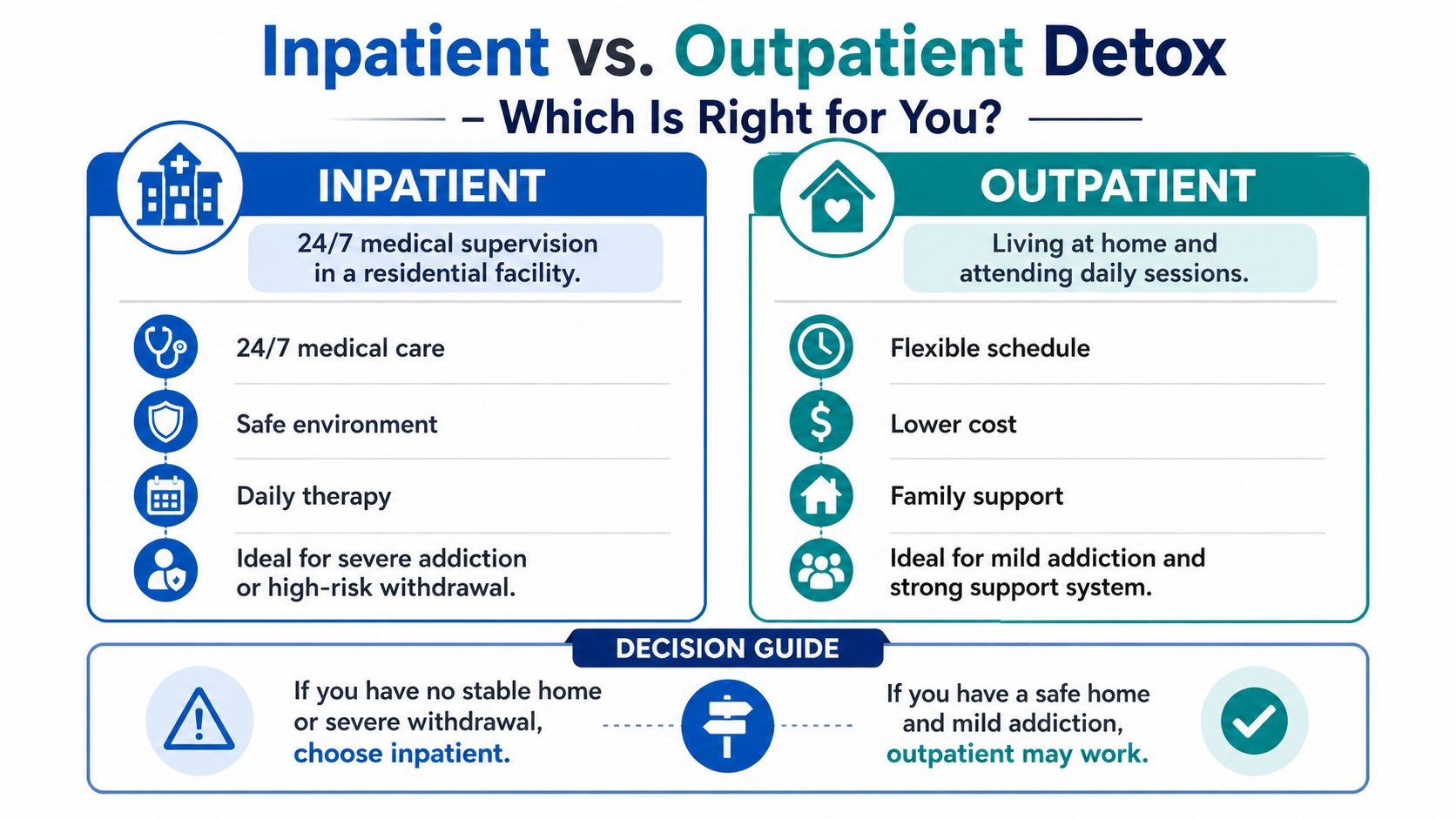
Inpatient detox means the person stays in a facility with 24-hour monitoring. Outpatient detox means the person lives at home and returns for scheduled medical visits. Both can be legitimate, but they fit very different levels of risk.
Substance choice is the first filter. Alcohol, benzodiazepines, and high-risk opioid withdrawal often call for inpatient care because the possibility of seizures or other complications is too hard to predict. If stimulant use is paired with severe depression or suicidal thoughts, the structure of inpatient care can also be the safer choice.
What pushes the decision one way or the other
- Medical history: A history of seizures, delirium, heart issues, or serious withdrawal pushes toward inpatient care.
- Mental health: Depression, panic, psychosis, or suicidal thoughts make outpatient detox less safe.
- Home setting: A house with active use, conflict, or no reliable adult support usually needs more structure.
- Motivation and stability: Someone with steady support, milder dependence, and good follow-through may do well outpatient.
A helpful rule is simple. If the home feels like a trigger zone, don't expect willpower to do the work of a clinical setting. If the home is calm, substances aren't around, and the person can follow instructions closely, outpatient detox may be reasonable.
Ask the program one direct question, “Why do you recommend this level of care for this person, and what risk are you trying to reduce?”
The answer should be specific, not vague. You want to hear about medical risk, monitoring needs, and how often the staff will check in. If the program can't explain its reasoning clearly, keep looking.
How to Choose a Safe Detox Program
Choosing a program is stressful because families are usually deciding under pressure. A good detox center should answer questions clearly, not rush you, and not act offended when you ask about safety. Think of the call as a safety check, not a sales call.
Start with the basics. Ask whether the program provides 24-hour medical oversight for substances that need it, who writes medication orders, and whether a physician is on-site or on-call. Confirm that staff can explain how they handle alcohol, opioid, stimulant, or benzodiazepine withdrawal differently instead of using one generic plan for everyone.
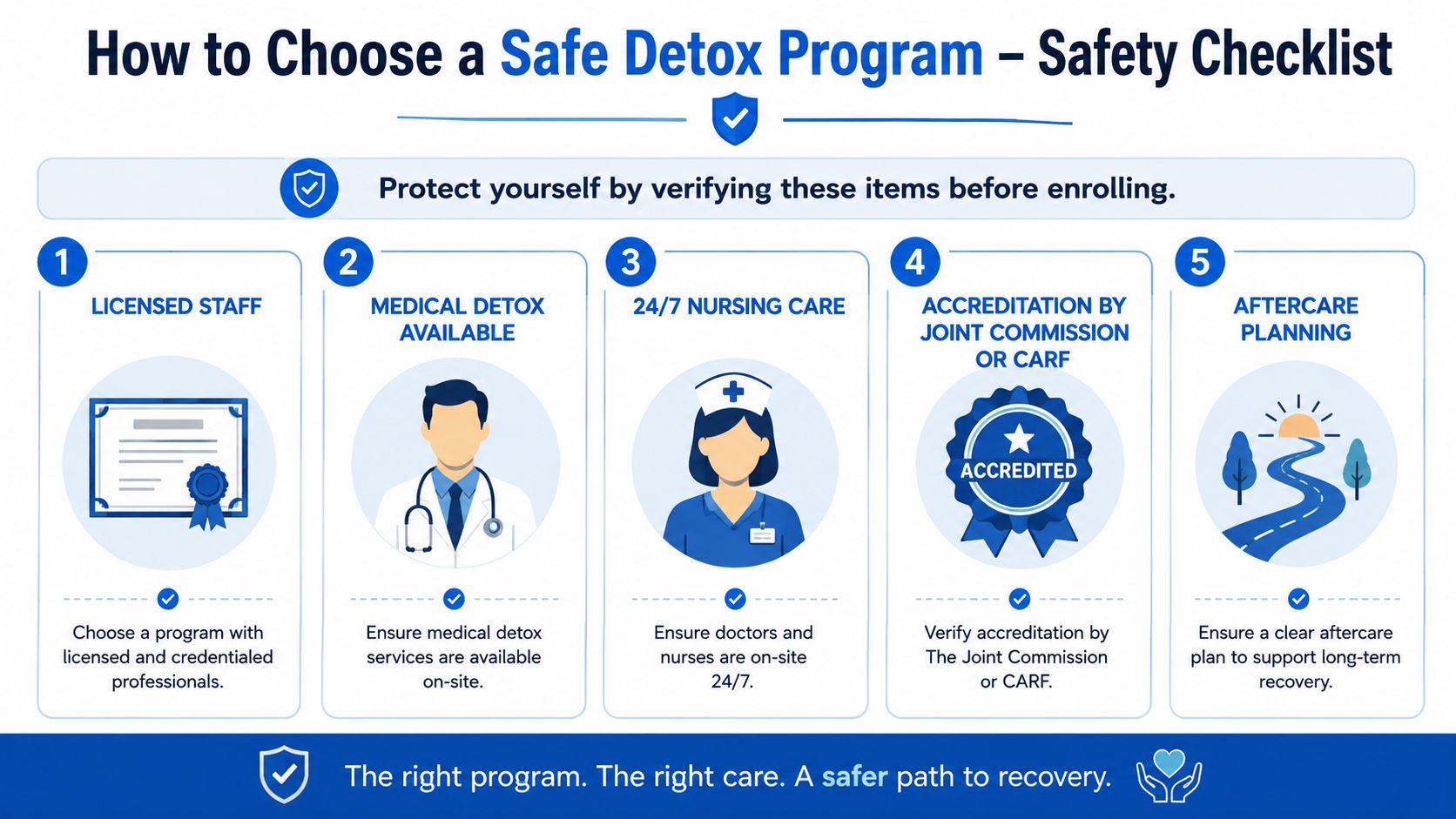
Here's a practical checklist to keep in front of you.
- Licensed staff: Ask which clinicians are present during the day and overnight.
- Medical detox available: Confirm that the program can manage withdrawal, not just offer a bed.
- 24/7 nursing care: Find out how often patients are physically checked.
- Accreditation: Ask whether the program is accredited or licensed in the state.
- Aftercare planning: Ask what happens after detox ends, not just how admission works.
Privacy and tone matter too. If you can tour the space or review photos, look for cleanliness, respectful staff behavior, and a setting that feels calm rather than chaotic. Trust your reaction if people sound dismissive, if family contact is discouraged without a clear reason, or if they refuse to discuss medications.
Red flag: Any program that promises a cure, pushes one ideology for every patient, or avoids direct answers about withdrawal care deserves extra skepticism.
Insurance and payment questions belong in the first phone call. Ask whether the program accepts your plan, offers a cash rate, or can help with verification. For families who want help comparing answers, Addiction Resource Center LLC can walk through the questions, explain the level of care, and help determine whether the fit is medical detox, outpatient support, or a different step in the continuum.
What Comes After Detox and How to Start
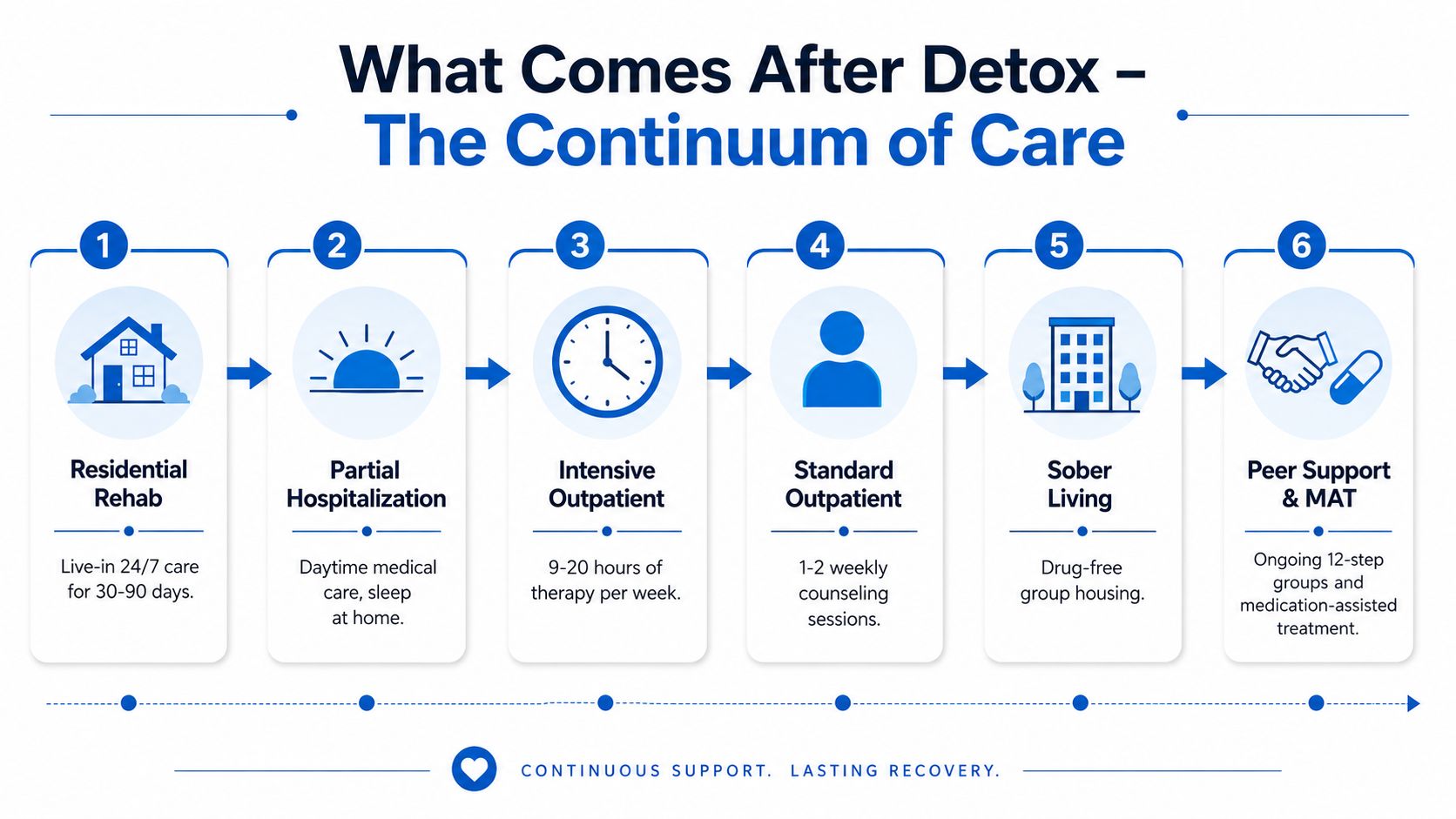
Detox opens the door, but it does not build the house. Once withdrawal has settled enough for clear thinking, many people still need residential rehab, partial hospitalization, intensive outpatient care, standard outpatient counseling, sober living, peer support, or ongoing MAT. The right next step depends on how much structure the person needs to stay safe and keep showing up.
A common path starts with detox, then moves into residential rehab, then steps down to partial hospitalization or intensive outpatient care as stability improves. Residential care means living at the facility with round-the-clock structure. Partial hospitalization lets someone sleep at home while spending the day in treatment. Intensive outpatient usually means several therapy blocks each week, and standard outpatient is lighter and more flexible.
Sober living can bridge the gap between treatment and independent life when a drug-free home is hard to maintain. Peer support and MAT can continue long after detox, because recovery often needs both accountability and medical follow-up. Therapy, recovery coaching, and community groups help the transition feel less fragile.
A few practical steps make the handoff smoother:
- Call today: Gather the substance used, the last time it was used, current medications, insurance details, and any co-occurring conditions.
- Pack for residential: Bring ID, medications in original containers, comfortable clothes, and any paperwork the program requested.
- Prepare for outpatient: Remove substances from the home, line up transportation, and tell supportive family members what the schedule will look like.
If you are deciding where to start, ask for a warm handoff instead of a generic referral. Ask the program who will help with admission, how insurance verification works, and what level of care is likely next. Families who want that kind of guided start can contact Addiction Resource Center LLC for medically supervised detox, MAT, residential partnership placement, and IOP options, with care planning built around the next step, not the first step alone.