Learn mindfulness for sobriety with practical daily techniques to strengthen your recovery and maintain emotional balance throughout your journey.


Staying sober means learning to sit with discomfort without reaching for old coping mechanisms. Mindfulness for sobriety gives you practical tools to do exactly that-by training your mind to notice cravings and triggers without acting on them.
At Addiction Resource Center, we’ve seen how simple daily practices can transform someone’s relationship with their thoughts and urges. The techniques in this guide are designed to fit into your life right now, whether you have five minutes or thirty.
What Mindfulness Actually Does for Your Recovery
Mindfulness Trains You to Pause Between Urge and Action
Mindfulness isn’t meditation sitting cross-legged in silence for an hour. It’s the deliberate act of noticing what’s happening in your mind and body right now, without judging it or pushing it away. When you’re in recovery, this matters because cravings and triggers don’t announce themselves politely-they arrive suddenly and demand a response. Mindfulness trains you to pause between the urge and your action, which is where your power lives.
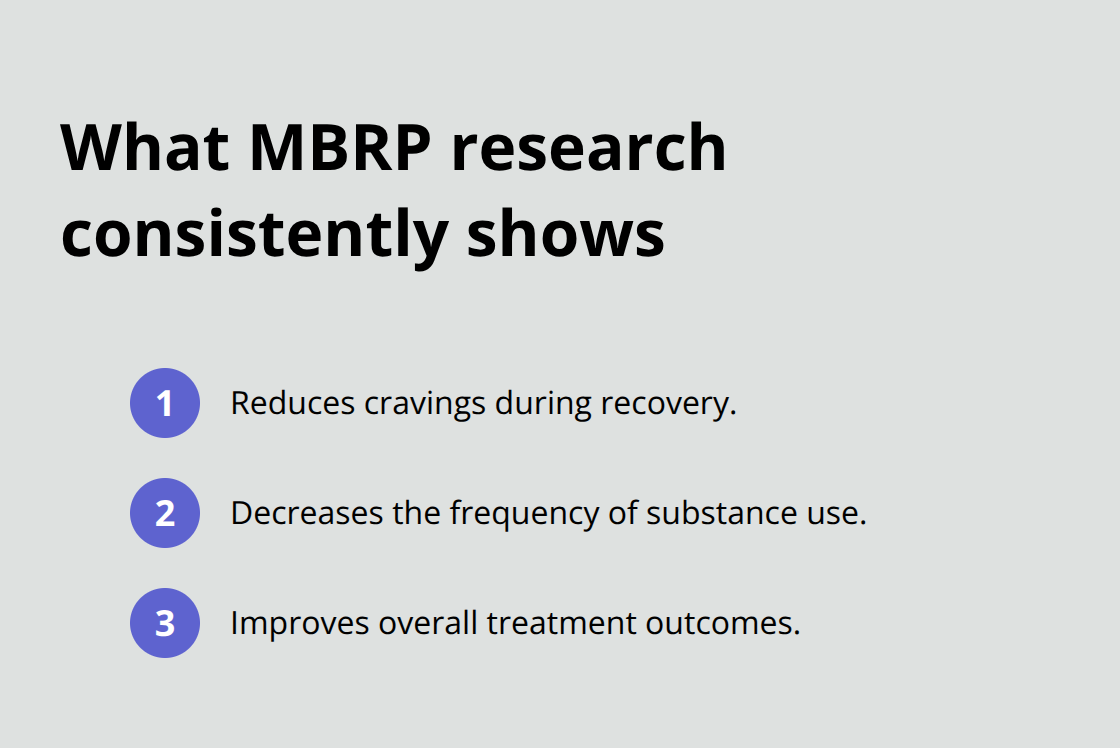
Research shows that Mindfulness-Based Relapse Prevention reduces cravings, decreases the frequency of use, and improves outcomes in people with substance use disorders. The mechanism is straightforward: mindfulness helps you recognize cravings as temporary mental events, not commands you must obey.
How Mindfulness Interrupts the Stress-Reactivity Loop
Your nervous system constantly responds to stress, and stress is one of the strongest predictors of relapse. When stress hits, your body floods with cortisol and adrenaline, making old coping habits feel urgent and necessary. Mindfulness interrupts this automatic chain by anchoring your attention to the present moment-your breath, your feet on the ground, sensations in your hands. This breaks the stress-reactivity loop that typically leads people back to substances.
The research on mindfulness-based interventions found that participants showed significantly greater reductions in cravings over time and increased acceptance of uncomfortable thoughts and emotions. Acceptance is the key word here: you’re not trying to eliminate cravings or pretend they don’t exist. Instead, you’re learning to experience them without acting on them. This shift from resistance to acceptance is what makes mindfulness work where willpower alone fails.
What You Need to Start
Starting this practice requires no equipment, cost, or special environment-only your attention, which you already have. The techniques ahead show you exactly how to apply mindfulness to real moments in your day, from the first breath you take in the morning to how you handle an unexpected trigger in the afternoon.
Three Techniques That Actually Work
The gap between knowing mindfulness helps and actually practicing it is where most people get stuck. You need techniques simple enough to use when stress hits hard, not theoretical exercises you’ll abandon after a week.
The 4-4-6 Breathing Technique for Immediate Calm
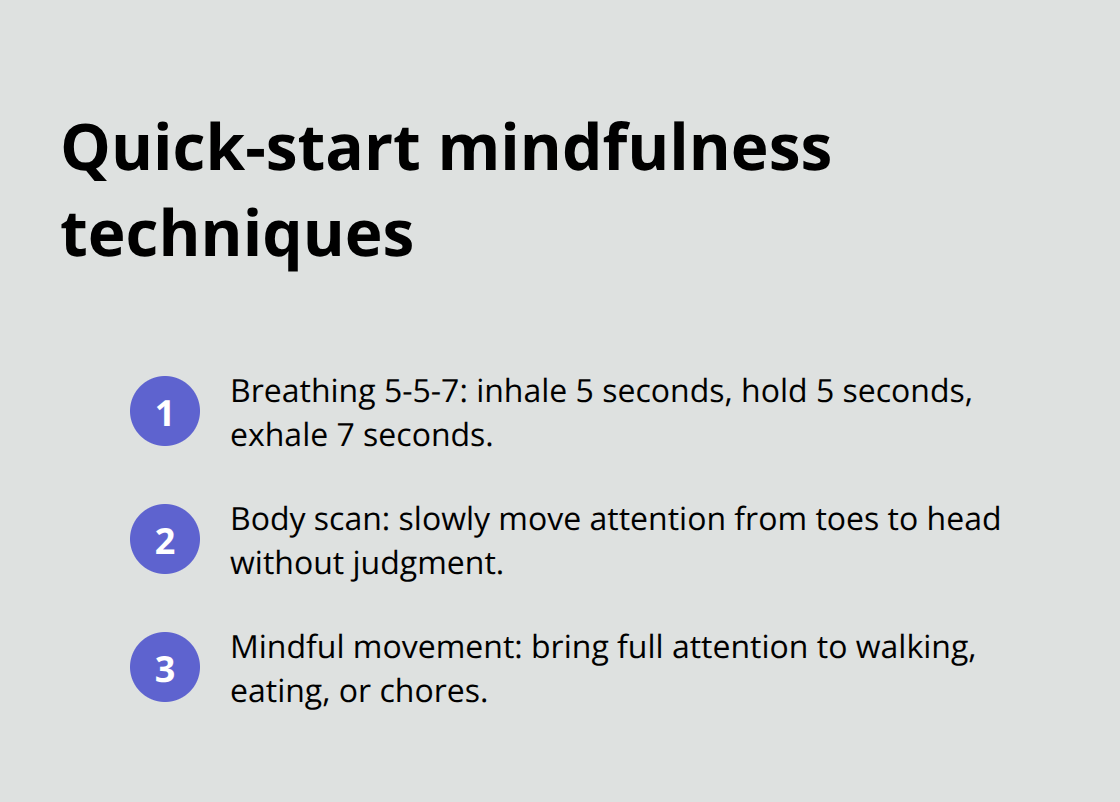
You simply breathe in through your nose for 5 seconds, hold your breath for 5 seconds and then release the air through your mouth for 7 seconds. The longer exhale activates your parasympathetic nervous system-the part that calms you down. Practice this for two minutes when you feel a craving building, and your chest will tighten less, your thoughts will slow, and the urge will lose its grip. This works because your nervous system responds to breath patterns faster than it responds to willpower.
Body Scan Meditation to Ground Yourself in Sensation
A body scan takes ten minutes and works differently than breathing exercises. Lie down or sit comfortably, then move your attention mentally from your toes to the top of your head, noticing sensations without trying to change them. When your mind wanders-which it will-bring it back to wherever you were scanning. This practice grounds you in physical sensation instead of mental chaos, and people in recovery report it interrupts the rumination cycle that leads to relapse.
Mindful Movement in Everyday Tasks
The third technique involves movement: walking, eating, or washing dishes with full attention. Pick one routine task and do it slowly, noticing textures, sounds, and sensations. When you eat mindfully, chew slowly and taste each bite instead of consuming food automatically. When you walk mindfully, feel your feet contact the ground with each step. These practices work because they anchor your mind to the present moment, which is where safety exists. Your brain cannot simultaneously obsess about past failures or future cravings while genuinely focusing on the sensation of cold water on your hands or the taste of coffee.
Making These Techniques Stick in Your Life
Research on Mindfulness-Based Relapse Prevention shows these methods stick when they’re practical. Start with whichever technique feels least awkward to you, then add another after two weeks. Consistency matters more than perfection, and as you build this foundation, the next step involves creating a routine that sustains these practices over time.
Building a Sustainable Mindfulness Routine
Start Small and Build Consistency
Mindfulness works best when you treat it as a practice, not a destination. You don’t arrive at mindfulness and stay there-you practice it daily, and the practice itself becomes the point. Start with five to ten minutes each morning before anything else happens. This timing matters because your mind is clearest before stress accumulates and your phone starts demanding attention.
Pick one technique from the previous section and use it for two weeks straight. Research on habit formation shows that consistency over a short period embeds a behavior more effectively than sporadic effort over months. After two weeks, add a second five-minute practice in the afternoon when cravings typically spike. Mindfulness-Based Relapse Prevention research found that participants assigned to this approach reported significantly lower risk of relapse to substance use and heavy drinking.
Track Your Practice and Identify Patterns
Write down each session in a simple notebook or phone notes app. Include the time, technique used, and how you felt afterward. This creates accountability without judgment. When you see thirty consecutive days of practice, your brain recognizes the pattern as real, not temporary.
Journaling works differently than tracking. After your mindfulness session, spend two minutes writing about what happened in your mind during the practice. Did thoughts about past mistakes surface? Did cravings appear? Did your attention wander constantly? This writing reveals patterns. Many people discover they crave substances most intensely after specific times or situations, which means you can position your mindfulness practice strategically at those moments (for example, right after work stress or before social events). The combination of tracking and journaling prevents the common collapse that happens around week three when motivation fades. You’re no longer relying on feeling motivated; you’re following a visible record of your own commitment.
Combine Mindfulness with Professional Support
Mindfulness alone cannot replace professional treatment. Therapy and counseling address the underlying reasons you used substances in the first place, while mindfulness gives you tools to manage urges in the moment. Combine them. If you’re working with a counselor, tell them about your mindfulness practice and ask how to integrate it into your treatment plan. Some therapists deliberately assign mindfulness homework as part of your session work. Others teach you to use mindfulness techniques when specific triggers arise. This integration makes both practices stronger.
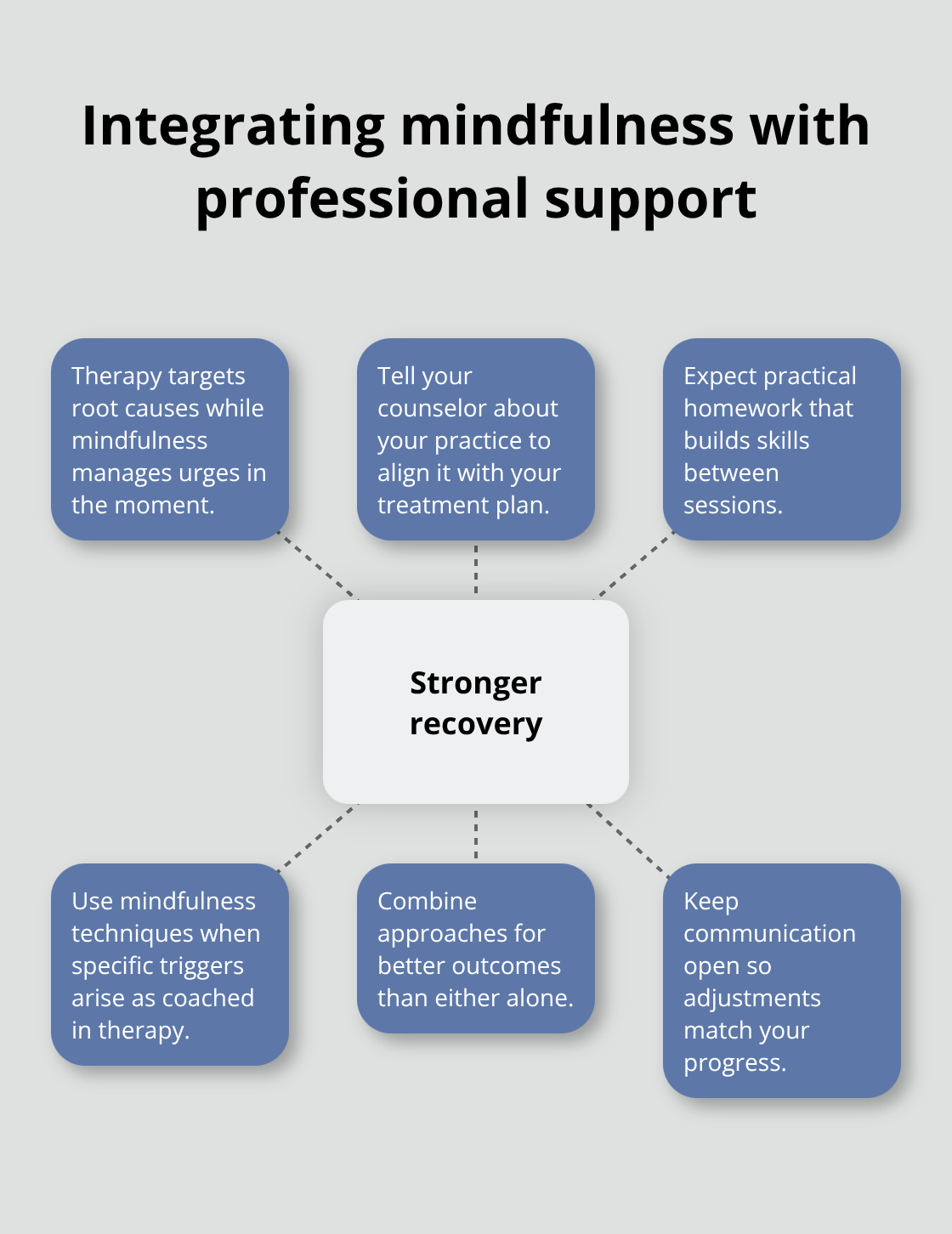
If you haven’t started professional treatment yet, start there first. Mindfulness works best as a support tool alongside therapy, not as a replacement for it. The research consistently shows that people who combine mindfulness with counseling experience better outcomes than those relying on mindfulness alone. Your nervous system needs professional support to process trauma, shame, and the root causes driving your substance use (which is why professional treatment matters so much). Mindfulness handles the daily management of cravings and stress, but professional help handles the foundation.
Building a Lasting Habit for Continued Sobriety
Mindfulness for sobriety works because it addresses the gap between impulse and action, the exact space where relapse happens. Over weeks and months of consistent practice, this gap widens. Your nervous system becomes less reactive to stress, and cravings lose their urgency.
The techniques in this guide are not magic-they are practical tools that work when you use them regularly, especially when combined with professional support. Research consistently shows that people who practice mindfulness alongside counseling experience better outcomes than those relying on either approach alone. Your daily five-minute breathing exercise or body scan meditation handles the moment-to-moment management of cravings and stress.
Starting today means choosing one technique and committing to it for two weeks. Not perfectly, and not without your mind wandering-just showing up and practicing. If you’re ready to combine mindfulness practice with professional support, Addiction Resource Center offers personalized addiction therapy and substance abuse counseling designed to meet your specific needs.