Learn mindfulness sobriety techniques to quiet cravings, reduce stress, and build lasting clarity in your recovery journey today.


Cravings hit hard, and they often feel impossible to resist. But what if you could observe them without acting on them?
At Addiction Resource Center, we’ve seen how mindfulness sobriety techniques transform recovery by creating distance between the urge and the choice. This guide shows you practical ways to quiet cravings and build the mental clarity that sustains long-term sobriety.
How Mindfulness Reveals What Cravings Really Are
Physical sensations signal the Start of Cravings
Cravings don’t appear out of nowhere. They build gradually, and most people miss the early warning signs until the urge feels overwhelming. Mindfulness teaches you to catch cravings at their weakest point, before they hijack your decision-making.
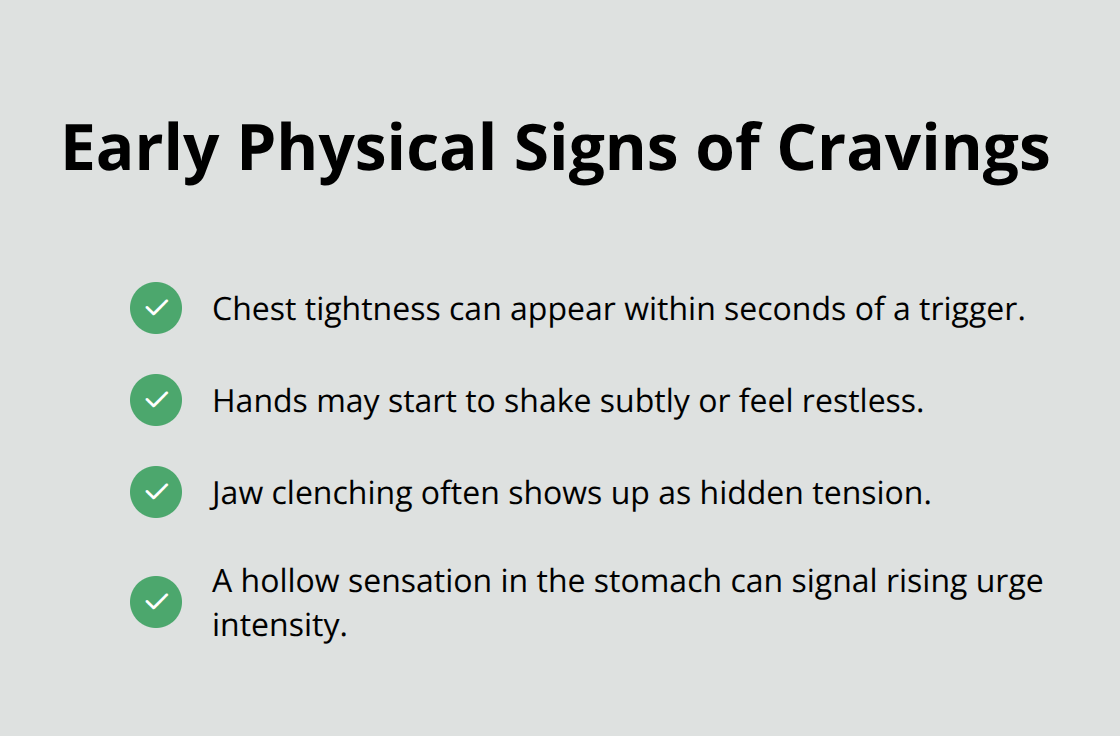
Your body sends physical signals within the first few seconds of a trigger-your chest tightens, your hands shake, or your jaw clenches. Your stomach might feel hollow. These sensations happen long before you consciously think about using.
Mindfulness-based interventions help people recognize these bodily signals early. The moment you notice the physical sensation, you’ve already created space to respond differently. Most urges peak and subside within 20 to 30 minutes if you don’t act on them, which means you have a natural window to ride out the craving without giving in.
Emotional Patterns Drive Most Cravings
Stress, loneliness, boredom, and even positive emotions trigger substance use more reliably than anything else. Your brain learned to associate certain feelings with relief through substances, and that connection runs deep. Mindfulness breaks this automatic pattern. You observe emotions without judgment instead of feeling lonely and immediately reaching for a substance. This creates space where you can notice the loneliness, name it, and choose what to do next.
This approach is called urge surfing, a technique Dr. G. Alan Marlatt developed in the 1980s as part of Mindfulness-Based Relapse Prevention. The core idea is simple: treat the craving like a wave that builds, peaks, and falls. Your job isn’t to stop the wave but to stay present while it passes. Identifying what specifically triggers your cravings and designing responses you’ll actually use is the real work of recovery.
How Your Brain Rewires Through Practice
When you practice urge surfing regularly, your brain strengthens the prefrontal cortex (the region responsible for decision-making and self-control). You’re literally rewiring how your nervous system responds to triggers. This rewiring takes consistency-practicing at the same time each day makes the skill automatic faster than sporadic practice. The more you observe cravings without acting on them, the weaker their grip becomes.
This foundation of recognizing physical sensations and emotional patterns prepares you for the specific techniques that make mindfulness work in real recovery.
Three Techniques That Actually Stop Cravings
The gap between recognizing a craving and acting on it is where recovery happens. Physical awareness and emotional insight mean nothing without concrete tools you can deploy in the moment when urges hit hardest. The three techniques below work because they interrupt the automatic response pattern your brain developed during addiction. Each one targets a different stage of the craving cycle, and together they give you multiple ways to stay in control when cravings feel overwhelming.

Body Scan Meditation Grounds You in Physical Reality
Sit or lie in a quiet space and spend 5 to 10 minutes moving your attention slowly from your toes to the top of your head, noticing sensations without trying to change them. This practice trains your nervous system to stay calm under pressure and builds the skill of observing bodily sensations without judgment. Research found that mindfulness-based interventions reduced both cravings and perceived stress while improving mindfulness skills overall.
The body scan works because it teaches you to notice tension, restlessness, or physical discomfort as information rather than as a command to use. When you practice this daily at the same time, your brain becomes faster at recognizing the physical early-warning signs of cravings, giving you more time to intervene before the urge escalates.
Breathing Exercises Deliver Immediate Relief
The 4-4-6 breath technique involves inhaling through your nose for four counts, holding for four counts, and exhaling through your mouth for six counts. Extend the exhale longer than the inhale because this activates your parasympathetic nervous system, the part that calms you down. Practice this for 5 to 10 minutes in a quiet spot, and notice where you feel the breath moving through your body.
Most people feel the breath in their chest or belly, and anchoring your attention there pulls you out of anxious thinking and back into the present moment. This technique works during the stress or anxiety that precedes cravings, making it one of your fastest defenses against relapse. Physical exercise also reduces anxiety and resets your nervous system in ways that sitting through cravings cannot match, offering another layer of support alongside breathing work.
Urge Surfing Handles Cravings Once They Arrive
The six-step protocol works like this: first, acknowledge the urge without judgment or resistance. Second, anchor yourself to your breath. Third, scan your body and notice where you feel the craving physically. Fourth, visualize the craving as a wave that builds, peaks, and falls, and imagine yourself riding that wave. Fifth, observe as the intensity naturally decreases (most urges peak and subside within 20 to 30 minutes if you don’t act on them, so you have a definite endpoint to work toward). Sixth, reflect on your success and notice that you survived the craving without using.
This technique works because it decouples the sensation of craving from the impulse to act, restoring your agency. Urge surfing is far more effective than distraction or suppression because it teaches your brain that cravings are temporary sensations you can tolerate, not emergencies requiring relief through substance use. Mindfulness-Based Relapse Prevention shows durable benefits that persist for months or years after treatment ends.
Consistency Transforms These Tools Into Automatic Responses
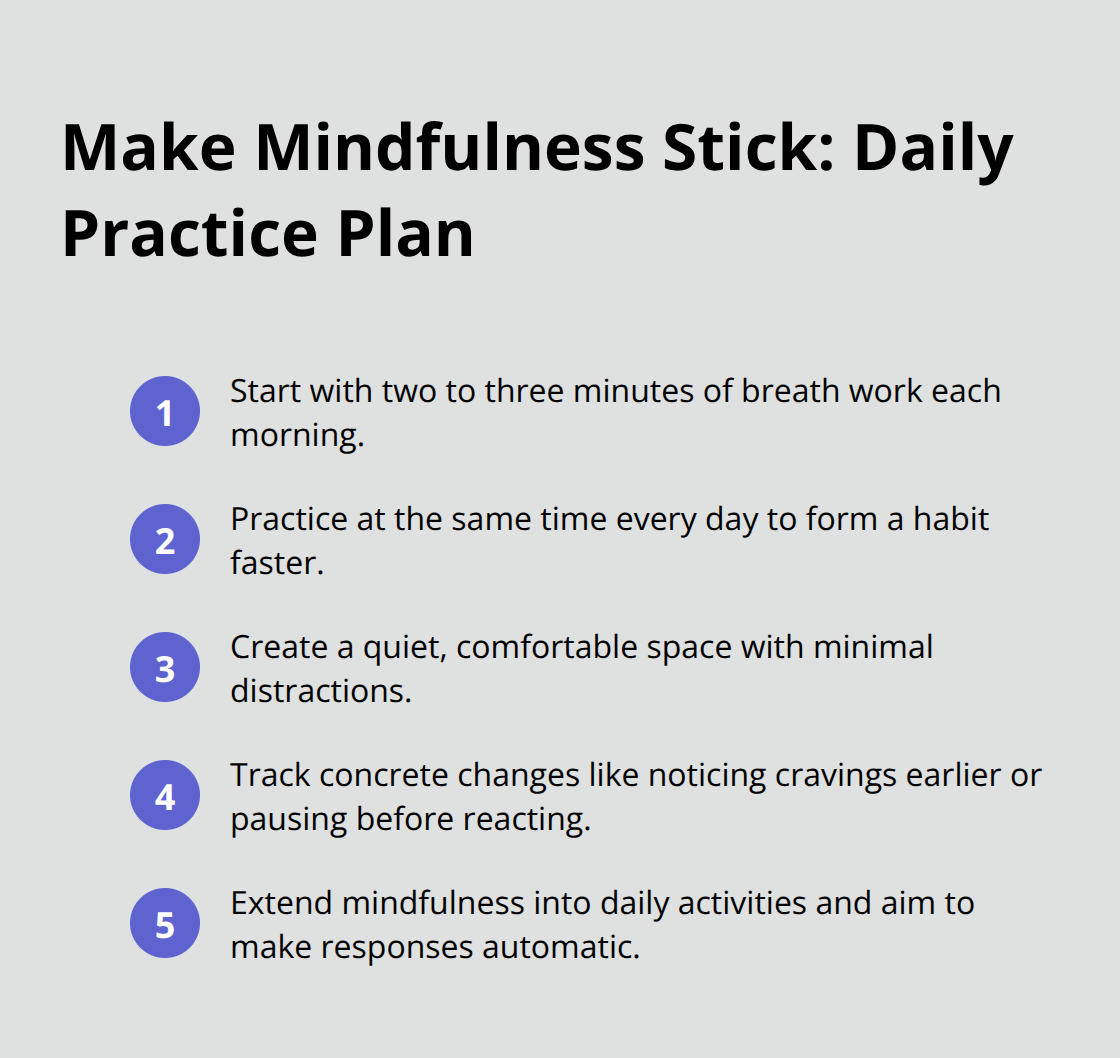
Practice the body scan and breathing exercises on a fixed schedule, ideally in the morning, so these skills become automatic. When cravings hit, you’ll already have trained your nervous system to stay calm and your mind to stay present. Urge surfing works best as a practiced skill rather than a last-minute emergency response, which means the real work happens during the quiet moments before cravings strike. The techniques you’ve learned here form the foundation, but they only deliver results when you integrate them into your daily life-something the next section addresses directly.
How to Build a Sustainable Mindfulness Practice
Mindfulness techniques only work if you actually practice them, and most people stop within the first two weeks. The hard beginning phase hits because expectations clash with reality-you sit down expecting immediate calm and instead notice your mind racing faster than ever. This isn’t failure; it’s the moment your awareness catches up with what was always happening. The real challenge isn’t mastering meditation or breathing exercises. It’s showing up consistently when nothing feels different yet.
Start With Sessions So Short You Can’t Fail
Two to three minutes of breath work each morning takes less time than checking your phone, yet the neurobiological effects compound over weeks. Research on Mindfulness-Based Relapse Prevention shows that daily practice solidifies the benefits your brain needs to resist cravings automatically. Set a specific time-ideally morning before other demands pull your attention-because consistency at the same time each day makes the practice habitual faster than scattered attempts.
Create an Environment That Supports Calm
Your environment matters more than most people realize. A quiet space with comfortable seating and minimal distractions directly impacts whether your mind settles or stays restless. If silence feels uncomfortable initially, guided meditation apps or recordings give you structured instruction and something external to anchor to while your practice develops.
Track Concrete Changes, Not How You Feel
Tracking progress separately from how you feel during meditation prevents the common mistake of quitting when sessions feel frustrating. Instead of judging meditation quality by inner peace, track concrete changes: Did you notice a craving earlier than usual? Did you pause before reacting to something that normally triggered you? Did you sleep better? These measurable shifts in awareness and decision-making prove your practice works even when sitting still feels pointless.
Extend Benefits Beyond Formal Practice
Booster interventions extend the benefits beyond your formal practice time. Mindfulness apps with reminders help you apply these skills during actual stress rather than just in calm moments. Mindfulness-based interventions reduce relapse risk most effectively when you practice both formally and throughout daily life-paying full attention while eating, walking, or completing chores strengthens the neural pathways that keep you sober when real triggers arrive. Treatment programs that integrate mindfulness into daily activities through yoga and forest therapy reinforce skills in varied contexts, showing that the most effective recovery programs embed these practices into structured routines rather than leaving them optional.
Make Mindfulness Automatic, Not Deliberate
Your recovery foundation strengthens when mindfulness becomes automatic rather than deliberate. This means the quiet work you do alone in the morning directly enables the quick responses you need when cravings hit unexpectedly during your day.
Building Long-Term Mindfulness for Sustained Sobriety
Mindfulness sobriety techniques interrupt the automatic cycle that addiction creates by teaching your nervous system to pause before reacting. You’ve learned how to recognize physical sensations before they escalate, identify emotional patterns that trigger cravings, and practice three concrete tools that restore control when urges hit hardest. The body scan, breathing exercises, and urge surfing rewire your prefrontal cortex with consistent daily practice, transforming how your brain responds to triggers.
Research on Mindfulness-Based Relapse Prevention shows that people who practice these techniques daily notice cravings earlier, pause before reacting, and experience fewer relapse episodes-with benefits that persist for months or years after treatment ends. Your brain learns that cravings are temporary sensations you can observe without acting on them, which means the work you do now compounds into lasting protection. Two to three minutes each morning, a quiet space, and consistent practice create measurable shifts in your awareness and decision-making.
Extend these skills beyond formal meditation by practicing mindfulness while eating, walking, or completing daily tasks, which is where recovery becomes sustainable. If you’re ready to build a recovery foundation that actually holds, contact Addiction Resource Center to explore how mindfulness-based treatment can work for your specific situation.