You may be reading this in the middle of a hard day. Maybe you found pills in a pocket, saw a text message that made your stomach drop, or got a phone call that forced you to face something your family has been fearing for a while. When fentanyl enters the picture, people often feel …

You may be reading this in the middle of a hard day. Maybe you found pills in a pocket, saw a text message that made your stomach drop, or got a phone call that forced you to face something your family has been fearing for a while. When fentanyl enters the picture, people often feel two things at once: panic and paralysis.
Both reactions make sense.
Families usually want immediate answers. Is this an emergency? Can someone stop safely at home? What kind of treatment works? What will the first day look like? If you're trying to help someone you love, the unknown can feel as scary as the addiction itself. The good news is that fentanyl addiction treatment isn't a mystery. There is a real path forward, and it can be taken one step at a time.
Table of Contents
- Recognizing the Crisis and Finding Hope
- What Fentanyl Addiction Looks and Feels Like
- A Guide to Evidence-Based Treatment Options
- The First Steps Toward Recovery
- A Look Inside the Healing Process
- Building a Life Beyond Addiction
- Your Journey to Recovery Starts Now
Recognizing the Crisis and Finding Hope
A lot of families realize something is wrong before they know exactly what it is. A son starts nodding off at dinner. A partner gets sick between doses and insists it's just stress. A parent notices money disappearing, sleep patterns changing, and a person who used to be steady becoming secretive, irritable, or unreachable.
When someone is using fentanyl, loved ones often feel like they need to solve everything by tonight. That urgency isn't an overreaction. Fentanyl was linked to 72,776 overdose deaths in 2023, making it the leading cause of overdose deaths in the United States, according to national fentanyl overdose data.
That number is heavy, but it should lead to action, not hopelessness.
Practical rule: If you suspect active fentanyl use, treat the situation as serious and time-sensitive, then move quickly toward professional help instead of waiting for “proof.”
Hope starts when the problem gets named clearly. Fentanyl addiction is dangerous, but it's also treatable. People do stabilize. Families do recover. The first real shift often happens when everyone stops arguing about whether it's “bad enough” and starts focusing on what kind of help is needed right now.
For some families, the next best step is urgent guidance rather than another attempt to manage things alone. If the situation feels unstable, emergency addiction treatment guidance can help you think through what needs immediate attention.
What Fentanyl Addiction Looks and Feels Like
Fentanyl changes behavior fast, but it also changes the body and brain in ways that can confuse families. A loved one may promise they want to stop and mean it. Then, hours later, they may seem desperate, withdrawn, or entirely focused on getting more. That doesn't mean they don't care. It means the drug has started driving the system.
Why fentanyl takes over so fast
A simple way to understand fentanyl is to think of the brain like a car alarm that has been rewired to be too sensitive. At first, fentanyl sets off an intense reward response. After repeated use, the alarm system stops working normally. Everyday discomfort feels louder. Stress feels sharper. The absence of the drug feels unbearable.
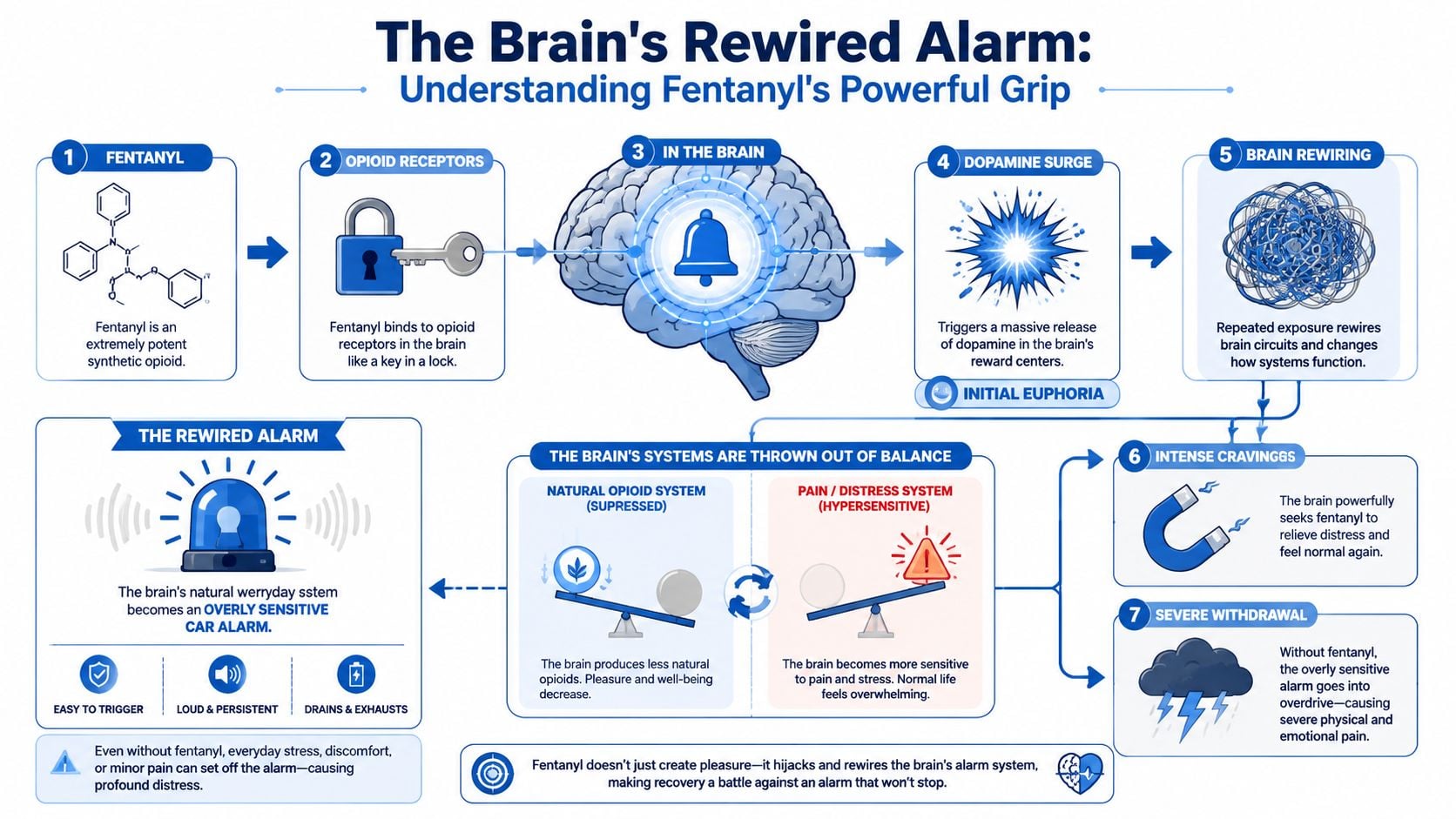
That helps explain why people often don't look “high” in the way families expect. Instead, they may look exhausted, flat, anxious, sick, or emotionally absent. The drug isn't just creating euphoria. It's reshaping what feels normal.
What families often notice first
Some signs show up subtly before the crisis becomes obvious:
- Physical changes: pinpoint pupils, drowsiness, nodding off, slowed breathing, nausea, poor appetite, or sudden flu-like sickness when the drug wears off
- Behavior shifts: disappearing for stretches of time, secrecy around phones, isolation, lying about money, or dropping responsibilities they used to handle
- Emotional instability: irritability, panic, apathy, shame, or sudden mood swings that seem out of proportion to the situation
- Compulsive patterns: wanting to quit, trying to quit, then using again even after frightening consequences
Families also get confused because fentanyl withdrawal may not follow the timeline people expect.
Why detox alone often isn't enough
Many people hear that opioid detox lasts about a week or two and assume the hardest part will be over quickly. But fentanyl often doesn't behave that neatly. According to Washington State fentanyl withdrawal interviews, 68% of interviewed users reported withdrawal symptoms beyond 3 weeks, and peak cravings occurred at 21 to 28 days, not within the first week.
That finding helps explain a painful pattern families see all the time. Someone gets through the early physical crash, everyone feels relieved, and then intense cravings return later. The person relapses, and the family thinks treatment “didn't work.” Often, the issue is that detox ended before recovery support began.
When cravings spike after detox, that isn't proof that the person doesn't want recovery. It's often proof that the brain is still trying to regain balance.
The most useful response is to stop treating detox as the finish line. For fentanyl, it's the opening phase of a longer healing process.
A Guide to Evidence-Based Treatment Options
When families search for fentanyl addiction treatment, they often get flooded with terms that sound similar but serve different purposes. Detox, residential rehab, outpatient care, medication, therapy, dual diagnosis treatment. The key is to see them as parts of one connected pathway rather than isolated choices.
The treatment options that matter most
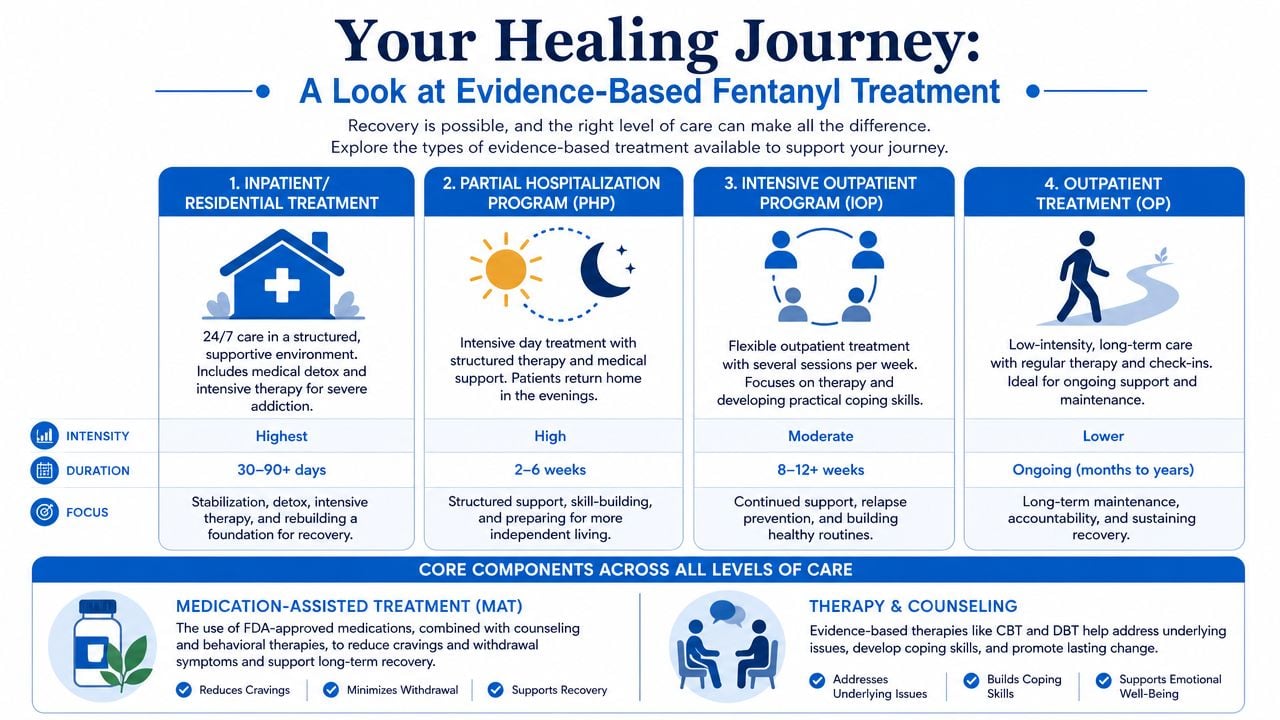
Medically supervised detox is where many people begin. This is the stabilization phase. The goal isn't willpower. The goal is safety, symptom management, and getting the person through withdrawal with medical oversight.
Medication-assisted treatment, or MAT, often starts here and may continue long after detox. This includes FDA-approved medications such as methadone, buprenorphine, and naltrexone. For fentanyl use, medication isn't a shortcut or a fallback. It's often the foundation that makes the rest of treatment possible.
Residential treatment gives people a structured place to heal when home life is unstable, cravings are intense, or repeated relapse has made lower levels of care too risky. Days are organized around therapy, medical support, routine, accountability, and rest.
Intensive outpatient treatment works for people who need strong clinical support but don't need to live onsite, or for those stepping down from a higher level of care. It lets patients practice recovery skills in real life while staying connected to therapy and monitoring.
Dual-diagnosis care matters when substance use and mental health problems are tangled together. Anxiety, depression, trauma, and other emotional struggles can fuel relapse if they're ignored.
If you're comparing programs and want a broader explanation of what evidence-based care looks like, this guide on effective addiction treatment options and outcomes is a useful companion resource.
Comparing treatment levels of care
| Level of Care | Intensity | Typical Duration | Best For |
|---|---|---|---|
| Medically supervised detox | Highest medical support at the start | Often begins with the withdrawal period | People who need safe withdrawal management and immediate stabilization |
| Residential treatment | High, with structured daily living | Often follows detox | People with severe addiction, unstable home environments, or repeated relapse |
| Intensive outpatient program | Moderate to high, with scheduled therapy | Can continue as recovery stabilizes | People who need flexibility for work, home, or step-down support |
| Standard outpatient care | Lower intensity, ongoing | Long-term as needed | People with stable functioning who need continued accountability and counseling |
Some families also compare local programs with regional options. For people looking at higher-structure care in Southern California, this overview of Orange County fentanyl treatment can help clarify how inpatient rehab is typically approached.
Why medication is often the turning point
The strongest misunderstanding in opioid treatment is the idea that taking medication means someone isn't really sober. In fentanyl treatment, that belief can be dangerous.
According to addiction recovery outcome data on MAT, treatment that includes Medication-Assisted Treatment reduces mortality by approximately 50%, and relapse rates for opioids can exceed 90% in the first year for people who don't receive full medication support.
That matters because fentanyl creates a powerful cycle of withdrawal, craving, and impulsive reuse. Medication can lower that pressure so the person can effectively absorb counseling, sleep, eat, think, and participate in life again.
A few points help families understand the role of MAT:
- It stabilizes the body: people are less consumed by withdrawal and craving.
- It creates space for therapy: counseling works better when the person isn't in constant physical distress.
- It lowers risk: the period after stopping opioids is often medically dangerous because tolerance changes quickly.
- It supports longer recovery: many people need continued medication, not just short detox support.
The question usually isn't “Why can't they just stop?” A better question is “What support will give them the safest chance to stay alive and engaged in recovery?”
The First Steps Toward Recovery
The hardest part for many families is the hour before they make the call. They worry they'll say the wrong thing, be judged, or get trapped in a complicated process. In reality, starting treatment is usually much more straightforward than people expect.
What happens when you first reach out
The first contact is often just a conversation. You describe what's been happening, ask whether the situation sounds urgent, and explain whether the person is ready for help now or whether the family is trying to plan the next move.
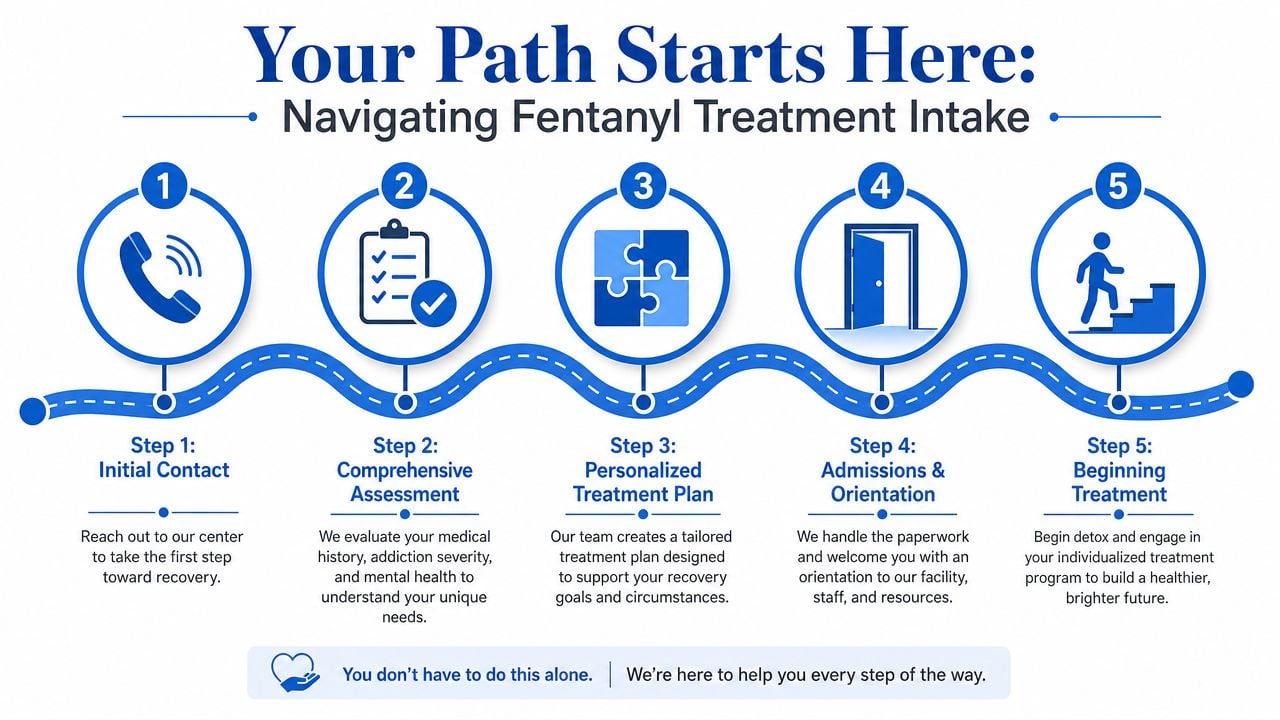
A solid intake process usually includes:
- A confidential assessment that asks about current use, withdrawal symptoms, past treatment, mental health, medications, and safety concerns.
- Clinical recommendations about the right level of care. Some people need detox first. Others may be appropriate for outpatient support if they're already medically stable.
- A practical admission plan that covers timing, transportation, what to bring, and what happens on arrival.
Fragmented systems often lose people between steps. The National Academy of Medicine discussion on improving access to evidence-based treatment for opioid use disorder emphasizes that lowering barriers to Medication for Opioid Use Disorder is critical. In plain language, people do better when they can move into real treatment without jumping through unnecessary hoops.
A short overview can also help make the process feel more familiar before that first conversation.
What to ask about insurance and admission
Families often freeze because they assume treatment access will be too complicated or too expensive to even explore. The better move is to ask direct questions right away.
Useful questions include:
- Insurance: Do you accept my plan, and can you verify benefits before admission?
- Medication: Can MAT begin quickly if the clinical team recommends it?
- Placement: If detox is needed first, can the team coordinate the next level of care after that?
- Family contact: How will updates, visitation rules, or family involvement work?
- Special circumstances: Is care available for adults with co-occurring mental health needs, work obligations, or military insurance such as TRICARE?
What the first day usually feels like
Most patients arrive exhausted, guarded, and unsure what comes next. That's normal. The first day is usually less dramatic than people fear. There is paperwork, orientation, basic medical review, and the start of a treatment plan built around immediate needs.
Many people don't need a perfect speech before admission. They need one calm decision, then someone else guiding the next few steps.
Families help most when they keep the focus narrow. Get through the call. Get the assessment. Get the admission plan. Recovery often begins that way.
A Look Inside the Healing Process
People are less afraid of treatment when they can picture it. The unknown feeds resistance. A clear picture lowers it.
What a day in detox can look like
In detox, the pace is quieter and more medical than many families expect. The patient checks in with staff, symptoms are monitored, medications may be adjusted, meals are encouraged, hydration matters, and rest is part of treatment. Someone may sleep a lot at first. Another patient may feel restless, achy, emotional, and unable to focus for long.
The emotional tone can shift hour by hour. A person might say, “I want to leave,” then feel relieved later that they stayed. That's one reason professional support matters so much during fentanyl withdrawal.
Medication plays a major safety role here. According to JAMA Network Open findings on first-line fentanyl treatment, MAT with buprenorphine or methadone is the only clinically validated first-line therapy for fentanyl use disorder and was associated with a 76% reduction in overdose risk at 3 months compared with no treatment or non-MAT approaches. For families, the practical meaning is simple: the treatment setting becomes safer when evidence-based medication is available.
What changes in residential care and outpatient treatment
Once the patient is medically steadier, treatment becomes more relational and skill-based. In residential care, the day usually has structure. Morning check-ins. Individual counseling. Group sessions. Education about cravings, relapse warning signs, and how fentanyl affects judgment. Time for meals, journaling, rest, and rebuilding basic routine.
Different professionals support different parts of the work:
- Medical providers manage withdrawal, medications, and health concerns.
- Licensed therapists and counselors help patients work through triggers, trauma, shame, grief, and destructive thought patterns.
- Recovery mentors offer practical support from lived experience and help patients believe change is possible.
Group therapy often worries people before treatment, but it becomes a relief for many. Patients hear their own fear, guilt, and confusion spoken out loud by someone else. That reduces isolation fast.
In an intensive outpatient program, the rhythm changes again. Patients attend therapy on a set schedule but live at home or in supportive housing. That's where skills get tested in real life. A person may learn how to handle a payday, a conflict with a partner, a lonely evening, or a drive past an old using spot without going back to fentanyl.
Treatment isn't built around keeping people busy. Each part has a job. Medication stabilizes. Counseling helps patients understand what drives use. Structure gives the brain time to heal. Practice turns insight into daily habits.
A good program doesn't expect a patient to “be fixed” in a few weeks. It helps them move from chaos to stability, then from stability to a life they can maintain.
Building a Life Beyond Addiction
The most helpful way to think about recovery is this: stopping fentanyl is only part of the work. The deeper task is building a life that no longer keeps pushing the person back toward it.
Recovery gets stronger with structure
When treatment ends, people don't just need motivation. They need a plan for ordinary life. Mornings, money, sleep, stress, loneliness, family conflict, boredom, and shame can all become relapse triggers if nothing new has been built around them.
That is why aftercare matters so much. It turns recovery from an idea into a routine.
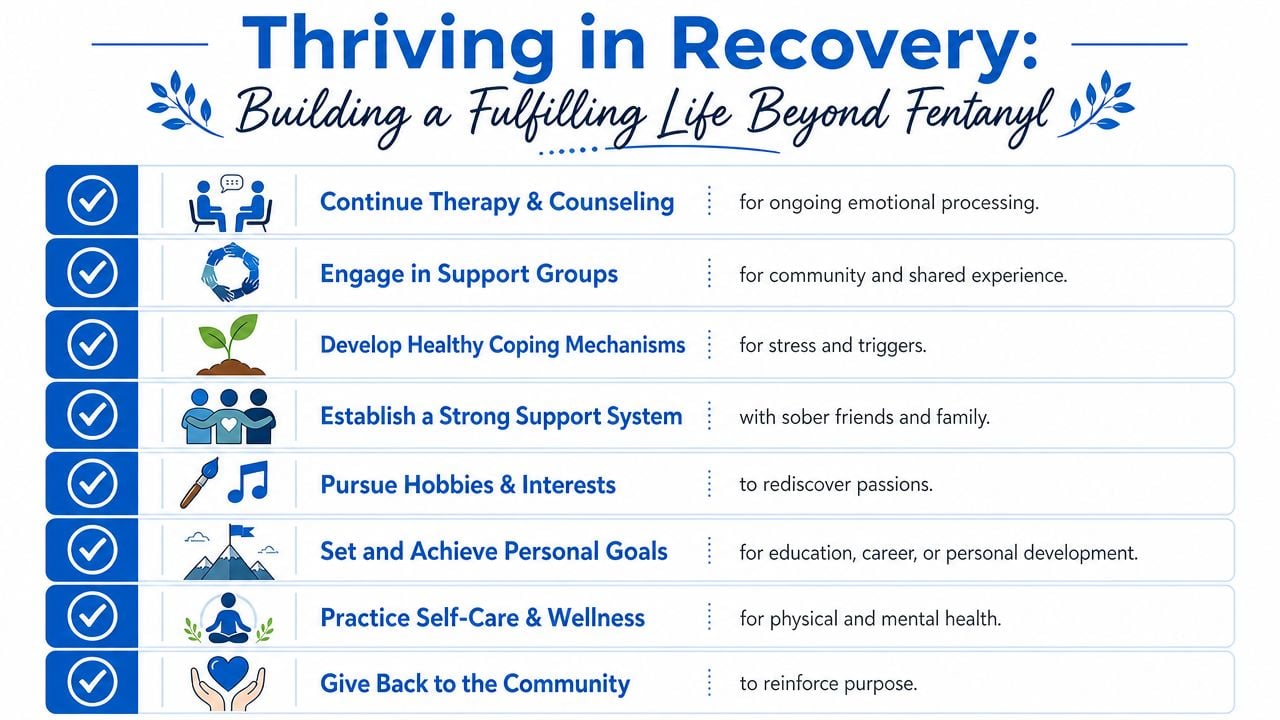
What a real aftercare plan includes
Strong aftercare usually includes several layers working together, not a single promise to “stay clean.”
- Ongoing therapy: People need continued space to deal with stress, trauma, cravings, and relationship patterns after formal treatment.
- Supportive community: Recovery gets steadier when the person has sober peers, trusted family, or structured support groups around them.
- Medication follow-up: For people on MAT, continued medical monitoring can protect early recovery and reduce the chance of a dangerous return to use.
- Stable environment: Some people need more than home discharge. A structured setting can help bridge the gap between treatment and independent living. For families exploring that option, this overview of sober living community benefits explains why environment matters.
Long-term recovery also grows when people reconnect with identity. Work. School. Parenting. Exercise. Spiritual life. Music. Volunteering. Repairing trust. These aren't side topics. They help answer a question that addiction keeps postponing: what will daily life be for now?
A useful relapse-prevention plan is specific. Not “call someone if things get bad,” but who to call, when to call, and what warning signs mean action needs to happen that day. Not “avoid triggers,” but which people, places, moods, and routines create danger.
Families can support this without becoming the police. The healthiest role is steady, boundaried, and honest. Encourage treatment. Don't fund use. Support recovery behaviors. Don't argue with active addiction at midnight and call it a strategy.
The goal isn't just to avoid fentanyl. It's to help the person build a life with enough connection, structure, and meaning that returning to fentanyl feels less and less compatible with who they're becoming.
Your Journey to Recovery Starts Now
If your family is facing fentanyl use, you don't need to solve the next year tonight. You need to take the next step.
Start with what you know. Fentanyl is serious. Detox alone often isn't enough. Evidence-based fentanyl addiction treatment works best when it includes medical support, medication when appropriate, therapy, structure, and a plan for what happens after the first crisis passes.
You also don't need to wait for a perfect moment. Many people enter treatment scared, ambivalent, and exhausted. Families often make the first move by asking questions, verifying insurance, arranging an assessment, or helping a loved one get through the door.
If you're the one seeking help for yourself, the same truth applies. You don't have to feel fully ready. You just have to stop doing this alone.
A clear path exists. It starts with a confidential conversation, then a real plan, then one day of treatment at a time. That's how panic becomes direction. That's how families begin to breathe again. That's how recovery begins.
If you're ready to take that first step, Addiction Resource Center LLC offers compassionate fentanyl addiction treatment in Yuba City, including medically supervised detox with MAT, residential rehab through its partner facility, and intensive outpatient care in person and via telehealth. They accept most major private insurance plans and welcome TRICARE beneficiaries. You can call or text 530-625-7910 anytime for a confidential conversation, help verifying insurance, or guidance on what level of care may fit your situation. The center is located at 1002 Live Oak Blvd., Suite A, Yuba City, CA.