Build family relapse prevention strategies that protect loved ones and strengthen recovery together with practical shared approaches.


When addiction affects someone you love, the entire family feels the impact. At Addiction Resource Center, we know that family relapse prevention isn’t just about the person in recovery-it’s about creating a household where everyone plays an active role in protecting that recovery.
Your family can be the strongest defense against relapse, but only if you understand the dynamics at play and have concrete strategies in place. This guide walks you through exactly how to do that.
How Family Relationships Shape Relapse Risk
Family relationships directly influence whether someone stays sober or returns to substance use. Research shows that greater social support has predicted lower substance use rates after treatment-stronger family connections support recovery. The same research indicates childhood trauma was positively correlated with relapse, with individuals experiencing more trauma reporting significantly more relapse episodes. This matters because it tells us family isn’t just emotionally important during recovery. It’s a measurable factor in whether treatment works. When family members understand this connection, they stop viewing their role as peripheral and recognize they’re actively part of the recovery equation. The home environment either reinforces sobriety or undermines it, and this happens through daily interactions, not grand gestures.
What Triggers Look Like Inside Your Home
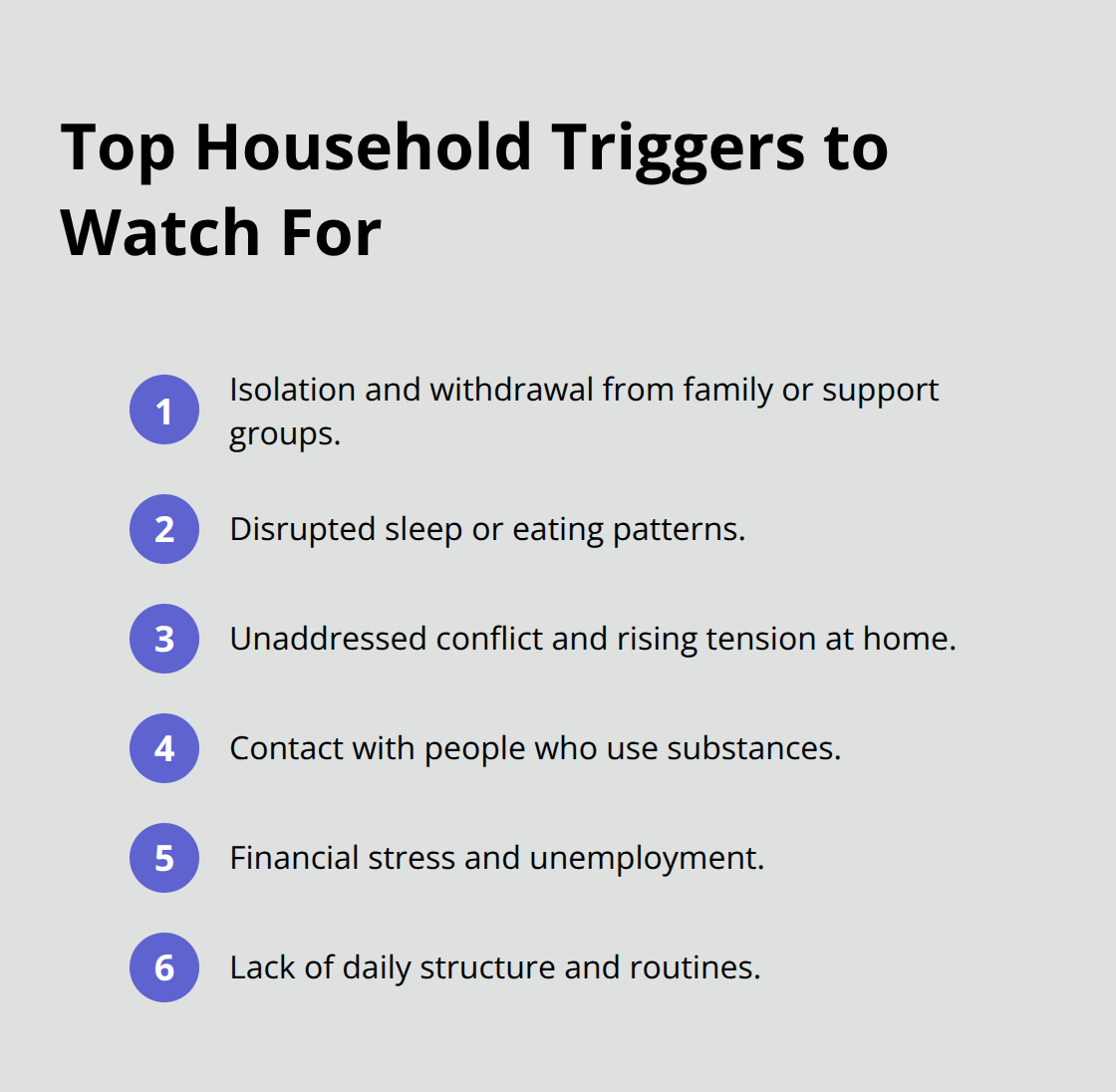
Specific situations within your household create relapse risk more than others. Isolation stands out as one of the most dangerous triggers families miss. When someone stops attending support groups, avoids family conversations, or withdraws into their room, these are emotional relapse warning signs that precede actual substance use. Disrupted sleep and eating patterns follow closely behind as red flags. Unaddressed conflict in the home ranks among the top relapse drivers-temptation and exposure to people who use are the most common motivators according to addiction research, and family tension often pushes someone toward their old social circles. Financial stress, unemployment, and lack of structure create vulnerability too. Research showed that unemployment was linked to lower social support and higher trauma exposure, both of which increase relapse odds. Your family’s role is to notice these patterns early and respond before cravings develop into action. This requires active observation, not passive hope that everything stays stable.
Breaking Codependency Patterns That Enable Relapse
Codependency in families with addiction creates a dynamic where family members unknowingly protect someone from the consequences of their behavior, which actually worsens addiction and increases relapse risk. Enabling behaviors include minimizing the addiction, avoiding difficult conversations, covering up the problem, or providing financial support that funds substance use. These patterns feel protective in the moment but they remove the motivation for sustained recovery. The distinction matters: support acknowledges the problem and helps address underlying issues, while enabling denies the problem exists. If you find yourself making excuses for your loved one’s behavior, paying their bills when they’re spending money on substances, or staying silent to keep peace, you’re enabling. Breaking this cycle requires setting clear boundaries with real consequences, which feels uncomfortable initially but actually strengthens recovery. Research shows that when families shift from enabling to structured support, treatment engagement improves significantly. Your loved one needs to experience natural consequences while simultaneously knowing your family won’t abandon them during recovery, and rebuilding trust happens through demonstrated change rather than words alone.
Moving From Awareness to Action
Understanding these dynamics is the first step, but families must translate that knowledge into concrete household practices. The patterns you’ve identified-isolation, conflict, financial instability-won’t resolve on their own. What happens next determines whether your home becomes a place where recovery thrives or where relapse becomes more likely. The strategies you implement in your daily routines, the boundaries you establish, and the way you communicate with your loved one will directly shape their path forward.
How to Set Boundaries That Protect Recovery
Boundaries as the Foundation of Recovery
Boundaries aren’t punitive measures-they’re the structural foundation that allows recovery to happen. Without them, families drift into patterns where substance use gets normalized or minimized. A boundary is a clear, specific rule about what behavior you will and won’t accept, combined with a concrete consequence if that rule gets broken. Instead of saying no drug use, a functional boundary states: there will be no substance use in this home, and if this happens, the person in recovery will move to a sober living facility for 30 days. The consequence must be something you can actually enforce, not an empty threat.
Research on relapse prevention shows that individuals with structured accountability experience significantly lower relapse rates than those without it. Your family needs written agreements that spell out expectations for curfew, financial transparency, participation in treatment, and contact with people who actively use. These aren’t suggestions-they’re non-negotiable requirements. The person in recovery should help create these boundaries because agreements they help design are far more likely to be followed than rules imposed on them. This collaborative approach also demonstrates that you trust their judgment while maintaining clear limits.
Tracking Emotional Relapse Before It Becomes Physical
Monitoring and responding to warning signs requires a different mindset than typical family interactions. Emotional relapse happens before physical relapse, meaning you have a window to intervene before substances reappear. The first emotional relapse signs are isolation and withdrawal from support groups or family. If your loved one skips three consecutive meetings at their support group, that’s not a minor slip-it’s a major warning sign that demands immediate conversation.
Sleep disruption, sudden irritability, or renewed contact with old friends are equally serious. Set up a simple tracking system: one family member checks in weekly, and everyone knows that missing this check-in triggers a conversation about what’s happening. Some families use a shared calendar where the person in recovery logs their support group attendance and therapy sessions. This isn’t invasive surveillance-it’s transparent accountability.
Managing Financial Oversight Without Control
Financial monitoring matters because money often funds relapse. Consider requiring receipts for cash withdrawals, limiting credit card access, or having one trusted family member handle bills temporarily. The person in recovery should understand this isn’t about control-it’s about removing the opportunity to make impulsive decisions during moments of weakness.
When warning signs appear, respond within 24 hours. A delayed response sends the message that you noticed but didn’t care enough to act, which actually reinforces the behavior. Set clear household boundaries and enforce them consistently so everyone in the household understands their role and commits to consistent follow-through. The next step involves translating these boundaries into actual communication with your loved one-conversations that feel difficult but ultimately strengthen the recovery foundation you’ve built together.
How to Talk About Relapse Without Making It Worse
Family conversations about relapse risk fail for one reason: they happen when emotions run high and nobody listens. Families make this mistake constantly. They wait until they catch their loved one isolating or notice contact with old friends, then they confront in anger. This triggers defensiveness, shuts down communication, and pushes the person further away.
Establish Predictable Check-In Conversations
Set up a standing weekly check-in that occurs on the same day and time regardless of whether problems exist. These conversations work best when they’re predictable and calm. Start by asking what’s going well in recovery, which shifts the focus from surveillance to genuine interest. Only after establishing connection should you ask about challenges like cravings, sleep problems, or difficult emotions.
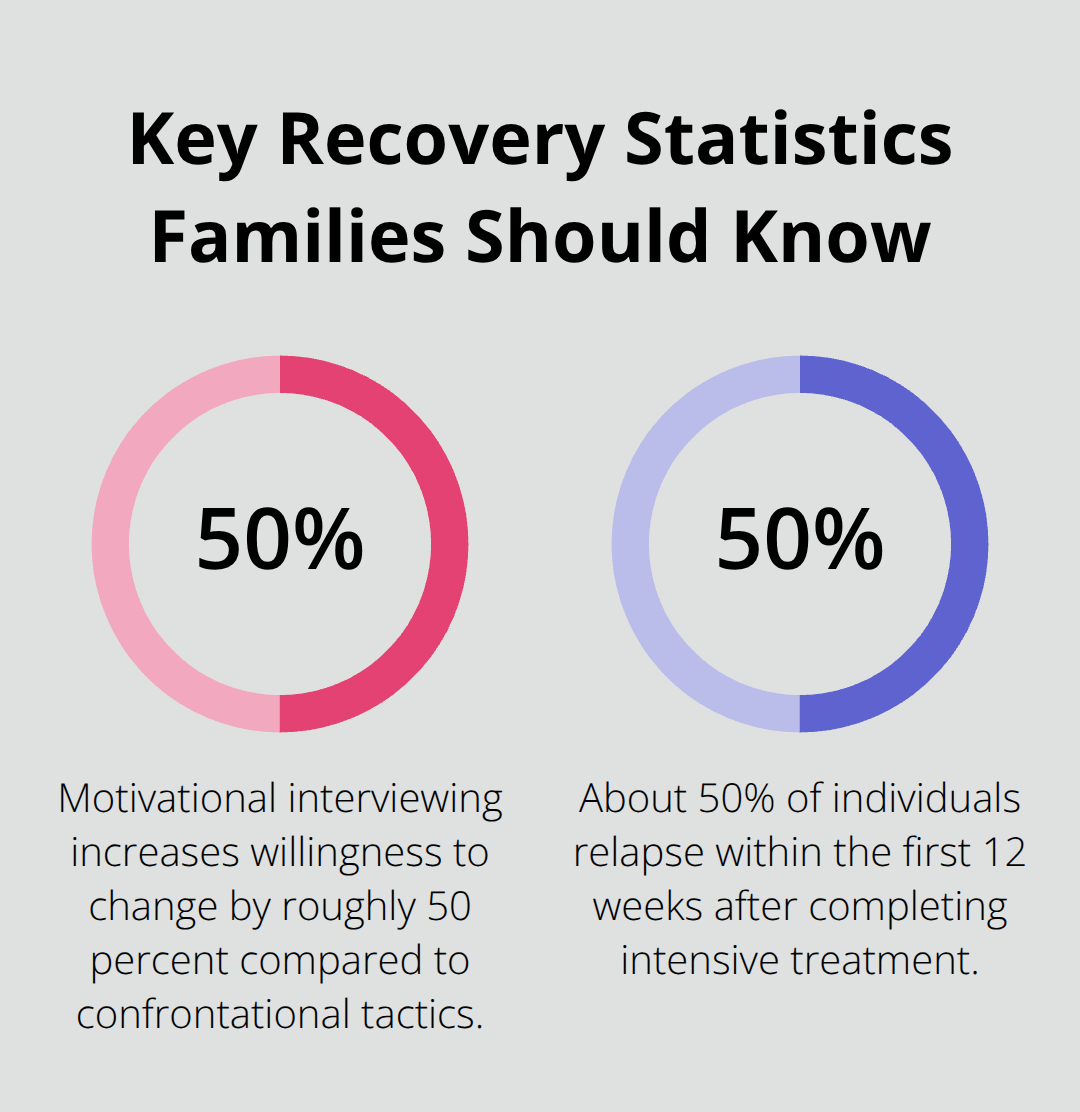
Research on motivational interviewing shows this approach increases willingness to change by roughly 50 percent compared to confrontational tactics. When your loved one mentions temptation, respond with curiosity instead of judgment. Ask what triggered the craving and what coping strategy they used. If they haven’t used one yet, collaborate on options together rather than lecturing. This transforms you from an authority figure into a problem-solving partner.
Master the Tone and Technique of Connection
The tone matters as much as the words. Studies on family communication in addiction recovery show that expressed emotion, criticism, and hostility from family members predict worse outcomes and faster relapse. Conversely, warmth and collaborative problem-solving predict sustained abstinence.
Write down what you want to discuss before the conversation so you stay focused and don’t veer into complaints about past behavior. Keep it to one topic per week. If you notice your loved one becoming defensive, pause and ask what they heard you say. Many conflicts stem from misunderstanding, not actual disagreement.
Active listening means fully concentrating on their words without planning your response while they talk. Reflect back what you heard before you respond. This simple step reduces conflict dramatically because people feel heard rather than attacked.
Involve Your Loved One in Treatment Decisions
Treatment planning works best when your loved one leads and your family supports their vision rather than imposing your own. Ask them what type of treatment appeals to them and what barriers prevent engagement. Some people respond to intensive outpatient programs that allow them to maintain work and family routines, while others need more structured partial hospitalization. When someone has input into their treatment choice, completion rates improve significantly.
Before treatment starts, attend at least one appointment together so you understand the clinician’s approach and the specific goals being targeted. This also signals to your loved one that you’re invested in their recovery, not just monitoring for failure.
Create a Written Crisis Response Plan
Develop a written crisis response plan together before problems emerge. This plan names specific people to contact if cravings become overwhelming, identifies treatment facilities within your area, and lists what each family member will do during a relapse. For example, one person manages immediate safety, another contacts the treatment provider, and another arranges transportation. When a crisis hits, confusion and panic dissolve if everyone knows their role.
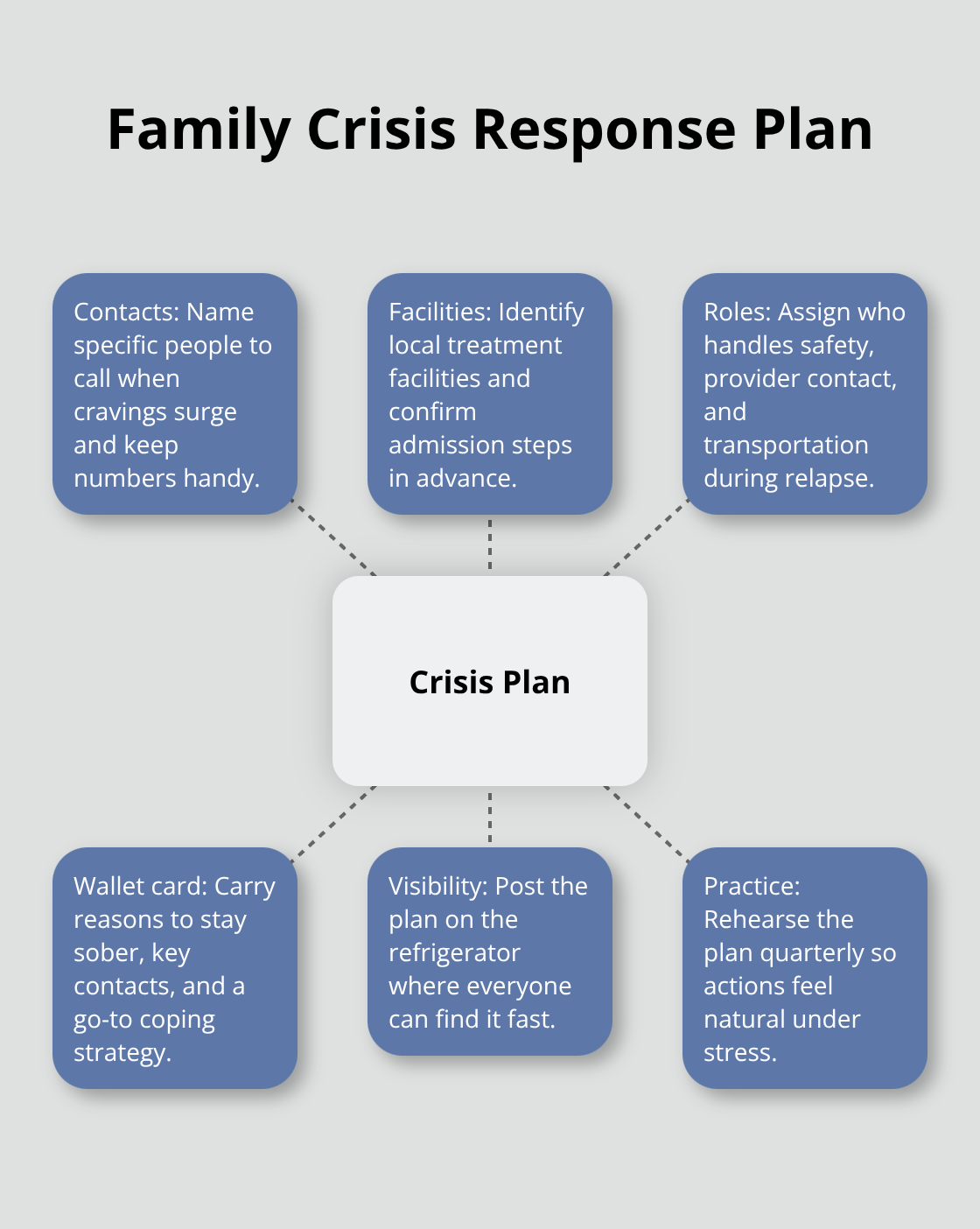
Assign one trusted family member to carry a recovery wallet card with the person’s top reasons for staying sober, key support contacts, and their favorite coping strategy. This card becomes a lifeline during moments of weakness because it provides concrete guidance when decision-making ability falters. Post the crisis plan on the refrigerator so nobody searches for it when they need it most. Practice the plan quarterly so it feels natural rather than foreign when urgency strikes.
Empowering Your Family’s Role in Lasting Recovery
Family relapse prevention works because it transforms recovery from an individual struggle into a shared responsibility. We at Addiction Resource Center have observed that families who implement these strategies experience measurably better outcomes than those who leave recovery entirely to the person in treatment, and research confirms this: about 50% of individuals relapse within the first 12 weeks after completing intensive treatment, but families who actively monitor warning signs, maintain consistent communication, and enforce clear boundaries significantly reduce this risk. Your role as a family member is not to fix addiction or force sobriety-it is to create an environment where recovery becomes the easier choice.
This environment takes shape when you notice emotional relapse signs before physical relapse happens, when you have difficult conversations without judgment, and when you follow through on the boundaries you established together. Your loved one’s childhood trauma and current stress levels directly influence their relapse risk, and your consistent support measurably reduces that risk. Recovery is lifelong, not a time-limited goal, which means ongoing family involvement matters as much in month six as it does in week one.
If your family struggles to implement these approaches or if your loved one needs professional support, we offer personalized addiction therapy and substance abuse counseling designed to meet your specific situation. Our team understands the complex dynamics between family relationships and recovery outcomes, and we are equipped to help both individuals and families navigate this journey together. Start with one strategy this week, then add another-progress matters more than perfection.