A parent is awake at midnight, trying to decide whether a loved one needs emergency help, detox, residential treatment, or a conversation that won't end in another argument. At the same time, someone has to call the insurer, protect children in the home, arrange transportation, and find support for the family members who are running …

A parent is awake at midnight, trying to decide whether a loved one needs emergency help, detox, residential treatment, or a conversation that won't end in another argument. At the same time, someone has to call the insurer, protect children in the home, arrange transportation, and find support for the family members who are running out of energy. Those needs compete, but they shouldn't be handled through one undifferentiated list of links.
The addiction resources for families below are organized around practical decisions: finding immediate help, comparing treatment pathways, supporting a loved one, navigating insurance and military benefits, and building aftercare. Some resources provide clinical care, some offer peer connection, and others help families understand options or locate local services. They don't all solve the same problem.
If someone is unconscious, having trouble breathing, experiencing a suspected overdose, threatening immediate harm, or facing another urgent medical danger, call emergency services now. A directory can help with planning and navigation, but it isn't a substitute for emergency response.
Table of Contents
- 1. Addiction Resource Center LLC
- 2. SAMHSA National Helpline and FindTreatment.gov
- 3. Al-Anon Family Groups and Alateen
- 4. Nar-Anon Family Groups and Narateen
- 5. SMART Recovery Family and Friends
- 6. Partnership to End Addiction
- 7. Hazelden Betty Ford Foundation Family Programs and Resources
- 8. CMC Foundation for Change and Invitation to Change
- 9. VA Vet Centers and Caregiver Support
- 10. California DHCS SUD County Access Lines
- Comparison of 10 Family Addiction Support Resources
- Turn Information Into a Family Support Plan
1. Addiction Resource Center LLC
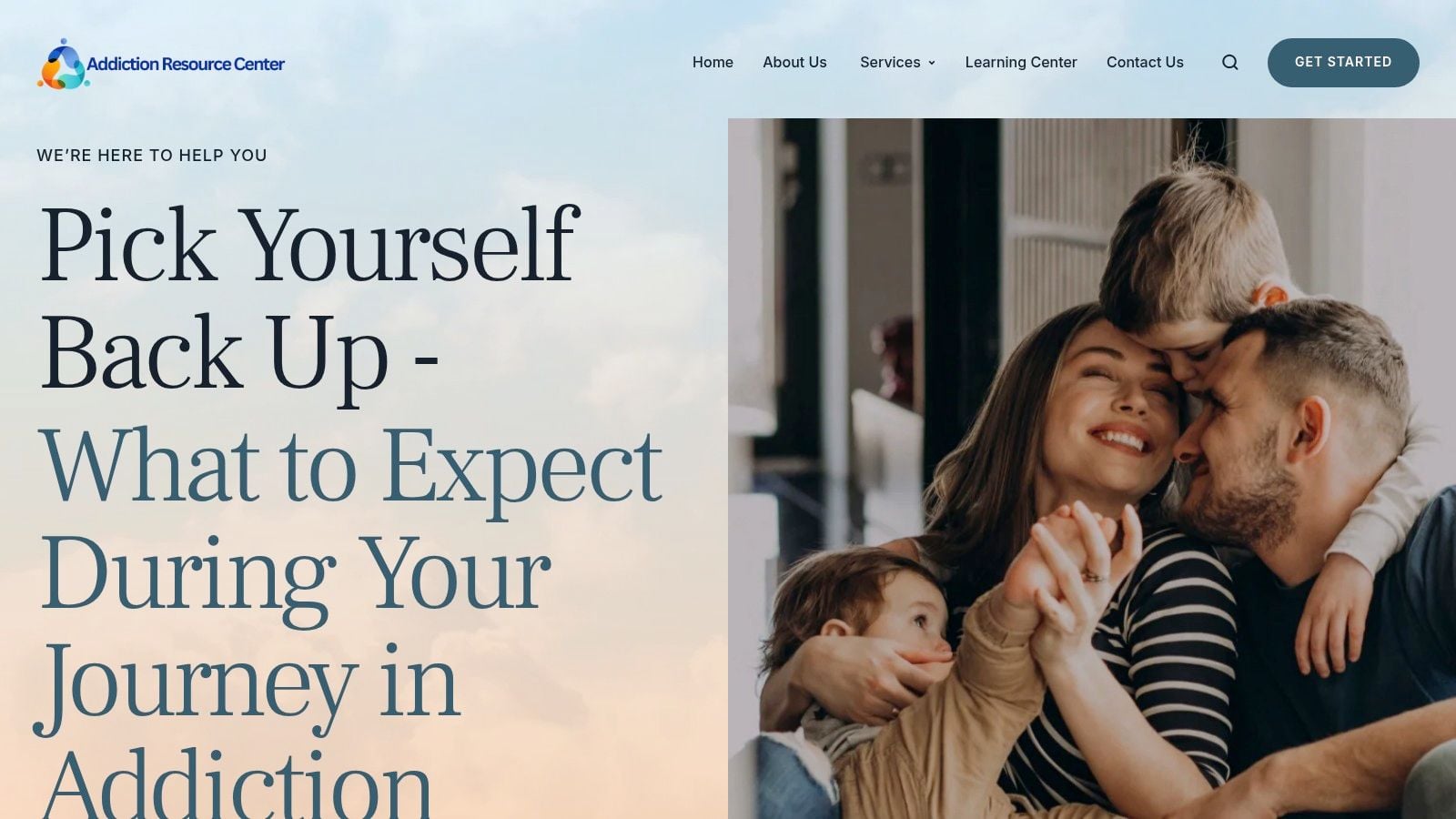
Addiction Resource Center LLC gives adults and families in Yuba City a local point of contact when the situation requires more than general information. The center serves adults 18 and older with substance use disorders and co-occurring mental health needs, combining medically supervised detox, medication-assisted treatment, residential rehabilitation through partner facility Ona Treatment Center in Browns Valley, California, and an Intensive Outpatient Program available in person or through telehealth. Families can start with a conversation about the appropriate level of care rather than trying to make every treatment decision alone.
The multidisciplinary team includes a medical doctor, registered nurse, licensed counselors with CADC credentials, an LMFT, and recovery mentors. Individualized treatment planning, 24/7 wellness monitoring, relapse-prevention education, privacy, and customized aftercare planning are particularly relevant when relatives need a coordinated path from stabilization to ongoing recovery.
Where the center fits best
This is a strong choice for families who want a full continuum of care and a reachable local team. The in-person and telehealth IOP options can help adults continue treatment while managing work, family, or distance. The center also accepts most major private insurance plans and TRICARE, which may make it a practical starting point for insured patients and veterans. Coverage still needs to be verified directly, because benefits, authorizations, deductibles, and network rules vary.
Residential rehabilitation takes place through Ona Treatment Center rather than in an on-site residential unit. That can support continuity across care levels, but families should ask how referrals, transportation, clinical communication, and transfers are handled.
Ask before admission: Confirm the recommended level of care, insurance benefits, expected out-of-pocket responsibility, residential placement arrangements, medication options, visitation rules, and aftercare schedule.
Specific program pricing, public testimonials, and awards or certifications aren't listed on the website. Families should request current cost estimates, insurance verification, program details, and tour information directly. The center is located at 1002 Live Oak Blvd., Suite A, Yuba City, and its 24/7 phone and text line is 530-625-7910. Visit Addiction Resource Center LLC to begin that conversation.
2. SAMHSA National Helpline and FindTreatment.gov
When the family doesn't know where to begin, the SAMHSA National Helpline and FindTreatment.gov offer a broad, government-run starting point. The helpline operates 24/7 in English and Spanish at 1-800-662-HELP (4357), with TTY support. Families can also text HELP4U to 435748 for a ZIP-code referral, which is useful when making a phone call feels difficult.
FindTreatment.gov helps families search for licensed mental health and substance use treatment programs. Filters can narrow options by level of care, payment or insurance, and medications for opioid use disorder. Listings are refreshed annually from the National Substance Use and Mental Health Services Survey database, so the directory is designed for current navigation rather than a static collection of provider names.
Best use and main limitation
SAMHSA works well when a relative needs several options without being directed toward one private provider. A family can gather programs, call admissions teams, and compare detox, residential, outpatient, and medication services. The service is free and confidential, but it doesn't identify one universally best facility, provide guaranteed placement, or act as ongoing case management.
Use the locator as a shortlist builder. Ask each program whether it currently has openings, accepts the family member's insurance, provides the required level of care, offers medication treatment when appropriate, and can explain the next step in writing.
3. Al-Anon Family Groups and Alateen
Al-Anon is designed for relatives and friends affected by someone else's alcohol problems, not for treating the person who drinks. Founded in 1951, it became a major peer-led support system for families. Historical SAMHSA material records more than 28,000 weekly Al-Anon Family Groups worldwide by 1989, including Alateen, while earlier reports recorded 16,500 groups worldwide in 1980, including 2,300 Alateen groups. These historical milestones show why Al-Anon remains one of the most established family-focused addiction resources. SAMHSA's historical data provides the background.
Families can search the Al-Anon meeting directory for in-person, phone, and online meetings. Alateen provides teen-specific support, with guidance around safety and anonymity. Literature and a mobile app can help members continue learning between meetings, but the central experience is anonymous, peer-led sharing.
What it can and can't provide
Al-Anon is useful when a family member feels isolated, caught in repeated crises, or unsure how to set limits without abandoning someone they love. Attendance is free, with optional donations and purchasable literature. That makes it accessible while a family is waiting for therapy, treatment placement, or insurance answers.
Meetings aren't clinically facilitated, and the 12-step approach won't fit every family's beliefs or preferences. It also isn't an emergency service or a substitute for medical, legal, or family therapy support.
For a practical discussion of how peer connection can strengthen recovery, see support networks for families. Families who prefer remote connection can also join a virtual support group.
4. Nar-Anon Family Groups and Narateen
Nar-Anon serves relatives and friends of people affected by drug addiction, including families dealing with opioids, stimulants, or polysubstance use. Its focus distinguishes it from Al-Anon, although both use an anonymous, peer-led, 12-step fellowship model. Narateen offers teen-specific support for young people affected by another person's drug use.
The Nar-Anon website provides a meeting directory for in-person and virtual groups, newcomer materials, teen resources, and the quarterly Serenity Connection newsletter. Families in smaller communities may need to search across nearby areas or consider online meetings, since local availability can be uneven.
When Nar-Anon is the better fit
Nar-Anon can be a practical choice when the family wants to speak with people who understand drug-related secrecy, fear, conflict, and uncertainty. The meetings are free to attend, while literature can be purchased through the Nar-Anon store. A relative can try a meeting without committing to treatment for the person using drugs, which matters when that person refuses help.
The trade-off is that peer support doesn't provide clinical assessment, detox supervision, medication management, or treatment placement. Some families also find that 12-step language doesn't match what they're looking for. If the household needs trauma treatment, family therapy, safety planning, or help with a child-protection concern, add a qualified professional rather than expecting a meeting to cover every need.
5. SMART Recovery Family and Friends
SMART Recovery Family and Friends takes a different route from Al-Anon and Nar-Anon. It uses a non-12-step, skills-focused framework informed by Cognitive Behavioral Therapy and Motivational Interviewing principles. The emphasis is on practical ways to reduce enabling, strengthen boundaries, communicate more effectively, and protect the family member's own well-being.
Families can find free U.S. online and in-person meetings through SMART Recovery's meeting page. Volunteer facilitators use standardized meeting guidance, and the program provides a Family and Friends Handbook along with practical handouts. Those materials give participants something concrete to practice between meetings instead of relying only on personal sharing.
The practical trade-off
SMART Recovery may suit relatives who want behavioral tools and don't connect with spiritual or 12-step language. A family can use the exercises to prepare a difficult conversation, identify responses that unintentionally reinforce harmful behavior, and establish limits that are clear and consistent. Attendance is free, with optional donations.
Availability is thinner in some regions than the larger peer fellowships, and volunteer facilitation has limits. The meetings aren't a replacement for professional family therapy when there's violence, severe trauma, child-safety risk, medical instability, or complicated co-occurring mental health needs. Use SMART Recovery as a skills and support layer, not as a substitute for clinical care.
6. Partnership to End Addiction
Partnership to End Addiction is especially useful for parents and caregivers supporting a teen or young adult. Its services include a free, confidential helpline at 855-378-4373, scheduled calls, text coaching, online support meetings, resource centers, and family toolkits. Families can also text CONNECT to 55753 to begin a coaching program that offers guidance over time.
The Partnership to End Addiction resource center covers prevention, treatment, recovery, communication, and family support. This breadth matters when a parent is still trying to understand whether a situation calls for a conversation, an assessment, formal treatment, or help for the parent.
A good match for parents who need coaching
The organization's strongest feature is its family-centered design. A parent can use the phone line for a focused conversation, choose text support when scheduling is difficult, and join an online group without tying the family to one treatment provider. The services are free and confidential.
The limitation is scope. The primary emphasis is on youth and young adults, so the guidance may be less appropriate for a spouse, sibling, or parent with a longstanding adult substance use disorder. The organization also focuses on education and coaching rather than guaranteeing direct treatment placement. Families needing immediate medical care or a confirmed bed should use a treatment locator, county access line, or provider admissions team alongside this resource.
7. Hazelden Betty Ford Foundation Family Programs and Resources
Some families need more structure than a peer meeting can offer. Hazelden Betty Ford provides therapist-led family programming, including a multi-session virtual Family Program, in-person children's and family programs at select treatment sites, a family support app, and telehealth resources. Registration is required for the virtual program, so families should review dates and participation expectations before planning around it.
The Hazelden Betty Ford family program is suited to relatives who want formal education and skills training connected to a national addiction treatment system. Workshops can address family impact, communication, recovery participation, and ways to support change without taking over the loved one's recovery.
Structured support comes with access questions
The clinician-led format is the main advantage. It gives families a planned curriculum, professional facilitation, and opportunities to ask questions in a setting more structured than an open peer meeting. Virtual delivery can also reduce travel barriers.
Many workshops and events have fees, while scholarships or discounts vary. In-person children's and family programs are limited to select locations. Before registering, ask about the total cost, financial assistance, who may attend, whether the program is educational or therapeutic, and how the content connects with the loved one's current treatment plan. If the family needs individualized therapy, confirm whether separate clinical care is recommended.
8. CMC Foundation for Change and Invitation to Change
The Invitation to Change approach is built for families who want to help without relying on confrontation, blame, or control. CMC Foundation for Change combines Community Reinforcement and Family Training, Motivational Interviewing, and Acceptance and Commitment Therapy in a skills-based model. Its materials address communication, boundary-setting, reinforcement strategies, and compassionate support.
The CMC Foundation for Change website offers a resource library, free webinars and talks, online family events such as Family Mondays, optional paid trainings, workbooks, and Zoom-based education for loved ones and professionals. Families can begin with free content and decide later whether a paid training or workbook offers enough additional value.
Best for learning what to do at home
The approach is practical when a family member is refusing treatment or shutting down during conversations. It can help relatives change their own responses, reinforce healthier behavior, and discuss treatment without making every interaction a power struggle. That doesn't guarantee that a loved one will accept help, but it can give the family a more deliberate way to respond.
CMC isn't a crisis line, detox provider, or emergency service. Live events also vary, so families shouldn't depend on one upcoming session for urgent guidance. Use the free resources for immediate skill-building, then add a therapist, treatment navigator, or emergency service when the situation requires direct clinical intervention.
9. VA Vet Centers and Caregiver Support
Veterans, service members, and military families often need support that understands substance use alongside PTSD, deployment experiences, grief, relationship strain, or military culture. Community Vet Centers provide no-cost, confidential counseling, including individual, couples, and family counseling, plus referrals. The VA Vet Center website explains local access and available services.
Families can call the 24/7 Vet Center Call Center at 1-877-927-8387 or the VA Caregiver Support Line at 1-855-260-3274. Caregiver Support can help relatives access services, while Coaching Into Care can help route family members who are trying to encourage a veteran to seek treatment.
Why military families should call before assuming
Vet Centers can be a strong fit when the family wants confidential counseling with staff who may have veteran or military cultural competence. Services are separate from VA hospital enrollment requirements, which can reduce hesitation for families unsure about entering the broader VA system.
Eligibility and access depend on veteran or service-member status, service history, and local program rules. Availability also differs by Vet Center. Ask directly whether the family member qualifies, whether couples or family sessions are available, how substance use treatment referrals work, and whether the center can coordinate with existing medical or behavioral health care.
Families seeking a broader overview of care options can also review addiction treatment for veterans.
10. California DHCS SUD County Access Lines
California families often need more than a statewide list of providers. They need to know which county office handles assessments, Medi-Cal or Drug Medi-Cal questions, detox referrals, residential placement, and outpatient care. The California Department of Health Care Services provides a centralized directory of county Substance Use Disorder Access Lines and related websites.
The California DHCS SUD County Access Lines page is especially useful for residents who need local, insurance-informed navigation. County staff can explain where to start, what assessments are required, which services may be available, and how local coverage affects placement. The page also provides guidance related to evidence-based opioid use disorder treatment.
A direct route for California coverage questions
This resource is stronger than a general search when the family's key question is, “Who handles treatment access where we live?” Families can call the relevant county line and ask about detox, residential care, outpatient treatment, medication services, eligibility, transportation, and wait times.
The limitations are geographic and operational. It's designed for California residents, and responsiveness, availability, and waiting periods vary by county. A county referral isn't a guarantee of an immediate bed or a specific program. Keep a written record of the person spoken to, the programs named, required documents, follow-up dates, and any pending authorization.
For additional California behavioral health context, review behavioral health services in California.
Comparison of 10 Family Addiction Support Resources
| Service | Core services | Quality & access (★) | Cost / Value (💰) | Who it's for (👥) | Unique / Notes (✨) |
|---|---|---|---|---|---|
| 🏆 Addiction Resource Center LLC | Medically supervised detox (MAT); IOP (in‑person & telehealth); residential via partner | ★★★★☆, 24/7 wellness monitoring; multidisciplinary team; local access | 💰 Accepts most private insurance & Tricare; contact for pricing | 👥 Adults 18+, insured patients & families | ✨ Individualized plans, private & serene setting; 🏆 Recommended |
| SAMHSA National Helpline + FindTreatment.gov | 24/7 helpline; FindTreatment.gov nationwide locator & SMS ZIP referrals | ★★★☆☆, 24/7, English/Spanish; annual data refresh | 💰 Free | 👥 Anyone seeking unbiased referrals | ✨ Nationwide, government-run referrals; not a placement guarantee |
| Al‑Anon Family Groups (incl. Alateen) | Peer‑led 12‑step meetings (in‑person/online/phone); teen (Alateen) options | ★★★☆☆, widespread meetings; anonymity preserved | 💰 Free (donations/literature optional) | 👥 Families/friends of those with alcohol use; teens | ✨ Peer support & boundary skills; non‑clinical |
| Nar‑Anon Family Groups (incl. Narateen) | Peer‑led 12‑step meetings for drug SUD; teen groups | ★★★☆☆, availability varies by region | 💰 Free (donations/literature optional) | 👥 Families of people with drug addiction; teens | ✨ Focused on non‑alcohol SUD dynamics; peer community |
| SMART Recovery Family & Friends | Skills‑based meetings using CBT & MI; practical handouts | ★★★★☆, evidence‑informed, skills‑focused | 💰 Free (donations optional) | 👥 Families preferring non‑12‑step, practical tools | ✨ Structured tools & practiceable strategies |
| Partnership to End Addiction | Free helpline, text coaching, online groups & toolkits | ★★★★☆, family‑centric, multi‑channel support | 💰 Free | 👥 Parents/caregivers of teens & young adults | ✨ Tailored text coaching and specialist helpline |
| Hazelden Betty Ford, Family Programs | Clinician‑led multi‑session virtual programs; in‑person family events; app | ★★★★☆, national reputation; clinician‑led | 💰 Program fees (scholarships/discounts vary) | 👥 Families seeking therapist‑led education | ✨ Structured clinician workshops + support app |
| CMC: Foundation for Change, ITC | ITC (CRAFT/MI/ACT) webinars, guides, trainings | ★★★★☆, practical, skills‑based approach | 💰 Mix of free webinars + paid trainings/workbooks | 👥 Families wanting actionable communication & reinforcement skills | ✨ Evidence‑based family trainings; webinars & resources |
| VA Vet Centers & Caregiver Support | Community Vet Center counseling; caregiver navigation & helplines | ★★★★☆, clinician‑staffed, veteran‑focused | 💰 Free for eligible veterans & caregivers | 👥 Veterans, service members & caregivers | ✨ Confidential, culturally competent veteran care |
| California DHCS, SUD County Access Lines | Centralized county SUD access numbers & Medi‑Cal guidance | ★★★☆☆, region‑specific responsiveness; 24/7 county lines | 💰 Free; routes to Medi‑Cal/Drug Medi‑Cal | 👥 California residents needing local SUD navigation | ✨ County‑level placement coordination & insurance guidance |
Turn Information Into a Family Support Plan
A directory helps only when it becomes a sequence of decisions. Start with immediate safety. If someone may be overdosing, is unconscious, has serious breathing problems, is threatening imminent harm, or faces another emergency, contact emergency services rather than waiting for a callback from a helpline or treatment provider.
Next, choose one navigation route. Use SAMHSA when you need broad national referrals, a county access line when local coverage and placement matter, the VA when military eligibility is central, or a local provider such as Addiction Resource Center LLC when you want to discuss a specific continuum of care. Calling several services at once can feel productive, but it can also scatter information. Assign one family member to keep the contact record.
Before agreeing to treatment, verify the level of care. Ask whether the recommendation is medically supervised detox, residential rehabilitation, partial hospitalization, IOP, outpatient counseling, medication treatment, or another service. Confirm who provides medical oversight, how co-occurring mental health needs are addressed, what happens after discharge, and whether the program can respond if the loved one declines or leaves treatment.
Coverage deserves its own call. Ask the insurer or provider to verify benefits, network status, prior authorization, deductibles, copays, medication coverage, telehealth rules, and out-of-pocket estimates. Programs may have different answers depending on the person's plan, location, eligibility, and clinical needs. Don't treat a website's general insurance list as a personal coverage determination.
Add support for the family member, not just the person using substances. Al-Anon, Nar-Anon, SMART Recovery Family and Friends, Partnership to End Addiction, CMC Foundation for Change, therapist-led family programs, and VA caregiver services meet different needs. Families affected by addiction are not a rare edge case. SAMHSA reported that about 8.7 million U.S. children age 17 or younger, roughly 1 in 8, lived in households with at least one parent who had a past-year substance use disorder, based on combined 2009 to 2014 National Surveys on Drug Use and Health data. The report also identified 7.5 million children living with a parent with an alcohol use disorder and 2.1 million living with a parent with an illicit drug use disorder. Read SAMHSA's report.
Build the family's follow-up plan
A useful plan should name who does what and when the family will review it. Include:
- Relapse-prevention contacts: Record the counselor, prescriber, sponsor or peer contact, treatment program, and emergency route.
- Medication and appointments: Note medication instructions, refill responsibilities, appointment dates, and permission limits for communicating with providers.
- Telehealth access: Confirm a private location, reliable connection, device access, and a backup phone number.
- Transportation: Arrange rides for detox, counseling, pharmacy visits, court obligations, and follow-up appointments.
- Childcare and household duties: Decide who handles children, meals, work interruptions, pets, and essential errands.
- Boundaries: Write down what support the family will provide and what it won't provide, especially around money, substances in the home, unsafe driving, and threatening behavior.
- Emergency steps: Keep emergency contacts, medication information, and the household safety plan accessible.
- Review date: Set a specific date to reassess treatment participation, family stress, access barriers, and the next level of support.
Families also need realistic expectations about evidence and access. A 2021 review found little or no evidence base for Professional Family Screening, Family Self-referral, and Family Member Self-Care across the service continuum, even though families are expected to play a major role. A later integrative review described stigma and guilt among family members and emphasized the continued need for structured support. Review the family support evidence.
Administrative barriers can further delay help. New Zealand research described difficulties involving accessibility, timeliness, confidentiality, and legal or administrative limits when relatives seek help for someone else. Earlier systematic evidence identified stigma, limited social support, cost, confidentiality concerns, and fear of child-custody consequences as recurring barriers. Read the evidence on barriers to care. Families should ask providers exactly what information they can share, what consent is required, how insurance communications work, and whether a release of information or guardianship document is relevant.
Remote family support can be acceptable when it is structured and moderated. In one mixed-methods evaluation of an online peer-led program, 95.65% of exit-survey respondents rated overall client satisfaction as satisfactory or very satisfactory, while 91.30% gave that rating to the group sessions. Read the online support study. That result doesn't prove that every online group will fit every family, but it supports considering remote options when travel, privacy, work, or caregiving make in-person attendance difficult.
Finally, confirm current information directly with each resource. Ask about availability, eligibility, insurance, pricing, staffing, program hours, medications, telehealth, family participation, and aftercare. Keep the answers in one document, schedule the next call before ending the current one, and choose the smallest next action that moves the family closer to safety and appropriate care.
Addiction Resource Center LLC offers adults in Yuba City and Northern California medically supervised detox with MAT, residential rehabilitation through its partner facility, and flexible in-person or telehealth IOP, along with individualized aftercare planning and support for families. Visit Addiction Resource Center LLC to verify insurance, discuss the right level of care, schedule a tour, or call or text 530-625-7910 for guidance.