A family member misses another shift, a spouse hides empty vodka bottles, or a parent finds pills that weren't prescribed. Everyone may have noticed the problem for months, but the conversation still feels difficult. Fear, exhaustion, anger, and a small sense of relief can arrive at the same time when someone finally says, “We need …


A family member misses another shift, a spouse hides empty vodka bottles, or a parent finds pills that weren't prescribed. Everyone may have noticed the problem for months, but the conversation still feels difficult. Fear, exhaustion, anger, and a small sense of relief can arrive at the same time when someone finally says, “We need help.”
That moment doesn't require a perfect plan. Addiction recovery medical services provide a clinical path from assessment and stabilization to medication, therapy, family support, and ongoing care. The right service depends on the substance involved, withdrawal risk, physical and mental health, medication needs, and safety at home.
Treatment access remains limited worldwide. The World Health Organization's global status report reports treatment contact coverage ranging from 0.3% to 35% for drug use disorders and 0.3% to 14% for alcohol use disorders in countries reporting data. In the United States, the 2024 National Survey on Drug Use and Health found that about 52.6 million people aged 12 and older needed substance use treatment in the past year, while only about 23% received the treatment they needed.
The first call can feel intimidating because families worry about cost, stigma, or being judged. Asking for help is still a meaningful clinical step. It starts the assessment that determines whether someone needs medically supervised detox, residential care, outpatient treatment, medication, mental health support, or a combination.
Table of Contents
- When a Family Decides It's Time to Get Help
- The Core Building Blocks of Addiction Recovery Medical Services
- Medically Supervised Detox and Medication-Assisted Treatment
- Residential Rehab, IOP, and Telehealth Step-Down Care
- Treating Co-Occurring Mental Health Conditions at the Same Time
- What the First Weeks of Treatment Actually Look Like
- Insurance, TRICARE, and Paying for Addiction Recovery Care
- Finding Addiction Recovery Medical Services in Yuba City
When a Family Decides It's Time to Get Help
A family decision often happens. An adult child misses another shift and stops answering messages. A spouse hides bottles before guests arrive. A parent finds pills in a bedroom and realizes the explanation no longer makes sense. A veteran lies awake at three in the morning after another binge, promising that tomorrow will be different.
When relatives agree that the situation has gone too far, they may feel several emotions at once. They're scared of what treatment will reveal, tired of managing crises, and relieved that they no longer have to pretend everything is under control. That mixture is normal. Families don't need to wait until the person loses a job, experiences an overdose, or reaches a medical emergency.
Start with a clinical assessment
The first appointment usually gathers information about substance use, withdrawal history, medical conditions, prescriptions, previous treatment, sleep, mood, trauma, and safety. A clinician may also ask whether the person has access to alcohol, opioids, benzodiazepines, stimulants, or other substances at home, and whether someone can monitor them safely.
This assessment matters because withdrawal risk varies. Someone who appears calm may still need medical supervision, while another person may be appropriate for outpatient care with frequent follow-up. A family's guess can provide useful context, but it shouldn't replace a professional placement decision.
Practical rule: If a person may be dependent on alcohol, benzodiazepines, or opioids, don't encourage an unsupervised “cold turkey” detox. Call a qualified treatment provider or seek urgent medical help when safety is uncertain.
Treat hesitation as part of the process
People often worry that calling means committing to a long residential stay. It doesn't. A confidential screening can clarify options before anyone agrees to admission. Families can ask what happens during intake, how medications are handled, which services are available locally, and what insurance information is needed.
The purpose of addiction recovery medical services is not to punish a person for using substances. It's to stabilize the body, reduce immediate danger, address the reasons substance use continues, and create a realistic structure for recovery.
The Core Building Blocks of Addiction Recovery Medical Services
Recovery care works best as a connected system rather than a single event. A person may begin with detox, receive medication during or after detox, enter residential rehabilitation, and then step down to intensive outpatient treatment. Therapy, family education, peer support, and mental health care can continue across those stages.
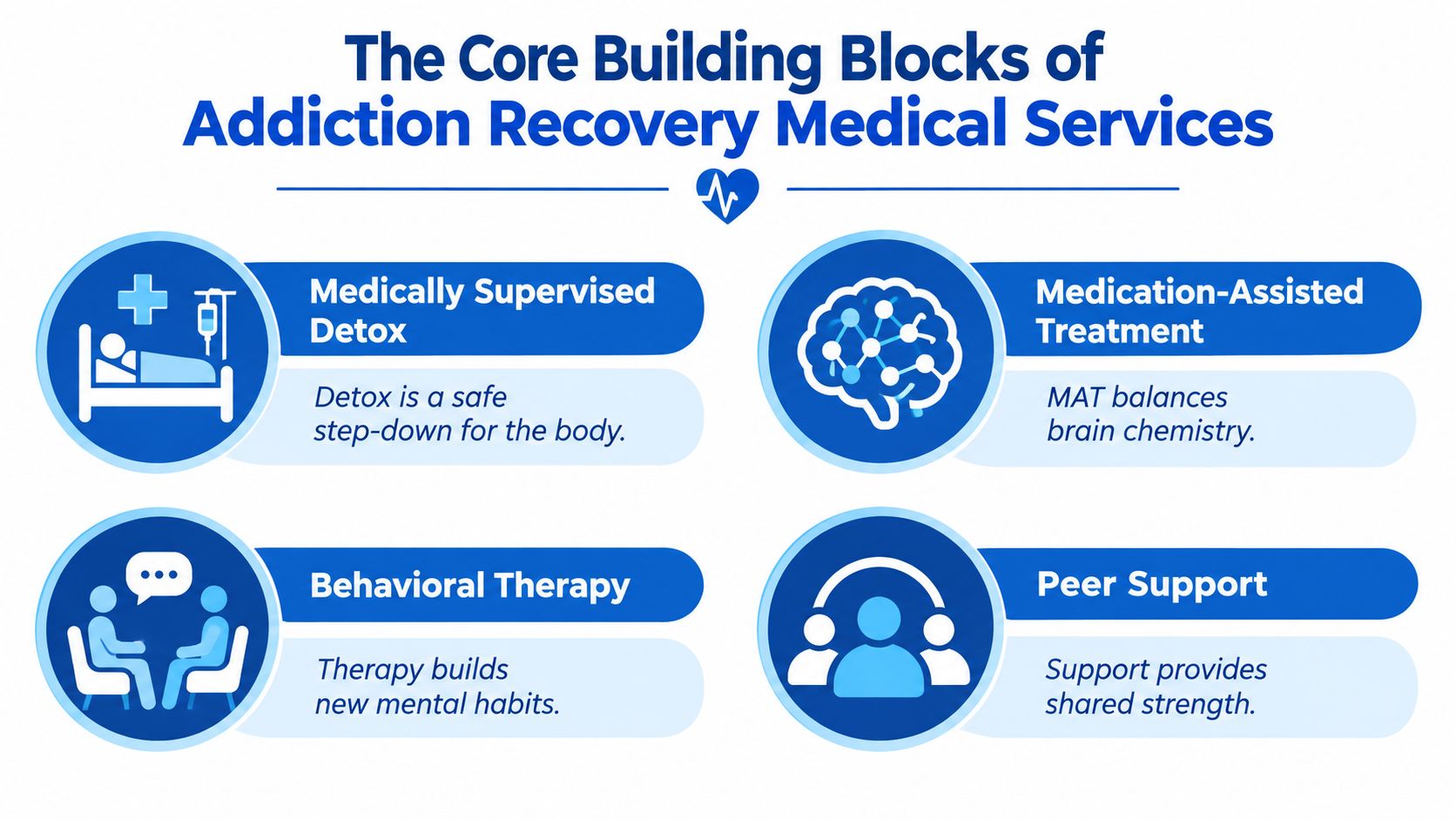
Four services families should recognize
Medically supervised detox is a monitored step-down for the body. Nurses and medical clinicians watch withdrawal symptoms, hydration, vital signs, sleep, mood, and safety while using appropriate medications and supportive care.
Medication-assisted treatment, or MAT, combines an approved medication with counseling and recovery support. For opioid use disorder, medications can reduce withdrawal and cravings. For alcohol use disorder, medication may help reduce drinking or support continued abstinence when clinically appropriate.
Residential rehabilitation provides structured living with clinical oversight. Instead of returning each night to the same environment where substance use occurred, the patient has time away from triggers for therapy, skill building, health monitoring, and daily routines.
Intensive outpatient treatment, or IOP, provides structured sessions while the person lives at home. A telehealth IOP can deliver group and individual therapy through secure video, which may help people managing work, parenting, transportation, or distance from a clinic.
Add mental health and recovery support
A fifth building block is integrated mental health care. Depression, anxiety, PTSD, ADHD, grief, and trauma can affect substance use and recovery decisions. A plan that treats only the substance problem may miss the symptoms that drive cravings or make sleep and emotional regulation difficult.
The Substance Abuse and Mental Health Services Administration's MAT guidance states that medication combined with therapy improves survival and treatment retention, decreases illicit opioid use and other illicit activity, and can improve employment and birth outcomes. Placement should still be individualized. The care team decides which combination is appropriate after reviewing medical history, withdrawal risk, mental health, motivation, and the home setting.
Medically Supervised Detox and Medication-Assisted Treatment
Detox and MAT are related, but they solve different problems. Detox manages the acute withdrawal period. MAT supports recovery after the immediate crisis and may continue for months or years. Confusing the two can lead families to think treatment is finished as soon as withdrawal ends.
| Feature | Medically Supervised Detox | Medication-Assisted Treatment (MAT) |
|---|---|---|
| Main purpose | Stabilize the body during withdrawal | Reduce cravings, withdrawal, and return to use |
| Typical setting | Inpatient or medically monitored program | Detox, outpatient, residential, or office-based care |
| Clinical focus | Vital signs, hydration, sleep, symptoms, and safety | Medication response, counseling, recovery routines, and follow-up |
| Common medications | Symptom-specific medications selected by clinicians | Buprenorphine, methadone, or naltrexone for opioid use disorder; medications such as naltrexone, acamprosate, or disulfiram for alcohol use disorder |
| What comes next | MAT, residential care, IOP, or outpatient treatment | Ongoing visits, counseling, monitoring, and aftercare |
What happens during detox
During the first several days, the team assesses the substance used, the amount and pattern of use, prior withdrawal complications, current health, and mental health safety. Nurses may monitor vital signs and provide oral or intravenous fluids, comfort medications, nutrition support, sleep assistance, and observation for complications such as seizures, severe dehydration, confusion, or suicidal thoughts.
Detox is a foundation, not the entire recovery plan. A person can feel physically better while cravings, emotional distress, and environmental triggers remain active. That's why discharge planning should begin early rather than waiting for the final day.
For a plain-language explanation of the process, families can review this guide to medically supervised detox.
Why MAT often begins early
For opioid use disorder, buprenorphine or methadone can reduce withdrawal symptoms and cravings, while naltrexone works through a different mechanism and may be appropriate for some patients after a clinician confirms the timing is safe. For alcohol use disorder, naltrexone, acamprosate, or disulfiram may be considered based on medical history and treatment goals.
SAMHSA describes medication plus therapy as a combination that supports survival and retention in care. The clinical reason is straightforward: medication can lower the biological pressure to return to use, while counseling helps the person change routines, respond to triggers, repair relationships, and plan for high-risk situations.
Stopping at detox leaves the person exposed to the same cravings and stressors that existed before admission. The care team should discuss medication options before discharge, including how prescriptions will be filled, who will monitor the response, and what happens if side effects or cravings continue.
Residential Rehab, IOP, and Telehealth Step-Down Care
Residential rehabilitation, IOP, and telehealth care aren't competing labels. They're different levels of structure. Clinicians may recommend residential care when a person needs a protected environment, while IOP can fit someone who is medically stable and able to manage evenings at home.
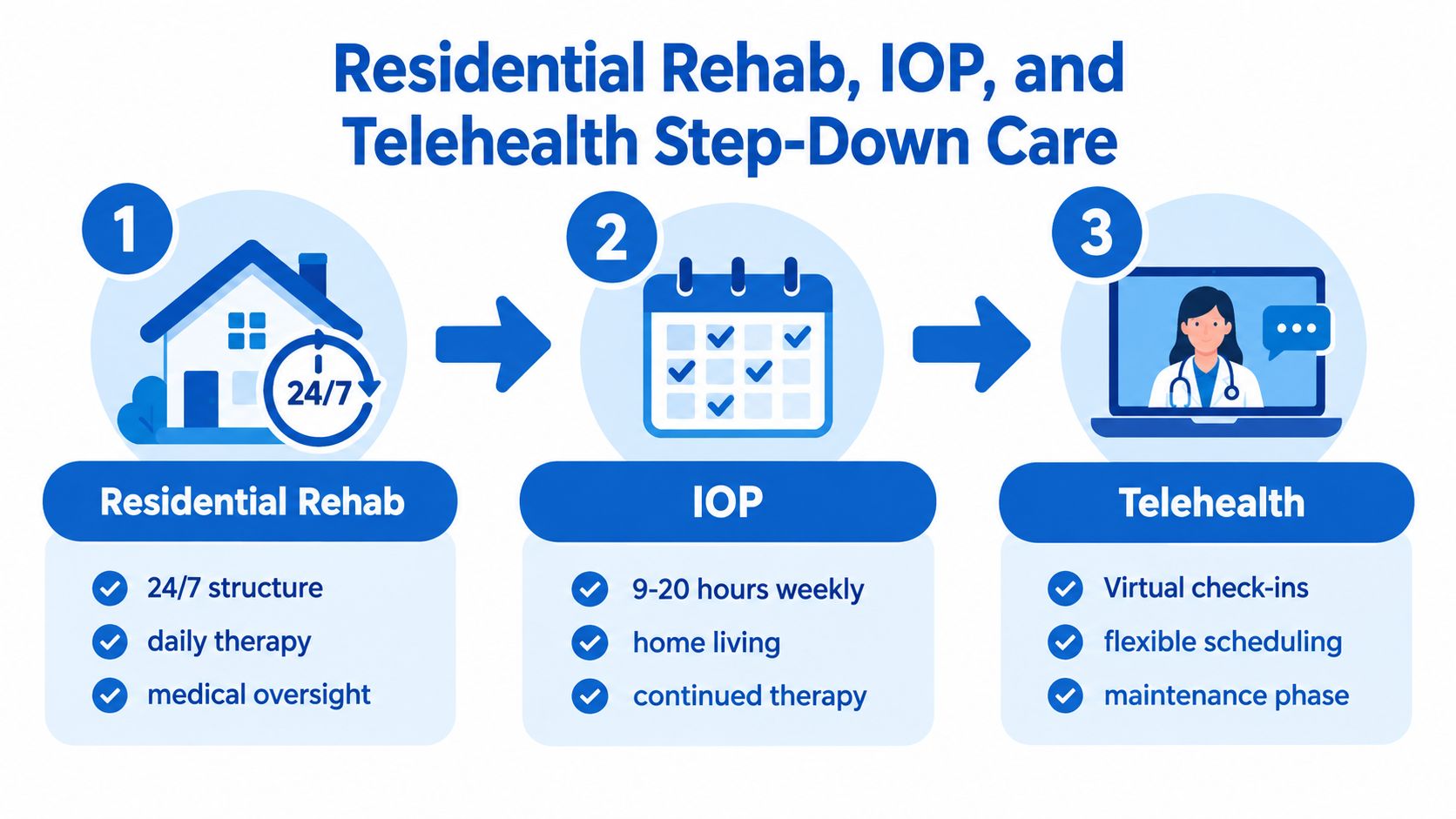
The step-down path
Residential rehab provides round-the-clock structure, daily therapy, medical oversight, group work, meals, rest, and distance from immediate triggers. Some patients move from residential care into a partial hospitalization program, then IOP, then standard outpatient visits. Others enter IOP directly after detox if their symptoms, housing, and support system make that safe.
IOP usually involves several structured sessions each week while the patient sleeps at home. Sessions may include cognitive behavioral therapy, motivational interviewing, relapse prevention, medication follow-up, family work, and peer groups. The person practices skills in real settings, then brings difficulties back to treatment for problem-solving.
Telehealth IOP uses secure video for scheduled group and individual sessions. It can be especially practical for rural Yuba City area families, working adults, parents with childcare responsibilities, or people who have difficulty traveling frequently. A 2024 retrospective cohort study of telehealth-delivered intensive outpatient treatment reported that nearly 80% of participants remained engaged for 30 days, 91% achieved at least 30 consecutive days of abstinence during treatment, and about 45% no longer required IOP by program end, according to the study indexed by PubMed.
The results don't mean telehealth fits everyone. The team still needs a way to manage emergencies, monitor attendance, coordinate medication, and involve family or local supports when risk increases.
How clinicians judge readiness
A step-down decision considers more than a calendar date. Clinicians look at:
- Physical stability: Withdrawal symptoms are controlled, medications are tolerated, and urgent medical needs have been addressed.
- Craving management: The patient can identify warning signs and has a plan for responding to strong urges.
- Sleep and mood: Severe insomnia, panic, depression, or agitation isn't being ignored.
- Home safety: Alcohol and drugs can be addressed, supportive people are available, and transportation or telehealth access is reliable.
- Engagement: The patient can attend sessions, communicate, and participate in medication and aftercare decisions.
A telehealth IOP can be a core treatment route, not merely a convenience. The telehealth IOP program information can help families compare virtual care with in-person scheduling.
Treating Co-Occurring Mental Health Conditions at the Same Time
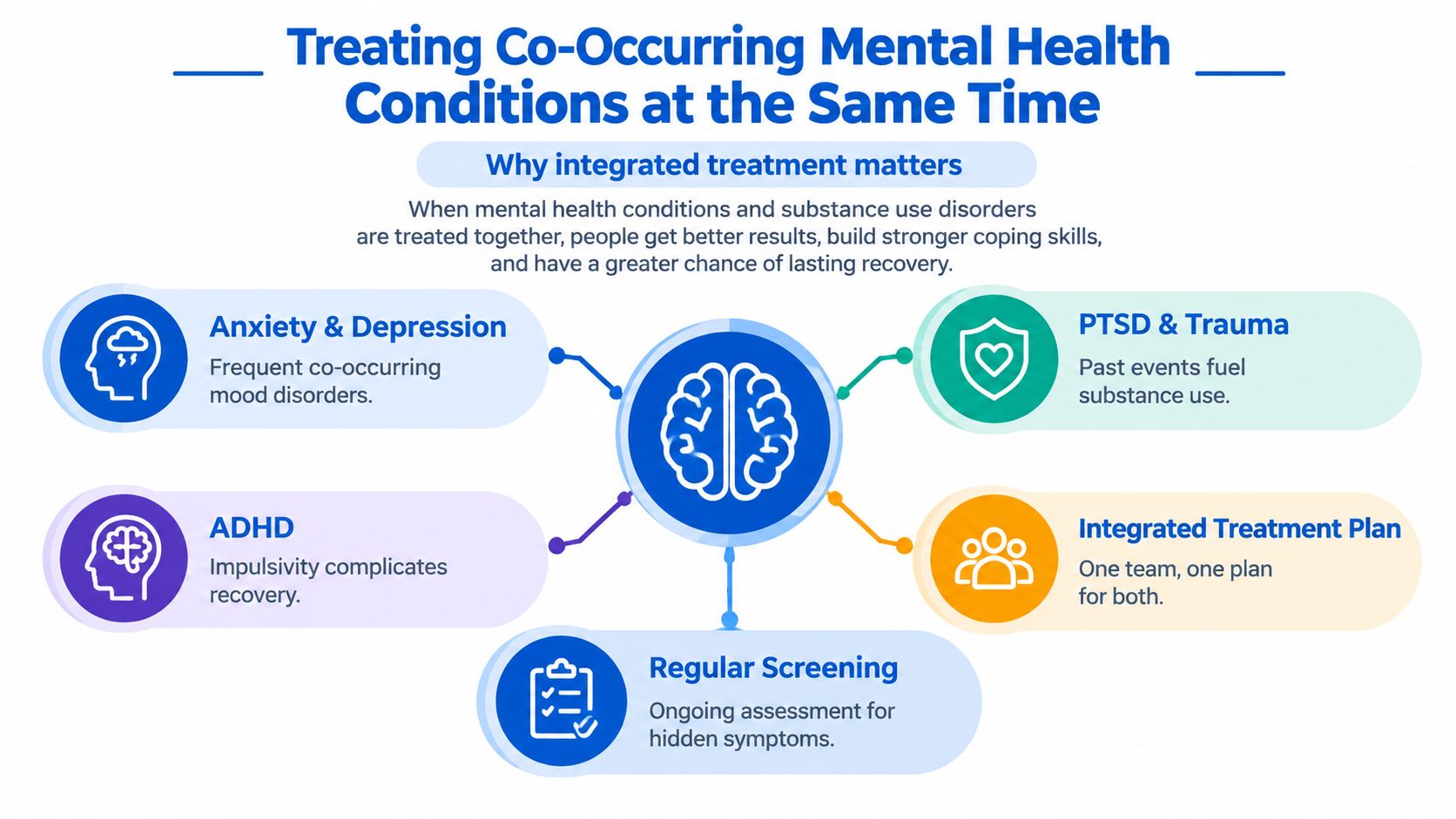
Substance use and mental health symptoms often reinforce each other. Someone may drink to sleep, use opioids to quiet trauma-related distress, take stimulants to push through depression, or use cannabis while trying to manage anxiety. The substance may provide short-term relief while worsening sleep, mood, concentration, or panic over time.
An integrated assessment looks beyond the substance itself. A clinician may complete a psychiatric evaluation, review medications, ask about trauma and intrusive memories, examine sleep and mood patterns, screen for suicidal thoughts, and create a safety plan during the early sessions.
What an integrated plan includes
Treatment can combine addiction counseling with cognitive behavioral therapy, dialectical behavior therapy skills, trauma-informed care, peer support, and psychiatric medication when appropriate. One coordinated team should understand the full plan, rather than forcing the patient to repeat the same history to disconnected providers.
A family member's observations can help. Share patterns such as panic after drinking stops, nightmares, sudden irritability, impulsive behavior, isolation, or statements that life feels pointless. These details don't diagnose a condition, but they give the clinical team important information for assessment and safety planning.
Why separate treatment can fall short
Treating only substance use may leave untreated depression, trauma, or anxiety driving the next crisis. Treating only anxiety or insomnia may overlook the way a medication interacts with alcohol or other substances. Integrated care lets clinicians coordinate decisions, watch for changes, and adjust the plan as the person becomes more stable.
Families who want a plain-language reminder that emotional health deserves clinical attention can read this mental health support guide from My Policy Quote. It can also help relatives choose less judgmental language when discussing care.
A combined plan doesn't promise an easy recovery. It does give the patient and family one clearer framework for understanding cravings, emotions, sleep, medication, and safety.
What the First Weeks of Treatment Actually Look Like
Consider a representative patient, Jordan, whose family in the Yuba City area has become concerned about alcohol use, missed work, poor sleep, and increasing isolation. Jordan agrees to an assessment but worries that treatment will mean losing control over every decision.
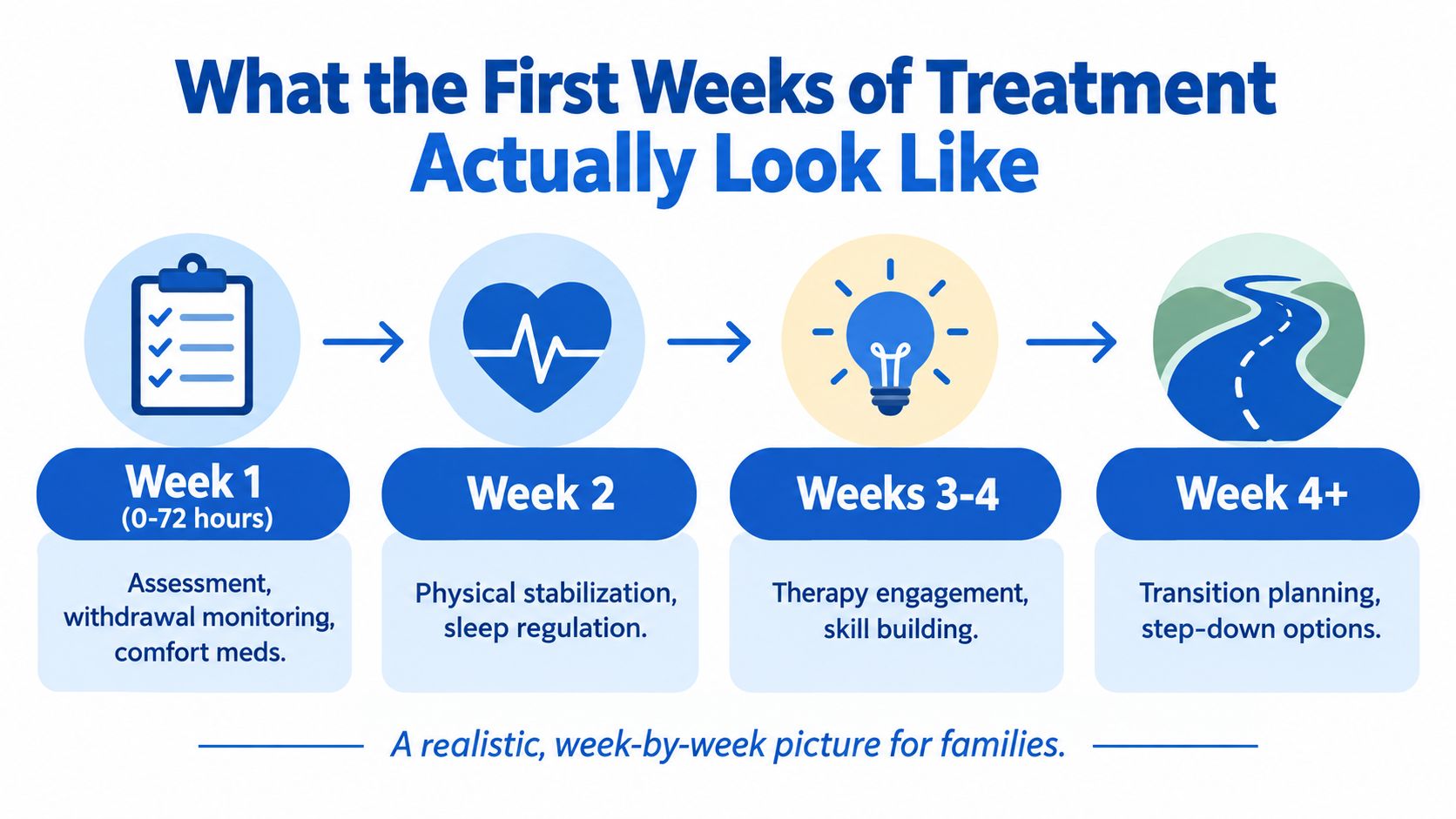
During the first 72 hours, the team gathers a medical and substance-use history, checks withdrawal symptoms, reviews medications, monitors vital signs, and provides comfort care. Jordan may sleep poorly, feel restless, or become emotional. A short first therapy conversation focuses on safety, immediate goals, and what support is needed rather than forcing a complete life story on the first day.
Days four through fourteen
As Jordan stabilizes, clinicians adjust medication when appropriate, build a regular sleep and meal routine, begin individual counseling, and introduce group therapy. Family education may cover cravings, enabling, communication, overdose safety, and boundaries.
The family's job isn't to supervise every breath or argue Jordan into recovery. Relatives can attend loved-one sessions, learn CRAFT-informed communication strategies, stop covering up missed responsibilities, and decide what they will and won't accept in the home.
Weeks three and four
Therapy becomes more practical. Jordan maps triggers such as payday, conflict, loneliness, and certain social settings. The team rehearses alternatives, builds a plan for cravings, discusses peer support, and considers sober housing or a return home with safeguards.
The aftercare plan should name the next appointment, medication prescriber, therapy schedule, transportation method, emergency contact, family communication plan, and steps for responding to renewed use. If telehealth is part of the next level, the team should confirm a private space, reliable connection, and a plan for urgent concerns.
Early recovery includes hard days. Sleep may remain uneven, emotions can swing, and motivation may change from one morning to the next. Structured care gives the patient and family somewhere to bring those problems before they become another crisis.
Insurance, TRICARE, and Paying for Addiction Recovery Care
The financial questions should come early, not after admission. Commercial insurance, Medi-Cal, and TRICARE may cover medically necessary detox, residential rehabilitation, IOP, outpatient therapy, and MAT, but the exact rules depend on the plan, network, clinical documentation, and authorization requirements.
Detox, residential care, and IOP often require prior authorization or concurrent review. MAT may involve both a medical benefit and a pharmacy benefit. A clinic can verify benefits, but the insurer should confirm the final responsibility in writing because deductibles, copays, coinsurance, exclusions, and network rules vary.
Questions to ask before treatment begins
- Network status: Is the facility and each clinician in network, including partner residential programs?
- Authorization: Does detox, residential care, IOP, or medication require prior authorization?
- Patient responsibility: What copay, deductible, coinsurance, or daily residential charge may apply?
- Session limits: How many IOP sessions or outpatient visits does the plan cover?
- Medication coverage: Will MAT prescriptions use the pharmacy benefit, and are prior approvals required?
- Laboratory charges: Are urine screens, blood tests, or other labs billed separately?
- Length of stay: Does the plan limit covered residential days or require frequent reviews?
Common surprises include out-of-network laboratory fees, undisclosed urine-screen charges, separate medication costs, and a residential authorization ending before the clinical team considers step-down safe. Ask for a written estimate and the name of the utilization-review contact.
TRICARE beneficiaries should ask how referrals and authorizations work before selecting a program. Active-duty families commonly use TRICARE Prime referrals, while retired service members with TRICARE for Life coordinate Medicare as the primary payer. This TRICARE rehab coverage guide can help families prepare questions for their plan.
Most plans treat substance use treatment as an essential health benefit, but coverage doesn't guarantee that every service, provider, or medication will be paid in full. Verification is part of responsible treatment planning.
Finding Addiction Recovery Medical Services in Yuba City
Families in Yuba City and nearby Northern California communities often need answers in a specific order. Is detox medically necessary? Can MAT begin promptly? Is residential care needed, or can the person safely return home? Would in-person IOP work, or would telehealth make attendance more realistic?
A practical access path starts with a central phone or text line. During a confidential screening, explain the substance involved, the last use, prior withdrawal, current medications, medical conditions, mental health concerns, insurance, and immediate safety risks. If there's confusion, a seizure, severe withdrawal, an overdose, or an immediate danger of self-harm, use emergency medical services rather than waiting for a routine intake.
Prepare for the first appointment
Bring:
- Photo identification: This helps the clinic complete registration.
- Insurance information: Include a private insurance card, Medi-Cal card, or TRICARE information when applicable.
- Medication list: Include prescriptions, over-the-counter medications, supplements, and recent changes.
- Treatment history: Note previous detox, residential stays, MAT, overdoses, withdrawal complications, and mental health care.
- Family observations: Write down changes in sleep, mood, work, safety, and substance access.
At an outpatient assessment, the clinical team reviews these details and matches the patient to the appropriate level of care. When clinically appropriate, the process may include same-day MAT induction, referral to medically supervised detox, residential placement, or enrollment in IOP. Ask about typical hours, language access, transportation, privacy, medication follow-up, family participation, and telehealth availability.
Addiction Resource Center LLC provides a Yuba City starting point for adults seeking medically supervised detox referrals, MAT, residential rehabilitation through a partner facility, in-person IOP, telehealth IOP, and co-occurring mental health care. Its multidisciplinary team includes a medical doctor, registered nurse, licensed counselors, licensed marriage and family therapist, and recovery mentors, with individualized treatment planning and aftercare coordination.
Recovery doesn't require a family to solve every problem before making contact. It requires one safe next step, followed by a clinical assessment and a plan that can change as the patient's needs become clearer.
Addiction Resource Center LLC can help adults and families coordinate detox referrals, MAT, residential rehabilitation, in-person or telehealth IOP, and support for co-occurring mental health needs. Visit Addiction Resource Center LLC to request guidance, schedule an assessment, or learn what treatment path may fit your situation.