You're standing in the kitchen at six in the morning. The person who usually reaches for a drink is shaking, sweating, anxious, and insisting they can handle it alone. You're wondering whether to offer water, call a doctor, drive to the emergency department, or call 911. Make one decision first: is this safe to monitor …

You're standing in the kitchen at six in the morning. The person who usually reaches for a drink is shaking, sweating, anxious, and insisting they can handle it alone. You're wondering whether to offer water, call a doctor, drive to the emergency department, or call 911.
Make one decision first: is this safe to monitor while arranging professional guidance, or does the person need emergency medical care now? Alcohol withdrawal can change quickly, and a calm morning doesn't guarantee a safe afternoon. The safest plan is to involve a medical professional before stopping alcohol when regular heavy drinking has been part of the person's routine.
Table of Contents
- What Alcohol Withdrawal Help Means
- Risk Factors That Decide Between Home, Outpatient, and Inpatient Care
- What Happens During a Medically Supervised Detox
- Choosing the Right Level of Care After Detox
- Insurance, TRICARE, and the First Phone Call
- How Families and Loved Ones Can Help Right Now
- Relapse Prevention and a 30-60-90 Day Aftercare Plan
What Alcohol Withdrawal Help Means
Alcohol withdrawal help is a connected plan, not one service. It may involve a trusted adult staying nearby while a clinician gives instructions, an outpatient team checking symptoms, or a medically monitored detox unit providing medication and responding to complications. The right setting depends on the person's drinking history, past withdrawal, current symptoms, health conditions, and available supervision.
Withdrawal symptoms can start within hours after the last drink. Early signs may look uncomfortable rather than immediately dangerous. Watch for tremors, anxiety, sweating, nausea, headache, a fast heartbeat, or trouble sleeping. Keep the room quiet, take away driving responsibilities, offer small amounts of fluid only if the person is alert and able to swallow, and contact a medical professional for specific guidance.
Practical rule: A previous “easy detox” does not predict the next one. Repeated withdrawal episodes can become more dangerous, so do not use past experience to justify handling the process alone.
Symptoms may intensify during the next phase. Hallucinations or seizures can occur, and a person who sees or hears things others do not, becomes severely agitated, develops serious confusion, has trouble breathing, or cannot stay awake needs emergency help. Call 911. Do not try to control these symptoms with alcohol, someone else's medication, or a home taper.
Delirium tremens, or DT, causes severe confusion and disorientation. It may also involve agitation, hallucinations, and major changes in vital functions. It can appear later in withdrawal, even after the person seemed stable. Suspected DT requires emergency assessment, not observation in a bedroom.
Use the timeline as a safety map
| Hours Since Last Drink | Common Symptoms | Recommended Response |
|---|---|---|
| 6 to 24 | Tremors, anxiety, sweating, nausea, headache, insomnia | Stay with the person, reduce stimulation, and contact a medical professional |
| 24 to 72 | Worsening agitation, confusion, hallucinations, or seizure risk | Seek urgent medical assessment. Call 911 for a seizure, severe confusion, breathing problems, or inability to stay awake |
| 48 to 96 | Possible delirium tremens, severe disorientation, hallucinations, and medical instability | Call 911 immediately |
| After the acute period | Fatigue, disrupted sleep, mood changes, or returning symptoms | Keep the follow-up appointment and begin ongoing treatment planning |
Alcohol withdrawal is associated with roughly 260,000 emergency department visits and about 850 deaths each year in the United States. In a large 2013 veteran-hospital sample, 1 in 17 admissions involved treatment for alcohol withdrawal syndrome. These figures show why professional help can save a life, not just provide reassurance. NIH's clinical overview of alcohol withdrawal identifies supported withdrawal as a treatment step and describes benzodiazepines as first-line medication, typically used during the first several days after alcohol cessation.
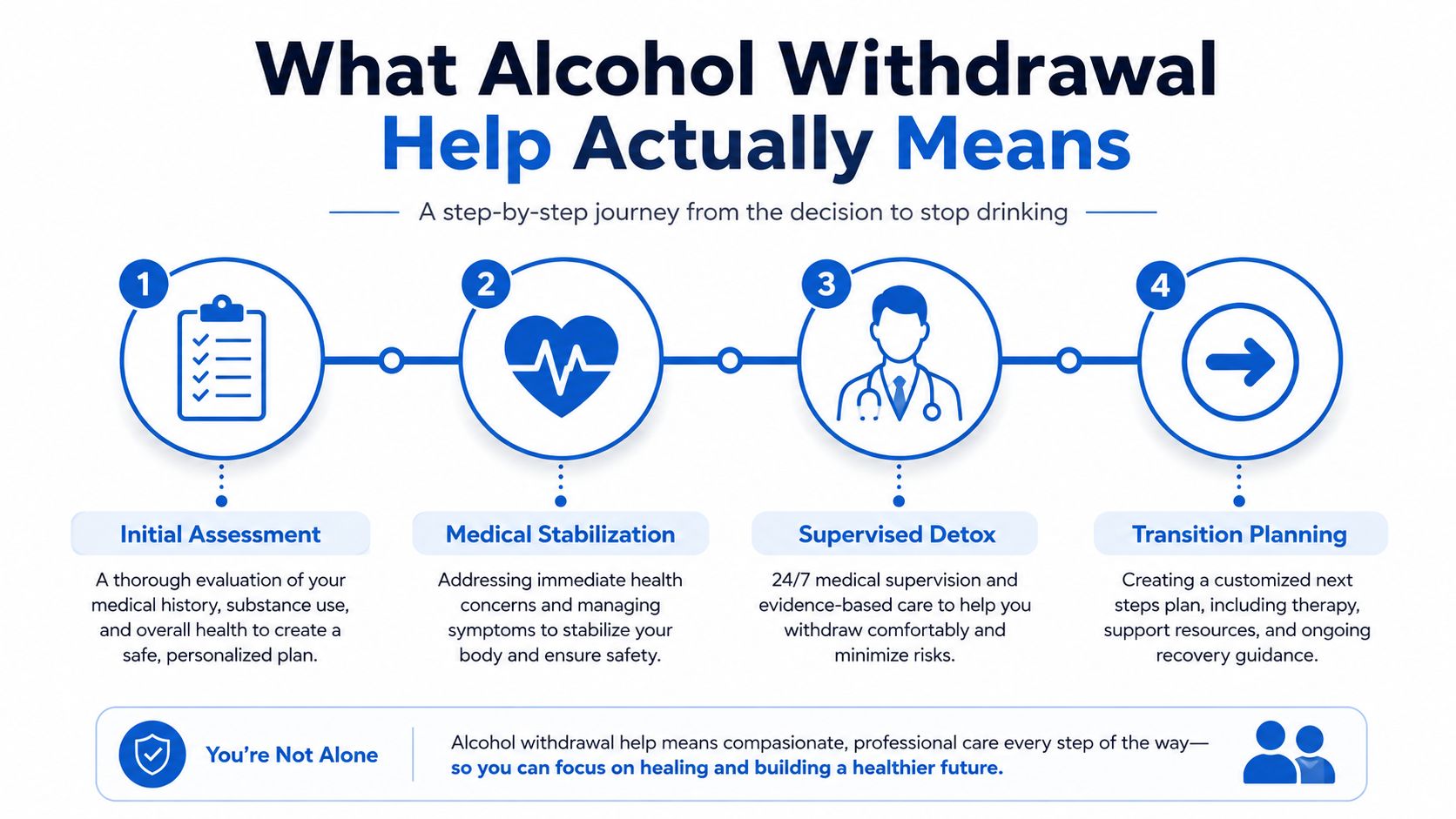
If symptoms ease, keep watching. Withdrawal can come in waves, and feeling better does not prove the danger has passed. Keep the person with a responsible adult, do not let them drive, and follow professional guidance rather than assuming sleep has solved the problem. A good withdrawal plan also sets up the next call, the level of care after detox, insurance questions, and a direct handoff to ongoing treatment.
Risk Factors That Decide Between Home, Outpatient, and Inpatient Care
The care setting should be chosen by a clinician, not by convenience or fear of treatment. Families often under-triage because the person is still talking, walking, or asking to go home. Those signs don't rule out serious withdrawal.
Inpatient care is the safer pathway when any of these apply:
- Past seizures or DT: A previous withdrawal seizure or delirium tremens strongly changes the risk calculation.
- Heavy, regular drinking: Daily heavy alcohol use over an extended period raises concern for significant physical dependence.
- Medical or psychiatric conditions: Heart, liver, breathing, seizure, pregnancy, severe anxiety, depression, psychosis, or other conditions can complicate withdrawal.
- Older age or frailty: Older adults may have less physiological reserve and more medication or health complications.
- No reliable supervision: If nobody can stay present, monitor changes, and get help quickly, home withdrawal isn't a responsible plan.
- A failed outpatient attempt: Worsening symptoms or resumed drinking during a previous attempt means the plan needs more structure.
Outpatient or intensive outpatient care may fit someone with mild symptoms, no major risk history, stable housing, reliable supervision, and the ability to attend frequent clinical check-ins. That still requires a medication plan and clear instructions for escalation. “At home” should never mean “alone and hoping.”
WHO guidance recommends inpatient management for people at risk of severe withdrawal, people with serious physical or psychiatric conditions, and people without adequate support. Delirium tremens carries about 8% mortality when not properly treated, which is why early triage matters. The clinical guidance summarized by NIH supports treating high-risk withdrawal in a monitored setting.
Ask these questions:
- Has the person ever had a seizure, hallucination, or severe confusion after stopping?
- Are symptoms already worsening?
- Can a responsible adult remain present?
- Can the person reach medical care quickly if symptoms change?
- Is there another illness or medication that could complicate treatment?
A “yes” to serious symptoms or a high-risk history should move the family toward urgent medical assessment. If you're uncertain, choose the more supervised option.
What Happens During a Medically Supervised Detox
A supervised detox unit turns an unpredictable process into a monitored clinical plan. At a provider such as Addiction Resource Center LLC in Yuba City, intake generally covers the last drink, usual alcohol pattern, previous withdrawal, medications, medical conditions, mental health, and immediate safety. Staff then track symptoms with a structured tool such as CIWA-Ar, the Clinical Institute Withdrawal Assessment for Alcohol, Revised.
CIWA-Ar scores symptoms including nausea, tremor, sweating, anxiety, agitation, sensory disturbances, and orientation. Clinicians repeat the assessment instead of relying on one snapshot. If symptoms reach the protocol threshold, medical staff can give medication and check the response.
Benzodiazepines remain the first-line medication for alcohol withdrawal because they can reduce dangerous overactivation and help prevent complications. Thiamine, a vitamin often given during withdrawal care, helps reduce the risk of Wernicke's encephalopathy, a serious neurological problem linked to deficiency. The treating medical team must determine the medication, dose, route, and monitoring plan.
A symptom-triggered protocol can limit unnecessary medication in lower-severity cases while allowing rapid escalation. In one ICU study, median withdrawal duration fell from 8 to 5 days, ICU stay from 7 to 4 days, hospital stay from 13 to 9 days, and mean lorazepam-equivalent exposure from 450 mg to 74 mg after implementation. Mechanical ventilation decreased from 57% to 31% in that study. The ICU protocol study also identifies a limitation: CIWA-Ar may not work reliably for critically ill people who cannot answer questions or participate in scoring.
Before admission, ask what identification, medication containers, comfortable clothing, and contact information to bring. Leave alcohol, illegal drugs, weapons, large amounts of cash, and valuables at home. Confirm the facility's rules for phones, visitors, smoking, belongings, meals, and discharge planning before arrival.
For a plain-language explanation of how long detox may take, review the process before admission. The first nights may be uncomfortable. Staff should explain what they are watching, why medication is offered, and what happens after stabilization, including the handoff to ongoing treatment.

Choosing the Right Level of Care After Detox
Detox removes the immediate withdrawal crisis. It doesn't, by itself, change the routines, stress responses, relationships, or mental health needs that kept alcohol in the person's life. The next level should be arranged before discharge, not after a few unstructured days at home.
Residential treatment is suited to someone who needs distance from alcohol, conflict, unsafe housing, or constant triggers. A partner facility such as Ona Treatment Center in Browns Valley can provide a more contained setting while the person works on therapy, coping skills, accountability, and recovery routines.
Intensive Outpatient Program care works better for someone who can remain safely at home and needs to keep work, school, or caregiving responsibilities. An IOP may be available in person at a Yuba City office or through telehealth, depending on clinical assessment, technology, privacy, and insurance authorization.
Individual and family therapy add another layer. A licensed LMFT or CADC can help identify triggers, address co-occurring mental health concerns, and give relatives practical ways to stop rescuing, arguing, or covering up alcohol-related consequences. Mutual-support meetings can provide community, but they shouldn't replace medical care when withdrawal risk or psychiatric needs are present.
| Level of Care | Hours per Week | Best Fit |
|---|---|---|
| Residential treatment | A structured daily schedule | People who need a protected living environment and distance from triggers |
| In-person IOP | Scheduled clinical visits throughout the week | People who can live safely at home and attend treatment locally |
| Telehealth IOP | Scheduled online clinical visits | People who need flexibility, privacy, or access from a broader service area |
| Sober living | Housing with recovery expectations | People who need structure between treatment and independent living |
Insurance and TRICARE may affect which option is available, how much the person pays, and whether prior authorization is required. For broader context on treatment formats, Georgia substance abuse care options can help families compare common care pathways outside the immediate detox decision.
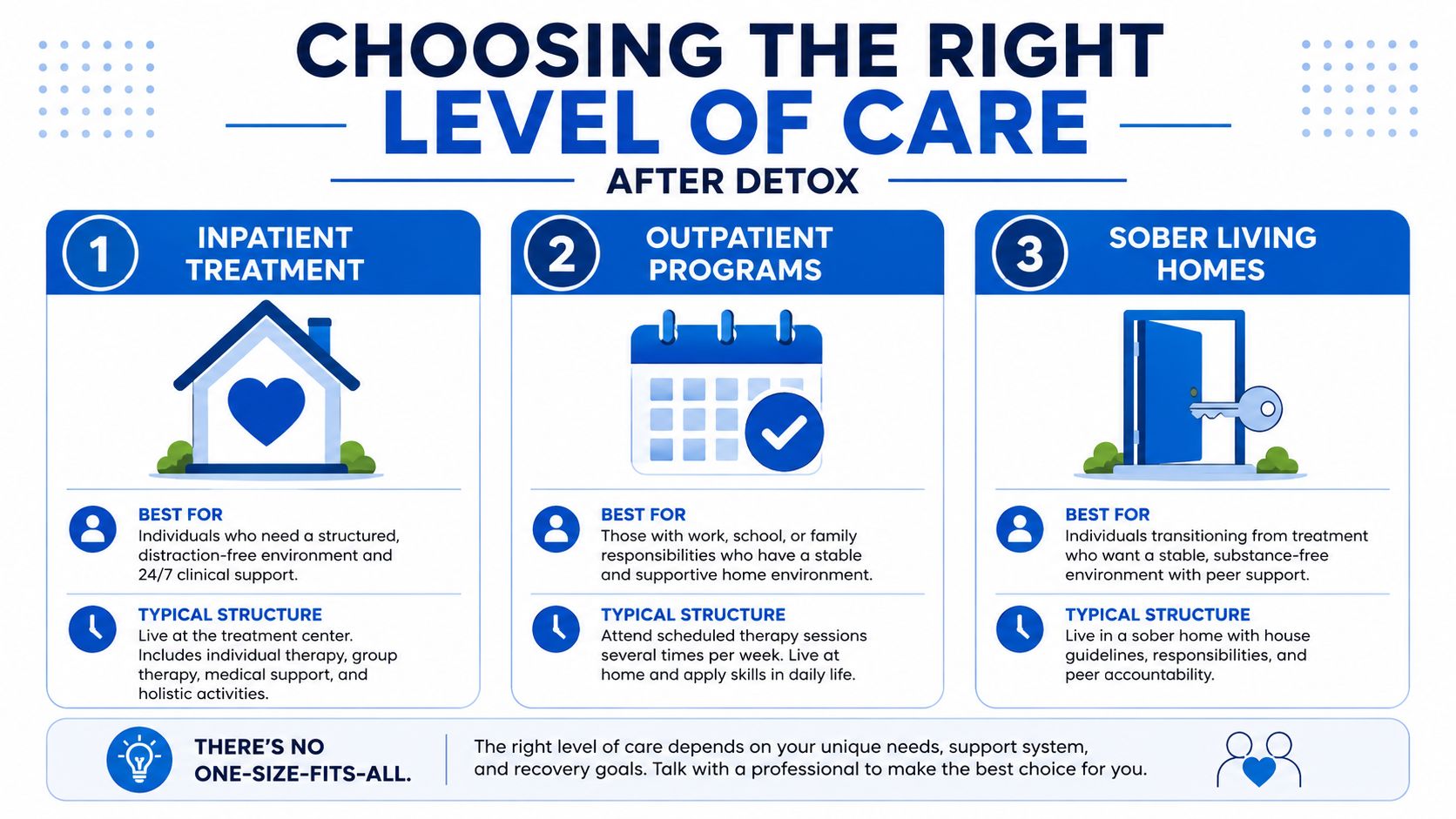
Choose the level the person can safely start this week. The most intensive program on paper won't help if the person never enters it.
Insurance, TRICARE, and the First Phone Call
Don't postpone alcohol withdrawal help because you haven't solved the billing details. Call the treatment provider and the insurer in parallel. A provider can often explain clinical fit and verify benefits, while the insurer can confirm the policy rules that determine authorization and cost.
Have the insurance card, policyholder's date of birth, the patient's date of birth, medication list, and a quiet place to talk. Then read this script:
“I'm calling about alcohol withdrawal and treatment. The person may need medically supervised detox. Can you verify whether your detox, residential, IOP, telehealth, therapy, and medication services are covered? Are you in network? Do you need prior authorization, and who handles it?”
Ask the provider:
- Network status: Are the specific detox and ongoing-care programs in network?
- Authorization: Who requests authorization, and what clinical information is needed?
- Medication coverage: Are withdrawal medications and alcohol use disorder medications included?
- Length of stay: How does the plan review continued care?
- Discharge planning: Will the team coordinate residential care, IOP, therapy, or follow-up?
Ask the insurer:
- Deductible: Has the deductible been met, and what applies to behavioral health?
- Out-of-pocket maximum: What amount remains for the plan year?
- Cost sharing: What copay or coinsurance applies to each level of care?
- Telehealth: Is telehealth IOP covered at the same rate as in-person care?
- Referrals: Does the plan require a primary-care referral or designated provider?
TRICARE beneficiaries should ask whether the plan requires a referral, authorization, or network facility for detox, residential care, IOP, and telehealth. Veterans, active-duty families, and retirees can have different rules based on plan enrollment and location, so get the answer attached to the person's specific benefits rather than relying on a general online statement. The guide on whether TRICARE covers rehab can help you prepare questions before calling.
Insurance conversations vary by location and plan. Even families researching using insurance for counselling in BC will see the same practical lesson, ask about eligibility, authorization, and cost before assuming a service is excluded.
Write down the representative's name, reference number, authorization requirements, and next step. Your goal after the call is a clear yes, a conditional yes with paperwork, or a no that tells you what alternative to pursue.
How Families and Loved Ones Can Help Right Now
If you're the spouse, parent, sibling, or adult child, you don't need to become the person's therapist. Your job is to make the next safe action easier and to stop participating in the drinking cycle.
Choose a moment when the person is as clear and calm as possible. Speak privately, use specific observations, and avoid labels:
“I'm worried because you're shaking and you've been unable to stop safely. I'm not asking you to solve everything today. I want us to call a medical treatment provider together.”
Don't threaten, lecture, count every drink, or argue about whether the person “really” has a problem. If they refuse help, you can still call a treatment center yourself, describe the symptoms and history, and ask what emergency signs require immediate action. You can't force voluntary treatment in most situations, but you can control whether you provide alcohol, cover missed work, lie to relatives, or let an impaired person drive.
Make the home safer while you arrange care:
- Remove transportation risks: Take the keys and don't let the person drive impaired or during active withdrawal.
- Reduce stimulation: Keep the room quiet, limit visitors, and avoid confrontational conversations.
- Protect children: Tell children that the adult is sick and adults are arranging help. Don't make children supervise or keep secrets.
- Stay available: A responsible adult should monitor the person if a clinician says home observation is appropriate.
- Set a boundary: “I'll help you call and get to care. I won't buy alcohol or hide what's happening.”
Family support should include care for the family. Ask whether the provider offers family counseling, education, or a family program so you receive guidance rather than only updates. Addiction Resource Center LLC has a 24/7 phone and text line at 530-625-7910 for questions about treatment and support for loved ones.
Relapse Prevention and a 30-60-90 Day Aftercare Plan
A discharge plan should answer four questions before the person leaves detox: where they'll sleep, when the next appointment is, who they'll call during cravings, and what happens after a slip. Write the answers down. Early recovery becomes harder when every decision is made during exhaustion or panic.
Medication options for alcohol use disorder can include naltrexone or acamprosate, when clinically appropriate. A prescriber must review medical history, current medications, liver or kidney concerns, pregnancy status, and the person's treatment goals. Medication works best as part of a broader plan that includes therapy, recovery support, and practical changes.
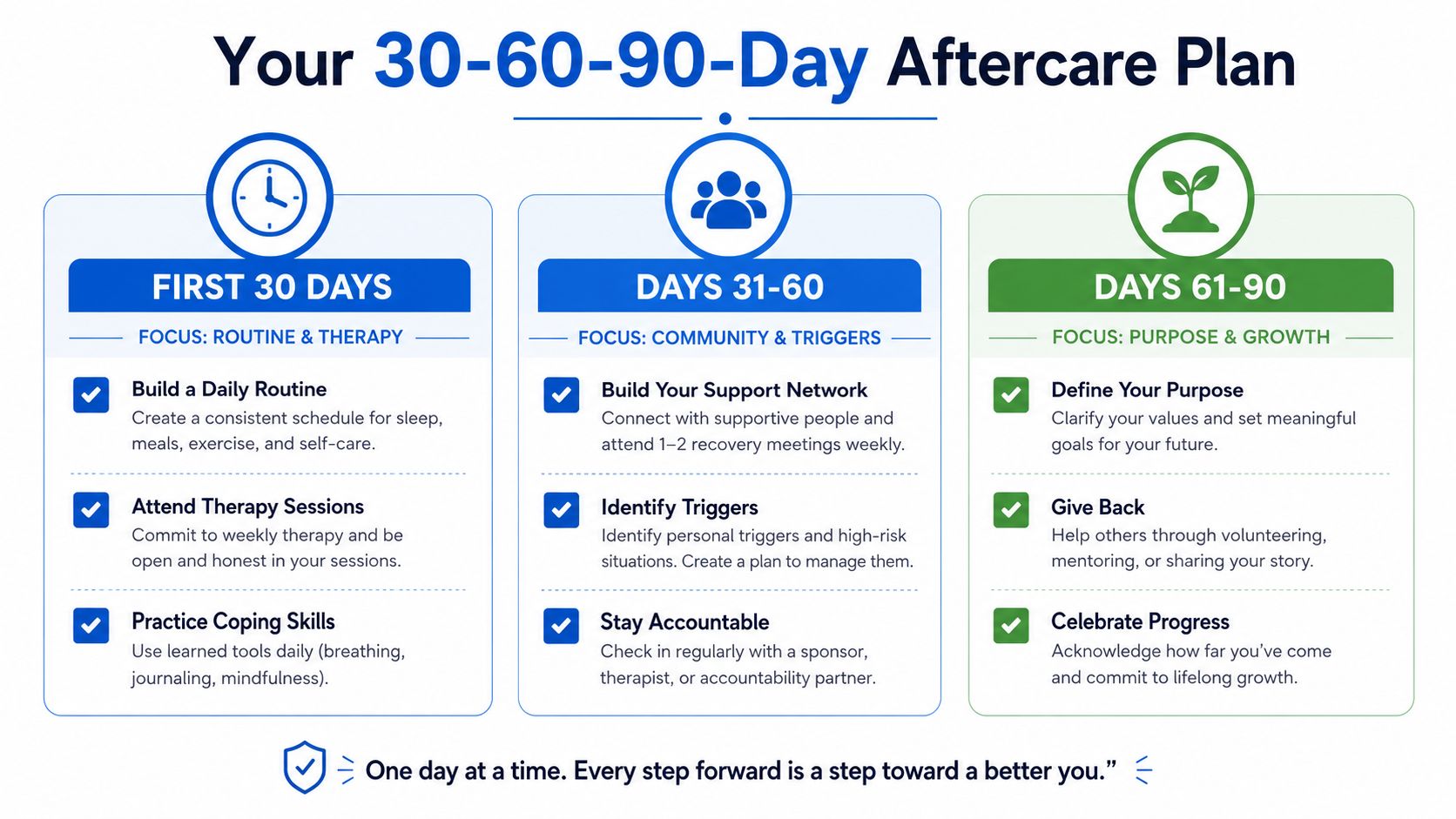
First 30 days
Build a predictable day. Attend scheduled clinical appointments, establish a sleep and meal routine, identify a recovery mentor or trusted support person, and map the situations that usually lead to drinking. Keep alcohol out of the living space when possible, and don't treat intense cravings as a private test of willpower.
Days 31 to 60
Deepen therapy and practice new responses to conflict, loneliness, boredom, and stress. Repair one or two important relationships through consistent behavior rather than dramatic promises. If returning to work or school, use a staged plan that protects appointments and sleep.
Days 61 to 90
Consolidate the routine that is working. Confirm the next phase of therapy or IOP, plan for anniversaries and holidays, and identify high-risk people, places, and emotions before they appear. A recovery plan should include purpose, not only avoidance, such as work, family roles, exercise approved by a clinician, volunteering, or a meaningful project.
If a slip happens, call the treatment team quickly. Don't hide it, binge further, or attempt another unsupervised withdrawal. Ask what level of care is needed now, and use available IOP alumni or recovery support channels to reconnect with people who understand the process. Aftercare planning guidance can help turn discharge instructions into a working routine.
Start with one action today: call, schedule a tour, or book a telehealth assessment. Addiction Resource Center LLC offers medically supervised detox, medication-assisted treatment, residential rehabilitation through its partner facility, and in-person or telehealth IOP for adults seeking alcohol withdrawal help in Yuba City and Northern California. Visit Addiction Resource Center LLC to review services and take the next safe step with a treatment team.