You may be sitting at your kitchen table with too many browser tabs open. One tab says “outpatient,” another says “PHP,” another says “IOP,” and none of them answer the question you care about: where can my loved one get safe, coordinated help, especially if food issues and substance use are tangled together? That confusion …


You may be sitting at your kitchen table with too many browser tabs open. One tab says “outpatient,” another says “PHP,” another says “IOP,” and none of them answer the question you care about: where can my loved one get safe, coordinated help, especially if food issues and substance use are tangled together?
That confusion is common. Eating disorders already create fear, secrecy, and urgency. Add alcohol or drug use to the picture, and families often feel like they're being asked to solve a clinical puzzle without a map. If you've been searching for an Eating Recovery Center in Sacramento, CA, you probably don't need more vague promises. You need plain language, practical questions, and a way to tell whether a program can effectively handle the full situation in front of you.
Table of Contents
- Navigating Your Path to Healing in Sacramento
- Understanding the Role of an Eating Recovery Center
- PHP vs IOP Decoding Levels of Care in Sacramento
- Key Therapies Used in Eating Disorder Treatment
- Finding Care for Co-Occurring Substance Use
- How to Choose a Program and Get Started
Navigating Your Path to Healing in Sacramento
A lot of people start this search after a hard moment. A parent notices hidden food, missing meals, or a sudden fear of eating with others. A spouse realizes drinking gets worse after binges or purging. An adult who's been trying to “handle it alone” reaches the point where work, school, sleep, and relationships are all starting to bend around the illness.
The first step usually doesn't feel brave. It feels messy. You may be second-guessing yourself, wondering whether the problem is “serious enough,” or worrying that calling a treatment center will lock you into something you're not ready for.
Getting an assessment doesn't commit you to treatment. It gives you clearer information.
In Sacramento, families often look for a center that can offer structure without immediately jumping to inpatient hospitalization. That's where an eating recovery center can make sense. It sits in the middle ground between standard weekly therapy and acute medical care, offering more support when symptoms have outgrown simple outpatient appointments.
If substance use is part of the picture, the search gets more complicated. Many programs are strong at treating eating disorders. Fewer explain, in plain terms, how they coordinate care when alcohol or drugs are involved too. That gap matters, because families need a plan that looks at the whole person, not two separate problems handled in isolation.
A calmer next step is to learn how these programs work, what the common levels of care mean, and what to ask before you trust a center with a complex case.
Understanding the Role of an Eating Recovery Center
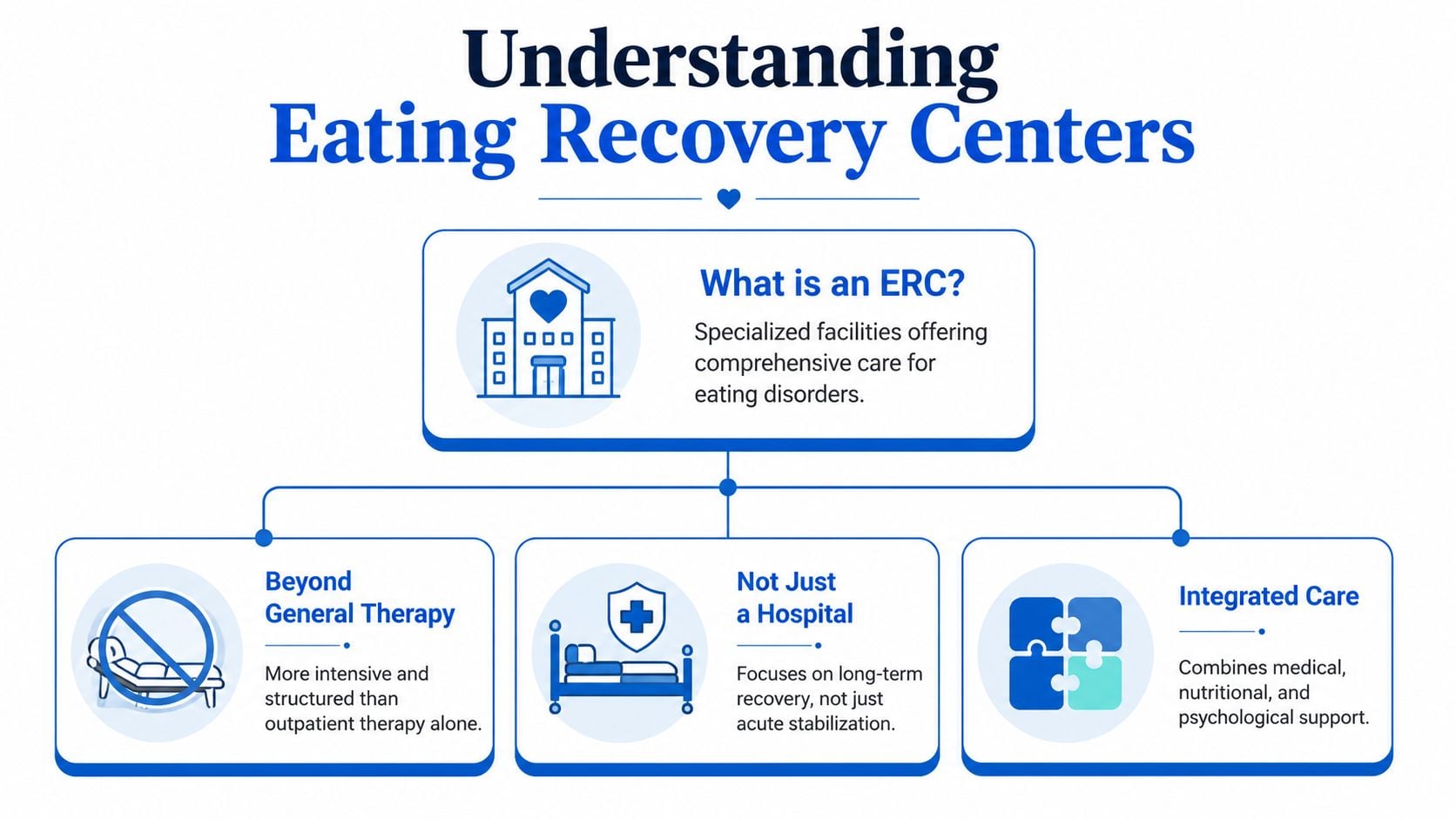
A parent may be calling after finding hidden food wrappers and empty bottles in the same week. A partner may be trying to sort out whether the primary danger is the eating disorder, the drinking, or both. In that moment, an eating recovery center is not just a place for therapy. It is a structured clinical setting built to assess the full picture and treat problems that often overlap.
An eating recovery center works like a specialty clinic rather than a general counseling office. Weekly therapy can help with insight and support. A specialty program adds coordinated meal support, medical monitoring, nutrition care, and therapy that all point in the same direction. That structure matters when symptoms are affecting physical health, daily functioning, or safety.
Why specialized care matters
Eating disorders rarely stay contained to food alone. They can change thinking, mood, routines, relationships, and the body's basic stability. Treatment works better when those pieces are addressed together instead of in separate silos.
That is even more important when substance use is also part of the picture. Some programs treat eating disorders well but have limited ability to assess alcohol or drug use, manage withdrawal risk, or coordinate addiction care. Families often do not learn that gap until after admission. A good intake process should explain, in plain language, whether the center can treat both conditions at the same time, or whether it partners with another provider for part of the care.
If you are comparing options, look for signs that the program is operating under recognized healthcare standards. For example, The Joint Commission's Quality Check directory lets you verify whether a facility holds current accreditation. That does not tell you whether the program is the right fit, but it does confirm that the center has gone through an outside review for healthcare quality and patient safety.
What that team usually looks like
The phrase multidisciplinary team can sound technical. In real life, it means recovery is handled like a puzzle with several connected pieces, and each clinician is responsible for one piece while staying in communication with the others.
A center may include:
- Therapists who help patients work through eating disorder thoughts, shame, anxiety, trauma, and coping patterns
- Dietitians who guide nutrition restoration, meal planning, and fear-food work
- Medical providers who monitor labs, physical symptoms, medications, and medical stability
- Psychiatrists or psychiatric prescribers who evaluate mood, obsessive thinking, substance use, and medication needs
- Family therapists or support staff who teach loved ones how to respond in ways that support recovery at home
That last point is easy to miss. A program can sound impressive on paper and still be a poor fit for someone with both an eating disorder and a substance use disorder if the team is not used to treating both. Asking whether they can provide or coordinate dual-diagnosis care is not pushy. It is part of choosing safely.
Practical rule: If a program describes therapy well but gets vague about medical care, nutrition support, or substance use assessment, ask for specifics.
You can also ask how they decide whether someone needs a higher level of structure, such as a partial hospitalization program for rehab and eating disorder support, rather than basic outpatient visits. The answer should be concrete. They should be able to explain what symptoms, risks, or daily impairments lead them to recommend more support.
A strong center does more than tell someone to eat differently or avoid substances. It creates a treatment plan where meals, emotions, medical safety, and relapse risk are monitored together. For people dealing with both an eating disorder and substance use, that coordination can mean the difference between partial progress and real stabilization.
PHP vs IOP Decoding Levels of Care in Sacramento
You call a program, finally get someone on the phone, and then hear a string of terms that sound more technical than helpful. PHP. IOP. Assessment. Level of care. If your family is already stretched thin by food struggles, substance use, secrecy, or medical worries, those labels can feel like one more barrier.
A simpler way to understand them is this. PHP offers more structure during the week. IOP offers more flexibility while still giving regular support. Both are outpatient options, meaning the person goes home daily. A key question is not which label sounds better. The question is which setting gives enough support to make progress safely.
What PHP usually looks like
A Partial Hospitalization Program is often used when weekly therapy is not enough, but inpatient care is not needed at that moment. It works like a strong brace for an injured joint. You are still living at home, but the day has more built-in support, more observation, and more chances to catch problems early.
People may be steered toward PHP when they need:
- More structure around meals and behaviors
- Closer observation of mood swings, urges, or compulsive routines
- Frequent practice using recovery skills instead of relying on willpower
- A step-down level after residential or inpatient treatment
- A step-up from standard outpatient care when symptoms keep disrupting daily life
For someone with both an eating disorder and substance use concerns, that extra structure can matter a great deal. A program day does more than fill time. It creates repeated check-in points where staff can notice patterns like skipped meals, rising anxiety, substance cravings, or a tendency to trade one coping behavior for another.
If you want a plain-language picture of how this level of care works, this guide to a partial hospitalization program for rehab and eating disorder support explains the setting in everyday terms.
What IOP usually looks like
An Intensive Outpatient Program gives treatment several times a week with more room for work, school, caregiving, or home responsibilities. It is often a better fit for someone who has more day-to-day stability and can use support without as much supervision.
That does not mean IOP is light care.
IOP can be a strong option for people who are medically and emotionally steady enough to spend more time outside the clinic, but still need regular therapy, nutrition support, meal accountability, and relapse prevention. It also gives the treatment team a chance to see how recovery skills hold up in real life, not just in session.
For dual-diagnosis cases, this distinction matters. Someone may look stable enough for IOP based on eating disorder symptoms alone, but need PHP if substance use is adding withdrawal risk, poor judgment, impulsivity, or an unsafe home pattern. That is why families should ask whether the level-of-care decision includes both conditions together, not one at a time.
PHP vs. IOP At a Glance
| Feature | Partial Hospitalization Program (PHP) | Intensive Outpatient Program (IOP) |
|---|---|---|
| Structure | More intensive and closely scheduled | More flexible and less time-heavy |
| Best fit | People needing more support and monitoring | People with more day-to-day stability |
| Daily life impact | Treatment takes up more of the week | Easier to balance with work, school, or home duties |
| Common use | Step-down from residential care or step-up from outpatient | Step-down from PHP or support beyond weekly therapy |
| Clinical goal | Stabilize patterns and build momentum | Maintain progress while practicing recovery in daily life |
A helpful way to vet a Sacramento program is to ask how they decide between these levels for a person who has both disordered eating and substance use. A solid answer should be specific. Ask whether they assess medical risk, meal-related behaviors, cravings, withdrawal concerns, psychiatric symptoms, and home stability as one connected picture.
If the answer stays vague, keep asking. You are not being difficult. You are checking whether the program can treat the whole person.
Key Therapies Used in Eating Disorder Treatment
A lot of people reach this part of the search and feel overwhelmed by the treatment words. CBT. DBT. Nutrition therapy. Family therapy. Individual counseling. If you are trying to find help for someone who may also be drinking, using, or misusing pills, those labels can feel even harder to sort out.
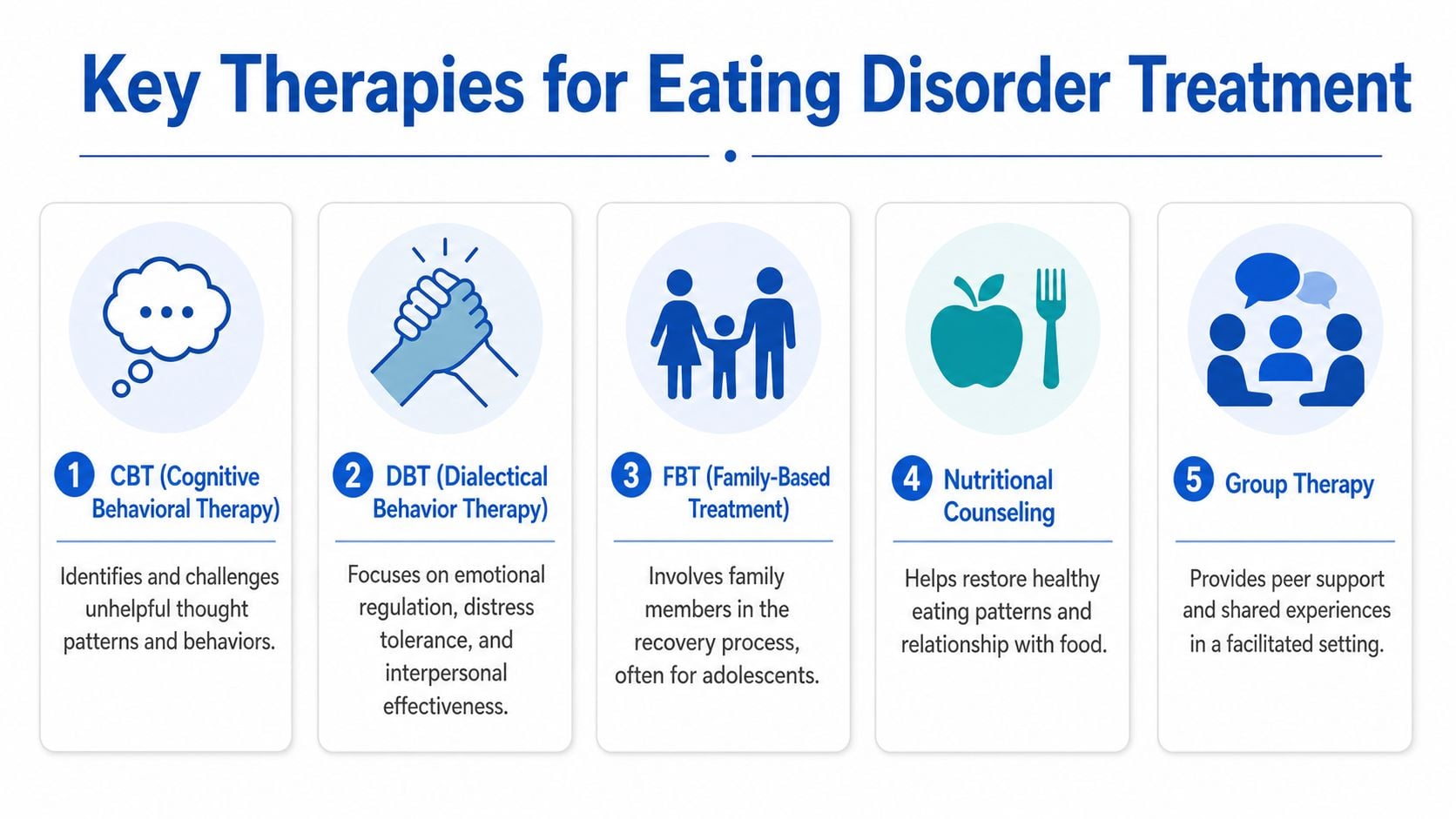
It helps to translate each therapy into the job it does. A good program uses different therapies the way a medical team uses different tools. One helps with thoughts. One helps with emotional storms. One helps rebuild meals and routines. One helps the family respond in ways that lower conflict and support recovery.
This visual gives a useful overview of the main approaches often used in care.
How CBT and DBT help in real life
CBT focuses on the thought patterns that keep symptoms stuck. Many eating disorder behaviors are tied to rules, predictions, and fears that feel true in the moment. A therapist helps the patient slow those thoughts down, test them, and build a more accurate response.
For example, a person might think, “If I eat this meal, I will lose control.” CBT breaks that moment into parts. What is the fear? What evidence supports it? What happened the last time? What is a safer, more realistic statement the person can use at the table?
DBT focuses on what to do when feelings surge fast and hard. That matters in eating disorder care, and it matters even more when substance use is part of the picture, because the same spike in shame, panic, anger, or numbness can drive bingeing, purging, restricting, drinking, or drug use.
A DBT session may teach distress tolerance for the first 20 minutes after an urge hits. It may teach emotion regulation so the person can name what they are feeling before reacting. It may teach interpersonal skills so a conflict at home does not turn into a night of symptoms.
Here's a brief video overview that can make these approaches feel less abstract.
Some of the most helpful therapy work is not dramatic. It's practicing one skill, one meal, one conversation, and one hard evening at a time.
Why family and nutrition support matter
Family therapy often changes the recovery environment, not just the patient's insight. For teens, that can mean helping caregivers respond to meal refusal, conflict, secrecy, or high emotion with more steadiness. For adults, it may involve partners or relatives learning how to support recovery without policing, arguing, or accidentally reinforcing symptoms.
If substance use is also present, family work can prevent a common problem. One set of loved ones may be focused on food, while another is focused on alcohol or drugs, and the person in treatment gets pulled in two directions. A clearer family plan keeps everyone working from the same map. If you want a plain-language example of how family work can support recovery patterns, this article on using family therapy in addiction recovery is a helpful companion read.
Nutrition therapy gives structure to one of the hardest parts of recovery. Many patients already know what they are “supposed” to eat. Knowing is rarely the same as being able to do it when fear rises. A dietitian or nutrition therapist helps turn food from a source of panic into a repeatable routine, one meal, snack, and support plan at a time.
Individual counseling ties these pieces together. It gives the patient space to talk openly about what the eating disorder is doing for them, what substance use may also be doing for them, and where those patterns overlap. When you call a program, ask a direct question: how do your therapists adjust CBT, DBT, nutrition support, and family work when eating disorder symptoms and substance use triggers show up in the same week? The quality of that answer tells you a lot about whether the program can treat a complex case with real coordination.
Finding Care for Co-Occurring Substance Use
Many families hit a wall when a program clearly describes its eating disorder services, but says much less about what happens when alcohol or drug use is part of the same clinical picture.
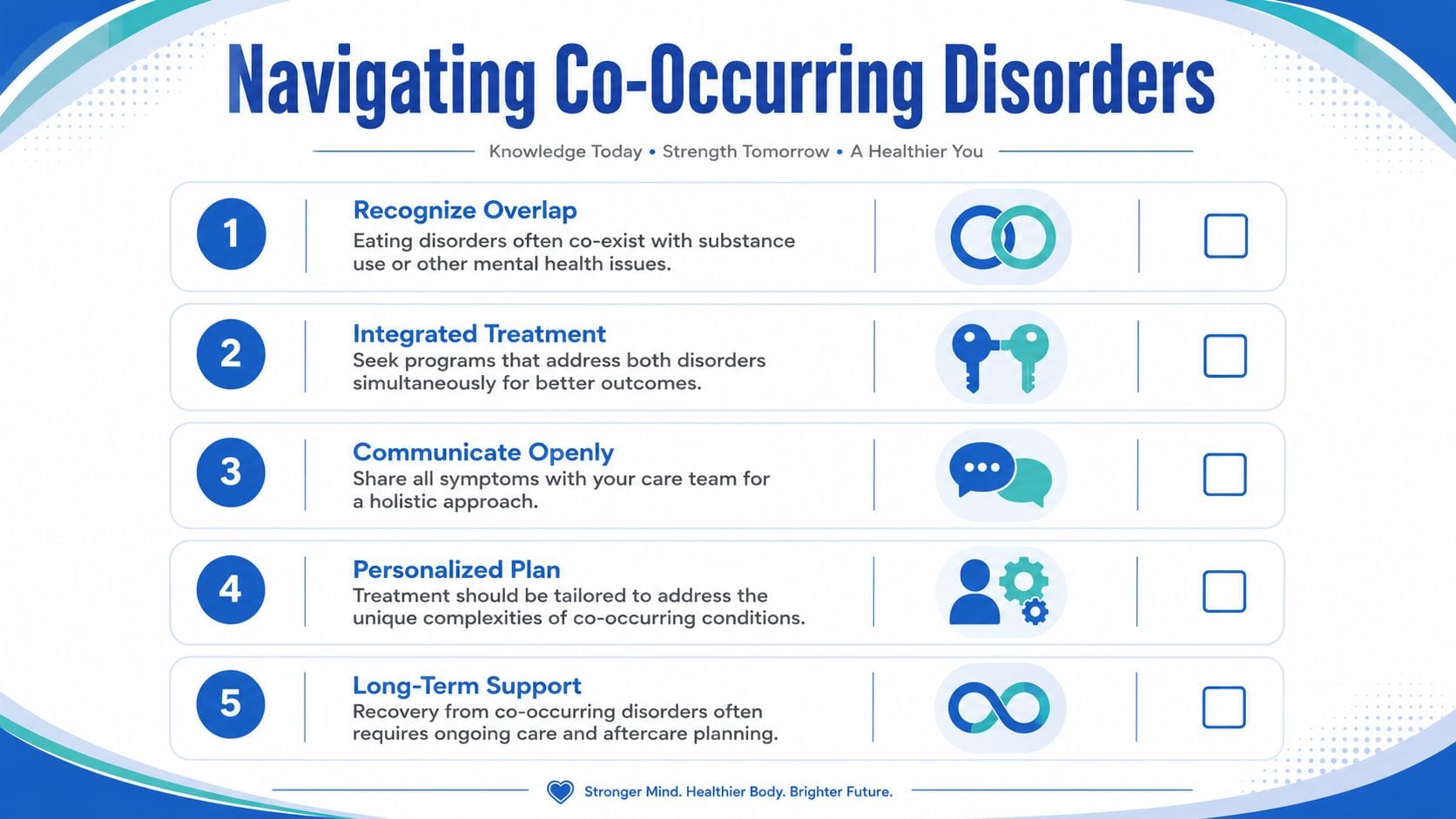
That matters because the overlap isn't rare. A PR Newswire background item cited in your source set notes that over 50% of individuals with eating disorders have a co-occurring substance use disorder, while also pointing out that public information on ERC Sacramento does not clearly explain how its outpatient eating disorder services coordinate with separate substance use treatment for co-occurring addiction in the referenced release.
Why separate treatment can create problems
When treatment is split across different programs, families often become the coordinators. One team may focus on meals and body image. Another may focus on detox, relapse prevention, or medication. If the two don't communicate well, the patient can end up receiving mixed messages or bouncing between priorities.
For example, a person might use alcohol to lower anxiety around eating. Or stimulant misuse may be tied to appetite suppression. If one team addresses only the substance use and the other addresses only food behaviors, neither team is treating the loop that keeps both conditions going.
A center might still be a good fit. But if dual-diagnosis coordination isn't clearly described, you need to ask direct questions. This overview of dual diagnosis treatment centers in California can help you understand what integrated care should generally include.
Questions to ask before you enroll
Bring these questions to the first call or assessment. Write down the answers.
- How do you handle both problems at once? Ask whether the eating disorder team and substance use providers work from one shared treatment plan.
- Who manages medical risk? If withdrawal, medication issues, purging, or nutritional instability are concerns, ask who monitors those pieces.
- What happens if substance use escalates during treatment? You want to know whether the program can adapt care or coordinate a higher level of support.
- Are families included in planning? Loved ones often need guidance on what to watch for and how to respond.
- How do you plan aftercare? A discharge plan should address both eating disorder recovery and substance use recovery, not just one.
If a center answers in broad marketing language but avoids specifics, keep asking until you understand who is doing what.
The best question is often the simplest one: “If my loved one has both an eating disorder and a substance use problem, what exactly happens next in your program?”
How to Choose a Program and Get Started
It often starts like this. You have a few quiet minutes, you open your phone, and suddenly you are trying to compare insurance rules, treatment terms, and safety concerns while also worrying about meals, alcohol or drug use, and what tonight will look like at home.
That kind of pressure can make every option blur together. A calmer way to handle it is to treat the search like triage. First confirm the program can meet the specific clinical need. Then confirm the practical pieces so you can begin.
Step 1: Screen for clinical fit before you worry about convenience
A program can sound warm, organized, and well known and still be the wrong fit if your loved one has both an eating disorder and a substance use problem. For a dual-diagnosis case, the first question is simple: can one team address both conditions in a connected way?
Start there. Ask whether the assessment includes eating behaviors, purging or restriction, substance use, withdrawal risk, mental health symptoms, medications, and medical stability. If the answer is vague, keep asking.
Then move to practical details:
- Insurance fit: Do you take my plan, and what costs should we expect at the start?
- Level-of-care fit: Do you offer the level we may need, and can you step care up or down if the picture changes?
- Family fit: How are parents, partners, or other supports included?
- Dual-diagnosis fit: Who treats the substance use piece, and how do they coordinate with the eating disorder team?
The goal is not to find a perfect brochure. The goal is to find a program that can explain, in plain language, what happens if both problems show up on day one.
Step 2: Schedule the assessment and bring the messy real-life picture
An assessment works like the intake side of an emergency folder. It gathers the pieces that matter so the team can recommend the safest next step.
You do not need to sound polished. You do not need every date, symptom, or detail. A direct opening is enough: “We're worried about eating disorder behaviors, and we're also seeing alcohol or drug use. We need to know what level of care makes sense and whether your team can treat both together.”

If stress makes your mind go blank, write notes before the call. Include recent food behaviors, bingeing, purging, restriction, compulsive exercise, substance use patterns, medical concerns, medications, past treatment, and any immediate safety worries. Intake coordinators are used to helping families sort through incomplete information. That is part of the job.
Step 3: Ask questions that show how the program actually works
A strong program should be able to describe its process clearly. Clear answers usually sound organized and specific. Fuzzy answers usually mean more screening is needed before you commit.
Ask:
- Who is on the care team? Listen for roles such as therapist, dietitian, medical provider, psychiatrist, and substance use clinician if needed.
- How do those people coordinate care? You want one plan, not separate conversations that never meet.
- What happens if substance use becomes the more urgent safety issue? A good answer should explain whether they can manage it in house, adjust the level of care, or coordinate a handoff quickly.
- How do you decide when PHP, IOP, or another level of care is no longer enough? This shows whether the program reassesses patients regularly.
- What does discharge planning include? For co-occurring cases, aftercare should cover food, therapy, medical follow-up, relapse prevention, and substance use support.
One small tip matters here. Write down the answers word for word if you can. Under stress, families often remember the feeling of a call but forget the details that help them compare one program with another.
A clear next step helps more than a long list of possibilities.
If safety feels uncertain right now, ask whether you need an urgent medical evaluation, a substance use assessment, or a standard outpatient intake first. That question can save time and reduce risk.
The search for Eating Recovery Center Sacramento CA is often really a search for clarity. If eating disorder symptoms and substance use are both part of the picture, choose a program that can explain exactly who treats each issue, how they coordinate, and what happens next if the situation changes. That is the difference between general treatment and care that precisely fits a complicated case.
If you're trying to sort out an eating disorder case that also involves alcohol or drug use, Addiction Resource Center LLC can be a practical first call for guidance. Their team helps adults and families in Northern California understand treatment options for substance use and co-occurring mental health needs, including detox, MAT, residential rehab through a partner facility, and IOP in person or by telehealth. If you need help figuring out what questions to ask next, they offer a compassionate place to start.