Strengthen family support in recovery and discover how loved ones can help heal addiction through connection and hope.


Addiction affects more than just the person struggling with substance use-it reshapes entire families. At Addiction Resource Center, we know that family support in recovery can be the difference between relapse and lasting change.
This guide walks you through how family dynamics influence addiction, practical ways to support a loved one, and how to rebuild trust after the damage is done.
How Family Dynamics Shape Addiction Recovery
Understanding the Interconnected System
Family systems don’t operate in isolation-they’re interconnected webs where one person’s addiction ripples through every relationship. When someone struggles with substance use, family members often slip into patterns that either accelerate recovery or inadvertently prolong the cycle. Understanding these dynamics isn’t about blame; it’s about recognizing what’s actually happening so families can respond differently.
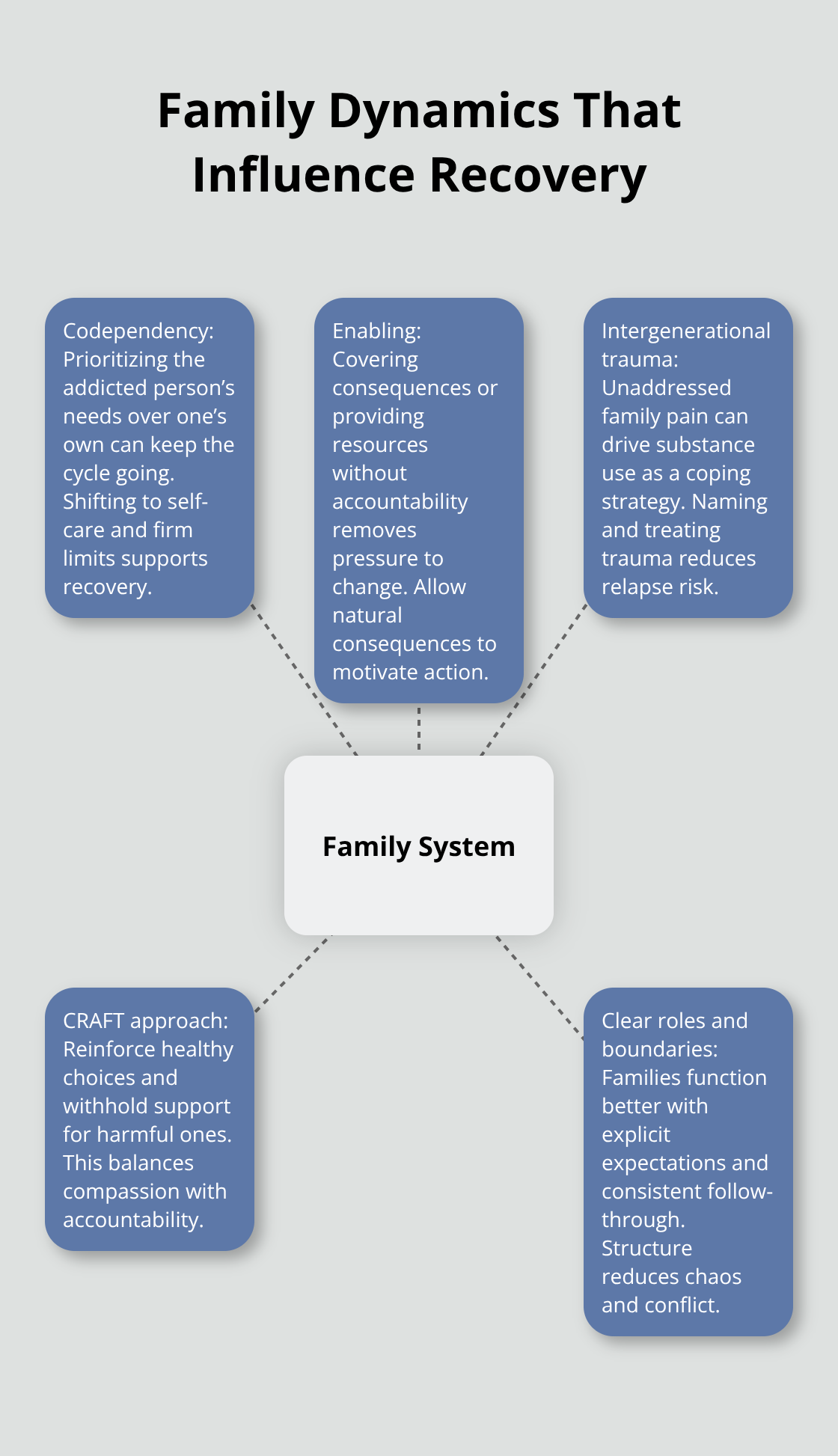
Research from SAMHSA’s Treatment Improvement Protocol 39 emphasizes that addiction treatment works best when families understand their role in the system, not as villains but as people caught in patterns that need to shift.
The Codependency Trap
Codependency emerges when family members prioritize the addicted person’s needs above their own, making excuses, covering up consequences, or sacrificing their own wellbeing to keep the person functional. This isn’t love-it’s a protective mechanism that backfires. When a parent pays off their adult child’s debt caused by drug use, or when a spouse calls in sick for a partner who’s hungover, these actions teach the person that substances don’t have real consequences.
The individual never hits bottom because the family cushions the fall. Behavioral Couples Therapy and Behavioral Family Therapy, supported by research from O’Farrell and Clements, show that when family therapy for addiction recovery helps families learn to set consequences and stop absorbing the fallout of addiction, people actually engage with treatment more seriously.
How Family Trauma Fuels Substance Use
Family trauma also fuels substance use in ways many families don’t recognize. People don’t wake up deciding to become addicted-they often turn to substances to numb pain rooted in family history. A child who grew up witnessing parental conflict, experiencing neglect, or surviving abuse may use drugs as an escape valve.
That trauma didn’t start with the current generation, and addressing it requires families to look backward honestly. Families Anonymous and Al-Anon, established support networks with decades of experience, help family members understand this connection and stop taking the addiction personally.
Breaking the Enabling Cycle
Enabling behavior differs from codependency in that it’s often more conscious. Enabling includes providing money without accountability, allowing the person to avoid natural consequences, or staying silent when confronted with destructive behavior. A family member might tell themselves they’re being compassionate when they’re actually removing the pressure that might motivate change.
CRAFT, or Community Reinforcement and Family Training, teaches families how to reinforce positive behavior while withdrawing support for harmful choices. The shift happens when families stop asking what the addicted person needs and start asking what they themselves need to do differently. This reorientation of focus opens the door to the practical strategies that actually work.
Practical Ways Families Can Support Loved Ones in Recovery
Setting Healthy Boundaries Without Abandonment
Family support means taking concrete actions that shift how the system responds to addiction, not simply showing up emotionally. The first action is establishing boundaries that hold firm without rejecting the person in recovery. A boundary isn’t punishment-it’s a clear line about what you will and won’t tolerate. If your adult child has stolen from you before, a boundary means not lending money without a structured repayment plan and regular check-ins, not cutting them off entirely. If your partner has missed work due to substance use, a boundary means you stop calling their employer with excuses and instead say directly: I won’t cover for you anymore.
Research shows that families who set specific, measurable boundaries see better treatment engagement and lower relapse rates than families who remain vague or inconsistent. Write these boundaries down. Tell the person what they are. Stick to them even when guilt or fear pushes you to cave.
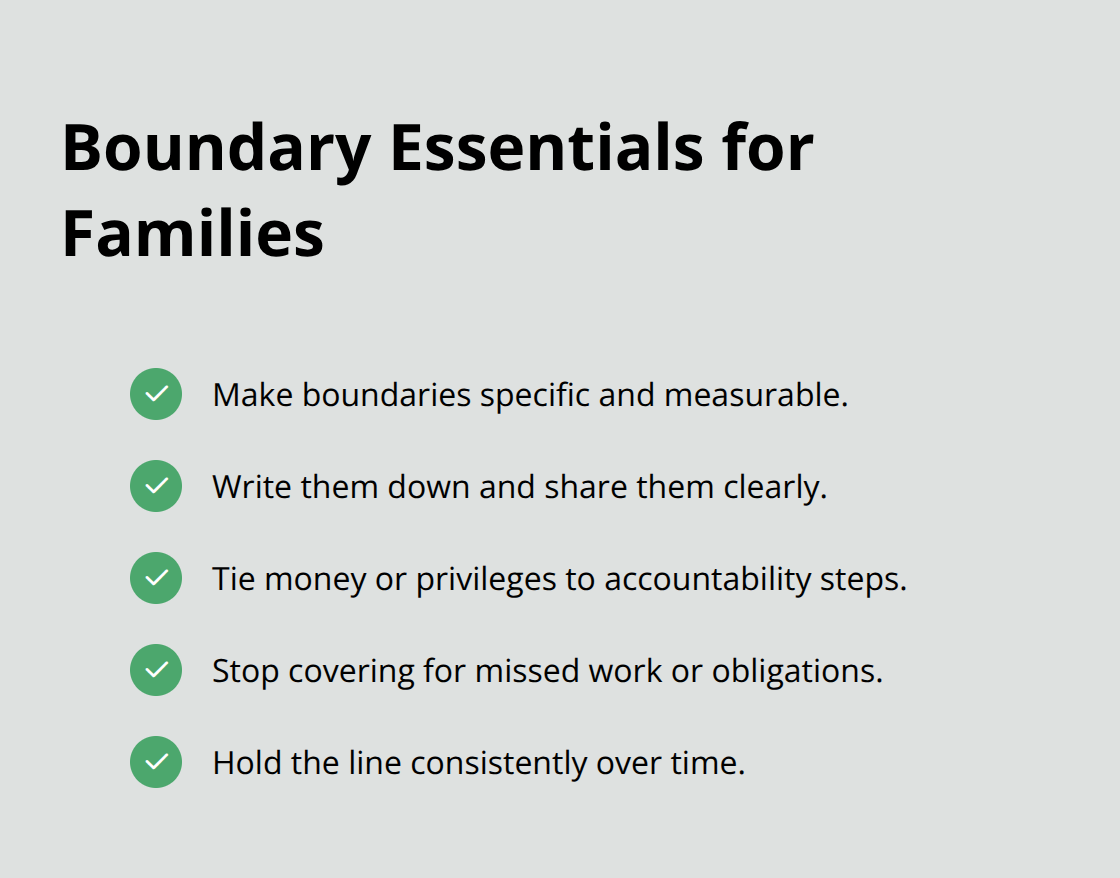
This consistency teaches the person that recovery has real stakes.
Communicating Effectively During Treatment and Aftercare
Communication during treatment and aftercare requires moving past vague reassurances into specific, honest conversation. Don’t say everything will be fine-say what you actually observe: I notice you’re attending meetings regularly, and that matters to me. Ask direct questions about what they need: Do you want me at family therapy sessions, or do you need that space first? Listen without planning your response.
When family members use I statements instead of blame, families report better emotional connection and people in recovery feel safer being honest about struggles. This shift in language transforms how conversations unfold and what people actually hear from one another.
Participating in Family Counseling and Support Groups
Family therapy or support groups like Al-Anon aren’t optional if you want real change-they’re where you learn to interrupt old patterns and practice new responses with professional guidance. Al-Anon, established in 1951, has helped millions of family members stop absorbing shame that doesn’t belong to them. Family therapy typically runs 12 to 20 weekly sessions and produces measurable improvements in family functioning and sustained abstinence.
The therapist becomes a translator between people stuck in old communication patterns, helping each person understand what the other actually needs instead of what they fear. These sessions create a safe space where family members can voice concerns, ask difficult questions, and learn skills that extend far beyond the treatment period itself. When families engage in this work together, the entire system strengthens-not just the person in recovery, but everyone involved in their life.
Rebuilding Trust and Connection After Addiction
How Trust Rebuilds Through Action, Not Words
Trust does not rebuild through words alone-it rebuilds through consistent, measurable actions over time. When addiction fractures a family, the person in recovery must demonstrate through behavior that they are genuinely committed to change, not just saying the right things. This means showing up on time to commitments, being transparent about where they are and who they are with, and answering difficult questions directly rather than defensively. Research on family recovery shows that when people in recovery acknowledge specific past harms without minimizing them, family members report significantly greater willingness to move forward together.
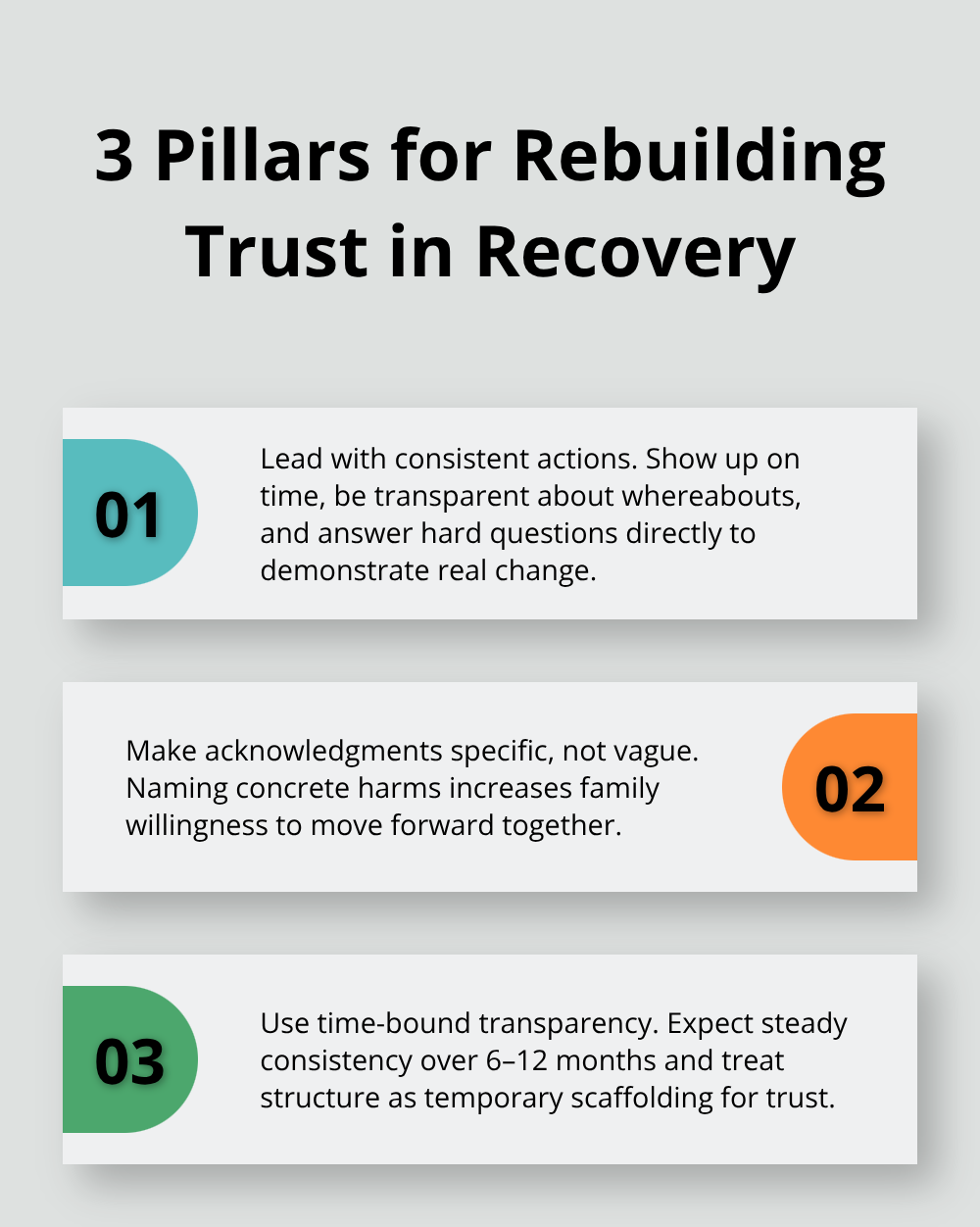
The acknowledgment works best when it is specific: “I stole money from you to fund my addiction, and I understand that broke your sense of safety in our home,” rather than vague apologies like “I’m sorry for everything.” Family members should also set a realistic timeline-trust typically takes 6 to 12 months of consistent behavior to meaningfully shift, not weeks. During this period, transparency matters more than privacy. If your loved one says they are going to a meeting, family members can ask for a time they will be home and follow up. This is not punishment; it is the temporary scaffolding that allows trust to rebuild on solid ground.
Building New Positive Experiences Together
Creating new positive experiences together is equally important as addressing the past. Families caught in the addiction cycle often have no memories of joy or connection that are not tainted by substance use, so intentionally building new ones breaks the pattern. These do not need to be expensive or elaborate-consistent, modest shared activities like weekly dinners, walking together, or working on a shared project matter far more than grand gestures.
The key is regularity and presence: put phones away, engage in actual conversation, and notice when progress happens. Celebrate small wins publicly within the family to reinforce that recovery is real and worth continuing. When someone reaches 30 days sober, acknowledge it directly-“This matters, and I’m proud you’re doing this”-rather than staying silent. Involve the person in recovery in decisions about household or family matters, which restores their sense of belonging and responsibility. Research shows that when families actively involve people in recovery in planning and decision-making, individuals report stronger commitment to sustained abstinence and families report better overall functioning.
Restoring Belonging and Responsibility
The shift from managing the addicted person to including them as a functioning family member signals that recovery is actually working. When families treat the person in recovery as a contributor rather than a problem to solve, the entire dynamic transforms. This means asking for their input on family decisions, assigning them responsibilities that matter, and trusting them with tasks that reinforce their role as a valued member of the household.
Families sometimes worry that this approach is too lenient or that it rewards bad behavior. The opposite is true. People in recovery who feel genuinely included in family life report higher motivation to maintain sobriety and stronger emotional connection to their support system. The person in recovery needs to know they are not permanently defined by their addiction-they are a family member whose presence and contribution matter.
The Lasting Impact of Family Support on Recovery
Family support in recovery transforms entire systems when families shift their patterns and commit to change. Research confirms that when families set boundaries, communicate honestly, and participate in their own healing, people in recovery stay sober longer and engage more seriously with treatment. The work you do as a family member directly impacts whether someone maintains sobriety or slides back into old patterns.
Recovery requires patience when progress feels slow and commitment when guilt tempts you to abandon the boundaries you’ve set. Trust rebuilds through consistent action over months and years, not through words alone. When you stop enabling, start showing up consistently, and rebuild trust through measurable behavior change, you transform not just one person but an entire family system.
We at Addiction Resource Center understand that family support in recovery works best when families participate from the start. If you’re ready to support a loved one or need professional guidance as your family navigates recovery, contact Addiction Resource Center for the compassionate, experienced support your family deserves.