Find the best outpatient addiction treatment options tailored to your needs. Compare programs, costs, and approaches to start recovery today.


Outpatient addiction treatment offers a realistic path to recovery without requiring you to step away from your job or family. At Addiction Resource Center, we know that finding the best outpatient addiction treatment program means understanding what actually works for your situation.
The right program combines flexibility with professional support, medical oversight, and proven therapy methods. This guide walks you through what to look for and how to evaluate your options.
Why Outpatient Treatment Actually Works
Flexibility Fits Real Life
Outpatient addiction treatment works because it matches how most people actually live. You don’t have to choose between recovery and keeping your job, maintaining your relationship with your kids, or paying your bills. A typical intensive outpatient program runs about three hours per day, three to five days per week, which means you attend treatment while managing your daily life. This structure isn’t a compromise on care quality; research from the National Institute on Drug Abuse shows that intensive outpatient programs have strong evidence supporting their effectiveness when matched to the right candidate. You stay connected to your support system during treatment. Family involvement improves outcomes significantly, and staying connected to your community and responsibilities actually strengthens recovery rather than weakening it.
The Financial Reality
The financial gap between outpatient and inpatient care is substantial. A typical 30-day inpatient program costs around $6,000, with many well-known centers charging up to $20,000 for the same period. Outpatient rehab for three months typically runs about $5,000 total. For someone working a regular job or managing a household, this difference is real money.
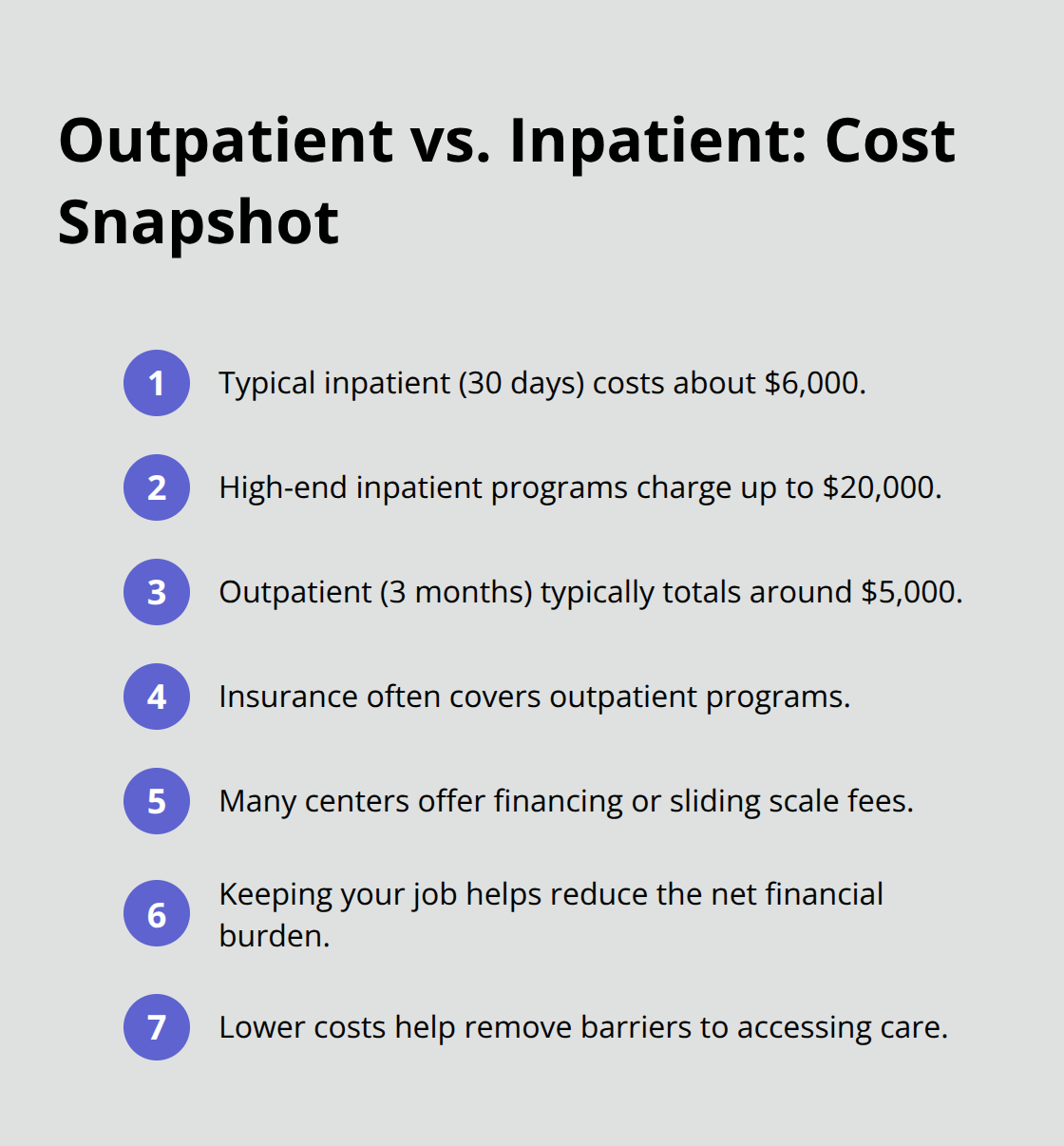
Insurance commonly covers outpatient programs, and many facilities offer financing or sliding scale fees based on income. When you maintain employment during outpatient treatment, the actual financial burden becomes manageable rather than devastating. The National Recovery Study found that people with greater access to treatment and recovery support services used them more frequently, suggesting that lower cost removes a genuine barrier to accessing help.
Success Rates When Conditions Align
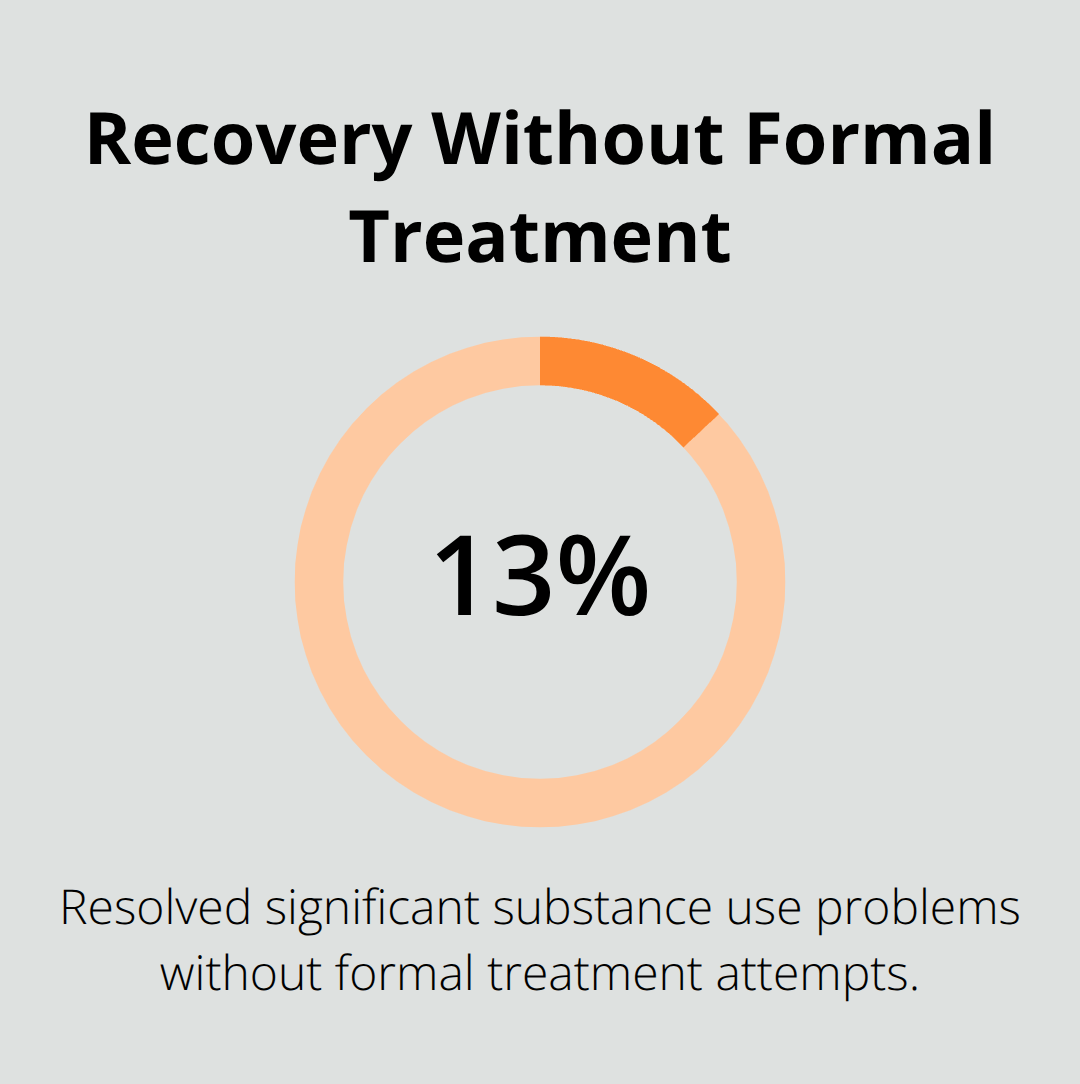
Outpatient treatment succeeds for people with mild to moderate addiction or those transitioning from inpatient care. The data shows this isn’t theoretical-it works when the person has some stability in their life and genuine motivation to change. Research indicates that about 13 percent of people resolved significant substance use problems without formal treatment attempts, but for most people, structured support matters. The median number of serious recovery attempts was two according to the National Recovery Study, meaning many people find lasting recovery relatively quickly with proper support.
What matters most is matching the intensity level to your actual situation. If you’ve tried outpatient care before without success, that signals you need something more intensive like an inpatient program or a day program meeting five to seven days per week.
The next step involves understanding what specific features separate effective programs from mediocre ones.
What Makes an Outpatient Program Actually Effective
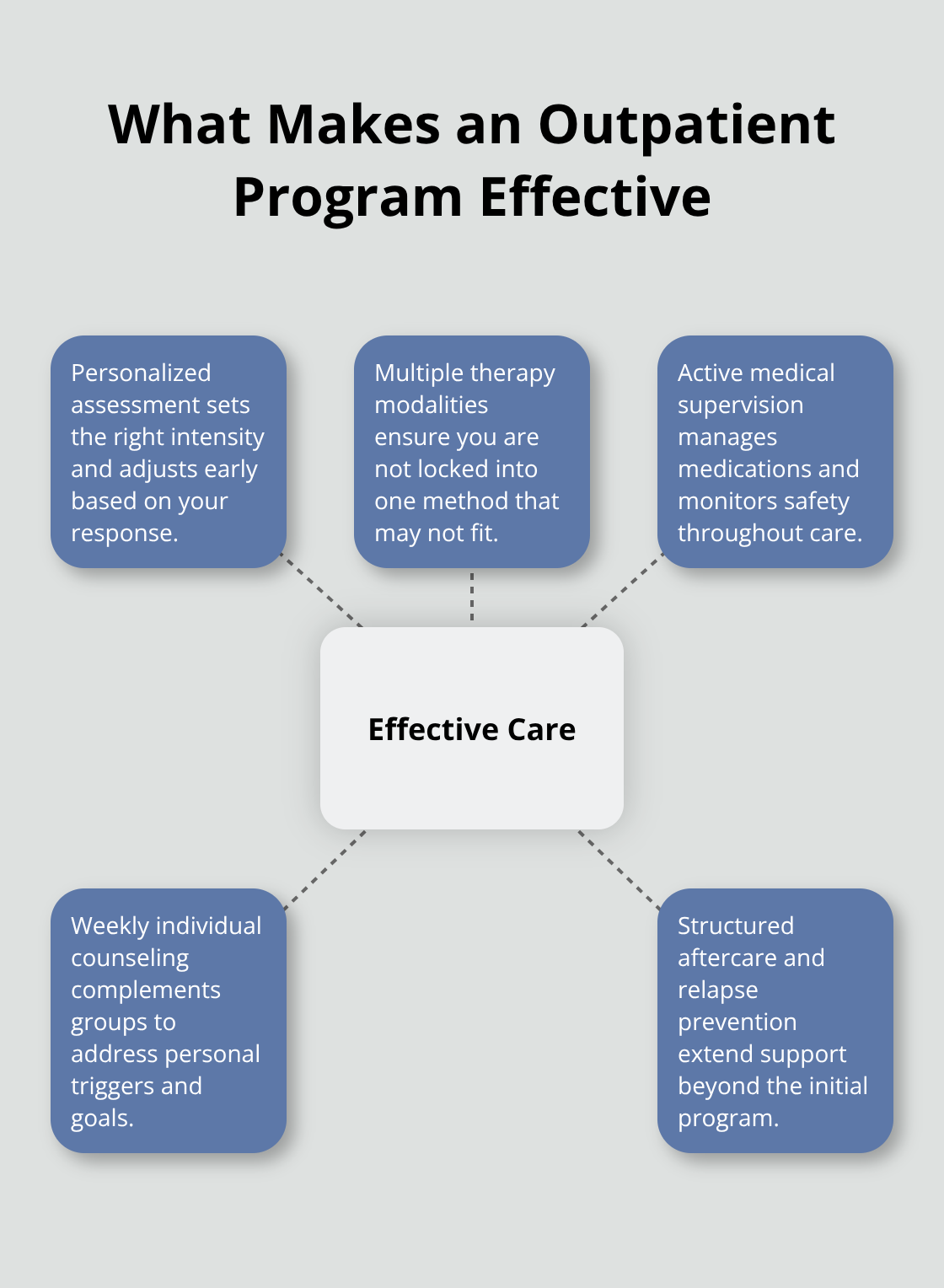
The difference between a mediocre outpatient program and an effective one comes down to three concrete factors: whether the program tailors treatment to your specific situation rather than forcing you into a generic mold, whether it offers multiple therapy approaches so you’re not stuck with one method that doesn’t work for you, and whether medical professionals actively supervise your care and adjust medications when needed. Most programs claim to do all three, but the execution varies dramatically. When you evaluate options, you need to ask specific questions that reveal whether a program truly personalizes care or just says it does.
Personalized Assessment Drives Better Outcomes
A real personalized treatment plan starts with a thorough assessment before you ever enter group therapy. An initial physical exam and psychosocial evaluation should determine whether you need medication-assisted treatment, how frequently you should attend sessions, and what types of therapy match your situation. Someone struggling with alcohol addiction and depression needs a different approach than someone with a cocaine problem and stable mental health. The program should adjust your plan within the first few weeks based on how you respond, not stick rigidly to what was written on day one. Many programs are inflexible here, and that’s a red flag.
Individual Counseling Creates Real Change
Group therapy is valuable, but individual counseling with a qualified therapist is where real change happens for most people. Your counselor needs specific credentials-look for licensed clinical social workers, licensed professional counselors, or psychiatrists rather than peer specialists alone. Group settings help you feel less isolated and expose you to others’ perspectives, but they can’t address your specific trauma, family dynamics, or the particular triggers that make you want to use. A strong program offers both without treating group therapy as the main event.
The National Recovery Study found that people with higher recovery capital (resources and supports available to them) had better outcomes, and individual therapy is a critical part of building that capital. Some programs meet three hours per week in group only; better programs include at least one individual session weekly within that time. Ask directly how many individual sessions you’ll have and who will lead them. If the answer is vague or if individual therapy costs extra, look elsewhere.
Medical Supervision Ensures Safety
Medical supervision in outpatient settings means a physician or nurse practitioner actively monitors your progress, not just a counselor with good intentions. This matters enormously if you’re taking medications like naltrexone, Suboxone, or acamprosate. These medications require dose adjustments based on how you respond, and that requires medical judgment. Medication-assisted treatment combined with counseling produces better outcomes than either alone according to research from the National Institute on Drug Abuse.
If a program can’t explain how medications are managed or who prescribes them, that’s a problem. Some outpatient programs coordinate medications poorly, leaving you without proper monitoring for side effects or effectiveness. Ask whether the program has an on-site physician or works with an external prescriber, how often medication reviews happen, and whether adjustments can be made quickly if something isn’t working. A program that takes three weeks to schedule a medication review is wasting your time.
Once you understand what effective programs look like, the next step involves knowing exactly what questions to ask when you contact treatment centers.
Questions to Ask Treatment Centers
Calling a treatment center without specific questions wastes everyone’s time and leaves you vulnerable to vague promises. You need to ask questions that reveal whether a program actually delivers personalized care or just claims to.
Verify Counselor Qualifications and Experience
Start with counselor qualifications because this determines who will guide your recovery. Ask whether the program employs licensed clinical social workers, licensed professional counselors, licensed marriage and family therapists, or psychiatrists. These credentials matter because they indicate training, supervised practice hours, and accountability through licensing boards. If a center staffs primarily peer specialists without clinical licenses, that’s a major red flag. Peer support has value, but it shouldn’t be your primary source of therapy.
Ask how many years of addiction treatment experience each counselor has and whether they specialize in your specific substance or co-occurring conditions. A counselor with fifteen years treating alcohol addiction might not be the right fit if you’re struggling with opioids. Having a qualified counselor who understands your specific situation is a critical part of your recovery foundation.
Address Co-Occurring Mental Health Conditions
Co-occurring mental health conditions dramatically complicate addiction treatment, and most programs handle this poorly. Ask directly whether the program screens for depression, anxiety, PTSD, and bipolar disorder during the initial assessment. If they don’t screen, move on. Ask whether a psychiatrist or psychiatric nurse practitioner is available to prescribe psychiatric medications if needed, not just addiction medications.
Many people fail in outpatient treatment because their underlying depression or anxiety goes untreated while they focus only on stopping substance use. The program should have a clear protocol for coordinating addiction treatment with mental health care, not treating them as separate issues. Ask how they handle situations where psychiatric medications and addiction medications interact or need dose adjustments.
Evaluate Aftercare and Relapse Prevention
Ask about aftercare and relapse prevention because the transition from active treatment to independence determines long-term success. A strong program doesn’t just discharge you after completing the initial phase. Ask what happens after you finish the main program and whether they offer step-down options like continuing care groups, weekly individual therapy, or alumni support.
Ask whether they connect clients with 12-step programs like Alcoholics Anonymous or Narcotics Anonymous and whether this connection is mandatory or optional. Ask how they track relapse warning signs and what happens if someone relapses during or shortly after treatment. If their answer is that you simply restart the program and pay again, that’s not relapse prevention-that’s profit-driven care. The best programs have structured aftercare lasting at least six months and clear protocols for addressing lapses before they become full relapses.
Choosing the Right Outpatient Treatment Program
Outpatient addiction treatment works when you match the right program to your actual situation. The best outpatient addiction treatment combines qualified counselors, personalized assessment, medical supervision, and realistic aftercare planning. You now know what to look for: licensed therapists who understand your specific substance and mental health needs, individual counseling alongside group therapy, active medication management if required, and structured support after you complete the initial program.
The evaluation process matters because mediocre programs waste your time and money while you rebuild your life. Ask the specific questions outlined here, verify credentials, understand how co-occurring conditions receive treatment, and know what happens after you finish the main program. These conversations reveal whether a center truly personalizes care or just claims to do so.
Taking action today means contacting multiple centers, asking hard questions, and choosing based on what matches your situation. Recovery happens when you access proper treatment and use it consistently-the median number of serious recovery attempts was two according to research, meaning many people find lasting recovery relatively quickly with the right support structure in place. Contact Addiction Resource Center or another qualified program in your area to start that conversation.