Discover aftercare planning strategies to maintain recovery momentum, prevent relapse, and build lasting sobriety after treatment.

Completing a treatment program is a major milestone, but it’s only the beginning of your recovery journey. The weeks and months after treatment are when real, lasting change happens-and that’s where aftercare planning guidance becomes essential.
At Addiction Resource Center, we know that people who follow a structured aftercare plan are significantly more likely to maintain sobriety long-term. This guide walks you through building a personalized aftercare strategy that works for your life.
What Aftercare Planning Means for Your Recovery
Your Roadmap After Treatment
Aftercare planning is your personalized roadmap for staying sober after you leave a treatment facility. It’s not a generic checklist-it’s a specific strategy built around your triggers, your support system, your work schedule, and your living situation. The reality is that relapse rates for substance use disorders hover between 40 and 60 percent, which means the first months after treatment are when you’re most vulnerable. Your aftercare plan addresses this directly by outlining exactly what you’ll do when cravings hit, who you’ll call at 2 AM, what meetings you’ll attend, and how you’ll structure your days to avoid idle time that feeds relapse.

A strong plan combines ongoing therapy sessions, peer support groups, medical care if you’re on medication-assisted treatment, and concrete lifestyle changes like exercise routines and social activities that replace substance use. You should start building this plan while still in treatment, not after you’ve already walked out the door.
Three Pillars That Actually Work
Your aftercare plan rests on professional support, peer connection, and environmental control. Professional support means continuing therapy with a counselor or therapist who understands your specific addiction history and any mental health conditions you’re managing-this isn’t optional if you want real results. Peer support means attending recovery meetings regularly; the standard recommendation is 90 meetings in 90 days to build a genuine sober network, whether that’s Alcoholics Anonymous, Narcotics Anonymous, or another evidence-based group.

Environmental control means being honest about your living situation: if you’re moving back in with people who use, you need a different plan than someone moving into a sober living home. Your plan should also identify your specific relapse triggers-whether that’s stress, certain people, specific locations, or emotional states like anger or loneliness-and describe exactly how you’ll respond when you encounter them.
Building Your Specific Action Plan
Include emergency contacts, the name of your sponsor or accountability partner, and the coping techniques you learned in treatment that actually worked for you, whether that’s mindfulness, exercise, or calling someone from your support group. These concrete details transform your aftercare plan from a vague intention into a tool you can actually use when you face a difficult moment. The more specific you make this plan, the faster you’ll respond when triggers appear.
Your next step involves identifying who will support you through this process and how you’ll stay connected to them consistently.
Building Your Aftercare Support System
Identify the Right People for Your Recovery Circle
Your support network isn’t something you build in isolation. Start by listing the people in your life who actually support your sobriety without judgment, then be ruthlessly honest about who doesn’t belong in your recovery circle. This might mean distancing yourself from friends who use, even if those friendships felt important before treatment. Research shows that the strength of your support system directly impacts your ability to stay sober, so this decision matters more than being polite.
Include your sponsor or accountability partner-someone you can call at 2 AM without hesitation-your therapist or counselor, family members who’ve committed to understanding your recovery, and people you’ll meet in support groups who get what you’re going through because they’ve lived it. Your support network should be a mix: professional people who understand addiction clinically, peers who understand it personally, and family members who understand your history.
Repair Family Relationships Through Professional Support
If your family relationships are damaged from your addiction, family therapy addresses this directly. Many aftercare plans include family counseling specifically to rebuild trust and improve communication at home. The goal isn’t to have dozens of supporters-it’s to have the right people consistently available and genuinely invested in your success.
Connect with Support Groups and Ongoing Counseling
Support groups and ongoing counseling transform your plan from words on paper into daily action. Attending support group meetings regularly helps build a stable sober network; this frequency works because it creates genuine relationships with people who understand your struggles without needing explanation. Whether you choose Alcoholics Anonymous, Narcotics Anonymous, or evidence-based alternatives like SMART Recovery, consistent attendance matters more than which program you pick.
Your therapist or counselor should specialize in addiction and ideally understand co-occurring conditions like depression or anxiety if you have them; this person becomes your sounding board for challenges that arise after treatment ends. Schedule appointments before you leave treatment, not after, so you never face a gap in professional support.
Create Accountability Structures That Stick
Tell your support network your specific goals and check-in schedule-weekly calls with your sponsor, twice-weekly therapy sessions, daily meeting attendance-then stick to them even when you don’t feel like it, especially then. When cravings or emotional turbulence hit, people with structured accountability respond faster than those flying solo. These regular touchpoints keep you connected to people who understand recovery and prevent isolation from taking hold.
With your support system in place, you now need practical strategies to handle the moments when triggers appear and cravings intensify.
Practical Strategies for Maintaining Sobriety
Identify Your Specific Triggers and Plan Your Response
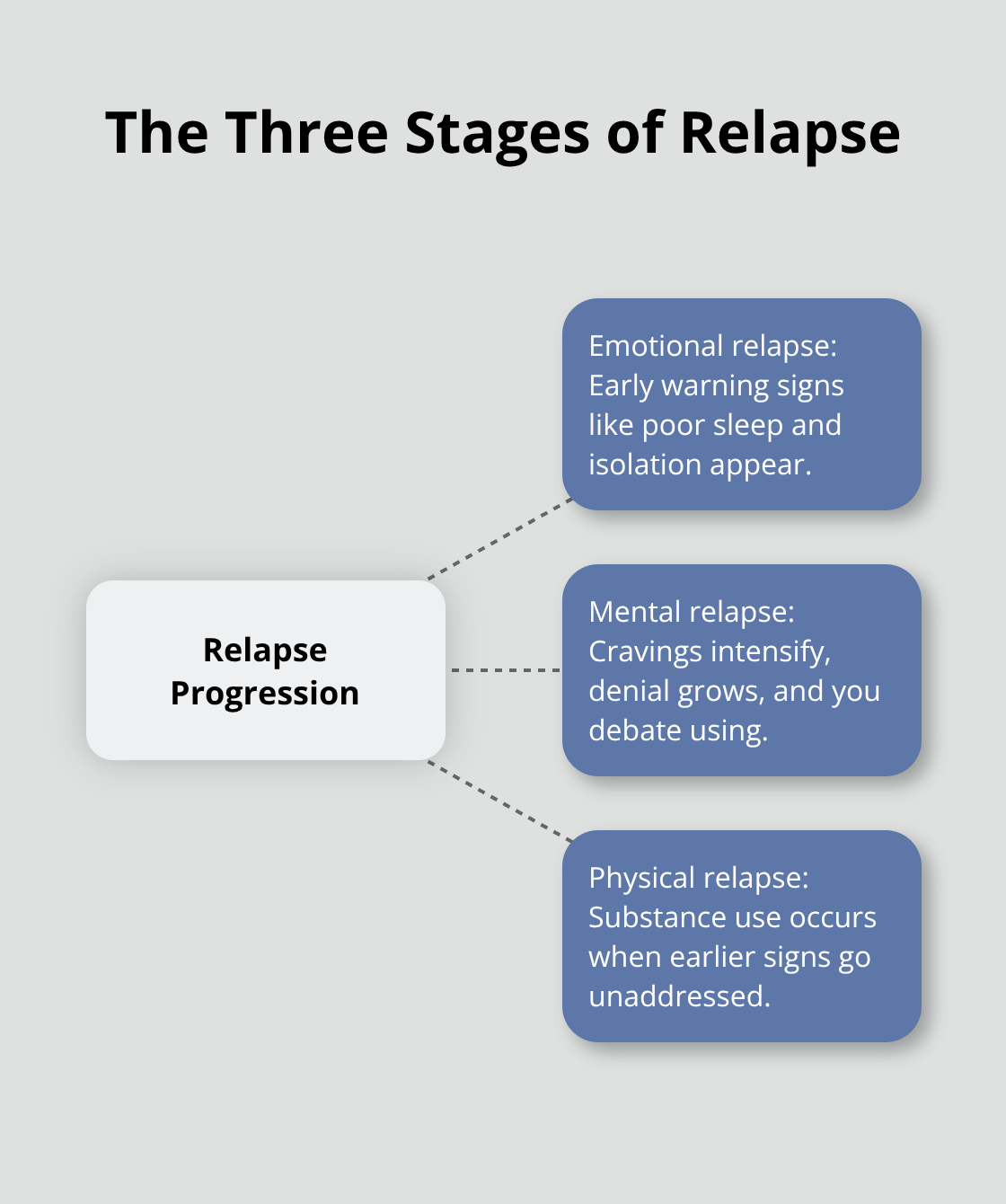
Knowing your triggers matters far more than generic stress-management advice. People who can name their specific relapse triggers respond faster when those triggers appear. Common triggers include stress, anger, loneliness, fatigue, certain people, and specific locations where you used before. Research from the American Addiction Centers shows that relapse typically progresses in three stages: emotional relapse marked by neglected sleep and isolation, mental relapse where cravings intensify and denial creeps in, and physical relapse where actual use occurs. This progression means you have time to intervene, but only if you’ve already identified what pushes you toward each stage.
Write down the three situations most likely to trigger cravings for you specifically, then describe exactly what you’ll do in each one. If stress triggers you, will you call your sponsor, go to the gym, or attend an unscheduled meeting? If a specific person triggers you, will you avoid them entirely or practice saying no beforehand? The specificity matters because when cravings hit hard, your brain won’t have capacity for creative problem-solving. You need a predetermined response ready to execute immediately.
Replace Substance Use With Healthy Coping Mechanisms
Healthy coping mechanisms replace the neurological reward your brain received from substance use. Exercise reduces cravings and stress in addiction recovery because it addresses multiple relapse risks simultaneously: it reduces stress, improves sleep quality, and occupies time that might otherwise lead to idle thinking about using. You don’t need intense workouts; even 30 minutes of walking five times weekly measurably reduces cravings according to addiction research.
Mindfulness meditation and yoga address the same needs differently (they help you observe cravings without acting on them), which builds genuine resilience rather than just distraction. These practices train your mind to sit with discomfort instead of running from it, a skill that transfers to every difficult moment you’ll face after treatment.
Build a Daily Routine That Prevents Relapse
Your daily routine becomes your most powerful tool after treatment ends. Structure prevents the idle time that feeds relapse because your brain won’t have space to ruminate on cravings. Wake at the same time daily, attend your support meetings at scheduled times, work or volunteer during set hours, exercise at consistent times, and maintain regular sleep hours. This sounds mundane, but sleep disruption directly correlates with increased relapse risk, making consistent sleep schedules non-negotiable rather than optional.
Build your routine around your aftercare commitments first (therapy appointments, support group meetings, medication management if applicable), then fill remaining time with activities that feel genuinely meaningful rather than just filling hours. Hobbies, volunteer work, or skill-building activities give your brain the engagement it needs while keeping you connected to your identity beyond recovery.
Final Thoughts
Your aftercare planning guidance starts now, not after you leave treatment. The strategies in this guide work because they’re specific, actionable, and built around your actual life rather than generic recovery principles. The three pillars of professional support, peer connection, and environmental control form the framework that keeps people sober when cravings hit and life gets difficult.
Your aftercare plan only works if you actually follow it. Write it down, share it with your support network, and treat it like a commitment you’d make to someone you love, because you’re making it to yourself. When you identify your triggers, schedule your meetings, build your daily routine, and stay connected to people who understand recovery, you’re actively building a life that feels worth staying sober for.
We at Addiction Resource Center understand that recovery looks different for everyone. Our team provides personalized substance abuse counseling, addiction therapy, and mental health support tailored to your specific needs, and our outpatient addiction treatment programs are designed to support you through every stage of your recovery journey. Reach out today to build the aftercare plan that works for your life.