Stop drinking safely with practical steps, medical support, and strategies to manage cravings and stay sober long-term.


Quitting alcohol is one of the hardest decisions you’ll make, but doing it the wrong way can put your health at serious risk. Stopping drinking suddenly can trigger dangerous withdrawal symptoms, from tremors and anxiety to seizures and organ damage.
At Addiction Resource Center, we know that stopping drinking safely requires a thoughtful approach with professional guidance and support. This guide walks you through the risks, the planning process, and the treatment options that work.
What Happens When You Stop Drinking Too Fast
When you stop drinking after heavy use, your body goes into shock. Alcohol depresses your central nervous system, and after prolonged heavy drinking, your system adapts to that suppression. The moment you quit, your brain becomes overexcited without alcohol to slow it down. This overexcitation drives withdrawal symptoms that can range from annoying to life-threatening.
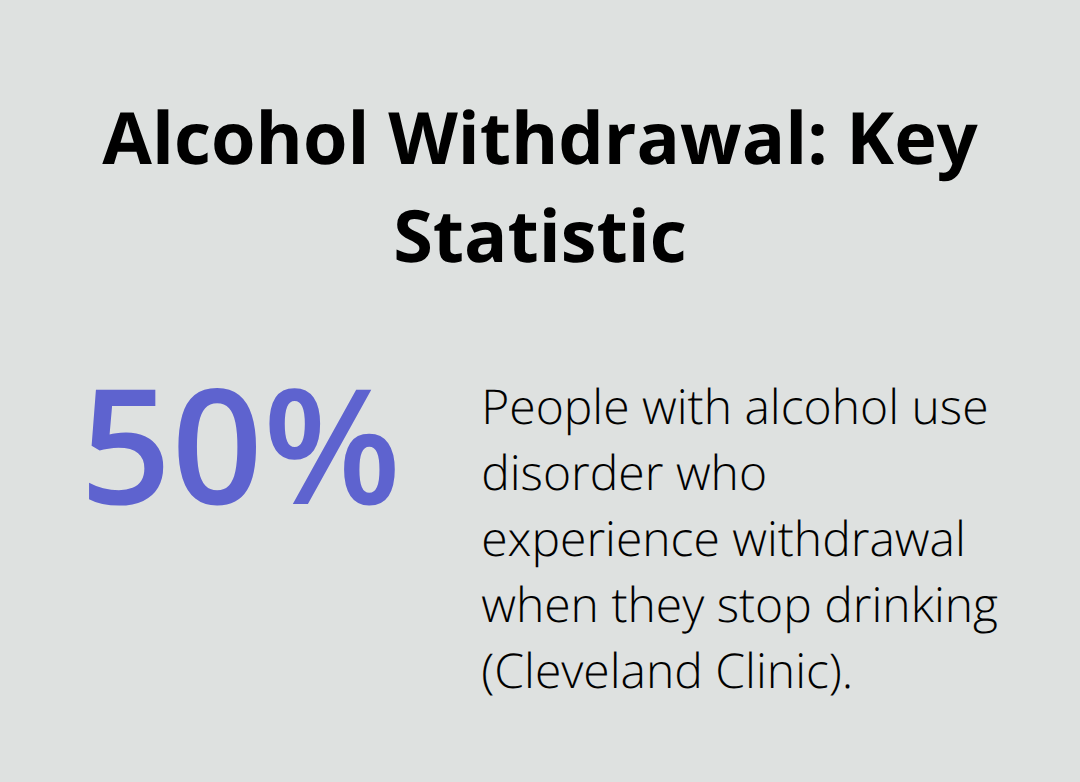
About 50% of people with alcohol use disorder who stop drinking experience withdrawal, according to Cleveland Clinic. For most people with mild-to-moderate withdrawal, symptoms peak within 24 to 72 hours after the last drink. You need to know the timeline and severity markers so you can recognize when medical help becomes non-negotiable.
The Withdrawal Timeline
Withdrawal symptoms typically begin 6 to 24 hours after your last drink and start mild-headaches, anxiety, insomnia. Within 24 hours, hallucinations can appear. Within 48 hours, seizure risk hits its highest point. Within 48 to 72 hours, delirium tremens may develop.
Delirium tremens represents the worst-case scenario: confusion, severe agitation, rapid heart rate, and dangerous body temperature changes. About 5 to 10% of people with delirium tremens die from it if untreated, according to Cleveland Clinic. Some withdrawal symptoms linger for weeks or months-prolonged insomnia and mood disturbances don’t disappear in days.
Who Faces the Highest Withdrawal Risk
Certain factors make withdrawal more dangerous. If you’re over 65, drink heavily every day, have a history of seizures or delirium tremens during past withdrawal attempts, or have liver damage, electrolyte imbalances, or dehydration, your risk climbs significantly. Cleveland Clinic identifies these as the primary risk factors that demand medical supervision.
This is why stopping at home alone is reckless if you’ve drunk heavily for years. Your doctor needs to know your exact drinking patterns-how many drinks per day, for how long-so they can assess whether you need hospital-based detox or can safely manage at home with medication support.
Medical Supervision and Medication Options
Mild withdrawal not at risk of worsening responds well to short-term medications like carbamazepine or gabapentin. Moderate withdrawal typically requires benzodiazepines (such as chlordiazepoxide or lorazepam) to prevent seizures and delirium. Severe withdrawal demands hospital or ICU care with continuous monitoring and IV benzodiazepines.
Heavy drinking is defined as 5 or more drinks per day for men or 4 or more for women. If that describes you, talk to a healthcare professional before you quit. They can decide whether home detox is safe or if you need professional supervision. Stopping abruptly when you’ve drunk at that level without medical guidance isn’t brave-it’s dangerous.
Your doctor will assess your individual risk factors and recommend the right level of care. This conversation happens before you quit, not after withdrawal starts. The treatment path you take depends on your drinking history, overall health, and access to support systems. Understanding these options prepares you to work with your healthcare team and move toward a safer, more supported approach to recovery.
Creating a Personalized Plan to Quit Drinking
Start With Your Doctor Before You Quit
You cannot plan your way out of alcohol withdrawal alone. Schedule a conversation with your doctor before you quit-not after symptoms start. This conversation determines everything: whether you detox at home, whether you need medication, and what support systems you need in place.
Your doctor needs specifics about your drinking pattern. How many drinks per day? For how long? Any previous withdrawal attempts?
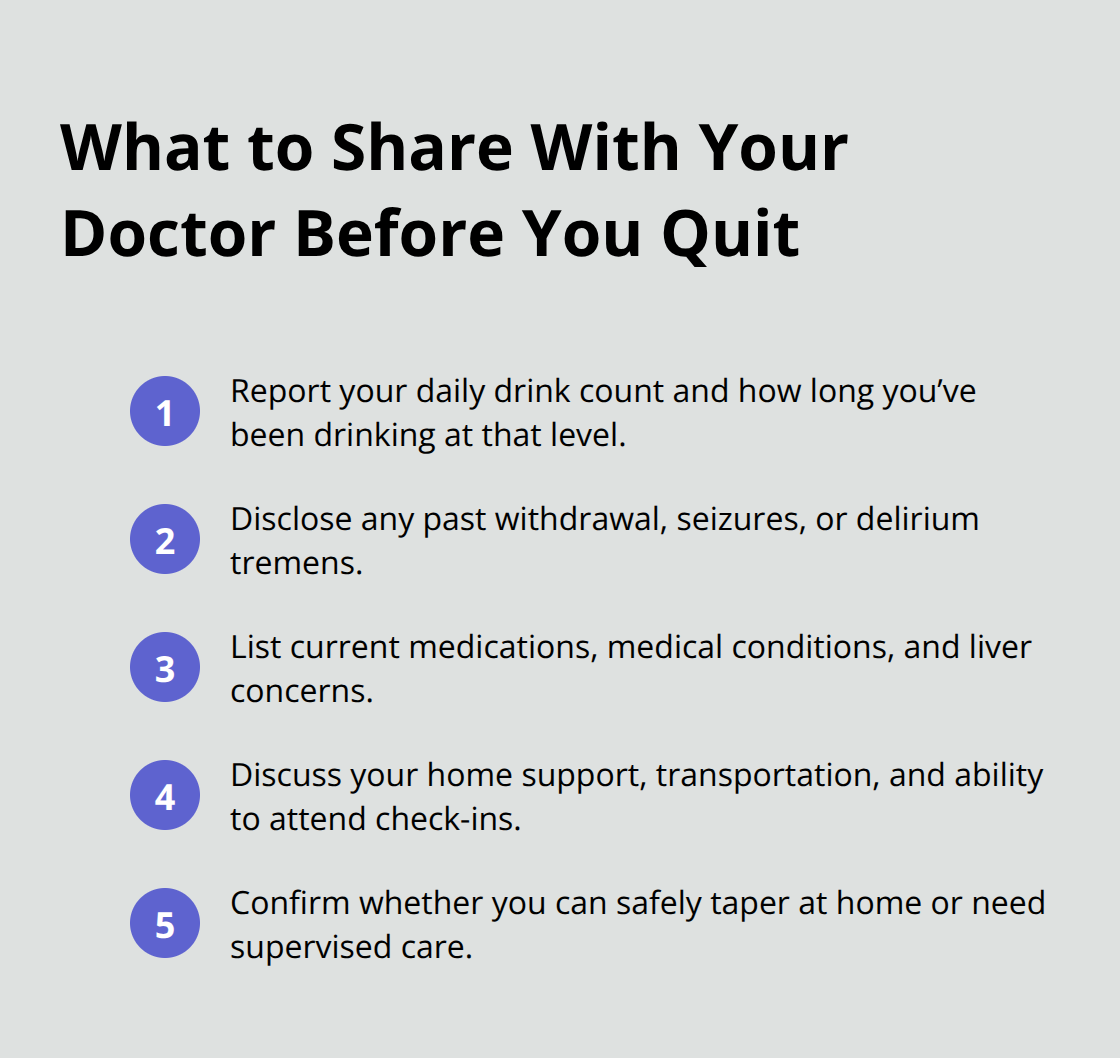
This information lets them assess your risk level and recommend the right care pathway. Heavy drinking means five or more drinks daily for men or four or more for women. If that matches your consumption, medical guidance isn’t optional.
Your doctor may prescribe benzodiazepines, gabapentin, or other medications to manage withdrawal safely while you reduce your drinking gradually. Some people can taper at home with medication and check-ins; others need outpatient monitoring; severe cases require hospitalization. Only your doctor can make that call based on your specific health history, liver function, and withdrawal risk factors. If you need immediate support, SAMHSA’s National Helpline is a free, confidential, 24/7 treatment referral and information service available in English and Spanish.
Identify Your Triggers and Build Concrete Coping Strategies
Once you have medical clearance and a medication plan, the next phase is identifying what actually triggers your drinking. Stress, specific people, certain times of day, boredom-these aren’t abstract concepts. Write down exactly when you drink and what happens before it.
A 2016 study cited by Alcohol Change UK found that people who tracked their drinking patterns had greater confidence to refuse drinks and maintained fewer drinking days long-term. Use this data to build concrete coping strategies. If stress triggers drinking, schedule exercise or call someone before reaching for a drink. If social situations trigger it, plan alcohol-free activities or bring a non-drinking friend. Replace the ritual entirely: if you drank wine after work, make that time a walk instead.
Activate Your Support Network
Your support network makes the difference between relapse and recovery. Tell your family and friends your specific goal and timeline so they understand what you’re doing and can help. Ask for concrete support-someone to check in daily, a buddy to text when cravings hit, people to avoid during early recovery.
The people closest to you need to know your triggers too, so they can help you navigate them. If professional support groups appeal to you, Alcoholics Anonymous, LifeRing, and other peer-led programs offer free ongoing community. Therapy or counseling accelerates progress; cognitive-behavioral therapy is an evidence-based approach that helps you rewire the thoughts and behaviors tied to drinking.
Document Your Plan and Stay Accountable
Your plan lives in writing: your goal, your medication schedule, your trigger list, your coping strategies, and your support contacts. Post it somewhere visible. Share it with your doctor and support people. This isn’t theoretical planning-it’s the operational framework that keeps you safe and accountable when withdrawal gets hard and cravings feel overwhelming.
With your personalized plan in place and your support network activated, you’re ready to explore the professional treatment options that align with your specific needs and circumstances.
Professional Treatment Paths That Work
Outpatient Programs Provide Structure Without Overnight Care
Outpatient programs give you flexibility while maintaining structure and accountability. These programs typically involve weekly or twice-weekly sessions where you meet with counselors, participate in group therapy, and check in on your progress without staying overnight. Intensive outpatient programs, or IOPs, demand more commitment-usually 9 to 20 hours per week-and work best if you have a stable home environment and moderate withdrawal risk. Standard outpatient counseling requires fewer hours but still provides regular professional contact.
You stay in your normal environment, maintain work and family responsibilities, and receive professional guidance simultaneously. Cleveland Clinic data shows that treatment combining counseling with medication produces better outcomes than either approach alone, so outpatient programs that integrate both medication management and therapy give you the strongest foundation. Your doctor will recommend the intensity level based on your withdrawal risk, home stability, and work situation.
Medication-Assisted Treatment Reduces Cravings and Relapse Risk
Medication-assisted treatment uses FDA-approved drugs to reduce cravings and support abstinence. Naltrexone blocks the rewarding effects of alcohol, making drinking less appealing. Acamprosate stabilizes brain chemistry disrupted by heavy drinking. Disulfiram creates an unpleasant reaction if you drink, serving as a behavioral deterrent.
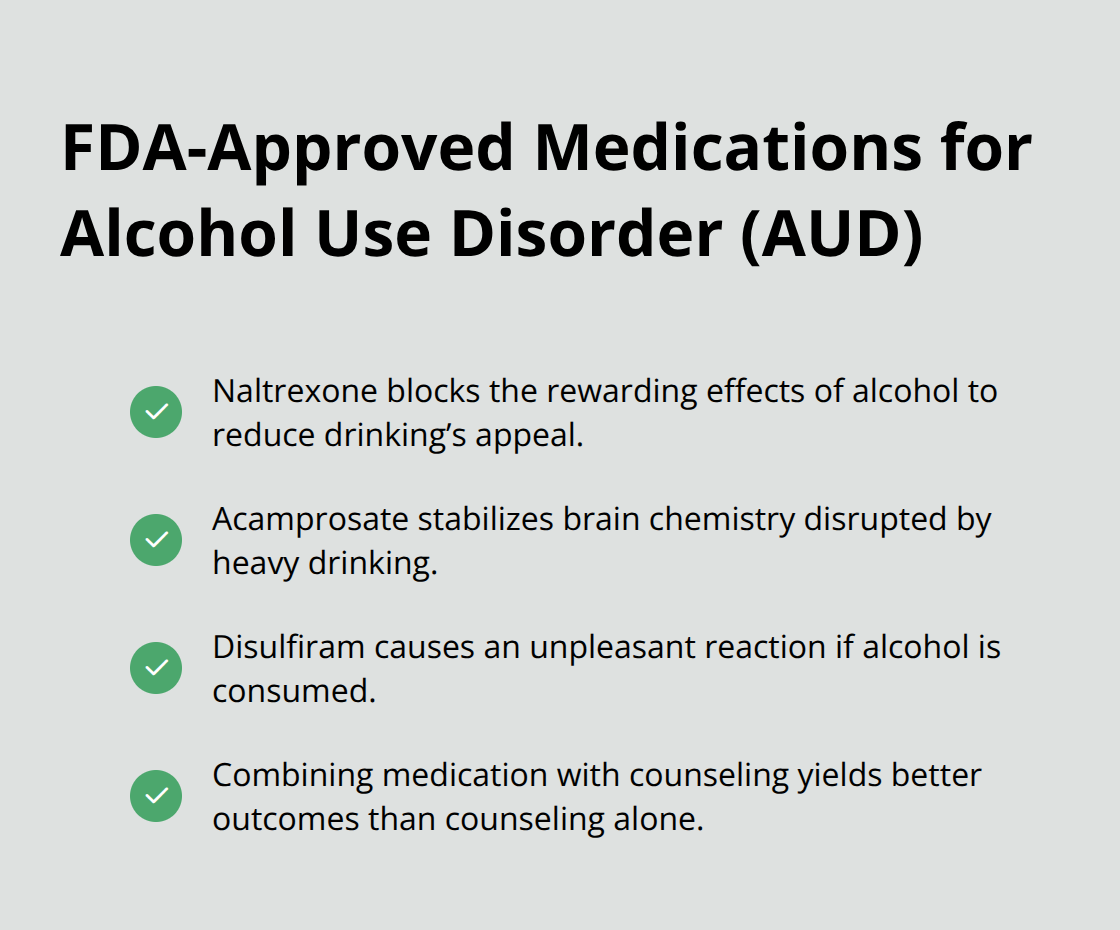
These medications work differently, and your doctor will select based on your medical history and what works best for your brain chemistry. Research from the National Institute on Alcohol Abuse and Alcoholism confirms that medication combined with counseling produces superior results compared to counseling alone. You take these medications as prescribed-missing doses undermines their effectiveness-and attend regular check-ins to monitor how they’re working and adjust dosages if needed.
Therapy Rewires the Thoughts That Drive Your Drinking
Cognitive-behavioral therapy teaches you to identify the thoughts and situations that trigger drinking, then practice new responses. Dialectical behavior therapy adds emotional regulation skills, helping you manage stress and difficult feelings without alcohol. Family therapy repairs relationships damaged by heavy drinking and involves your support system in recovery.
These aren’t vague talk sessions-they’re structured, skill-building interventions with measurable outcomes. A therapist or counselor trained in alcohol use disorder treatment guides you through specific exercises and homework between sessions. The goal is to build new neural pathways so your automatic response to stress or boredom shifts away from drinking. Treatment settings range from medical detox facilities for severe withdrawal to standard outpatient offices for ongoing therapy. Your choice depends on your withdrawal risk, access to support at home, and treatment intensity your doctor recommends. Early professional engagement matters: people who start treatment quickly after deciding to quit show better long-term outcomes than those who delay.
Final Thoughts
Stopping drinking safely requires medical guidance before you quit, a personalized plan that addresses your triggers, and professional treatment matched to your withdrawal risk. Start with a conversation with your healthcare provider about your drinking history and let them determine whether home detox with medication works for you or if you need outpatient or inpatient care. This single conversation prevents the life-threatening complications that emerge when people quit without medical input.
Your personalized plan becomes your operational guide-write down your triggers, your coping strategies, your medication schedule, and your support contacts, then share this plan with your doctor and the people supporting you. When withdrawal symptoms hit or cravings intensify, this written plan keeps you grounded and accountable. Professional treatment accelerates recovery through outpatient programs that provide structure while you maintain your normal life, medication-assisted treatment that reduces cravings and relapse risk, and therapy that rewires the thoughts and behaviors tied to drinking.
Recovery is possible, and you don’t navigate it alone. If you’re ready to stop drinking safely with professional support, our experienced team at Addiction Resource Center understands the complex nature of addiction and provides compassionate care throughout your recovery journey. Reach out to your doctor, contact a treatment provider, or call SAMHSA’s National Helpline at 1-800-662-4357 for confidential referrals.