Practice mindfulness for sobriety to manage cravings, reduce stress, and build lasting recovery habits.


Addiction doesn’t disappear overnight, but mindfulness for sobriety offers a practical path forward. When cravings hit or stress builds, having concrete tools makes the difference between staying grounded and slipping back.
At Addiction Resource Center, we’ve seen firsthand how mindfulness transforms recovery. This guide walks you through techniques that work, not theories that sound good on paper.
How Mindfulness Rewires Your Brain During Recovery
Mindfulness doesn’t work through willpower alone. Research from clinical psychology shows that regular practice physically alters brain regions responsible for attention and impulse control-you’re literally rewiring how your brain responds to cravings. When stress triggers substance use, your brain’s default reaction is automatic and fast. Mindfulness interrupts that cycle by creating space between the urge and your response. Studies published in addiction journals confirm that people using mindfulness-based relapse prevention experience greater reductions in cravings compared to standard treatment alone.
How Cravings Lose Their Power
The mechanism is straightforward: mindfulness trains you to observe cravings as temporary thoughts and sensations rather than commands you must obey. This shift from reaction to observation makes the difference. When mindfulness practitioners notice a craving arise, they practice acknowledging it without judgment or resistance. This acceptance-based approach prevents the mental struggle that typically intensifies cravings.
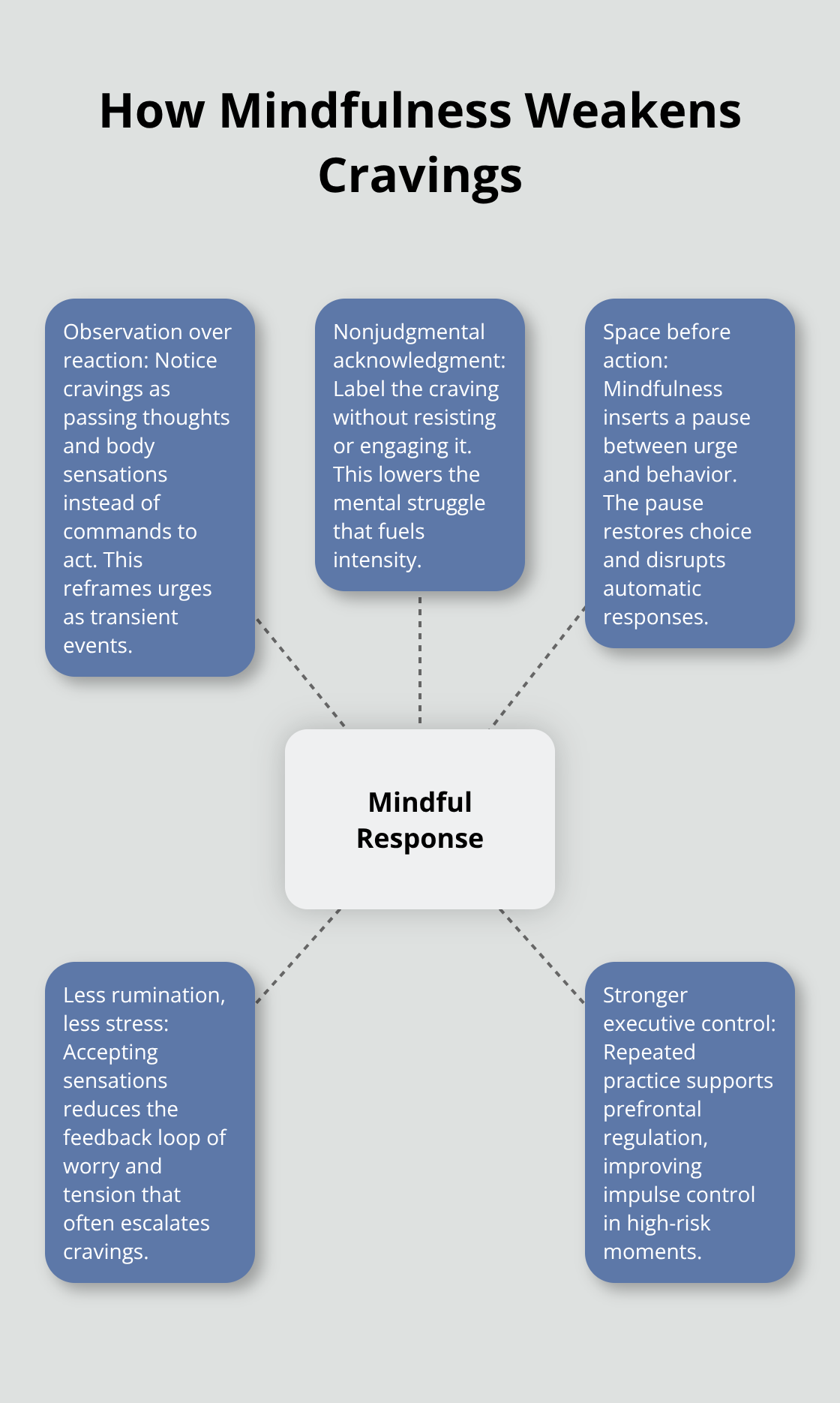
People who resist cravings tend to amplify them through rumination and stress, creating a feedback loop that increases relapse risk. Instead, mindfulness teaches you to notice the physical sensations, the thoughts, and the emotions attached to craving, then watch them pass without acting. Neuroscience shows this rewires your prefrontal cortex, the region that governs decision-making and impulse control. Within weeks of consistent practice, your nervous system becomes less reactive to triggers that previously felt overwhelming.
Why Stress Management Matters Most
Stress remains the most established trigger for relapse, according to research in addiction neurobiology. Managing stress early matters far more than waiting until you’re in crisis mode. The predictable patterns your brain learned during active addiction respond to mindfulness practice through repeated exposure and acceptance. Your brain learns that stress signals don’t require substance use as a response.
Building Emotional Resilience Without Suppression
Emotional regulation in recovery fails when people try to suppress difficult feelings. Anxiety, anger, shame, and sadness don’t disappear through avoidance; they compound and fuel relapse. Mindfulness teaches the opposite approach: you feel emotions fully while staying grounded in the present moment. This distinction matters because suppression requires constant mental effort, while acceptance creates actual stability.
The practical application means noticing where sadness lives in your body, observing your thoughts without believing them as truth, and letting the emotional wave move through you. Self-awareness grows through this process because you start recognizing your specific emotional patterns and triggers before they escalate into crisis.
Moving From Theory to Technique
Understanding how mindfulness changes your brain sets the foundation, but the real work happens when you apply specific techniques to your daily life. The next section walks you through concrete practices that interrupt cravings and ground you during moments of weakness.
Techniques That Work When Cravings Hit
Knowing how mindfulness rewires your brain is one thing. Applying it when a craving strikes at 2 a.m. or stress floods your system is another. The gap between theory and practice closes only through specific techniques you can deploy immediately.
Controlled Breathing as Your First Line of Defense
Controlled breathing stands as the fastest intervention because it directly calms your nervous system within minutes. Box breathing works reliably: inhale through your nose for four counts, hold for four, exhale through your mouth for four, hold for four. Research shows that lengthening your exhale activates your parasympathetic nervous system, the biological brake on stress responses. Practice this three times daily when you feel calm, not just during crises, so your body recognizes the pattern and responds automatically when you need it most.
Body Scanning to Locate and Release Tension
Body scanning anchors awareness in physical sensations and complements breathing work. Lie down or sit comfortably, then mentally move from your toes upward, noticing tension, tingling, warmth, or numbness without trying to change anything. Most people discover that cravings live as physical sensations in the chest, throat, or stomach. When you locate and name the sensation, it loses psychological power. Spend five to ten minutes on this practice each morning before your day accelerates.
Meditation for Managing Triggers
Meditation for managing triggers requires starting smaller than most people assume. A fifteen-minute session overwhelms beginners; instead, commit to five minutes using a guided app like Headspace, Calm, or Insight Timer. These apps offer addiction-specific meditations that teach you to observe triggering thoughts as temporary mental events rather than reality. The distinction matters enormously because your brain spent years reinforcing the belief that certain thoughts demand action through substance use. Meditation rewires that connection by creating distance between thought and behavior. Understanding how to handle triggers in your recovery deepens this work and gives you additional coping strategies.
Grounding Techniques for Acute Weakness
Grounding techniques for moments of acute weakness should feel simple enough to use anywhere. The 5-4-3-2-1 method works reliably: name five visible objects, four textures you can touch, three sounds, two smells, and one taste. This sensory redirect pulls your attention from internal craving signals to external reality within seconds.

Keep a small object in your pocket-smooth stone, textured fabric, or cold metal-specifically for grounding practice. Touch it deliberately during weak moments. These aren’t mystical tools; they’re attention-shifting mechanisms that interrupt the automatic response chain your brain built during active addiction.
Moving Your Practice Into Real Life
The techniques above only work when you practice them consistently, not just when crisis hits. Your nervous system needs repetition to build new pathways. Start with one technique this week-perhaps box breathing-and add another the following week. This layered approach prevents overwhelm and creates sustainable habits. As you build confidence with these tools, you’ll notice that cravings lose their grip faster, and stress no longer hijacks your decisions. The next section shows you how to weave these practices into your daily schedule so they become automatic responses rather than emergency measures.
How to Build a Mindfulness Practice That Actually Lasts
Anchor Your Practice to Existing Routines
The mistake most people make is treating mindfulness like a New Year’s resolution instead of a recovery tool. You don’t need perfect conditions or an hour of free time daily. What you need is a realistic commitment that fits into the life you actually live, not the life you imagine having after recovery. Successful people anchor mindfulness to existing routines rather than creating entirely new schedules.

Start with five minutes attached to something you already do every morning, whether that’s drinking coffee, showering, or brushing your teeth. This pairing strategy, called habit stacking, makes the new practice feel automatic instead of like another obligation competing for attention.
Research on behavior change shows that consistency matters far more than duration, which means practicing five minutes daily for thirty days outperforms sporadic hour-long sessions. Your nervous system builds new pathways through repetition, not intensity. After two weeks of consistent practice, you’ll notice cravings feel less urgent and stress responses happen slower. That measurable shift keeps motivation high because you’re experiencing real changes, not just following instructions.
Track Your Personal Patterns
The second critical piece is tracking what actually happens when you practice versus when you skip it. Keep a simple log with three columns: the date, which technique you used, and one sentence about how you felt afterward. This isn’t about perfection; it’s about collecting data on your personal patterns. You might discover that box breathing works better when stress hits but body scanning helps more with morning anxiety. Another person finds that five minutes of meditation makes evening cravings disappear while grounding techniques feel pointless to them.
Your recovery belongs to you alone, so your practice must reflect your specific triggers and responses. After thirty days of logging, review the patterns and double down on what works while dropping techniques that don’t. This adjustment phase prevents frustration and keeps your routine relevant as your recovery evolves. Many people stay stuck using one technique because they think they should rather than because it actually helps them.
Personalize Your Approach for Long-Term Success
The difference between a mindfulness practice that survives six months and one that fades after two weeks comes down to honest assessment and willingness to personalize. Your nervous system responds to what works for your specific brain chemistry and life circumstances (not someone else’s recovery story). Try the techniques that produce measurable results in your log, and abandon the ones that don’t. This honest feedback loop keeps your practice alive because it remains relevant to your actual experience rather than theoretical ideals.
As your recovery evolves, your practice evolves with it. A technique that feels essential during early sobriety might become less necessary six months later. That’s not failure; that’s adaptation. The people who maintain mindfulness practices long-term treat them as living tools that shift and change rather than rigid routines carved in stone.
Final Thoughts
Mindfulness for sobriety works because it interrupts the automatic patterns your brain built during active addiction and replaces them with conscious choice. The techniques in this guide aren’t theoretical exercises; they’re practical interventions that calm your nervous system, reduce cravings, and help you stay grounded when stress threatens your recovery. Research confirms that people who practice mindfulness consistently experience measurable improvements in emotional regulation, stress management, and relapse prevention within weeks.
Your recovery depends on consistency, not perfection. Start with one technique this week, track what actually works for your specific triggers, and adjust your practice as your sobriety evolves (the five-minute daily commitment anchored to an existing routine beats sporadic hour-long sessions because your nervous system builds new pathways through repetition). After thirty days of logging your experience, you’ll have real data about which techniques serve you best, and you can personalize your approach accordingly.
Long-term sobriety requires tools that work when cravings hit at 2 a.m., when stress floods your system, and when old patterns try to pull you back. If you’re ready to build a comprehensive recovery plan that includes mindfulness alongside professional support, reach out to Addiction Resource Center in Yuba City. Your recovery matters, and you don’t have to do this alone.