Discover restorative sleep strategies to reset your mind and body. Learn evidence-based techniques for better rest and recovery tonight.


Sleep deprivation during recovery isn’t just uncomfortable-it actively sabotages your progress. Poor sleep weakens your defenses against cravings, amplifies stress, and slows brain healing.
At Addiction Resource Center, we’ve seen how restorative sleep strategies transform recovery outcomes. This guide shows you exactly how to reclaim quality sleep and strengthen your path forward.
Why Sleep Drives Recovery Success
Sleep deprivation and addiction recovery exist in direct conflict. When you don’t sleep well, your brain’s prefrontal cortex-the region responsible for decision-making and impulse control-operates at a significant disadvantage. Sleep loss directly impairs your ability to resist cravings and manage stress.
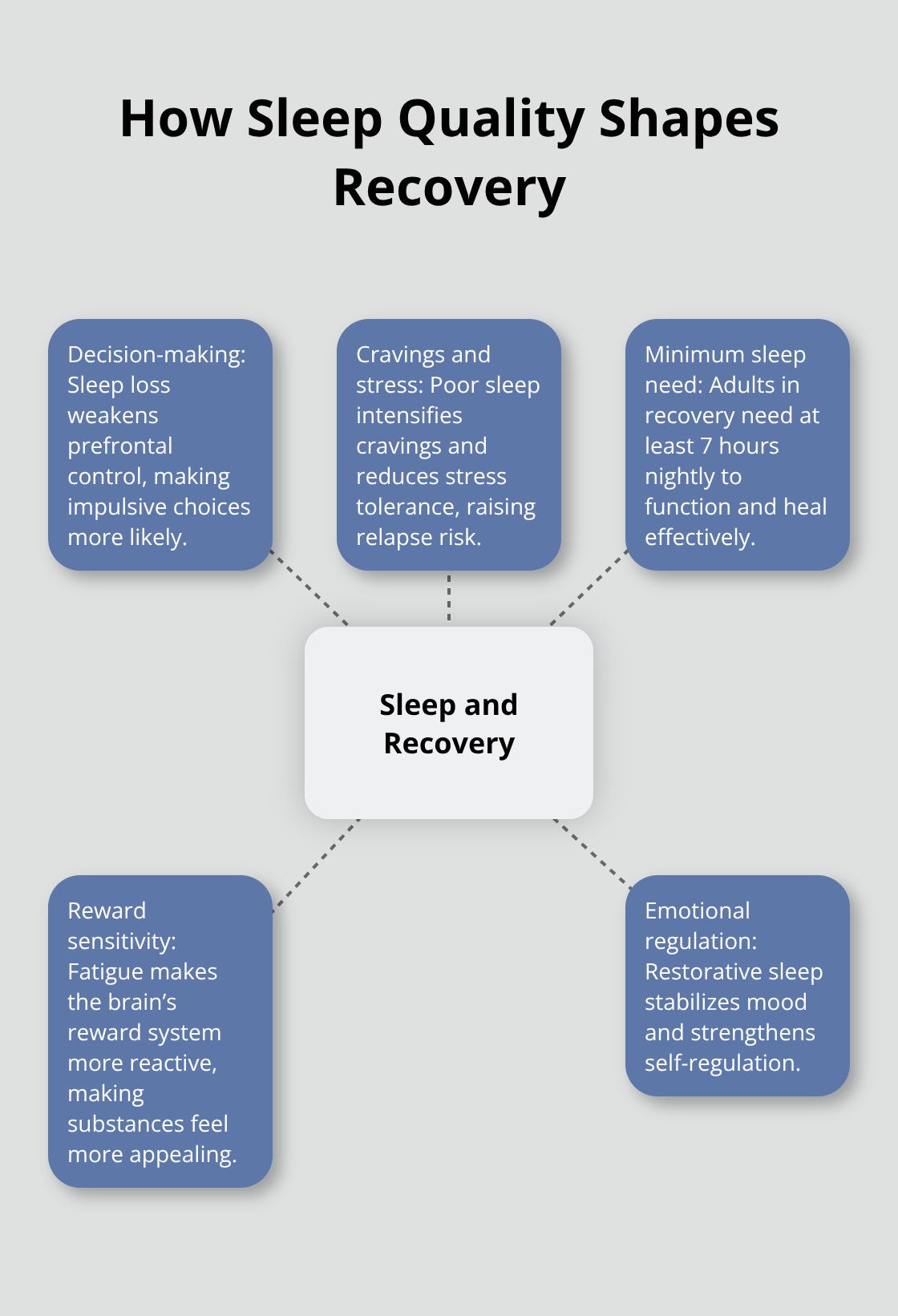
Adults in recovery need at least 7 hours of sleep per night, but many people early in their recovery struggle to achieve this. The stakes are real: poor sleep amplifies irritability, weakens emotional regulation, and creates the exact mental conditions that trigger relapse. Your brain’s reward system becomes hypersensitive when fatigued, making substances feel more appealing and your defenses feel weaker.
Sleep Repairs the Damage Addiction Causes
Your brain does not heal while you’re awake-it repairs itself during sleep. During deep sleep stages, your brain consolidates memories, clears toxic proteins, and restores neurotransmitter balance. Addiction disrupts these critical functions, leaving your brain in a depleted state. Quality sleep directly reverses this damage. According to the American College of Lifestyle Medicine, restorative sleep improves daytime attention and mood regulation, which are foundational for sustained recovery. This isn’t theoretical: sleep directly supports the neurochemical healing your brain desperately needs. When you prioritize sleep, you actively rebuild the neural pathways that addiction damaged.
The Stress and Relapse Connection
Stress and poor sleep create a vicious cycle. Sleep deprivation raises cortisol levels and heightens anxiety, while stress makes falling asleep harder. This bidirectional relationship means that without good sleep, your stress management capacity collapses. Mayo Clinic research confirms that sleep loss leads to irritability, trouble concentrating, and fatigue-all significant relapse triggers. People in recovery often report that their strongest cravings hit during sleep-deprived periods. The solution isn’t willpower; it’s protecting your sleep as fiercely as you protect your sobriety. A consistent sleep schedule regulates your circadian rhythm, which naturally stabilizes cortisol and mood. This biological shift removes a major obstacle between you and sustained recovery.
How Your Circadian Rhythm Controls Recovery
Your circadian rhythm acts as your body’s internal clock, controlling when cortisol peaks (typically in the morning to support alertness) and when melatonin rises (in darkness to cue sleep). When addiction disrupts this rhythm, your body loses its natural ability to manage stress and mood. Irregular sleep schedules compound this problem, leaving your nervous system in a state of constant dysregulation. Establishing a consistent sleep-wake schedule-going to bed and waking at the same times each day-realigns this rhythm and restores your body’s natural defenses. This consistency matters more than you might think, as it directly influences your emotional resilience and your capacity to handle recovery’s challenges.
Sleep Strategies That Actually Work
Build a Consistent Sleep Schedule
Consistency beats perfection every single time. Set a bedtime and wake time, then stick to them within 30 minutes, even on weekends. A regular sleep schedule directly regulates your circadian rhythm and stabilizes cortisol production. Your body adapts within two to three weeks, so the first 21 days feel hard but matter enormously.
If you can’t fall asleep within 20 minutes, leave your bedroom and do something calming with dim lighting, then return only when you feel genuinely sleepy. This prevents your brain from associating your bed with frustration. Treat your sleep times like therapy appointments-non-negotiable and protected.
Optimize Your Sleep Environment
Your sleep environment either supports you or sabotages you. Keep your bedroom cool (between 60 and 68 degrees Fahrenheit), completely dark, and quiet. Use blackout curtains, a white noise machine, or earplugs if needed.
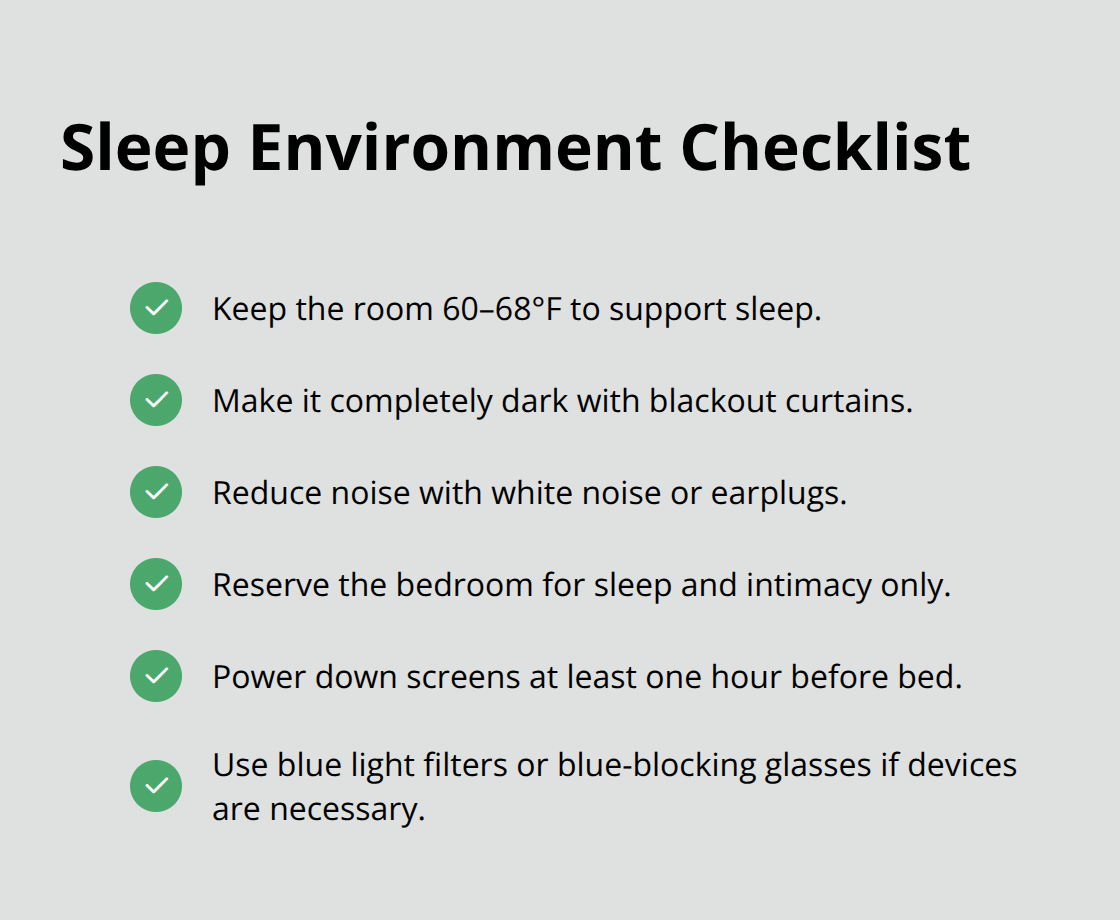
Your bedroom should serve only sleep and intimacy, not work or scrolling.
Electronics are your biggest enemy here. Stop using your phone, tablet, or television at least one hour before bed because blue light suppresses melatonin production and tricks your brain into thinking it’s daytime. If you must use devices, enable blue light filters or wear blue light blocking glasses, which research shows can improve sleep in people with insomnia.
Control What You Consume Before Sleep
Skip caffeine after 2 p.m., avoid alcohol within three hours of bedtime (it disrupts sleep architecture later in the night), and don’t eat heavy meals within two hours of sleep. Your nervous system needs time to transition, so add a calming pre-sleep activity like deep breathing, gentle stretching, or a warm bath. These aren’t luxuries-they’re recovery tools that directly reduce your relapse risk.
The habits you establish now shape whether your next chapter of recovery holds steady or crumbles under stress. What happens during your waking hours-your daytime choices and activities-matters just as much as what you do at night.
Sleep Obstacles During Recovery
How Addiction Disrupts Your Sleep System
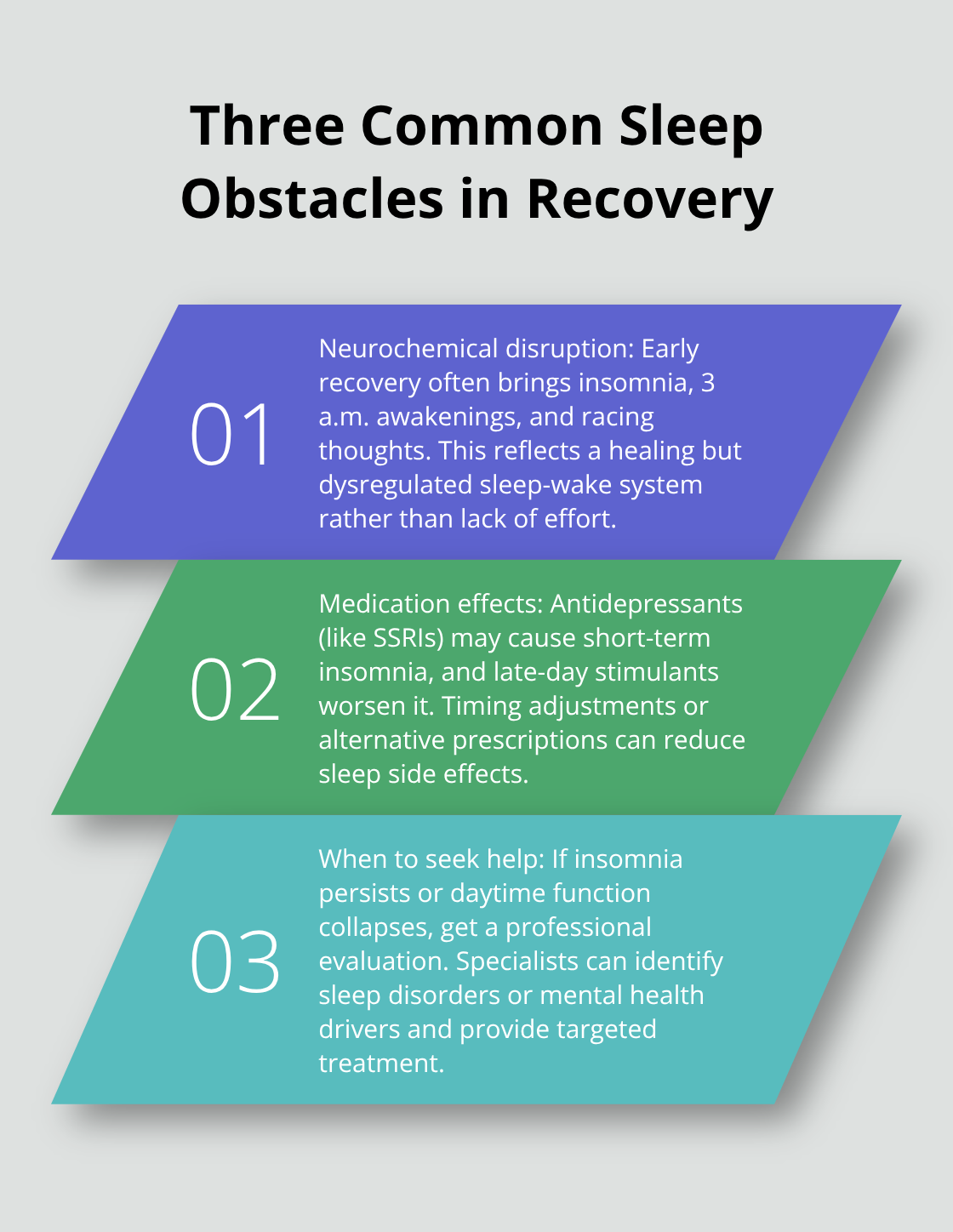
Insomnia and sleep disruptions hit differently during recovery. Your brain, still healing from addiction’s neurochemical damage, struggles to regulate sleep naturally. You might fall asleep easily but wake at 3 a.m. with racing thoughts, or lie awake for hours despite exhaustion. This isn’t laziness or weakness-it’s a predictable consequence of how addiction rewires your sleep-wake system. The National Institute on Alcohol Abuse and Alcoholism documents that people in early recovery experience significantly higher rates of insomnia than the general population, with some studies showing sleep disturbances persist for months after stopping substance use.
The frustration compounds when you realize that the very tools you used to numb yourself-alcohol, benzodiazepines, or other depressants-initially seemed to help you sleep, creating a false dependency. Your body adapted to those substances, and now withdrawal leaves your nervous system hyperactive at night. This is temporary, but the timeline varies. Most people see meaningful improvement within 4 to 12 weeks, though some experience lingering issues longer.
Medications That Sabotage Sleep
Your medication regimen might be sabotaging your sleep without you realizing it. Antidepressants, particularly SSRIs prescribed to stabilize mood during recovery, can trigger insomnia in the first two to four weeks of use. Stimulant medications for ADHD or other conditions compound the problem if taken too late in the day.
Even seemingly innocent substances matter-your doctor prescribed that blood pressure medication at night, but it contains a diuretic that forces bathroom trips at 2 a.m.
Talk directly with your prescriber about timing adjustments rather than stopping medications on your own. Many doctors can shift doses to morning hours or switch to alternatives with fewer sleep side effects. If sleep problems started after a medication change, mention this specifically; your provider might have immediate solutions. Some people benefit from starting antidepressants at lower doses with gradual increases, which reduces initial sleep disruption. The conversation takes 10 minutes but transforms your sleep quality.
When Professional Help Becomes Essential
When insomnia persists despite consistent schedules and optimized environments, when you’re awake more nights than you sleep, or when daytime fatigue makes work or relationships impossible, professional evaluation becomes non-negotiable. A sleep specialist or your primary care doctor can identify whether you’re dealing with adjustment-phase insomnia, a genuine sleep disorder like sleep apnea, or psychiatric symptoms that need different treatment.
Some people discover they have untreated anxiety or depression that manifests primarily through sleep problems-treating the underlying condition resolves the insomnia. Others need short-term sleep medication to break the cycle while their brain chemistry stabilizes, which is entirely appropriate when supervised carefully. The key distinction is this: sleep deprivation doesn’t strengthen your recovery-it weakens it and increases relapse risk. Getting help with sleep is getting help with recovery.
Final Thoughts
Sleep isn’t a luxury during recovery-it’s the foundation that everything else rests on. Your brain heals during sleep, your stress hormones stabilize through circadian rhythm alignment, and your defenses against cravings strengthen when you’re well-rested. This isn’t motivation talk; it’s neurobiology, and restorative sleep strategies work because they address the biological reality of how addiction damages your sleep system and how consistent, intentional habits rebuild it.
Start with one change this week by picking the strategy that feels most achievable-whether that’s setting a consistent bedtime, removing your phone from the bedroom, or adjusting your caffeine cutoff time. Add a second change after two weeks, since small, stacked habits create momentum faster than trying to overhaul everything at once. Your body adapts within three weeks, so the discomfort you feel in those first 21 days is temporary and worth it.
If sleep problems persist despite your efforts, or if medication side effects sabotage your rest, talk to your doctor or sleep specialist immediately. We at Addiction Resource Center understand that sustainable recovery requires addressing every piece of your health, including sleep, and our outpatient addiction treatment services integrate sleep support into your overall recovery plan because better sleep means better outcomes.