Build a lasting sobriety lifestyle with practical tips for daily routines that support long-term recovery and wellness.


Recovery demands more than just stopping substance use. At Addiction Resource Center, we know that lasting sobriety requires intentional daily habits and structure.
A solid routine becomes your foundation for staying sober. These sobriety lifestyle tips will help you build the schedule, healthy habits, and support system that actually work.
Build a Structured Daily Schedule
Your sleep schedule matters more than most people realize. Research from sleep science shows that consistent bedtimes and wake times regulate your circadian rhythm, which directly impacts mood, energy, and cravings. Try for at least eight hours of sleep every night and keep the same wake time even on weekends. This consistency helps your body anticipate rest and naturally produce melatonin at the right time. If you struggle with sleep, create a wind-down routine 30 minutes before bed-turn off screens, dim lights, and practice deep breathing exercises. Poor sleep in early recovery significantly increases relapse risk, so this isn’t optional. It’s foundational.
Prioritize Recovery Activities First
Block your day into three categories: recovery activities, work or school, and personal care. Recovery activities come first. Schedule your support group meeting, therapy session, or sponsor check-in before anything else. These aren’t flexible. Next, schedule work or educational commitments at the same time each day to rebuild stability in your life. Finally, allocate specific time for meals, exercise, and hygiene. Research on habit formation shows it takes approximately 66 days for new behaviors to become automatic, so commit to this structure for at least two months. Use a physical calendar or phone app to block these times visually. Seeing your day mapped out reduces decision fatigue and removes the temptation to fill gaps with idle time.
Add Movement to Your Daily Schedule
Physical activity does more than improve fitness-it directly reduces cravings and anxiety. Start with three workouts per week, even if it’s just a 20-minute walk outdoors. Walking outside provides dual benefits: sunlight exposure stabilizes your circadian rhythm, and movement releases endorphins that combat the reward-seeking behavior addiction creates. If three workouts feel overwhelming, start with two and add the third after two weeks. Include low-impact options like gentle yoga, cycling, or hiking with supportive friends. Schedule exercise at the same time each day so it becomes automatic rather than something you negotiate with yourself. Structured daily routines and physical activity show significantly lower relapse rates, making consistency transformative for your sober identity.
Connect Your Schedule to Your Support System
A structured day only works when you anchor it to people who support your recovery. Your daily schedule should reflect your commitment to attending meetings and connecting with your recovery community. These connections prevent the isolation that triggers relapse. When you schedule recovery activities first and stick to them, you signal to yourself and others that sobriety matters most. Your routine becomes the visible proof of your commitment. The next section shows you how to strengthen these connections and build the accountability that keeps your routine intact.
Healthy Habits That Anchor Your Sobriety
The structured schedule you built in the previous section only works when you fill it with habits that genuinely support recovery. Exercise, mindfulness, and nutrition aren’t nice-to-haves-they’re biological interventions that directly counteract the damage addiction causes. When you stop using substances, your brain needs time to rebalance dopamine and serotonin levels. Physical activity speeds this process.
Exercise Reduces Cravings and Withdrawal
Research shows that regular aerobic exercise reduces drug cravings and withdrawal symptoms. Start with a 20-minute walk three times weekly, but here’s the critical part: do it at the same time each day. Your brain learns to anticipate this reward and gradually stops seeking it from substances.
If you hate formal exercise, hiking with a recovery friend or cycling to run errands counts equally. The key is consistency over intensity. Your body responds to predictable movement patterns, not to how hard you push yourself. Even a slow walk produces the neurochemical shifts that combat addiction’s grip on your reward system.
Meditation Calms the Nervous System
Mindfulness and meditation work differently than exercise but equally matter. Research shows that breathing exercises reduce the stress that triggers relapse. Most people fail at meditation because they expect 30 minutes of perfect focus.
Start with five minutes of simple deep breathing-breathe in for four counts, hold for four, exhale for four. Do this when you wake up and before bed. Many people find it easier to practice during their morning coffee or tea ritual rather than as a standalone activity. This grounds you before the day starts and prevents your nervous system from spiraling into the anxious, restless state that makes relapse feel tempting.
Nutrition Rebuilds Your Body
Nutrition directly impacts your recovery trajectory and most people underestimate this connection. Your body spent months or years in a depleted state. Rebuilding it requires consistent, nutrient-dense meals at regular times.
Eat a protein-rich breakfast within one hour of waking-eggs, Greek yogurt, or a protein smoothie-because this stabilizes blood sugar and prevents the afternoon energy crashes that trigger cravings. Try complex carbohydrates, lean protein, and vegetables at lunch and dinner. Drink water first thing in the morning and maintain at least two liters throughout the day. Dehydration mimics withdrawal symptoms and makes stress feel unbearable.
Plan your meals on Sunday so you’re not making desperate food choices on Tuesday night when you’re tired. Buy pre-cut vegetables and rotisserie chicken if that removes friction. The goal isn’t perfection; it’s replacing the chaotic eating patterns that fueled your addiction with predictable, nourishing ones.
How These Three Pillars Work Together
Movement, mindfulness, and nutrition work together to create a stable biochemical foundation that makes staying sober feel manageable rather than constantly difficult. Each habit reinforces the others-exercise improves sleep quality, which reduces stress and cravings; meditation calms the nervous system so you make better food choices; proper nutrition provides the energy that makes exercise sustainable. This interconnected system becomes stronger the longer you maintain it. Your next step involves connecting these personal habits to the people and communities that will hold you accountable when motivation wavers.
Create a Support Network and Accountability System
Isolation kills recovery faster than almost anything else. The moment you stop using substances, your brain enters a vulnerable state where it searches for reward and comfort. Without people around you who understand this struggle, you fill that void with the same substance that created the problem. People with solid routines and healthy habits still relapse because they attempt recovery alone. Your exercise schedule and meditation practice only work when they anchor to human connection. The people you surround yourself with during recovery aren’t optional support-they’re the difference between lasting sobriety and a relapse that catches you off guard.
Identify and Build Your Recovery Relationships
Start by identifying which relationships actually support your recovery and which ones don’t. This means cutting contact with people who use substances around you or encourage old behaviors, even if they’re family. Then actively build new connections with people who are also in recovery. Attend support group meetings like AA, NA, SMART Recovery, or SOS-these aren’t just meetings where you sit and listen. They’re where you meet people who’ve faced exactly what you’re facing right now.
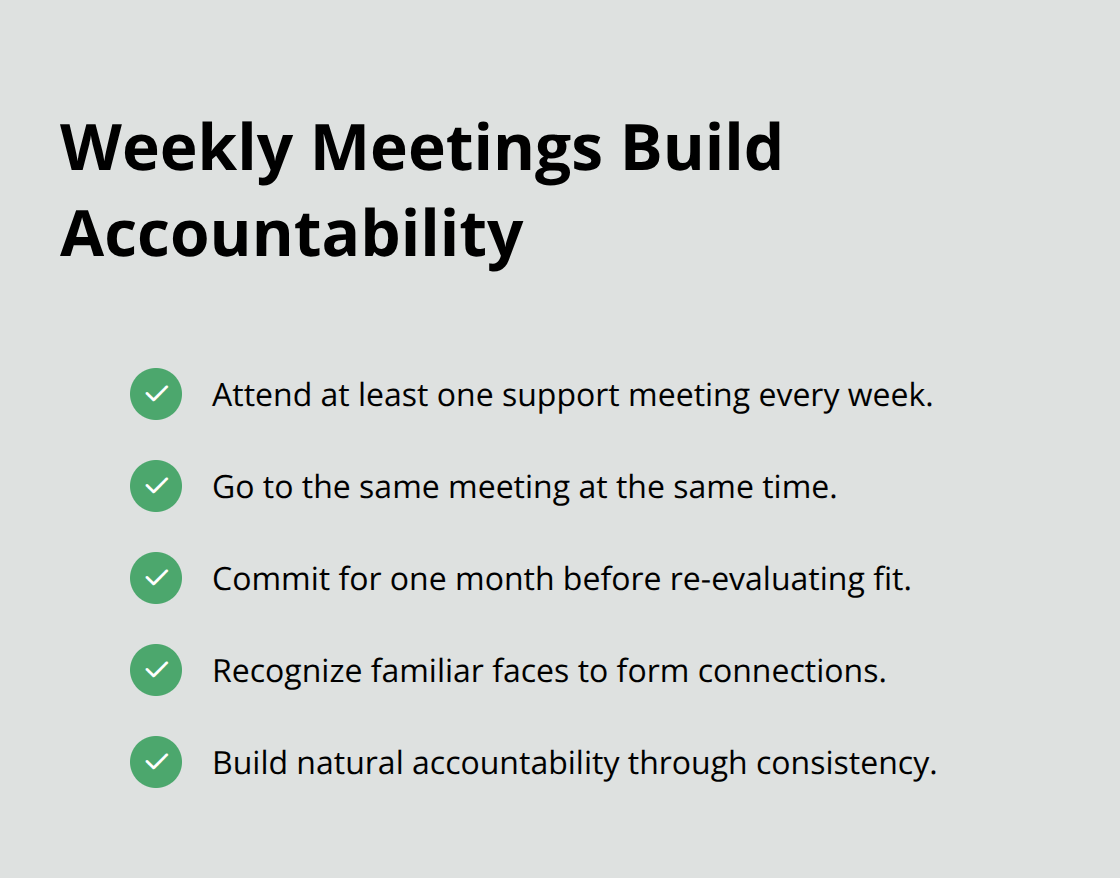
Research shows that people who attend support meetings at least once weekly have significantly lower relapse rates than those who attend sporadically. Pick one meeting type and go to the same meeting at the same time each week for at least a month before deciding if it’s right for you. The consistency matters because you’ll start recognizing faces, building relationships, and creating accountability naturally.
Find a Sponsor or Accountability Partner
Find a sponsor or accountability partner-someone further along in recovery who takes your call at 2 a.m. when cravings hit hard. This person should be someone you respect and who won’t let you make excuses. They should push back when you rationalize destructive choices. Many people wait too long to ask for a sponsor, thinking they need to have their recovery perfectly figured out first. That’s backwards. Ask someone within the first month of attending meetings. If that person isn’t right, switch. Your sponsor relationship isn’t permanent-it’s a tool, and tools need to fit properly to work.
Schedule regular contact with your accountability partner, not just when you’re struggling. Text them on Tuesday morning about how your week is going. Call them after a stressful day at work. This normalizes the relationship so reaching out during a crisis feels natural rather than like you’re bothering them.
Replace Substance-Based Social Connection
The people in your recovery circle also become your social outlet. Plan activities that don’t involve substances-hiking with recovery friends, going to coffee shops, attending recovery social events. These interactions replace the social component that substance use once provided. Your brain needs social connection, and it doesn’t care if it comes from old using friends or new recovery friends (it just needs it). Make the choice to invest time in people who actually want you to stay sober.
Final Thoughts
Building a structured daily routine isn’t about perfection-it’s about creating a life where sobriety feels sustainable rather than like constant struggle. The strategies we’ve covered work together: consistent sleep schedules stabilize your mood, regular exercise reduces cravings, mindfulness calms your nervous system, and nutritious meals rebuild your body. When you anchor these habits to people who support your recovery, you create a system that actually holds up when life gets difficult. These sobriety lifestyle tips compound over time, and research shows that after 66 days of consistency, your brain stops fighting the new routine and starts expecting it.
Long-term sobriety doesn’t depend on motivation-it depends on routine, community, and the daily choices that reinforce your commitment. When you wake at the same time, exercise consistently, attend your support meetings, and spend time with people who want you to stay sober, you actively choose recovery every single day. Each week you stick to your routine, you prove to yourself that you can follow through, and that proof becomes the foundation for the next week. Your body learns to produce melatonin at bedtime, your nervous system relaxes during meditation, and your energy stabilizes with regular meals.
If you struggle to build these routines alone or feel like you need professional guidance, we at Addiction Resource Center offer personalized addiction therapy and substance abuse counseling to help you develop a recovery plan that fits your life. Our team understands that recovery isn’t one-size-fits-all, and we’re here to support you. Learn more about how we can help.