Learn how long alcohol poisoning recovery takes, what affects healing time, and when to seek emergency help for alcohol toxicity.


Alcohol poisoning is a medical emergency that demands immediate attention. The path to recovery depends on how quickly someone receives treatment and the severity of their condition.
At Addiction Resource Center, we’ve created this guide to help you understand alcohol poisoning recovery time and what to expect at each stage. Whether you’re supporting someone or seeking answers for yourself, knowing the recovery timeline can reduce fear and help you plan next steps.
What Happens When Alcohol Overwhelms Your Body
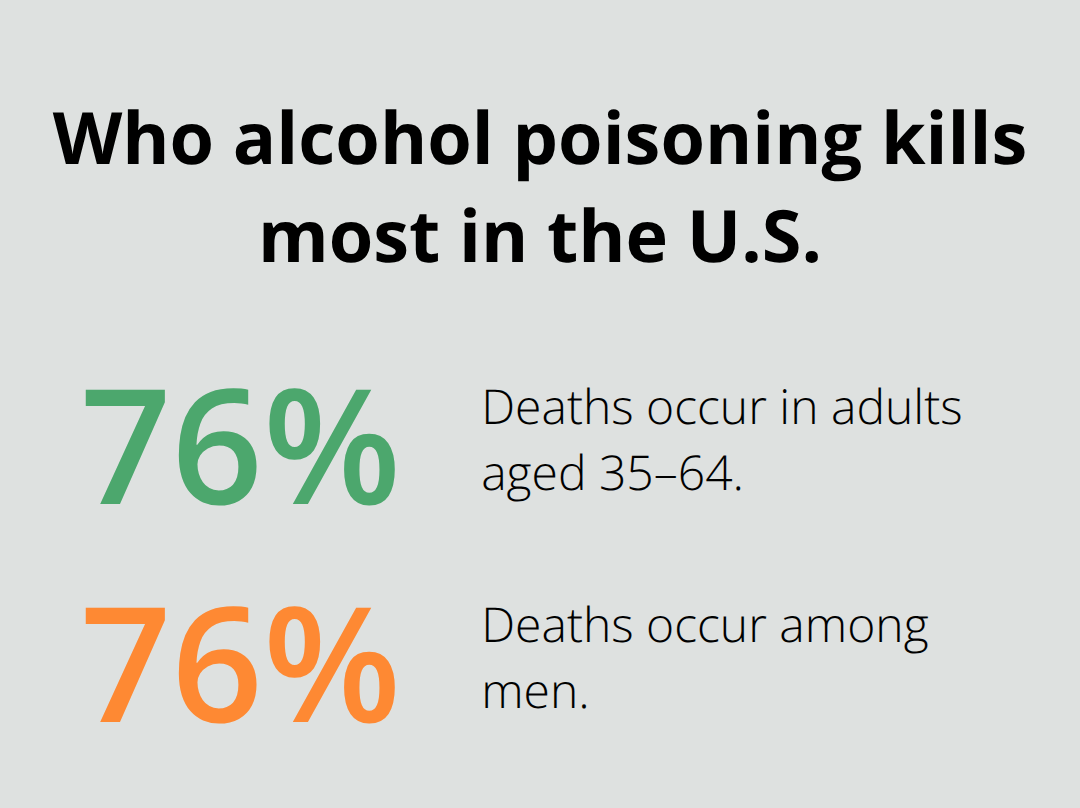
Alcohol poisoning occurs when blood alcohol concentration reaches dangerous levels that suppress critical brain functions. The Cleveland Clinic defines this as a condition where excess alcohol depresses the brain regions controlling breathing, heart rate, and body temperature. When someone consumes large amounts of alcohol quickly, the liver cannot metabolize it fast enough. A standard drink takes roughly 1.5 hours for your body to process, but binge drinking overwhelms the body’s metabolic system entirely. At a BAC of 0.30 to 0.40 percent, alcohol poisoning becomes life-threatening. Above 0.40 percent, death becomes likely without emergency intervention. The CDC reports that about 6 people die daily from excessive alcohol consumption in the United States, with 76 percent of these deaths occurring in adults aged 35 to 64 and 76 percent among men.
How Your Central Nervous System Fails
The immediate danger comes from alcohol’s effect on your central nervous system. At a BAC of 0.15 to 0.30 percent, confusion and vomiting begin. At 0.30 to 0.40 percent, you face severe hypothermia, seizures, and irregular breathing patterns-fewer than eight breaths per minute or gaps exceeding ten seconds signal critical danger. Your body loses its ability to protect itself. The gag reflex weakens, meaning someone can choke on vomit while unconscious. Heart rhythm becomes erratic. Body temperature plummets dangerously low. The brain stops receiving adequate oxygen. These aren’t minor side effects-they represent organ system failures happening simultaneously.
What Hospital Treatment Involves
Hospital treatment focuses on stabilizing vital functions through IV fluids containing dextrose, magnesium, folate, and thiamine to prevent dehydration and support detoxification. Oxygen therapy supports breathing, and in severe cases, intubation becomes necessary. Medical teams monitor for hypoglycemia, electrolyte imbalances, metabolic acidosis, and heart arrhythmias that can develop even after BAC returns to zero. This is why hospitals typically observe patients for up to 72 hours after stabilization-complications can emerge hours later.
Who Faces the Greatest Risk
Body weight matters significantly. Smaller individuals reach dangerous BAC levels from smaller amounts of alcohol. Drinking on an empty stomach accelerates absorption, making poisoning more probable than when food is present.
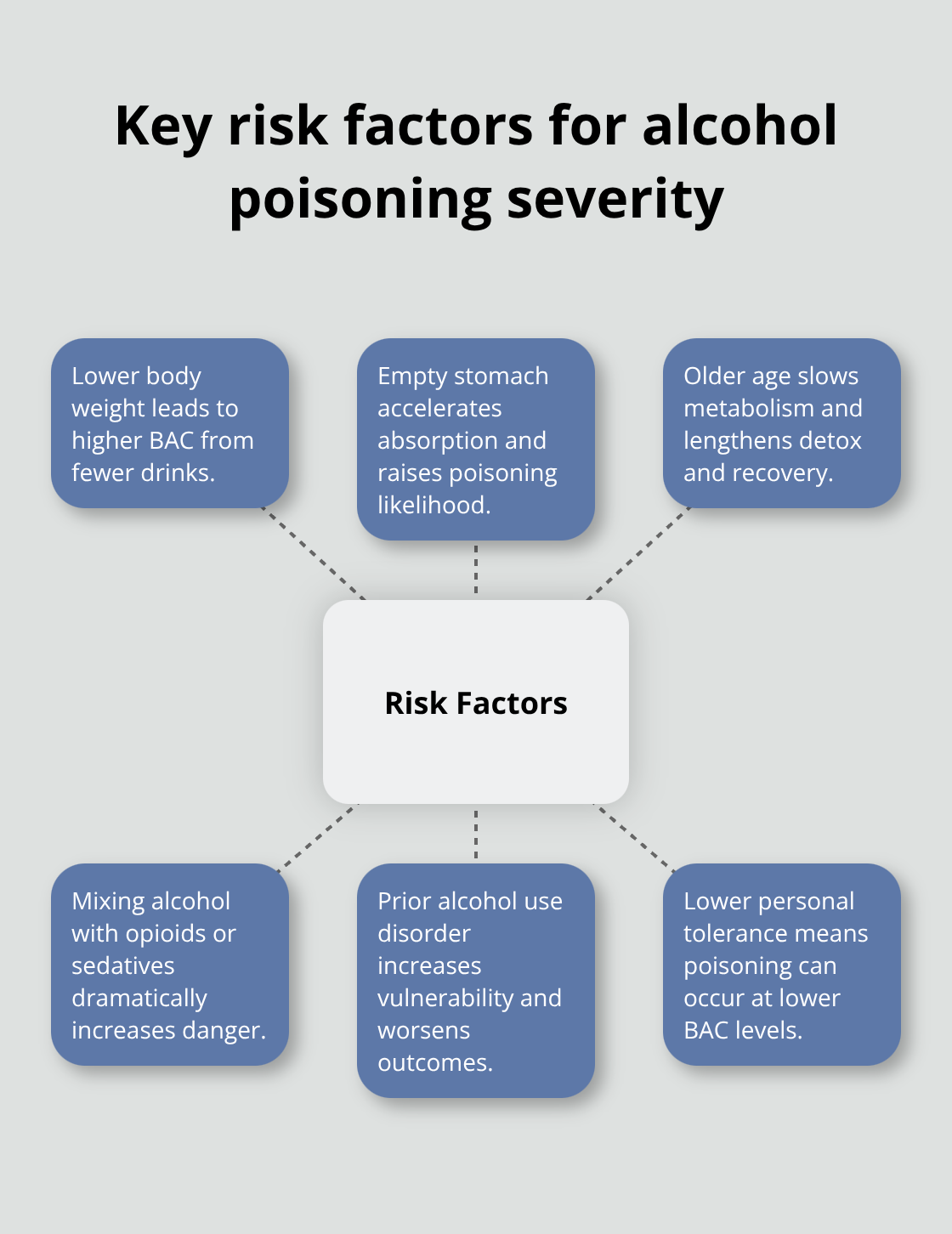
Age plays a role too-older adults experience longer detoxification periods due to slower metabolism and existing health conditions. Mixing alcohol with opioids or sedatives dramatically increases risk and complicates recovery. About 75 percent of alcohol poisoning deaths occur in men, according to Cleveland Clinic data, partly because men engage in binge drinking more frequently. Prior alcohol use problems increase vulnerability, as the CDC notes that about 30 percent of alcohol poisoning deaths involve people with previous alcohol use disorders. Lower personal tolerance-whether from genetics, infrequent drinking, or other factors-means poisoning can occur at lower BAC levels than in heavy drinkers.
The First Hours After Poisoning Occurs
These risk factors don’t just influence whether poisoning happens; they determine how severe it becomes and how long recovery takes. The first hours after someone reaches dangerous BAC levels are critical. What happens during this window-whether someone receives immediate medical attention or attempts to “sleep it off”-shapes the entire recovery trajectory. Understanding what occurs during these initial hours helps explain why the recovery timeline varies so dramatically from person to person.
Recovery Timeline After Alcohol Poisoning
The Critical First 24 Hours
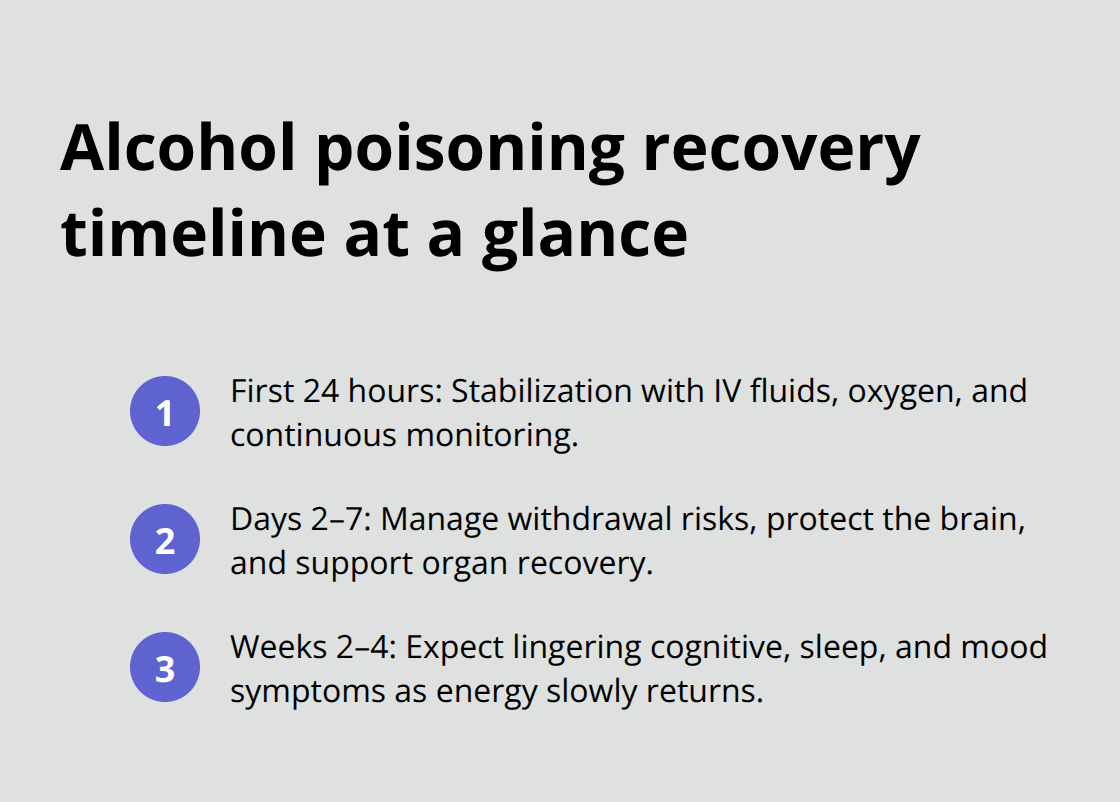
The first 24 hours after hospital admission determine whether someone survives alcohol poisoning with minimal complications or faces lasting organ damage. During this stabilization phase, medical teams work to reverse the poisoning’s immediate effects. IV fluids restore electrolyte balance and prevent hypoglycemia, which can trigger seizures even after BAC drops to zero. Oxygen therapy supports breathing, and hospitals monitor heart rhythm continuously because irregular heartbeats can develop hours into treatment. The body’s core temperature rises gradually back to normal as staff manage hypothermia. Antiemetic medications control vomiting that could cause aspiration. This intense monitoring continues because complications don’t follow a predictable schedule-metabolic acidosis, kidney stress, or arrhythmias can emerge at hour 18 or hour 48.
Hospitals observe patients for up to 72 hours after BAC normalizes rather than releasing them once they regain consciousness. Someone who appears stable at hour 12 can deteriorate rapidly without warning, making premature discharge dangerous. This unpredictability explains why medical teams take a cautious approach during this window.
Days Two Through Seven: Managing Withdrawal and Organ Recovery
Days two through seven shift focus from life support to managing alcohol withdrawal and addressing organ stress. If someone drank heavily before the poisoning event, their nervous system becomes hyperactive during withdrawal, causing tremors, anxiety, rapid heart rate, and sometimes seizures. Hospitals use medications like benzodiazepines during this window-not to sedate unnecessarily, but to prevent withdrawal seizures that could cause brain damage. Doctors assess alcohol use history with tools like the AUDIT questionnaire to determine withdrawal risk and guide medication decisions.
Nutrition becomes critical as the liver and pancreas recover from chemical injury. Thiamine deficiency from heavy drinking increases risk of Wernicke-Korsakoff syndrome, a serious neurological condition, so supplementation continues throughout this period. The body demands substantial resources to repair tissue damage and restore normal function.
Weeks Two Through Four: The Lingering Phase
Weeks two through four involve gradual return to normal physical function, though cognitive effects linger longer than most people expect. Memory gaps from the poisoning event may never fully resolve. Sleep disturbances persist. Mood instability occurs as the brain recalibrates neurotransmitter levels disrupted by alcohol’s depressant effects. Fatigue extends well beyond what people anticipate-some individuals report low energy for weeks because the liver remains focused on repair rather than normal metabolic function.
This phase presents a vulnerable window. People make critical decisions about future drinking, often underestimating how susceptible they remain to relapse. The physical symptoms fade faster than the psychological ones, creating a false sense of recovery that can lead to dangerous choices. Understanding what happens next in the recovery process-and recognizing the role that underlying addiction plays-becomes essential for preventing another poisoning event.
Breaking the Cycle After Alcohol Poisoning
Managing Post-Acute Withdrawal Symptoms
Post-acute withdrawal syndrome persists for weeks or months after the initial poisoning event, manifesting as anxiety, depression, sleep disruption, and intense cravings. These symptoms reflect genuine neurochemical imbalances from heavy alcohol use, not weakness or failure. The brain requires time to restore normal dopamine and serotonin levels, a process that unfolds slowly over weeks.
Medication-assisted treatment becomes valuable during this window. Naltrexone reduces cravings by blocking opioid receptors involved in alcohol reward pathways, while acamprosate stabilizes neurotransmitter systems disrupted by chronic drinking. Gabapentin addresses anxiety and sleep problems directly. Working with an addiction medicine specialist-not just a general practitioner-matters because they understand dosing and timing specific to alcohol recovery. The National Institute on Alcohol Abuse and Alcoholism reports that medication-assisted approaches increase abstinence rates significantly compared to counseling alone.
Cognitive behavioral therapy during weeks two through eight helps identify triggers and rebuild coping strategies before cravings intensify. This timing matters: starting therapy too early when someone is still acutely unwell produces poor results, but waiting too long allows harmful patterns to solidify. Practical steps include removing alcohol from your home immediately, blocking apps that facilitate alcohol delivery, and scheduling therapy appointments before discharge from medical care rather than weeks later when motivation fades.
Addressing the Root Addiction
Underlying addiction rarely resolves through medical stabilization alone, no matter how thorough the hospital care. Someone who survived alcohol poisoning typically engaged in binge drinking patterns for months or years beforehand-the poisoning event represents the visible crisis, not the root problem. Addressing this requires confronting why drinking escalated to dangerous levels and what needs it filled.
Dual diagnosis treatment is essential if depression, anxiety, or trauma coexists with alcohol use disorder, since untreated mental health conditions drive relapse rates above 90 percent according to addiction research. This integrated approach treats both conditions simultaneously rather than addressing them separately. The brain cannot stabilize when underlying mental health issues remain unmanaged, making relapse nearly inevitable without comprehensive care.
Building Structured Support Systems
Sustained recovery demands connecting with structured support beyond individual therapy. Alcoholics Anonymous and SMART Recovery offer different philosophies-AA emphasizes spiritual connection and peer accountability, while SMART Recovery uses self-empowerment and science-based techniques-and research shows people succeed with whichever approach aligns with their values rather than one objectively superior method. Attending meetings three to four times weekly during the first month creates accountability and normalizes discussing cravings openly.
Family involvement through programs like Al-Anon or family therapy sessions repairs relationships damaged by drinking and prevents enabling behaviors that sabotage recovery. Employment also stabilizes recovery: having structured daily obligations and financial independence reduces idle time when cravings intensify. These practical anchors-work, family connections, peer support-transform abstract recovery goals into daily lived experience.
Finding Professional Guidance
Addiction specialists in your area can assess your specific situation and connect you with evidence-based programs suited to your needs. They understand how to match individuals with treatment modalities that work for their particular circumstances, whether that involves medication, therapy, support groups, or combinations of all three.
Moving Beyond Alcohol Poisoning Recovery
Alcohol poisoning recovery time spans far longer than most people anticipate, extending well beyond the initial hospital stay into weeks and months of neurochemical rebalancing. Physical symptoms fade faster than cognitive effects, creating a dangerous window where people underestimate their vulnerability to relapse and make poor decisions about future drinking. Professional treatment transforms recovery from an isolated struggle into a structured process with proven outcomes, addressing both the poisoning event and the underlying addiction patterns that preceded it.
Medication-assisted treatment addresses cravings directly while therapy identifies triggers and rebuilds coping strategies that alcohol had replaced. Support groups normalize discussing struggles with others who understand the specific challenges of recovery, and family involvement repairs relationships damaged by drinking while preventing enabling behaviors that sabotage progress. Contact Addiction Resource Center to connect with addiction specialists who assess your situation and match you with evidence-based programs tailored to your needs.
Lasting change requires commitment beyond hospital discharge and demands connecting with structured support that reinforces sobriety through daily practice. We at Addiction Resource Center offer personalized addiction therapy and substance abuse counseling designed to address both the immediate crisis and the drinking patterns that created it. Your recovery journey begins with professional guidance and compassionate support.