Learn how cognitive behavioural therapy for addiction rewires thinking patterns and breaks the cycle of substance dependence through practical techniques.


Cognitive behavioural therapy for addiction works by rewiring how your brain responds to triggers and cravings. Instead of fighting urges with willpower alone, CBT gives you concrete tools to change the thought patterns that fuel addictive behavior.
At Addiction Resource Center, we’ve seen firsthand how this approach transforms recovery outcomes. This guide walks you through the techniques, strategies, and practical steps to make CBT work in your own recovery.
How CBT Rewires Your Brain’s Response to Addiction
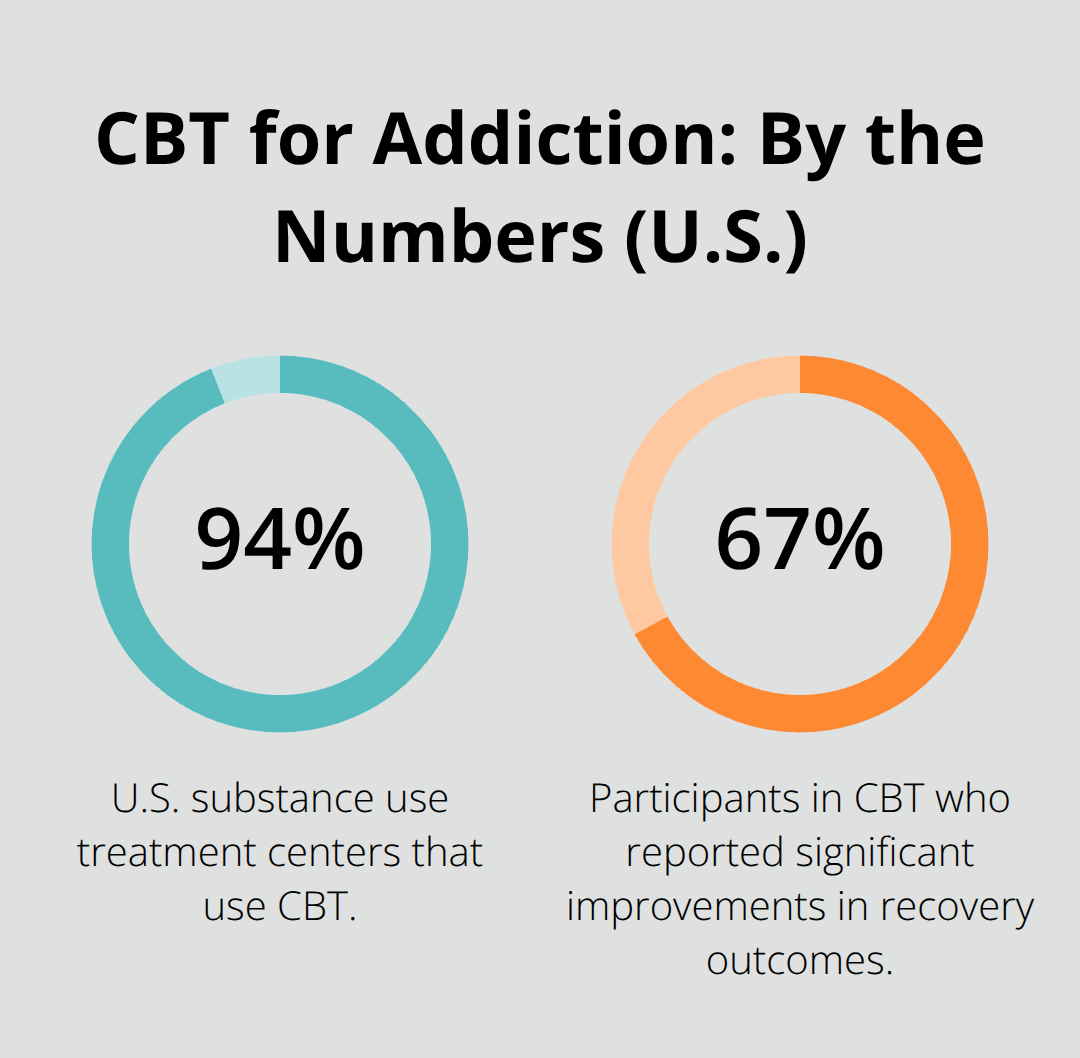
CBT works because it targets the specific brain pathways that addiction strengthens. When you use substances repeatedly, your brain creates strong neural connections between triggers (stress, certain people, specific locations) and the urge to use. CBT doesn’t ignore these connections-it rewires them. According to research from Magill et al. (2023), 94% of U.S. substance use treatment centers use CBT, and studies show that 67% of participants undergoing CBT reported significant improvements in recovery outcomes.
The mechanism is straightforward: CBT teaches you to recognize the thought that comes after a trigger, challenge that thought, and then choose a different behavior. This isn’t about positive thinking or willpower. It’s about interrupting the automatic chain reaction your brain has learned. When you identify a trigger like stress at work, CBT helps you notice the thought that follows (I need a drink to cope), then examine whether that thought is actually true. Most of the time, it isn’t. You’ve coped with stress before without substances. Once you see the thought clearly, you can choose a different response-calling a friend, exercising, or using a relaxation technique. The more you practice this sequence, the weaker the old neural pathway becomes and the stronger the new one grows.
Functional Analysis: Map Your Triggers With Precision
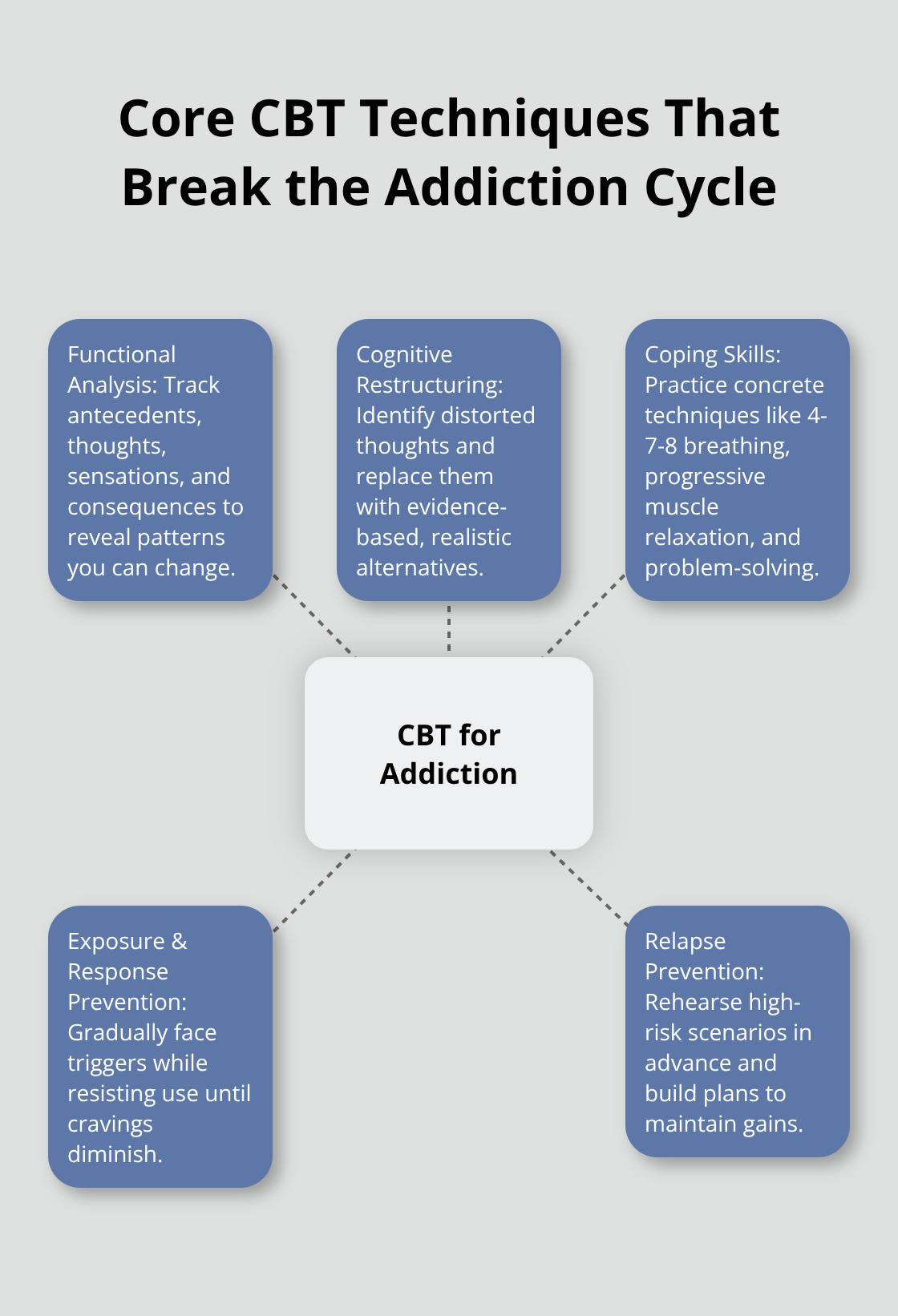
Functional analysis maps your specific triggers through careful tracking of what happens before you use, during the use, and after. You write down the actual situation, your exact thoughts, your physical sensations, and the consequences. This concrete practice reveals patterns you might otherwise miss. The process transforms vague awareness into actionable data that shapes your recovery strategy.
Cognitive Restructuring: Challenge Distorted Thoughts
Cognitive restructuring teaches you to identify distorted thinking patterns like catastrophizing (one setback means total failure) or all-or-nothing thinking (if I can’t stay perfectly sober, I might as well give up). You then replace these with realistic thoughts grounded in evidence. This technique directly attacks the mental habits that fuel substance use and opens space for healthier responses.
Relapse Prevention: Rehearse Before Crisis Hits
Relapse prevention builds skills for high-risk situations before they occur through role-play and rehearsal. A typical CBT course runs 6 to 20 weeks with sessions lasting 30 to 60 minutes, giving you time to practice between appointments. The strongest effects appear in the first 1 to 6 months after starting treatment, which is why consistent attendance and homework completion matter significantly.
Combining CBT With Other Approaches
Research shows that when CBT combines with other approaches like Motivational Interviewing or Contingency Management, outcomes improve further. Indiana, where synthetic opioids like fentanyl account for over 70% of the 2,811 drug-related deaths recorded in 2021, has implemented CBT across 91.9% of outpatient substance abuse facilities. This widespread adoption reflects how essential this approach has become in communities facing severe addiction crises. The next section walks you through the specific techniques that make CBT work in real recovery situations.
The Techniques That Stop the Addiction Cycle
Functional Analysis: Map Your Triggers With Precision
Functional analysis maps your specific triggers through careful tracking of what happens before you use, during the use, and after. You write down the actual situation, your exact thoughts, your physical sensations, and the consequences. This concrete practice reveals patterns you might otherwise miss. The process transforms vague awareness into actionable data that shapes your recovery strategy.
When you see the pattern repeated across multiple entries, you stop making excuses and start seeing the actual chain. A person might notice that stress at work always produces the thought “I can’t handle this without a drink,” followed by the physical sensation of tension in their shoulders, and then the consequence of a hangover and regret. Once you see this sequence multiple times, you can intervene at any point.
Most people try to fight the urge directly, which rarely works. Instead, CBT teaches you to catch the thought and examine it. Is it actually true that you cannot handle work stress without substances? The evidence usually says no-you’ve managed difficult days before. This single shift from fighting the urge to questioning the thought changes everything.
Cognitive Restructuring: Challenge Distorted Thoughts
Cognitive restructuring teaches you to identify distorted thinking patterns like catastrophizing (one setback means total failure) or all-or-nothing thinking (if I can’t stay perfectly sober, I might as well give up). You then replace these with realistic thoughts grounded in evidence. This technique directly attacks the mental habits that fuel substance use and opens space for healthier responses.
Coping Skills: Replace Substance Use With Concrete Alternatives
Coping skills replace the substance as your primary response to stress and triggers. Rather than vague advice to exercise or call a friend, CBT trains specific techniques you practice before crisis hits. Deep breathing techniques like the 4-7-8 method (inhale for 4 counts, hold for 7, exhale for 8) activate your parasympathetic nervous system and genuinely reduce cravings within minutes.
Progressive muscle relaxation, where you tense and release muscle groups systematically, gives your brain something concrete to focus on besides the craving. Problem-solving training teaches you to define the actual problem, brainstorm solutions without judgment, evaluate each option, and pick the most practical one. For example, if loneliness drives your substance use, the solution isn’t to feel less lonely-it’s to join a specific group, text a specific person, or attend a specific event this week.
Role-play in sessions with your therapist lets you rehearse these skills in controlled conditions before using them in high-risk situations. Research shows that stronger effects appear in the first 1 to 6 months after starting treatment, which means consistent practice during this window determines your long-term success.
Exposure and Response Prevention: Rewire Your Brain’s Threat Response
Exposure and response prevention works when you gradually face situations that trigger cravings while resisting the urge to use. You don’t jump into your highest-risk scenario immediately. Instead, you create a hierarchy from mild triggers to severe ones, then practice staying in each situation without using until the craving naturally decreases.
Your nervous system will eventually learn that the trigger no longer predicts substance use. This rewiring takes time and repetition, but it permanently weakens the connection your brain created during active addiction. A typical CBT course runs 6 to 20 weeks with sessions lasting 30 to 60 minutes, giving you time to practice between appointments. Research shows that when CBT combines with other approaches like Motivational Interviewing or Contingency Management, outcomes improve further. Indiana, where synthetic opioids like fentanyl account for over 70% of the 2,811 drug-related deaths recorded in 2021, has implemented CBT across 91.9% of outpatient substance abuse facilities. This widespread adoption reflects how essential this approach has become in communities facing severe addiction crises. The next section walks you through how to find a qualified therapist and start applying these techniques in your actual recovery.
Starting Your CBT Recovery Plan
Finding the right therapist matters more than most people realize. You need someone trained specifically in addiction CBT, not general CBT, because addiction requires targeted interventions that address substance-specific triggers and cravings. When you contact a potential therapist, ask directly whether they specialize in substance use disorders and how many addiction clients they’ve treated. Ask about their training in functional analysis and relapse prevention specifically. Most therapists will answer these questions honestly. According to Magill et al. (2023), 94% of U.S. substance use treatment centers use CBT, which means qualified providers exist in most areas, but quality varies significantly. Some therapists treat addiction as secondary to other mental health issues, which weakens outcomes.
Your initial consultation should feel like a real assessment, not a sales pitch. A competent therapist will spend time understanding your specific triggers, your substance use history, and your living situation before proposing a treatment plan. If a therapist suggests starting with weekly sessions but has no plan to adjust frequency based on your progress, that’s a warning sign. CBT works best with structured sessions lasting 30 to 60 minutes over 6 to 20 weeks, with homework between appointments. The homework matters as much as the sessions themselves because your brain rewires through practice, not conversation alone.
Track Your Triggers and Thoughts in Writing
Start tracking your triggers and thoughts immediately, even before your first therapy session. Use a simple notebook or phone notes app to record the situation when you feel a craving, the exact thought that follows, your physical sensations, and what you actually did. This creates the data your therapist needs to build your functional analysis. Within two weeks of consistent tracking, patterns emerge that would take months to discover through conversation alone.
One person discovers that their 3 PM energy crash always triggers the thought “I deserve a break,” which they’ve been satisfying with substances. Another realizes that specific people, not places, are their real triggers. This concrete information changes everything because it shifts treatment from general coping skills to targeted interventions. Your therapist will use this data to help you design exposure exercises that match your actual life, not hypothetical scenarios.
Measure Your Progress With Real Data
The tracking also serves as your progress measurement. After eight weeks of CBT, you should see fewer cravings recorded, shorter duration of cravings when they occur, or different thoughts following triggers. If you see no change, something needs adjustment. Your therapist should review these records weekly and modify techniques based on what’s working. This feedback loop keeps your treatment responsive to your actual experience rather than locked into a generic plan.
Practice Specific Skills Between Sessions
The real work happens at home. CBT sessions plant seeds, but your daily practice grows the new neural pathways. Set one specific practice goal each week that connects directly to your biggest trigger. If stress drives your use, practice the 4-7-8 breathing technique three times daily when you’re calm, so your nervous system learns the pattern before crisis hits.
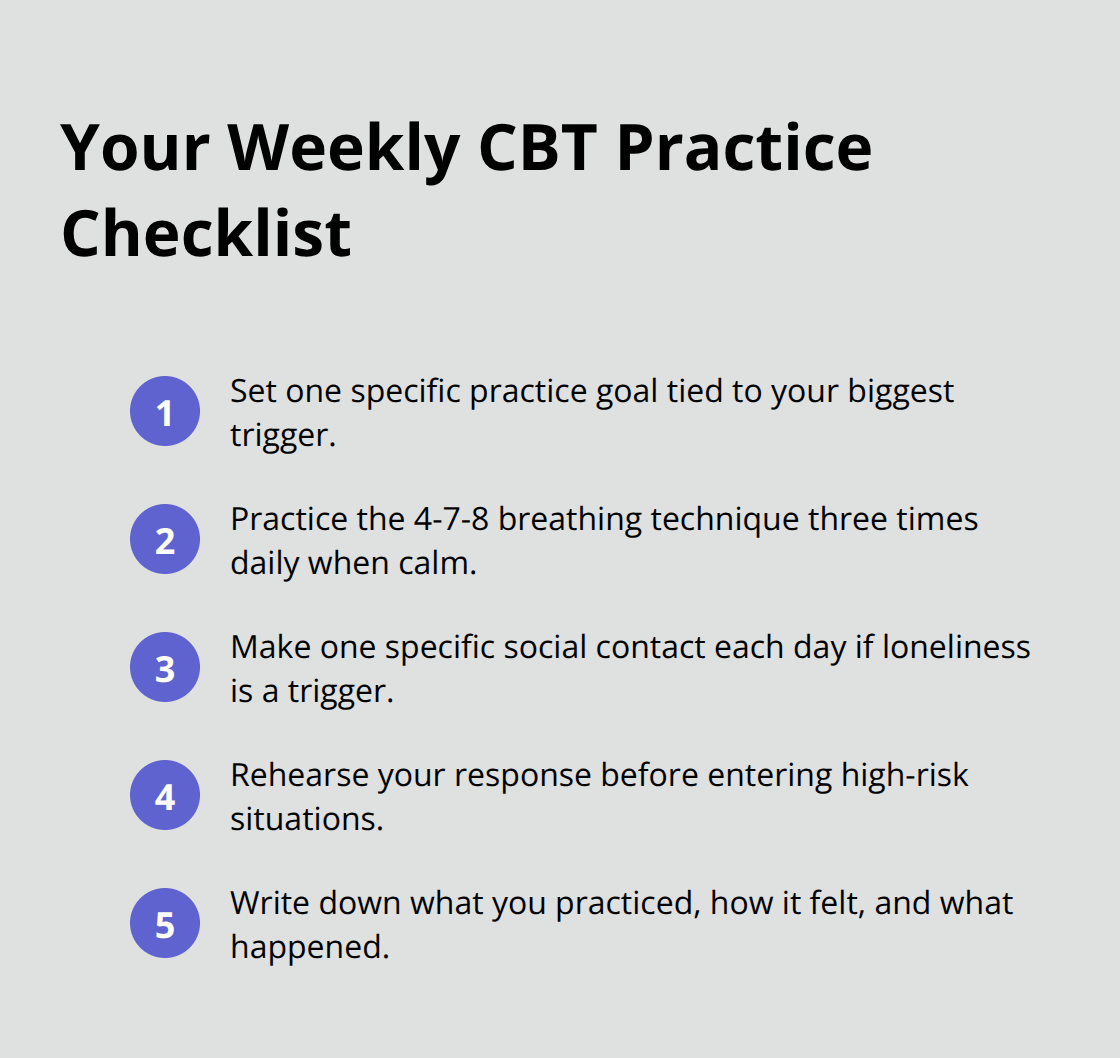
If loneliness is your trigger, commit to one specific contact with another person each day, not vague promises to be more social.
If certain situations spark cravings, use role-play skills from sessions by actually rehearsing your response before entering that situation. Write down what you practiced, how it felt, and what happened. This creates accountability and gives your therapist real feedback. Most people who relapse stopped doing their homework weeks before the actual relapse occurred. The homework stops because they feel better, which creates dangerous overconfidence. Recovery requires consistent practice for six to twelve months minimum, not until you feel fixed.
Final Thoughts
CBT’s effectiveness for addiction recovery rests on one simple fact: it works because it targets the actual mechanisms that keep addiction alive. Studies show 67% of participants undergoing cognitive behavioural therapy for addiction reported significant improvements in recovery outcomes, with the strongest gains appearing in the first six months of treatment. These aren’t marginal improvements-people who stick with CBT protocols see measurable reductions in cravings, fewer relapse episodes, and genuine changes in how they respond to triggers.
We at Addiction Resource Center integrate CBT into every treatment program because the evidence demands it. We build it as the foundation, then layer in other approaches like motivational interviewing and contingency management when your specific situation calls for them. Our therapists specialize in addiction-focused CBT, not general therapy adapted for substance use, which means they know how to conduct functional analysis for addiction triggers, design exposure exercises that match your actual life, and teach coping skills that genuinely compete with substance use as a stress response.
The techniques in this guide work only if you actually practice them. Reading about cognitive restructuring changes nothing-doing it daily changes everything. Your first step is contacting a qualified provider who specializes in addiction treatment, and Addiction Resource Center offers personalized addiction therapy and substance abuse counseling tailored to your specific needs.