Find the best sober living program for your recovery journey with our comprehensive guide to choosing the right fit for lasting sobriety.

Picking the right sober living program can make or break your recovery. The wrong choice wastes time and money, while the right one provides structure, accountability, and genuine support when you need it most.
At Addiction Resource Center, we’ve seen firsthand how much the program selection matters. This guide walks you through what to look for, what questions to ask, and which red flags demand your attention.
What Type of Sober Living Structure Actually Works
Structured Programs with Daily Schedules
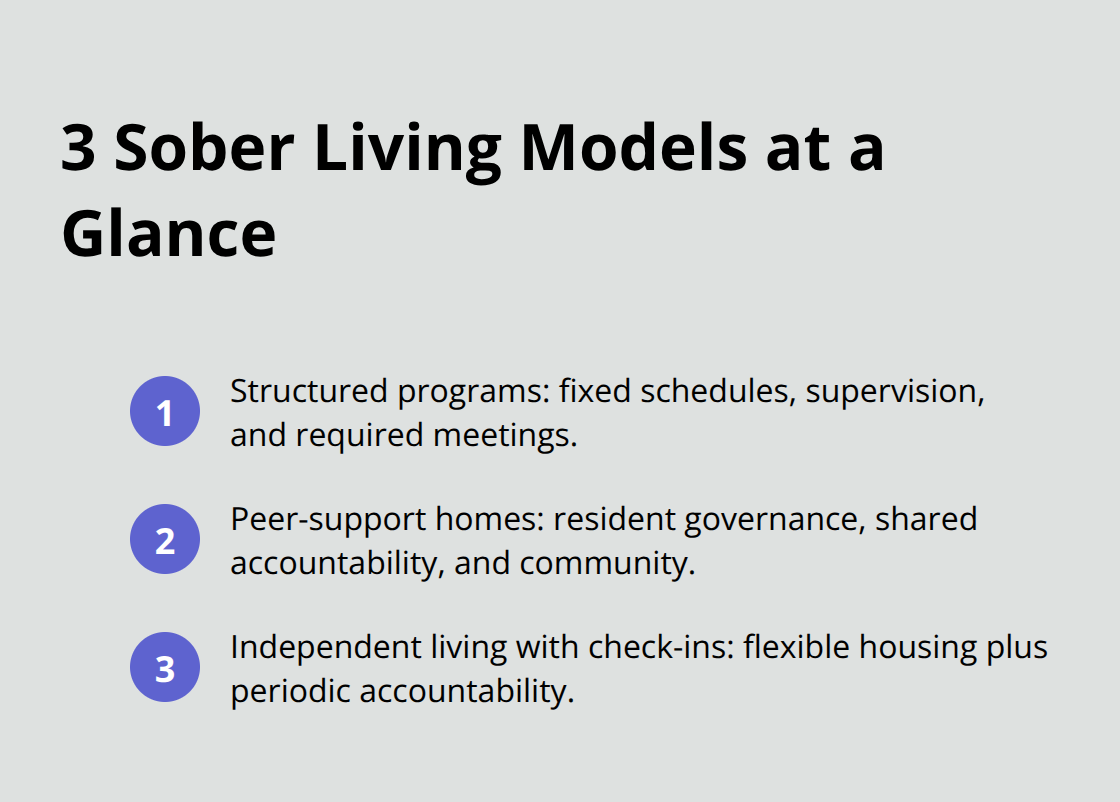
Sober living programs fall into three distinct models, and your choice depends on how much structure you need and what triggers you’re managing. The most heavily structured programs operate with fixed daily schedules-residents wake at set times, attend mandatory house meetings, complete assigned chores, and often participate in required 12-step meetings or group therapy. These programs work best if you struggle with self-discipline or have limited experience managing unstructured time.
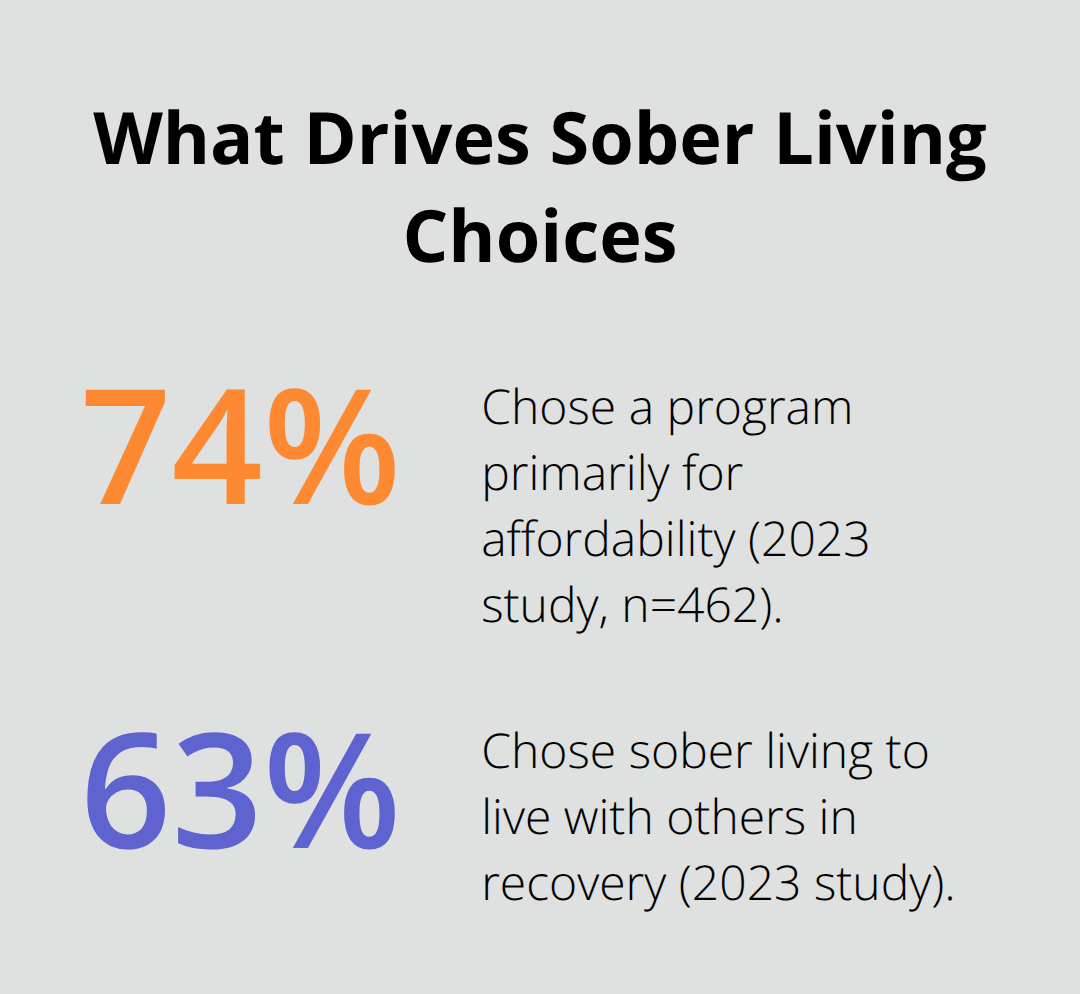
A 2023 study of 462 sober living residents found that 74.4% chose their program primarily for affordability, but the structure itself matters more than cost alone. Facilities with 24-hour supervision and a high staff-to-clinical ratio reduce relapse risk significantly, though they typically cost more monthly. You’ll pay anywhere from $800 to $2,500 per month depending on location and amenities, with some programs accepting insurance or offering sliding-scale fees.
The downside of rigid structure is that it can feel restrictive and doesn’t teach you how to manage independence-which you’ll eventually need. Residents in these settings sometimes struggle when they transition to less supervised environments because they haven’t practiced making their own decisions about daily routines or recovery maintenance.
Peer-Support-Based Community Homes
Peer-support-based community homes take a different approach entirely. These homes, often called social model residences, give residents input into house rules and operations through resident councils or feedback channels. Oxford House represents this model at scale, with over 2,200 homes nationwide operating on peer governance principles. Residents share decision-making power, which builds accountability and reduces the sense of being controlled.
The same 2023 study showed that 63.2% of residents chose sober living because they wanted to live with others in recovery, and peer support directly improves motivation and prevents isolation. Residents in these homes develop stronger connections to their peers and take greater ownership of the recovery environment. However, peer-based homes require more personal responsibility and work poorly if you need clinical supervision for co-occurring mental health conditions.
Independent Living with Regular Check-Ins
The final model-independent living with regular check-ins-suits people further along in recovery who maintain their own housing but receive periodic counseling or accountability visits. This option costs significantly less, often $200 to $500 monthly for structured check-ins alone, but it only works if you have stable employment, reliable transportation, and strong external support networks already in place.
This approach demands the most self-direction and works best for individuals who have already built solid recovery habits and identified their personal triggers. You’ll need to actively manage your own schedule, attend outside support meetings, and reach out for help when cravings or stress intensify. The flexibility appeals to people who want to live independently while maintaining professional accountability.
Matching Structure to Your Recovery Stage
Your recovery stage determines which model fits best. Early recovery typically requires more structure because your brain is still adjusting to sobriety and your coping skills are underdeveloped. Mid-stage recovery (three to six months sober) often benefits from peer-based models where you can practice independence within a supportive community. Later recovery stages may transition toward independent living with periodic check-ins as you rebuild your life outside the program.
The next step involves evaluating the specific factors that separate quality programs from mediocre ones-accreditation standards, staff qualifications, and the actual support services each facility provides.
What Makes a Program Worth Your Trust
Accreditation and Staff Credentials Set the Foundation
Accreditation and licensing matter more than most people realize, but the real test comes when you visit a facility and speak directly with staff and current residents. The National Association of Recovery Residences (NARR) certifies recovery residences through state affiliates, and certification signals that a program meets established safety and ethical standards. However, certification alone doesn’t guarantee quality-it simply means the program committed to following national standards. Some excellent programs operate without formal certification, particularly in states without active NARR affiliates, so you need additional ways to evaluate them.
Ask whether the program holds state licensing if required in that jurisdiction, what accrediting bodies have reviewed it, and whether it participates in continuous quality improvement processes. Staff qualifications separate mediocre programs from exceptional ones. Programs staffed with licensed clinical counselors, master’s-level therapists, and medical professionals deliver measurably better outcomes than those relying solely on peer support staff. Ask directly about staff credentials, years of experience in addiction treatment, and whether clinicians hold current licenses. Into Action Recovery Centers in Houston demonstrates this standard-they employ master’s-level counselors and medical professionals who shape personalized treatment approaches.
Treatment Philosophy and Recovery Pathways
The treatment philosophy matters equally. Some programs emphasize 12-step integration as mandatory, while others support multiple recovery pathways. If you have a strong preference for or against 12-step approaches, verify the program’s stance upfront rather than discovering incompatibility after you arrive. This alignment prevents friction later and increases your commitment to the program’s structure.
Location, Cost, and Financial Accessibility
Location and cost require honest self-assessment about your recovery priorities. Programs near family and established support networks help you maintain connections, but proximity to old friends or drug-using environments can sabotage recovery. Sometimes geographic distance-moving to a different city-reduces trigger exposure significantly.
Monthly costs range from $800 to $2,500 depending on structure and amenities, but affordability shouldn’t drive your decision alone. A 2023 study of 462 sober living residents found that 74.4% cited affordability as their primary reason for choosing a program, yet those motivated by affordability experienced less psychiatric distress at six-month follow-up, suggesting that financial accessibility itself supports mental health. Ask what your monthly fee covers-housing only, meals, counseling services, medical access, or transportation assistance.
Verify whether the program accepts insurance, offers sliding-scale fees, or provides payment plans, because unexpected costs create stress that threatens recovery.
Relapse Policy and Length of Stay
Length of stay flexibility matters significantly. Programs that allow residents to stay as long as they maintain sobriety work better than those enforcing arbitrary discharge dates. Ask explicitly about relapse policies-whether a single slip triggers immediate eviction or whether the program offers intervention and recovery support. Programs that evict residents after relapse essentially abandon people at their most vulnerable moment, which contradicts actual recovery science.
Understanding these evaluation criteria positions you to ask the right questions during facility visits and identify which programs genuinely support long-term recovery versus those that prioritize profit over outcomes.
What to Ask Before You Commit
Request Concrete Success Metrics
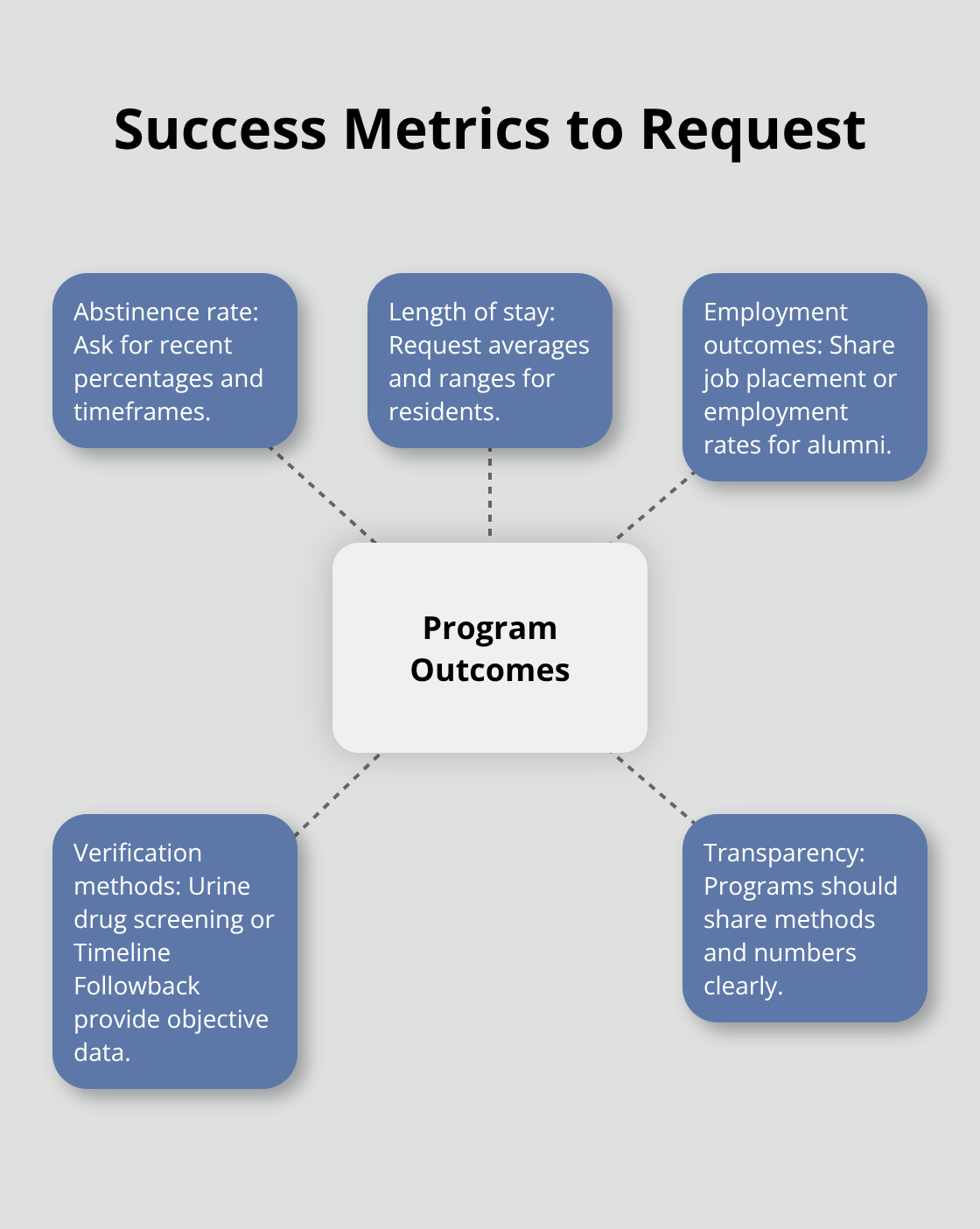
The questions you ask during facility visits separate programs that deliver results from those that prioritize enrollment numbers. Start by asking for concrete success metrics. Request the program’s abstinence rates, length of stay averages, and employment outcomes for alumni. Most quality programs track these numbers because they matter for accreditation and continuous improvement. If a program refuses to share outcomes or becomes vague about results, that’s a legitimate red flag.
Programs hiding poor performance data aren’t worth your time.
Ask specifically whether they measure abstinence using objective methods like urine drug screening or the Timeline Followback assessment, which documents substance use patterns over time. Generic claims like “most residents succeed” mean nothing without actual percentages and verification methods.
Connect with Alumni Directly
Contact at least three alumni from the program and ask direct questions about their experience. Alumni reveal what daily life actually feels like versus what marketing materials promise. Ask them whether the staff delivered what was promised, whether house rules were enforced fairly, and whether the program prepared them for life after discharge.
Request alumni contact information directly from the program’s leadership; if they refuse or claim privacy concerns prevent sharing names, question their confidence in outcomes. Their willingness to connect you with graduates signals transparency and trust in their results.
Evaluate Aftercare and Long-Term Support
Aftercare support matters enormously for long-term success. Programs should offer alumni counseling, job placement assistance, or ongoing group meetings that extend beyond discharge. Ask whether the program maintains contact with graduates, provides relapse prevention resources, or connects alumni to employment services. Residents who receive structured aftercare show better sustained recovery than those simply released into the community without follow-up.
Verify whether the program partners with outpatient counselors, therapists, or psychiatrists who can continue treating co-occurring mental health conditions after residents leave. This continuity of care prevents the dangerous gap between residential treatment and independent living.
Identify Red Flags and Pressure Tactics
Watch carefully for programs making unrealistic promises about guaranteed sobriety, rapid life transformation, or success rates exceeding ninety percent. Recovery is messy and individual, and any program claiming near-perfect outcomes is either lying or serving only the easiest cases. Pressure tactics like limited-time enrollment discounts, aggressive recruitment, or dismissing your questions signal that profit matters more than your recovery.
Legitimate programs answer tough questions patiently and acknowledge that recovery requires work from residents, not just the facility. Trust your instincts when something feels off, because your skepticism protects you from poor choices. Programs that respect your concerns and welcome scrutiny demonstrate genuine commitment to resident success.
Making the Right Choice for Your Recovery Journey
Choosing the right sober living program requires matching your specific recovery needs to the structure and support each facility actually provides. Early recovery demands more supervision and daily structure, while later stages benefit from peer-based models or independent living with periodic accountability. Your decision should reflect where you are in recovery, not where you wish you were.
Visit every program in person before committing and talk to current residents and alumni about their actual experience, not just what staff tell you during tours. Ask about success rates, aftercare support, and relapse policies-these answers reveal whether sober living programs genuinely prepare residents for life after discharge. Trust your instincts when something feels wrong, because your skepticism protects you from poor choices that waste time and money.
Location, cost, and program philosophy all shape your recovery trajectory, but the right sober living program ultimately provides structure, accountability, and genuine peer support during the critical transition from treatment to independent living. At Addiction Resource Center, we understand that recovery extends beyond residential treatment, which is why we offer personalized addiction therapy and substance abuse counseling programs that address underlying mental health conditions and build lasting recovery skills. Take time to research thoroughly, visit multiple facilities, and ask difficult questions-your recovery deserves a program built on transparency, qualified staff, and measurable outcomes.